
Depop, Poshmark & Vinted Flippers: Estate Sales Are Your Cheat Code — and Finding the Good Stuff Just Got Stupid Easy
Every reselling guide says "source from estate sales" — and not one of them tells you how to actually find the sale with the Levi's, the silk slips, and the 90s Carhartt. Here's the move that turns estate sales into a restock-on-demand pipeline: keyword search by item, a wishlist that hunts while you sleep, and an AI worth-check so you never drive for nothing.
Let's be honest about the advice you've already read a hundred times.
Every "how to make money on Depop" thread, every Poshmark sourcing video, every Vinted hustle guide eventually lands on the same line: "Source from estate sales." And they're right! Estate sales are an absolute goldmine of vintage clothing. The problem is that's where the advice stops. Nobody tells you how to actually find the estate sale that has the Levi's 501s, the silk slip dresses, the buttery leather jackets, or the dead-stock 90s Carhartt. They just wave at the gold and walk off.
So you've been doing it the hard way: driving to random sales, hoping the closet upstairs has something good, coming home with a single flannel and a tank of gas you'll never get back. Let's fix that.
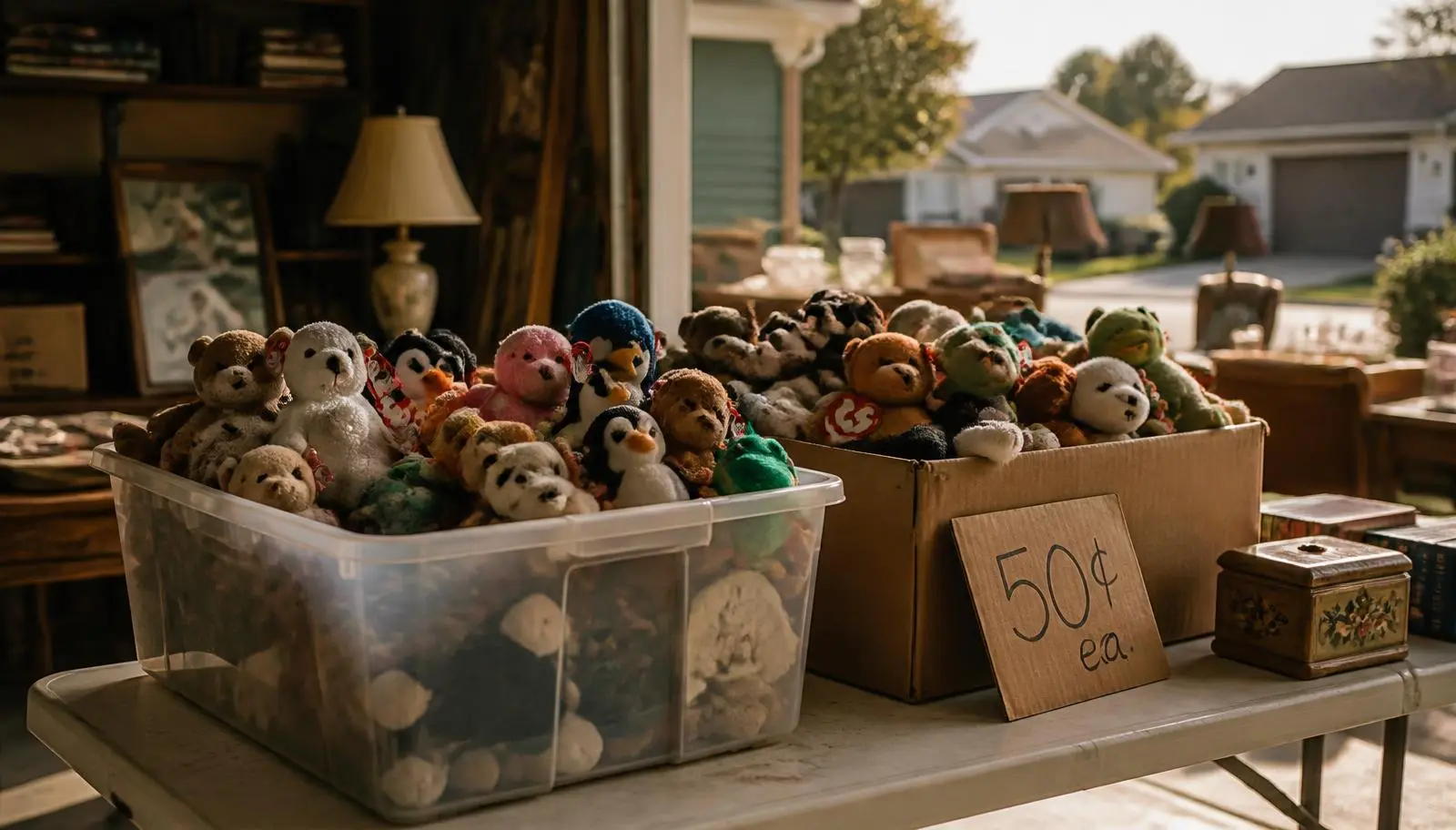
Estate sales are the cheapest link in the entire resale chain
Here's the thing the pros know and the algorithm won't tell you: estate sales sit at the very top of the supply chain, where prices are lowest. Everything you buy anywhere else already passed through someone who marked it up.
Follow a single pair of vintage Levi's down the line:
- Estate sale: priced by a family clearing a house. Maybe $3.
- Thrift store: already sorted, tagged, and marked to "vintage denim" pricing. Now $25.
- Vintage shop: styled, steamed, displayed. $60.
- Depop / Poshmark / Vinted: photographed, measured, shipped. $70+.
Same jeans. Same fades. Same red tab. The only thing that changed is how many resellers took a cut before they reached the buyer. At the estate sale, you ARE that first reseller. That $3 pull is the single widest margin you will ever get on that item — which is exactly why thrift stores feel so picked-over and pricey lately. The flippers already shopped there. The estate sale is the room before the flippers.
What actually flips: the fashion estate sales are quietly hiding
Estate sales aren't just brown furniture and Pyrex. A whole life's wardrobe is usually upstairs, untouched, in a closet nobody's gone through. Here's what makes resellers' eyes light up — with rough buy-vs-resell spreads:
- Vintage denim — Levi's (look for the red tab + single-stitch), Wrangler, Lee. Buy $3–8, flip $40–120.
- Workwear — Carhartt, Dickies, vintage chore coats. Buy $5–10, flip $50–150.
- Leather — moto jackets, trench coats, bomber jackets. Buy $8–20, flip $60–250.
- Silk & slips — slip dresses, blouses, scarves (that grandma "fancy" drawer). Buy $1–3, flip $25–70.
- Band & graphic tees — concert tees, movie promos, single-stitch. Buy $2–5, flip $40–300+.
- Knitwear — chunky cardigans, hand-knit sweaters, cashmere. Buy $3–6, flip $30–90.
- Designer & handbags — Coach (older creed stamps), leather satchels, occasional luxury. Buy $10–40, flip $80–600+.
- Jewelry — costume and fine. Buy a box of "junk" jewelry $5–15, flip the pieces individually for $10–100 each.
The wild part? Most of this gets tagged by people who have no idea what it's worth on Depop. That gap between "old clothes" and "sought-after vintage" is your entire business.
Feature #1: Search estate sales by item, like it's a vintage shop
This is the part that makes resellers actually gasp. On EstateSaleFinder, the individual items inside the sale are searchable — not just the address and the dates.
Type "leather jacket." Type "silk." Type "Levi's," "Carhartt," "band tee," "cashmere," or "pleated skirt." Up come matching pieces at real estate sales near you — with photos, prices, and how far away they are. You can search every item across nearby estate sales before you decide whether a sale is even worth the drive.
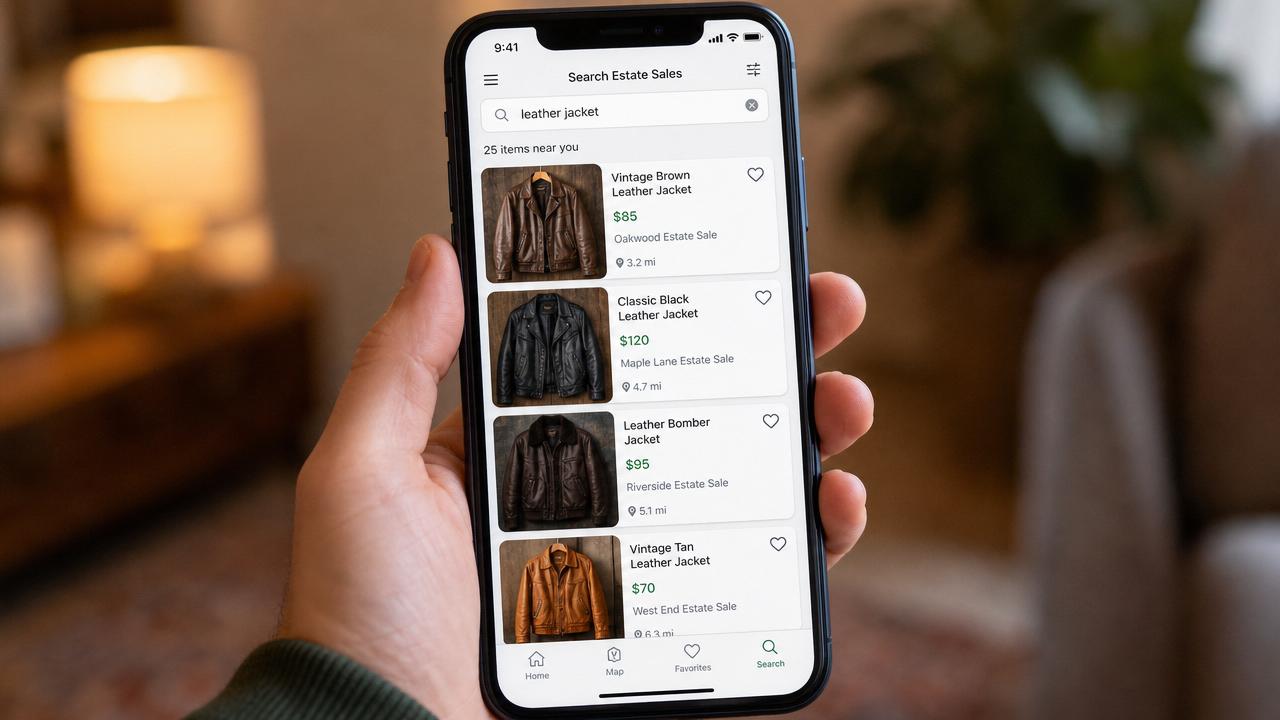
No legacy estate-sale directory does this. They list sales; we make the contents findable. That single shift turns sourcing upside down. Instead of gambling a Saturday on a sale that might have clothes, you go straight to the rack you want and see exactly where it is right now. You search the item. The item finds you.
What flippers are actually searching for (real data)
We don't have to guess what's hot — we can measure it. Here's how many times Americans search these terms on Google every single month:
| What people search | Monthly U.S. searches |
|---|---|
| vintage | 110,000 |
| vintage clothing | 40,500 |
| vintage stores near me | 33,100 |
| online thrift store | 27,100 |
| thrifting near me | 22,200 |
| vintage clothing stores near me | 14,800 |
| where to sell old clothes | 12,100 |
| where can i sell my clothes | 4,400 |
| best place to sell clothes online | 2,400 |
| how to sell on depop | 2,400 |
| selling on depop | 1,300 |
| where to sell vintage clothing | 480 |
(Search-volume data via Semrush, United States.)
Translation: hundreds of thousands of people a month are hunting vintage and figuring out where to sell their finds. The demand is enormous and the buyers are already on Depop, Poshmark, and Vinted waiting. The only edge that matters now is who sources the inventory first and cheapest. That's the gap this fills.
Feature #2: The wishlist that sources for you while you sleep
Search answers "what's listed right now." The wishlist answers the better question: "what about the piece that isn't listed yet?"
Save the brands and keywords you flip — "Levi's 501," "silk slip dress," "vintage Carhartt," "band tee," "pleated skirt" — set how far you'll travel, and go live your life. The second any sale lists a match near you, EstateSaleFinder pings you. No refreshing. No 6 a.m. anxiety. No missing the good closet because you didn't know the sale existed.
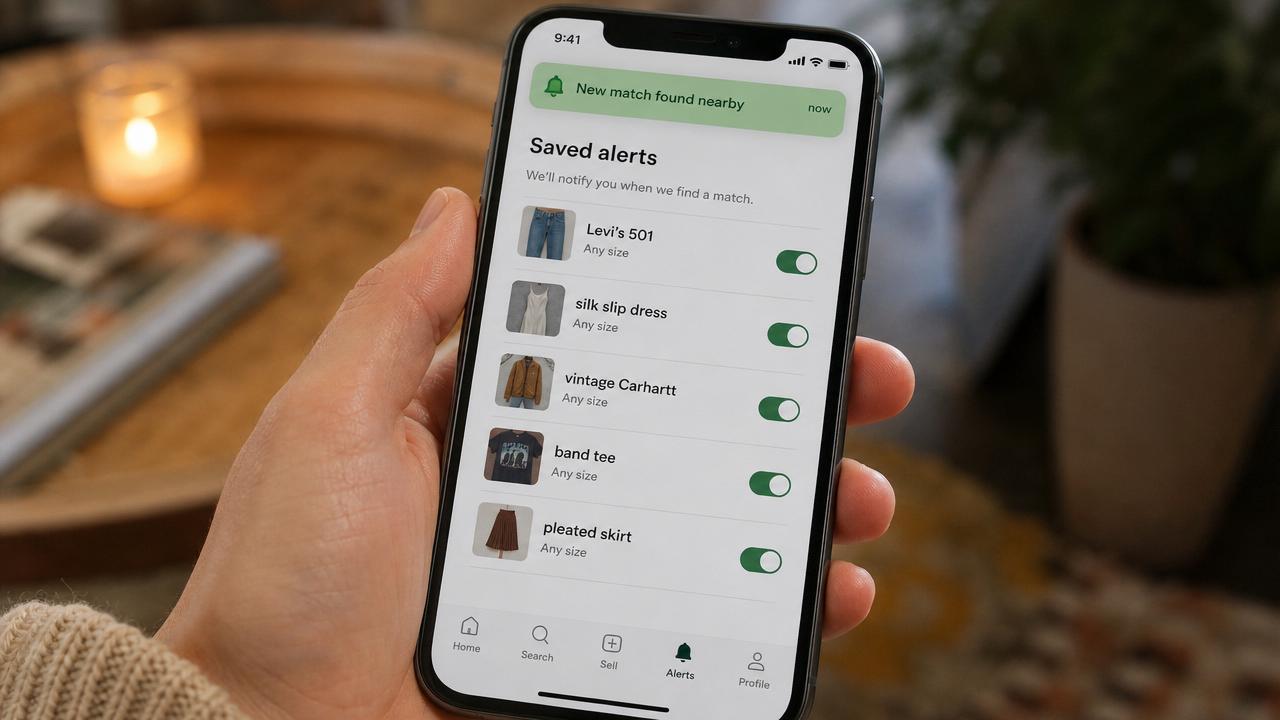
It's a standing restock order for your shop. While you're packing yesterday's orders, the platform is out there watching every new sale for your exact inventory — and tapping you on the shoulder the moment it appears.
Feature #3: Check what it's worth before you drive
The worst part of sourcing isn't the cost — it's the wasted trip. So before you burn gas, you can use the built-in AI worth-check to scan a piece, read what comparable items actually sell for, and sanity-check a brand or label. Is that "leather" jacket real leather? Is that a genuine vintage tee or a 2015 reprint? Get a read before you commit, so every drive is a drive worth making.
The flipper math, start to finish
Put it together and the case writes itself:
- You search "vintage Levi's" → a sale 4 miles away listed three pairs.
- The wishlist already pinged you at 7 a.m. when they posted, so you're first.
- The worth-check confirms the red-tab single-stitch pair is the keeper.
- You buy all three for $18 total. They list at $55–95 each.
Lowest possible cost. First dibs. Verified before you left the house. That's the entire reselling game — sourced, automated, and sitting in your pocket. Thrift stores can't give you that, because the markup already happened before you walked in.
Built for how you actually sell
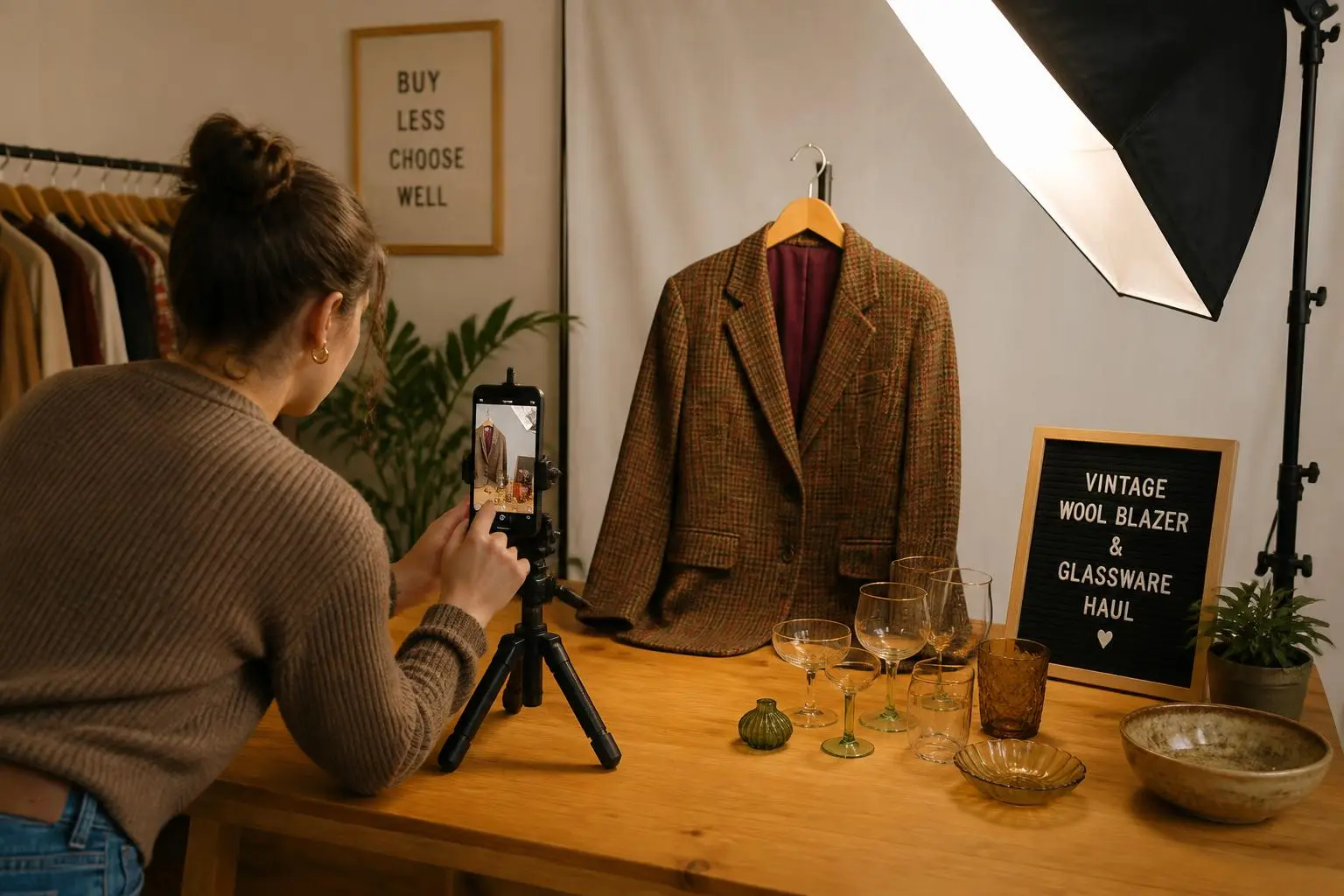
Whether your shop lives on Depop, Poshmark, or Vinted, the move is the same: source cheaper than your competition and restock faster than they can. EstateSaleFinder doesn't care which platform you flip on — it just feeds you the rawest, cheapest, least-picked-over inventory in the resale world, and tells you the instant more of it shows up.
Start sourcing in about 60 seconds
Create a free account, type the first brand or item you flip, and save it to your wishlist. That's it — you're now sourcing from the very top of the resale chain, and the platform will ping you the second your next find lists nearby.
Every reselling guide told you estate sales were the secret. Now you finally have the tool that makes them searchable. Start your free clothing wishlist on EstateSaleFinder and let your next flip come to you.
Keep exploring
Ready to start your own treasure hunt?
Discover estate sales near you and find incredible deals.
Explore Sales Near Me
About the author
Andy
Founder, EstateSaleFinder.net
Hi, I'm Andy — a retired commercial photographer turned developer with a five-year (and counting) obsession with estate sales. I started EstateSaleFinder.net because I knew there had to be an easier, smarter way to find and list estate sales. Now I get to chase treasure and build the tool I always wished existed.