
How to Actually Make Money Reselling: The Estate-Sale Playbook Flippers Don't Want You to Know
Everyone's Googling how to start reselling. Almost nobody's talking about where the pros actually source: estate sales. A $3 casserole dish becomes $45. A $10 skillet becomes $50. This is the buy-low, sell-high playbook — the best things to flip, how to start this weekend, and the free tool that finds the sales for you.
Let's start with a true kind of story, because it's the story that hooks almost every reseller.
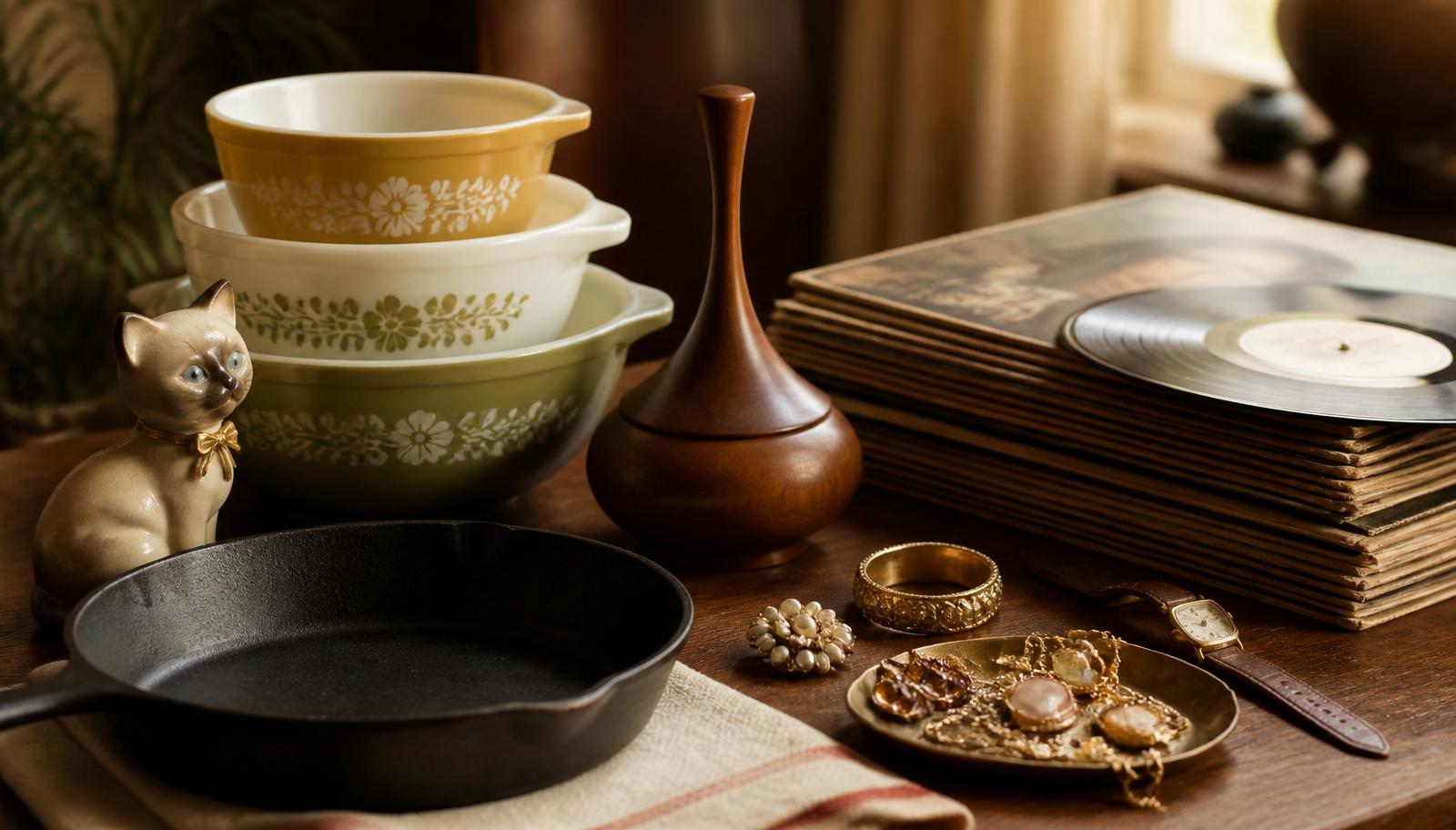
Someone walks into an estate sale on a Saturday morning. On a kitchen shelf, half-hidden behind chipped mugs, sits a turquoise Pyrex bowl with a little white pattern. Sticker price: $3. They buy it, photograph it that night, list it — and a collector three states away pays $45 plus shipping. One bowl. Forty-two dollars of profit. And the same house had cast iron, costume jewelry, and a box of vinyl nobody else looked twice at.
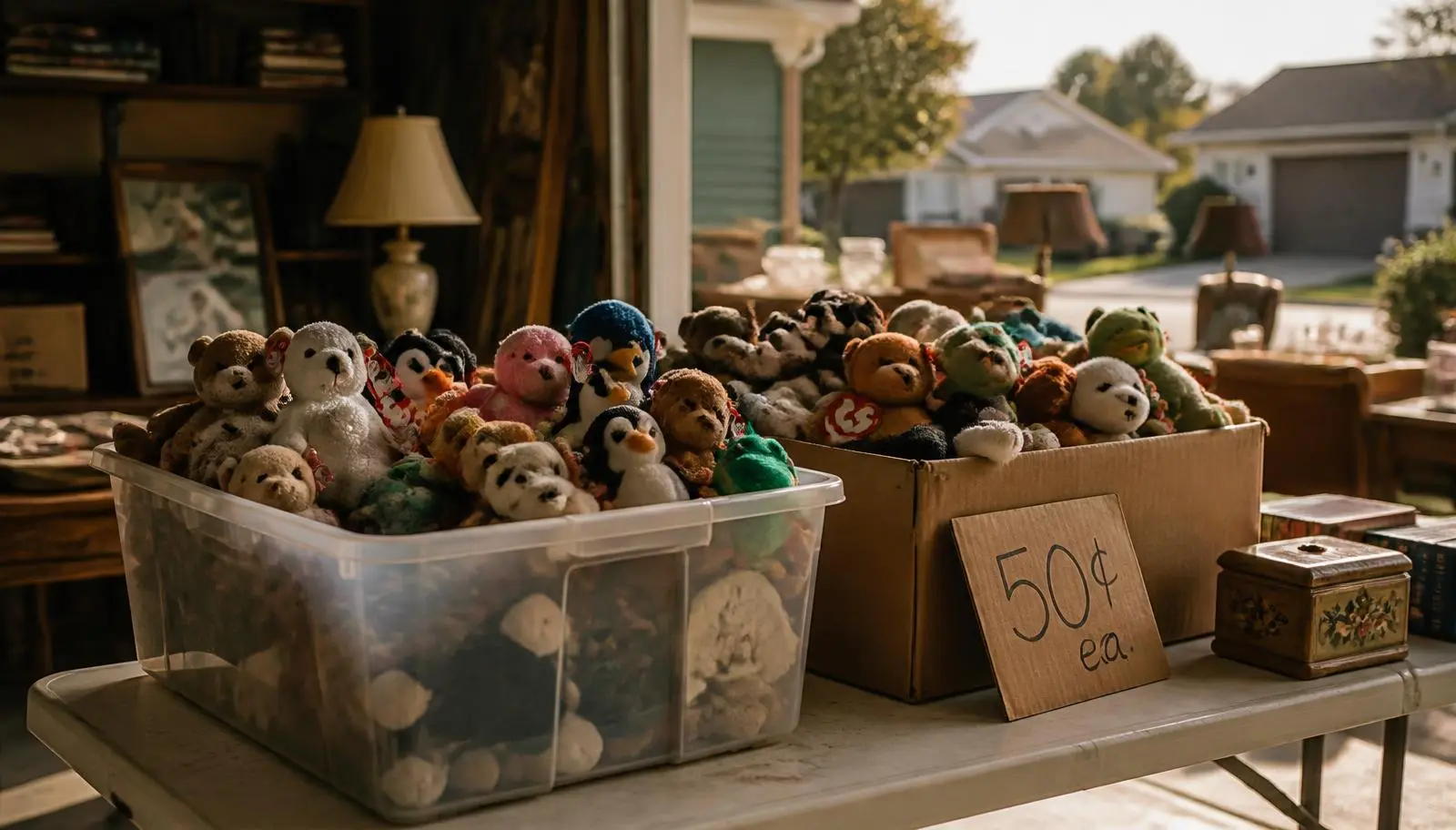
That's the whole game in one sentence: reselling is buying something for less than the next person will happily pay, and estate sales are where the "buying for less" part is almost embarrassingly easy. You're not competing with a thrift store's markup or a flea-market dealer who already knows what they've got. You're buying from a house that needs to be empty by Sunday.
This post is the playbook. What to buy, how to start this weekend even if you've never sold a thing, how to know what something's worth before you hand over cash, and how to stop wasting Saturdays driving to dead sales. If you'd rather skip ahead, browse estate sales near you or explore the tools we built for pickers and flippers. Let's go.
Why estate sales beat thrift stores and garage sales for reselling
Every "how to start reselling" video points you at the same crowded places: thrift stores, Facebook Marketplace, garage sales. Those work. But estate sales quietly beat them on the one thing that actually determines your profit — your buy price relative to real value.
Here's why the math is better:
- Whole households, priced to clear. Estate sale companies aren't running a store. Their job is to empty a home in one to three days. On the last day, prices are often slashed 50% or more. That deadline is your margin.
- Specialty items that thrift stores never see. Sterling flatware, mid-century furniture, tools, fine and costume jewelry, first-edition books, full china sets — the stuff of a real life, not donation-bin leftovers.
- Less picked-over than thrift resale apps. By the time an item hits a resale app, someone already flipped it once. At an estate sale, you're first in line at the source.
- You can see the whole story. A garage of labeled tools tells you the owner was a serious woodworker. That context helps you spot the sleeper items other shoppers walk past.

The takeaway: thrifting is fine for volume, but estate sales are where the margins live. Now let's talk about what to actually grab.
The 9 best things to resell from estate sales
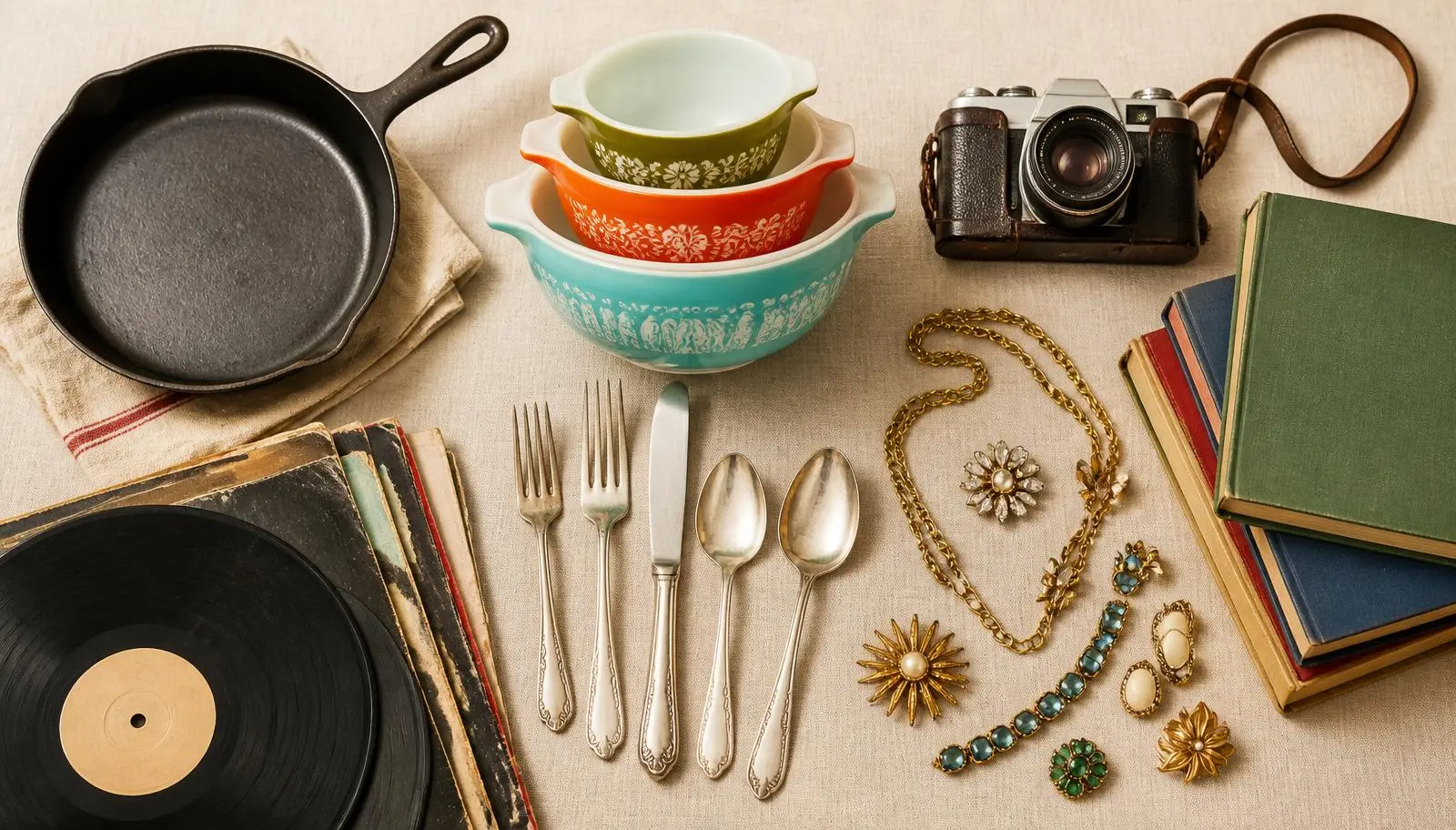
If you're wondering what the best things to resell are, this is your shopping list. These categories combine strong demand, high sell-through, and — crucially — sellers who routinely underprice them. Prices below are realistic ranges, not guarantees; every item depends on pattern, brand, and condition.
| Category | Typical estate-sale buy | Realistic resale range | Why it flips |
|---|---|---|---|
| Vintage Pyrex & glassware | $2–$8 | $25–$120+ | Collectors chase specific patterns |
| Cast iron cookware | $5–$15 | $35–$90 | Griswold/Wagner names command premiums |
| Mid-century furniture | $20–$75 | $150–$600+ | Teak & walnut are perennial design demand |
| Vintage denim & clothing | $2–$10 | $30–$200 | Union-made & selvedge denim is hot |
| Costume & fine jewelry | $1–$20 | $20–$300+ | Signed pieces and real gold/silver hide here |
| Vintage tools | $3–$20 | $30–$150 | Hand planes, wrenches, and shop gear sell fast |
| Vinyl records & books | $1–$5 | $15–$100+ | First pressings and first editions add up |
| Vintage electronics & audio | $10–$40 | $75–$400 | Receivers and speakers have cult buyers |
| Sterling silver & china | $10–$50 | $60–$400+ | Sold by weight and by pattern |
A few field notes that separate profit from clutter:
- Cast iron is the beginner's best friend — nearly unbreakable, easy to ship, and a $10 skillet routinely becomes $45+. Flip it over and look for a foundry name.
- Pyrex lives and dies by pattern. Learn five hot patterns (Butterprint, Gooseberry, Pink Daisy, Snowflake, Atomic Eyes) and you'll out-earn shoppers who just grab "the pretty blue one."
- Jewelry is where the sleeper money is. Sellers price a whole tangle of costume jewelry at a few dollars — and a signed brooch or a real 14k ring is hiding in the pile.
How to start reselling this weekend (a beginner's walkthrough)
You do not need a warehouse, a business license, or a big bankroll to start. Here's the honest, do-it-this-weekend version of how to start reselling:
- Pick one niche to start. Don't try to flip everything. Choose one category from the list above — cast iron and Pyrex are the friendliest for beginners because they're cheap, sturdy, and easy to research.
- Set a small sourcing budget. Give yourself $40–$60 for your first sale run. Constraints make you a sharper buyer.
- Find sales worth your Saturday. This is where most beginners waste their whole morning. Browse estate sales near you with real photos so you only drive to the good ones. (More on the fix in a minute.)
- Buy on the numbers, not the vibes. Before you buy, check what the item actually sells for (next section). If the math doesn't work, put it down.
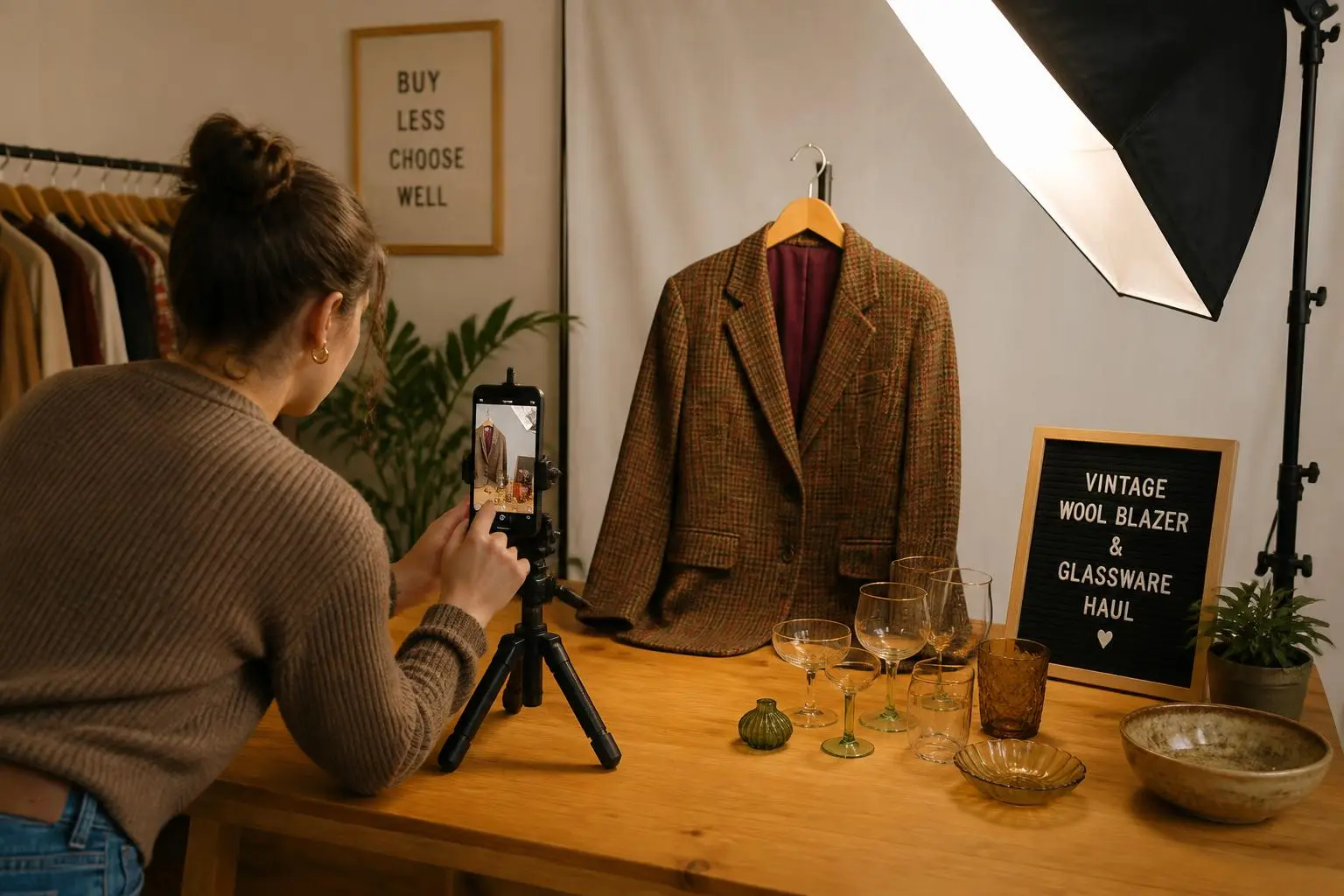
- Photograph in daylight and list clearly. Clean the item, shoot it near a window, write an honest title with the brand and pattern. Good photos are 80% of the sale.
- Sell where the buyers are. eBay for collectibles and shippable goods; local marketplace apps for furniture and bulky items. List within 48 hours while you still remember the details.
That's it. Your first flip doesn't need to be glamorous — it needs to happen. Momentum is the whole skill.
How to know what something's worth before you buy
This is the difference between a hobby that drains money and a reselling business that makes it. The pros aren't guessing — they're checking comparable sold prices ("comps") in the aisle, in seconds, before they commit a dollar.
Two habits to build:
- Read the marks. Flip everything over. A foundry stamp on cast iron, a signature on a brooch, a maker's mark on the back of a plate, a pressing number in a record's dead wax — these tiny details are where value is confirmed.
- Check sold comps, not asking prices. What something is listed for means nothing. What it sold for is the truth. Search completed/sold listings before you buy.
Doing this by hand for every item is slow — and slow gets you beaten to the good stuff. This is exactly where EstateSaleFinder's built-in Ai research tools earn their keep: photograph an item and get an instant read on what it likely is and a suggested value range to sanity-check your buy. Treat every Ai number as a smart starting point — a suggestion to guide your decision, not a final appraisal — and you'll make faster, more confident calls in the aisle.

How EstateSaleFinder makes sourcing (and profit) easier
Sourcing is where resellers quietly lose the most money — not on bad buys, but on wasted Saturdays: driving to a "sale" that's three folding tables of junk, missing the good house across town, or showing up after the item you wanted walked out the door. EstateSaleFinder is built to fix exactly that.
- Find every estate sale near you. Search real sales in your area with photos of what's actually being sold — so you know a sale is worth the drive before you get in the car. See what's on this weekend or browse every listing.
- Plan a smart route. Hit more sales in one morning with a route planner that orders your stops efficiently. More sales seen = more deals found.
- Get alerts for the items you flip. Tell the platform you hunt cast iron, or Pyrex, or mid-century furniture, and get notified when matching items show up nearby. Your inventory comes to you.
- Make early offers. On participating sales you can stake a claim on a piece before the doors even open — a real edge over the crowd racing for the same shelf.
- See what's hot right now. Check the trending estate-sale items buyers are chasing, then source to match real demand instead of guessing.
- Research on the spot. The same Ai research tools live in your pocket, so you can check a suggested value range while you're standing in the kitchen deciding.
Add it up and the pitch is simple: you spend less time driving and guessing, and more time buying the right things at the right price. That's the entire job. See everything built for resellers in one place.
Real-life inspiration: what reselling can actually become
The best part of this business is how it scales with you. A few realistic paths people take:
- The weekend side hustle. Two estate sales every Saturday, a dozen items listed a week, a few hundred extra dollars a month. Low pressure, real cash, and genuinely fun.
- The niche specialist. Someone falls in love with one category — say, vintage audio gear — learns it deeply, and turns a $40 receiver into a $300 sale again and again. Depth beats breadth.
- The full-time flipper. After a year of consistent sourcing and reinvesting, the side hustle covers real bills. Now it's a schedule of sales, a listing rhythm, and a shelf that turns over every week.

None of these require luck. They require showing up to the right sales, buying on the numbers, and doing it again next week. The compounding is the magic.
Questions & answers
Frequently asked questions
Is reselling still profitable?
Yes — especially when you source at estate sales instead of retail-priced resale channels. Profit comes from the gap between a low buy price and real market value, and estate sales routinely underprice specialty items because the goal is to empty a home fast.
What sells best from estate sales?
The most reliable flips are cast iron cookware, patterned vintage Pyrex, mid-century furniture, vintage clothing and denim, signed costume and fine jewelry, vintage tools, records and first-edition books, vintage electronics and audio gear, and sterling silver and china.
How much money do I need to start reselling?
Very little. A first sourcing run of $40–$60 is plenty. Because estate-sale items are cheap and margins are high, you can reinvest your early profits and grow your buying budget without ever going into debt.
How do I know what an item is worth before I buy it?
Check the maker's marks and search sold comps, not asking prices. EstateSaleFinder's Ai research tools give you a suggested value range from a photo to speed this up — use it as a starting point, then confirm with real sold listings.
Your next Saturday is worth money
Reselling isn't a secret and it isn't luck. It's a repeatable loop: find the right sales, buy underpriced things you've verified, list them well, and repeat. Estate sales are the sourcing edge almost nobody talks about — and EstateSaleFinder turns "somewhere out there is a great sale" into a map, a route, and an alert on your phone. Start by finding estate sales near you.
The bowl was three dollars. The skillet was ten. Somebody's going to buy them this weekend and flip them. It might as well be you.
Keep exploring
Ready to start your own treasure hunt?
Discover estate sales near you and find incredible deals.
Explore Sales Near Me
About the author
Andy
Founder, EstateSaleFinder.net
Hi, I'm Andy — a retired commercial photographer turned developer with a five-year (and counting) obsession with estate sales. I started EstateSaleFinder.net because I knew there had to be an easier, smarter way to find and list estate sales. Now I get to chase treasure and build the tool I always wished existed.