The 15 Things Everyone Is Hunting for at Estate Sales Right Now (2026 Edition)
Estate sale regulars aren't finding these by accident. They know exactly what to look for before they walk in the door — a specific logo on the bottom of a bowl, a stamp inside a coat, a marking on the back of a cast iron pan. Here's the 2026 list.
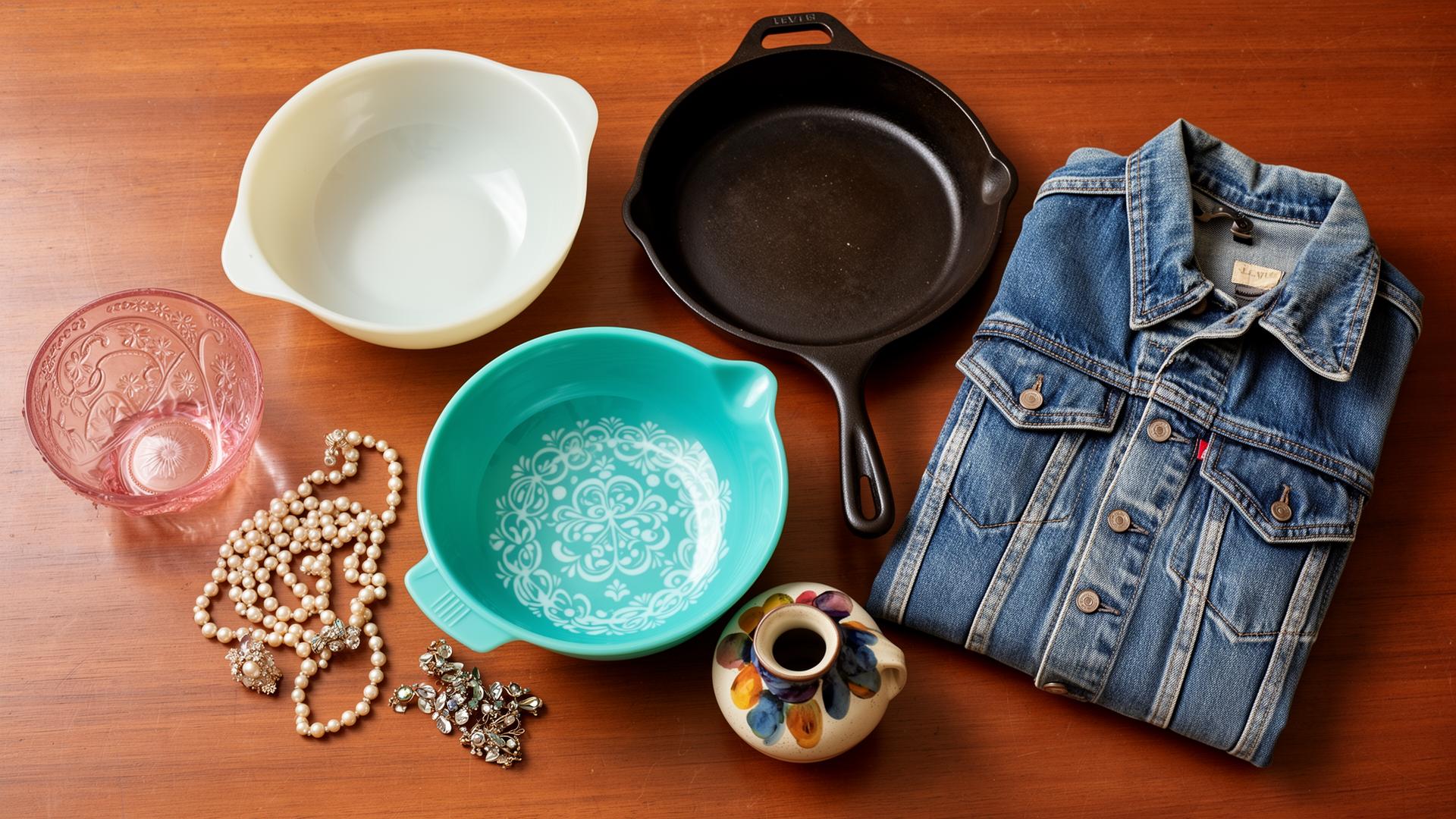
Every Saturday morning, the same scene plays out at estate sales across the country. Someone picks up a green bowl, glances at the bottom, and their face does a thing. They put it back down calmly, pick up two other items to disguise the find, and carry all three to checkout without making eye contact with anyone.
That bowl was probably Pyrex. Or Fire-King. Or Depression glass. And the person who picked it up wasn't lucky — they knew exactly what they were looking for.
This guide is the list they know. The 15 things that serious estate sale buyers, resellers, and collectors are hunting for right now in 2026. What to look for, how to identify it in under 30 seconds, and roughly what it's worth when you find it. Snap a photo of anything uncertain at the end using the AI Appraiser — it reads the specific pattern, pulls real eBay sold data, and gives you a number before you've left the sale.
1. Vintage Pyrex (With the All-Caps Logo)
This one tops almost every serious buyer's list and has for years. The key most people miss: you're looking for the all-caps PYREX logo stamped on the bottom — that indicates pre-1998 borosilicate glass, the kind that collectors actually want. Modern Pyrex says "pyrex" in lowercase and is soda-lime glass.
Patterns worth serious money: Butterprint (turquoise with rooster and corn), Gooseberry (pink or black berries), Spring Blossom (green flowers, also called Crazy Daisy), Primary Colors nesting sets, and Lucky in Love.
What it sells for: Anywhere from $15 for common pieces in good condition to $400+ for rare patterns like Lucky in Love or Pink Gooseberry sets. A complete Butterprint nesting set runs $80–$200.
How to spot it in 10 seconds: Flip it over. All-caps PYREX logo. Done.
2. Griswold and Wagner Cast Iron
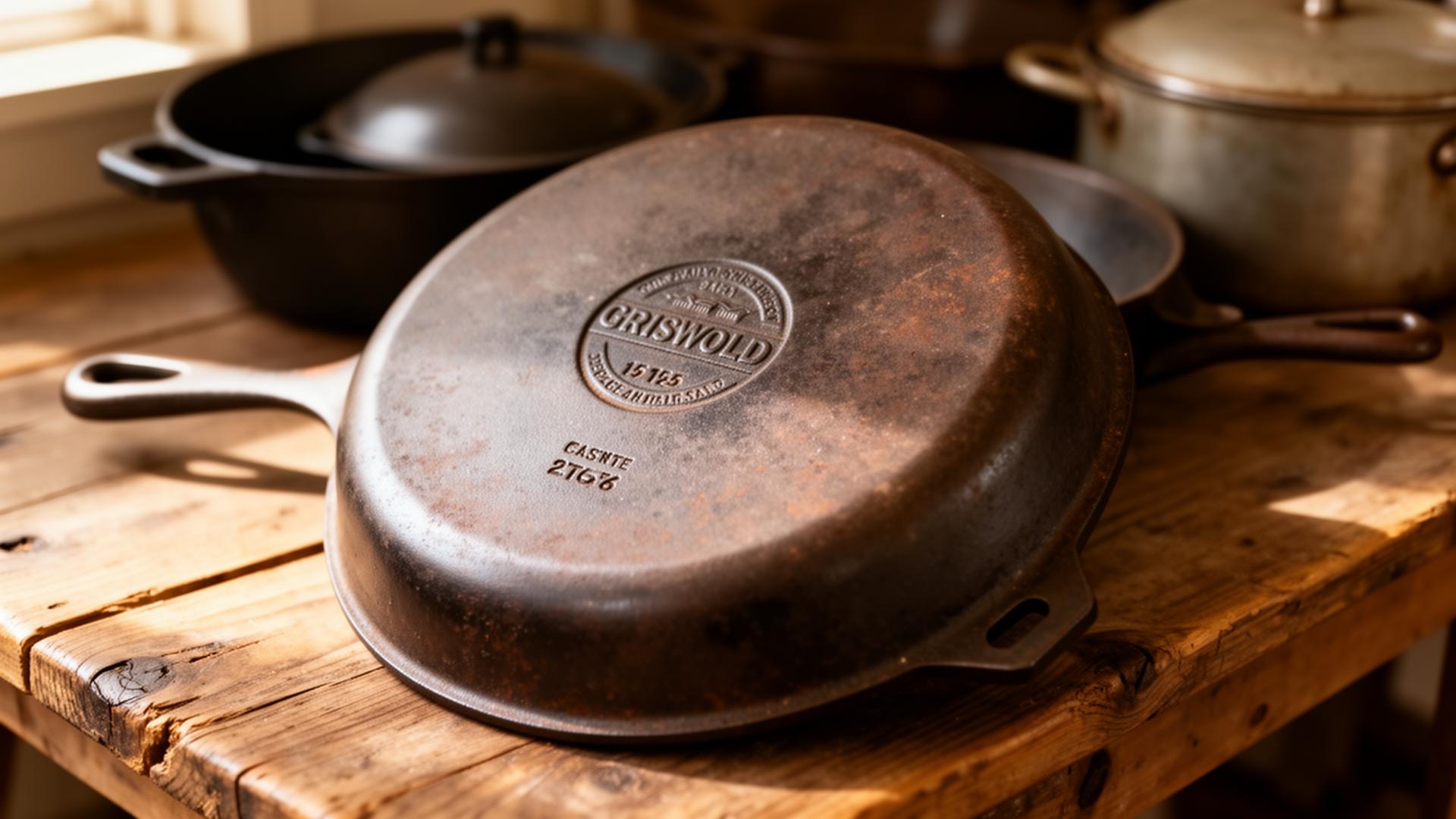
When you see cast iron skillets stacked in a box on a garage shelf, look at the bottoms before you put anything down. Most old cast iron has no marking. But if you see GRISWOLD with "Erie, PA" — or the spider web logo on earlier pieces — you have something.
What to look for: Griswold skillets, especially sizes 3–8, with the slant or block logo. Wagner Ware marked "Sidney -O-" indicates pre-1935. Even unmarked pre-1950 cast iron with a smooth cooking surface (not the pebbly texture of modern Lodge) sells well to collectors.
What it sells for: A common Griswold #8 in good condition runs $40–$80. Rare sizes like #13 and #14 run $200–$600. Early spider-logo pieces go higher.
How to spot it in 10 seconds: Flip the pan. Read the casting marks on the bottom.
3. Vintage Levi's (The Single-Stitch Test)
The vintage denim market is massive and most estate sale staff have no idea what they're holding. Pre-1980s Levi's are identified by one simple thing: single-stitch seams on the back pockets and hem. Post-1980s Levi's use chain stitching that's more obvious and less valuable.
Also check: the red tab (all-caps "LEVI'S" pre-1971), the type on the care label, and whether the fly has a zipper or buttons (501s with button fly are significantly more desirable).
What it sells for: 1970s Levi's 501s in good condition run $60–$180. 1960s pieces go higher. Denim jackets from the same era run $80–$250.
How to spot it in 10 seconds: Check the pocket and hem seams. Single stitch = look closer.
4. Signed Costume Jewelry
The word "signed" in costume jewelry means the piece has a maker's mark — a small stamp, plate, or impression of the designer's name or logo. Unsigned 1940s-1970s jewelry is worth $10–$40. Signed pieces from the right makers are worth $40–$500.
Names to look for: Miriam Haskell, Trifari, Schiaparelli, Weiss, Monet, Lisner, Napier, Crown Trifari (the crown + "Trifari" mark).
What it sells for: A signed Miriam Haskell beaded set can run $100–$400. Signed Trifari pieces in good condition start at $30 and reach $200+. Schiaparelli commands $75–$300+.
How to spot it in 10 seconds: Turn each piece over and look for a small impressed or applied mark.
5. Pre-1990s Coach Bags
Look for these words stamped in gold inside a Coach bag: "Made in United States of America" and the Coach Leatherware creed patch. Pre-1990s Coach used full-grain American leather cut from a single hide per bag — the quality is genuinely different, collectors know it, and the market reflects it.
Bags to know: The Bonnie Cashin-era pieces (1960s-70s, very rare), the Dinky, the Penny Pocket, and the Station Bag. Tan "British Tan" leather is the classic colorway.
What it sells for: Clean pre-1990s Coach bags run $60–$300 depending on style and condition. Cashin-era pieces go significantly higher.
How to spot it in 10 seconds: Open the bag. Find the creed patch. Read "Made in United States of America."
6. Depression Glass
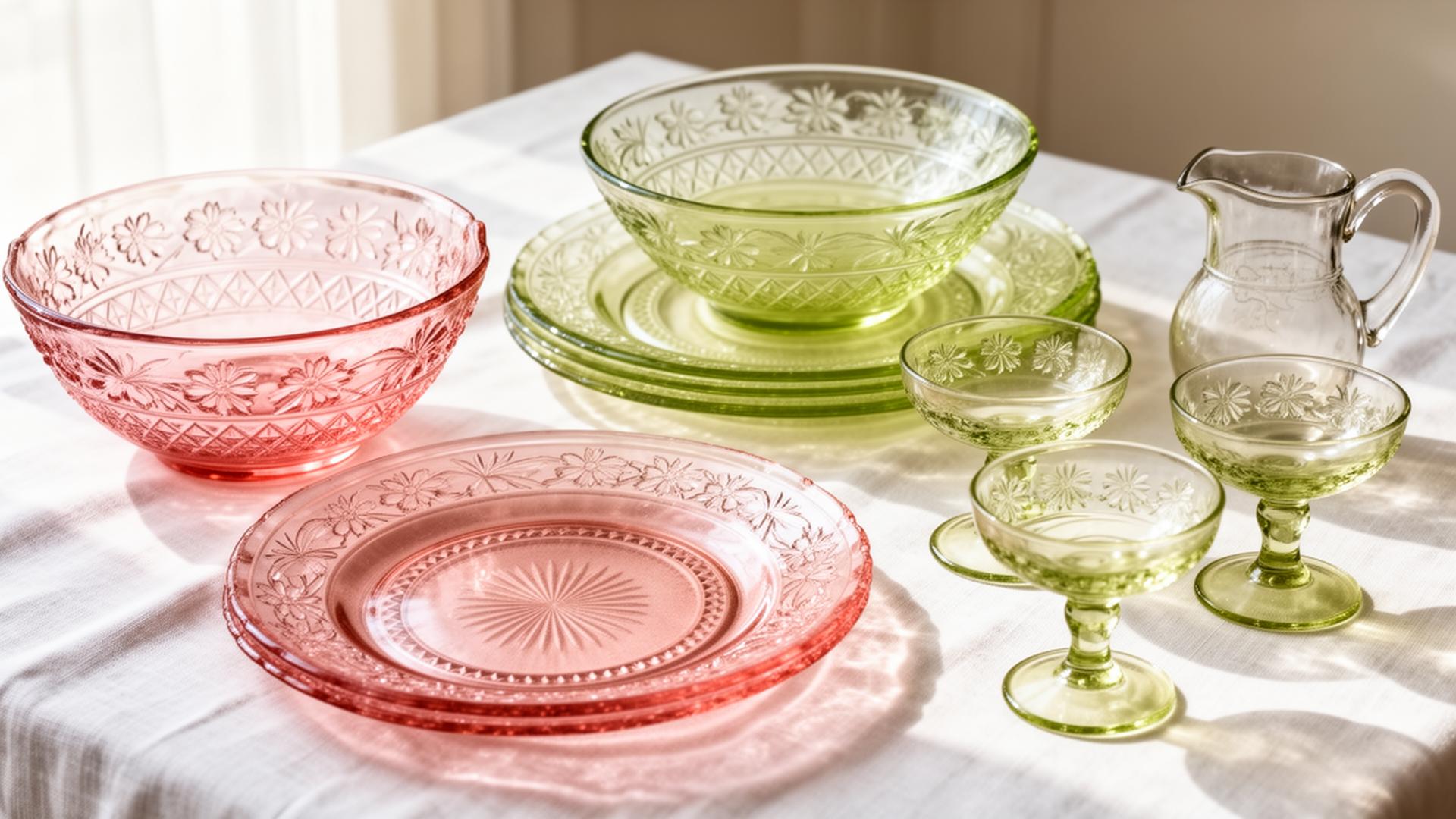
Depression glass is the colored pressed glass made in the United States from roughly 1929 through the 1940s. Most people know it as "old colored glass." Collectors know it by pattern and color — and the difference in value between them is enormous.
Colors worth the most: True red, cobalt blue, and pink. Clear and amber are the most common and the least valuable.
Patterns worth knowing: Royal Lace, Cherry Blossom, Cameo (also called Ballerina), American Sweetheart, and Mayfair/Open Rose.
What it sells for: Common pieces in clear run $5–$15. A pink Royal Lace cookie jar runs $100–$300. Cobalt blue pieces in high-demand patterns start at $30 and reach several hundred for complete sets.
How to spot it in 10 seconds: Hold it up to the light. Depression glass has a particular clarity and thinness that's different from later pressed glass.
7. Cabbage Ware
This is the surge item of the last three years and it shows no sign of slowing. Cabbage ware — pottery and ceramic pieces shaped like cabbages, leaves, or featuring the cabbage leaf pattern — has gone from overlooked to genuinely sought-after as the maximalist décor trend has taken hold on social media.
What to look for: Plates, bowls, tureens, and butter dishes in the green cabbage pattern. Also pink and yellow cabbage ware exists but is rarer. Portuguese pieces from Vista Alegre and similar makers are especially desirable.
What it sells for: Individual cabbage plates run $15–$40. Sets sell fast. Tureens start at $60 and go up.
How to spot it in 10 seconds: Green leafy plate = look closer. Check the bottom for a mark.
8. Vinyl Records (But the Right Ones)
Every reseller's instinct is to grab every vinyl record they see. The reality is that 95% of the records at any given estate sale are worth under $5. What matters is the specific record, pressing, and condition.
Categories doing well in 2026: Classic rock (Led Zeppelin, Pink Floyd, The Beatles — original pressings only), jazz (Blue Note and Prestige labels, original or early pressings), soul and funk (original 45s in particular), and hip-hop (original late 80s-90s pressings are rising fast).
The shortcut: Look for Blue Note, Prestige, Impulse!, or Atlantic label jazz. Original UK pressings of any major rock album. Check the matrix number scratched into the vinyl near the label — original pressings have short matrix numbers.
What it sells for: A common Tom Petty LP from the 80s: $5–$10. A Blue Note original pressing of a sought-after jazz title: $40–$400.
How to spot it in 10 seconds: Pull the record out. Check the label name and the matrix number in the dead wax.
9. 1980s-90s Toys in Original Packaging
Nostalgia collecting is the engine driving this category and it is not slowing down. The generation that grew up with these toys is now 35–45 with disposable income and a very specific sense of what a "perfect" childhood Saturday morning felt like.
Categories worth grabbing: Star Wars (anything pre-1985, with original accessories), G.I. Joe (vintage series, not modern), Transformers (Generation 1), original Pokémon cards (especially first-edition holographics in graded condition), He-Man, and My Little Pony Generation 1.
The golden rule: Original packaging multiplies value 5–10x. A loose vintage Star Wars figure in good condition might be $10. Carded in original packaging: $40–$500 depending on character.
What it sells for: Extremely variable. Always photograph the item and check sold eBay listings before paying more than a few dollars for anything.
10. Hand-Knotted Rugs
The vintage rug trend has been building for five years and the market has not softened. Buyers want the worn, imperfect, genuinely-used look of a real Turkish or Persian rug in a way that machine-made reproductions simply cannot replicate.
How to tell hand-knotted from machine-made: Flip the corner back. Hand-knotted rugs show the knot pattern through to the back — you can see the individual knots. Machine-made rugs have a smooth latex or canvas backing.
What to look for: Natural fiber backing, tight dense knots, rich colors (particularly jewel tones), and some visible wear (considered character, not damage).
What it sells for: A small (2x3) vintage hand-knotted rug in good condition: $40–$150. A room-sized (8x10) Persian in nice condition: $300–$1,500+.
11. KitchenAid Stand Mixers, All-Clad, and Le Creuset
This surprises people who think of estate sales as only collectibles and antiques. Quality American kitchen equipment — the real, heavy, made-to-last kind — has a robust resale market because people would rather buy real All-Clad at $15 at an estate sale than cheap imitation at $60 new.
What to grab: KitchenAid stand mixers (any era — they're repairable and last forever), All-Clad stainless cookware, Le Creuset Dutch ovens and braisers in any color, and Vitamix blenders.
What it sells for: Le Creuset Dutch ovens run $60–$150 used depending on size. All-Clad skillets start at $25. KitchenAid stand mixers go for $40–$120 depending on model and condition.
12. Roseville, McCoy, and Hull Art Pottery
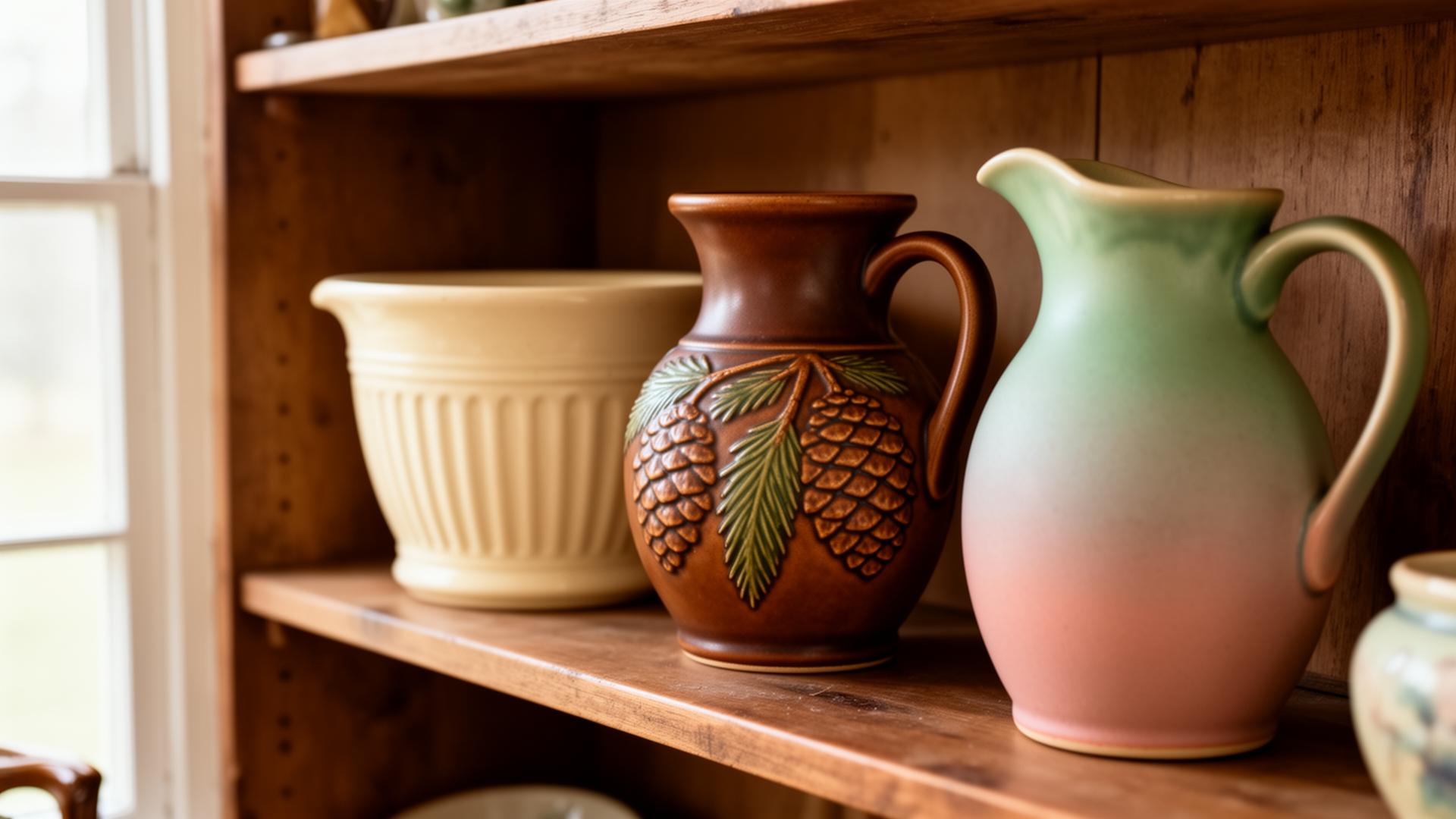
American art pottery from the early-to-mid 20th century is a mainstay of the estate sale collectibles market and shows no sign of fading. The key is learning to recognize the makers — which is easier than it sounds once you've seen a few pieces.
Roseville: Look for raised naturalistic patterns — Pinecone (brown or blue), Magnolia, Bushberry, Foxglove. Usually marked "Roseville USA" with a shape number.
McCoy: "McCoy USA" impressed in the base. Common pieces are $15–$40. Rare lines like Brocade or Butterfly run higher.
Hull: Matte glaze, often in two-tone pastels. Look for the "Hull USA" mark. Open Rose and Woodland are the most sought-after lines.
What it sells for: Common Roseville pieces run $30–$150. Rare shapes or colors — Pinecone in blue, early Rozane — run several hundred.
13. Vintage Silver (Even Tarnished)
Black, tarnished, ignored silver is one of the most reliably profitable finds at any estate sale. The tarnish is surface-level. The silver is still there.
What to check: Flatware marked "Sterling" or "925" is genuine silver, not silverplate. Hollowware (pitchers, trays, candlesticks, tea sets) marked "Sterling" or with lion passant marks (British silver) is the same. Silverplate marked "EPNS," "Silver On Copper," or "Quadruple Plate" is not sterling and worth only the charm of the piece.
What it sells for: Sterling flatware sells by weight to dealers at minimum (roughly $15–$20 per troy ounce of silver content). Rare makers and patterns sell for significantly more on the open market. A sterling candlestick pair in decent condition: $40–$200.
How to spot it in 10 seconds: Look for "Sterling" or "925" stamped on the piece itself, not just the box.
14. Mid-Century Modern Furniture With Clean Lines
The MCM furniture market has matured but remains strong. What's changed is that buyers have gotten more educated — they know the difference between genuine period pieces and 1990s reproductions — and prices at estate sales have adjusted accordingly.
What makes a piece worth money: Maker's labels (Knoll, Herman Miller, Heywood-Wakefield, Drexel Heritage), teak or walnut wood (real, not veneer — check the underside of a drawer), and the specific design language of the period: tapered legs, clean horizontal lines, minimal ornamentation.
What it sells for: A genuine Heywood-Wakefield dresser: $200–$600. An unmarked teak credenza in good condition: $150–$400. A Herman Miller Eames chair shell: $100–$300 depending on the color.
15. Primitive Cutting Boards and Bread Boards
This one surprises people every time. Vintage wooden cutting boards and bread boards — the thick, worn, patinated kind that look like they came from a farmhouse in 1908 — have gone from overlooked estate sale items to one of the most searched items in vintage home décor.
The round bread boards with carved edges and the large thick rectangular cutting boards with handles are the ones that sell fastest. If you find a matching serrated bread knife with a wooden handle alongside one, you've hit the jackpot.
What it sells for: Individual pieces run $15–$60. Sets or particularly large or well-patinated boards go higher. The market on these is still discovering itself — buy them when you see them.
The Tool That Changes Everything
The most valuable thing a buyer can have at an estate sale in 2026 isn't experience — it's a fast way to check real sold prices before they pay. The EstateSaleFinder AI Appraiser identifies items from a photo and pulls actual eBay sold data — not what sellers are asking, but what buyers actually paid in the last 60 days. Snap a photo of anything on this list and you'll know in under a minute whether the asking price is the deal it looks like.
Free to use. No account required for basic identification.
Check any item at your next sale → · Find sales near you this weekend →