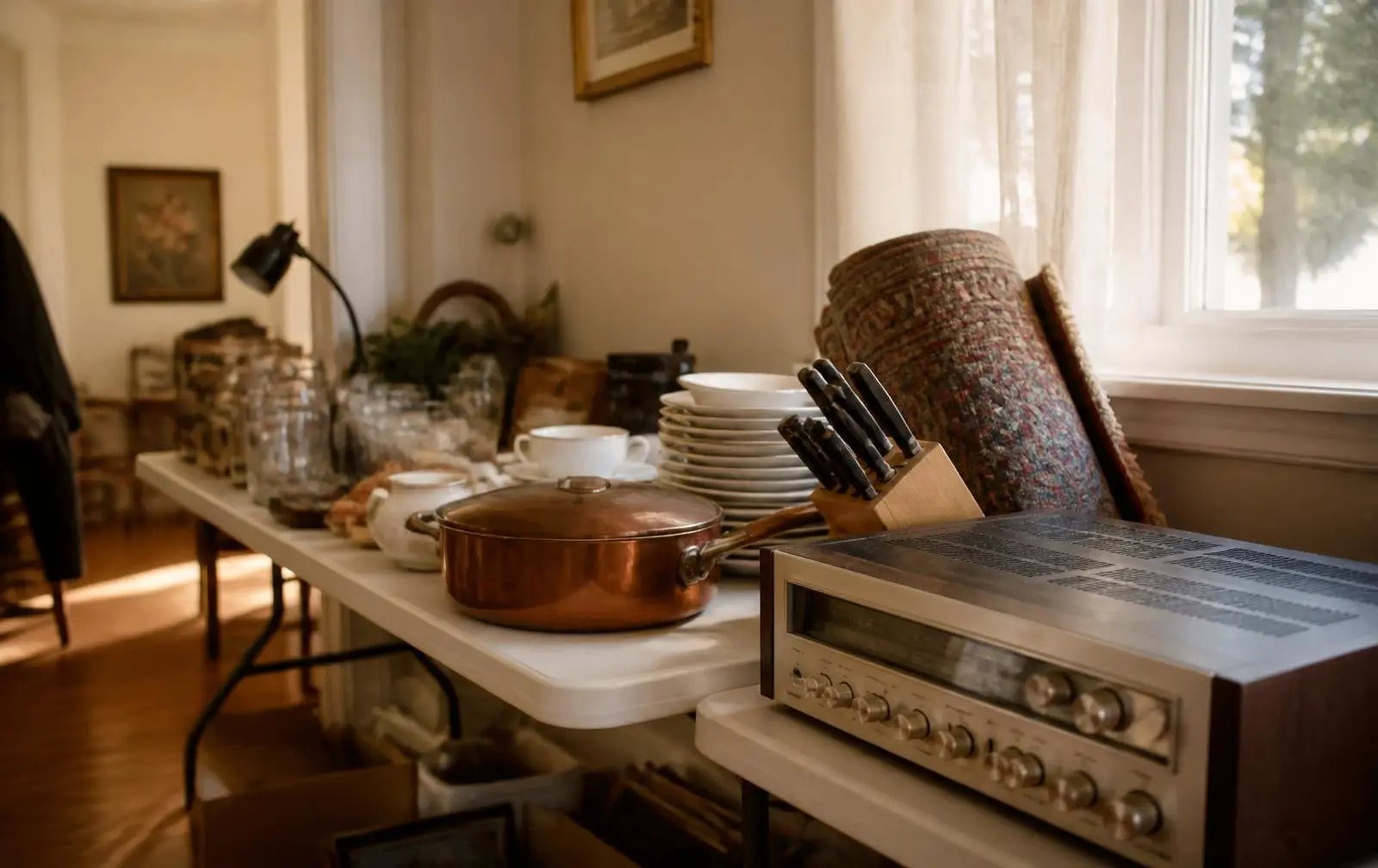
Vintage Pyrex Dating Guide: How to Tell What You Have (and What It's Worth)
A friendly, photo-by-photo guide to dating vintage Pyrex — the 10-second all-caps logo test, how the backstamp changed by decade, Cinderella shapes, standard patterns vs. rare promotionals, and the 'holy grail' pieces collectors chase. Perfect for estate sale hunters and anyone clearing out grandma's kitchen.
Pick up the bowl. Turn it over. Look at the bottom.
If you see a stamped logo, a number, and maybe a little oval that says "OVENWARE" — congratulations, you're holding a tiny dated time capsule. That bottom stamp tells you roughly when the piece was made, and the pattern on the outside tells you how excited a collector should be to find it.
This is the friendly, no-jargon version of the guide. Real photos throughout, a 10-second test you can do at any estate sale, and honest notes on which pieces are genuinely worth money — and which are just lovely, common, and perfect for actually using.
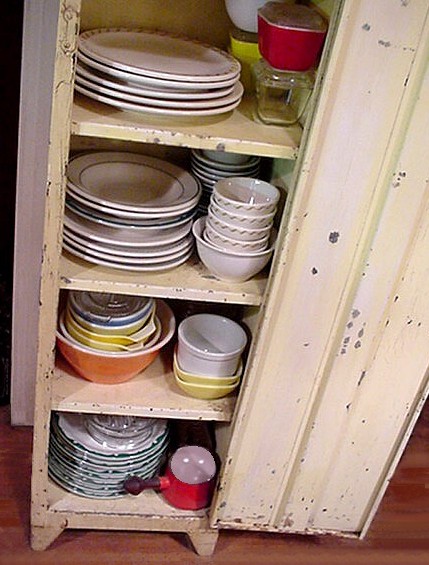
Photo: Cheryl from River City (Richmond), VA, CC BY-SA 2.0, via Wikimedia Commons.
The 10-Second Test: All Caps vs. Lowercase
Here's the single fastest way to date a piece of Pyrex, and you can do it before you even flip on a pattern app.
Look at how the word "Pyrex" is written.
- PYREX in all capital letters → made roughly before the mid-1970s. This is the vintage era collectors care about.
- pyrex in lowercase → made mid-1970s and later, and almost always the clear, modern kitchen glass.
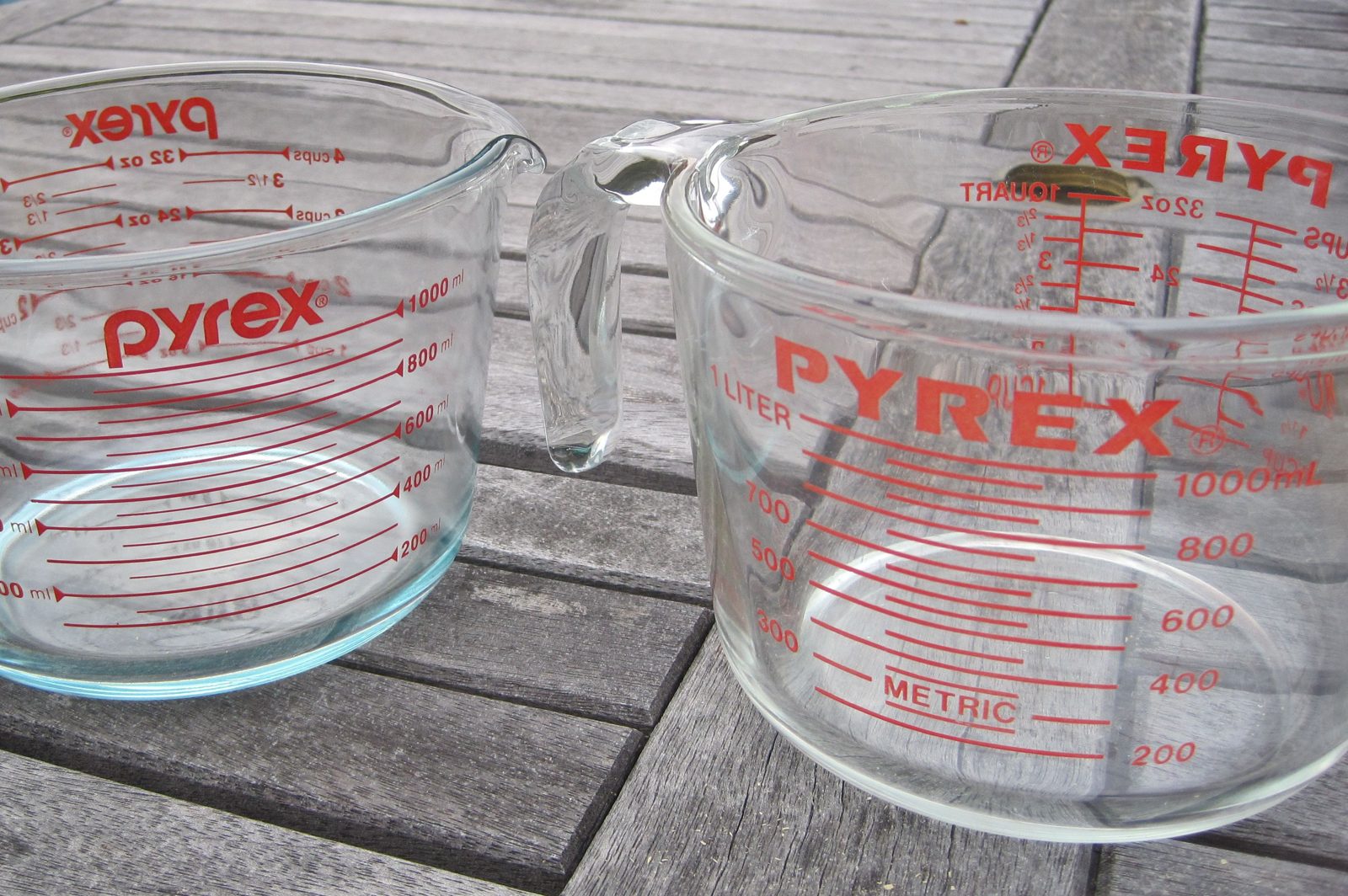
Photo: Picofluidicist, CC0, via Wikimedia Commons.
That's it. One glance at the logo and you've already narrowed it to "vintage" or "modern." Everything below helps you get more precise — and helps you spot the rare stuff.
Quick note on the name: in the US, the older opal (milk-glass) pieces are "PYREX." After Corning sold the consumer line, the modern clear glass became "pyrex." When collectors say "vintage Pyrex," they almost always mean the all-caps, opaque, patterned pieces.
Reading the Backstamp by Decade
The mark on the bottom — the "backstamp" — evolved over time. You don't need to memorize every variation, but a few signposts will get you within a decade:
- 1940s–1950s: Simpler marks, often "PYREX" with "Made in U.S.A.," sometimes inside a circle. Pattern pieces from this era can have minimal stamping.
- 1950s–1960s: The classic era. Backstamps add the model number (like 471, 472, 473 for the round Cinderella casseroles) and often the capacity. An oval "OVENWARE" or "T.M. REG." mark is common.
- 1960s–early 1970s: Model numbers are standard, and you'll see "Trade Mark Reg." plus the piece's size in quarts.
- Mid-1970s onward: The logo shifts to lowercase pyrex, and the playful opal patterns wind down in favor of clear glass.
The model number is your friend. Once you can read it, you can look up the exact shape and the pattern's production years.
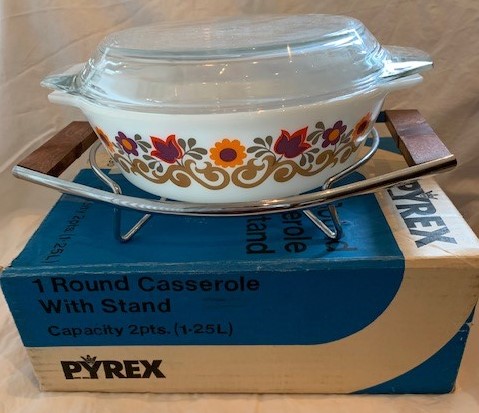
Photo: Melissa Highton, CC BY-SA 4.0.jpg), via Wikimedia Commons.
A bonus: finding a piece with its original box (like the one above) is a real value bump. Boxed promotional sets were sold for a single season, often around the holidays, which is exactly why surviving boxed examples are scarcer.
Cinderella Shapes — The Tab Handles and Spout
One shape comes up constantly, and knowing its name makes you sound like a pro: the Cinderella bowl.
Cinderella pieces have two tab handles, and on bowls, one side is pinched into a pouring spout while the opposite tab is wider for gripping. Introduced in 1957, they're some of the most beloved (and most produced) Pyrex shapes. The round Cinderella casseroles carry model numbers in the 470s (441–445 for the classic nesting mixing-bowl set, 471–475 for the round casseroles).
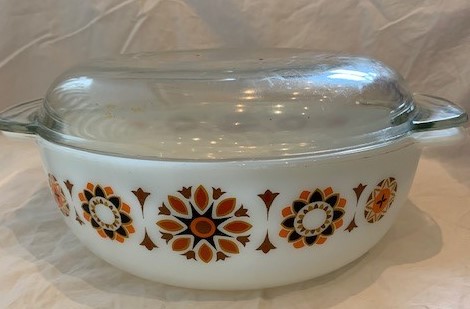
Photo: Melissa Highton, CC BY-SA 4.0.jpg), via Wikimedia Commons.
Why it matters: lots of patterns were issued on Cinderella shapes, so once you recognize the form, you only need to identify the pattern and color to nail down the piece.
Standard Patterns vs. Rare Promotionals
This is where money enters the picture. Pyrex patterns fall into two broad camps:
- Standard / dinnerware patterns — produced for years and sold everywhere. Think Butterprint (the Amish farm couple), Snowflake, Daisy, Gooseberry, Spring Blossom (the "Crazy Daisy" green). Lovely, collectible, and usually affordable because so many were made.
- Promotional pieces — sold for a single season, often as gift sets, frequently in unusual shapes or colorways. Made in far smaller numbers, so these are where the higher values live.
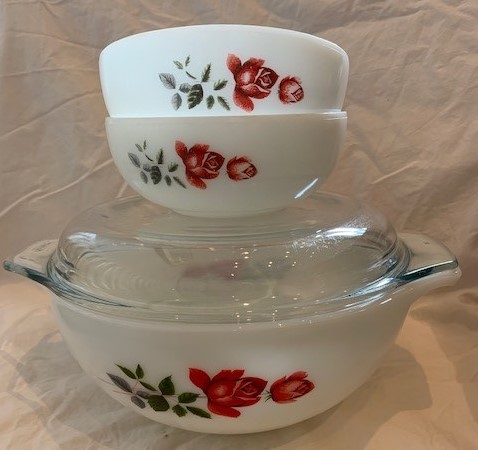
Photo: Melissa Highton, CC BY-SA 4.0.jpg), via Wikimedia Commons.
A rule of thumb: if a pattern shows up in every thrift store you've ever walked into, it's a standard. If you've genuinely never seen it before and it's in an odd shape, slow down and look it up — you might be holding a promotional.
Don't overlook the solid-color and "Fireside" pieces either. Smoked amber mugs, opaque colorways, and the Friendship/Forest Fancies lines all have followings.
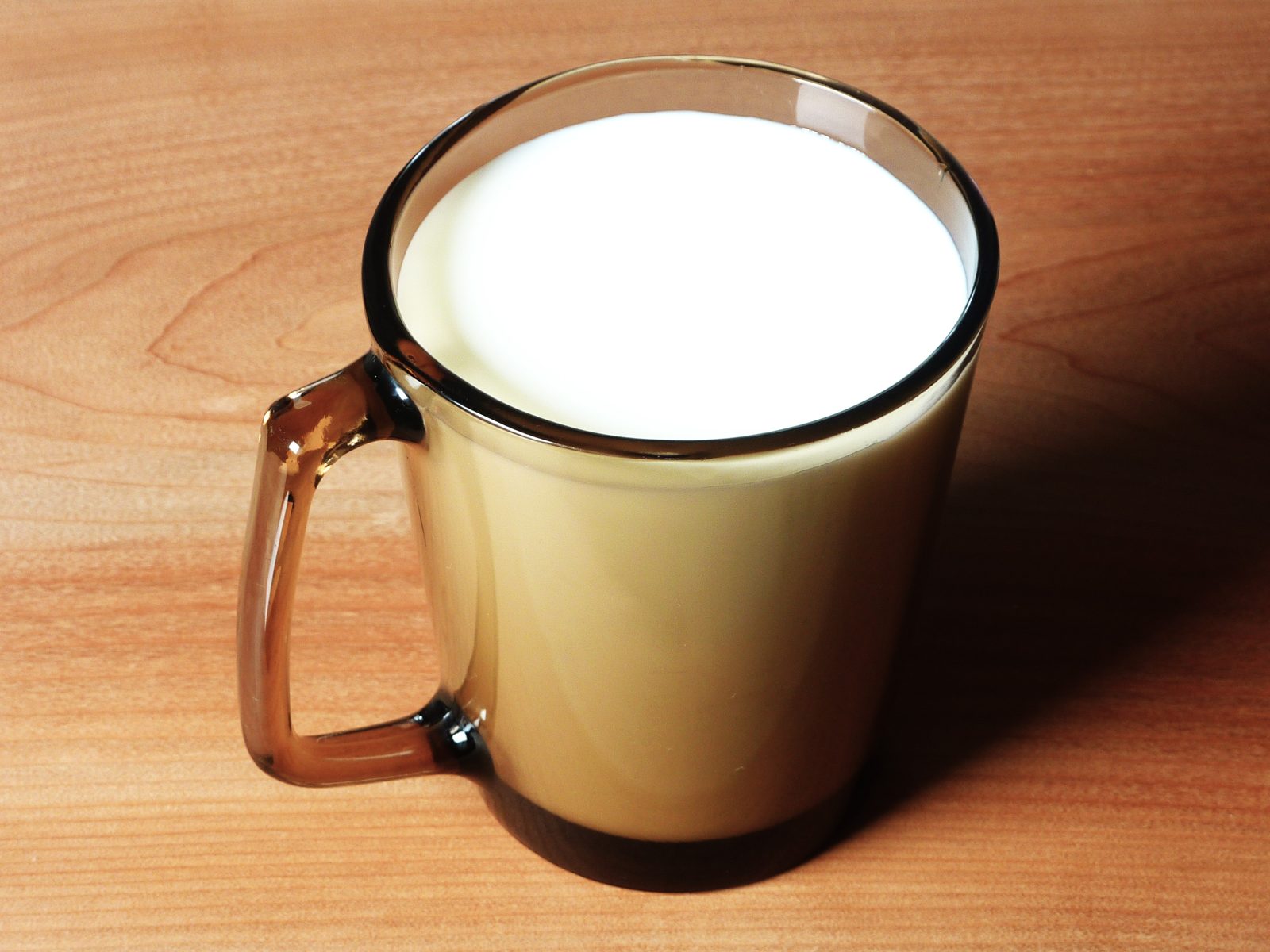
Photo: Quercus acuta, CC BY-SA 4.0, via Wikimedia Commons.
The Holy Grails Collectors Chase
A handful of rare promotionals have become legends. If you ever spot one of these in the wild, take a breath:
- Lucky in Love — pink hearts and green four-leaf clovers on white, on a round casserole. One of the most coveted Pyrex pieces ever made; confirmed examples have sold for thousands.
- Pink Stems / "Atomic Eyes" — turquoise atomic-eye motif promotionals.
- Balloons, "Golden Honeysuckle," and other one-season promotionals that most collectors only ever see in photos.
You won't find these every weekend — that's the whole point. But estate sales are exactly where the unrecognized ones still surface, because a family clearing out a kitchen rarely knows that one casserole is the grail.
Condition: The Dishwasher Is the Enemy
Pattern rarity sets the ceiling on value, but condition sets the actual price. The number-one killer of vintage Pyrex value is the dishwasher.
- Glossy, vivid color = hand-washed its whole life. Best value.
- Hazy, faded, chalky, or scratched = decades of dishwasher detergent. Still usable, but worth a fraction of a glossy example.
Other things that cut value: chips on the rim, heavy utensil scratches inside, and missing lids (a casserole with its original matching lid is worth noticeably more than the base alone). When you're buying to keep, hand-wash only — warm water, soft cloth, no abrasives.
A Quick Field Checklist
When you flip a piece at a sale, run through this in order:
- All caps or lowercase? (vintage vs. modern)
- What's the model number? (tells you the exact shape)
- Standard pattern or something you've never seen? (common vs. promotional)
- Does it have its lid / box? (value bump)
- Glossy or hazy? (condition = price)
Five questions, about twenty seconds, and you'll know whether to keep walking or quietly carry it to the checkout table.
Spotted Some Pyrex at an Estate Sale?
If you're standing in someone's kitchen holding a mystery bowl, you don't have to guess. Snap a photo of the pattern and the backstamp and let our Ai Appraiser identify the piece and give you a value range on the spot — it reads the marks and compares against real sold listings.
Hunting for specific patterns? Set up a keyword search and wishlist for "Pyrex," "Cinderella," or a pattern name, and we'll alert you the moment a matching piece gets listed near you — so the grail doesn't slip past while you're at work. Ready to go hunting? Find estate sales near you this weekend.
Happy hunting — and hand-wash that bowl.
Keep exploring
Ready to start your own treasure hunt?
Discover estate sales near you and find incredible deals.
Explore Sales Near Me
About the author
Andy
Founder, EstateSaleFinder.net
Hi, I'm Andy — a retired commercial photographer turned developer with a five-year (and counting) obsession with estate sales. I started EstateSaleFinder.net because I knew there had to be an easier, smarter way to find and list estate sales. Now I get to chase treasure and build the tool I always wished existed.