What Can't Be Sold at an Estate Sale? (Guns, Medications, Food, and 12 Other Surprises)
You'd think everything in the house is fair game. It's not. Prescription medications, certain foods, firearms without paperwork, and a few other surprises have rules. Here's what every family needs to know before they sign anything.
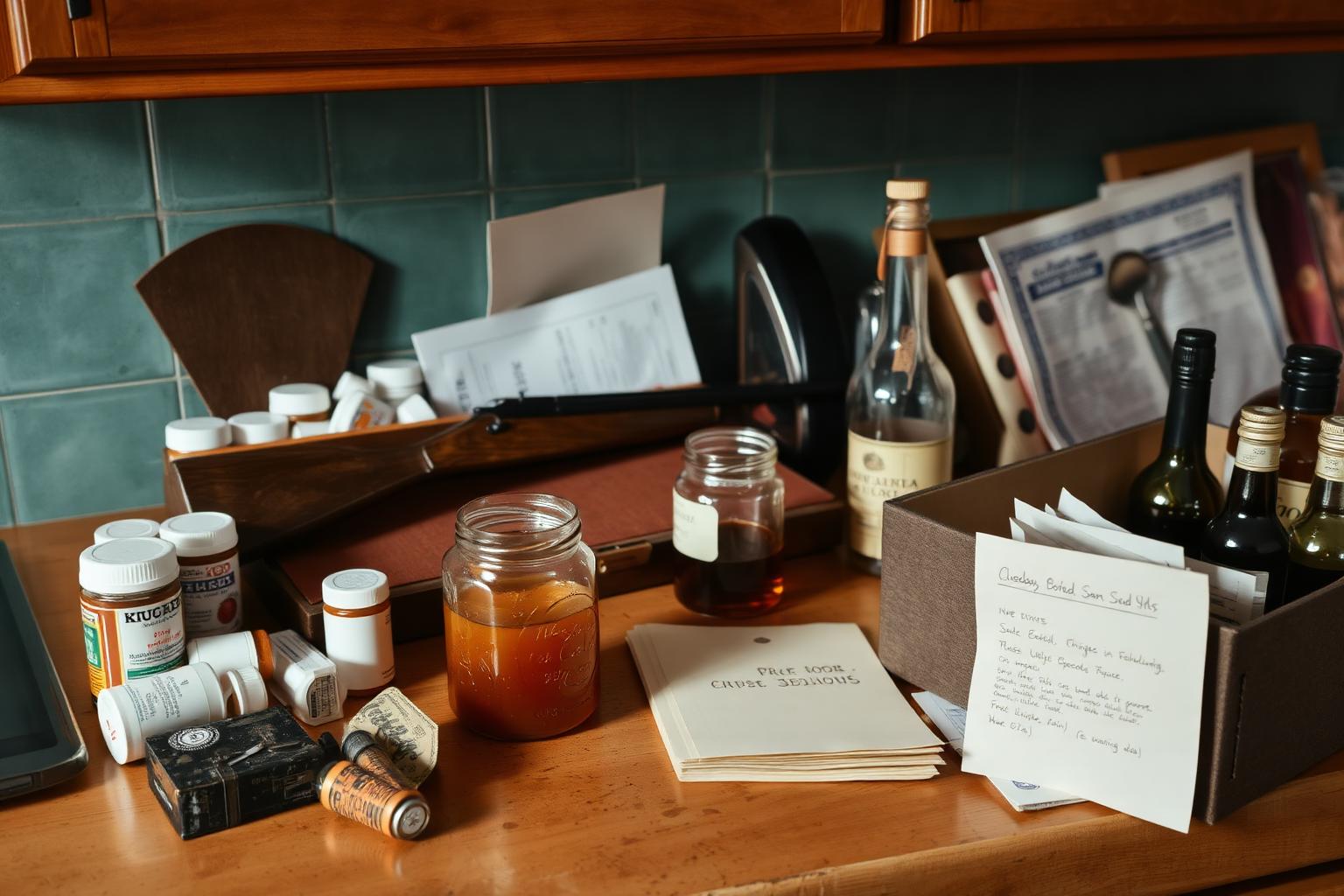
A family in Ohio called the estate sale company on Tuesday morning, three days before setup. The dad had been a tinkerer — half the garage was workshop, the other half was decades of unlabeled chemicals, half-empty paint cans, and a corner stacked with what looked like fireworks from the 1980s. The company's lead walked in, took one look, and said the entire back third of the garage was off-limits. Nobody had thought to ask.
You'd think everything in a house is fair game for an estate sale. It isn't. Some categories have legal rules. Some have insurance rules. Some are just a hard no from every reputable company in the country. Here's the full list — so the conversation with your company starts on Tuesday, not on the day of setup.
The Big Three (Handle These Separately Before the Company Arrives)
Prescription Medications
Cannot be sold. Period. Federal law. Even sealed, unopened, and clearly valuable.
What to do with them: most pharmacies, most police stations, and most county health departments run drug take-back programs. Walgreens and CVS have in-store kiosks. Don't put them in the trash, don't flush them, and don't leave them in the medicine cabinet for sale day.
This includes over-the-counter medications that are open or expired.
Firearms
This one is *complicated* and varies dramatically by state.
Many estate sale companies are not licensed to sell firearms at all. Some have an FFL (Federal Firearms License) and can. Some bring in a partner FFL dealer for the sale weekend. Some require all firearms to be removed and consigned to a separate dealer.
Antique firearms (generally pre-1899, definitions vary) often have different rules than modern ones. A revolver from 1880 and a revolver from 1980 are governed by different paperwork.
Ask your company explicitly before you sign: "Do you handle firearms? If yes, how? If no, what should I do with the ones in the house?" If you're unsure what's in the house, take an inventory now and store everything in a locked, secured location off-site until a licensed dealer can advise.

Hazardous Materials
Most estate sale companies cannot sell — and cannot legally dispose of — old paint (especially anything pre-1978 with lead), garage chemicals, gasoline, propane tanks, pesticides, fertilizers, motor oil, antifreeze, mercury thermometers, or asbestos-containing materials.
Your county runs a household hazardous waste program. Find it now (search "[your county] household hazardous waste"). Most are free or low cost. A typical garage cleanout fits into one trip in a pickup truck.
The Surprising Stuff (Most Families Don't Know About These)
A clean checklist of categories that catch families off guard:
- Homemade food and home-canned goods. Health code violation in nearly every state, even if the jam is sealed and beautiful and grandma's. Cannot be sold.
- Opened alcohol. Liquor sales in most states require a license. A bar of half-finished bottles often cannot be sold and must be removed.
- Recalled products. Anything on an active CPSC recall list cannot legally be sold. Cribs from before 2011, certain power tools, specific kitchen appliances. A two-minute search at saferproducts.gov will tell you.
- Counterfeit goods. Fake Rolex, fake Louis Vuitton, knockoff designer bags. The company will pull them from the sale.
- Live animals. Yes, families ask. No, you cannot sell pets at an estate sale.
- Live plants. Most companies refuse — there's no liability coverage for a plant that dies the day after a buyer takes it home.
- Perishable food. Refrigerator and pantry contents get cleared before the sale. Plan a kitchen cleanout the week before.
- Real estate itself. The house is not an estate sale item. Obvious, but worth saying.
- Items with active liens. A snowmobile that's still being financed, a tractor with a lien on the title — these can't be sold without resolving the lien first.
- Most car seats and child safety equipment. Liability concerns. Most companies refuse them entirely.
- Tires older than ~10 years. Liability again. Often refused.
- Used mattresses. Many states restrict resale. Many companies won't touch them.

What Happens to the Items That Can't Be Sold?
Three options.
- Take them yourself. The medications go to the pharmacy. The hazmat goes to the county program. The firearms go to a licensed dealer.
- Donate (where eligible). Sealed non-perishable food can sometimes go to food banks. Cleaning supplies go to women's shelters. Building materials go to ReStore.
- Pay the company to coordinate disposal. Many estate sale companies offer this as an add-on for a flat fee (typically $200–$800 depending on volume). Get the price in writing.
What you should *not* do: assume the company "handles everything." Ask exactly what they handle and what they don't.
The Conversation to Have Before You Sign
A short script. Five questions. Ask all of them before signing any contract:
- Do you handle firearms? If yes, how. If no, what should I do.
- Do you dispose of hazardous materials, or is that on me?
- What happens to unsold items at the end of the sale — do you arrange haul-away, and is that included or extra?
- Who is responsible for items that violate regulations (recalled products, expired meds, etc.) if they're discovered during setup?
- Do you carry liability insurance covering accidents during the sale?
Get answers in writing. If the company hesitates on any of these, get a second quote.
When you're ready to compare vetted companies, find estate sale companies near you or read the hiring guide.