
What to Expect at Your First Estate Sale
Walking into a stranger's home and shopping their belongings can feel a little strange the first time — we get it. So here's the warm, honest, no-jargon guide to your very first estate sale: how they work, what really happens at the door, how to behave, and how to walk out with something you love (and a story to go with it).
If the idea of wandering through a stranger's house, picking up their teacups and flipping over their lamps, makes you feel a little awkward — you are completely normal. Almost everyone feels that way at their first estate sale. And almost everyone, after that first one, is hooked for life.
Here's the thing nobody tells you up front: an estate sale isn't a sad place. It's one of the most human, warm, surprisingly joyful places you can spend a Saturday morning. You're not rummaging through someone's grief. You're giving a lifetime of well-loved things a second home — and usually paying a fraction of what they're worth to do it.
So take a breath. This guide walks you through exactly what to expect, in plain language, mostly as questions, because those are the things first-timers actually wonder about (and quietly worry about) before they go.
First, the Basics
What is an estate sale, really?
An estate sale is when the entire contents of a home are sold off — furniture, dishes, art, tools, clothing, books, jewelry, the stuff in the kitchen drawers, all of it. It usually happens because someone is downsizing, moving, settling into assisted living, or because a loved one has passed and the family is clearing the home.
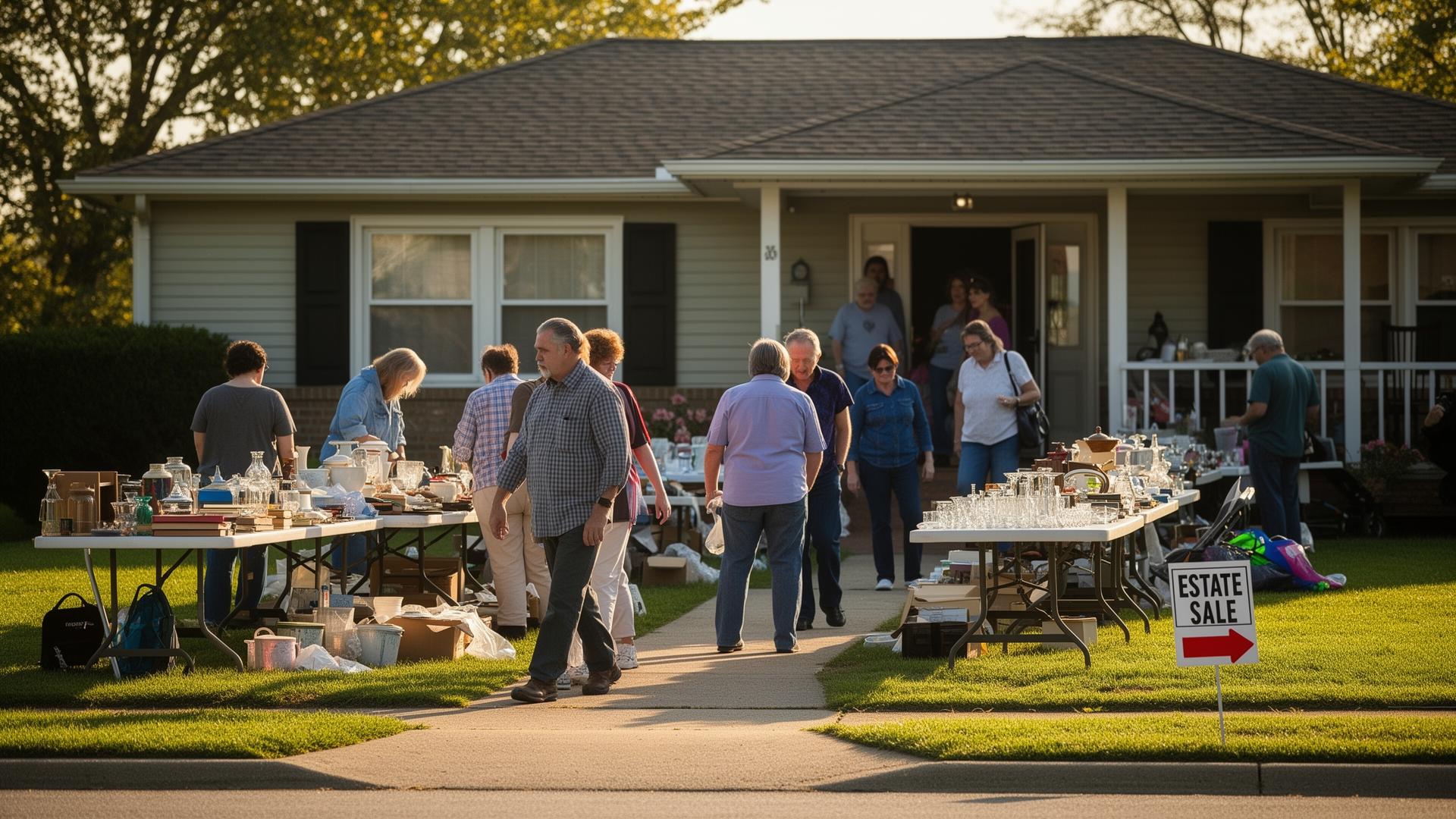
Think of it as a garage sale's far more interesting cousin. Instead of a folding table in the driveway, you're walking through the actual house, room by room, and everything inside has a price on it.
How is it different from a garage sale?
A garage sale is usually a homeowner clearing out a few things they don't want. An estate sale is the whole house, often professionally run by an estate sale company that prices, stages, and manages everything. That means more variety, better organization, real treasures mixed in with the everyday — and pricing that's usually fair because a pro set it.
The other big difference: estate sales are a genuine hunt. You never know what's behind the next door. That's the addictive part.
Before You Go
Do I need to sign up, pay, or bring anything special?
Nope. The vast majority of estate sales are free to walk into — no ticket, no entry fee, no membership. Just show up during the posted hours.
Bring the simple stuff that makes the day easier:
- Cash — small bills are king. Many sales take cards now, but cash is always welcome and sometimes gets you a friendlier price.
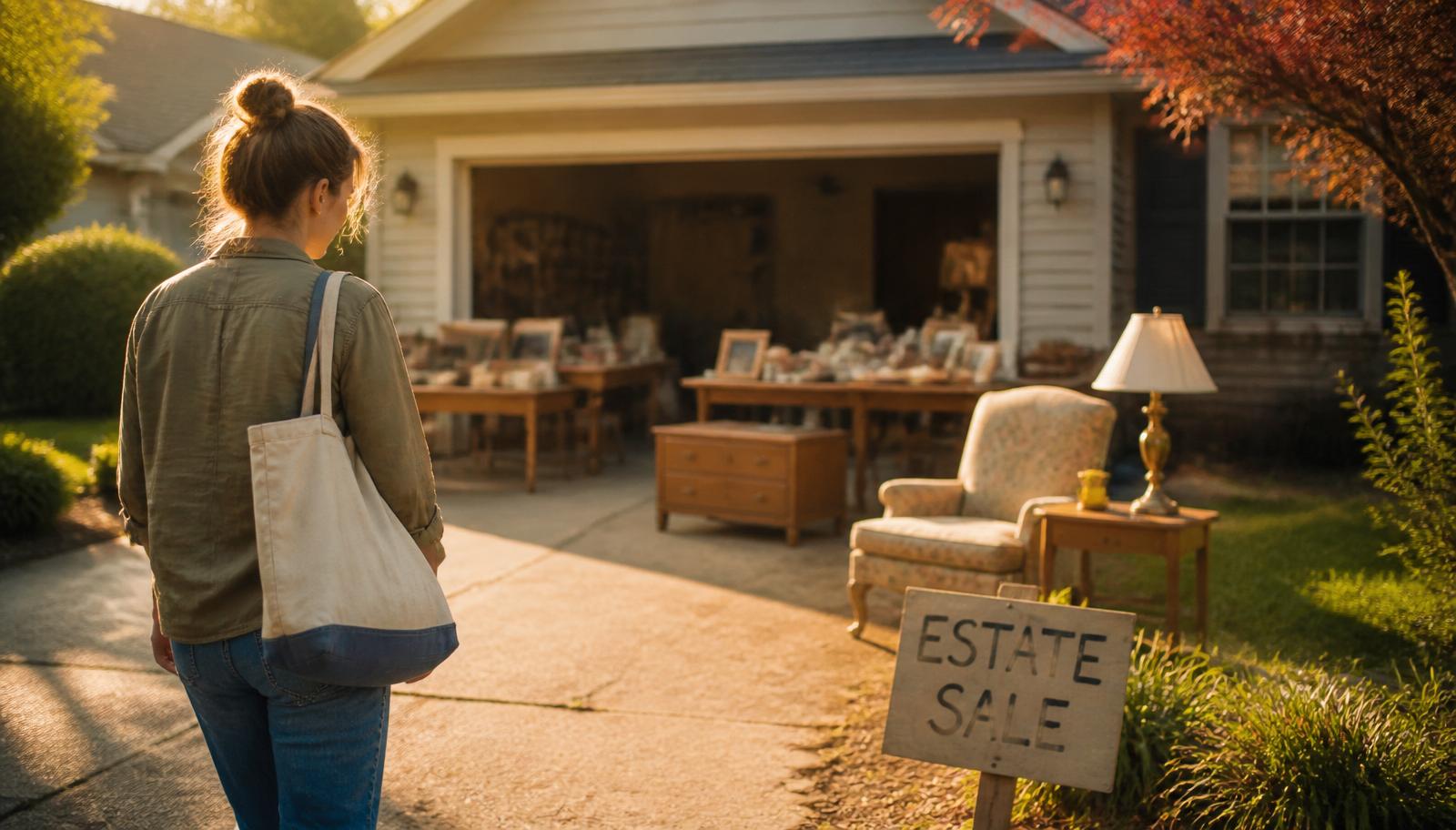
- Reusable bags or a box — you'll want something to carry your finds.
- A tape measure and your room dimensions — if you're hunting furniture, this saves heartbreak.
- Comfortable shoes — you'll be on your feet, sometimes in line.
- Your phone — for measuring, checking your list, and using our Ai Appraiser to identify what you're actually looking at.
Spot hidden value with the Ai Appraiser
Estate sale purchases are usually final, so it helps to know what you're buying before you commit. Snap a photo of a mystery item and our Ai Appraiser will tell you what it likely is, what similar pieces have sold for, and whether the sticker price is in the right ballpark. You can plug anything in to test it — no receipt, no return, no risk.
How do I even find estate sales near me?
This is where most first-timers get stuck — and honestly, where we built EstateSaleFinder to make your life easy.
Search by what you actually want
Instead of scrolling endless listings hoping to spot something good, our keyword search lets you type in exactly what you're hunting — "mid-century dresser," "Pyrex," "vintage tools," "vinyl records" — and we surface the sales that actually have it. You're not guessing from a thumbnail anymore.
Save the good ones to your Wishlist
Found a sale (or an item) you don't want to lose track of? Tap to add it to your Wishlist. It's your personal saved list, so the sale you spotted on Tuesday is still right there when the weekend rolls around.
Build your morning with Add to Route
Going to more than one sale? Use Add to Route to drop your chosen sales into a single optimized driving route. We line them up in a smart order so you're not zig-zagging across town — you just follow the map and hit them all.
What if I'm going to a bunch of sales and forget what I'm looking for?
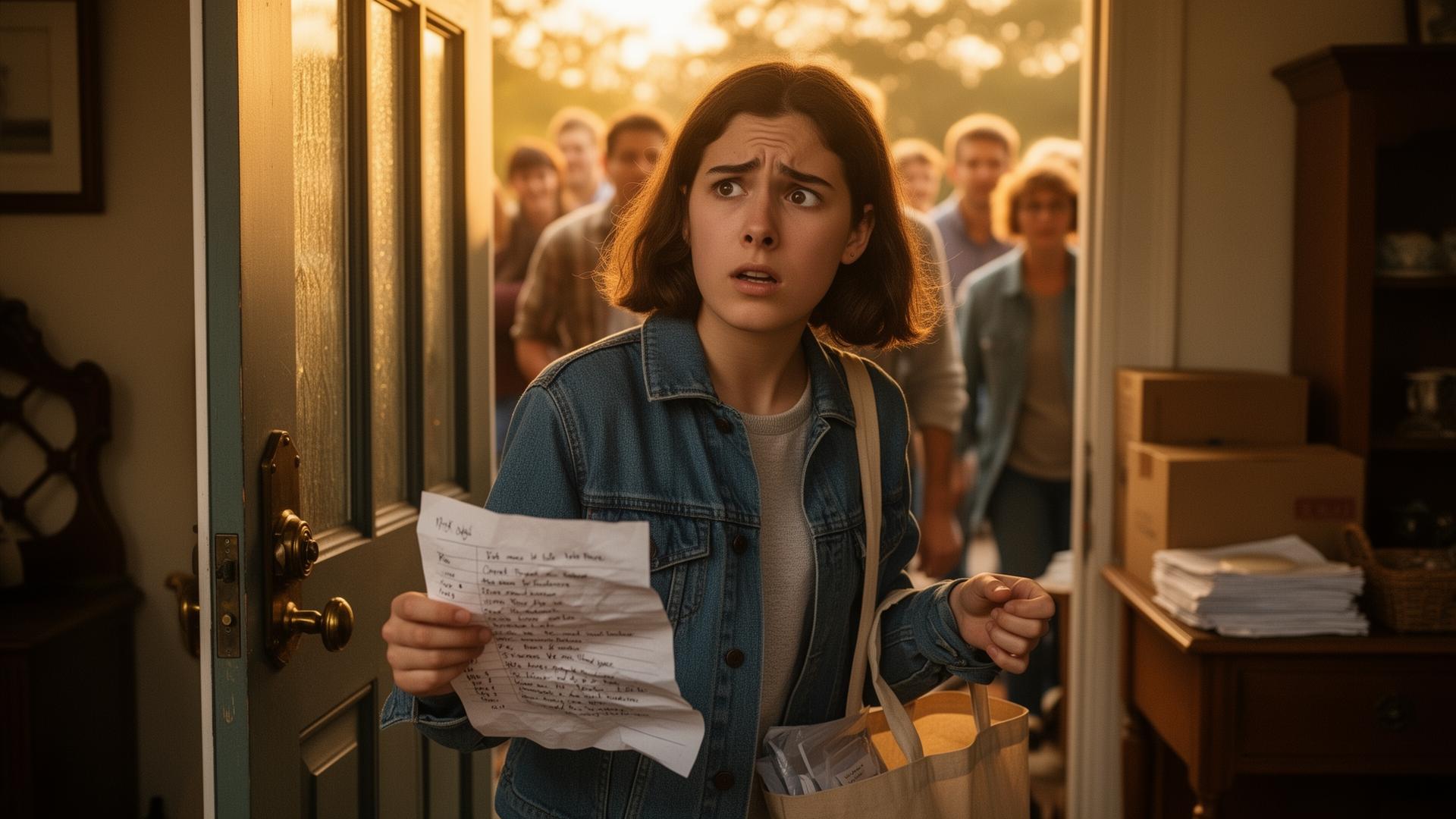
This happens to everyone. You walk into a packed house, your brain goes blank, and you completely forget you came for a brass lamp and a set of drinking glasses.
That's exactly why we built the Remind Me feature. Tell us the items you're hunting, and when you arrive at a sale on your list, we'll gently remind you what you came for — right there, in the moment. No more standing in someone's dining room thinking, wait, what was I looking for again? It's like having a little shopping memory in your pocket.
At the Door
What actually happens when I arrive?
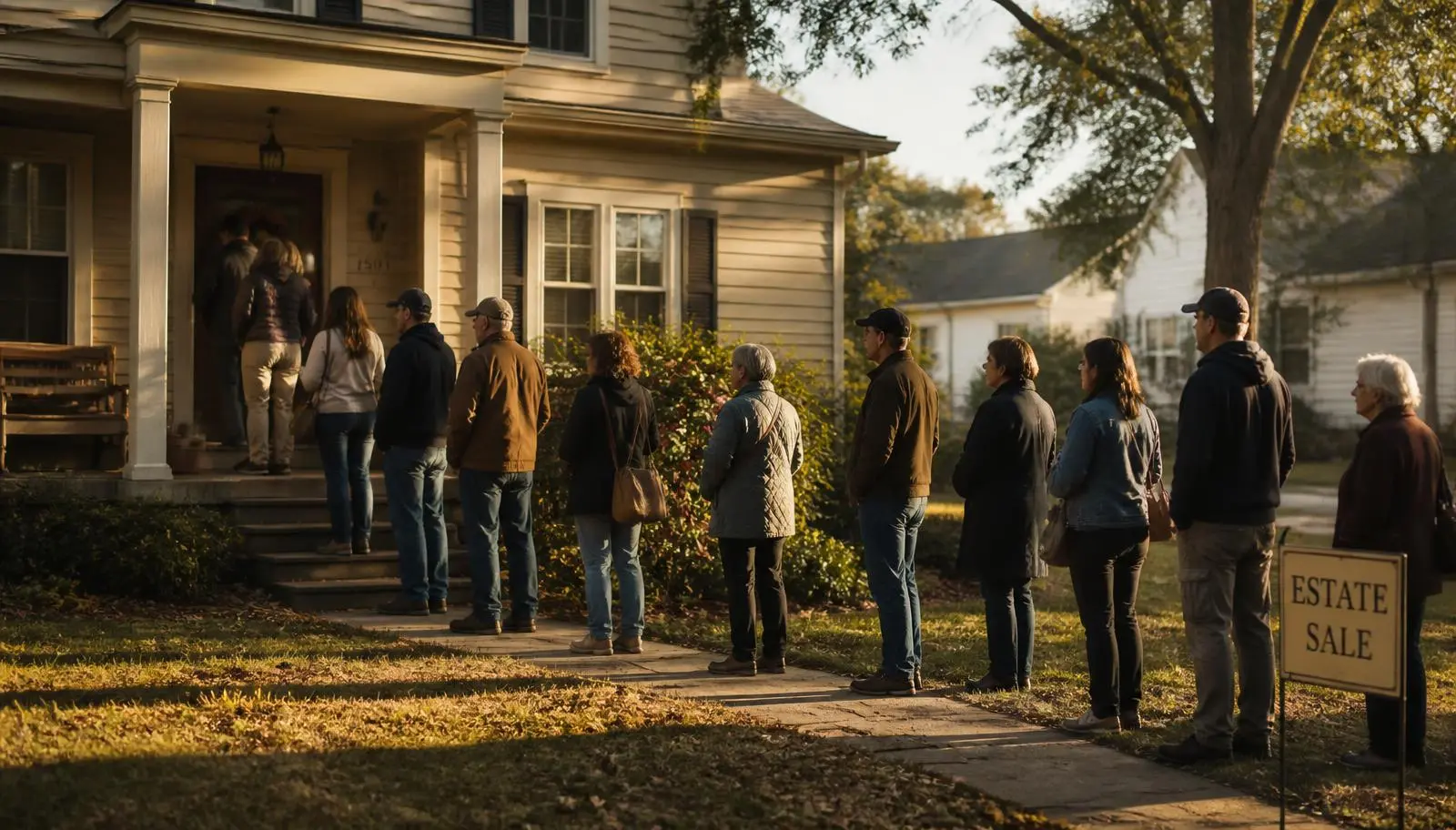
Most sales open at a set time — often early, like 8 or 9 a.m. on the first day. If it's a popular sale, there may be a line, and some companies hand out numbers to keep things fair and orderly. You wait, the doors open, and everyone files in.
It feels a bit like the start of a friendly race. The serious dealers move fast toward the jewelry and the high-value stuff. You don't have to. Take your time, soak it in, and enjoy the fact that you're getting a peek into a home full of stories.

Is it rude to show up right at opening? Or should I come later?
Both are totally fine — it just depends on your goal.
Come at opening if there's a specific, in-demand item you have your heart set on. The best stuff goes first.
Come on the last day if you love a deal and don't mind a thinner selection. Most sales drop prices dramatically on the final day — often 50% off or more — to clear the house. You'll find fewer treasures, but the ones left are gloriously cheap.
Etiquette (a.k.a. "How Not to Be That Person")
What are the unwritten rules I should know?
Estate sale regulars are a warm community, and a few small courtesies go a long way:
- Be respectful of the home and the family. Someone lived here. Treat their things — and their space — gently.
- Don't haggle aggressively on day one. Prices are usually firmer early. Polite offers are welcome, lowball insults are not.
- If you pick it up, you've "claimed" it. Carrying an item around means it's yours to decide on. Don't set down someone else's pile and grab from it.
- Respect "sold" and "hold" tags. If something's marked, it's spoken for.
- Lines and numbers are sacred. If the company hands out numbers, honor the order.
Can I negotiate the price?
Often, yes — politely. Early in the sale, expect prices to hold firm. As the sale goes on (especially the last day), companies are far more open to offers because they'd rather sell it than pack it. A friendly "Would you take $20 for this?" is perfectly normal. Just read the room and be kind about it.
Should I inspect things before I buy?
Absolutely, and nobody will think it's strange. Pick it up, turn it over, check for cracks, chips, missing pieces, and maker's marks on the bottom. Most estate sales are all sales final, so a thirty-second once-over now saves regret later.

After You Buy
How do I pay and get my stuff home?
You'll bring your items to a checkout area, usually near the entrance, and pay with cash or card. For big pieces like furniture, you're typically responsible for hauling it yourself — so bring a friend, a truck, or a plan if you're eyeing something large. Some companies offer help or can recommend movers, but don't assume it.
What if I get there and everything's already gone?
It happens, and it's okay — that's the nature of the hunt. The fix is simple: cast a wider net and plan ahead. That's the whole reason to Wishlist sales in advance, line them up with Add to Route, and let Remind Me keep your target items front of mind. The people who "always find the good stuff" aren't luckier than you — they're just a little more organized. Now you can be too.
The Part Nobody Warns You About
Will I actually enjoy this?
Here's our honest prediction: you'll walk in nervous and walk out grinning, holding something you didn't know you needed, already wondering where the next sale is.
There's a real magic to it. You find a hand-thrown bowl that someone made, used, and loved. A stack of records that scored someone's whole life. A lamp that'll look perfect in your hallway — for eight dollars. You're not just shopping. You're keeping good things in the world, and giving them a new chapter.

Okay, I'm in. How do I start?
Start small and let the tools do the heavy lifting:
- Search by keyword for the things you love, so you only see sales worth your Saturday.
- Wishlist the sales that look good so you don't lose them.
- Add to Route to build an easy, efficient morning across several sales.
- Turn on Remind Me so you never forget what you came for.
Then just go. Be curious, be kind, and have fun. Your first estate sale is the start of something — and we'll make it as easy as possible to find the next one, and the one after that.
Welcome to the hunt. We're so glad you're here.
Keep exploring
Ready to start your own treasure hunt?
Discover estate sales near you and find incredible deals.
Explore Sales Near Me
About the author
Andy
Founder, EstateSaleFinder.net
Hi, I'm Andy — a retired commercial photographer turned developer with a five-year (and counting) obsession with estate sales. I started EstateSaleFinder.net because I knew there had to be an easier, smarter way to find and list estate sales. Now I get to chase treasure and build the tool I always wished existed.