

You Were Never Stuck — You Were Just Missing the Tools: How Estate Sale Companies Can Reach New Buyers and Finally Earn More
Most estate sale companies rely on one listing site and the same regular crowd, year after year. It's not a lack of effort — it's a lack of tools. Here's how to reach buyers who've never been to an estate sale, market every sale like a pro, and grow your income beyond the ceiling you've been living under.
If you run an estate sale company, you already know the rhythm of this business by heart. You earn the family's trust, you spend a week staging a home with real care, you list the sale on the one site everyone uses, you put your signs out, and you open the doors. The same dependable faces line up at 7 a.m. — the dealers, the regulars, the early birds you've seen a hundred times. By Sunday night you've done good work for a grieving family, and you start the whole cycle again.
It works. But somewhere in the back of your mind, you've probably wondered: is this all there is? Why do the same people show up every time? Why does so much great inventory go home unsold? Why does growing the business feel like pushing a boulder uphill — chasing the next client through referrals and crossed fingers — when you're genuinely great at the actual job?
Here's the truth, and it's a hopeful one: you were never stuck. You were just missing the tools. The estate sale industry is one of the last corners of the resale world that technology mostly skipped. While everyone else got search, alerts, data, and discovery, you were handed a single listing site and a stack of yard signs. That's not complacency — that's a whole industry that never got the upgrade it deserved. This post is about the upgrade.
The one-channel trap (and why it's quietly capping your income)
Let's name the thing honestly. Nearly every estate sale company in the country funnels the bulk of their advertising through one or two listing platforms. Industry surveys back this up: those sites are the marketing plan for most operators, and beyond them, roughly 80% of new clients come from word of mouth, personal networks, and professional referrals. There's almost no outbound marketing happening — no real plan to reach people who don't already know what an estate sale is.
That single channel feels safe. You pay your subscription, maybe you pay extra to "feature" a sale, and it feels like you're doing marketing. But here's the catch that costs you real money: those platforms reach people who are already estate sale shoppers. You're not bringing in new buyers — you're reminding the same finite pool of regulars that another sale is happening. You're renting visibility on someone else's platform, to someone else's audience, and paying climbing fees for the privilege.
A crowd of regulars can only do so much. They can only be in one place at a time, they've seen it all, and they negotiate hard. So your best pieces sit. Your prices stay soft. And the ceiling on what a sale can earn — for you and for the family who trusted you — stays exactly where it's always been.
The buyers you've never reached are already out there
Now for the exciting part. While the industry has been talking to the same regulars, an entire new generation of buyers has been falling in love with secondhand — and almost nobody in estate sales is reaching them.
Consider what's actually happening in the market. The U.S. secondhand market is projected to hit $74 billion by 2029. Searches for "estate sales near me" have doubled in the last five years. Major marketplaces are reporting double-digit growth in shoppers aged 25 to 35 — young people drawn in by sustainability, by the hunt for solid wood furniture and quality that mass production can't match, by the thrill of a real find. YouTube estate-sale "haul" videos pulled in over 500 million views in a single year.
These people want what's in the homes you sell. They just don't know your sale exists — because they're not subscribed to an estate sale newsletter and they never will be. They're discovering this world through their phones, through search, through wishlists and alerts for the specific things they're hunting. The demand is enormous and growing. The only thing missing is a bridge between your sale and these brand-new buyers.
That bridge is exactly what we built.

How EstateSaleFinder is different — and why it's your solution
EstateSaleFinder isn't another listing site that drops your sale into the same old pool. It's a modern marketplace built around what buyers are actively searching for, designed to pull new, high-intent shoppers toward your sale — and to hand you the marketing playbook the industry never gave you. Here's how, feature by feature.
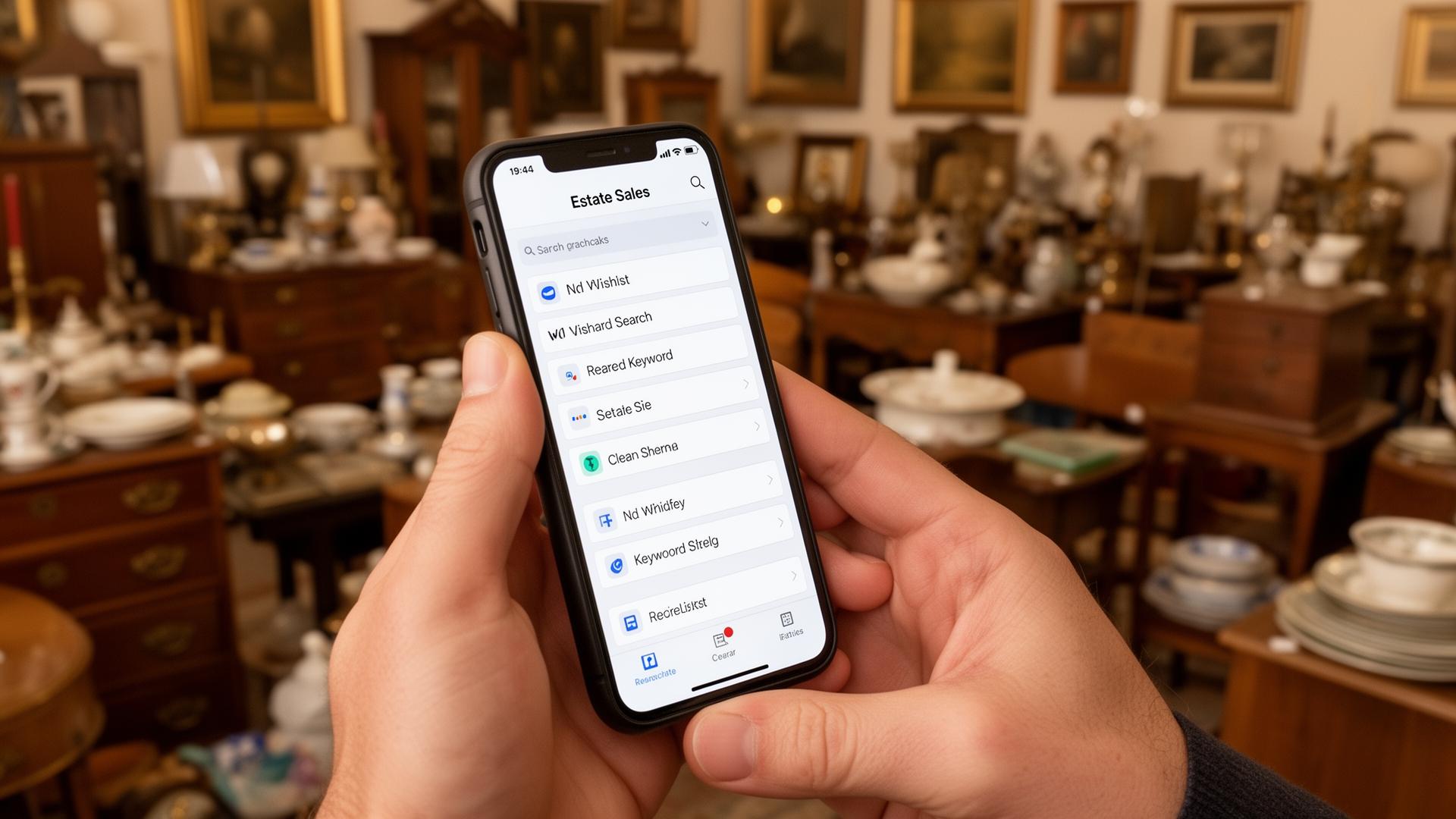
1. Keyword item search — buyers find your sale by what's in it
On most platforms, a buyer searches "estate sale near me," scrolls a list, and maybe clicks yours. On EstateSaleFinder, buyers search for the exact items they want — "mid-century lamp," "Pyrex," "sterling," "Stickley," "fishing reels," "Roseville." When you list a sale, your items become discoverable to the people specifically hunting for them.
Why this is the solution
the collector who would happily pay $900 for that lamp finally finds your sale — because of the lamp. You stop relying on whoever happens to drive past your signs and start attracting the buyers who came on purpose, ready to pay.
2. Wishlist alerts — reach buyers who never knew estate sales had what they want
This is the feature that breaks the one-channel trap wide open. Buyers create a wishlist of the things they're searching for, and the moment a matching item appears in a new sale, they get an alert. They don't have to be estate sale regulars. They don't have to browse anything. Someone who has never been to an estate sale but has always wanted a particular vintage chair, camera, or set of china gets pulled straight to your door the instant you list it.
Why this is the solution
this is how you reach the brand-new generation of buyers everyone else is missing. Their wishlist does the discovery for them — and your sale is the answer.
3. The Sale Marketing Report — your personal advertising plan for every sale
Here's where complacency ends and strategy begins. For eligible estate sale companies and estate sale sellers, EstateSaleFinder generates a Sale Marketing Report for your sale — a guided plan that tells you exactly where to advertise it. Not vague advice. A real, tailored list: the local Facebook groups to post in, the specialty collector groups that care about what you're selling, relevant Reddit communities, listing platforms, auction houses, and ready-to-use Instagram hashtags — organized and grouped so you can just go execute.
For years, "marketing" in this industry meant dropping business cards at attorneys' offices and hoping. The Sale Marketing Report replaces guesswork with a roadmap. It's the marketing brain you never had time to build, generated fresh for every sale.
Why this is the solution
you stop relying on one channel and start reaching new audiences across the web — without needing to become a part-time marketer. We tell you where the buyers are. You just show up there.

4. Ai-powered pricing help — stop leaving money on the table
Pricing is where money quietly leaks out of every sale. You've got thousands of items and a few days to tag them, so you comp what you can and eyeball the rest. The scary ones are the sleepers — the "ugly" basement lamp that's actually a sought-after designer piece, the unmarked bowl worth a small fortune.
EstateSaleFinder's Ai Analyzer helps you identify an item from a photo and pulls real eBay sold-listing data — what things actually sold for, not hopeful asking prices — so you can ground your pricing in facts, fast. It's not a replacement for your expertise; it's a sharp second opinion that catches the sleeper before it gets tagged at $5 and walks out the door.
Why this is the solution
every item priced right is money kept — for you and for the family. Suggested prices backed by real sold data mean fewer underpriced treasures and stronger results on sale day.
5. Built-in SEO — your sales get found on Google, automatically
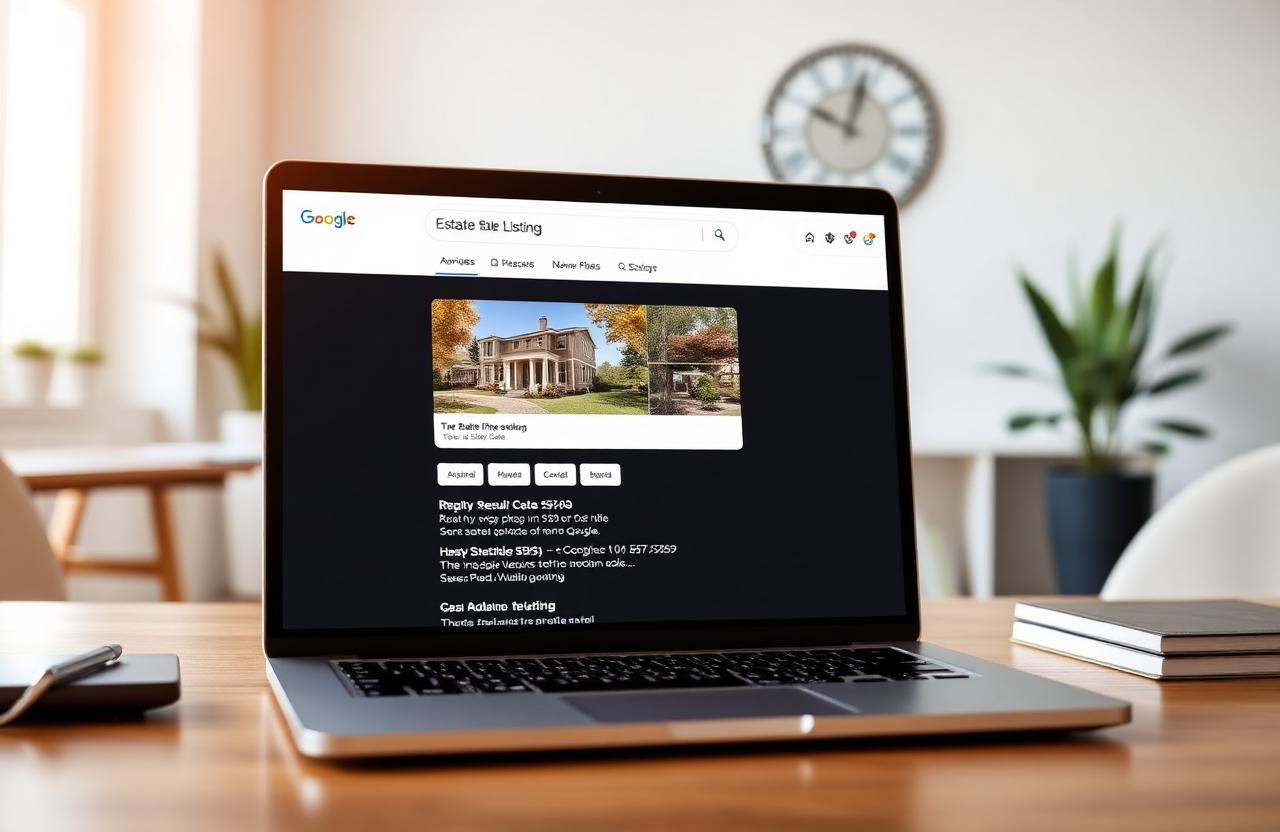
Most estate sale companies never think about search engines, and that's fair — you have a sale to run, not a website to optimize. But here's what's quietly happening: when someone in your town types "estate sale near me" or "vintage furniture estate sale" into Google, somebody's listing shows up first. On EstateSaleFinder, that listing can be yours — without you knowing a single thing about SEO.
Every sale you create runs through a built-in visibility engine. As you add a title, a description, photos, dates, and keywords, a live visibility score coaches you in plain English — "add the city to your title," "add a couple more photos," "describe what's for sale" — and your listing is automatically structured the way Google rewards: clean titles, location signals, image alt text, event dates, and proper metadata. Your sale gets its own shareable page that search engines can actually read and rank.
Why this is the solution
searches for "estate sales near me" have doubled in five years, and most of that traffic goes to whoever shows up on page one. Our SEO does the technical heavy lifting for you, so your sales get discovered by people Googling at the exact moment they're ready to shop — a brand-new stream of buyers your yard signs could never reach.
6. The Ai Social Media Studio — pro-level posts in seconds
Social media is where today's buyers actually live, but for a busy estate sale company, "post on Instagram and Facebook" usually means one rushed, blurry photo dump the night before — if it happens at all. The Ai Social Media Studio changes that completely.
Pick a sale, and the Studio generates a scroll-stopping, ready-to-publish post for you — a polished caption written to sell, the right hashtags, and a clean hero image. You can promote a single sale, round up several sales at once, showcase individual storefront or booth items, or build posts that market your company and brand. What used to take a marketing person an afternoon now takes you a few taps between appointments.
Why this is the solution
consistent, professional social posts are how you reach the younger, design-driven buyers scrolling for "thrift haul" and "vintage finds." The Studio gives you a marketing team's output without the marketing team — so every sale gets promoted everywhere, every time.

7. The seller newsletter — with Ai sign-up sheet scanning (OCR)
Your best buyers are the ones who already love your sales. A newsletter keeps them coming back — but most companies never build one because collecting and typing in emails is a chore. We removed the chore entirely.
EstateSaleFinder includes a full seller newsletter with an Ai writing assistant that drafts and designs beautiful, simple emails for you — drag-in content blocks, subject-line ideas, even a featured-sale block that links straight to your listing. And here's the part owners love: the built-in OCR scanner. OCR stands for optical character recognition — technology that reads text from a photo. At your sale, you put out a paper sign-up sheet like always. Afterward, you just snap a photo of it, and the Ai reads the handwritten names and emails right off the page, flags anything it's unsure about for a quick double-check, skips duplicates, and adds everyone to your list automatically. No squinting at handwriting, no typing dozens of addresses by hand.
Why this is the solution
every sale becomes a list-building machine. Those in-person shoppers turn into a loyal audience you can reach for free, sale after sale — turning one-time visitors into repeat buyers who show up because you invited them.

8. An independent marketplace built around your sale
EstateSaleFinder lists your company's sale on its own terms and points buyers straight at your event. You also get a verified company profile and presence on city and area pages, so when someone searches for an estate sale company in your town, you show up. Every sale you list becomes a working advertisement for your business — turning the endless grind of chasing clients into clients finding you.
Why this is the solution
you stay the business. We're simply how the right buyers — and the next family who needs you — find you.
More money, not just more traffic
Put it all together and you get the thing that actually changes your numbers: the right buyers, in greater numbers, paying what items are truly worth. Industry data shows that companies who expand beyond in-person-only — reaching online and new audiences — see meaningfully higher sales volume and stronger revenue per sale. That's not hype; that's what happens when your $900 lamp finally meets the collector who's been hunting it for two years instead of a tire-kicker offering a dollar.
You don't need a thousand more browsers. You need the handful of people who specifically want what's in this house, plus a whole new generation of buyers who never knew estate sales had it. That combination — new audiences, smarter advertising, confident pricing — is how you break through the income ceiling you've been living under.

You deserve better tools — and now they exist
Behind every sale is a family in transition: a downsizing, a move, a loss. Your job is to handle their belongings with care and send them off with a fair return, and that work has always deserved better than a single listing site and a box of yard signs. For a long time the tools just weren't there. Now they are.
You were never stuck. You were just early to an industry that's finally catching up. The companies that pick up these tools first — keyword discovery, wishlist alerts, a real marketing plan for every sale, Ai pricing help, automatic SEO, the Ai Social Media Studio, a newsletter that builds itself from a photo of your sign-up sheet, and a marketplace that works for them — are the ones who will define the next chapter of this business.
So take the first step. It costs nothing to start.
Want to keep going? Read the six things estate sale companies are tired of (and the fix for each), our social media guide for estate sale companies, and how to run a successful estate sale.
This industry got skipped by technology for a long time. We're here to fix that — quietly, practically, and firmly on your side.
Keep exploring
Ready to start your own treasure hunt?
Discover estate sales near you and find incredible deals.
Explore Sales Near Me
About the author
Andy
Founder, EstateSaleFinder.net
Hi, I'm Andy — a retired commercial photographer turned developer with a five-year (and counting) obsession with estate sales. I started EstateSaleFinder.net because I knew there had to be an easier, smarter way to find and list estate sales. Now I get to chase treasure and build the tool I always wished existed.