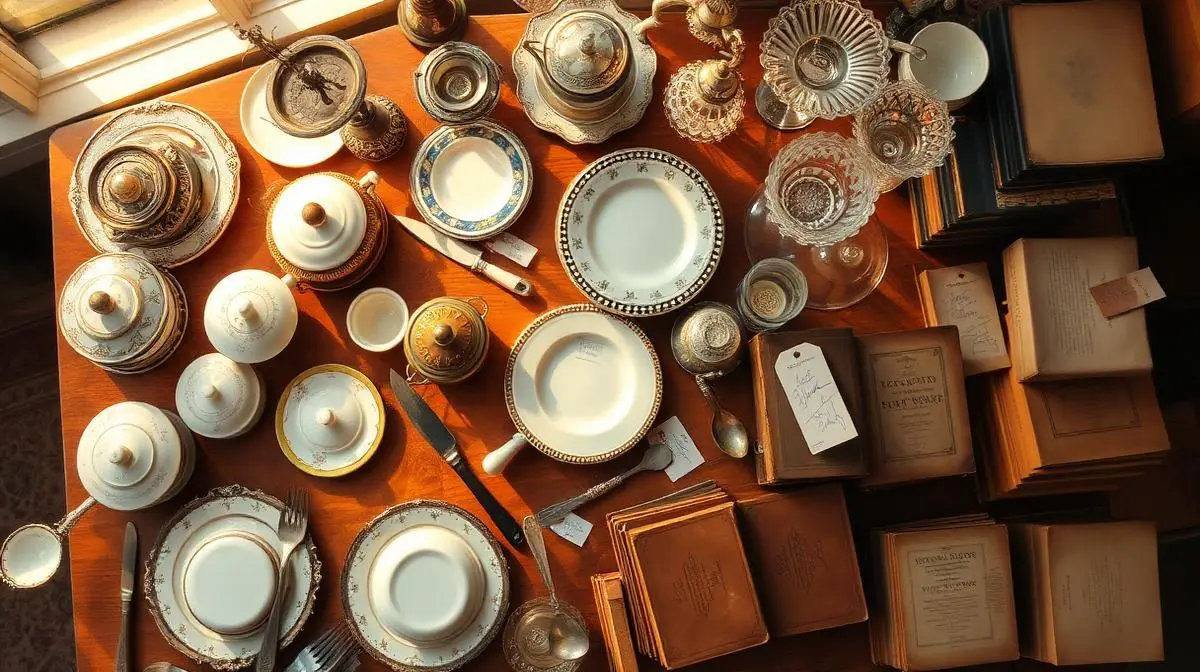
The $5 Find That Turned Out to Be Worth $2,000
A chipped bowl at a folding table. A faded painting behind a dresser. Some of the best estate sale scores look like junk — until you know what to look for.
Every seasoned treasure hunter has a story like this — the moment they picked up something everyone else walked past and realized it was worth a small fortune.
The Bowl That Changed Everything
It was sitting on a card table next to a stack of old magazines — a small ceramic bowl with a hairline crack along the rim. Price tag: $5. Most people walked right by it. But one buyer noticed the mark on the bottom — a tiny stamp that read "Rookwood" with a date code from 1907.
That $5 bowl sold at auction three months later for $2,100.
Stories like this get shared because they're rare — but they're not flukes. They happen because somebody trained their eye to notice details that most shoppers scroll right past. Here's how to build that same instinct.
How to Spot Hidden Value
Look at the bottom first. Maker's marks, stamps, and signatures are almost always on the underside. Learn to recognize the major pottery marks — Rookwood, Roseville, Weller, Fiesta — and you'll start seeing value where others see clutter. A quick photo of any mark, paired with a search for the maker's name plus the words "mark" or "backstamp," will usually get you close to an identification within a minute or two.
Check inside drawers and cabinets. Estate sale staff sometimes miss small items tucked away in furniture. Jewelry, coins, vintage pens, and small collectibles often hide in drawers that other buyers don't bother opening. It's worth politely asking staff if it's okay to open drawers — most companies welcome it, since finding and pricing a hidden item helps everyone.
Research anything unusual. If something looks different from everything else at the sale — unusual material, intricate craftsmanship, foreign writing, an odd weight for its size — take a photo and look it up. The 30 seconds of research could reveal a hidden gem. Weight is an underrated clue: sterling silver, bronze, and early Bakelite all feel noticeably heavier than their modern plastic or silver-plate equivalents.
Learn to tell age from construction, not just looks. Hand-thrown pottery often has faint ridges or an uneven foot ring; machine-made pieces tend to be perfectly symmetrical. Hand-cut dovetail joints in old furniture drawers are irregular and tightly spaced, while machine-cut dovetails are uniform. These small construction details are often more reliable age indicators than a "look" that can be reproduced.
How to Evaluate Condition and Real-World Value
Finding something special is only half the job — knowing what it's actually worth once you've found it matters just as much.
- Separate condition from rarity. A rare piece with damage can still have strong value, but chips, cracks, hairlines, repairs, and missing parts will all reduce the price compared to a pristine example. Be honest with yourself about condition before you get excited about a price.
- *Compare against completed sales, not asking prices.* Searching a marketplace and sorting by "sold" listings (rather than active ones) gives you a realistic sense of what buyers have actually paid recently, rather than what a hopeful seller is asking.
- Factor in selling costs. If you plan to resell through an auction house or consignment shop, commissions typically run anywhere from 15% to 40%. A $2,000 hammer price might net considerably less once fees are subtracted — worth knowing before you get your heart set on a number.
- When in doubt, get a second opinion. A reputable appraiser, a specialty dealer, or even a knowledgeable collector in an online forum can usually tell you within minutes whether something is worth pursuing further.
Common Mistakes to Avoid
Assuming "old" automatically means "valuable." Plenty of genuinely antique items — mass-produced glassware, common furniture styles, and ordinary china — simply aren't in high demand today, regardless of age. Rarity and desirability drive price far more than age alone.
Overpaying based on a hunch. Excitement is part of the fun of treasure hunting, but it pays to do at least a quick gut-check search before spending serious money on an item you can't readily identify.
Ignoring damage because you want the deal to be real. It's tempting to overlook a crack or chip when you think you've found something special. A good rule: assume any flaw you can see will be factored into resale value, and treat anything beyond that as a bonus.
Forgetting to ask the seller what they know. Estate sale staff or family members sometimes have provenance information — where an item came from, how long it's been in the family, or who originally bought it — that can meaningfully support an identification or value, even if it isn't written on the tag.
The Takeaway
The best estate sale finds aren't the obvious ones. They're the overlooked, underpriced, easy-to-miss items that reward curiosity and knowledge. Train your eye, do your research, check the bottoms of things, open the drawers nobody else opens, and never walk past a $5 table without looking twice. The next find like that could be sitting there right now, waiting for someone who knows what to look for.
Building the Habit Over Time
None of this requires becoming an expert overnight. Most seasoned buyers built their eye for value one sale at a time, by looking things up after the fact — even items they didn't buy — just to see how close their instincts were. Keep a simple note on your phone of marks, patterns, or materials you learn to recognize, and review it occasionally. Over a year of regular estate sale visits, that habit compounds into real expertise, and the "lucky" finds start happening a lot more often than luck alone would explain.
Keep exploring
Ready to start your own treasure hunt?
Discover estate sales near you and find incredible deals.
Explore Sales Near Me
About the author
Andy
Founder, EstateSaleFinder.net
Hi, I'm Andy — a retired commercial photographer turned developer with a five-year (and counting) obsession with estate sales. I started EstateSaleFinder.net because I knew there had to be an easier, smarter way to find and list estate sales. Now I get to chase treasure and build the tool I always wished existed.