The $36,285 Marble: How to Tell If Vintage Marbles Are Valuable
Grandma’s jar may hold ordinary players, miniature glass art, or both. Here is the entertaining, evidence-first guide to pontils, onionskins, Lutz marbles, sulfides, condition, reproductions, and the extraordinary marble that sold for $36,285.
To tell if a vintage marble is valuable, identify how it was made, measure it, inspect both poles and the entire surface, name the exact pattern, and compare it with recent completed sales. Age alone does not create value. The strongest prices go to scarce types with desirable colors, unusual size, original surfaces, excellent condition and confident identification. A common cat’s-eye may be worth pocket change; an exceptional handmade onionskin reached $36,285 in 2026.
There is probably a jar like this somewhere in your family: marbles collected over three generations, rattling together with one steel ball bearing, two pebbles and a mystery gumball that has survived since the Carter administration.
Most jars are charming rather than life-changing. But every marble deserves ten calm seconds before somebody prices the whole container at five dollars—because tiny differences in glass, construction and condition can separate a childhood player from a serious piece of folk art.
First, the $36,285 marble was not a sulfide
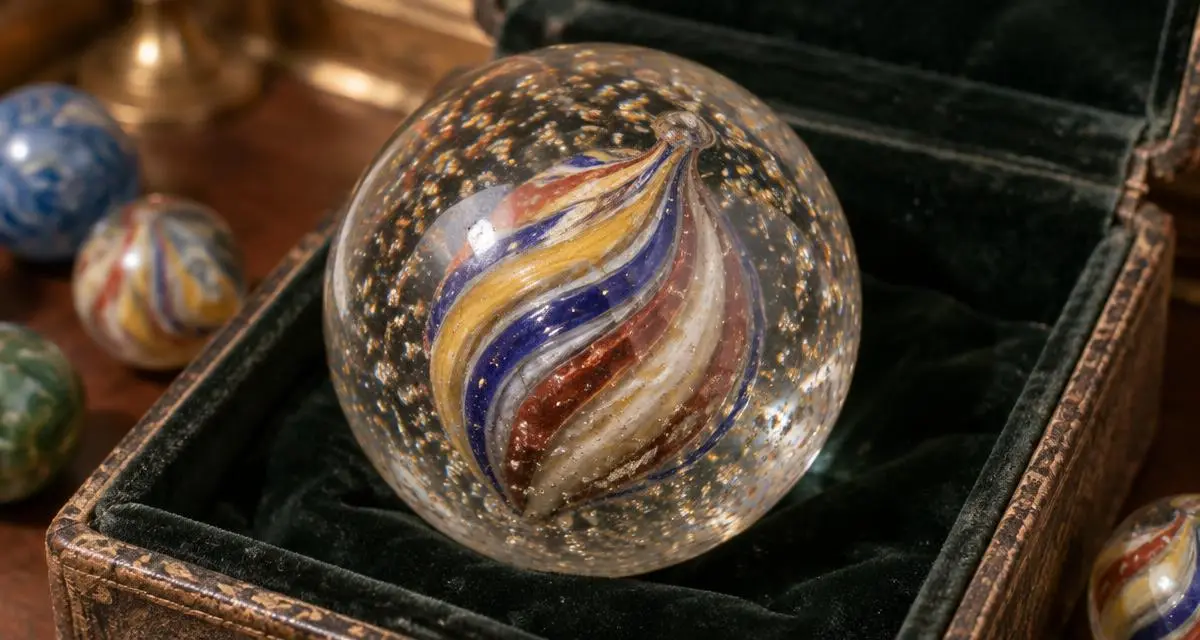
The spectacular sale behind this story happened at Morphy Auctions’ April 11, 2026 Premier Marbles auction. The top lot was a 2¼-inch shrunken-core onionskin with floating “blizzard” mica, colored white, yellow, orange and blue, and graded 9.7. It carried a $20,000–$30,000 estimate and realized $36,285. Morphy reported 478 lots in the auction, with the sale totaling more than $900,000. Read Morphy’s auction report and inspect its photographs.
That correction matters. The marble was an onionskin, not a sulfide. A sulfide contains a small figure—often an animal or person—inside clear glass. An onionskin is all about layered color, construction and, in this extraordinary case, a storm of floating mica around a visible inner core.
The same sale provides useful perspective. A rare 7/8-inch pink opaque Lutz with red bands realized $28,290, while a large single-pontil “end of day” marble with heavy floating mica realized $20,910. These were elite, high-condition examples sold to committed collectors, not typical jar prices.
THE HEADLINE IS AN EXCEPTION, NOT A PRICE GUIDE. A $36,285 result proves that the best marbles can command art-market money. It does not turn every old swirl into a five-figure object.
What makes an antique marble valuable?
Five forces work together:
- Type and rarity. A named, scarce construction generally attracts more serious buyers than a pretty marble nobody can confidently identify.
- Color and visual complexity. Unusual color combinations, mica, aventurine and sharply organized internal designs can matter enormously.
- Size. Large handmade marbles can be dramatic and scarce, but size only helps when the type and condition are desirable.
- Condition and original surface. Chips, fractures, deep moons, grinding and polishing can sharply reduce collector interest.
- Proof. Measurements, clear pole photographs, provenance and truly comparable completed sales make a value opinion defensible.
Beauty helps. Evidence closes the sale.
Start with construction: pontil, cut-off or something between?
A classic handmade marble was formed from hot glass and separated from a cane or punty. That separation can leave a pontil: rough, faceted, melted or ground depending on the technique. Machine-made marbles are cut from flowing glass and commonly show cut-off marks at opposite poles.
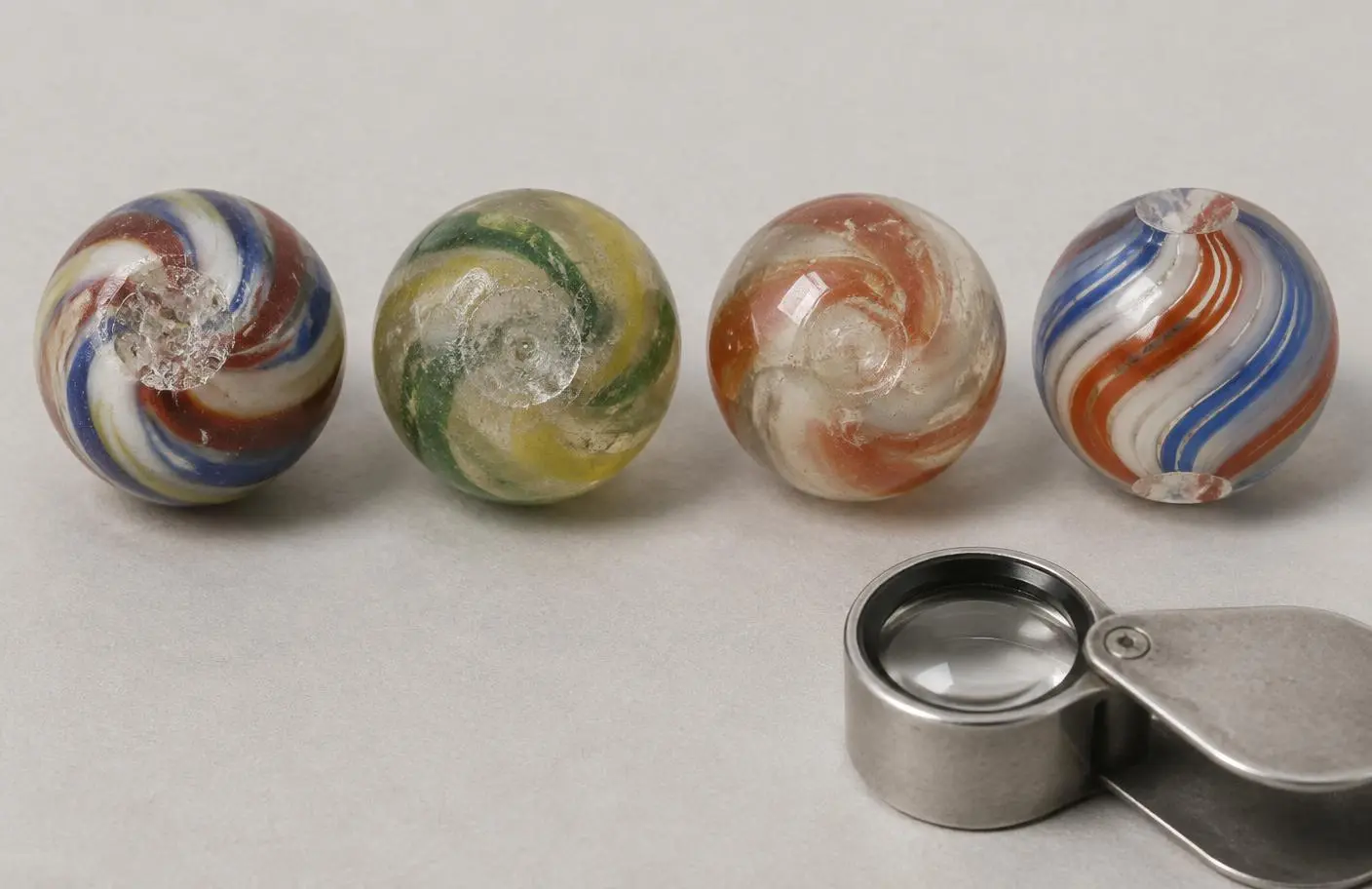
The popular “one pontil means old; two seams mean modern” rule is too neat. Transitional and hand-gathered machine marbles from the early twentieth century can combine handwork with mechanical rounding. Damage can imitate a pontil. Polishing can erase one. The Marble Collectors Society of America’s handmade-marble guide is a useful visual reference, but difficult examples still deserve an experienced human inspection.
Best first move
rotate the marble slowly under side light. Photograph both poles, then the equator. Do not decide from the prettiest side alone.
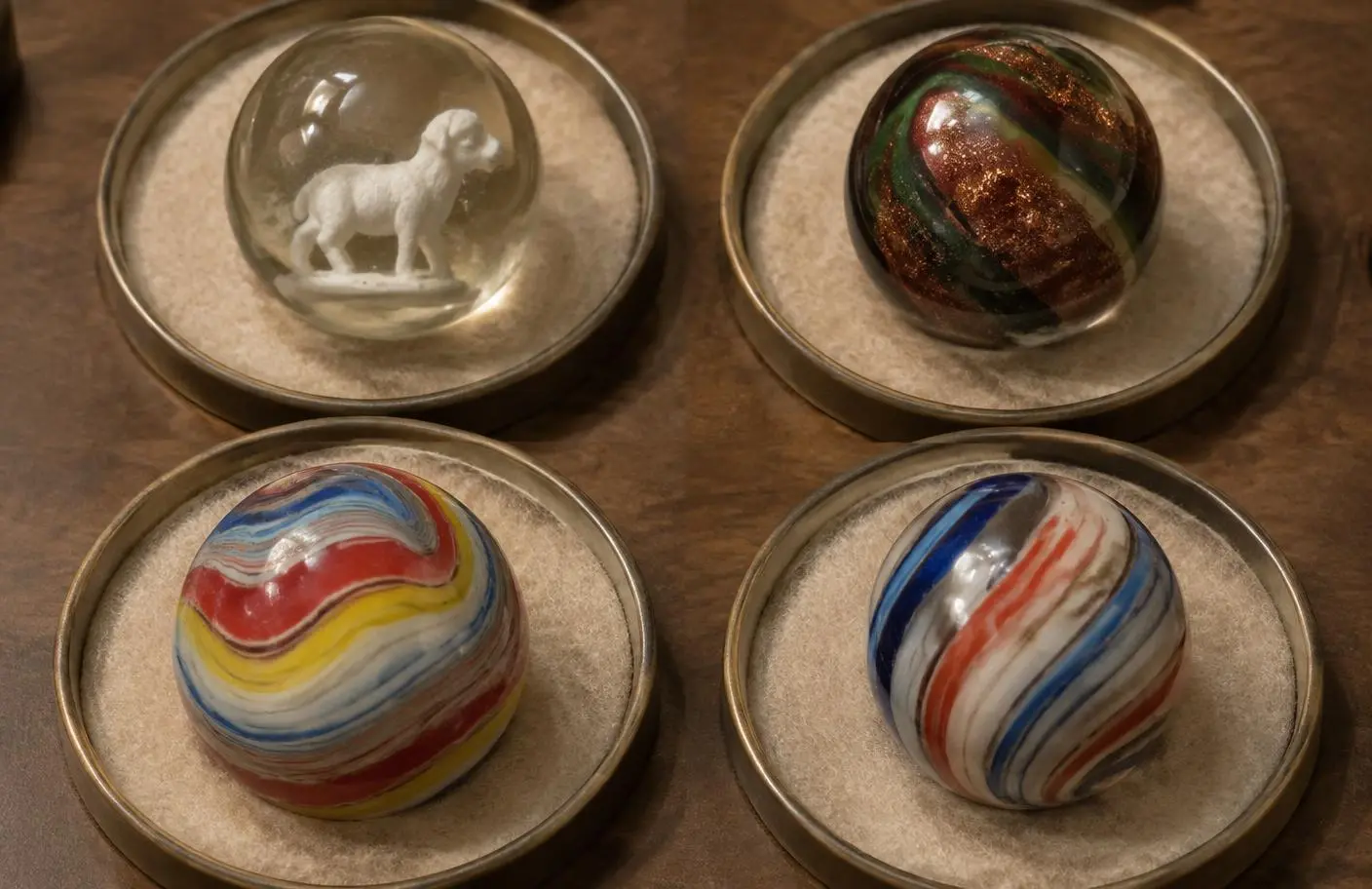
A real collection of German handmade marbles
The photograph below is not a rendering. It shows a collector’s own antique German handmade marble collection, including the irregular ribbons, pontil evidence and charming variation that polished reproductions can fail to capture.
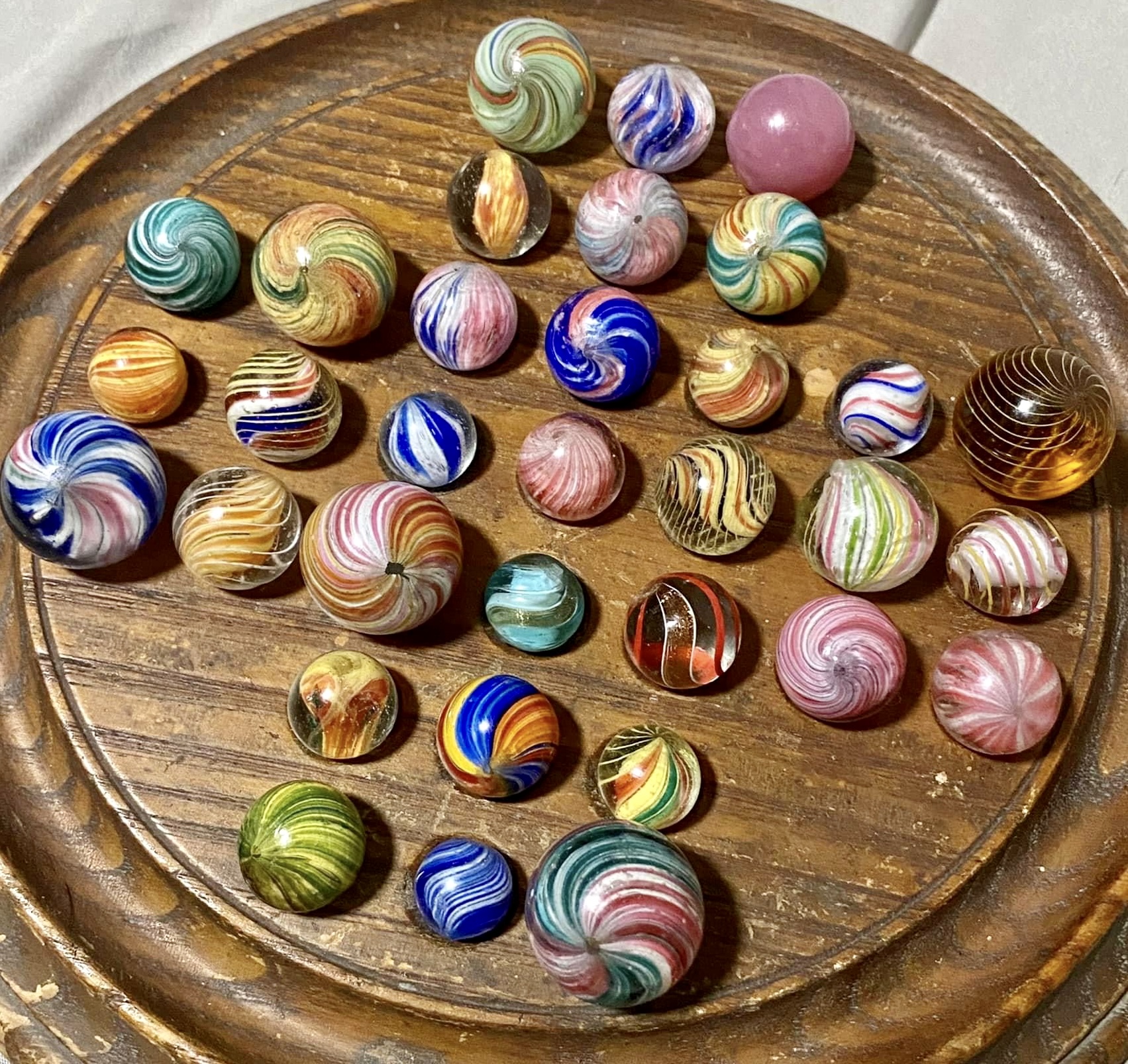
Real handmade marbles are not required to look battered, cloudy or crude. Nor does a rough surface automatically mean “Victorian.” Treat wear as condition evidence, not an age certificate.
The valuable marble types people search for
Onionskins: layers under glass
Onionskins typically show bands, panels or layered sheets of color under a clear casing. Collectors care about color palette, organization, mica, size and condition. The $36,285 example was exceptional because its smaller core remained visible through a dense field of floating mica.
Lutz marbles: look for copper sparkle
“Lutz” is the collector term for handmade marbles incorporating copper-colored aventurine. The sparkle should belong inside the glass design, not sit on the surface like craft glitter. The name is traditionally linked to glassmaker Nicholas Lutz, but historians and collectors dispute the simple story that he invented or personally made these German marbles. It is safer to describe what is physically present: aventurine bands, color, construction and size.
Sulfides: tiny figures inside clear glass
Sulfides—also spelled sulphides—contain a small figure inside transparent glass. The figure may be an animal, person, bust or symbolic object. The specialist sulfide reference at MarbleCollecting.com explains that they are single-gather, single-pontil marbles and that animals are the most common subjects.
The market can still be astonishing. A teal-blue 2⅛-inch sulfide with a centered rooster, graded 9.8, realized $21,600 including buyer’s premium at Morphy in November 2024. See the closed lot. A painted rearing-horse sulfide realized $26,400 including premium in June 2026. See that closed lot.
But subject alone does not guarantee a jackpot: a storybook bear sulfide graded 9.1 realized $660 including premium in the April 2026 sale. Compare the bear’s closed lot.
American machine-made marbles: do not dismiss the machine
Machine-made does not mean worthless. Maker, pattern, color, run and condition still matter. The Museum of American Glass in West Virginia documents Martin F. Christensen’s automated glass-marble machine, patented in 1905, and the rise of M.F. Christensen & Son and Akro Agate. Akro corkscrews, Popeyes and certain experimental or scarce color combinations have serious collector followings.
Common modern cat’s-eyes, however, are usually inexpensive unless an unusual maker, package, color or documented rarity changes the story.
Documented marble sales: examples, not promises
| Documented example | Reported result | Why it mattered |
|---|---|---|
| Shrunken-core onionskin with blizzard mica, 2¼ in., grade 9.7 | $36,285 | Top lot; rare construction, dramatic mica, large size and elite condition |
| Pink opaque Lutz with red bands, 7/8 in., grade 9.7 | $28,290 | Scarce color combination with aventurine |
| Painted rearing-horse sulfide, 1 55/64 in., grade 9.3 | $26,400 | Rare painted figure; result includes buyer’s premium |
| Teal-blue rooster sulfide, 2⅛ in., grade 9.8 | $21,600 | Colored glass, centered detailed figure and exceptional condition |
| Storybook bear sulfide, about 2 in., grade 9.1 | $660 | A useful reminder that subject, demand and bidding vary widely |
These are individual auction results, not standard ranges. Dates, premiums and venue matter. The $36,285, $28,290 and $20,910 figures come from Morphy’s April 2026 auction report; the sulfide figures link to their closed lot records above.
Condition: where value quietly disappears
A marble can survive 140 years and lose much of its collector value in five minutes with the wrong “restoration.”
- Fleabites: tiny nicks, often around a pontil or high point.
- Moons: crescent-shaped impact marks from play.
- Chips and subsurface fractures: more serious losses that interrupt the glass or threaten stability.
- Pocket wear: fine overall abrasion from decades carried with other marbles.
- Polishing or buffing: glass removed to disguise damage; this changes the original surface and may erase construction evidence.
The BuyMarbles reproduction and repair guide warns that polishing can remove substantial glass and may reduce value dramatically. Under magnification, look for an unnaturally uniform shine, missing pontils, rounded-over damage or tiny scars that remain below an otherwise glossy surface.
Do not scrub, tumble, polish or oil a promising marble. Dust it gently, isolate it from the jar and photograph it as found.
Reproductions: the “too perfect” problem
Modern artists make beautiful marbles, and contemporary work should be enjoyed on its own terms. The problem begins when a modern piece is represented as nineteenth-century glass.
With sulfides, collectors specifically warn about reproductions known as California Sulphides, which appeared in the 1980s. Unusual figures, multiple figures, colored glass or strange-looking pontils deserve extra scrutiny—but none of those traits alone proves a fake. Modern sulfides may also have brilliantly clear glass, highly decorated figures and no period pontil.
For any marble carrying a serious price:
- Demand photographs of both poles and every surface flaw. One glamorous front view is not authentication.
- Measure with a ruler or calipers. Search the exact diameter with the proposed type.
- Ask whether it has been polished, buffed, filled or remelted. Get the answer in writing.
- Compare construction, not merely color. A modern marble can imitate a palette more easily than an entire historical process.
- Escalate the expensive ones. A respected marble specialist or established auction house is worth the fee when the claim reaches four or five figures.
How to photograph a marble for identification
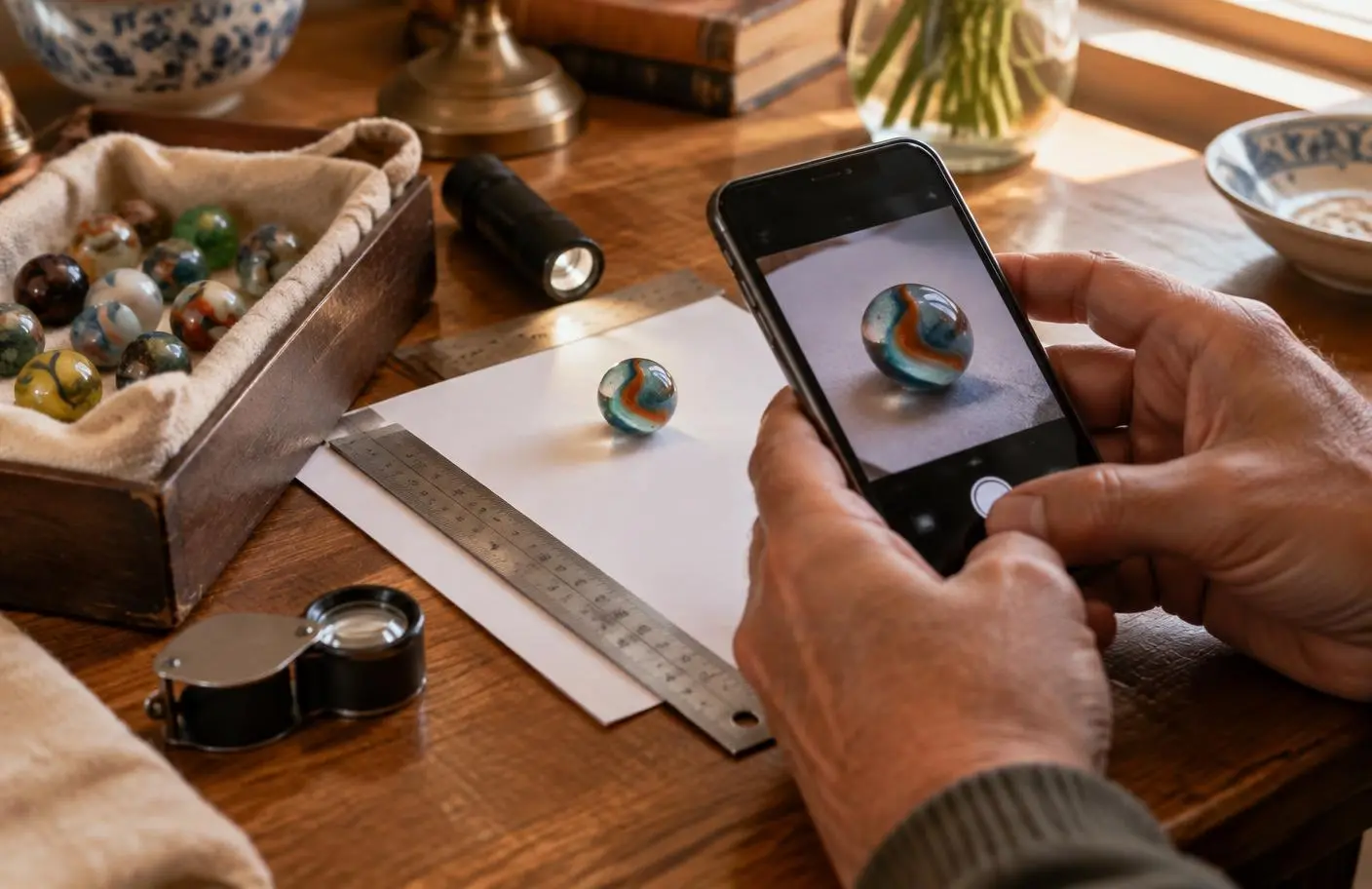
Use a clean white sheet of paper beside a bright window. Photograph:
- the full marble straight on;
- the opposite side;
- both poles in close focus;
- the marble beside a ruler;
- any chips, fractures, wear or suspiciously polished areas;
- the group or original packaging it came with.
Then use the EstateSaleFinder Ai Appraiser for a fast identification and value suggestion. A photo tool is useful for naming possibilities and finding comparable sales; it cannot certify age, detect every repair or replace hands-on authentication for a potentially valuable marble. Our estate-sale appraisal workflow explains how to move from a possible name to defensible sold comparisons.
The 60-second estate-sale marble check
- Move the jar onto a towel so nothing rolls or collides.
- Look for unusually large marbles, suspended figures, mica or coppery aventurine.
- Rotate each promising marble and photograph both poles.
- Measure diameter; never estimate from a hand or coin photo.
- Check the entire surface under side light for chips, moons and polishing.
- Keep boxes, bags and handwritten collection notes with the group.
- Search completed sales for the exact type, size and condition.
- Ask a specialist before cleaning or pricing a serious candidate.
If hunting marbles is your idea of a perfect Saturday, browse photographed estate sales near you, then save “vintage marbles,” “Lutz marble” and “sulfide marble” in your wishlist alerts. Our guide to finding collectibles with keyword search and alerts shows how to make the search do the early digging for you.
For more small-object treasure hunting, read the guide to vintage toys worth money and the breakdown of what sells best at estate sales. Dealers who source collections can also see the inventory and market tools built for resellers.
Quick answers about vintage marble value
How can I tell if a marble is valuable?
Look for a confidently identifiable type, scarce color or construction, unusual size, excellent original condition and matching completed sales. Photograph both poles and measure it before searching. Age or beauty alone does not establish value.
What old marbles are worth money?
Exceptional onionskins, Lutz marbles with aventurine, rare sulfides, elaborate handmade swirls and scarce American machine-made patterns can be valuable. Common examples within every category also exist, so exact identification and condition are essential.
Are cat’s-eye marbles valuable?
Most familiar modern cat’s-eyes are inexpensive. Unusual makers, colors, packaging or documented experimental varieties may interest collectors, but a standard cat’s-eye is not valuable merely because it looks old.
What is the most valuable marble?
There is no permanent universal record because private sales and auction results change. The strongest verified recent result discussed here is the $36,285 shrunken-core onionskin sold by Morphy Auctions in April 2026. It should not be described as a sulfide.
Should I clean an old marble before selling it?
Do not polish, tumble, oil or grind it. Gently remove loose dust only. Altering the original surface can erase identifying evidence and sharply reduce collector value.
Does a pontil prove a marble is antique?
No. A pontil is an important construction clue, but damage, polishing and reproductions complicate the picture, while transitional production can blur a simple handmade-versus-machine rule. Evaluate all evidence together.
Value note
Every price above is a documented historical example, not a guarantee or formal appraisal. Buyer’s premiums, condition, rarity, attribution, venue and timing can change results dramatically. Claims and links were reviewed September 17, 2026.
Keep exploring
Ready to start your own treasure hunt?
Discover estate sales near you and find incredible deals.
Explore Sales Near Me
About the author
Andy
Founder, EstateSaleFinder.net
Hi, I'm Andy — a retired commercial photographer turned developer with a five-year (and counting) obsession with estate sales. I started EstateSaleFinder.net because I knew there had to be an easier, smarter way to find and list estate sales. Now I get to chase treasure and build the tool I always wished existed.