The $2,200 Waffle Iron: When Grandma's Appliance Is Art Deco
That chrome waffle iron on the appliance shelf may be more design object than breakfast tool. Here is the honest story behind a $2,200 ask, a verified $950 Griswold sale, and the clues that separate an exceptional find from an ordinary iron.
A vintage waffle iron becomes valuable when the right maker, scarce design, original parts, strong condition and genuine buyer demand meet. A Royal Rochester Modernistic waffle iron has been offered by one specialist dealer at $2,200, marked down to $1,760. That is an asking price—not proof of a sale. A rare hammered Griswold waffle iron, however, has a documented $950 hammer price from a 2023 auction. Ordinary Griswold No. 8 examples have sold much lower.
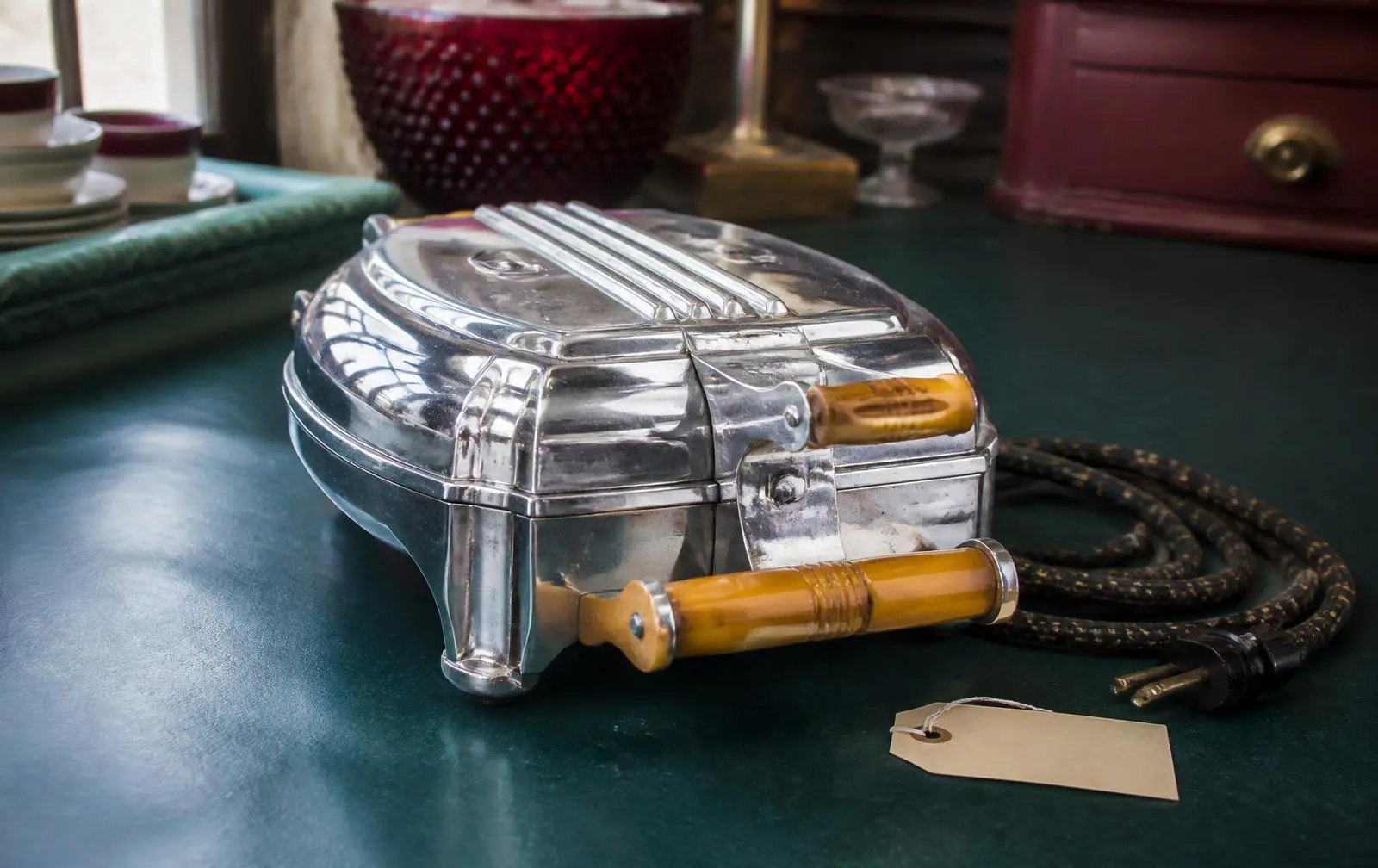
Every estate sale has one: the appliance shelf. A tired toaster. A mixer with no beaters. A cord that looks as though Herbert Hoover might have tripped over it. Then, under a tea towel, something flashes—chrome, amber handles, a body shaped like a tiny locomotive.
Is it a $15 breakfast relic or a serious design collectible?
The answer is not hiding in the shine. It is underneath the iron, inside the plates, in the completeness of the base and in the difference between a price someone typed and a price someone paid.
The truth about the $2,200 waffle iron
The spectacular object behind the headline is a Royal Rochester Modernistic waffle iron. The International Museum of Dinnerware Design identifies its example as Art Deco, circa 1928, made by Robeson Rochester with hand-painted china components by Fraunfelter China, chrome and electrical parts. It looks less like a humble appliance than the observation deck of a Jazz Age skyscraper.
A specialist dealer currently shows one at a $2,200 list price and $1,760 sale price. The same object appears through InCollect at $2,200.
Here is the important correction
these are retail asking prices from the same dealer, not independent auction results. We found no completed public sale proving that this model regularly changes hands for $1,760 or $2,200. The ask still tells us something—an established design dealer considers the object rare and desirable—but it is not a sold comparable.
ASKING PRICE ≠ SOLD PRICE. An active listing tells you what a seller hopes to receive. A completed sale tells you what a buyer actually paid. For an uncommon object, you may need both—and a generous margin for uncertainty.
The history is real. The Metropolitan Museum of Art preserves Rochester Stamping Company trade catalogs and a circa-1927 Robeson Rochester catalog, placing the maker firmly in America's early electrical-housewares story. The museum documentation is the pedigree; the dealer listing is the market signal. They are useful for different reasons.
The $950 Griswold result is a real sale
Cast-iron collectors play a different game. The hero is not chrome—it is crisp casting, an unusual pattern, a correct base and a maker's mark sharp enough to read from across the table.
At the February 16–18, 2023 Air Works consignment auction in Mount Hope, Ohio, a hammered Griswold waffle iron sold for $950. The contemporary auction recap specifies that the number excludes the 20% buyer's premium and 7% tax. That is the strongest verified high sale we found for the hammered form.
But “Griswold No. 8” is not a magic four-figure phrase. Documented ordinary examples include a $234 completed sale and a $150 auction result. Different dates, venues, condition and completeness make these imperfect comparisons—but together they show the honest range.
| Documented example | Reported price | What the number means |
|---|---|---|
| Royal Rochester Modernistic | $2,200 / $1,760 | One dealer's list and markdown prices; not a verified sale |
| Hammered Griswold waffle iron | $950 | 2023 hammer price; premium, tax and shipping excluded |
| Griswold American No. 8 | $234 | Completed online sale reported with 14 bids |
| Griswold No. 8 with high base | $150 | Auction result for a more ordinary example |
The pattern is the point. Rare hammered surfaces, unusual variations and complete high bases can separate a standout from the many usable Griswold irons that survive. Read our complete cast-iron identification and value guide before cleaning anything.
What Art Deco looks like on a breakfast table
Art Deco did not stay in skyscraper lobbies. It moved into kitchens through polished metal, stepped profiles, speed lines, geometric vents and dark early-plastic handles. In 1932, even a toaster could look ready to depart for the future.
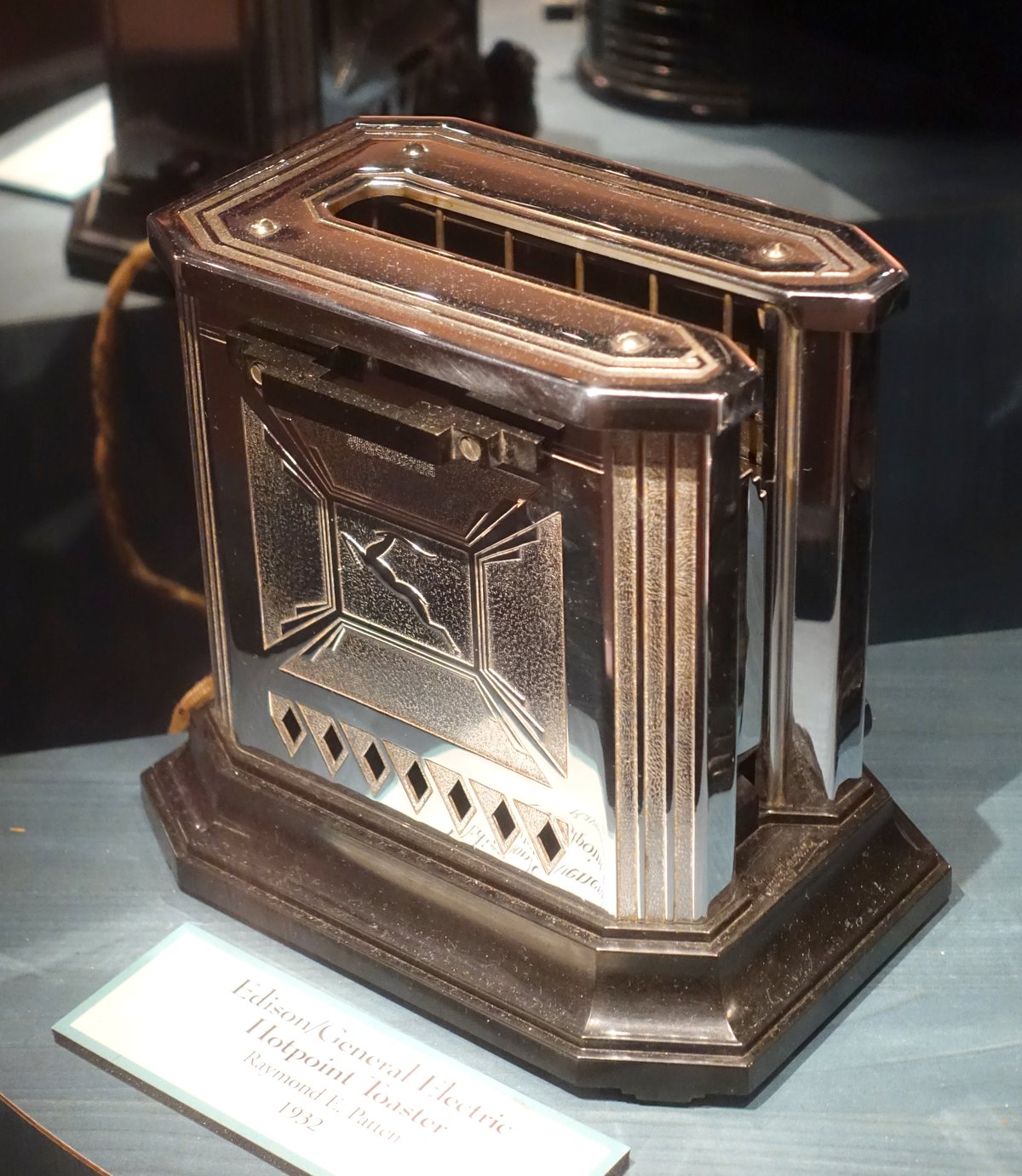
The Metropolitan Museum of Art's 1932 Birtman toaster, designed by Henry Dreyfuss, similarly pairs a polished chrome body with a dark plastic base and handles—materials the museum calls hallmarks of 1930s industrial design. Museum Boijmans Van Beuningen also catalogs a later Raymond Loewy/Kalorik waffle iron made with Bakelite, stainless steel and iron.
That does not mean every brown handle is Bakelite, or every shiny appliance is Art Deco. “Bakelite” is often used loosely online for any old-looking plastic. Color, smell and surface clues can help, but they do not replace maker documentation or knowledgeable inspection.
A real 1920 electric waffle iron
Design history is easiest to understand when you can see the real thing. This Eleiko electric waffle iron is dated 1920 in Sweden's DigitaltMuseum collection. Its squat round body and long handle show the bridge between stove-top irons and the sculptural countertop machines that followed.
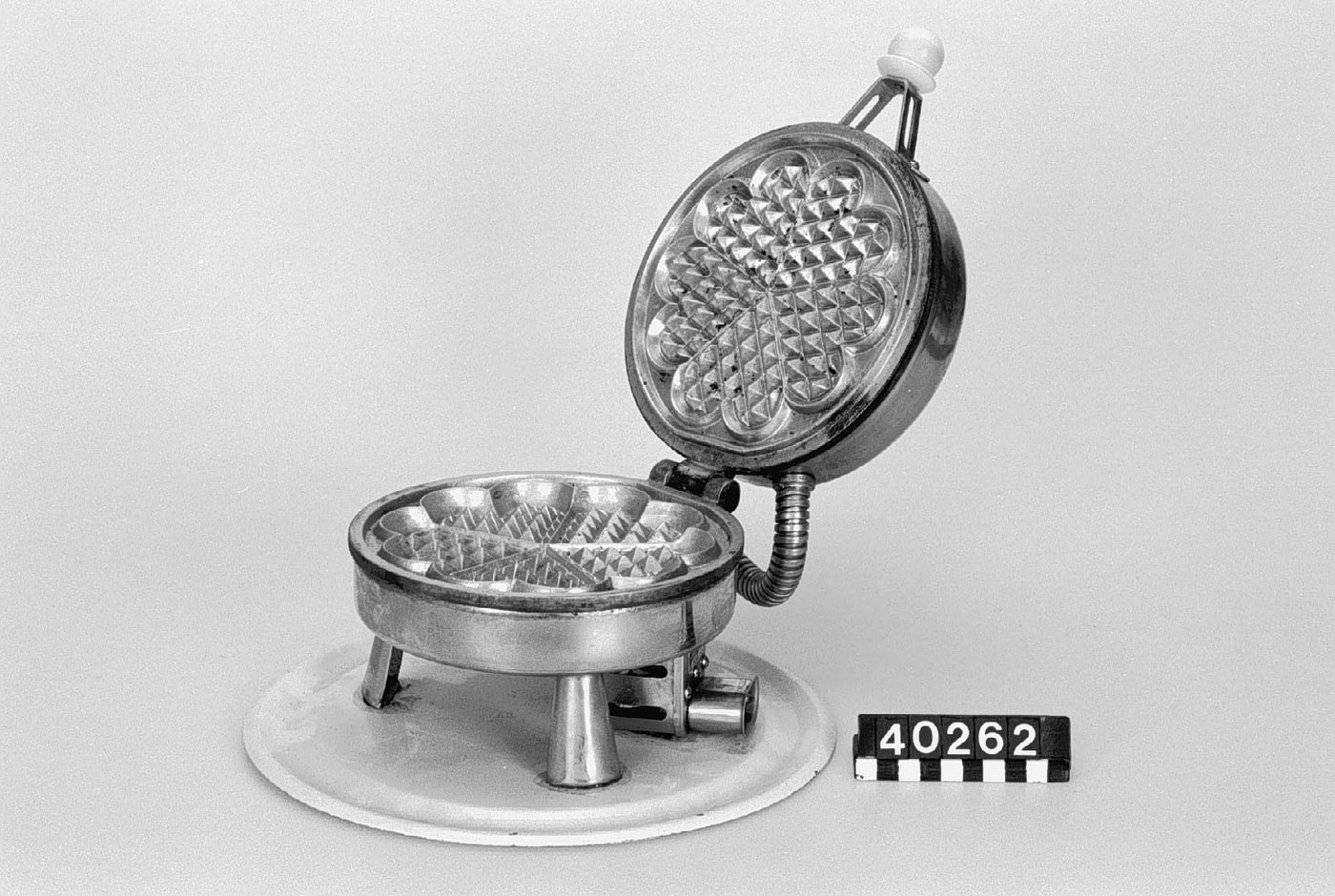
Look at the silhouette before you look at a price. Early electric appliances can be collectible because of industrial design, not merely because they are old. A dramatic shape may interest kitchenware collectors, Art Deco buyers, industrial-design enthusiasts and period-set decorators—four audiences looking at the same object for different reasons.
Where Bersted fits
Bersted is worth knowing because its chrome waffle irons can have the machine-age look buyers notice without carrying the same mythology as Royal Rochester. Ohio corporate records place Bersted Manufacturing Company in Fostoria, Ohio, filed in 1934. A surviving Bersted Art Deco-style waffle iron listing documents a chrome body, fluted brown composite handles, winged ornament, temperature gauge, cast plates, original guarantee tag and fabric-wrapped cord.
Use that auction page to study features—not to assign value. Its broad estimate is not a completed sale result.
The 60-second estate-sale inspection
- Read every cast mark. Photograph the underside, hinge, plates, base and plug. Search the exact words and model numbers later.
- Keep the pieces together. A waffle iron without its correct base, bail, handles or matching plates may lose much of its collector appeal.
- Open it gently. Check hinges, locking points, warped plates, cracks and heavy rust. Never force a frozen joint.
- Study the casting. Genuine Griswold pieces are known for fine, crisp work. Soft lettering, crude texture and unusual weight can signal a recast.
- Inspect chrome and decoration. Deep pitting, lifting plating, missing painted china or replaced handles affect both beauty and value.
- Photograph the cord—do not test it. Brittle insulation, frayed cloth and old plugs are evidence for an electrician, not an invitation to find an outlet.
- Save the paper. Guarantee tags, instructions, boxes and receipts can be scarcer than the appliance and may establish exactly what belongs together.
LOOK UNDERNEATH. The front sells the fantasy; the underside identifies the object. One clear photograph of a foundry mark or model plate can be worth more than ten glamorous angles.
For Griswold, compare questionable examples with the specialist guides to spotting reproductions and the waffle-iron reproduction gallery. These are collector resources, not laboratory authentication, but they teach the right visual questions.
Please do not plug it in
An old cord can look intact and still hide failed insulation. The U.S. Consumer Product Safety Commission's home electrical safety checklist advises replacing damaged cords and having electrical problems checked by a qualified electrician. With an unknown 1920s or 1930s appliance, the sensible first test is visual inspection—not electricity.
DO NOT PLUG IT IN AT THE SALE. Leave it unplugged until a qualified professional has inspected the cord, plug, insulation, heating element and grounding situation. Collector value does not require breakfast.
Also skip the hot-pin “Bakelite test.” It damages material, creates fumes and still may not produce a dependable identification. Non-destructive collector checks are clues only. When the handle material matters to value, ask a specialist.
How to research value without fooling yourself
- Identify first. Search the complete mark, model, plate number and base style—not “old waffle maker.”
- Filter for sold results. Ignore a row of hopeful active listings until you have checked completed sales.
- Match the version. Hammered is not plain; high base is not low base; complete is not missing half the appliance.
- Normalize the price. Note the sale date, buyer's premium, tax, shipping and whether the item actually sold.
- Account for condition. Chrome loss, cracks, recasting, replacement handles and missing parts can invalidate an otherwise tempting comparison.
- Use more than one source. Museum records establish what an object is. Auction archives show what sold. Dealer listings show current retail positioning. Do not make one source do all three jobs.
If you are standing in the house with only a minute, photograph the marks and use the EstateSaleFinder Ai Appraiser for a research suggestion, then verify the identification and sold comparisons yourself. Our estate-sale appraisal workflow shows how to do that without turning one exciting listing into a fantasy number.
What should you do if you find one?
Do not clean, power or separate it. Photograph every mark, keep all parts and paperwork together, then compare the exact model with documented sold examples. If it is a sculptural chrome Royal Rochester-type object, an unusual Bersted, or a hammered Griswold with its proper base, pause before pricing it like an ordinary kitchen tool.
Resellers should still buy from the real number backward: likely sale price minus fees, packing risk, restoration uncertainty and the time needed to reach the correct collector. Our reseller field guide makes that math less romantic and much more useful. Dealers can also explore the tools built for antique dealers and resellers, including local inventory visibility through the Collective.
And if this is exactly the sort of odd treasure you chase, save “Griswold waffle iron,” “Royal Rochester” or “Art Deco toaster” to your wishlist. The best appliance shelf is the one you hear about before Saturday morning.
Quick answers for collectors
Are old waffle irons valuable?
Some are. Maker, rarity, exact pattern, completeness, casting quality, condition and buyer demand matter far more than age alone. Documented examples in this guide range from $150 to a $950 hammer price, while the $2,200 Royal Rochester number is an asking price.
How much is a Griswold No. 8 waffle iron worth?
There is no single value. The documented examples we found include ordinary No. 8 results around $150–$234 and a rare hammered waffle iron at a $950 hammer price. Match the exact pattern, base and condition before choosing a comparison.
Does a brown handle mean Bakelite?
No. It may be Bakelite, another early plastic, composite material or even painted wood. Avoid destructive tests and use maker records or a knowledgeable specialist when the material affects value.
Can I cook with an antique electric waffle iron?
Do not plug in an unknown vintage appliance merely to test it. Have a qualified professional inspect its cord, plug, insulation, heating elements and overall electrical condition first.
Is the Royal Rochester waffle iron proven to be worth $2,200?
No completed sale at that level was verified. The $2,200 figure is one specialist dealer's asking price, with a displayed markdown to $1,760. It demonstrates retail positioning, not a guaranteed market value.
Value note
Prices are historical examples, not guarantees or formal appraisals. Markets, condition, completeness, location and selling venue can change the result dramatically. All claims and links were reviewed September 16, 2026.
Keep exploring
Ready to start your own treasure hunt?
Discover estate sales near you and find incredible deals.
Explore Sales Near Me
About the author
Andy
Founder, EstateSaleFinder.net
Hi, I'm Andy — a retired commercial photographer turned developer with a five-year (and counting) obsession with estate sales. I started EstateSaleFinder.net because I knew there had to be an easier, smarter way to find and list estate sales. Now I get to chase treasure and build the tool I always wished existed.