Cast Iron Cookware at Estate Sales: How to Identify, Clean, and Value It
Griswold spider logos, Wagner 'Sidney -O-' stamps, glass-smooth cooking surfaces and honest orange rust — cast iron is the estate-sale category collectors obsess over for a reason. Here's exactly how to spot the real ones, what they're worth in 2026, and how to bring a $5 rust bucket back to a lifetime of cornbread.
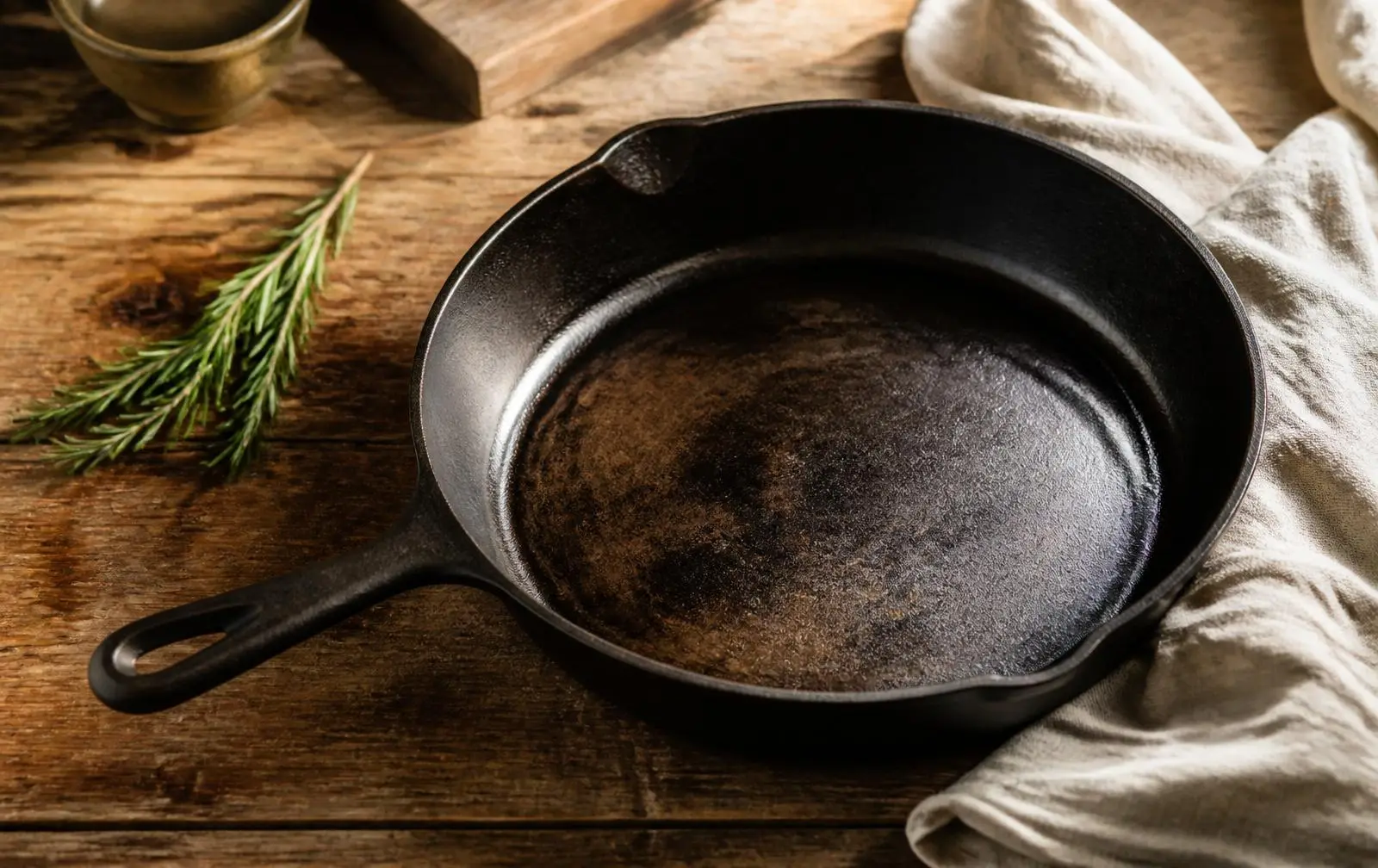
There's a moment every estate-sale regular knows. You're in the kitchen — the last room, the one everyone else has already picked over — and there, on a bottom shelf next to a bread machine no one wants, sits a black skillet. You flip it over. On the back, faintly, is a spider inside a circle. You just found a Griswold. Someone's grandmother cooked in it for sixty years and nobody at this sale knows what it is. It's marked $8.
Cast iron is the single most under-appreciated category at American estate sales, and it's also the one with the most passionate community behind it — homesteaders who want to bake sourdough in it forever, resellers who know a #8 Griswold "Erie" can clear $150, and collectors on the Cast Iron Collector forum who can date a pan from a photo of the handle.
This is the honest, dealer-grade field guide: how to identify what you're holding, how to clean and restore even the rustiest bucket, how to season it so it lasts another hundred years, and — the part nobody else writes about honestly — what it's actually worth in 2026.
Why cast iron matters (and why the good stuff is at estate sales)
American cast iron cookware had its golden age from roughly 1865 to 1957. During that window, three foundries dominated: Griswold Manufacturing of Erie, Pennsylvania; Wagner Manufacturing of Sidney, Ohio; and dozens of smaller regional makers like Favorite Piqua, BSR (Birmingham Stove & Range), and Martin Stove. Their skillets were cast, then machined — the interiors were ground smooth as glass. Compare that to a modern pan from Lodge Cast Iron (still a great company; more on them below) whose interior is intentionally left pebbly.
Old cast iron is:
- Smoother — food actually slides
- Lighter — thinner wall construction than modern pans
- Better balanced — a Griswold #8 weighs about 4.5 lbs; a modern Lodge 10.25" is closer to 5.5 lbs
- Prettier — the logos and lettering are craft objects
And it all ended up in kitchens across the country, then in cabinets, then in estates. Nobody threw it away — it just outlived its owners. Today it turns up at almost every estate sale in America, and 80% of the time it's mispriced because whoever staged the sale didn't turn it over.
That's the whole opportunity.
The 90-second cast iron identification cheat sheet
Before we go deep, here's the shortcut that will win you 90% of estate sale kitchens. When you pick up a piece of cast iron:
- Turn it over. Every clue lives on the bottom.
- Look for the maker's name or logo in the center.
- Look for a size number (usually a single digit near the handle).
- Look for a heat ring — that raised circle on the bottom means it's likely pre-1950.
- Run your finger across the inside. Glass-smooth = old and desirable. Pebbly = modern.
- Check the wall thickness. Thin walls = old American; thick and heavy = modern or import.
If you see a name, a smooth interior, and a heat ring — buy it. You can figure out what exactly you have on the drive home.
The makers you need to know
Griswold (1865–1957) — the Cadillac of American cast iron
If you find one piece of cast iron in your life that pays for every yard sale you've ever driven to, it will probably be a Griswold. The Griswold Manufacturing Company of Erie, Pennsylvania made cookware for nearly a century, and collectors have mapped every logo change down to the year. The Wagner & Griswold Society — the official collector organization — publishes reference guides that are considered the last word.
The logos, in rough order of age and rarity:
- Spider logo (1865–1890s): A literal spider inside a "spider web" oval. Rarest Griswold mark. Even a well-worn #8 spider skillet regularly sells $800–$3,000+.
- Block ERIE (1880s–1907): Just the word "ERIE" in block letters. Very collectible.
- Slant/script logo (1907–1920s): Slanted "Griswold" script inside a Greek-cross cartouche. Beautiful mid-period.
- Large block logo (1920s–1940s): The big "GRISWOLD" cross logo most people recognize. This is the "workhorse" era.
- Small block logo (1940s–1957): Same cross but smaller. Last of the true Griswolds.
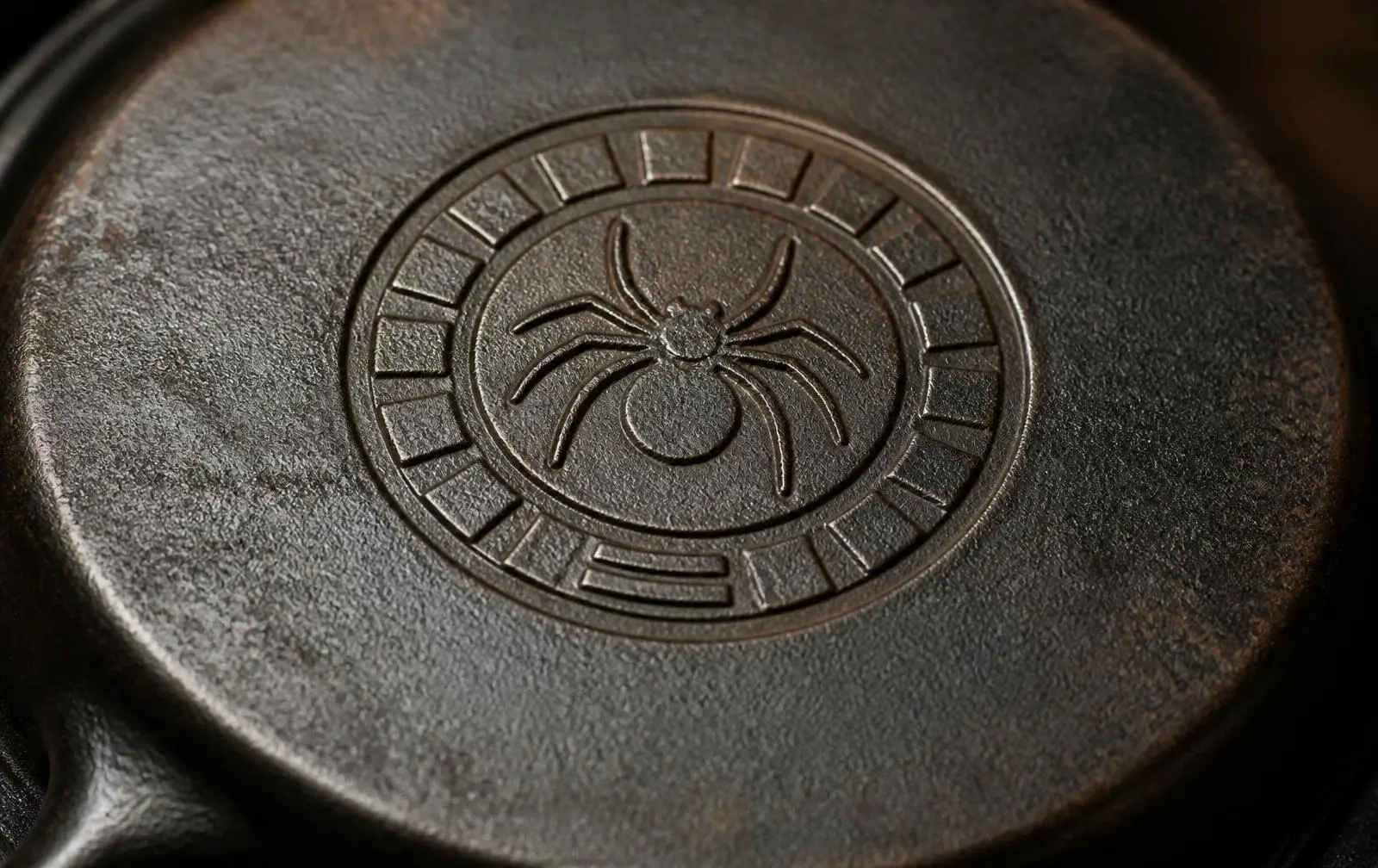
Sizes matter. Griswold skillets are numbered #3 through #14. The everyday sizes (#7, #8, #9) are the most common and typically go for $40–$150 on eBay in good condition. The very small (#3) and very large (#13, #14) are rare and can push into four figures. A #13 in any Griswold logo, in good shape, is a genuine payday.
Wagner (1891–1959) — Griswold's biggest competitor
Wagner Manufacturing of Sidney, Ohio was Griswold's crosstown rival, and their cookware is nearly as prized. The tell:
- "WAGNER WARE SIDNEY -O-" on the bottom — that little "-O-" between hyphens is the Wagner signature.
- Pre-1935 pieces marked "Sidney -O-" are the most valuable.
- After 1959, Wagner was owned by Textron, then General Housewares — quality declined and collectors care less about later pieces.
A typical Wagner #8 skillet in good shape runs $35–$90. A pre-1935 Wagner in a rare size or shape (waffle iron, muffin pan, small skillet) can multiply that easily.
Lodge (1896–today) — still American, still worth buying
Lodge of South Pittsburg, Tennessee is the great survivor. Founded as Blacklock Foundry in 1896 (rebuilt as Lodge in 1910 after a fire), it's the only major American cast iron manufacturer that's been in continuous family ownership. Modern Lodge pans have a pebbly interior — perfectly good, but not what collectors chase.
Vintage Lodge is a different animal. Pre-1960s Lodge pans have the same milled-smooth interior as Griswold and Wagner, and they're often mismarked at estate sales because everyone assumes "Lodge = new." Look for the older three-notch heat ring or the raised "LODGE" script.
The rest of the "worth stopping for" list
- Favorite Piqua Ware (Piqua, Ohio, ~1849–1934) — elegant slanted script; very collectible.
- BSR / Birmingham Stove & Range — Southern-made, often unmarked or marked with just a size number and star.
- Martin Stove & Range (Florence, Alabama)
- Sidney Hollow Ware (a Wagner sister brand)
- Wapak (Wapakoneta, Ohio) — best known for the extremely collectible Indian Head logo skillet.
- Erie (before Griswold used the name) — very early gate-marked pieces.
Unmarked cast iron — still worth grabbing
Plenty of great old cast iron has no maker's mark at all. That doesn't make it worthless — it makes it a mystery. The clues that tell you it's still probably vintage American:
- Gate mark on the bottom (pre-1890)
- Heat ring and thin, smooth walls
- A single number (like "8") near the handle
- A hand-cast look — slight surface irregularities, an off-center handle joint
The Cast Iron Collector identification guide is the internet's best free reference for unmarked pieces.
What to check before you hand over cash
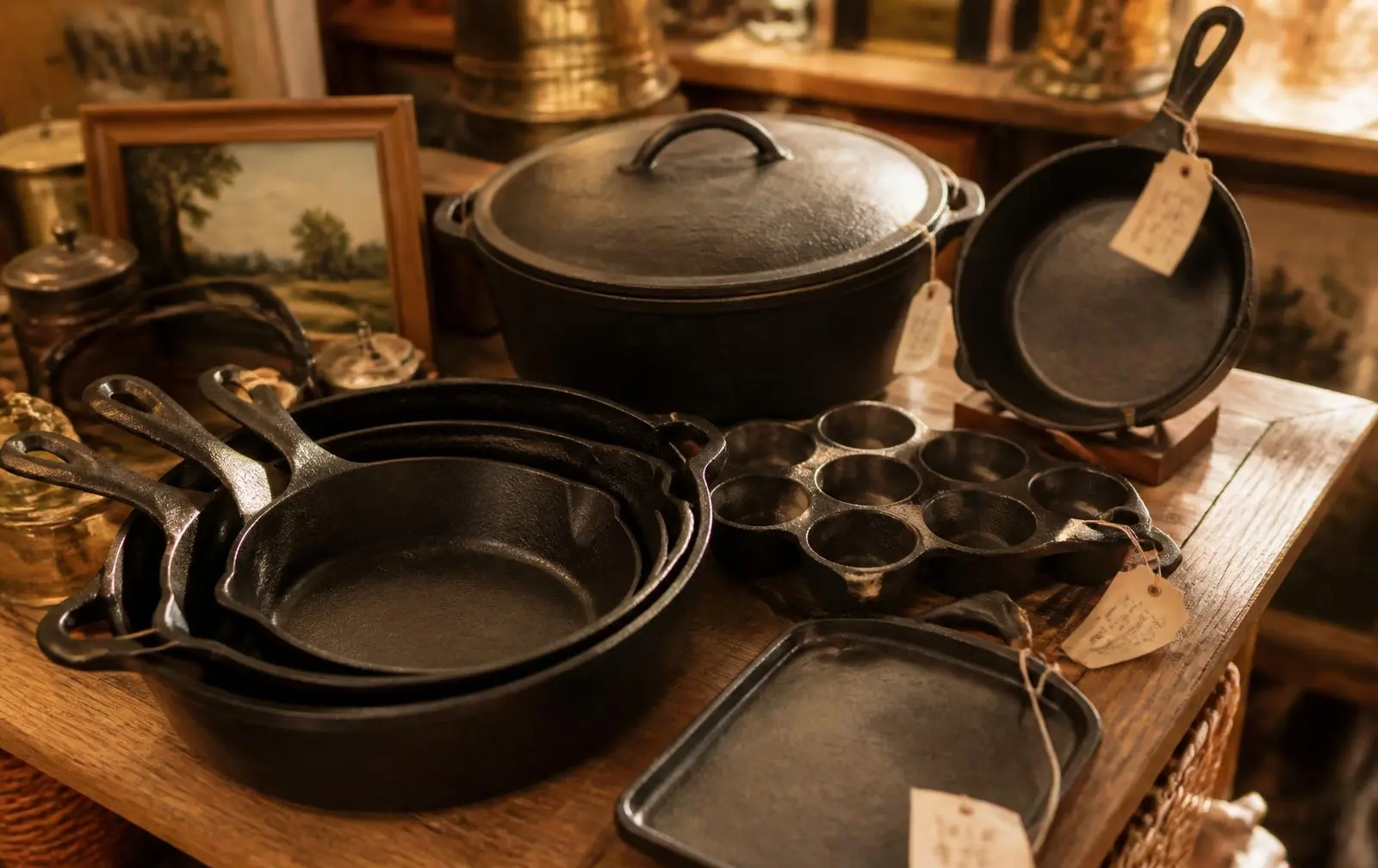
Once you've decided you're interested, run through this checklist right there at the sale:
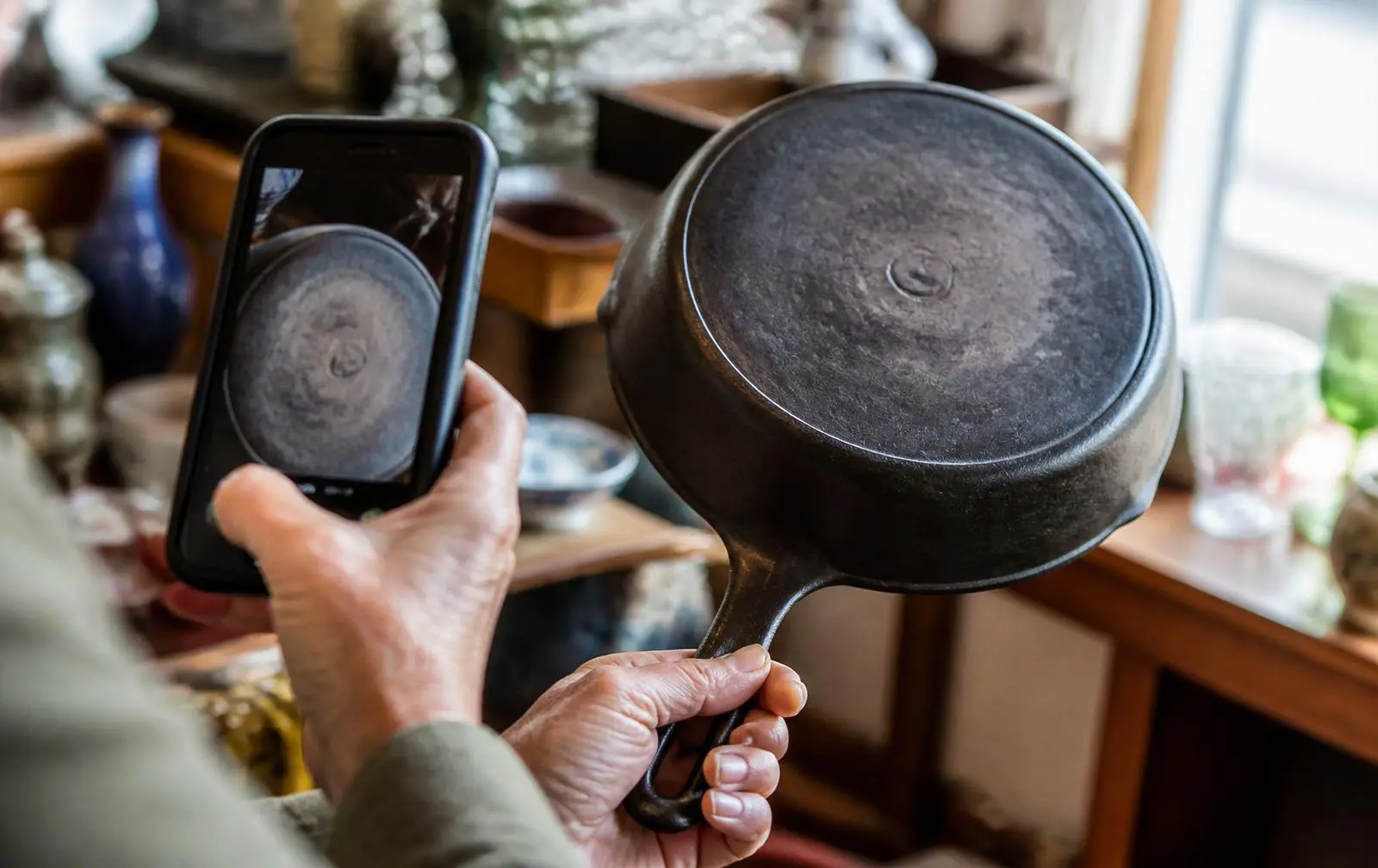
- Flip it and photograph the bottom. The mark is everything. If you can't see one, use your phone flashlight at a low angle — old marks can be almost worn smooth.
- Check for cracks. Ring it — tap the edge gently with a fingernail. A crack-free pan rings like a bell. A dull thud = cracked and dead. A hairline crack in the cooking surface kills the value.
- Check for warping. Set it on a flat surface. A "spinner" that rocks means the bottom has warped from a bad thermal shock — usable, but half the value.
- Check for pitting. Deep pitting inside the cooking surface is a permanent scar. Pitting on the outside is cosmetic.
- Rust is fine. Even ugly, orange, "ruined-looking" rust. It cleans off. Do not walk away from a marked pan because of rust.
- Handle wobble. On skillets, check the handle-to-pan joint for cracks. This is where old pans fail.
- Do not test-scrub. Never take steel wool to a piece you don't own yet. Some estate sale staff get testy about it and it doesn't help you assess anything.
The one deal-breaker in that list is a crack. Everything else is fixable. Rust, crud, mystery black gunk, decades of neglect — all cleanable. This is the whole reason cast iron is such a rewarding thing to hunt: the ugly pans are often the deals.
How to clean and restore rusty cast iron (the safe methods)
You brought it home. Now what? There are four widely-used restoration methods in the cast iron community, ranging from "quick fix" to "nuclear." All of them are covered in depth by Cast Iron Collector's restoration guide — treat this as your at-a-glance version.
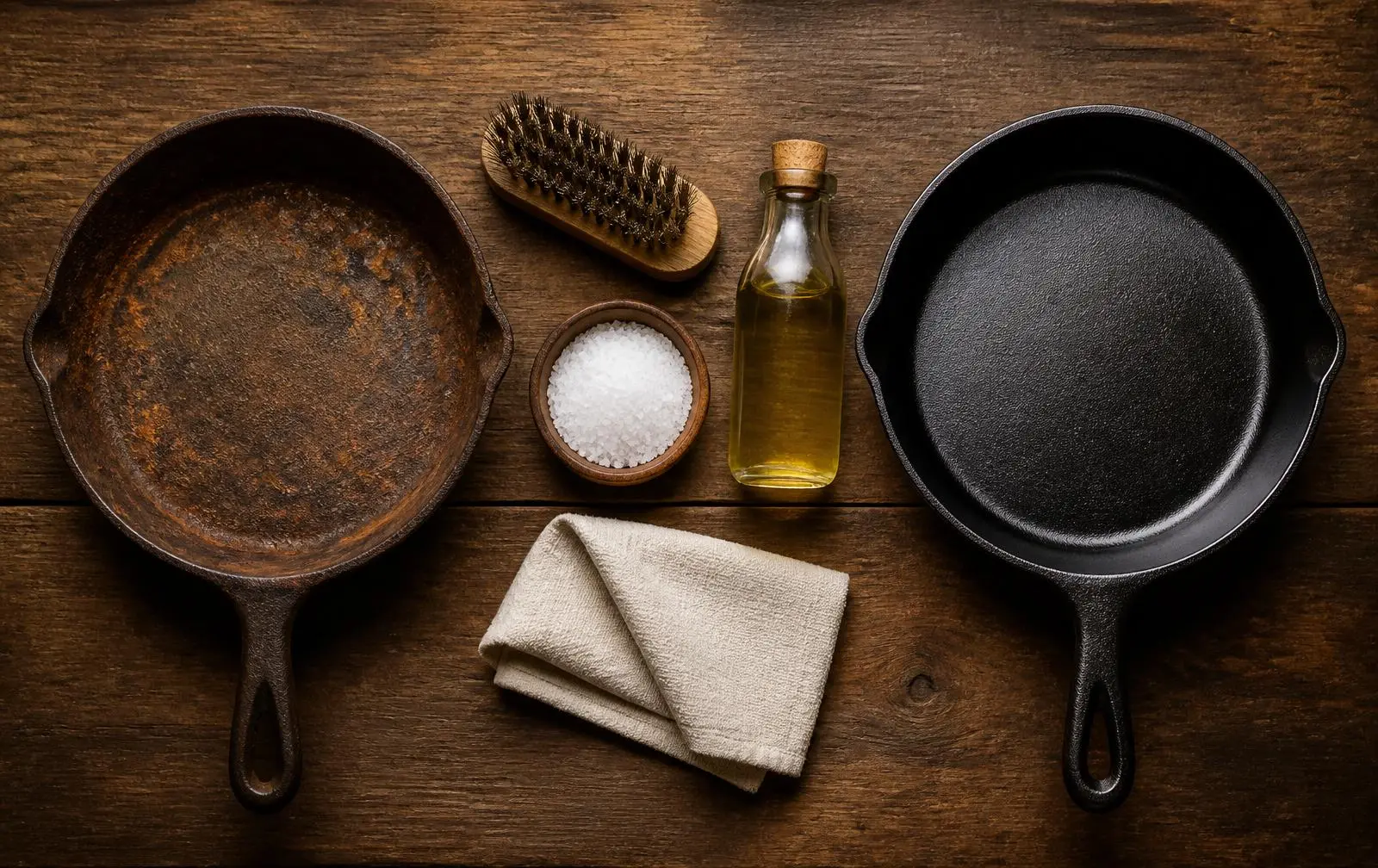
Method 1: Light surface rust — coarse salt scrub
For a pan that just needs freshening up. Cover the surface with coarse kosher salt, add a splash of oil, and scrub hard with a rag or half a potato (yes, really — the oxalic acid helps). Rinse, dry over a burner, apply a thin coat of oil. Done. Cook's Illustrated / America's Test Kitchen has covered this technique for years.
Method 2: Moderate rust — vinegar bath
For orange rust across the surface. Submerge the pan in a 1:1 mix of white vinegar and water for 1 to 8 hours max — no longer. Check every hour. Vinegar keeps eating iron once the rust is gone, so pulling it too late will eat the pan itself. Scrub, rinse, dry immediately, oil, and re-season.
Method 3: Heavy crust — lye bath
For decades of built-up carbon and grease. Mix 1 lb of pure lye (100% sodium hydroxide) per 5 gallons of water in a plastic bucket, add pan, wait 1–7 days. Lye dissolves organic gunk but doesn't touch iron. Wear gloves and safety glasses — lye is caustic. This is the standard "reset" method used by serious collectors.
Method 4: The nuclear option — electrolysis
For truly ruined pieces or bulk restoration. A battery charger, a bucket of water and washing soda, a sacrificial piece of steel — and rust is electrically pulled off the pan. There's a great electrolysis walkthrough on Cast Iron Collector if you want to try it. Overkill for one pan; incredible for restoring ten.
The one thing you should NOT do
Do not run it through a self-cleaning oven cycle. Yes, it works. It also warps thin vintage skillets and cracks handles by taking the metal past 900°F. If a pan is worth restoring, it's worth doing right.
How to season cast iron so it lasts forever
Seasoning is not a mystery. It's just polymerized oil — thin layers of fat, baked past their smoke point, that bond into a hard, slick surface. The Lodge seasoning guide and Serious Eats' definitive science-based cast iron seasoning article will teach you more than any of this — but here's the honest, no-drama version:
- Wash the raw pan with hot water and a little soap (yes, soap is fine on bare iron; the "no soap" rule applies to seasoned pans).
- Dry it completely — over a burner if needed. Any water left will flash-rust in the oven.
- Apply a shockingly small amount of oil — a teaspoon of flaxseed, grapeseed, or Lodge's own seasoning spray — and wipe it in with a lint-free cloth. Then wipe it all off again. It should look almost dry.
- Bake it upside down at 450–500°F for one hour, with a foil sheet on the rack below to catch drips. Turn the oven off and let the pan cool inside.
- Repeat 3–5 times for a new or freshly-stripped pan.
Then just cook in it. Cornbread, bacon, roasted vegetables — every meal thickens the seasoning. Fried chicken and searing steaks builds it fastest. In three months of regular use, a properly-seasoned pan will be as slick as any non-stick you've owned, and it'll outlive you.
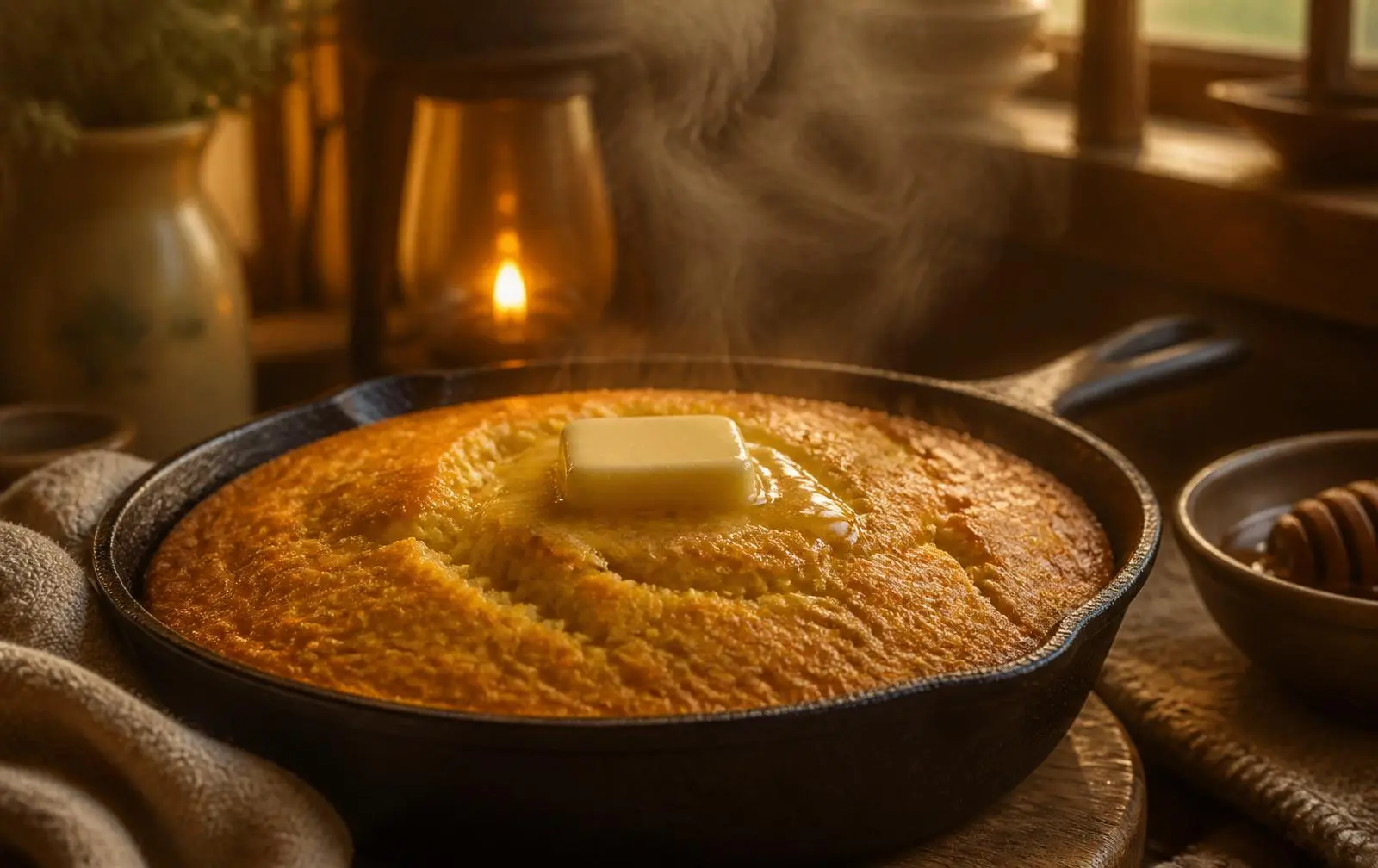
Daily-use rules to keep it happy:
- Rinse hot with water and a chainmail scrubber. Soap is fine sparingly.
- Dry over a burner. Never air-dry.
- Wipe with a whisper of oil after every wash.
- Don't cook highly acidic things (tomato sauce, wine reductions) for long stretches in a new-seasoned pan.
- Don't leave water sitting in it. Ever.
What cast iron is actually worth (real 2026 numbers)
Prices below are based on sold eBay listings — not asking prices, which are often fantasy — cross-referenced with the WAGS collector price guides. Rough retail ranges for a piece in "good user" condition (fully cleaned, well-seasoned, no cracks or warp):
| Piece | Realistic value |
|---|---|
| Griswold #8 large block logo skillet | $60–$150 |
| Griswold #8 slant logo skillet | $120–$275 |
| Griswold #3 or #13 skillet | $250–$1,000+ |
| Griswold spider-logo skillet | $800–$3,500+ |
| Wagner Ware "Sidney -O-" #8 | $40–$90 |
| Wagner #8 pre-1935 | $70–$180 |
| Wapak Indian Head skillet | $300–$1,200 |
| Favorite Piqua Ware skillet | $75–$400 |
| Unmarked heat-ring skillet | $25–$75 |
| Vintage Lodge (pre-1960) skillet | $40–$120 |
| Modern Lodge skillet | $10–$30 |
| Griswold griddle or waffle iron | $80–$400 |
| Cornbread / gem / muffin pan | $40–$300 |
Two big variables:
- Condition premium. A perfect, unrusted, unwarped, no-crack pan is worth 2–3× a "user grade" version of the same piece.
- Complete waffle irons, muffin pans, and specialty items (heart pans, egg-poachers, Dutch ovens with the correct original lid) command real premiums — especially matched pairs.
One caveat worth stating plainly
these are collector/resale values, not what you'll get flipping to a neighbor. The market for old cast iron is nationwide and mostly online — eBay sold comps are your source of truth. When in doubt, snap a photo and check the value on the spot with the free Ai Appraiser — it pulls live comps so you know before you commit.
The homesteader's angle (why non-resellers love this too)
Half the people buying cast iron at estate sales have no intention of ever reselling it. They just want to cook. A honestly-seasoned #8 skillet will:
- Sear a steak better than any pan in your kitchen
- Bake cornbread with a crust that's genuinely worth writing home about
- Make roasted chicken thighs that ruin restaurant chicken thighs for you forever
- Move seamlessly from stovetop to oven to campfire
- Cost less than any decent non-stick and last a hundred times longer
The whole homesteader / real-food / from-scratch community — from King Arthur's cast iron recipes to homestead YouTube — runs on old iron. Every estate sale kitchen in America is a chance to add another piece to that lineup for the price of a fast-food lunch.
How to actually find the good stuff (without wasting Saturdays)
The best cast iron shows up in kitchens of houses built between roughly 1900 and 1970 — the exact demographic that estate sales serve. Here's the smart workflow:
- Browse estate sales near you the night before. Look for kitchen photos in the listings. A house whose kitchen has old cabinets, ceramic canisters, and an enamel bread box almost always has cast iron.
- Add "cast iron," "Griswold," and "Wagner" to your wishlist alerts — you'll get a ping the moment any nearby sale lists a match.
- Get to the kitchen first. Most treasure hunters go to the jewelry table. Head straight for the pantry, the cabinets under the range, and the garage shelves.
- Photograph and check on the spot. Snap the bottom, run it through the Ai Appraiser for a live value, decide in 30 seconds. Sellers respect a fast buyer.
- Plan the day. Cast iron is heavy — no one wants to circle a city hitting eight sales at random. Our route planner will chain your morning stops in the shortest driving order so you actually make it to that last kitchen before it's picked clean.
Want to go deep on sourcing strategy in general? Our companion posts on the 13 vintage treasures dealers always grab and how to make money reselling from estate sales pair perfectly with this one.
Questions & answers
Frequently asked questions
How can I tell if cast iron is valuable?
Turn the pan over. Look for a maker's name or logo in the center of the bottom, a size number near the handle, and a raised heat ring around the outer edge. Vintage American makers — Griswold, Wagner, Wapak, Favorite, and pre-1960 Lodge — are the most valuable. Then check the interior: a glass-smooth milled cooking surface confirms pre-1960s American manufacture. Even unmarked skillets with a heat ring, smooth interior, and thin walls are typically worth $25–$75.
How much is a Griswold cast iron skillet worth in 2026?
A common Griswold #8 large block-logo skillet in good shape sells for $60–$150 on eBay. Slant-logo pieces run $120–$275. Rare sizes (#3, #13, #14) start around $250 and can exceed $1,000. The rarest spider-logo pieces sell for $800 to over $3,500 depending on size and condition.
Is rusty cast iron ruined?
No. Even severely rusted cast iron is almost always restorable. Light rust cleans off with coarse salt and oil; moderate rust responds to a 1:1 vinegar-and-water bath (under 8 hours); heavy crust needs a lye bath or electrolysis. As long as the pan isn't cracked or warped, rust is cosmetic — a $5 rust bucket often becomes a $150 skillet after a weekend of restoration.
Can I put cast iron in the dishwasher?
No. Dishwashers strip seasoning and encourage flash-rust. Wash cast iron by hand with hot water (a little soap is fine), dry it immediately over a burner, and wipe on a whisper of oil before storing.
What's the difference between vintage Lodge and modern Lodge?
Vintage (pre-1960) Lodge has a machined-smooth interior like Griswold and Wagner and often carries a three-notch heat ring. Modern Lodge is intentionally left pebbly from the sand mold and doesn't have a heat ring. Both are made in South Pittsburg, Tennessee, but the vintage version cooks smoother and sells for 3–5× the price of a comparable new pan.
Should I clean and season a piece before selling it?
Only if you know what you're doing. A poor cleaning job can scar the surface and destroy the value — and heavy machine-buffing can obscure a maker's mark. If in doubt, sell it as-is and let the collector restore it. The exception: an obvious modern piece with light surface rust is worth a quick salt-scrub before listing.
The bottom line
Cast iron is the estate-sale category with the best combination of three things a treasure hunter wants: it's everywhere, it's mispriced constantly, and there's a huge, hungry, informed community waiting to buy the rare pieces at full price. All you need to compete is a phone, a five-minute cheat sheet, and the discipline to always, always turn the pan over.
Ready to hunt? Find estate sales near you this weekend, set a wishlist alert for "cast iron", and check any pan's value on the spot with the free Ai Appraiser. The Griswolds are still out there. Someone's about to find them — it might as well be you.
Keep exploring
Ready to start your own treasure hunt?
Discover estate sales near you and find incredible deals.
Explore Sales Near Me
About the author
Andy
Founder, EstateSaleFinder.net
Hi, I'm Andy — a retired commercial photographer turned developer with a five-year (and counting) obsession with estate sales. I started EstateSaleFinder.net because I knew there had to be an easier, smarter way to find and list estate sales. Now I get to chase treasure and build the tool I always wished existed.