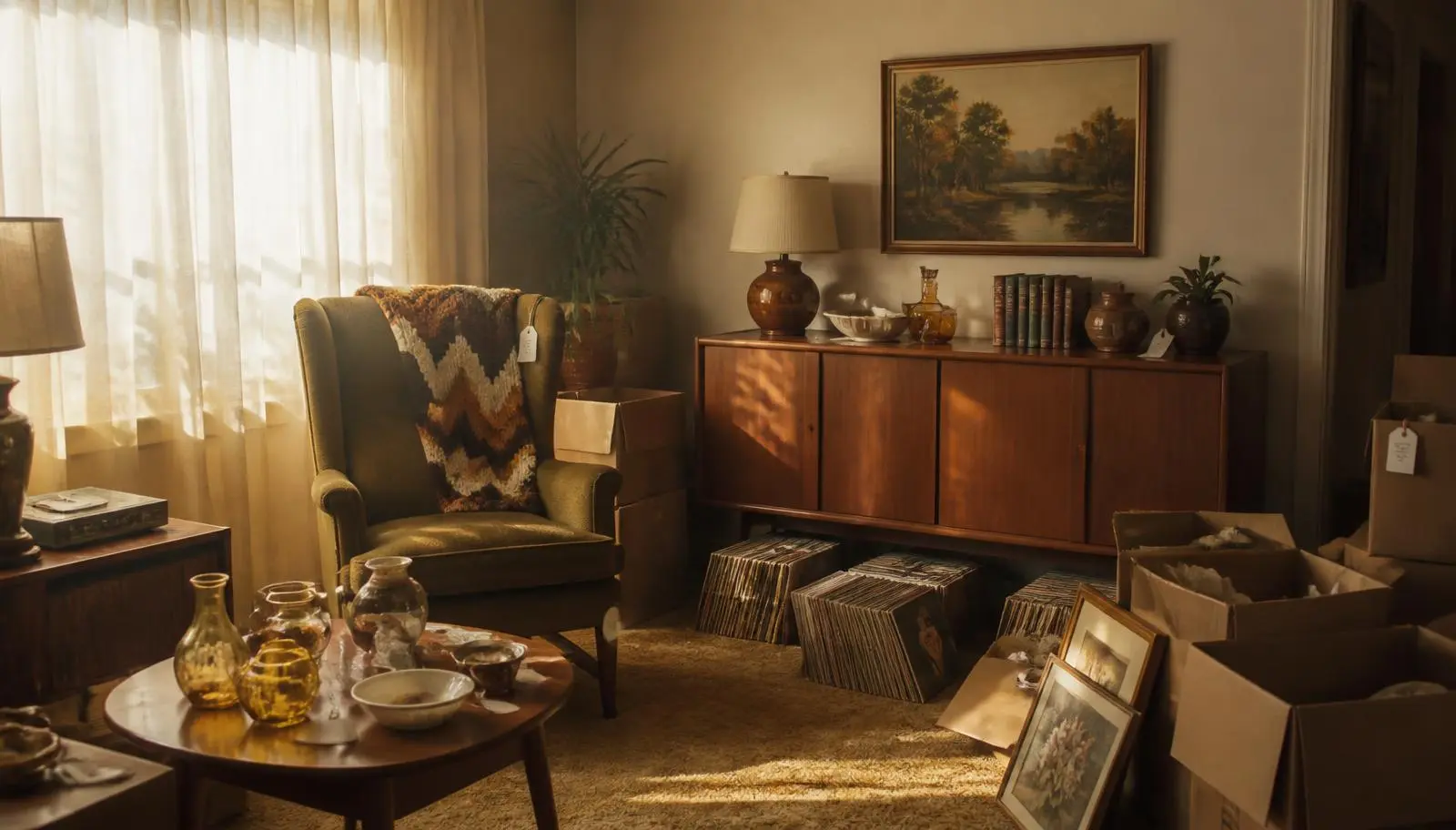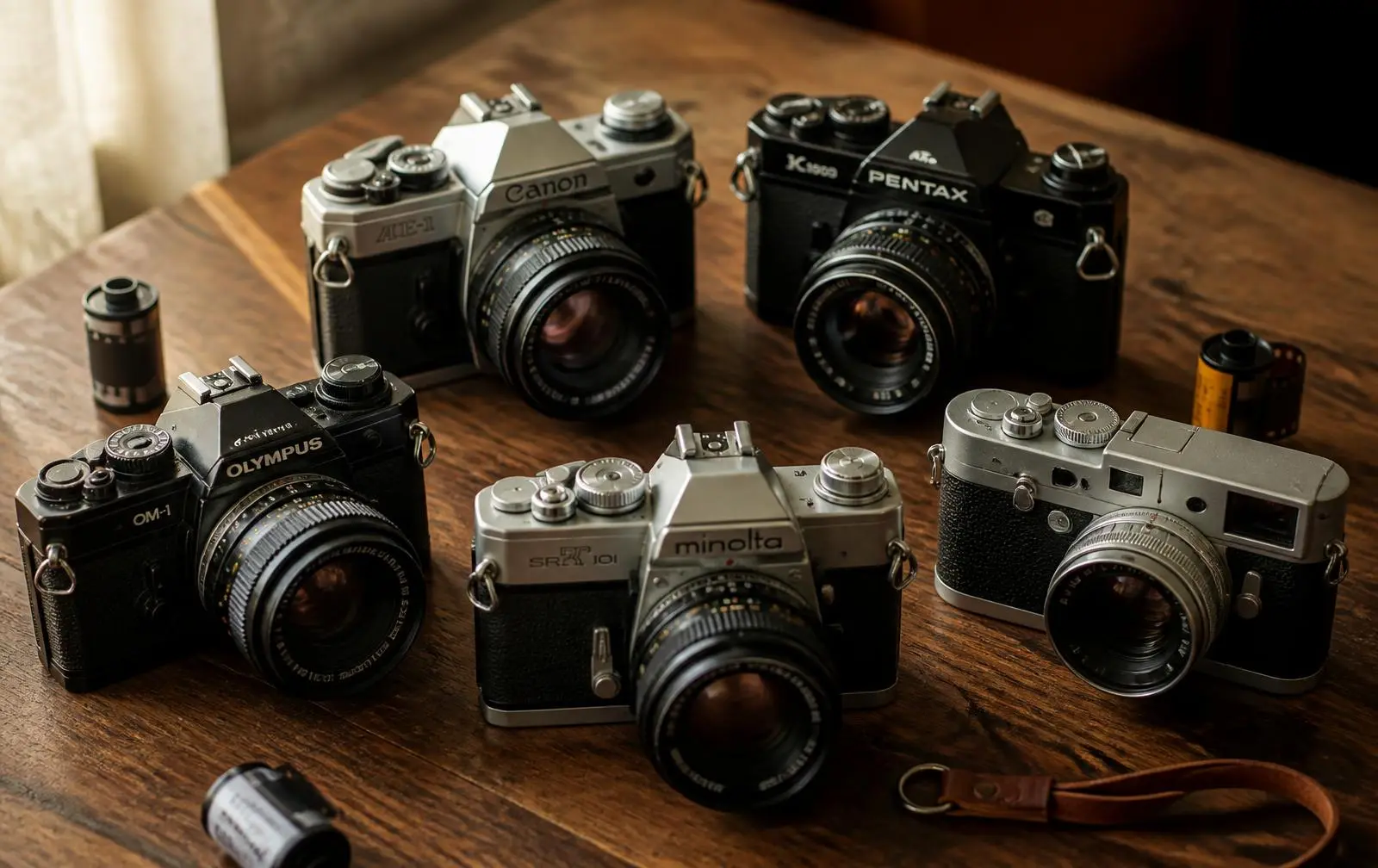
13 Vintage Treasures Antiques Dealers Always Grab at Flea Markets & Estate Sales
Antiques dealers move fast for a reason: they know which flea market finds are secretly worth real money. Here are the 13 vintage treasures they grab first — and exactly what to check before you buy.
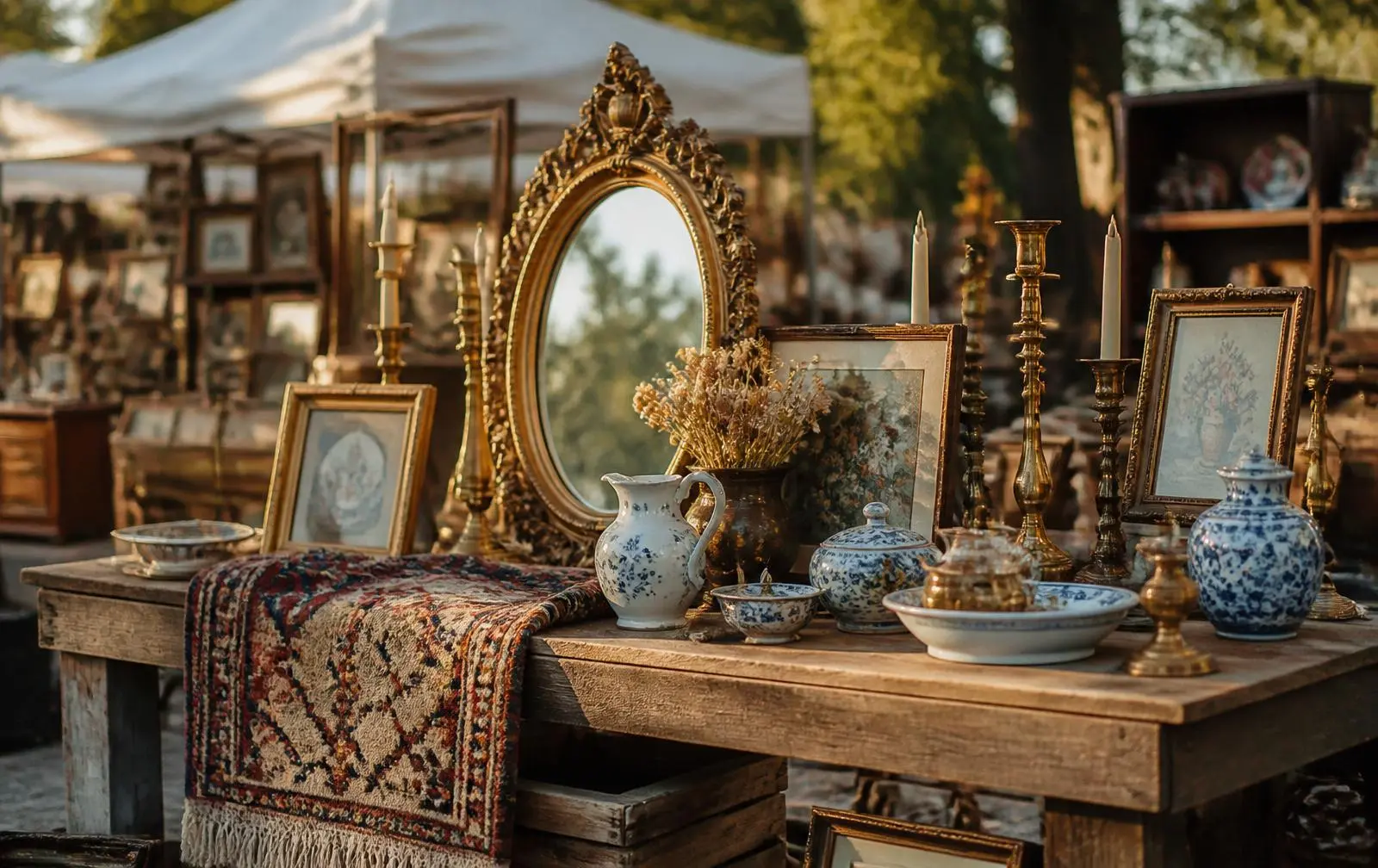
Antiques dealers don't wander flea markets — they hunt. The moment the gates open, they head straight for a short list of vintage items worth money that most shoppers walk right past: solid brass candlesticks, blue and white transferware, real mid-century furniture, ornate mirrors, handwoven rugs. These are the flea market finds that quietly resell for real money, and once you know the list, you'll never look at a folding table of "junk" the same way again.
We pulled together the pieces the pros grab first — expanded well past the usual roundup — plus exactly what to check on each one so you buy smart, not just fast. Grab your coffee. Let's hunt.
Why antiques dealers move so fast
Dealers aren't guessing. They're reading clues: signatures, maker's marks, age, unusual materials, and obvious quality hiding under ordinary presentation. A heavy base, a hand-finished edge, a stamp on the bottom — those little tells separate a $3 knickknack from a $200 sleeper.
The good news? You can learn the same clues. And when you're standing there unsure, you can point your phone at anything and get an instant value read with the Ai Appraiser — like having a dealer in your pocket. Curious what's hot right now before you even leave the house? The free Trending Estate Sale Items report shows the exact pieces buyers are searching for most, ranked by real demand.
Now, the list.
1. Original art & signed prints
Framed art is the most overlooked category at any sale, because people assume the style is "out." Dealers know better. Look for original paintings, lithographs, and prints that are signed and numbered — limited runs are where the value lives.
What to check
flip it over. Gallery labels, a signature in pencil, or a numbered edition (like 12/150) are all green flags. Even if it's not your taste, there's always a market for vintage framed artwork.
2. Vintage brass candlesticks

A pair of solid brass candlesticks with real heft and a natural patina is a dealer favorite — they're timeless, they style beautifully, and vintage brass is having a serious moment in home decor.
What to check
pick it up. Real brass is heavy and cool to the touch; a magnet won't stick to solid brass (if it does, it's brass-plated steel). Don't over-polish — collectors pay more for that warm, aged glow.
3. Solid-wood side tables & stools
Newer furniture is mostly particleboard. A hefty solid-wood side table or stool is more practical, easier to move, and far better made — and it works as a plant stand, nightstand, or accent piece.
What to check
lift it (weight = solid wood), look for interesting leg shapes and joinery, and check that it's sturdy. Dovetail joints and no visible screws usually mean quality.
4. Ornate mirrors
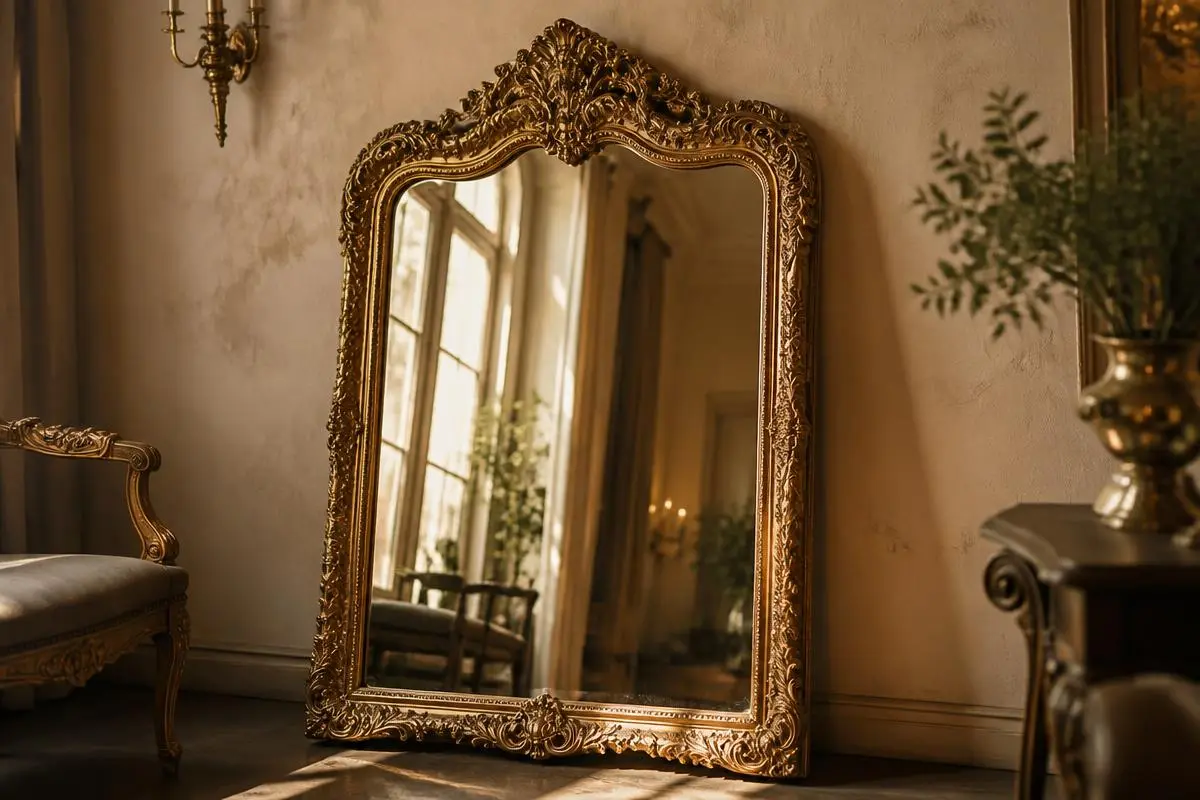
Antique mirrors with ornate frames are always in demand. They bounce light around a room, add instant character, and a little age-spotting on the glass only makes them more charming.
What to check
examine the frame material (carved wood and gesso beat plastic every time) and don't be scared of a slightly foggy mirror — that "foxing" is original and desirable.
5. Blue & white transferware
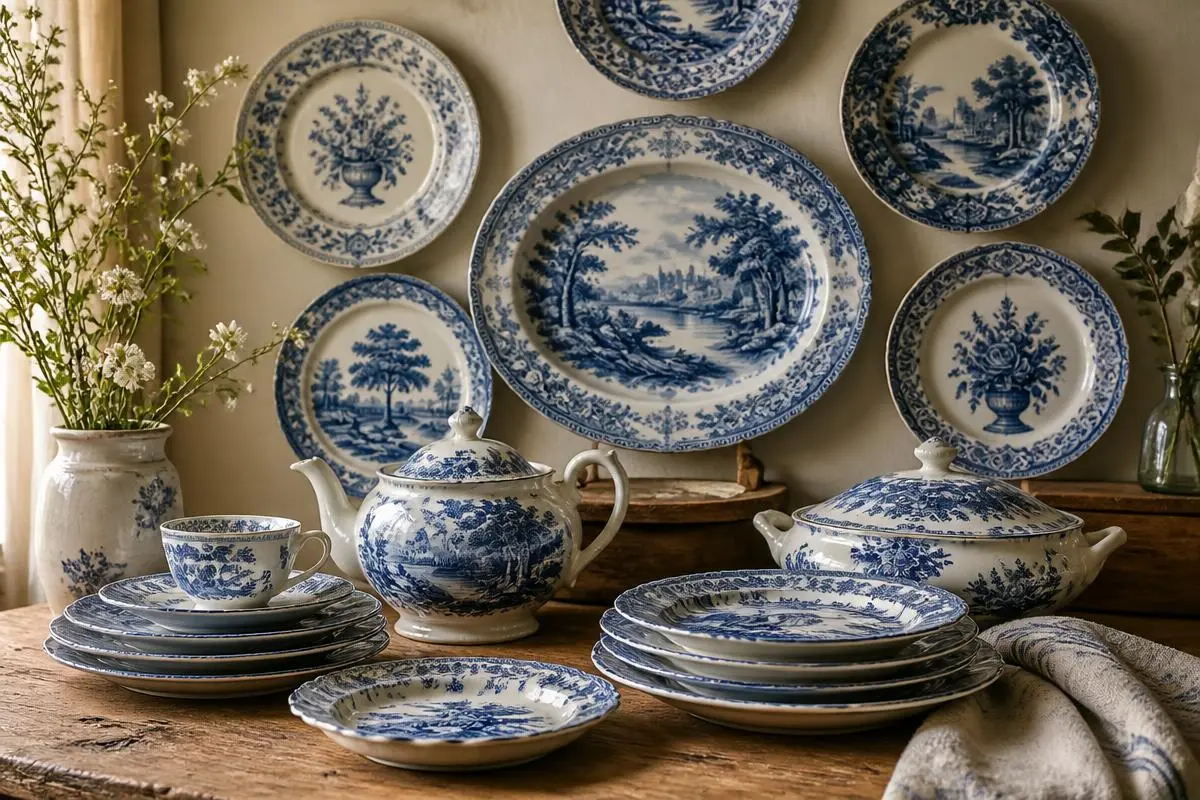
Transferware — classic blue and white china — is one of the most collectible things you can find. It mixes with nearly any decor, looks stunning displayed on a wall, and complete sets command real money.
What to check
turn a plate over for the maker's mark (Spode, Johnson Bros, and English potteries are prized), and run your fingers over the surface — crazing (fine cracks) is normal for age, but avoid chips on the rim.
6. Mid-century modern furniture
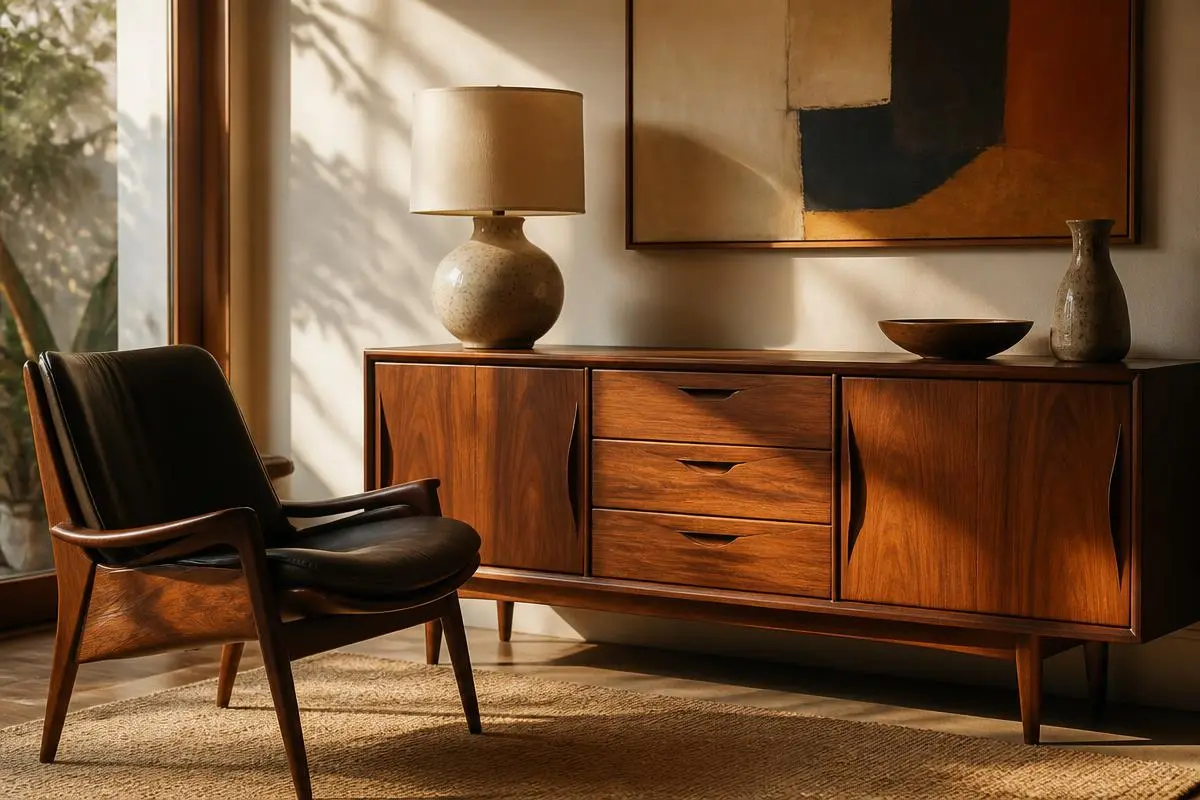
Mid-century furniture is the blue-chip stock of the flea market world — teak and walnut credenzas, tapered-leg dressers, and iconic lounge chairs. Demand has stayed strong for years, and quality pieces only get harder to find.
What to check
look for maker's stamps inside drawers, tapered legs, and warm hardwoods (not veneer over MDF). A signed Danish or American-made piece is a genuine payday.
7. Handwoven rugs
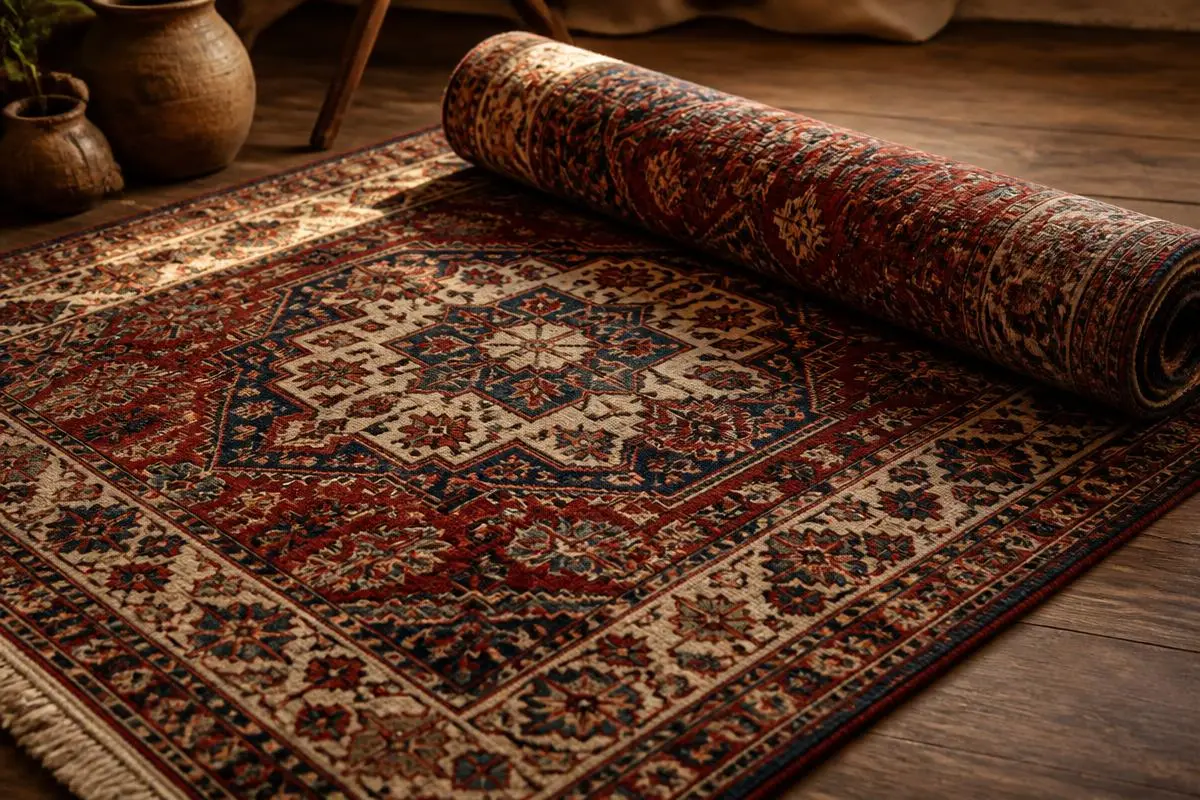
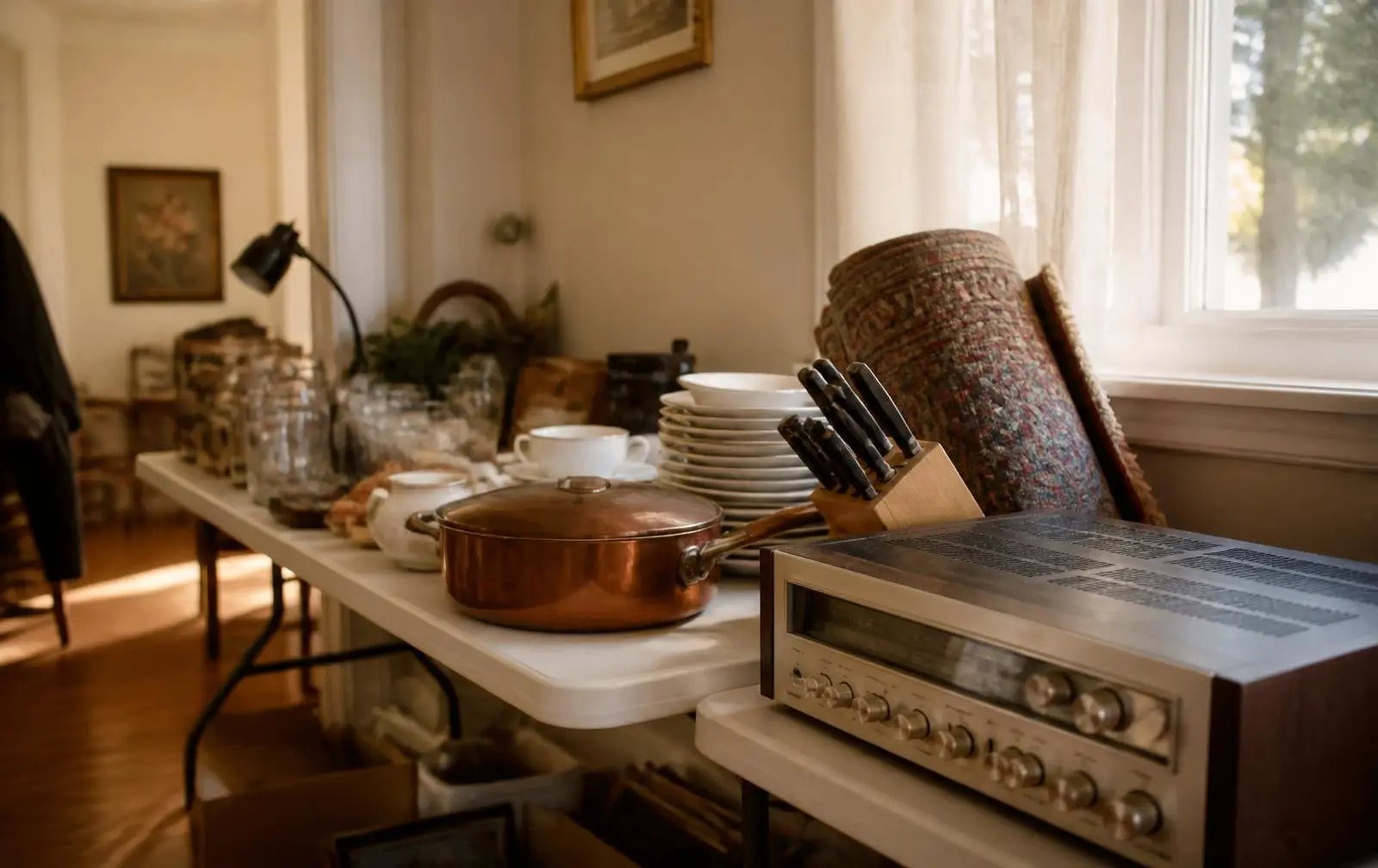
A genuine handwoven rug is one of the most rewarding finds out there. Natural fibers, made to last generations, and even a little wear reads as character rather than damage.
What to check
flip a corner — hand-knotted rugs show the pattern on the back, and you'll see individual knots. Machine-made rugs have a uniform, printed-looking backing.
8. Costume & fine jewelry
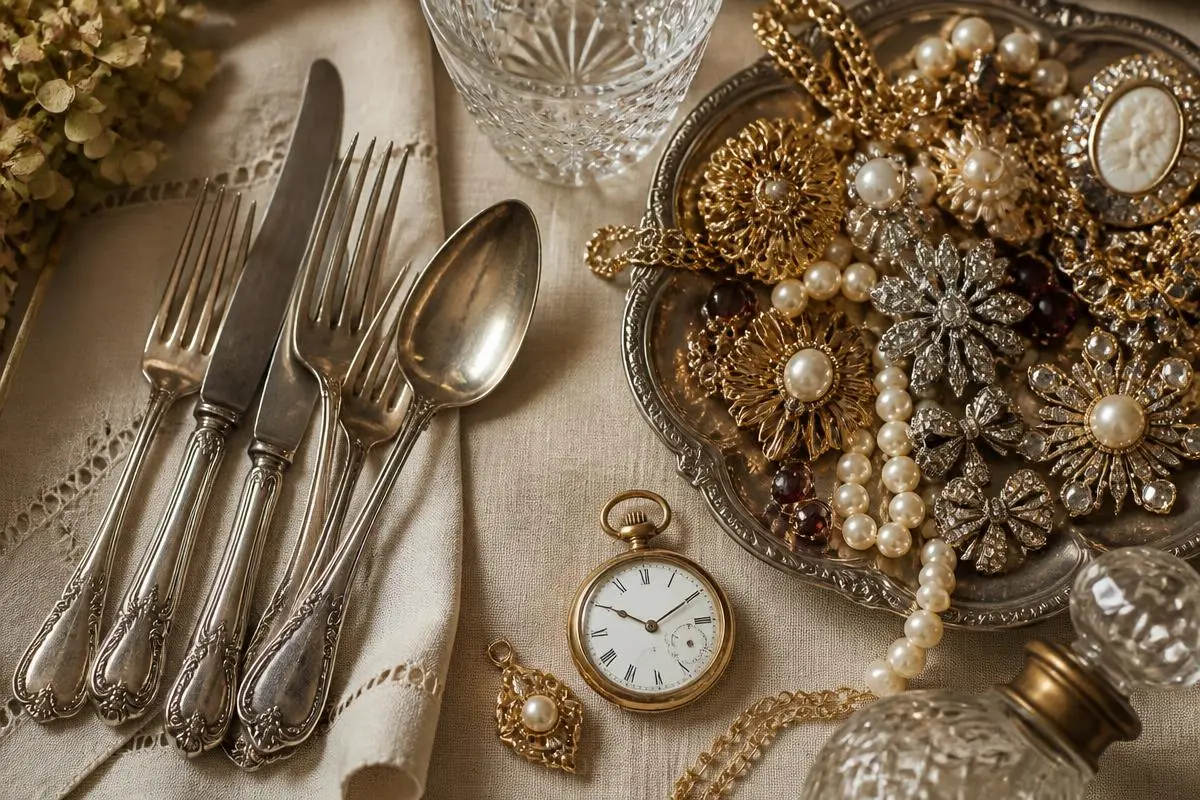
The jewelry box is where sleepers hide. Signed costume jewelry (think Trifari, Weiss, Coro) sells briskly, and every so often real gold or a genuine gemstone gets tossed in with the rhinestones.
What to check
look for maker's marks on clasps and backs, karat stamps (10k, 14k, 925 for sterling), and real weight. When in doubt, snap a photo and check the value on the spot.
9. Sterling silver flatware
Old sterling silver flatware carries real intrinsic value on top of its beauty. A stray serving spoon or a partial set is often mispriced by sellers who don't check the marks.
What to check
look for "Sterling" or "925" stamped on the handle. Plated pieces say "EPNS" or "silverplate" — still nice, but not the same payday.
10. Cut glass & crystal
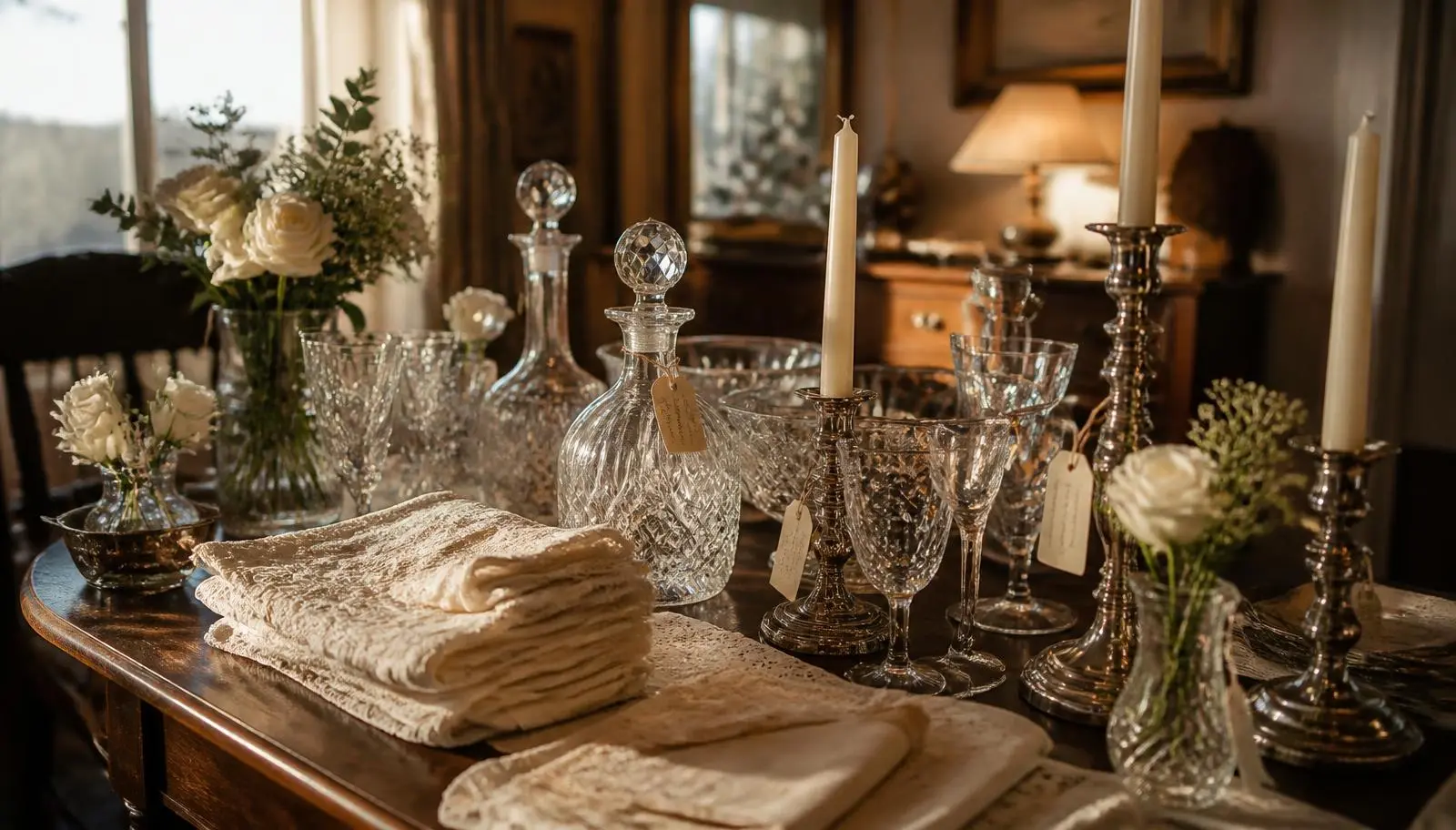
Heavy cut crystal — decanters, bowls, candlesticks — sparkles like nothing modern glass can. Good pieces are weighty and ring when you tap them.
What to check
run your finger over the cuts (real cut crystal feels crisp and sharp, molded glass feels soft), tap for a bell-like ring, and hold it to the light for that prismatic sparkle.
11. Vintage Pyrex & kitchenware
Grandma's kitchen is a goldmine. Vintage Pyrex in rare patterns, enamelware, and old cookie jars have a devoted collector base and can jump from a couple dollars to real money for the right print.
What to check
patterns like Gooseberry, Butterprint, and Pink Daisy are the ones to know; look for bright, unfaded color and minimal utensil scratches inside the bowls.
12. Marble accessories
Marble trays, pedestals, and bookends add elegance to any space, never go out of style, and are almost always underpriced at sales because they're heavy and easy to overlook.
What to check
real marble is cold, heavy, and has natural veining; resin fakes feel warm and lightweight. A few honest chips are fine and keep the price friendly.
13. Cast iron cookware
A well-seasoned cast iron skillet — especially older Griswold or Wagner pieces — cooks better than anything you'll buy new and lasts forever. Even rusty ones restore beautifully.
What to check
look for the maker's name on the bottom, a smooth (not pebbly) cooking surface on older pieces, and don't fear surface rust — it cleans right off.
How to know what a find is really worth
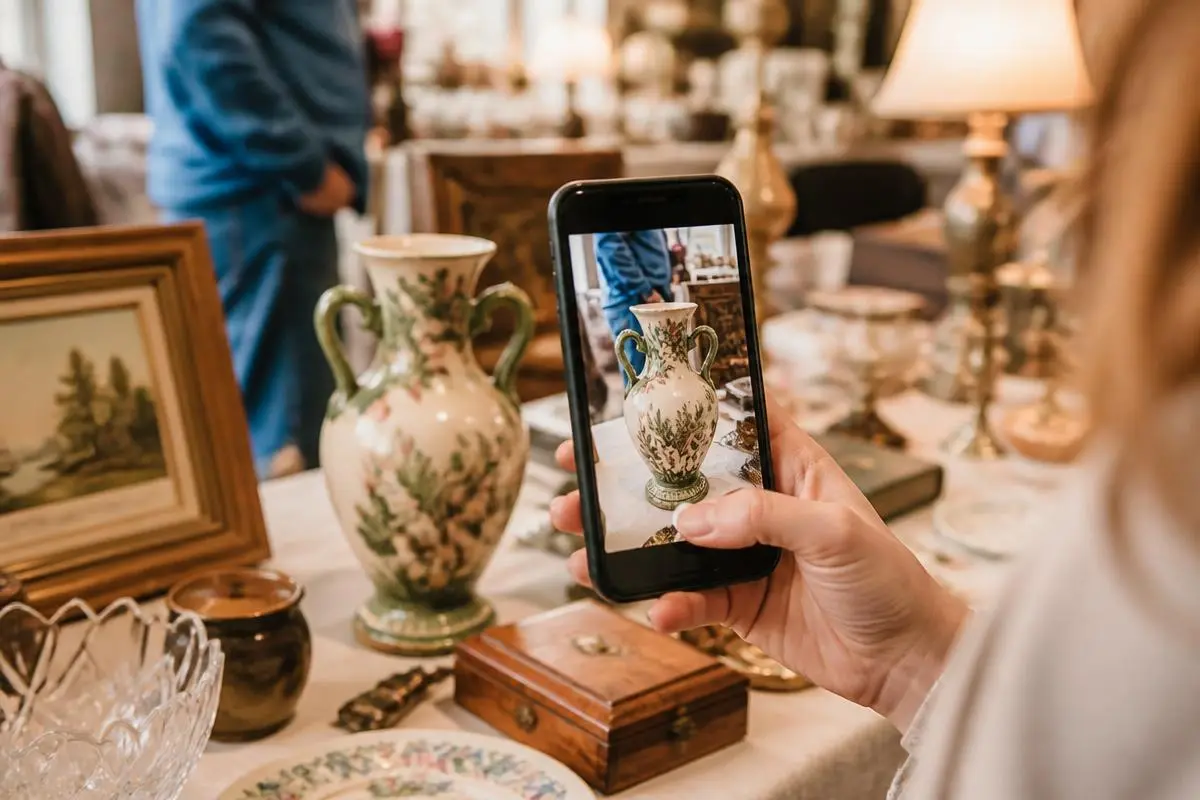
Here's the honest truth every dealer knows: the piece in your hand is only worth what someone will actually pay for it today. Trends move. A pattern that was hot last year might be quiet now, and vice versa.
That's exactly why we built tools to take the guessing out of it:
- Ai Appraiser: point your camera at anything and get an instant, real-world value estimate before you buy.
- Trending Estate Sale Items: see what buyers are searching for most, ranked by real demand — so you source what actually sells.
- Wishlist alerts: tell us what you're hunting for, and we'll ping you the moment a sale near you lists it.
- Browse estate sales near you: find this weekend's sales and plan your route before you burn a tank of gas.
Want more? Our guides on valuable finds hiding in Grandma's house and how to start reselling from estate sales go deeper on turning finds into cash.
What are the best things to look for at estate sales and flea markets?
The most valuable antiques and vintage items worth money include original signed art, solid brass candlesticks, blue and white transferware, mid-century modern furniture, antique mirrors, handwoven rugs, sterling silver, cut crystal, vintage Pyrex, and cast iron cookware. Look for maker's marks, real weight, and quality materials hiding under ordinary presentation.
How can I tell if an antique is actually valuable?
Check for clues dealers rely on: a signature or maker's mark, real heft (solid wood, brass, or marble instead of lightweight fakes), unusual materials, and craftsmanship like dovetail joints or hand-knotting. When you're unsure at the sale, use the Ai Appraiser to get an instant value estimate from a photo.
Are flea market and estate sale finds worth reselling?
Yes — top selling items at flea markets like mid-century furniture, transferware, sterling silver, and signed jewelry regularly resell for many times their purchase price. The key is sourcing pieces that are currently in demand, which you can track with the free Trending Estate Sale Items report.
The bottom line
You don't need to be an expert to hunt like one — you just need to know the list and check the clues. Brass, transferware, mid-century wood, mirrors, silver, crystal, and cast iron: memorize those seven and you're already ahead of most of the room. For a deeper cheat sheet of sleeper finds, keep 20 Things at Estate Sales That Are Secretly Worth $500+ open on your phone the next time you walk a sale.
Then let the tech do the heavy lifting. Find estate sales near you, check any find's value in seconds, and go grab something wonderful. Happy hunting.
Keep exploring
Ready to start your own treasure hunt?
Discover estate sales near you and find incredible deals.
Explore Sales Near Me
About the author
Andy
Founder, EstateSaleFinder.net
Hi, I'm Andy — a retired commercial photographer turned developer with a five-year (and counting) obsession with estate sales. I started EstateSaleFinder.net because I knew there had to be an easier, smarter way to find and list estate sales. Now I get to chase treasure and build the tool I always wished existed.