How to Identify Antiques From a Photo: 7 Steps That Actually Help
A clear photograph can turn “old vase” into a useful research lead—but only if you capture the right clues. Use this seven-step field guide, then compare the result with real sold listings.
To identify an antique from a photo, start with one clear full-object image, then photograph the base, maker's mark, construction details, damage and scale. Use those clues to form a likely identification, verify the mark against a trusted reference, and compare genuinely similar sold items—not asking prices. A photo identifier is a fast research starting point, not a certificate of authenticity or a formal appraisal.
That distinction is what makes photo identification useful instead of magical. Your phone can help you move from “mystery vase” to a searchable description in seconds. The quality of that answer depends on the evidence you give it.
Try the free Ai Appraiser with a free EstateSaleFinder account, or keep this guide open while you photograph your next find.
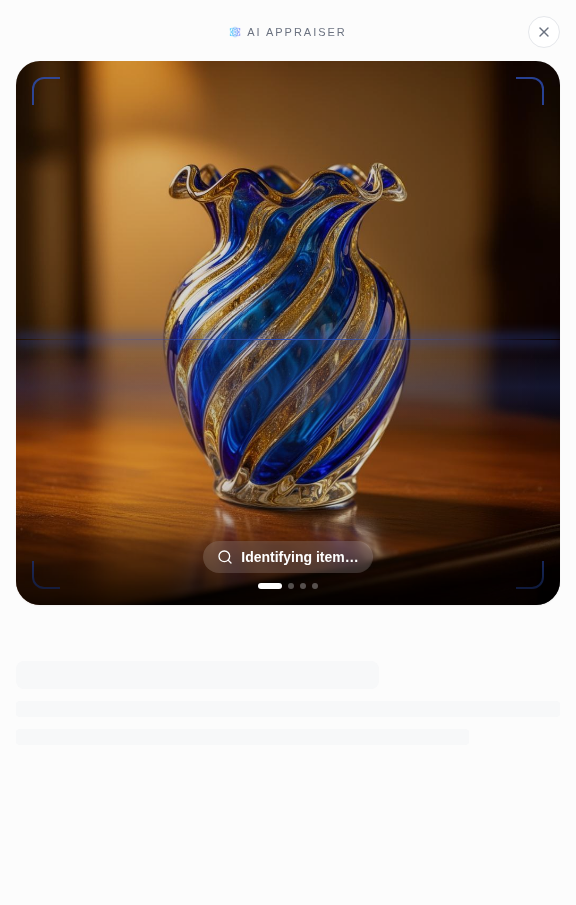
Actual EstateSaleFinder screen: the Appraiser begins identifying the photographed vase. The demo object is illustrative; the result is still a suggestion to verify.
The seven-step photo identification method
1. Start with the whole object
Place the item against a plain, contrasting background and fill most of the frame without cutting off the top, feet, handles or edges. Photograph it straight on, not at a dramatic angle. A useful first image should answer: what kind of object is this, what is its overall shape, and are all major parts present?
For reflective silver or glass, move beside a bright window and turn off the flash. For furniture, step back far enough to include the complete silhouette. For jewelry, use a clean sheet of white or neutral paper and tap the screen to focus.
2. Photograph the base and back
The most valuable clue is often on the side nobody displays. Turn over plates, vases, figurines and cookware. Photograph furniture backs and drawer undersides. Open watch cases only when you know how to do so safely.
Look for:
- Printed backstamps and paper labels
- Incised or impressed numbers
- Signatures and monograms
- Patent, model or registration numbers
- Country-of-origin wording
- Old repair labels or retailer marks
If you are working with china, use our vintage china identification guide alongside your photos.
3. Get one sharp close-up of every mark
Do not zoom from across the room. Move closer, keep the phone parallel to the mark and tap the mark to focus. Take one picture with the mark filling the frame and another showing where it sits on the object. Raking light from the side can reveal shallow impressed marks that overhead light hides.
For precious-metal marks, compare your photo with an institutional reference. The Birmingham Assay Office date-letter tables help decode British marks, while our sterling silver hallmark guide explains how town, standard, date and sponsor marks work together.
A photo of “925” may support a sterling identification, but it does not prove authenticity by itself. Stamps can be copied; plating, repairs and mixed-metal components require closer inspection or testing.
4. Show construction, materials and wear
Photograph joints, fasteners, seams, glaze, hardware, backs, interiors and unfinished surfaces. Those details often separate a period object from a later revival or reproduction.
Useful clues include hand-cut dovetails, casting seams, screw type, tool marks, pontil marks on glass, glaze pooling, wear where hands naturally touch, and whether hardware holes suggest replacement parts. Natural wear is usually irregular. An evenly distressed finish can be decorative rather than old.
5. Record condition before cleaning
Take close-ups of chips, cracks, crazing, dents, missing stones, replaced hardware and repairs. Do this before polishing or washing anything. Aggressive cleaning can remove original surfaces, labels, patina or evidence an expert needs.
Condition changes value and sometimes identification. A vase with a ground-down rim is not directly comparable to an intact example. A ring with a replaced stone may still be attractive, but it is not the same object described in an auction record.
6. Add scale and a useful hint
Photograph a ruler flat beside the item—one image for height and another for width when both matter. Do not rely on a hand, coin or coffee mug for exact scale. Perspective makes guesses unreliable.
Then add any fact you know: “found with 1950s household items,” “mark may read Rookwood,” or “the clasp is marked 14K.” Treat family stories as leads, not proof. If an answer seems wrong, a precise hint and a better mark photo are more useful than repeating the same broad image.
7. Verify the identification and then research value
Separate the two questions:
- What is it likely to be? Match maker, pattern, material, dimensions, mark and construction.
- What might this example sell for? Compare recent sold examples with similar condition, size and completeness.
The V&A ceramics collection is a useful visual reference for ceramic forms and techniques. For jewelry descriptions and material claims, consult the FTC Jewelry Guides. Then read what an antique may be worth to build a defensible sold-comp range.
What to photograph by category
| Item | Essential photos | Clues that matter |
|---|---|---|
| Vase, pottery or china | Whole piece, side profile, base, backstamp, rim, damage | Mark, glaze, foot shape, decoration method, dimensions |
| Jewelry | Front, back, clasp, every hallmark, stone setting, damage | Metal marks, construction, maker, stone condition, weight |
| Furniture | Front, side, back, underside, drawer joints, hardware | Joinery, wood, veneer, screws, labels, replaced parts |
| Silver or flatware | Whole piece, reverse, hallmark row, pattern detail | Standard, assay office, date letter, sponsor, monogram |
| Art | Full front, signature, reverse, frame labels, surface detail | Medium, support, signature, labels, condition, dimensions |
| Glass | Whole form, base, pontil, rim, pattern close-up | Mold seams, wear, color, inclusions, applied parts |
| Books and paper | Cover, title/copyright pages, edition line, binding, faults | Printing, edition statement, dust jacket, completeness |
How EstateSaleFinder's free antique identifier works
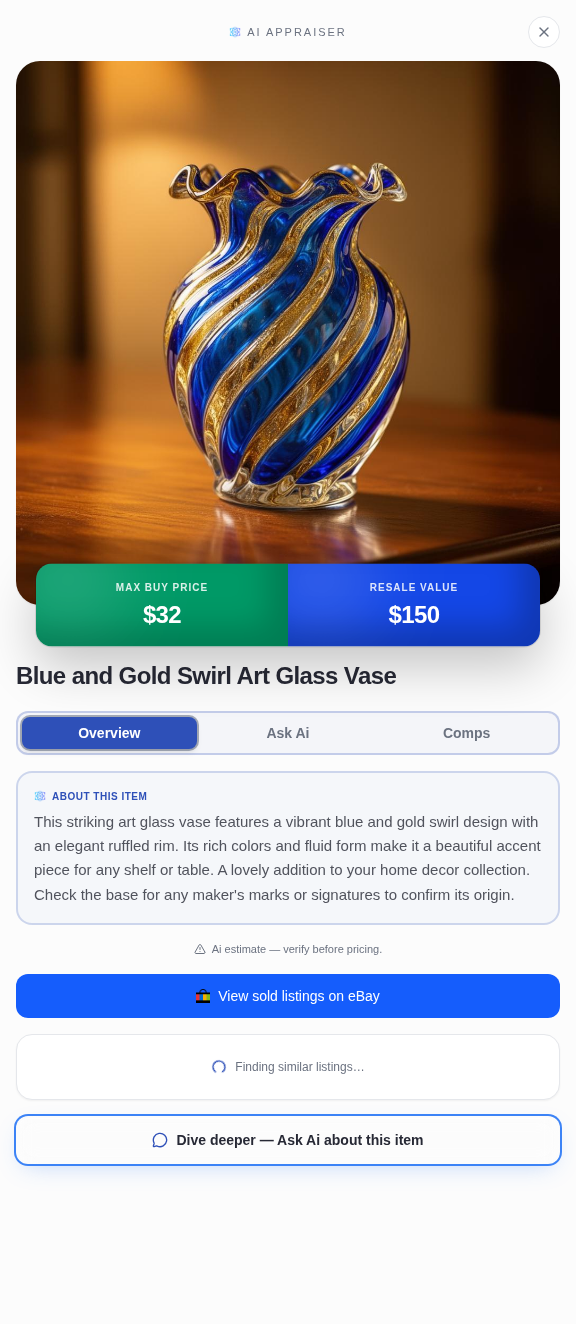
EstateSaleFinder's Ai Appraiser reads the item photo and any supporting mark photo, creates a likely title and description, and provides audience-aware value guidance. Its estimate is a suggestion. The seller or buyer remains responsible for checking the title, condition and price.
The real result screen keeps the warning beside the estimate: verify before pricing.
Buyer accounts include 10 live eBay lookups each month; seller and booth plans include unlimited lookups. The sold-listing tools are there to help test an identification against current market evidence.
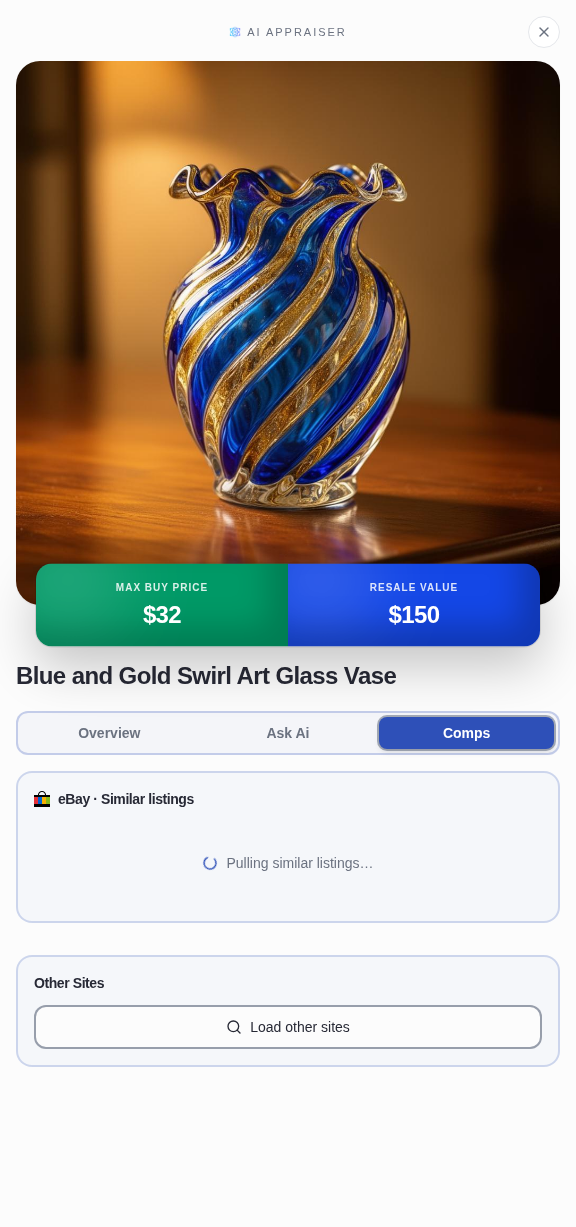
Use comparable listings only after the likely maker, material, size and condition line up.
The Ask Ai tab gives the item context, so follow-up questions can be specific: where to look for a signature, which condition problems matter, or what reproductions to watch for.
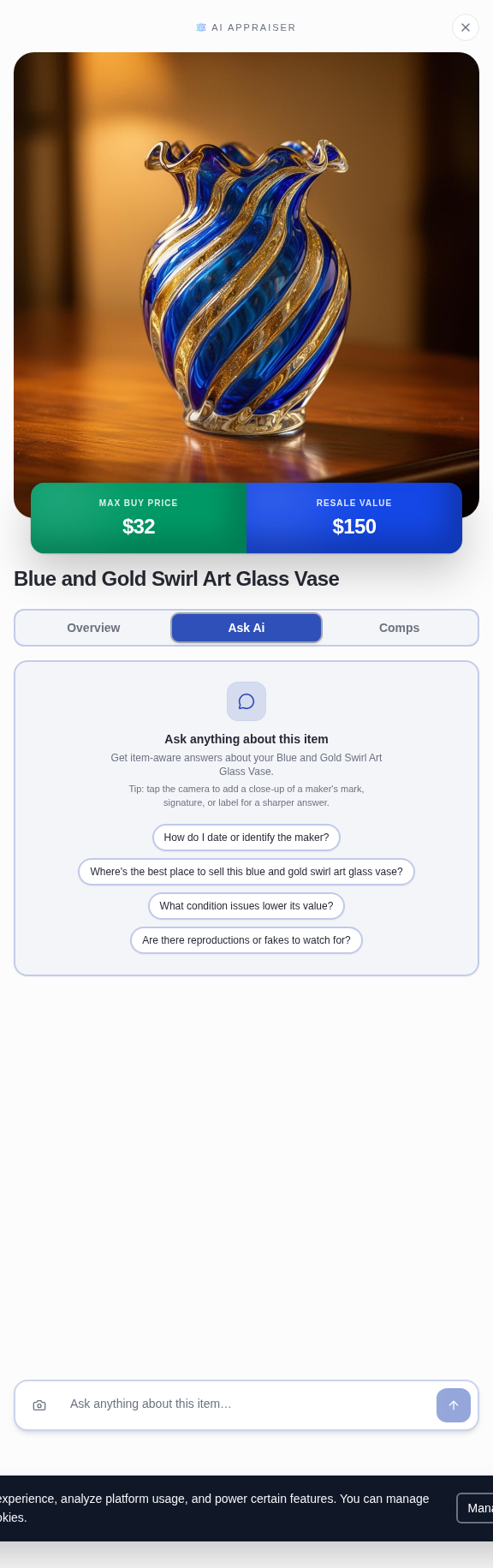
Ask a focused question and add another close-up when a mark or construction detail could sharpen the answer.
What a picture cannot prove
A photograph alone cannot reliably certify authenticity, precious-metal purity, gemstone identity, hidden repairs, internal movement condition, structural integrity or legal fair-market value. It also cannot establish provenance without documents that connect the object to its history.
Escalate to the right professional when:
- The likely value makes a mistake financially significant
- Authenticity changes the price dramatically
- The item may need insurance, tax, charitable-donation or estate documentation
- A gemstone or metal needs physical testing
- Fine art, tribal art, antiquities or regulated materials may raise legal or ethical questions
Formal appraisal assignments follow professional standards and a defined intended use. The Appraisal Foundation's USPAP resources explain why a quick online estimate and a documented appraisal are different products.
Quick answers before you take the photo
- Can a photo tell me exactly what my antique is worth? No. It can produce an identification lead and value range; condition, location, venue, fees and buyer demand affect the sale result.
- Can I identify a vase from one picture? Sometimes, but the base, rim, mark and dimensions usually make the answer much stronger.
- Can a jewelry picture prove gold or gemstones? No. Use marks as clues, then use appropriate physical testing or a qualified jeweler. Our guide to telling whether gold is real explains the limits.
- Should I clean the item first? Usually not. Photograph it first and research safe care for that material.
- Are asking prices useful? They show seller expectations, not completed market transactions. Give more weight to closely matched sold examples.
Turn the mystery object into a useful search
The win is not getting an impressive-sounding answer. The win is getting a testable identity: maker + object type + material + pattern or model + approximate era. That phrase lets you search museum collections, hallmark tables, maker archives and sold listings intelligently.
Take the whole-object photo. Turn it over. Capture the mark. Show the damage. Add a ruler. Then open the free Ai Appraiser and see what your evidence can reveal.
Continue researching:
- How estate sale professionals identify items before they buy or price them
- How to appraise estate sale items using sold comps
- Vintage china marks and pattern identification
- Sterling silver hallmarks explained
- Find nearby estate sales with promising inventory
- Save a wishlist and get alerts for wanted items
Keep exploring
Ready to start your own treasure hunt?
Discover estate sales near you and find incredible deals.
Explore Sales Near Me
About the author
Andy
Founder, EstateSaleFinder.net
Hi, I'm Andy — a retired commercial photographer turned developer with a five-year (and counting) obsession with estate sales. I started EstateSaleFinder.net because I knew there had to be an easier, smarter way to find and list estate sales. Now I get to chase treasure and build the tool I always wished existed.