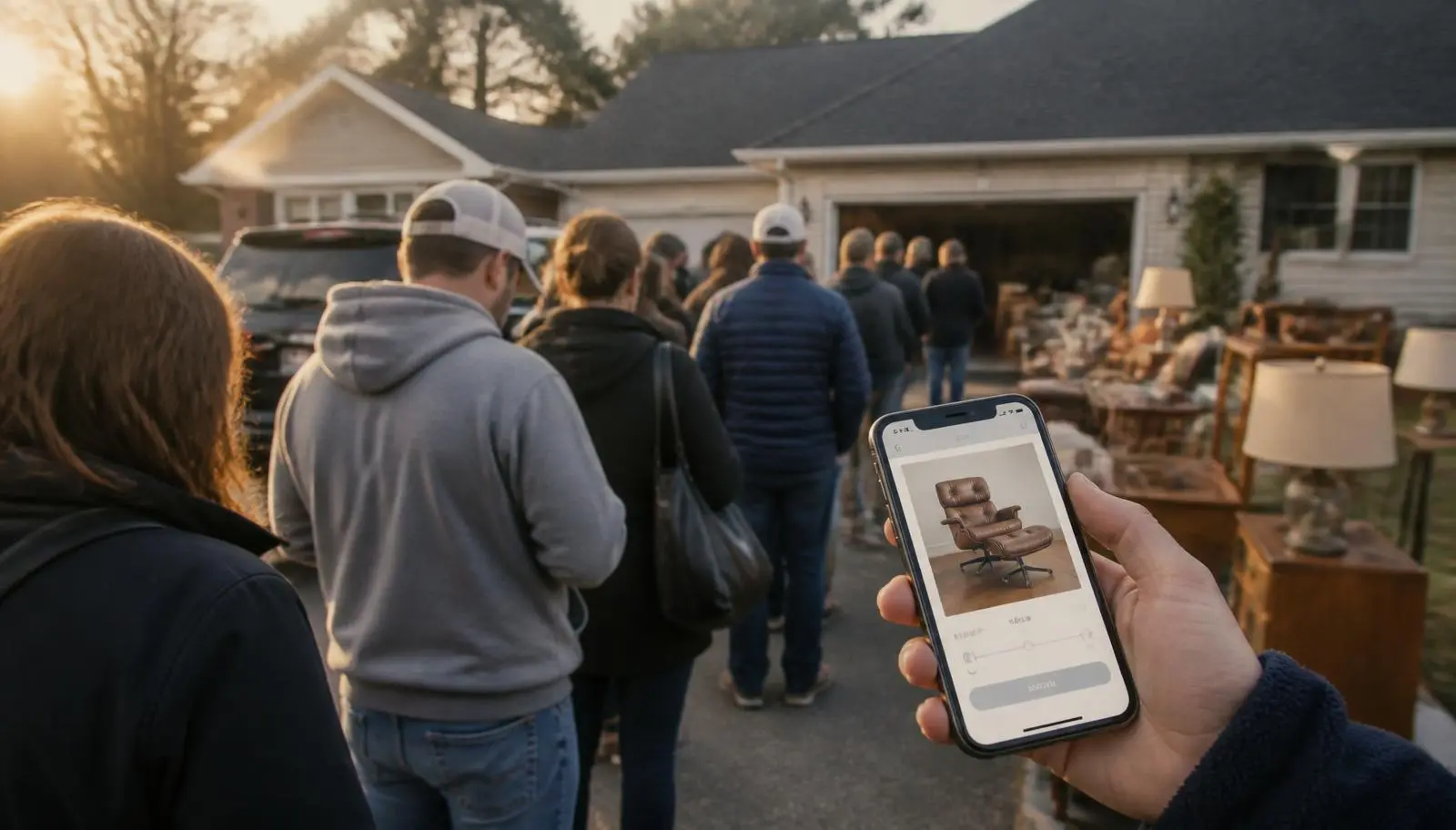
How Estate Sale Pros Identify Items Before They Buy or Price Them
Professionals do not research every object equally. They triage the room, photograph the evidence, verify high-impact clues and spend expert time only where it can change the outcome.
Estate sale professionals identify items efficiently by triaging first, photographing the evidence, verifying only the clues that can change value, and pricing from comparable sold items. The skill is not knowing every object on sight. It is knowing which question to ask next—and which pieces deserve more time.
The room may contain 800 objects. Treating each one like a museum accession is impossible. Guessing is expensive. A professional workflow sits between those extremes.
1. Triage the room before researching
Make three mental lanes:
- Routine: recognizable household goods with predictable local pricing
- Research: signed, marked, unusually constructed, complete, scarce-looking or potentially high-impact items
- Specialist: fine art, important jewelry, firearms, antiquities, sensitive cultural material, or anything where authenticity and legal handling matter
This prevents a two-dollar object from consuming twenty minutes while a valuable marked piece goes unnoticed.
2. Photograph evidence, not just beauty
For each research item, capture the whole object, base or back, every mark, construction details, damage and scale. Our seven-step antique photo guide gives the complete shot list by category.

A listing-ready hero photo can come later. The research photos need to answer questions.
3. Build a searchable working title
Move from vague to specific in layers:
- “vase”
- “blue and gold art-glass vase”
- “blue and gold swirl art-glass vase with ruffled rim”
- maker or model only after the evidence supports it
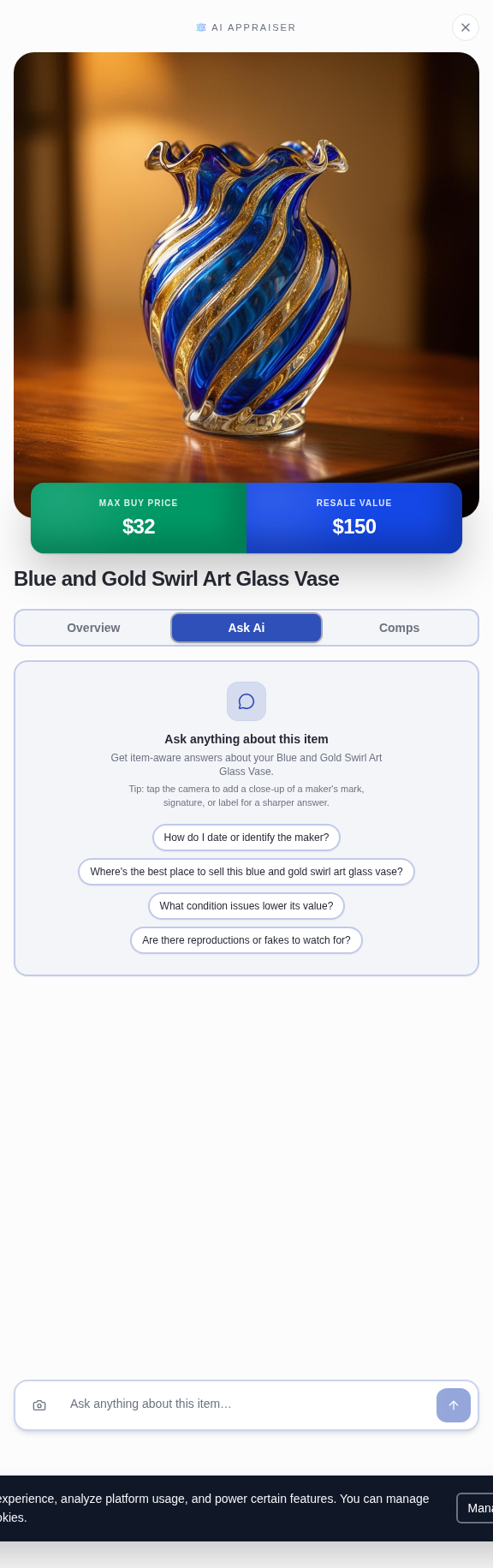
The Ai Appraiser can accelerate that first pass and lets you add a mark photo or ask an item-specific follow-up. Treat the output as a suggestion to inspect, not text to copy blindly.
4. Verify the clue that changes the decision
Not every detail changes price. Focus on the hinge fact: sterling versus plate, period production versus reproduction, complete set versus partial set, named maker versus decorative object, original finish versus refinished.
Use primary or institutional sources when possible. The V&A ceramics collection, Birmingham Assay Office and FTC Jewelry Guides are better foundations than an unsourced marketplace caption.
5. Compare sold objects, not optimistic listings
A useful comparable should align on maker, form, dimensions, material, age or production period, condition and completeness. One close sold match is often more informative than 30 visually similar but materially different listings.
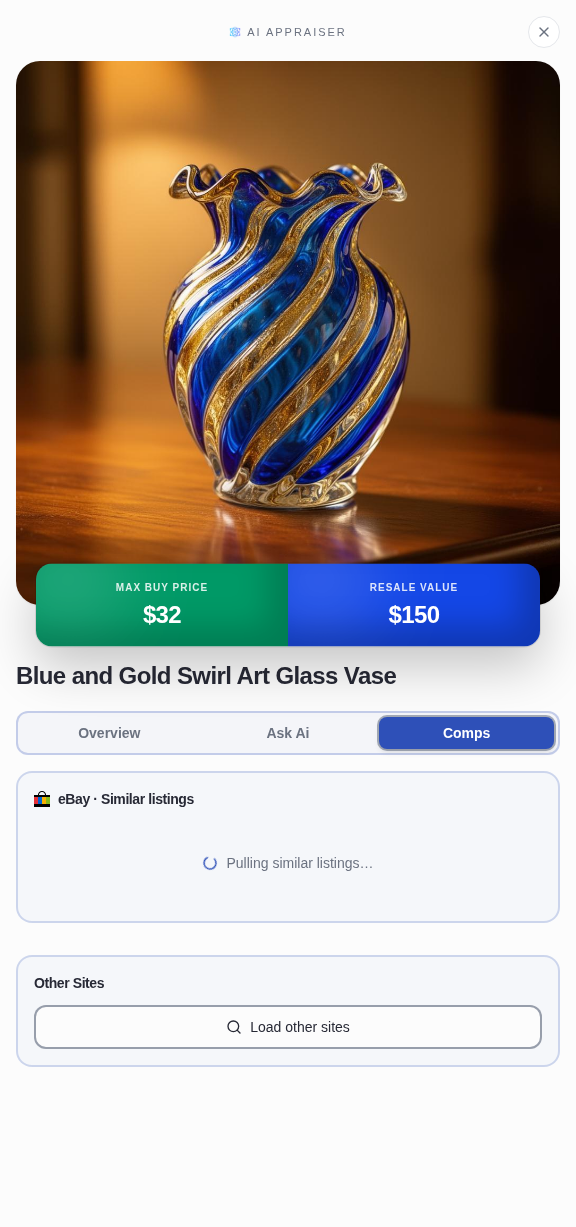
Record a range, not a fantasy number. Then adjust for the actual selling channel: an estate sale, local booth, online marketplace and specialist auction attract different buyers and impose different time, fee and shipping constraints. Read our practical appraisal guide before setting the final price.
6. Match effort to risk and upside
Spend another five minutes when a better identification could change the price or sales channel materially. Stop when additional research is unlikely to change the decision. Escalate when the object needs physical testing, specialist knowledge, formal documentation or legal review.
Photo research is particularly useful for estate liquidators and resellers because it compresses the first pass. It does not replace a certified appraisal when the assignment requires one.
7. Turn the research into action
A good research note produces:
- A cautious, evidence-based title
- The marks and features a buyer should see
- Honest condition notes
- A sold-comp range and date checked
- The chosen channel and pricing strategy
- A flag for expert review when needed
EstateSaleFinder sellers can carry that work into item descriptions and labels. Resellers can use Reseller Tools, keep a sourcing target in their wishlist, and browse nearby estate sales before the weekend route fills up.
The professional advantage
The advantage is not pretending Ai never makes mistakes. It is combining fast visual analysis with better photographs, source checking, sold evidence and human judgment. That process catches more promising objects without slowing the entire sale to a crawl.
Start with one item: photograph it in the Ai Appraiser, verify the strongest clue, and write down what would change your conclusion.
Keep exploring
Ready to start your own treasure hunt?
Discover estate sales near you and find incredible deals.
Explore Sales Near Me
About the author
Andy
Founder, EstateSaleFinder.net
Hi, I'm Andy — a retired commercial photographer turned developer with a five-year (and counting) obsession with estate sales. I started EstateSaleFinder.net because I knew there had to be an easier, smarter way to find and list estate sales. Now I get to chase treasure and build the tool I always wished existed.