
Stop Turning Down Estate Sales: Every “Impossible” Sale Early Offers Unlocks
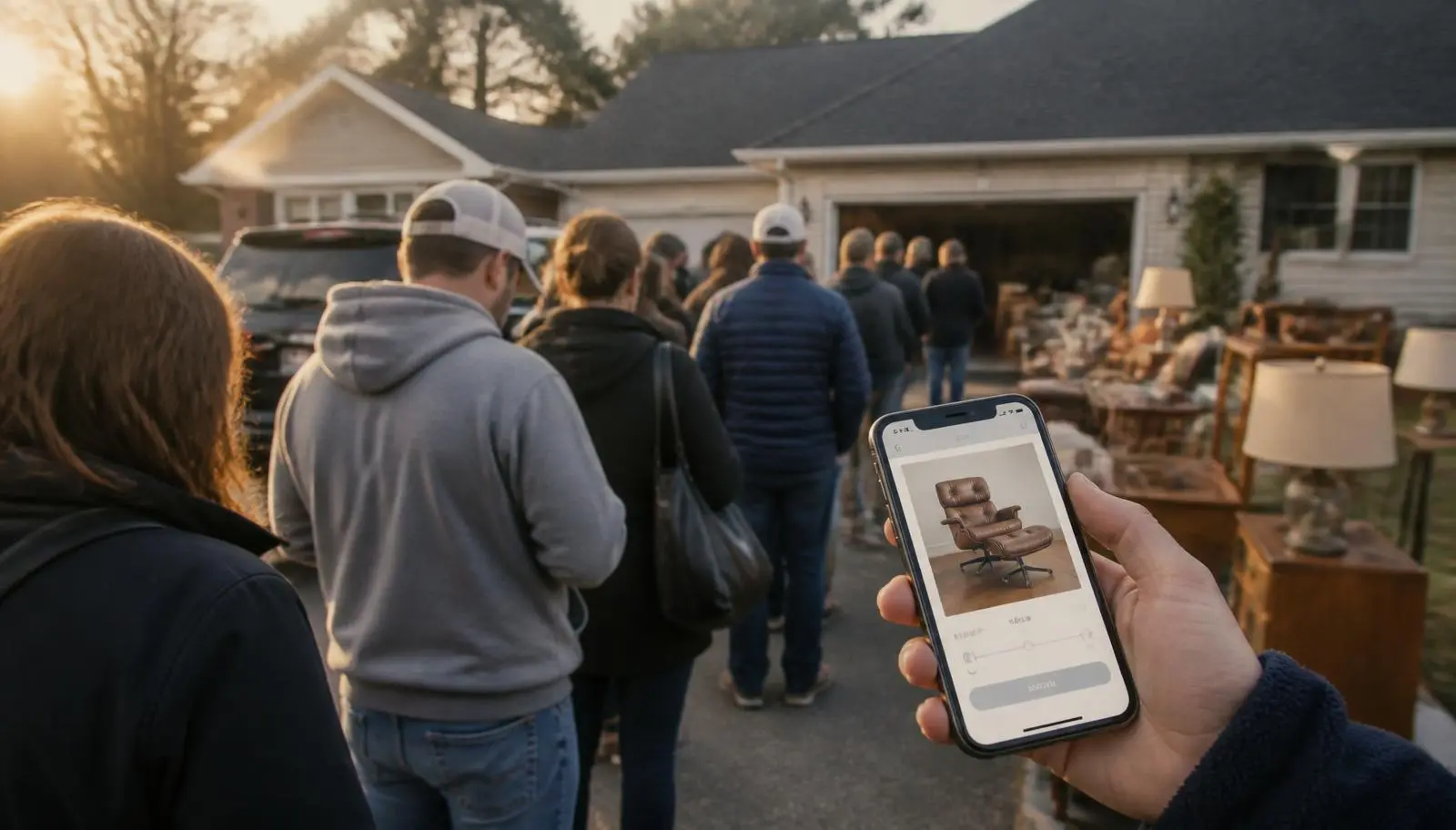
You get about 20 hours to sell an entire household, and you're hoping the one buyer who wants the dining set happens to be free on Saturday morning. That's why the gated community, the 55+ village, the storage unit, and the staged listing where the agent won't allow foot traffic all get turned down. Early Offers takes the crowd out of the equation: buyers browse your tagged items, make offers, and pay before opening day, then collect in scheduled pickup windows you control.
Early Offers lets estate sale shoppers buy tagged items online before opening day and collect them in scheduled pickup windows. That single change does two things for an estate sale company: it stops the sale from depending on a roughly 20-hour walk-in window, and it makes the jobs companies normally decline — gated communities, condos, storage units, listed homes, privacy-sensitive estates — sellable. See the seller tools that run it.
You get about 20 hours to sell an entire household. Two days, a few hundred people through the door, and you're hoping the one buyer who actually wants the dining set happens to be free on Saturday morning. That's the whole business model — and it's why you keep saying no to good work.
The gated community with a guard shack. The 55+ village that bans sales outright. The storage unit stuffed with a whole household. The staged, active listing where the agent won't allow foot traffic through the house. Every one of those is real inventory with real money in it, and the walk-in format simply can't reach it. Early Offers removes the crowd from the equation: buyers browse your tagged items, make offers, and pay before opening day, then collect in scheduled pickup windows you control.
Here's the part that gets skipped, though. The format isn't just failing on the hard jobs. Look at the numbers on your easy ones.
The 20 hours nobody ever puts on paper
A standard three-day sale opens around 9 and closes around 4. Call it seven hours a day, minus the hour of opening chaos where you're counting heads instead of selling. You end up with roughly twenty hours in which it is physically possible for a human being to hand you money.
Twenty hours to sell a lifetime of belongings. And the business model is: hope the right buyer is free on Saturday morning.
~20
hours of actual selling time
A typical 3-day sale, roughly 6–7 hours a day, with doors open.
168
hours in the week it happens
The other 148 hours, your inventory is invisible and unbuyable.
~12%
of the week your sale exists
Everything a house is worth has to move inside that sliver.
Selling window, side by side
Same house. Same inventory. The only thing that changed is how long buyers were allowed to buy.
The buyers who never walk in
None of these people are “not interested.” They just aren’t free during your 20 hours.
Nobody runs that math because nobody has to — the sale ends, the check clears, and the leftovers go to donation. But leftovers are the tell. When a house doesn't sell out, the usual explanation is "the market was soft" or "nothing good in it." Sometimes that's true. Often what actually happened is that the buyer for the Danish credenza works weekends, the buyer for the fishing reels lives two hours north, and the dealer who wanted the whole glassware cabinet was already committed to another sale that weekend.
None of those people said no. They were never asked.
The sale isn't the problem. The window is.
Early Offers moves the selling window off the calendar and onto the internet. The mechanics are boring on purpose:
- You tag as you go. Photos and prices go up as your team works the house — the same tagging workflow you already use for labels and the register.
- Offers open before the sale. Shoppers browse the items, submit offers on the specific pieces they want, and pay online when you accept.
- You stay in control. Every offer lands in one place. Accept, counter, or decline, with the whole negotiation trail attached to the item. Nothing sells until you say it does.
- Buyers book a pickup window. Approved items get grouped by room into a pickup-day agenda, so one staff member can run the entire day.
- Buyers arrive one at a time, grab pre-paid items, and leave.
That's it. No crowd, no numbers handed out at dawn, no street lined with cars, no signs on the corner.
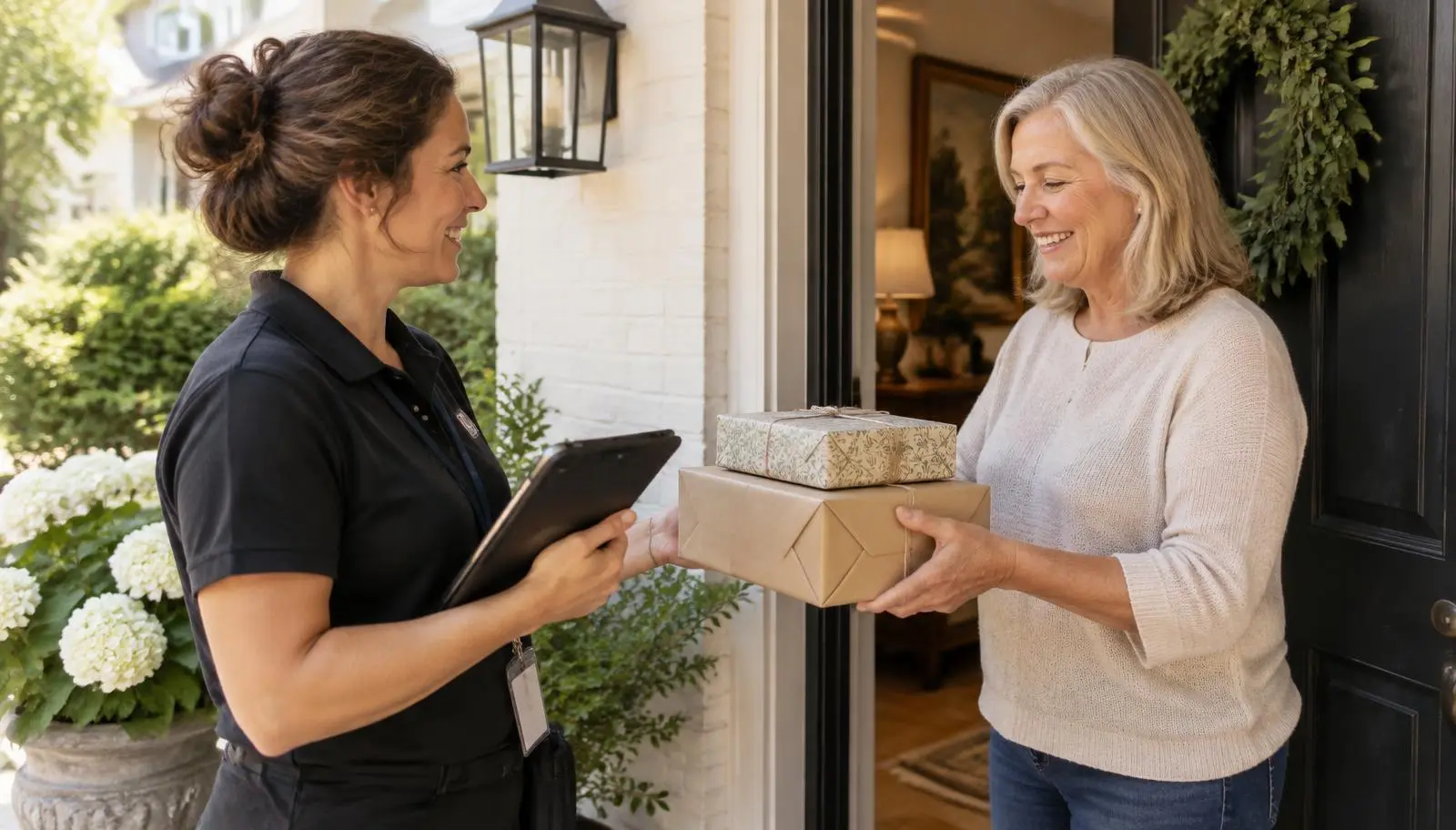
And notice what just became possible: a sale that used to need three hundred walk-ins across three days can now run with ten to twenty booked pickups and one person on site.
Which means the jobs you declined are jobs again
This is the part that surprises operators. The restrictions that killed these sales — appointment-only, limited parking, no crowds, no signage, no public access — are the exact conditions Early Offers runs in naturally. The HOA's rule stops being an obstacle and becomes the format.
HOA, gated & 55+ communities
No“The association doesn’t allow estate sales.”
YesMost bans still allow an appointment-only, one-time sale. Pre-paid buyers in timed slots are that appointment system — no gate line, no street parking.
Condos, co-ops & high-rises
No“No garage, no elevator access, board says no crowds.”
YesOne buyer per window, one freight-elevator booking, invoices for the concierge. The building gets a documented process instead of a crowd.
Storage units & remote estates
No“There’s no foot traffic — it isn’t worth staffing.”
YesPhotograph, tag, sell online, then run two scheduled pickup days. The traffic is created digitally instead of hoped for.
Staged homes with active showings
No“The agent won’t let hundreds of people through a staged listing.”
YesThe house stays show-ready. Offers open Monday, pickups happen in windows, the house is empty by closing.
Privacy-sensitive & high-value estates
No“The family can’t have strangers in the house.”
YesAddress stays private, buyers are named and vetted, every item has an invoice trail an attorney or executor can read.
Deadline & probate cleanouts
No“We close in ten days — there’s no time for a sale.”
YesSelling starts the day items get tagged instead of the day doors open, so the calendar stops being the reason to say no.
Let me take a few of those one at a time, because each one is a different kind of money.
HOA, gated and 55+ communities
Most community bans on estate sales contain a one-time exception for a death or a relocation, and that exception almost always comes with conditions: appointment only, a cap on cars in the driveway, no signs, no crowds. Operators read those conditions and hear no.
Read them again. That's a description of a pre-paid pickup schedule.

Now scale it. A 55+ village or continuing-care campus is a pipeline — dozens of households downsizing on a schedule, every one of them currently unreachable by walk-in sales. The company that shows up with a documented, appointment-based process becomes the only company the board will approve. That's not one sale. That's a standing relationship.
The pitch line
"The association doesn't ban liquidation. It bans crowds. We don't bring one."
Storage units and everything with no foot traffic
A climate-controlled unit with a downsized household in it, or three units from a hoarder home, has always been a no. There's no yard, no rooms, no way to run a crowd through a corridor.

But storage is the ideal Early Offers venue: the contents are already consolidated, the gate already has access codes, and buyers already expect to load out. Photograph, tag, sell online, then run two pickup days at the roll-up door.
This works in reverse, too. If a community bans sales outright, you can move the contents into a unit and run the sale from there — an off-site sale without leasing a showroom for a month.
Remote estates, cabins, second homes and farmsteads
A farmhouse at the end of a half-mile gravel drive has no passing traffic to convert. Neither does a lake cabin an hour from the nearest city, or a snowbird condo whose family lives three states away.

The buyers for those estates were always online. The sale might as well be. One staffer meets pre-paid buyers at the pickup point during a scheduled window and the job pencils out for the first time.
Homes the realtor won't let crowds walk through, or closing in ten days
Two of the most common jobs in the industry are also two of the worst fits for a walk-in sale: the active listing where the realtor refuses foot-traffic during showings, and the house that has to be empty before a closing date.

Early Offers handles both without a negotiation. The listing stays show-ready because there's never a crowd in it. Offers open Monday, pickups run Thursday and Friday, keys get handed over clean. The agent gets an empty house, the executor gets an itemized paper trail, and you get paid for a job you'd have passed on.
The estates that never wanted to be estate sales
The best-paying jobs are often the most private ones: a high-profile family, a grieving spouse who cannot have strangers in the hallway, a collection of firearms, coins, or jewelry that should not sit on a table in an open house, a trust officer whose default answer to "estate sale" is no.
Early Offers gives all of them a format they can actually approve. The address never gets published, buyers are named and pre-paid, and every item carries an invoice — which is also the version an attorney or a probate court prefers to read.
Turn on Early Offers for your next sale
Tag from your phone, review every offer in one place, and run pickup windows from a room-by-room agenda. Labels, register, and ledger included.
What changes inside your business
Operators tend to assume adding an online layer means more work. In practice it moves work off your worst day.
| Walk-in weekend | With Early Offers | |
|---|---|---|
| Selling window | ~20 hours, fixed | Days of open buying before doors ever open |
| Buyer pool | Whoever is free locally | Anyone who can arrange a pickup |
| Staff on the busiest day | Full crew for crowd control | One person running scheduled windows |
| Parking, signage, gate risk | Your problem all weekend | Largely gone |
| Payment | At the table, sale day | Collected before pickup |
| Paper trail | Register totals | Itemized invoices per buyer |
| Jobs you can accept | Houses that can absorb a crowd | Nearly anything with contents |
It also fixes something quieter: staffing a pickup day is cheaper than staffing a sale weekend, and you can put pickups midweek when your crew is free.
Two objections worth answering honestly
"Won't the good stuff be gone before opening day?" Some of it, yes — at prices you accepted. You decide which items are eligible and which get held back for the floor. If a piece was going to sell to the first person through the door anyway, selling it Wednesday at your number is a better outcome than selling it Saturday at your number.
"My buyers like the hunt." They do, and Early Offers doesn't cancel the hunt. The walk-in crowd still comes. The point isn't to replace the crowd — it's to stop the crowd from being the only way somebody can buy from you.
How it works on EstateSaleFinder
Everything above runs on tooling that's already in the seller side of the platform: phone tagging with Ai-suggested titles and prices (always suggestions, never automatic), printable QR and barcode labels, an Offers Command Center with the full negotiation trail, buyer-selected pickup slots, a pickup-day agenda grouped by room, and a register that scans the same label you printed.
- See the full seller toolset — listings, labels, offers, register, ledger, analytics.
- Create a free seller account and list a sale to see offers in context.
- Compare plans and pricing if you want to know what tier the label and register tools sit in.
- New to the business side? Start with how estate sale companies work and how to list your estate sale for free.
- Want the training version? Jenna Pecor's live workshop on the Preoffer Process walks operators through it, challenges included.
Want it taught to you? Jenna teaches this
If you'd rather learn the Early Offers / Preoffer workflow from an operator who runs it on her own sales, Jenna Pecor teaches it through the Institute for Estate Sale Professionals. Her course catalog covers the preoffer system end to end — how to tag for it, how to set offer rules, how to talk to a family or an HOA board about it, and how to run pickup day without a crowd.
Preoffer training at the Institute for Estate Sale Professionals
Learn the preoffer and Early Offers workflow from the operator who pioneered teaching it — plus the business side of running the sales it unlocks.
- How the preoffer process works from tagging to accepted offer
- Pricing and offer rules that protect your numbers
- Pitching appointment-only sales to HOAs, realtors, and executors
- Running pickup day with one staff member
- Every course purchase includes 3 months of Pro on EstateSaleFinder, free
One more thing worth knowing
anyone who purchases a course from the Institute gets three months of Pro on EstateSaleFinder free — which is the tier the Early Offers, label printing, and register tools live in. So the training and the software to run it show up together.
The sale you declined last month
Somewhere in your email there's a job you passed on. Gated community, or a storage unit, or a listing the agent wouldn't open up.
Nothing about that house changed. The only thing that made it unsellable was the assumption that selling requires a crowd standing in a driveway during a twenty-hour window.
Set up Early Offers on your next sale — then go back and claim the one you turned down.
Questions & answers
Frequently asked questions
What are early offers at an estate sale?
Early Offers are offers shoppers submit on individual tagged items before an estate sale opens to the public. The estate sale company reviews each offer and accepts, counters, or declines it. Buyers pay online for approved items and collect them during a scheduled pickup window, so inventory sells before opening day.
How many hours does a normal estate sale actually have to sell a house?
A typical three-day walk-in sale is open roughly six to seven hours a day, which is about twenty hours of real selling time in a 168-hour week. Everything a household is worth has to move inside that window, and only to buyers who happen to be free during it.
Can you run an estate sale in a community that doesn't allow estate sales?
Often, yes. Many HOA, condo, and 55+ community rules ban open public sales but permit a one-time, appointment-only liquidation with limited vehicles and no signage. An offers-and-pickup-window format is built that way by default, which is why boards approve it when they reject a traditional sale. Always confirm the specific community's rules in writing first.
Do early offers hurt the walk-in sale?
They don't have to. You choose which items are eligible for offers and which are held for the floor, and you can decline any offer. Items sold ahead of time are sold at prices you approved, and the public sale still runs afterward for everything left.
How do buyers pick up items they bought before the sale?
Buyers book a scheduled pickup window. On pickup day, their paid items are grouped by room into an agenda, so one staff member can hand off orders as buyers arrive one at a time — no line, no crowd, no register bottleneck.
Can this work for a storage unit or a remote property?
Yes, and those are two of the strongest cases. Contents are already consolidated in a unit, and remote properties have no walk-in traffic to lose. Items get photographed and tagged, sold online, and released during one or two scheduled pickup days.
Where can I get trained on the preoffer process?
Jenna Pecor teaches the preoffer and Early Offers workflow through the Institute for Estate Sale Professionals, covering tagging, offer rules, client and HOA conversations, and pickup day. Every course purchase also includes three months of Pro on EstateSaleFinder free, so you can run what you learn right away.
Keep exploring
Ready to start your own treasure hunt?
Discover estate sales near you and find incredible deals.
Explore Sales Near Me
About the author
Andy
Founder, EstateSaleFinder.net
Hi, I'm Andy — a retired commercial photographer turned developer with a five-year (and counting) obsession with estate sales. I started EstateSaleFinder.net because I knew there had to be an easier, smarter way to find and list estate sales. Now I get to chase treasure and build the tool I always wished existed.