The Last Generation of "Stuff": Why Boomer Estates Are a Uniquely Rich — and Fleeting — Era
Americans born 1946–1964 are the last generation to furnish an entire life with durable, largely American-made objects — and to keep them for fifty years in one house. All of it is entering estate sales at once, right now. Here's the demographic data behind the wave, exactly what to hunt while it's here, what's collapsing in value, and how long the window stays open.
Boomer estates are the richest hunting ground in the history of secondhand shopping, and the window is already closing. Americans born between 1946 and 1964 are the last generation to furnish an entire life with durable, largely American-made objects — and to keep them. That accumulation is entering estate sales right now: roughly 11,200 Americans turn 65 every day through 2027, and Freddie Mac projects about 9 million homes will come to market this decade as boomers downsize or pass on. Every category buyers chase — Pyrex, uranium glass, hand tools, vinyl, teak furniture, sterling — is a downstream effect of that one demographic wave. When the houses are empty, the supply doesn't come back.
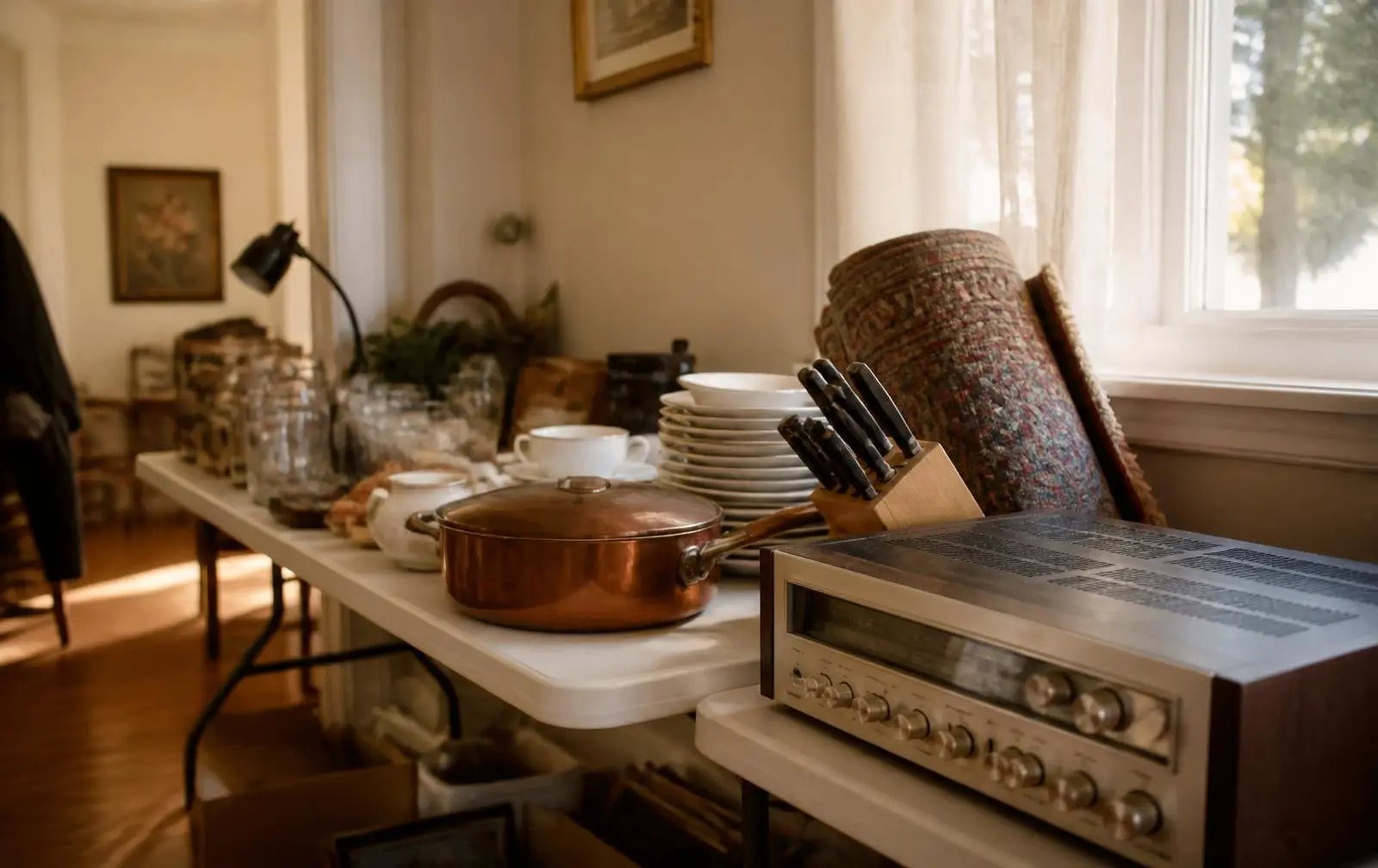
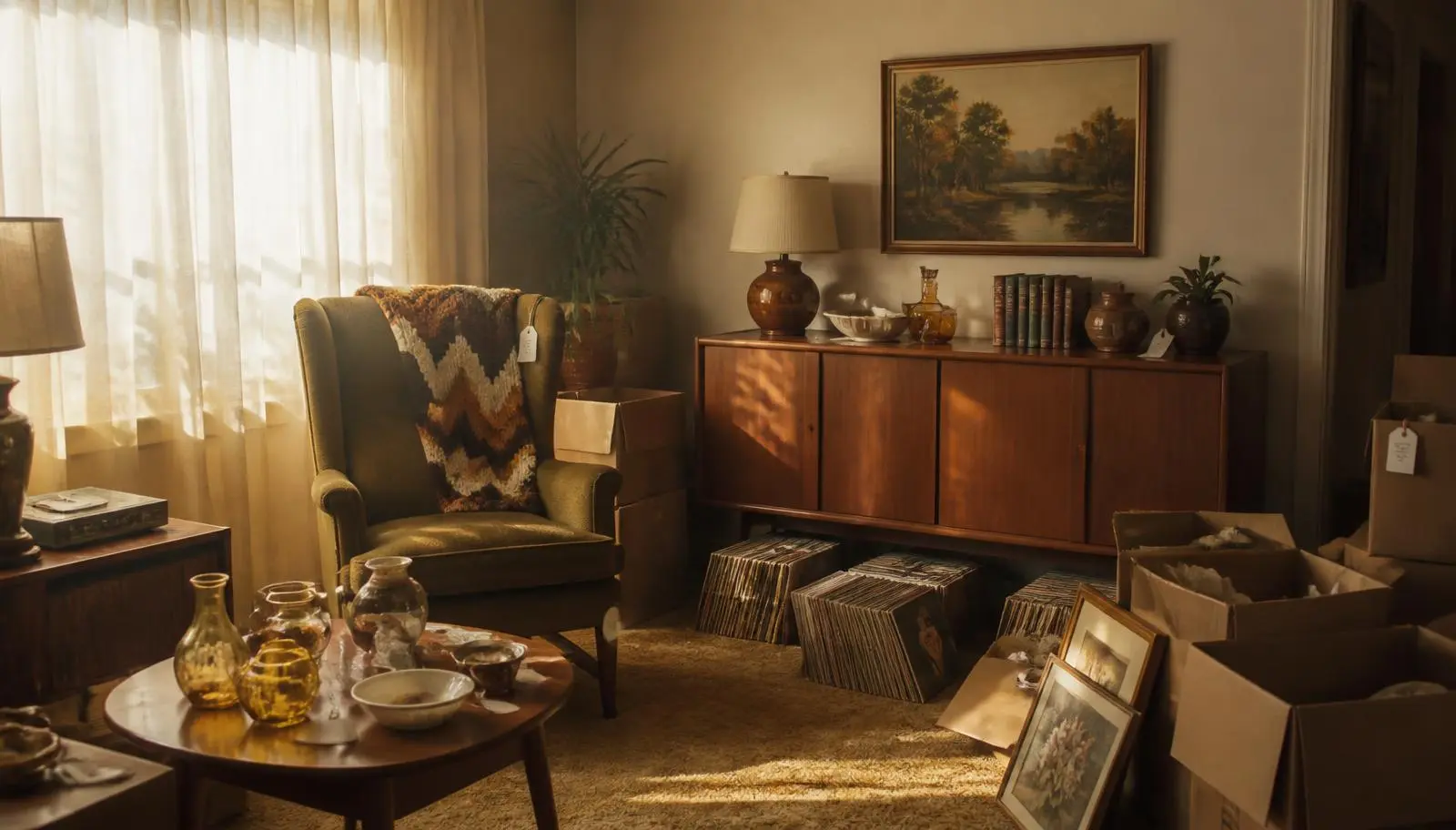
I've walked several hundred of these houses. There is a specific feeling you get in a 1968 ranch that's been owned by one family since it was built, and it's not nostalgia — it's density. Sixty years of stuff, bought new, used carefully, and stored in the same garage the whole time. That house is a historical document. And in 2026, there are more of them being emptied at once than there ever will be again.
What "the last generation of stuff" actually means
Three things happened at once for this generation, and they will not happen together again.
They bought objects made to last. A boomer household outfitted itself between roughly 1965 and 1995 — before the full offshoring of American consumer manufacturing. Cast iron from Erie, Pennsylvania. Craftsman wrenches stamped USA. Marantz receivers with real transformers. Pyrex made from Corning's opal glass. These things survived because they were engineered to.
They kept them. One house, one garage, one attic, one basement, for thirty to fifty years. No storage-unit churn, no minimalism, no annual purge. Later generations move an average of several times before forty and shed objects constantly. There is no such thing as a fifty-year millennial attic.
They collected in depth. This is the generation of the finished basement, the workshop, the darkroom, the reloading bench, the sewing room, the record wall. Depth is what makes an estate sale worth driving to — not one camera, but forty years of one hobby, with the manuals and the receipts still in the box.
Take those three away and you get what estates will look like in twenty years: a laptop, a subscription list, a TV, an IKEA dresser, and a phone full of photos. That's the whole point. This isn't the best era of estate sales because the objects are older. It's the best era because it's the last time an entire generation's material life gets liquidated all at once.

The numbers behind the wave
This is not a vibe. It's demography, and it's unusually well documented.
| What | Figure | Source |
|---|---|---|
| Wealth transferring between generations | $124 trillion through 2048 ($105T to heirs) | Cerulli Associates |
| Americans turning 65 each day, 2024–2027 | ~11,200 per day (~4.1M/year) — "Peak 65" | Alliance for Lifetime Income / LIMRA |
| All boomers older than 65 | 2030 | U.S. Census Bureau |
| Adults 65+ outnumber children for the first time in U.S. history | 2034 | U.S. Census Bureau |
| U.S. deaths projected to reach a historic high | 3.6 million+ in 2037 | U.S. Census Bureau |
| Homes expected on the market as boomers age | ~9 million over the decade | Freddie Mac |
| Share of U.S. homes owned by boomers | 38% | Clever survey, via Realtor.com |
| Boomer home equity | $17 trillion | Freddie Mac |
| Share of large (3BR+) homes held by empty-nest boomers | 28% | Redfin |
Read those rows together and the shape of the thing appears. The retirement surge is happening now, 2024 through 2027. The housing turnover builds through the 2030s. The estate settlement peak lands around 2037. Then it tapers — not because people stop dying, but because the generation behind them owns dramatically less physical stuff, and the objects they do own are disposable by design.
Nobody has to guess who empties all those houses, either. Somebody does it, house by house, and there are nowhere near enough trained people doing it — a labor gap I dug into in the estate sale age crisis. That post is about the business opportunity. This one is about what it means if you're the person standing in line at 7:40 a.m.
The buyer's paradox: peak supply is why prices are low
Here's the part most "invest in antiques" content gets backwards. Right now, supply is enormous and simultaneous. Ten thousand china cabinets hit the market the same weekend. That crushes prices on anything common — which is good news for you as a buyer and terrible news for anyone hoping to cash out an inheritance.
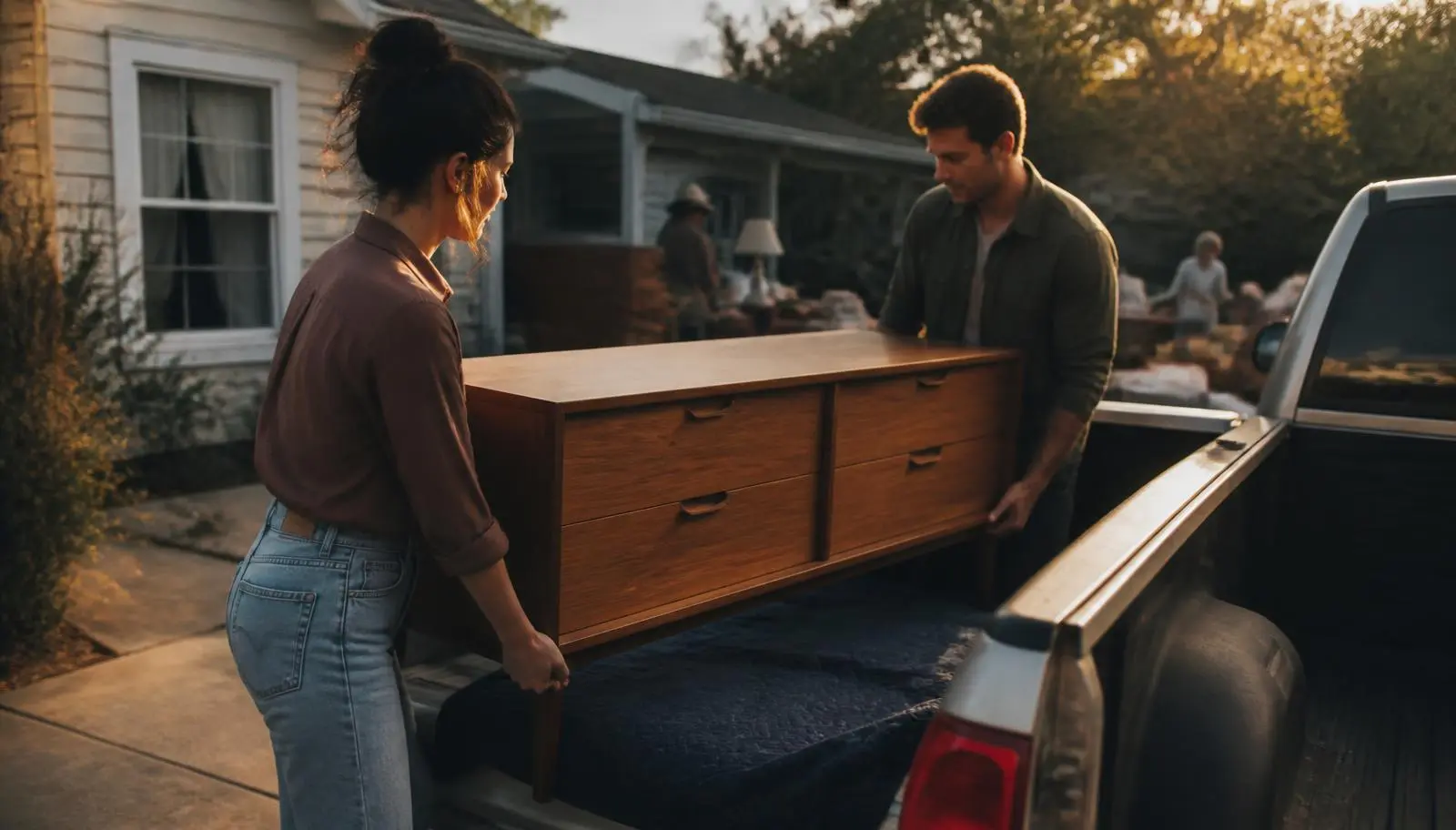
It also means the pricing at estate sales in 2026 is the softest it will be in your lifetime for genuinely good objects, because liquidators have to clear a whole house in three days whether or not the market is paying. A teak credenza that would be a $1,800 shop piece gets a $250 tag on Sunday because it has to be out of the house Monday. That gap is your entire opportunity.
The corollary: the categories that are scarce right now don't get cheaper later. When single-owner tool benches and record walls stop entering the market around the late 2030s, the surviving examples get bid up by a buyer pool that never shrank. Buy scarcity now, ignore volume now.
What to hunt while it's still here
Prices below are realistic observed secondary-market ranges, not guarantees — condition, marks and region move every one of them. Always check live sold comps before you commit real money.
Kitchen glass and cookware
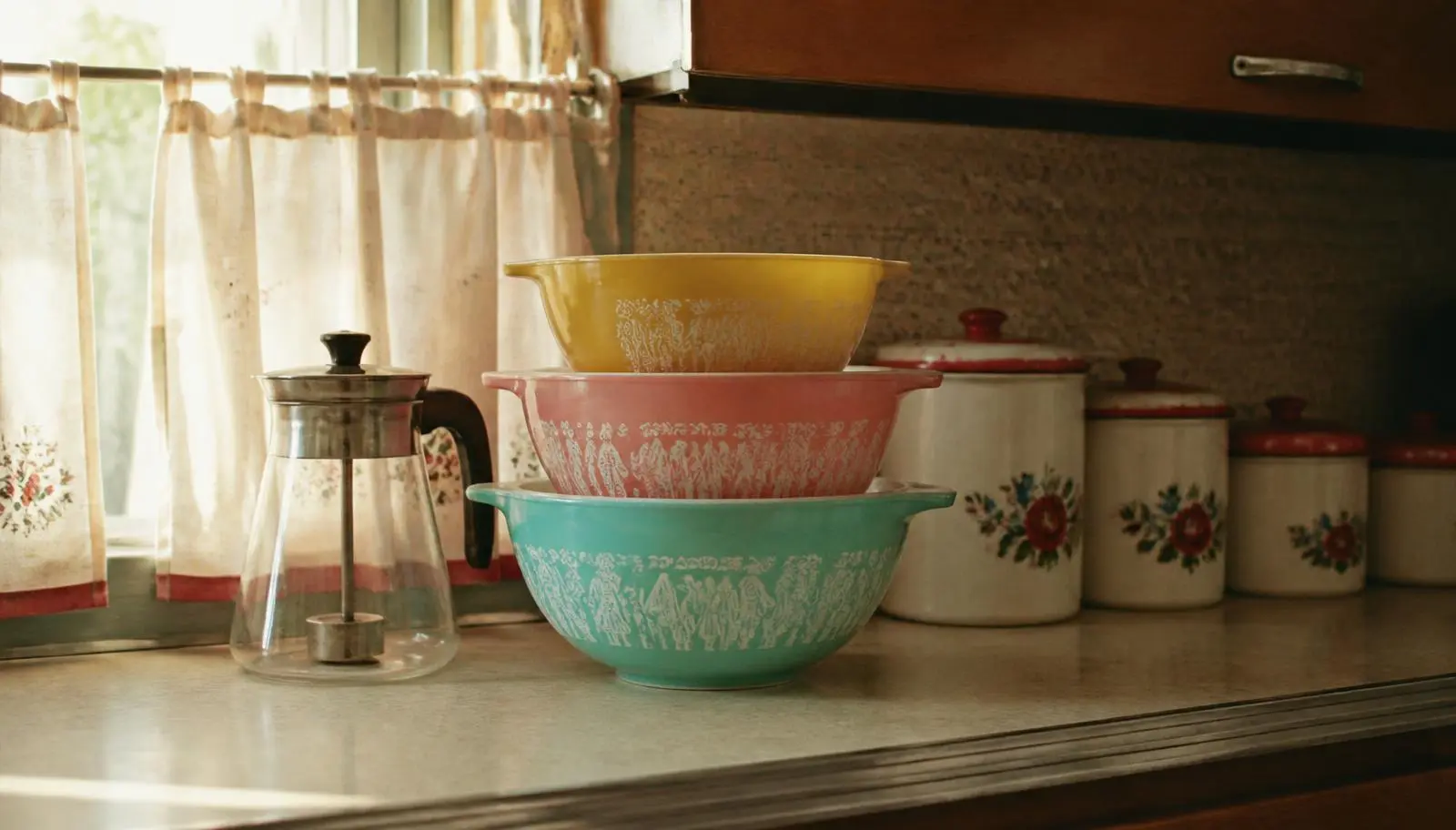
Vintage Pyrex is the purest example of this whole thesis: mass-produced, heavily used, and now genuinely scarce in good condition. Common patterns (Snowflake, Butterfly Gold, Old Orchard) move in the $10–$60 range per piece. Short-run promotional patterns are a different sport — Lucky in Love has sold for $22,100 on eBay, and pink Gooseberry or unusual Butterprint colorways regularly clear three figures. Verify patterns against the Corning Museum of Glass pattern library rather than a marketplace listing title, and read our vintage Pyrex dating guide before you pay collector money.
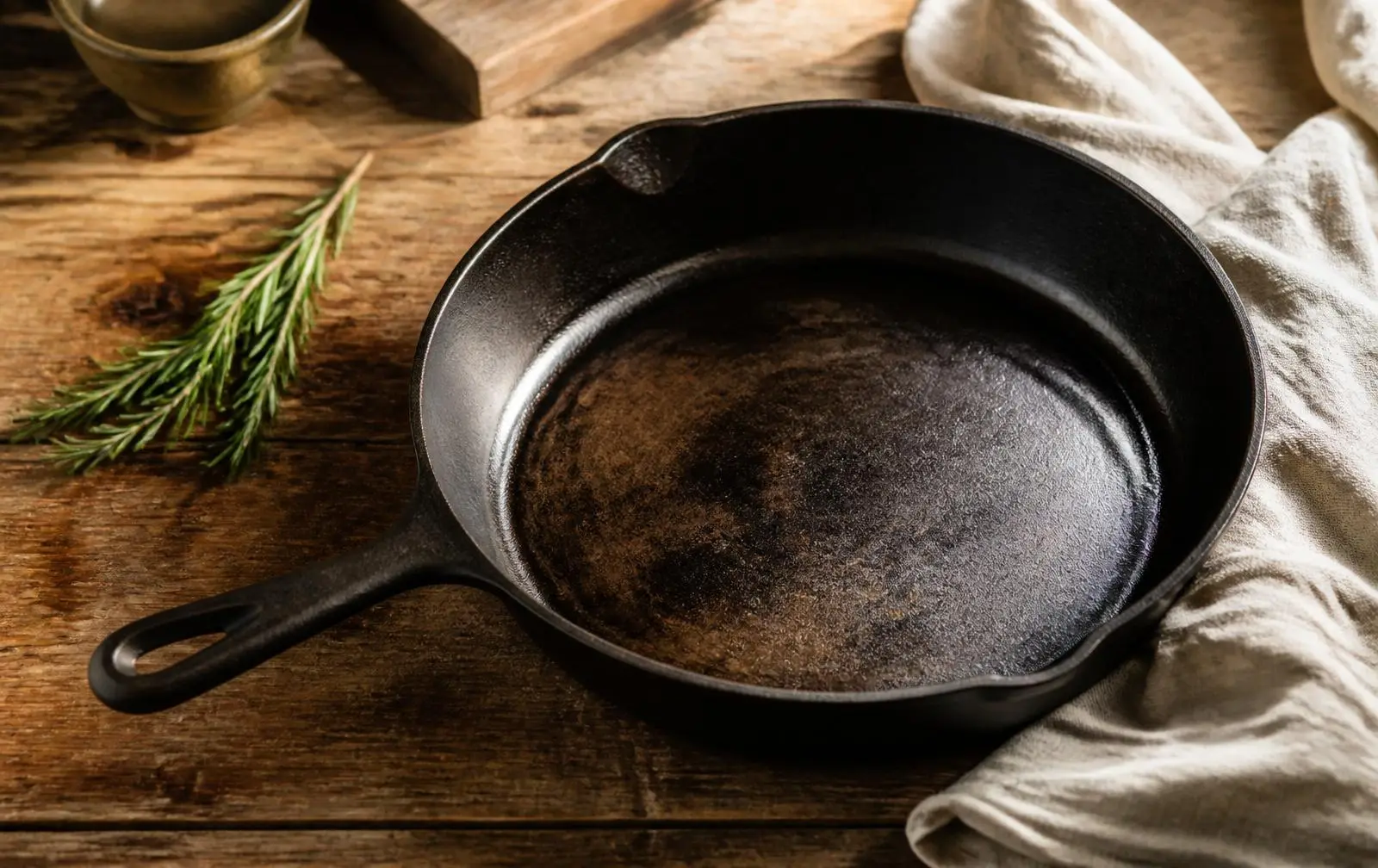
Cast iron. Glass-smooth machined cooking surfaces, heat rings and bottom-cast logos are the tells. Griswold and Wagner Ware dominate; small-logo Griswold skillets commonly trade in the tens of dollars, while scarce large-block-logo pieces and odd forms run into the hundreds and occasionally far beyond. Our cast iron identification guide covers the marks and the cleaning that doesn't destroy value.
Uranium and art glass. Bring a UV flashlight — real uranium glass fluoresces bright green, and the test takes two seconds in a dark hallway. Fenton and Blenko are the workhorse names, mostly $15–$150 with designer forms higher. Start with our uranium glass guide and Depression glass patterns.
The garage — still the most underpriced room in the house
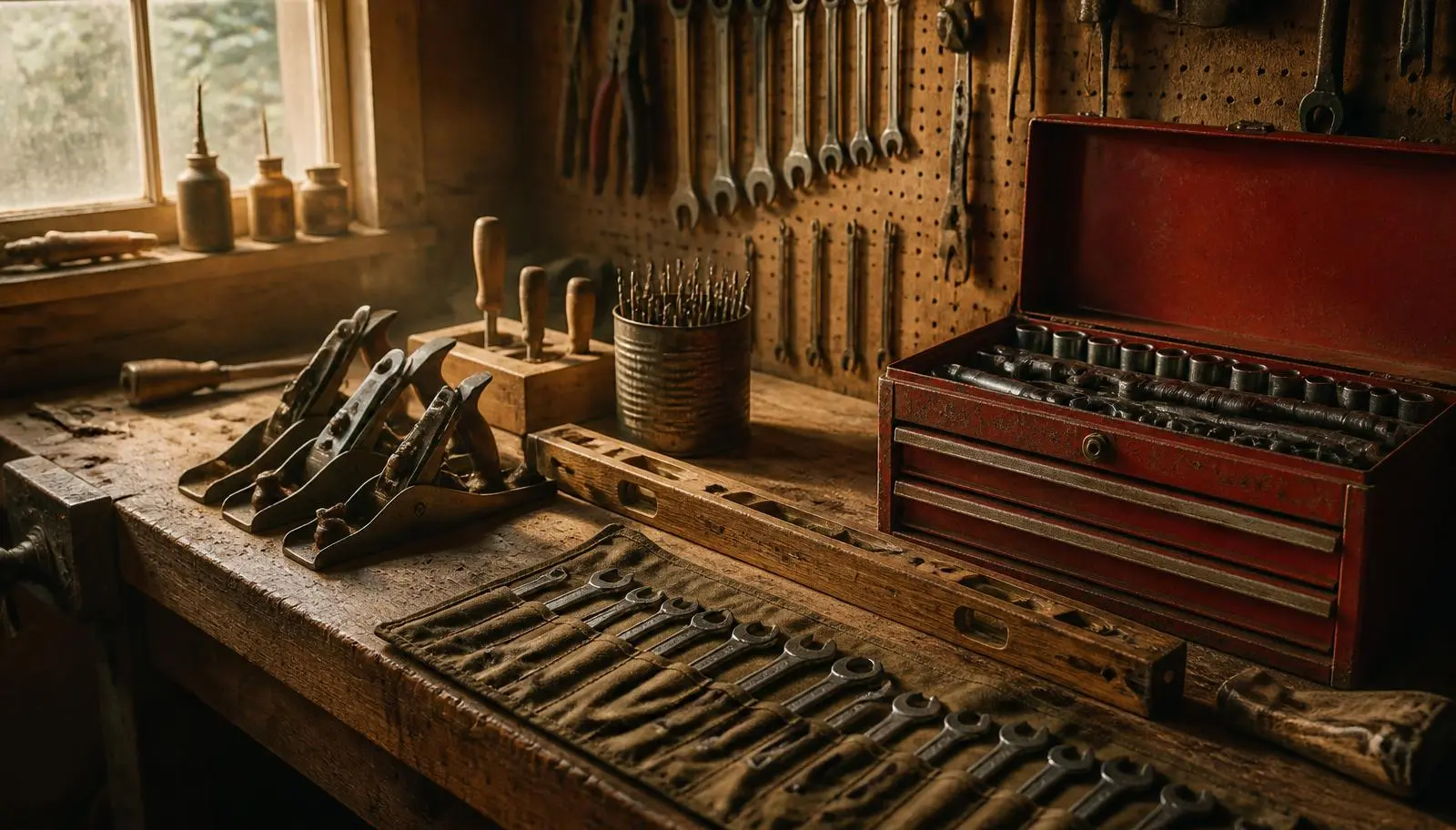
Pre-1990 American hand tools outperform their modern equivalents because they were forged from better steel domestically, and because functional buyers (not just collectors) compete for them. Look for Stanley "Bailey" and "SW" markings on plane frogs and lever caps, Craftsman stamped USA, Snap-on date codes, and Starrett precision instruments. Common user-grade Stanley planes sit around $75–$120; early and rare sizes go much higher.
The garage is also where estate sale pricing is weakest, because liquidators are usually strongest on decor and jewelry and weakest on machinery. Full walkthrough in garage and shed hidden treasures.
Vinyl and vintage audio
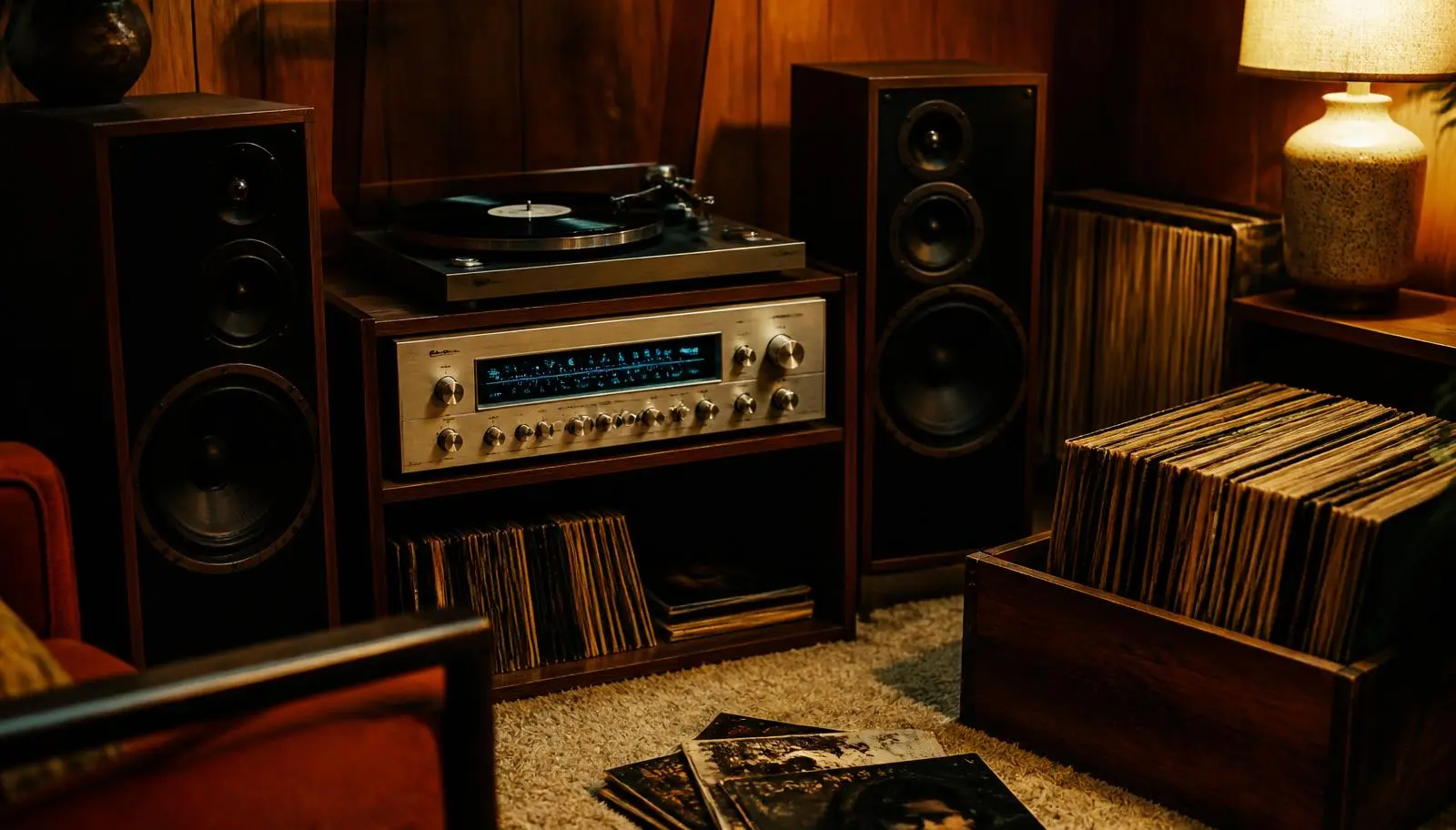
Vinyl still carries more than three-quarters of all U.S. physical music revenue, and boomer estates are where the original pressings live. The money is in first pressings and audiophile issues, not volume: Blue Note jazz first pressings with deep grooves, RVG stamps and the right label addresses have sold in the low thousands, per the Blue Note auction price guide. Common easy-listening LPs — Mantovani, orchestral soundtracks, cut-out pop — are effectively worthless in any quantity.
Vintage receivers and separates are the frothiest corner of this whole market. Golden-era Marantz, Pioneer and McIntosh units routinely clear several hundred to several thousand dollars, and some in the hobby openly warn the category is overheated. Buy known-working units, not blind lots. More in our vinyl record collector's guide and vintage camera hunter's guide.
Metal you can weigh
Sterling flatware and hollowware is the one category where the floor is arithmetic rather than taste: it's .925 silver, stamped STERLING or 925, and it has a melt value regardless of whether anyone likes the pattern. Silver-plate — EPNS, A1, "quadruple plate," most Rogers Bros. pieces — has essentially none. Learning that difference in thirty seconds is the highest-ROI skill in this entire article; our sterling hallmark guide and gold, silver and melt value in the jewelry bins cover it, plus how to tell if gold is real.
Signed costume jewelry is the sleeper: Trifari's crown mark, Weiss, Eisenberg and Miriam Haskell's oval tag turn a $2 bin piece into a $100–$500 one, and rare parures higher.
Furniture with a name on it
Real makers only. Herman Miller decals and model numbers, Knoll foil labels, Lane's "Acclaim" tag inside the drawer, Danish Furniture Control stamps, Broyhill Brasilia's carved starburst panels — those pieces have national demand and shipping-worthy value. Undated, unlabeled 1970s–80s veneer bedroom sets do not, no matter how solid they feel. Furniture buyers who know real design breaks down the labels.
Textiles
Hand-stitched pre-1950 quilts with graphic patterns, genuine Hudson's Bay point blankets, Pendleton wool, tagged leather and pre-1971 "Big E" Levi's are the textile categories that reward inspection. Everything else in the linen closet is fabric.
What is collapsing — and please stop buying it to flip
| Category | Reality in 2026 |
|---|---|
| Formal china sets, 12-place settings | Enormous supply, almost no demand; often unsellable at any price |
| Curio figurines (Hummel, Precious Moments) | Kovels lists Hummel among fad collectibles that fell |
| Silver-plate flatware and tea sets | No melt value, no collector base |
| Mass-market crystal stemware | Glutted by simultaneous estate liquidation |
| Encyclopedia and book-club sets | Freight cost exceeds resale value |
| Console organs, giant wall units, armoires | Frequently require paid removal |
| Beanie Babies and junk-wax cards | The textbook manufactured-scarcity crash |
None of this means those objects are meaningless. It means market value and sentimental value are different numbers, and confusing them is how families lose money and buyers lose garage space. If you've inherited a house full of it, start with valuing inherited items before you give away a fortune and cleaning out a parent's house.
How to actually work a fleeting market
Urgency without a system is just adrenaline. What separates people who capitalize on this decade from people who buy three boxes of crystal is coverage and speed.
- Cover more sales than you can physically attend. Set keyword alerts for the specific things you hunt — "Griswold," "Blue Note," "Brasilia," "sterling," "Snap-on" — and let matches at brand-new listings come to you. That's exactly what our wishlist keyword alerts do, and it's the single highest-leverage habit in this article.
- Route the weekend, don't wander it. Ordering sales geographically is worth more finds than arriving earlier at one sale. Use the route planner strategy and let our planner order the stops.
- Buy before doors open where sellers allow it. More companies now accept early offers on individual items, which turns a Saturday footrace into a Wednesday transaction.
- Shop by what you're furnishing, not by address. Our occasion browsing view pulls matching items from every sale in a city at once — first apartment, workshop, entertaining — instead of forcing you to open fourteen listings.
- Know the etiquette so companies want you back. Read the unwritten rules. Dealers who behave well get called first when a single-owner house comes in.
And if you're on the other side of this — a homeowner, an heir, or an executor holding a full house — the honest options are laid out in downsizing on your own terms, the senior downsizing checklist, and how estate sale companies work. You can also find a vetted company near you instead of guessing.
The part nobody puts in a data table
Every one of these houses belonged to somebody. The tools were sharp because a man kept them sharp. The Pyrex is worn in the same spot because the same hand reached for it forty thousand times. The records are in order because order mattered to someone.
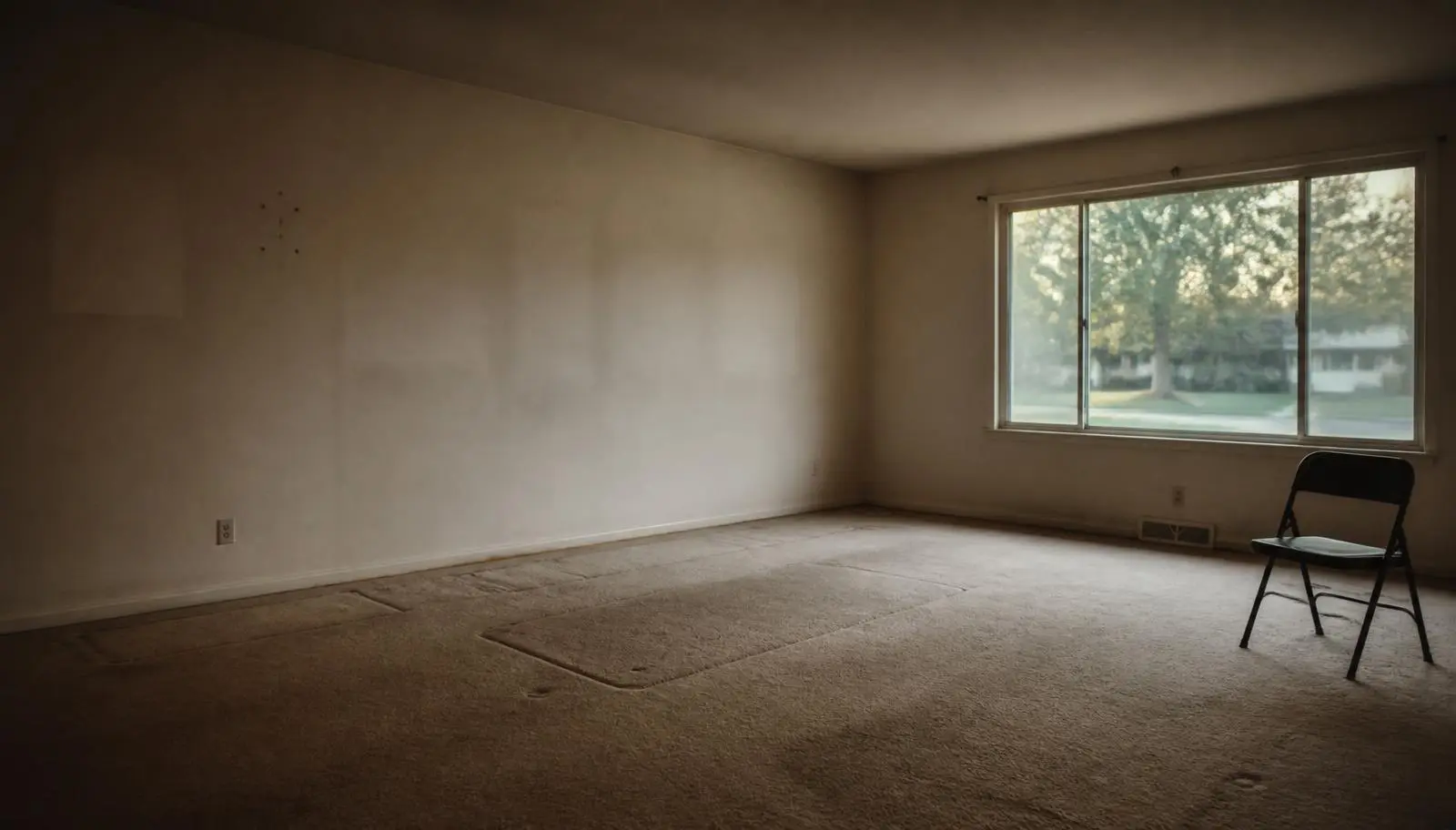
That's the actual reason this era is unrepeatable, and the reason to treat it with some respect while you're carrying pieces of it out to your truck. The objects outlasted the lives, and for a short window in the 2020s and 2030s, they're all passing through our hands at once. Then the rooms are empty, and the next generation's estate fits in a cloud account.
Go find one while they're still here. Browse estate sales near you, and take the good stuff home.
Questions & answers
Frequently asked questions
Why are boomer estate sales considered a once-in-history opportunity?
Because three conditions overlap only once: a very large generation, a lifetime of durable and largely American-made goods bought new, and single-household ownership for thirty to fifty years. The Census Bureau projects all boomers will be over 65 by 2030 and that U.S. deaths will peak above 3.6 million around 2037, so the volume of these single-owner households being liquidated crests in the 2030s and then declines. Later generations own fewer, cheaper, more disposable physical objects, so the same density of finds will not return.
How long will boomer estate sales last?
The surge phase is now. Roughly 11,200 Americans turn 65 every day through 2027, Freddie Mac expects about 9 million homes to reach the market this decade, and Census projections put peak U.S. mortality around 2037. Expect a strong, high-supply market through the early-to-mid 2030s, then a gradual thinning of true single-owner, deeply collected estates.
What should I buy at an estate sale right now?
Prioritize scarcity and identifiable makers: rare-pattern Pyrex, marked Griswold or Wagner cast iron, uranium and art glass, pre-1990 American hand tools, first-pressing and audiophile vinyl, working golden-era stereo receivers, labeled mid-century furniture, sterling silver by weight, and signed costume jewelry. Skip anything that arrives in the market by the truckload — formal china, silver-plate, curio figurines, mass-market crystal and generic 1970s veneer furniture.
Are estate sale prices going to go up as this wave ends?
For common items, no — heavy simultaneous supply keeps them cheap and much of it never recovers. For genuinely scarce objects, the supply side thins as single-owner households stop entering the market while the buyer pool stays, which historically pushes prices up. That's the argument for buying quality now and volume never.
Is inherited china or silverware worth anything?
Sterling silver has a real floor because it can be weighed and valued as metal — look for STERLING or 925. Silver-plate (EPNS, A1, quadruple plate) has effectively no melt value. Formal china sets, even expensive ones bought new, generally sell for a small fraction of original cost today because millions of sets are on the market at once and few households host formal dinners. Have anything unusual identified before selling or donating.
Where can I find estate sales near me this weekend?
Browse current sales by city, date and keyword on EstateSaleFinder, set keyword alerts for the categories you collect, and plan the drive with the route planner so you hit the highest-value stops first.
Sources and further reading
- Cerulli Associates — $124 trillion wealth transfer through 2048
- Alliance for Lifetime Income / LIMRA — the Peak 65 Zone
- U.S. Census Bureau — Demographic Turning Points for the United States (P25-1144)
- U.S. Census Bureau — As Population Ages, U.S. Nears Historic Increase in Deaths
- Freddie Mac — Aging Boomers and the Housing Market
- Redfin — The Great Housing Mismatch
- National Association of Realtors — Home Buyers and Sellers Generational Trends
- EstateSales.NET — 2024 Estate Sale Industry Insights Report
- RIAA — 2025 Mid-Year Music Industry Revenue Report
- ThredUp — Annual Resale Report
- Kovels — The Rise and Fall of 7 Fad Collectibles
- Corning Museum of Glass — Pyrex pattern library
Keep exploring
Ready to start your own treasure hunt?
Discover estate sales near you and find incredible deals.
Explore Sales Near Me
About the author
Andy
Founder, EstateSaleFinder.net
Hi, I'm Andy — a retired commercial photographer turned developer with a five-year (and counting) obsession with estate sales. I started EstateSaleFinder.net because I knew there had to be an easier, smarter way to find and list estate sales. Now I get to chase treasure and build the tool I always wished existed.