
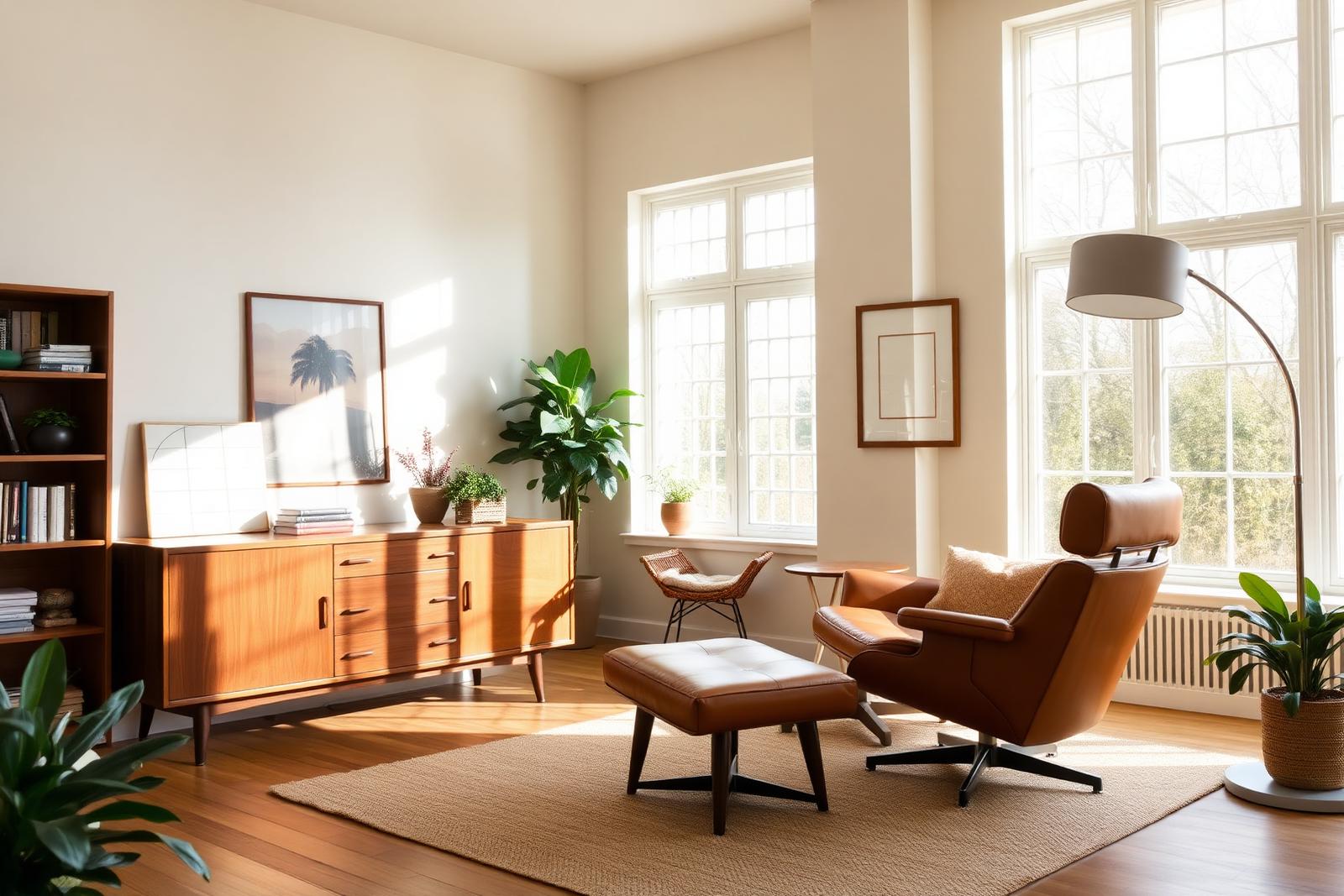
Before You Buy Another Particleboard Couch
Fast furniture is dying. Designers are telling clients to buy solid wood and timeless pieces that last — and millennials are now the fastest-growing estate-sale buyers. The real walnut credenza and the genuine Eames you actually want is already sitting in a house near you, priced by someone clearing it out. Here's how to find it by category, and how the AI Appraiser confirms a real Herman Miller from a knockoff before you ever drive over.
You're standing in a showroom (or scrolling one) trying to decide between a $1,200 sofa and the slightly nicer $1,400 one. Both are wrapped in fabric you can't see through. Underneath, both are the same thing: a particleboard frame, foam that'll pack down in a year, and legs screwed into engineered wood.
Here's what nobody in that showroom will tell you: the solid walnut credenza, the genuine leather lounge chair, the real designer pieces you actually want — they already exist. They're sitting in a house maybe twelve minutes away, priced by someone clearing it out who has no idea what they're holding.
You've just never thought to look there. Let's fix that.
Fast furniture is having its reckoning
For a decade, furniture got cheaper, flatter, and more disposable. Particleboard and MDF wrapped in a photo of wood grain. Built to look fine in a delivery box and sag by the second lease.
The bill came due. Americans throw away roughly 12 million tons of furniture a year, and less than 1% of it gets recycled — most goes straight to a landfill. And the "cheap" math never actually worked: the $1,400 sofa whose cushions collapse in eight months isn't cheaper than the solid-wood piece you keep for twenty years. It's just cheaper today.
That's why 2026 is the year designers and buyers started saying the same thing: buy better, buy once. Solid wood, honest materials, timeless shapes over throwaway trends. Furniture as something you keep — even something that holds value — instead of something you replace.
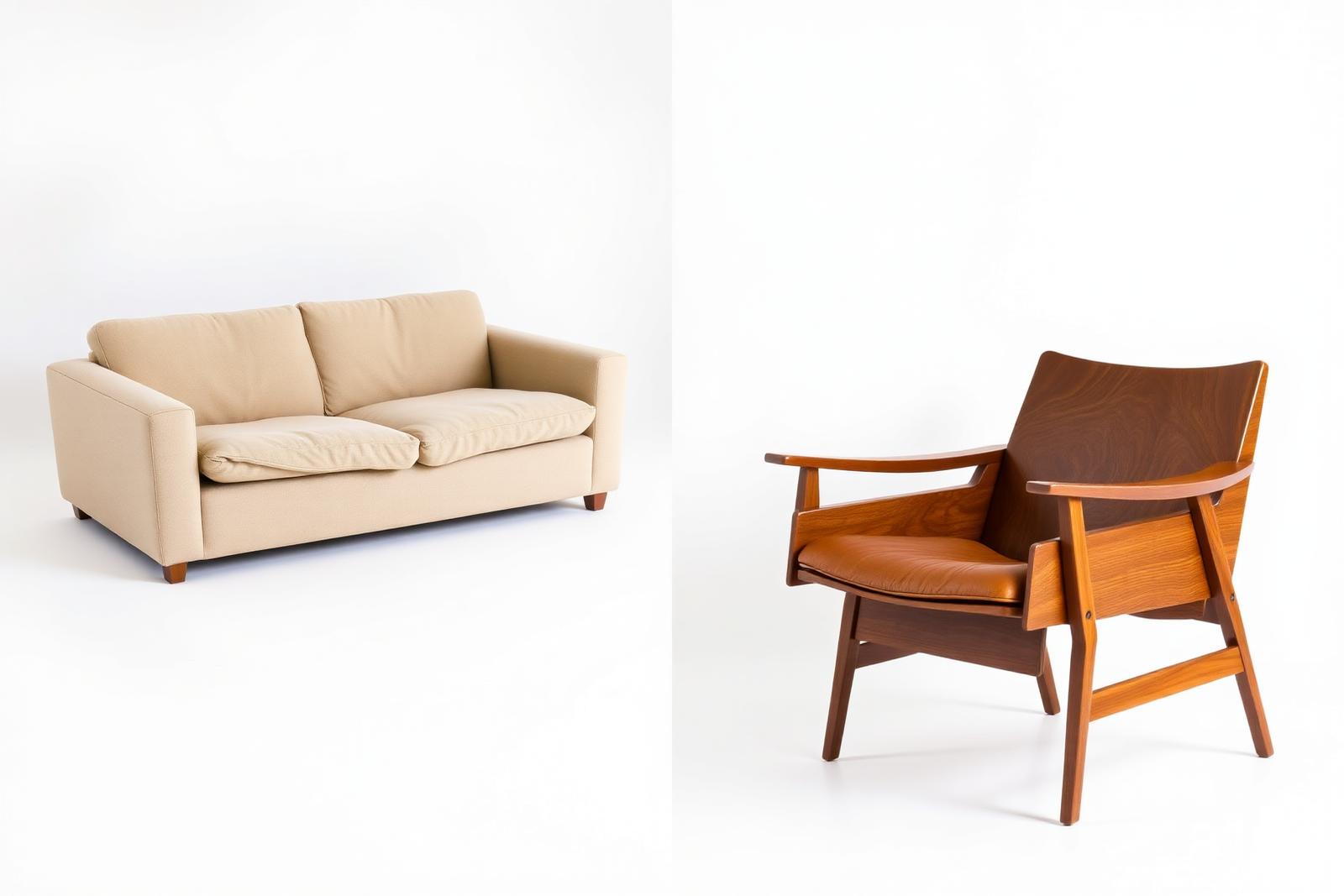
The furniture you actually want already exists — it's just in someone's house
Here's the quiet truth about "investment" furniture: most of the best of it was made decades ago, and most of it is already out in the world. Solid teak and walnut dressers. Dovetailed drawers. Real leather that's only gotten better with age. Lighting and art and dining tables built by people who assumed you'd own them for life.
When a household is cleared — a downsize, a move, an estate — all of that goes up for sale at once. And it's almost never priced by someone who knows furniture. It's priced to move by Sunday. A solid-wood dresser that would be $1,800 restored at a vintage shop is $90 because the tag-writer saw "an old dresser."
That gap — between what something is worth and what a house-clearer charges for it — is the entire opportunity. It's the same reason resellers and designers have quietly shopped estate sales for years. The only thing that ever stopped regular furniture buyers was finding the right sale and not knowing if the thing was real.
Why you've never thought to shop this way — and why that's changing
Estate sales used to feel niche, a little intimidating, and impossible to search. You'd have to already know about a sale, show up blind, and hope.
That's over. Millennials are now the fastest-growing group of estate-sale buyers — up about 15% since 2020 — and Gen Z is right behind them. Not out of nostalgia. They're chasing exactly what you're chasing: quality that lasts, sustainability over landfill, and character you cannot buy in a flat-pack box. The algorithm shift from "fast furniture haul" to "vintage score" is real, and estate sales are where the score actually lives.
The piece that was missing was a way to find it without driving around all weekend. That's what EstateSaleFinder is for.
The real fear: "What if I overpay — or it's a fake?"
Let's name the thing that stops most first-time secondhand furniture buyers. It's not the dust. It's the anxiety: What if I pay $400 for an "Eames" that's a $90 knockoff?
It's a legitimate fear. The Eames Lounge is the most-counterfeited piece of mid-century furniture in the world. Real value lives in details most people don't know to check — maker's labels and stamps, the actual materials, the joinery, the proportions. The dupes hide behind phrases like "mid-century style" and "in the style of."
You shouldn't need to become a furniture historian to buy a chair with confidence. So we built the part that does the knowing for you.
Feature #1 — Browse by category, not by digging
Instead of showing up blind, you can browse estate sales near you by what you actually want — furniture, mid-century, lighting, décor — and see the real pieces with photos, prices, and distance before you leave the house.
No more guessing whether a sale "has good furniture." You look first, then decide if it's worth the drive. For someone furnishing a whole home, a second home, or an Airbnb, that's the difference between a wasted Saturday and a living room sourced in one trip.
Feature #2 — The AI Appraiser tells you if it's the real thing
This is the one that removes the fear. Standing in front of a chair you're not sure about? Open the AI Appraiser, snap a photo, and it goes to work like a dealer who's seen ten thousand pieces:
- Identifies the maker and era — is this an actual Herman Miller / Eames, or a look-alike?
- Flags real vs. knockoff using the details that matter, not just the silhouette.
- Gives you a value range so you know instantly whether $250 is a steal or a skip.
You walk in nervous and walk out certain. No furniture degree required — just your phone.

Feature #3 — A wishlist that hunts the pieces you want while you sleep
You don't have to refresh listings all week. Save what you're after — "mid-century credenza," "leather lounge chair," "marble dining table" — set how far you'll travel, and we'll ping you the moment a match lists nearby.
It's the difference between hoping you stumble onto the right piece and having the right piece come find you.
The new-home math
Run the numbers the way a designer would. A particleboard showroom run to furnish a living room and dining room easily clears a few thousand dollars — for pieces engineered to be replaced. The same budget at estate sales buys solid wood, real design, and character, with pieces that hold their value instead of heading to a landfill.
For a primary home, it means a space that looks collected, not catalog-ordered. For a second home or Airbnb, it means durable, photogenic furniture that survives guests and actually stands out in listing photos — sourced for a fraction of retail.
Stop buying disposable. Start buying real.
The furniture you actually want isn't sold out, back-ordered, or three states away. It's already here — it's just been hard to find and scary to verify. Both of those problems are now solved.
Create a free account, browse the real furniture near you by category, save your wishlist, and let the AI Appraiser confirm the real thing before you ever load it into your car.
The next great piece in your home is at a sale this weekend. Go get it before someone who knows what it is does.
Keep exploring
Ready to start your own treasure hunt?
Discover estate sales near you and find incredible deals.
Explore Sales Near Me
About the author
Andy
Founder, EstateSaleFinder.net
Hi, I'm Andy — a retired commercial photographer turned developer with a five-year (and counting) obsession with estate sales. I started EstateSaleFinder.net because I knew there had to be an easier, smarter way to find and list estate sales. Now I get to chase treasure and build the tool I always wished existed.