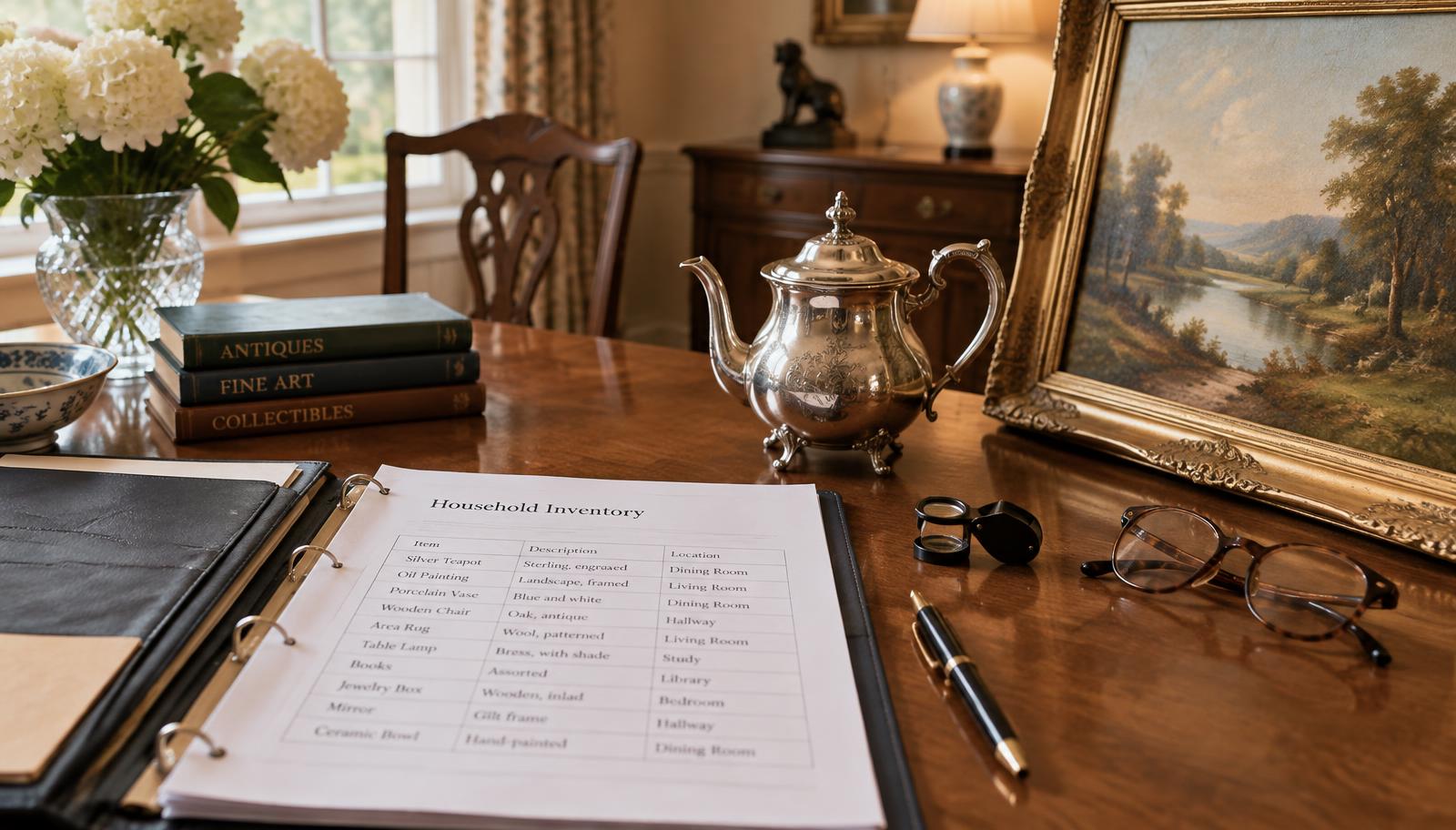


How to Sell Everything in Your House: What Goes Where (Estate Sale, Marketplace, eBay, Consignment, Donation) and a 30/60/90-Day Plan
To sell everything in your house, book an estate sale walkthrough before selling anything, let the company sell the bulk, sell only a few items yourself, consign the valuables and donate the rest. Here's what goes where, the time math, and a 30/60/90-day plan.
To sell everything in your house, call an estate sale company for a walkthrough first, before you sell or donate anything. Let it price and sell the bulk of the contents in one weekend. Sell only a few specific items yourself (newer furniture, appliances, small collectibles), consign fine jewelry and art, then donate or haul away what's left.
That's the short answer. The order matters more than most people think. The most common mistake is selling the best pieces yourself on Facebook Marketplace first, then calling a company. By then the house may not have enough value left to make a sale worth running, and the company may lower its offer or say no.
This guide covers what goes where, how much time each option really takes, the right order to do things, a 30/60/90-day plan, and how to stay safe selling online. If you just want the house empty and don't care about getting top dollar, our guide to getting rid of everything in a house covers cleanouts, junk removal and donation.
Quick summary for skimmers:
- Walkthrough first. Have one or two estate sale companies see the house before anything leaves.
- Estate sale for the bulk. Furniture, kitchenware, tools, decor, linens, books and the hundreds of small things.
- Sell yourself only where it pays. Newer furniture, appliances and patio sets on Marketplace; small, shippable collectibles on eBay.
- Consign or auction the few high-value pieces. Fine jewelry, signed art, designer handbags.
- Donate and haul away last. Only what didn't sell.
- Find help: compare local companies in our estate sale company directory.
How do I sell everything in my house?
Selling a whole house of belongings works best as a sequence, not a free-for-all:
- Decide what you're keeping. Mark it, box it, or move it to one closed room.
- Book estate sale company walkthroughs. Most companies do the first visit free and will tell you whether your house is a fit. Our guide to how estate sale companies work explains what happens on that visit.
- *Agree with the company what you will sell.* Get it in writing so nobody is surprised.
- List those few items yourself while the company prepares.
- Hold the estate sale.
- Consign or auction anything the company recommends sending elsewhere.
- Donate, recycle and haul away the leftovers. Many companies offer this as an add-on.
Done this way, you keep control of the pieces you care about and still give the company enough to run a strong sale.
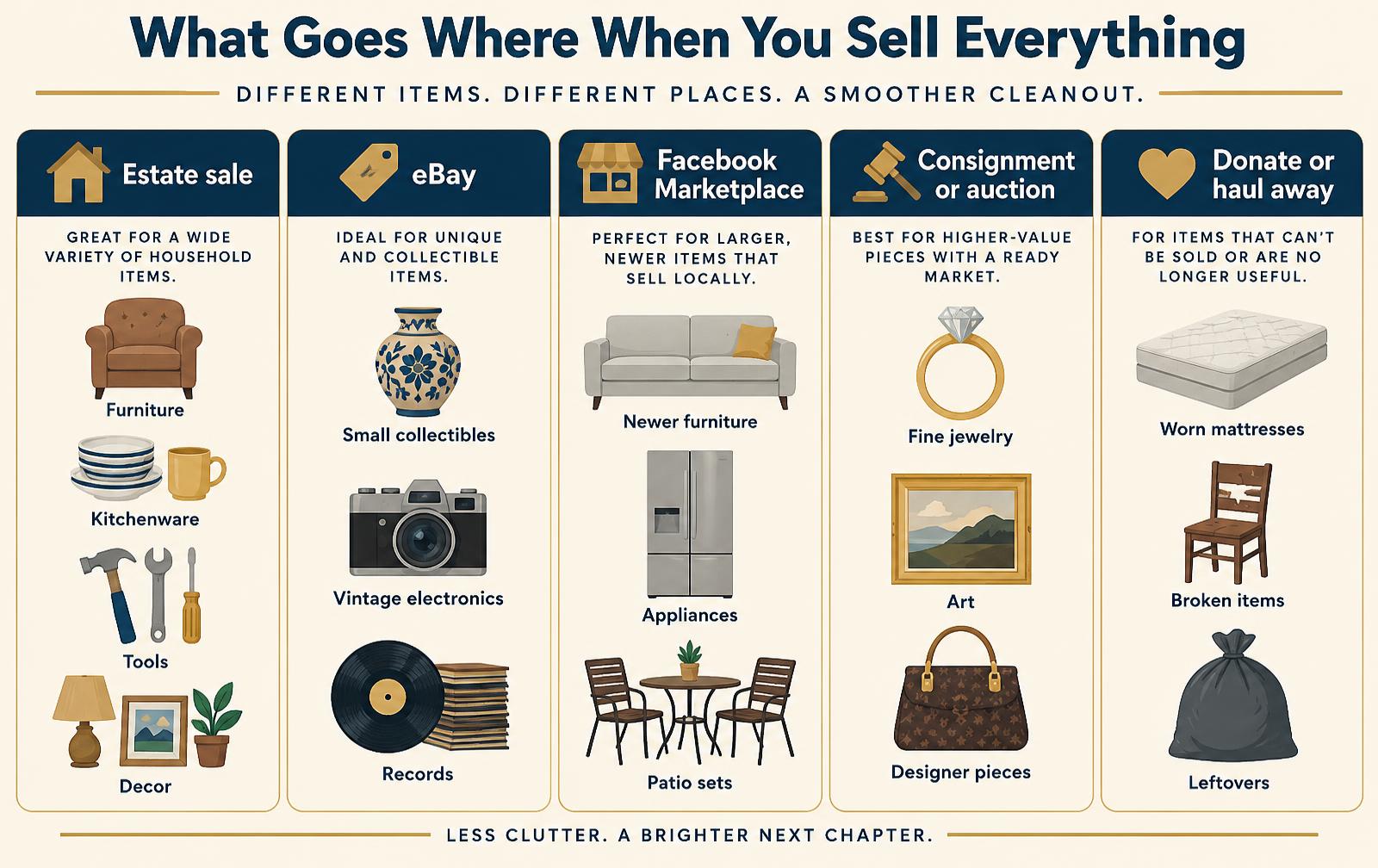
What goes where: the whole-house selling table
Each kind of item has a place where it usually brings the most money for the least work. Use this as a starting point, then ask the company what they see in your house.
| Item type | Usually sells best at | Why |
|---|---|---|
| Older and solid-wood furniture | Estate sale | Heavy to move; buyers come to it |
| Kitchenware, dishes, glassware | Estate sale | Hundreds of small sales, priced in bulk |
| Tools, garage and yard gear | Estate sale | Draws dealers and DIY buyers early |
| Linens, books, decor, holiday items | Estate sale | Too small to list one by one |
| Newer furniture (under ~10 years old) | Facebook Marketplace or estate sale | Local buyers search for it by name |
| Appliances, patio sets, exercise gear | Facebook Marketplace | Pickup only; local demand |
| Small collectibles, records, vintage electronics | eBay or estate sale | National buyers; easy to ship |
| Fine jewelry, gold, coins | Specialist dealer, consignment or auction | Value depends on weight, purity and grading |
| Signed art, designer handbags, rare pieces | Consignment or auction house | Needs the right buyers and authentication |
| Vehicles, boats, trailers | Private sale or dealer | Titles and paperwork |
| Worn, broken, stained items | Donate, recycle or haul away | Not worth a seller's time |
Not sure what something is? Snap a photo with our Ai Appraiser for a quick identification and a suggested range based on sold listings. Treat it as a starting point, not a final price.
Estate sale vs. Facebook Marketplace: which is better?
For a whole house, an estate sale is usually better. For a handful of items, Marketplace often is. The difference is volume.
| Estate sale company | Selling it yourself on Marketplace | |
|---|---|---|
| Best for | A whole house, hundreds or thousands of items | 5 to 30 items worth listing one at a time |
| Your time | A walkthrough, decisions, and signing a contract | Photos, listings, messages, no-shows, pickups |
| Cost | A commission on what sells (varies by company and region) | No fee for local pickup, but your hours |
| Pricing | Done by people who price thousands of items | You research every item |
| Strangers in your home | Managed by staff during set hours | One buyer at a time, on your schedule |
| Leftovers | Many companies arrange donation or cleanout | All on you |
Commissions vary a lot by company, region and house. See how much estate sale companies charge for what drives the number.
A worked example: time vs. commission
Say a house has about 600 sellable items and an estate sale would gross $12,000. Using a made-up 35% commission just for the math, the family nets about $7,800 and spends a few hours on decisions.
Now say the family tries to sell the same house on Marketplace. Even at a fast 20 minutes per item to photograph, list, message and hand off, 600 items is about 200 hours. That's five full work weeks, before no-shows and lowball offers, and most small items wouldn't sell at all online. The $4,200 "saved" in commission works out to roughly $21 an hour, for the items that actually sell.
The math flips for a few big, easy items. A two-year-old sectional or a newer refrigerator can sell on Marketplace in an afternoon and might be worth listing yourself, if the company agrees.
The right order: walkthrough first, then pull your items
This is the part most people get backwards. Estate sale companies decide whether to take a job based on what's in the house. The best pieces are what bring buyers through the door, and they help pay for the labor of pricing everything else.
If you sell the dining set, the good tools and the jewelry first, a company may:
- Lower its estimate or raise its commission.
- Ask for a minimum fee.
- Turn the job down because what's left won't cover the work.
So invite the company in while the house is still full. Then ask directly: "Which items would you like me to keep for the sale, and which can I sell myself?" Many companies are happy for you to sell a newer appliance or a car. They just want to know before they quote. Our post on the labor trap in estate sale walkthroughs explains why the contents decide the price.
Where else can I sell household items?
Beyond an estate sale and Marketplace, these are the main options:
- eBay for small, shippable things with national demand: records, cameras, vintage electronics, some collectibles. Shipping and returns take time.
- Consignment shops for furniture, home decor, clothing and designer goods. They take a cut and set the price, and items can sit for weeks.
- Auction houses for fine art, jewelry, coins and rare items. Ask about buyer's premiums, seller fees and timelines. See should you have an estate sale or online auction? for how the two compare.
- Specialist dealers for gold, silver and coins. Get more than one quote.
- Donation for clean, usable leftovers. Ask for a receipt if you plan to deduct it.
A 30/60/90-day plan to sell everything
Use this if you have about three months before a move or closing. Squeeze the steps if you have less time.
Days 1–30: decide and book
- Walk every room and mark what you're keeping.
- Pull out papers, photos and family keepsakes. Don't throw away paperwork until you've checked it.
- Call two or three estate sale companies and book walkthroughs. Use our directory to find companies near you.
- Don't sell, donate or toss anything of value yet.
- Choose a company, sign a contract and set a sale date.
Days 31–60: sell the few items yourself
- List only the items the company agreed you'd sell.
- Move keepers into one closed room or into storage.
- Get quotes from a jeweler, coin dealer or auction house for anything the company flagged as high-value.
- Stop using the rooms the company will stage.
Days 61–90: sale weekend and cleanout
- The company prices, stages, advertises and runs the sale.
- Stay away during the sale if the company asks; most prefer it.
- Unsold items go to donation, a buyout, consignment or haul-away, as agreed.
- Get your settlement and a written list of what sold.
Selling on Facebook Marketplace: safety and scam warnings
If you do sell some items yourself, protect your money and your home:
- Never accept a check for more than the price and send back the difference. The FTC warns that fake checks can look real and bounce days later, leaving you owing the bank.
- Never share a verification code someone texts you. Real buyers don't need it.
- Take cash or a payment you can see clear in your own app before the item leaves.
- Meet in a public place for small items. For large items, have someone with you and keep buyers in the garage or one room.
- Don't say the house is empty or that you're moving. Don't post your address publicly.
Read more in our guide to common estate sale scams to avoid.
For realtors: call an estate sale company before a cleanout crew
If you list homes, the order you recommend can put thousands of dollars back in your client's pocket. A cleanout crew charges to empty the house. An estate sale company is paid from what it sells, and many can arrange the cleanout afterward. That means the client often gets a check instead of a bill, and the house is often cleared and broom-clean for photos.
Bring a company in at the listing appointment, not after the photos are scheduled. Ask about their timeline so the sale doesn't collide with showings. Our realtor's guide to estate sales covers timing, contracts and referrals. To send a client a short list of local companies, use hire an estate sale company.
For estate sale companies
If clients often call you after they've already sold the best pieces, put the order in writing. A one-line note in your first email or on your website, "please don't sell or donate anything until we've walked through," saves jobs. On EstateSaleFinder you can list your company so families find you before they start selling, and use built-in item marketing, a register and a ledger to run the sale.
How EstateSaleFinder helps
- Find a company: browse local companies by state and city in our directory, or get matched.
- Check values: try the Ai Appraiser on things you're unsure about. Its prices are suggestions.
- Shop and save sales: buyers can save sales and get notified when new ones post nearby.
FAQ
What is the fastest way to sell everything in your house?
An estate sale is usually the fastest way to sell the bulk of a household. A company can typically price, stage and sell most of the contents over a two- or three-day sale, then arrange donation or haul-away for what's left.
Should I sell items myself before an estate sale?
Only after the estate sale company has walked through and agreed. Selling the best pieces first can lower the company's estimate or cause it to decline the job.
Is an estate sale better than Facebook Marketplace?
For a whole house, usually yes, because one sale handles hundreds of items. Marketplace can be better for a few large, newer items like appliances or a recent sofa.
How do I get rid of everything when moving?
Decide what you're keeping, book an estate sale walkthrough, sell only agreed items yourself, hold the sale, then donate or haul away the leftovers. See our full cleanout guide.
What sells best at an estate sale?
Jewelry, tools, kitchen gear, quality furniture and collectibles tend to sell well. See what sells best at estate sales.
What if the estate sale company says my house isn't a fit?
Ask why, and ask for a referral. Some companies do smaller sales, online auctions or buyouts. You can also contact a few more companies in our directory.
Related reading
Keep exploring
Ready to start your own treasure hunt?
Discover estate sales near you and find incredible deals.
Explore Sales Near Me
About the author
Andy
Founder, EstateSaleFinder.net
Hi, I'm Andy — a retired commercial photographer turned developer with a five-year (and counting) obsession with estate sales. I started EstateSaleFinder.net because I knew there had to be an easier, smarter way to find and list estate sales. Now I get to chase treasure and build the tool I always wished existed.