

The Downsizing Checklist for Seniors: Tips That Make It Actually Bearable
Downsizing isn't a decluttering project — it's forty years of life in one house, and it deserves a plan that's kind to you. Here's a room-by-room checklist, a realistic 12-week timeline, and the parts nobody warns you about.
Downsizing for seniors works best in three passes: decide where you're going and measure it, sort room by room into keep / sell / give / donate / recycle, then sell the valuable things before you pack anything. Give yourself eight to twelve weeks if you can, start with the storage areas where nothing is emotional, and handle the sentimental rooms last — when you've had practice deciding and you're not exhausted.
That's the whole method. The rest of this is how to actually do it without dreading every Saturday.
Why downsizing feels so much harder than it looks
Because it isn't cleaning. Every object is a small decision with a memory attached, and you're making hundreds of them in a row. Researchers and clinicians who work with older adults describe this plainly: later-life moves carry real grief, and the stress lands on top of whatever prompted the move in the first place — health, a spouse, stairs that stopped being optional. The National Institute on Aging's guidance on aging in place and housing choices is a good, unsentimental place to start thinking about the why before the what.
So plan for the emotional load the way you'd plan for the physical one. Short sessions. Someone with you. Snacks and a stopping time.
Start here: the four decisions before you touch a single box
- Where are you going, and how big is it? Everything downstream depends on this number. Get the floor plan or measure the rooms yourself.
- When do you have to be out? A real date turns a vague dread into a schedule.
- Who's helping? Name them. "The kids will help" is not a plan; "Sarah, the first two Saturdays in October" is.
- What's your one non-negotiable? The piano, the dining table, Dad's tools. Protect one thing without guilt, and the other calls get easier.
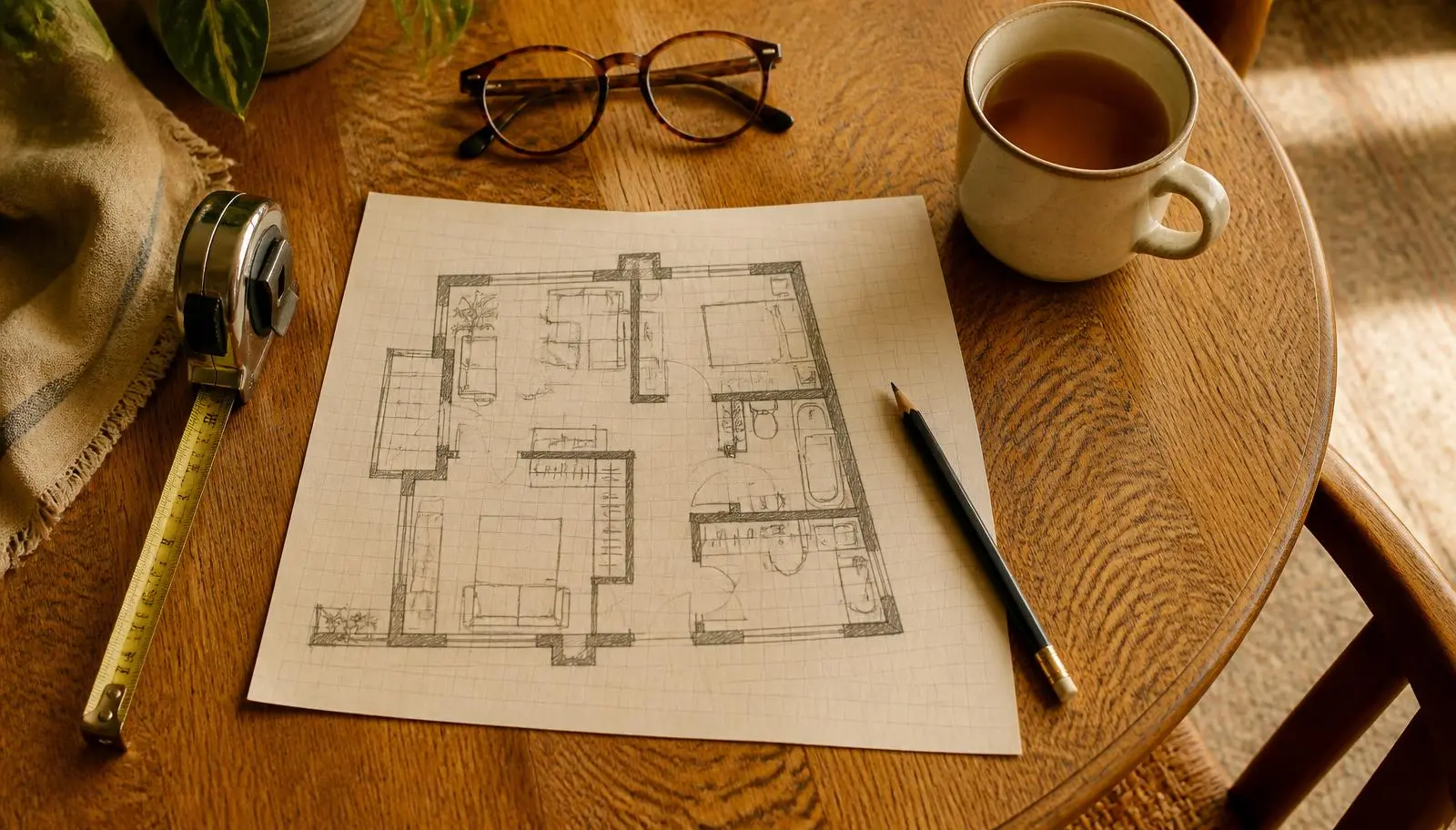
Measure first, decide second
Take the new floor plan and pencil in the furniture you think is coming — with real measurements, not memory. Doorway widths, elevator depth, wall length between windows. Most people discover the sectional and the china cabinet cannot both exist in the new living room, and it's far kinder to learn that on graph paper than on moving day with two movers waiting.
A rough rule that holds up: a 2,400 sq ft house into a 1,100 sq ft apartment means roughly half of everything goes. Knowing that up front reframes the whole project — you're not failing at keeping things, you're succeeding at fitting a life into a smaller frame.
The 12-week downsizing timeline
If you have less time, compress it — but keep the order. The order is what keeps it bearable.
| When | Focus | What "done" looks like |
|---|---|---|
| Weeks 1–2 | Plan | New floor plan marked up, move date set, helpers scheduled, boxes and bins bought |
| Weeks 3–4 | The unsentimental zones | Garage, basement, attic, shed, linen closet, expired pantry — sorted and cleared |
| Weeks 5–6 | Duplicates and utility | Kitchen, bathrooms, laundry, tools, holiday decorations |
| Week 7 | Paperwork and digital | Documents sorted, shredding done, photos scanned, accounts and address list built |
| Weeks 8–9 | Sell | Appraise the maybes, choose your sale method, book the company or list the items |
| Week 10 | The tender rooms | Bedrooms, keepsakes, letters, the china, the closet you've been avoiding |
| Week 11 | Give and donate | Family pickups scheduled, charity pickups booked, receipts filed |
| Week 12 | Pack and go | Only what's coming is left in the house |
Put it on a paper calendar on the refrigerator. Crossing off a week is the single most motivating thing in this entire process.
The five-pile system (and the sixth pile nobody mentions)

Work one room at a time, and put every single object into one of five places:
- Keep — it fits the new floor plan, and you've used it or loved it in the past year.
- Sell — it has real market value. Furniture in good condition, jewelry, sterling, tools, collections, mid-century anything.
- Give — a specific person has said they want it. Write the name on a sticky note now.
- Donate — useful, not valuable enough to sell for the effort involved.
- Recycle or toss — broken, stained, expired, or genuinely nobody's treasure.
The sixth pile is "decide later," and it needs a hard rule or it will eat the project: one box per room, and everything in it gets a final answer by Week 10. No box of boxes.
Three questions that break a deadlock
When you're stuck holding something for the fourth time:
- Would I buy this today, at the new place, for what it's worth?
- Am I keeping the object, or the memory? If it's the memory — photograph it, write two sentences about it on the back of the print, and let the object go. This works remarkably well for kids' artwork, trophies, wedding china you never use.
- If I'm gone in ten years, is this a gift or a chore for my family? Blunt, but it settles more decisions than any other question here.
Room-by-room downsizing checklist
Print this. Check things off. Momentum is the whole game.
Garage, basement, attic, shed
- [ ] Paint, solvents, old fuel, pesticides — take to a household hazardous waste day, never the curb - [ ] Tools: keep one good set, sell the duplicates (power tools and vintage hand tools sell well) - [ ] Lawn equipment you won't need at a condo - [ ] Sporting goods and camping gear - [ ] Empty boxes, packing peanuts, "might need it" lumber - [ ] Anything a mouse has been in — that decision is already made
Kitchen
- [ ] Keep one set of everyday dishes sized to how you actually eat now - [ ] Small appliances: the bread machine, second slow cooker, the juicer - [ ] Duplicate utensils and gadgets — put everything in a box, use the kitchen for two weeks, donate what stayed in the box - [ ] Pantry: check dates, donate unopened non-perishables to a food pantry - [ ] Special-occasion serving pieces — sell or pass down, don't move them "just in case"
Living and dining rooms
- [ ] Measure every piece against the new plan before deciding - [ ] Oversized furniture: sectionals, entertainment centers, dining sets for twelve - [ ] Books: keep a shelf's worth, not a room's worth - [ ] Media you can no longer play — VHS, cassettes, most DVDs - [ ] Decor and framed art: choose the pieces that go with the new walls
Bedrooms and closets
- [ ] Clothes you haven't worn in two years, and anything in a size you're not shopping for - [ ] Excess linens — most people need two sets per bed, not eight - [ ] Jewelry: sort real from costume before anything leaves the house (how to tell if gold is real is the ten-minute version) - [ ] Furniture that doesn't fit the new bedroom footprint
Paperwork and digital life
- [ ] One accordion file for the essentials: deed, titles, insurance, wills, trust, medical, tax returns - [ ] Shred old statements and anything with account numbers - [ ] Scan photo albums and slides — a flatbed scanner or a scanning service turns twelve boxes into one drive - [ ] Write your address-change list: Social Security, Medicare, pharmacy, bank, insurance, voter registration, subscriptions
The keepsakes (save this room for last)
!Weathered elderly hands holding an old framed family photograph, with vintage floral china and a worn cookbook softly out of focus nearby - [ ] Letters and photographs — set a keep limit before you open the box - [ ] Military items, family documents, family bibles: these belong with a person, not a sale - [ ] Children's and grandchildren's things — ask them, honestly, and believe the answer - [ ] One memory box per person is the format that actually survives the next move
What actually sells — and what doesn't
This is where downsizing turns into money instead of a dumpster fee. The market in 2026 is not the market your parents remember.
Sells reliably
solid-wood and mid-century furniture, sterling flatware, gold and real gemstone jewelry, tools, cast iron, art glass, vintage clothing and handbags, cameras, vinyl records, quality rugs, garden and patio pieces, anything genuinely industrial or unusual.
Sells poorly, almost everywhere
formal dining sets and china cabinets, mass-market brown furniture from the 1990s, printed encyclopedias, collector plates, most figurines, artificial flowers, exercise equipment, and full sets of formal china — the china question has a longer answer here, and it's usually not the answer families hope for.
Before you accept anyone's offer on the maybes, get a second opinion. You can check an item's value with our AI appraiser in about a minute from a phone photo — it reads the item and shows comparable real-world sales, which is exactly the number you want in your head before someone quotes you a price. Treat it as a well-informed suggestion, not a formal appraisal. For the pieces that might be genuinely valuable, our guides to spotting valuable items and how appraisal actually works will keep you from giving away the good stuff.
Which selling method fits your situation?
| Method | Best when | What to expect |
|---|---|---|
| Estate sale company | A whole house of contents, and you want it handled | Commission on gross sales, typically 30–50%; they price, staff, advertise and clean out. See what estate sale companies charge |
| Consignment shop | A handful of good pieces, no rush | Shop takes a cut, pays after it sells; furniture consignment is picky about style and condition |
| Online marketplace, yourself | Ten to thirty items you can photograph and hand off | Best price per item, most work, strangers at the door |
| Auction | One genuinely valuable or specialized item | Seller's commission plus fees; a real specialist reaches real collectors |
| Buyout | You have days, not weeks | One check for everything; the lowest number you'll be offered, and the least work |

If a professional sale is the right answer, you can compare estate sale companies near you on EstateSaleFinder and see verified reviews and specialties before you invite anyone into the house. Interview two or three, get the commission and the clean-out terms in writing, and ask specifically what happens to whatever doesn't sell — that clause is where downsizers get surprised.
Where to donate what's left
- Furniture and housewares: Habitat for Humanity ReStore and The Salvation Army both offer free pickup in many areas — book two to three weeks out.
- Clothing and small goods: Goodwill locations, plus local shelters and church closets that often need specific items.
- Medical equipment: local reuse programs and senior centers; walkers and shower chairs are always needed.
- Books: library Friends groups, literacy programs, Better World Books drop boxes.
- Anything still useful: Freecycle and local Buy Nothing groups move things fast and free.
Keep an itemized list and the receipt. If you itemize deductions, the IRS explains valuing donated goods in Publication 561 — fair market value, not what you paid.
When to hire help (and it isn't weakness)
If the house is large, the timeline is short, or you're doing this while managing your own health or a spouse's, a Senior Move Manager is the single best money you can spend. NASMM members do space planning, sorting, sale and donation coordination, packing, and unpacking the new place so the bed is made the first night. Many families use one for the planning and heavy days only. Professional organizers through NAPO are a lighter-weight option for the sorting stage.
AARP's practical downsizing and moving advice is worth reading alongside this checklist, especially on the housing-choice side.
Downsizing tips that make it actually bearable
The checklist gets the house done. These get you through it.
- Two-hour sessions, hard stop. Decision fatigue is real, and it's what makes people either keep everything or throw out something they regret.
- Start where there are no feelings. The linen closet and the garage build the muscle you'll need for the bedroom.
- Do not sort with an audience of opinions. One helper. Committees turn every object into a debate.
- Photograph before you release. A photo of the workbench, the kitchen with your handwriting on the calendar, Mom's handwriting on the recipe card. The picture carries almost all of the memory at a fraction of the square footage.
- Let family choose early, with a deadline. "Tell me by the 15th, and it needs to leave your hands by the 30th." Otherwise items sit in your hallway for months.
- Never let anyone say "you'd get more for that." You're not optimizing an estate; you're moving. Speed has value, and so does your weekend.
- Keep the one thing. The chair, the piano, the ugly lamp you love. It buys enormous goodwill with yourself.
- Plan the first night. Sheets, coffee, medications, a lamp, the good pillow, the photo you like — in one clearly marked box that travels with you, not the truck.
- Mark the ending. Dinner out the day the house is empty. This was a big thing you did, not a chore you finished.
If you're doing this for a parent rather than for yourself, the emotional map is different and worth reading on its own: cleaning out a parent's house.
Questions & answers
Frequently asked questions
How long does downsizing take for seniors?
Eight to twelve weeks of steady, part-time work for an average three-bedroom house — a few hours, two or three days a week. Larger homes with full basements and attics realistically take three to six months. Compressed timelines are absolutely doable, but that's usually when hiring help stops being optional.
Where do I start when downsizing?
The garage, basement, attic, or a storage closet — somewhere with almost no emotional weight. You get a visible win, you learn how fast you can decide, and you build momentum before the rooms that hurt.
How much should I get rid of?
Compare square footage. Moving from 2,400 sq ft to 1,200 means planning to release roughly half of everything, and closet and storage space usually shrinks even more than living space does. Measure the new closets specifically.
Is it better to sell or donate when downsizing?
Sell anything with real resale value — furniture in good condition, jewelry, sterling, tools, collections — and donate the useful rest. Check values first so you don't donate the one piece that would have paid for the movers.
What do I do with furniture nobody wants?
Try, in order: family, a local Buy Nothing or Freecycle group, a charity that offers free pickup, then a junk-removal service. If it's part of a whole-house clear-out, an estate sale company that includes clean-out in its contract handles this for you.
Should I rent a storage unit?
Almost never, and never as a way to avoid deciding. Storage costs add up to thousands over a few years, and boxes that go into a unit undecided tend to come out undecided — usually being sorted by your children instead of you. Short-term storage during a closing gap is a different, legitimate thing.
Sources and further reading
- National Institute on Aging — Aging in Place: Growing Older at Home
- National Association of Senior Move Managers (NASMM)
- National Association of Productivity & Organizing Professionals (NAPO)
- AARP — Home and Family: Your Home
- IRS Publication 561 — Determining the Value of Donated Property
- Habitat for Humanity ReStore · Salvation Army pickup · Goodwill · Freecycle
Related reading:
Values and percentages here are general ranges from the current resale market, not appraisals. Commission rates, donation pickup availability and tax treatment vary by company, charity and state — get specifics in writing, and talk to your own tax advisor about deductions.
Keep exploring
Ready to start your own treasure hunt?
Discover estate sales near you and find incredible deals.
Explore Sales Near Me
About the author
Andy
Founder, EstateSaleFinder.net
Hi, I'm Andy — a retired commercial photographer turned developer with a five-year (and counting) obsession with estate sales. I started EstateSaleFinder.net because I knew there had to be an easier, smarter way to find and list estate sales. Now I get to chase treasure and build the tool I always wished existed.