

Swedish Death Cleaning + Estate Sales: The Do-It-Now Plan That Saves Your Kids Months (Checklist, What to Keep, When to Call a Company)
Swedish death cleaning means sorting your own things now so your family doesn't have to later. Here's the room order, the five piles, a printable 30/60/90-day checklist, and how a living estate sale handles the rest.
*Swedish death cleaning (in Swedish, döstädning) means going through your own belongings while you're healthy, keeping what matters and passing on, selling or donating the rest, so your family isn't left to do it after you're gone. It isn't grim and it isn't a weekend purge. It's a slow, kind habit. When the sorting is done, a living or downsizing estate sale can clear everything that's left in a few days.*
Quick summary
- What it is: a gentle, lifelong decluttering habit made famous by Margareta Magnusson's book The Gentle Art of Swedish Death Cleaning, later an eight-episode Peacock series narrated by Amy Poehler (2023).
- When to start: Magnusson suggests starting around 65, but any age works. The best time is before a move, an illness or a crisis forces it.
- Room order: storage and garage first, photos and letters last.
- Five piles: Keep, Family, Sell, Donate, Toss.
- The finish line: once the family has picked what it wants, a living or downsizing estate sale sells the rest in one weekend, often while you still live in the home.
- Free printable: download the 30/60/90-day checklist (PDF).
Why this matters right now
Thanksgiving is often the one weekend a year the whole family is in the same house. It's a good time for a calm conversation about "the stuff", before anyone has to have it in a hospital waiting room.
The numbers say most families wait too long. A University of Kansas study by gerontologist David Ekerdt, published in the Journals of Gerontology, used national survey data and found that among people 70 and older, nearly a third hadn't donated or given away anything in the previous two years, and more than 80% hadn't sold anything (NPR's report on the study). Meanwhile, baby boomers made up 53% of all home sellers in the National Association of Realtors' 2025 generational report (NAR). That's a lot of full houses changing hands.
What Swedish death cleaning is (and isn't)
Swedish death cleaning is about other people. You sort your things so your kids, spouse or executor won't spend months guessing what mattered. Magnusson's famous line is that nobody wants to clean up after you, so do it yourself.
It is not:
- A one-weekend purge. It's meant to be slow, over months or years.
- Getting rid of everything. You keep what you use and love.
- Only for the very old or very sick.
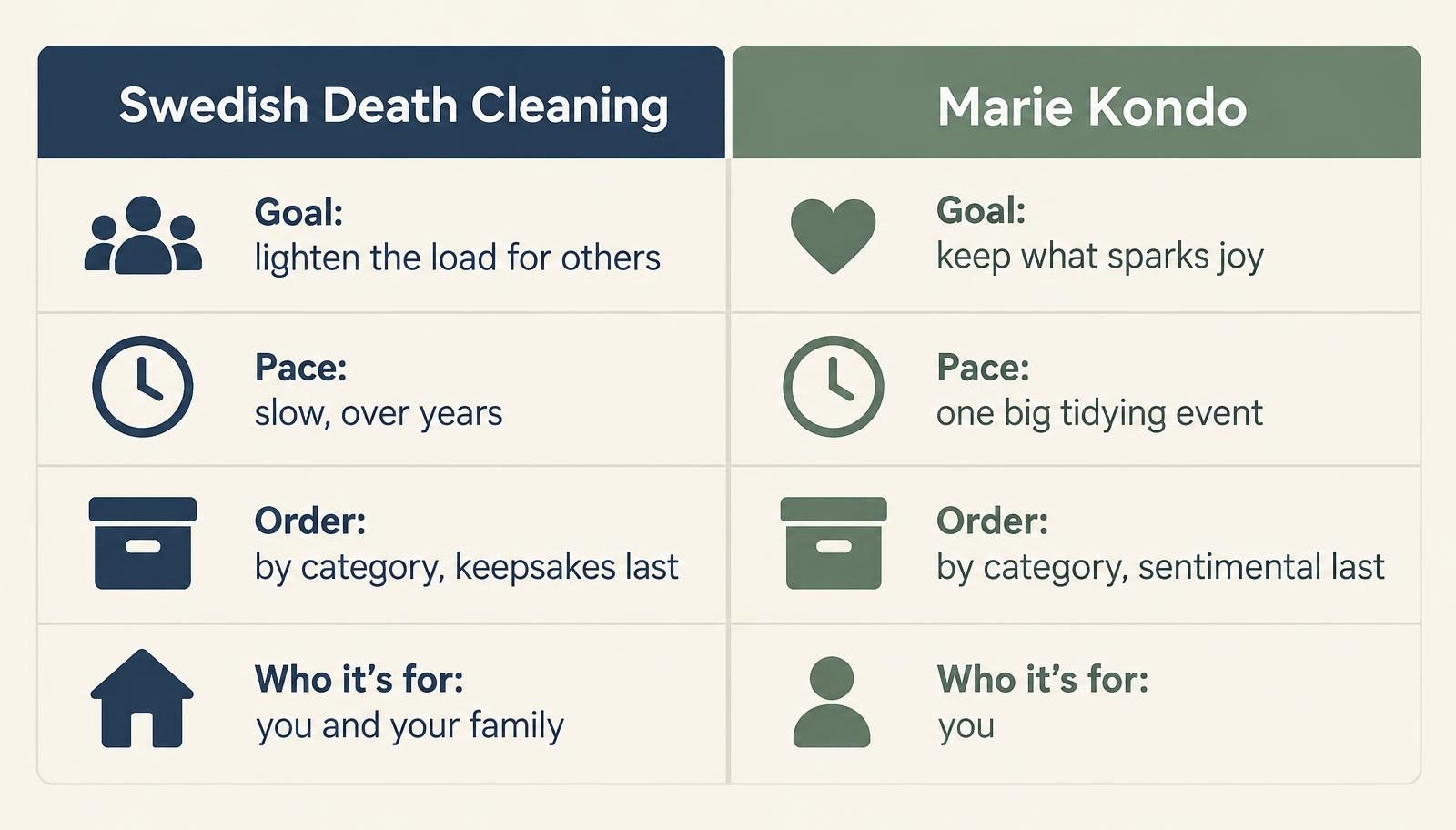
Swedish death cleaning vs Marie Kondo
| Swedish death cleaning | Marie Kondo (KonMari) | |
|---|---|---|
| The question | "Will anyone be glad to find this?" | "Does it spark joy?" |
| Who it's for | You and the people who will inherit your things | Mostly you |
| Pace | Slow, ongoing | One big tidying "festival" |
| Keepsakes | Last, and you decide who gets them | Last |
| The end | Fewer things, a clear plan, and no mystery boxes | A joyful, tidy home |
Swedish death cleaning vs a crisis cleanout
A crisis cleanout happens after a death or a sudden move, usually on a deadline, with grieving family members flying in. In our guide to cleaning out a parent's house after a death, the hardest part families describe is not knowing what anything means. Death cleaning removes that guesswork.
When to start
- In your 60s, on your own schedule. Magnusson suggests about 65. Starting early means you can go slowly.
- Before a move. Downsizing to a condo or senior living is the natural trigger. See our downsizing checklist for seniors.
- After a big life change. Retirement, losing a spouse or a health scare.
- Now, if you're the adult child. You can't do it for a parent, but you can offer to help. Our guide to talking to aging parents about downsizing has wording that works.
Room order: storage first, photos last
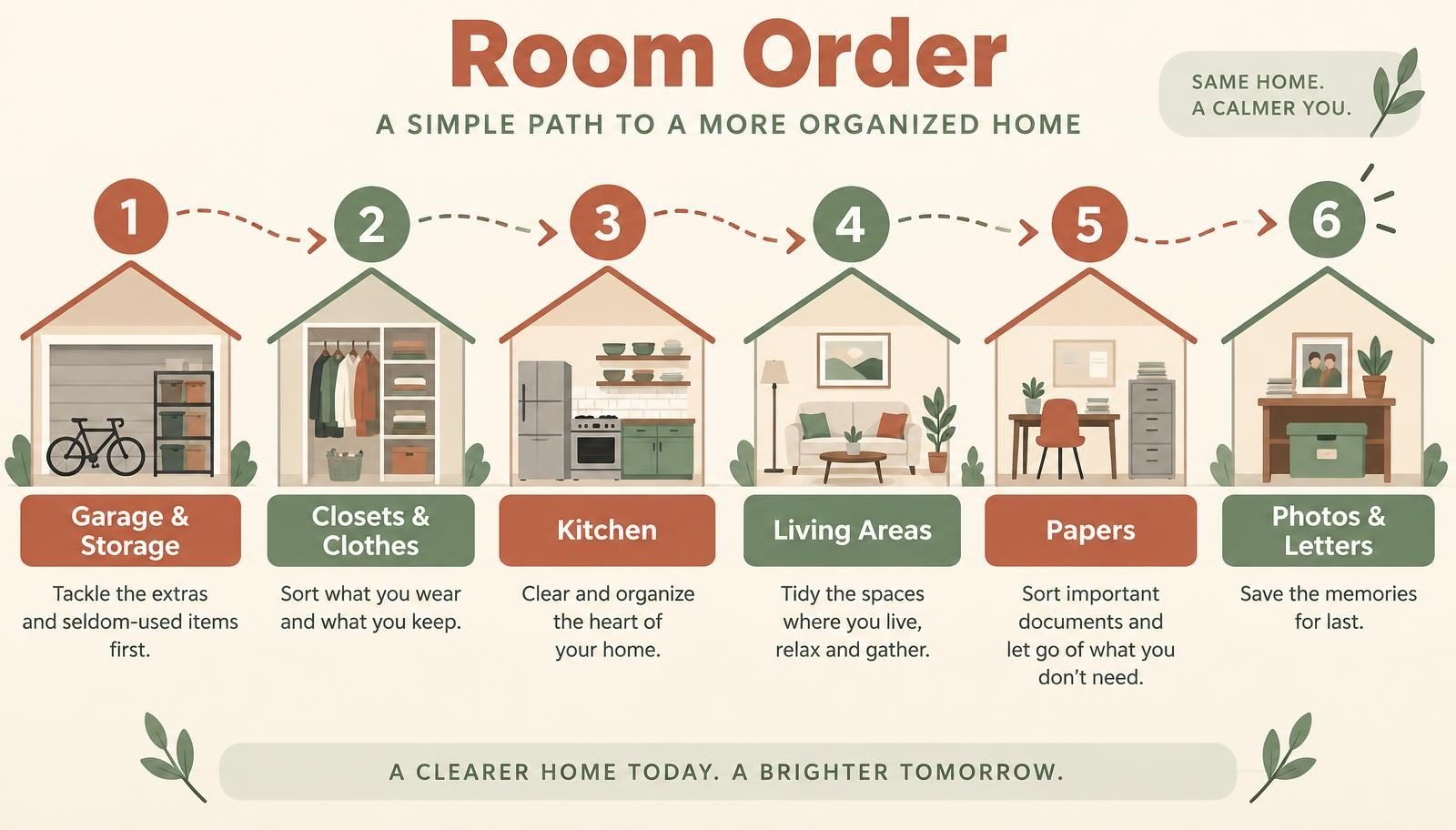
- Garage, attic, basement and storage units. There are lots of duplicates and few feelings attached.
- Closets and clothes. Keep what you actually wear this year.
- Kitchen. Most homes have three times the dishes anyone uses. Keep a working set.
- Living areas. Furniture, books, décor and collections.
- Papers. Shred old statements. Keep a clear folder of the documents your executor will need.
- Photos and letters, last. Sorting these is slow and emotional, and you'll be better at deciding by the end. Our guide to what to do with old family photos walks through it. Label people's names on the back of photos while you still remember them.
The five piles
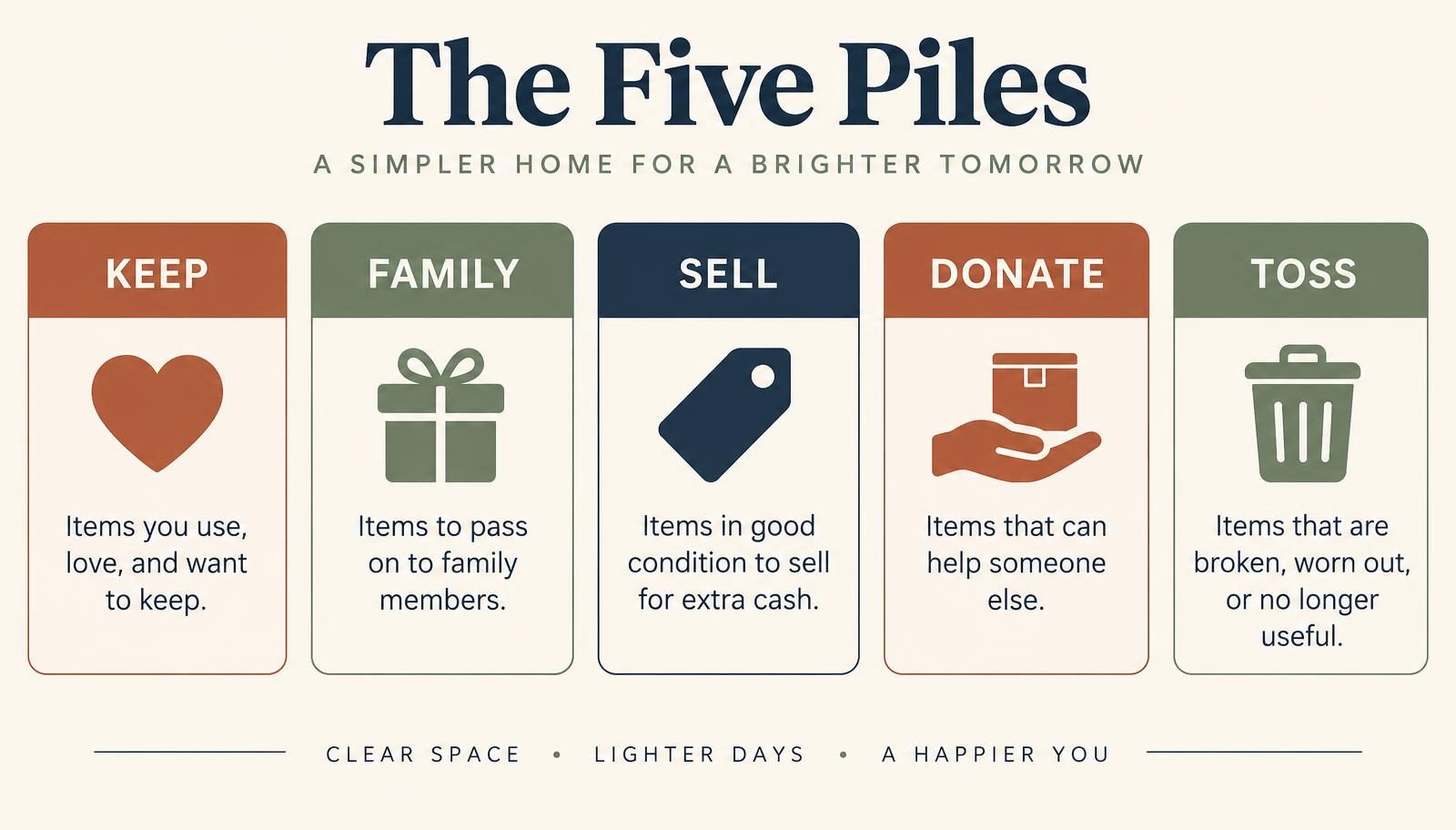
- Keep. Things you use or truly love.
- Family. Items a specific person has asked for. Write their name on a tag now.
- Sell. Furniture, collections, tools, jewelry and anything else with resale value. Don't haul these to the curb; they're what pays for an estate sale.
- Donate. Usable everyday goods that won't sell for much.
- Toss. Broken, stained or expired things.
Tip
don't make Sell decisions on value alone. Not sure if a piece is worth anything? Snap a photo with our free Ai Appraiser for a suggested range, then decide. It's a suggestion, not a final price.
The "kids don't want it" check
Here's the hard truth most families meet: adult children often don't want the china, the dining set or the curio cabinet. Before you save something "for the kids", ask them directly and get a yes or no in writing (a group text works). Anything with no taker goes to the Sell pile.
Estate sale companies hear the same thing from families again and again: the kids want a few photos, a recipe box and one or two meaningful pieces, not the full dining room.
When siblings do want the same things, use a simple system. Our guide to dividing parents' belongings among siblings covers round-robin picks and color stickers.
What happens to "the rest": three estate sale options
Death cleaning sorts your things. It doesn't sell them. That's where an estate sale company comes in.

1. A living estate sale (you're still in the home)
The company stages the Sell pile, often closing off rooms you're keeping, and runs a two- or three-day sale. It's common before a move to senior living. See what a downsizing sale is.
2. A downsizing sale after the move
You move first with your Keep pile. The company sells everything left in the house, then hands back a broom-clean (or close) home for listing. See our downsizing estate sale guide.
3. Offsite or online sale
For a small Sell pile, some companies take items to a warehouse sale or an online auction. Fewer shoppers walk through your home.
Is it worth it? If the Sell pile is only a few boxes, probably not. If it's a houseful, usually yes. Our is an estate sale worth it? guide walks through the math. And timing matters: here's the best time of year for an estate sale.
Who can help
- A senior move manager plans the move, floor plans and packing. See senior move manager vs estate sale company.
- An estate sale company prices and sells what's left. Find estate sale companies near you.
- Family, for the Family pile and the photos.
- Donation pickups and junk haulers, for the leftovers after the sale.
The printable 30/60/90-day checklist
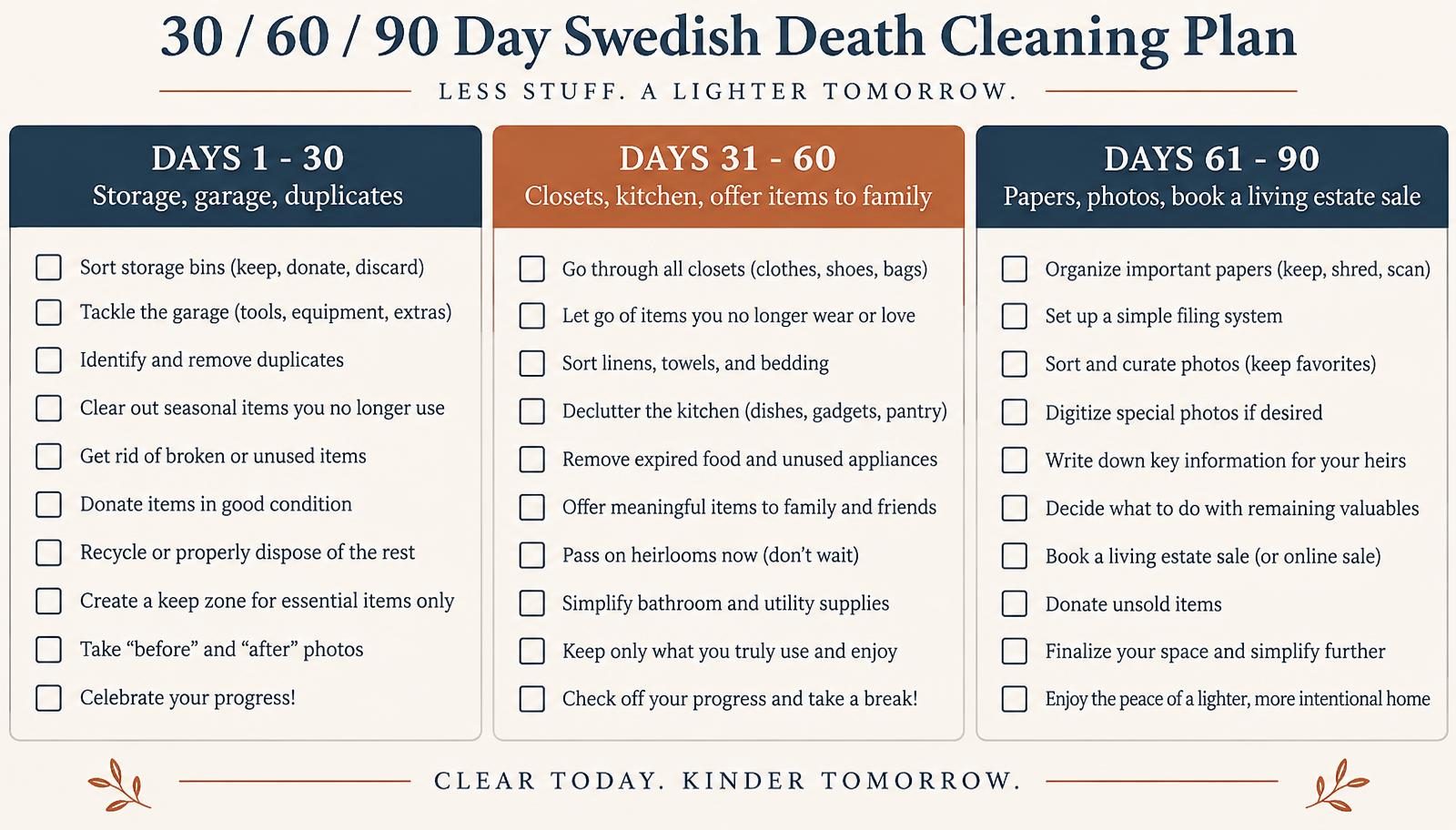
Days 1–30: storage, garage, duplicates
- [ ] Sort storage bins into the five piles - [ ] Clear the garage of duplicate tools and old paint - [ ] Pick one shelf for "Family" items and start tagging names - [ ] Book donation pickups for anything bulky
Days 31–60: closets, kitchen, and asking family
- [ ] Closets: keep what you wore this year - [ ] Kitchen: keep one working set of dishes and pans - [ ] Send the family a photo list and ask "yes or no?" - [ ] Set a deadline for family pickups
Days 61–90: papers, photos, and the sale
- [ ] Shred old statements; make one "for my executor" folder - [ ] Label names on the back of photos - [ ] Get two or three estate sale company quotes - [ ] Book a living or downsizing estate sale
How to start the conversation at Thanksgiving
Keep it short and about them, not the stuff:
- "Mom, is there anything in the house you'd really want one of us to have?"
- "Would it help if I spent a Saturday with you on the garage?"
- "Have you heard of Swedish death cleaning? It's about making things easier, not giving things up."
Then stop and listen. One box at a time is fine.
FAQ
What is Swedish death cleaning?
It's sorting through your own belongings while you're able, keeping what matters, and passing on, selling or donating the rest, so loved ones don't have to do it later. The Swedish word is döstädning, a mix of "death" and "cleaning."
When should you start Swedish death cleaning?
Margareta Magnusson suggests around age 65, but there's no wrong time. Starting before a move or health change lets you go slowly and make your own choices.
Is Swedish death cleaning the same as Marie Kondo?
No. KonMari asks whether something sparks joy for you. Swedish death cleaning asks whether anyone will be glad to find it after you're gone. It's slower and focused on your family.
What should I do with things my kids don't want?
Ask first, in writing. Anything without a taker goes to Sell or Donate. A living or downsizing estate sale is the fastest way to sell a houseful.
Can I have an estate sale while I still live in my home?
Yes. That's a living estate sale. The company closes off the rooms you're keeping and sells the rest over two or three days.
What should I do with old photos?
Do them last. Label names and dates on the back, scan your favorites, and offer the originals to family.
Who helps with Swedish death cleaning?
Family members, professional organizers, senior move managers and estate sale companies. Each handles a different part, from sorting to moving to selling.
Sources
- Margareta Magnusson: The Gentle Art of Swedish Death Cleaning
- Deadline: Peacock series announcement (2022)
- Ekerdt & Baker, "The Material Convoy After Age 50," Journals of Gerontology Series B
- NPR: Why Older Adults Have a Hard Time Letting Their Stuff Go (2014)
- National Association of Realtors: Baby boomers driving the housing market (2025)
Sources checked November 6, 2026. Reddit comments are quoted as anecdotes, not data.
Keep exploring
Ready to start your own treasure hunt?
Discover estate sales near you and find incredible deals.
Explore Sales Near Me
About the author
Andy
Founder, EstateSaleFinder.net
Hi, I'm Andy — a retired commercial photographer turned developer with a five-year (and counting) obsession with estate sales. I started EstateSaleFinder.net because I knew there had to be an easier, smarter way to find and list estate sales. Now I get to chase treasure and build the tool I always wished existed.