
How to Divide Your Parents' Belongings Among Siblings Without a Fight: 6 Fair Methods, What the Law Says, and What Happens to the Rest
What the will and executor decide, what to do before anyone takes anything, six fair methods side by side, a worked even-up example, and a printable worksheet.
Start with the will and the executor: specific gifts in the will, or a signed list of belongings, come first. Then take an inventory, photograph everything, and appraise valuable pieces before anyone takes anything. Pick one fair method (rotating picks are the most common), agree on it in writing, and plan for the rest: an estate sale, donations, or a cleanout.
Holidays like Thanksgiving are often the first time siblings are in the same house after a parent dies or moves. That makes it a natural time to divide belongings, and an easy time for old tensions to flare. This guide covers what the law says, what to do before anyone takes anything, six fair methods compared side by side, and what to do with everything nobody wants.
Why this goes wrong so often
Families often haven't talked about it. In a September 2025 Pew Research Center survey, 61% of parents 65 and older said they had talked with their adult children about what to do with their belongings. But only 51% of adults under 65 with a parent 65 or older said a parent had talked with them about it (Pew Research Center, Nov. 6, 2025). The two groups weren't matched families, but the gap suggests parents often think they've explained more than their children heard.
Fights are common, too. An older UK poll by YouGov for Scottish Widows, of 2,294 people, found that 1 in 10 UK adults had fallen out with a family member over an inheritance. Most of those arguments were between brothers and sisters, and 42% of those who argued never spoke again (BBC News, July 2006). This is UK data from 2006, not a current U.S. figure.
Step 1: What does the will say, and who's in charge?
Before anyone divides anything, find out:
- Is there a will or trust? It may name specific gifts ("my piano to Sarah").
- Is there a separate list of belongings? Many states let a will point to a signed list (see below).
- Who is the executor or trustee? That person has legal authority over the estate's property. Siblings don't, unless the will gives them shares.
- Is the estate in probate? If so, the executor may need court approval before giving things away or selling. See can you have an estate sale during probate.
If there's no will, state law decides who inherits, and the court-appointed administrator handles the property. Talk with a probate attorney if anything is unclear.
The "separate list" rule
States that follow the Uniform Probate Code let a will refer to a separate written list that gives away tangible personal property (things like furniture, jewelry and art, but not money). The list must be signed by the parent and describe the items and who gets them with reasonable certainty. It can be written before or after the will, and the parent can change it anytime. Examples:
- Massachusetts: M.G.L. c. 190B, Section 2-513
- South Dakota: SDCL 29A-2-513
- New Mexico: NMSA 45-2-513
Not every state allows this, and the rules differ. Ask an estate attorney in your parent's state.
Step 2: Before anyone takes anything
The most common cause of a fight is one sibling taking things early. Agree on these rules first, in writing if possible:
- Nothing leaves the house until the division is done (except items the will names).
- Change the locks or control the keys if needed, especially for an empty house.
- Look for papers and valuables first: wills, deeds, titles, cash, jewelry, guns, and savings bonds.
- Take an inventory, room by room.
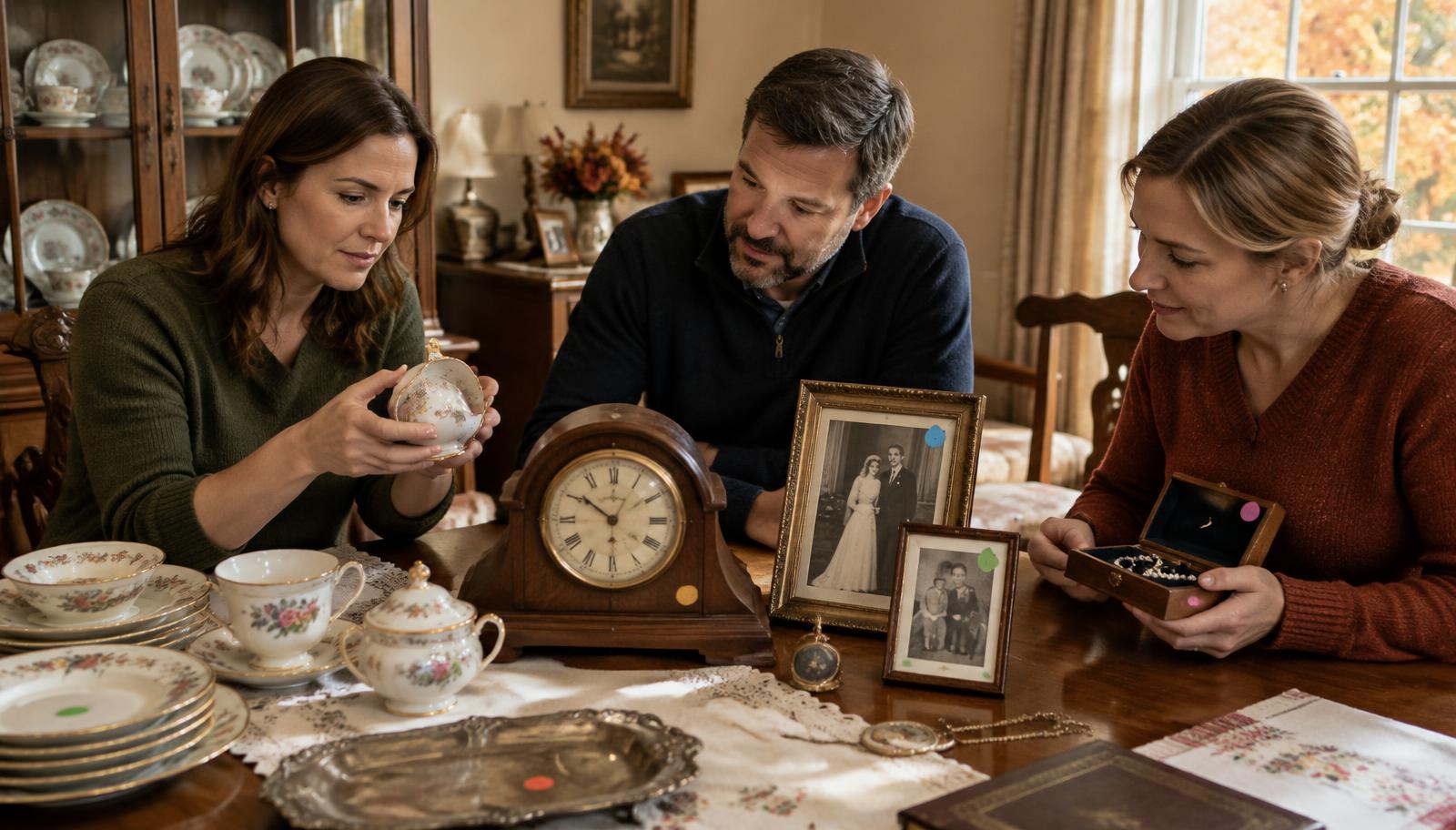
- Photograph every item worth discussing, and share the photos in one folder everyone can see.
- Get valuable items appraised so "equal" means something.
- Pick a method and a date for dividing.

Appraisals matter more than most families expect. An item that looks ordinary can be worth thousands, and a "valuable" antique might be worth very little. See valuing inherited items before giving away a fortune. For a quick first look, you can photograph items with EstateSaleFinder's Ai Appraiser to get a suggested value range. It's a suggestion, not a formal appraisal, so get a certified appraiser for anything important.
Step 3: Pick a fair method
There's no single right way. What matters is that everyone agrees on the method before the first pick. Here are six common methods:
| Method | How it works | Best for | Watch out for |
|---|---|---|---|
| Rotating picks | Siblings take turns choosing one item each. The order reverses every round (1-2-3, then 3-2-1) | Most families; simple and visible | Who picks first; draw lots for it |
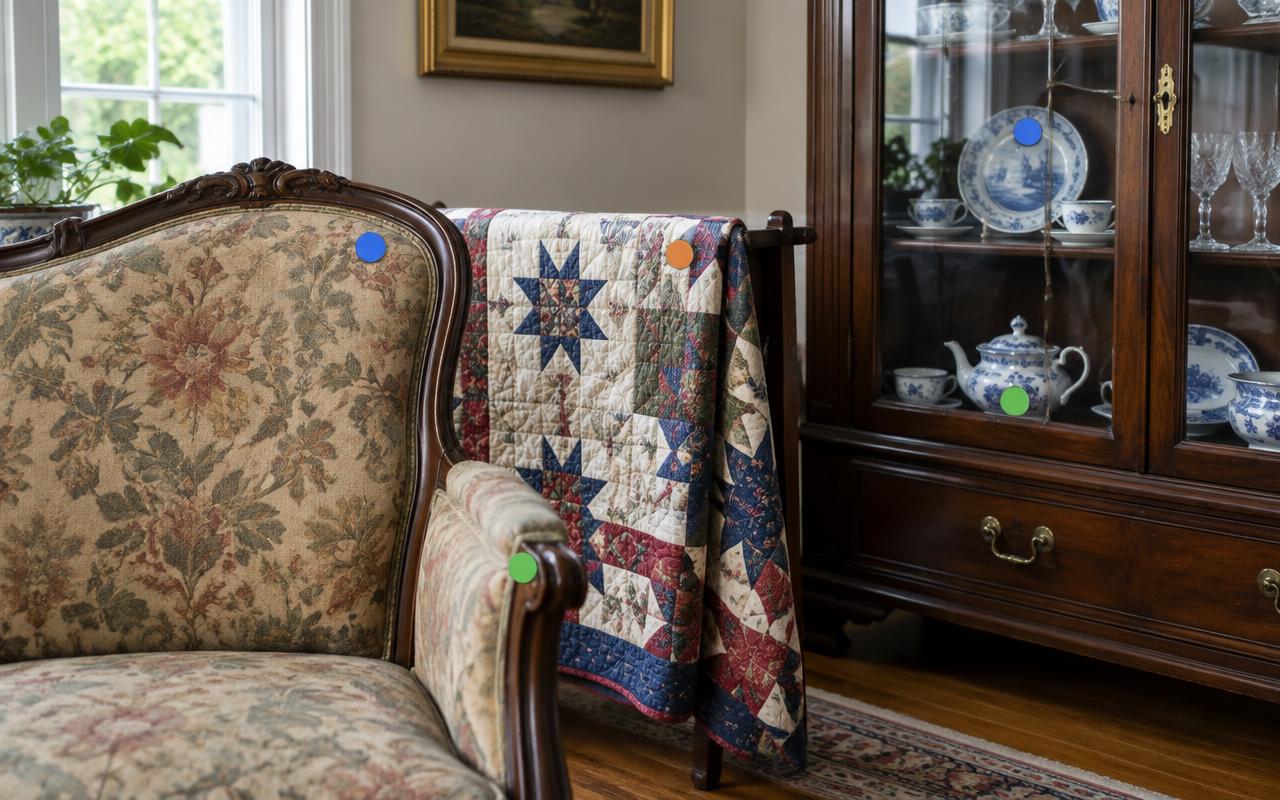
| Color stickers | Each sibling gets a color and tags what they want. Items with one sticker go to that person; items with two or more go to picks or a coin flip | Large houses with lots of items | People tagging everything; set a sticker limit |
| Points or bidding | Each sibling gets the same number of points (say 1,000) and "bids" points on items. The highest bid wins | Families who want to show how much each item matters to them | Can feel competitive; keep it friendly |
| Lottery | Draw names for each disputed item | Breaking ties quickly | Feels random for important items |
| Equal value, then even up | Use appraised values. Each sibling takes items up to an equal share, and whoever takes more pays the difference in cash or from the estate | Estates with a few high-value items | Needs real appraisals; settle differences in writing |
| Executor decides | The executor divides items, following the will and talking with heirs | When siblings can't agree, or live far apart | Executor must act fairly and keep records |
A worked example: rotating picks with an even-up
Three siblings agree to rotating picks. Before they start, an appraiser values the dining set at $2,400, a diamond ring at $3,000 and the mantel clock at $400.
- Round 1: Sam picks the ring ($3,000), Jo picks the dining set ($2,400), Lee picks the clock ($400).
- Round 2 (reverse order): Lee, Jo, then Sam pick everyday items with little resale value.
- Even up: The valuable items total $5,800, so an equal share is about $1,933 each. Sam is $1,067 over, Jo is $467 over, and Lee is $1,533 under. Sam and Jo each reduce their share of the estate's cash by those amounts, and Lee's goes up by $1,533. Have the executor record this in writing.
Step 4: Sentimental items
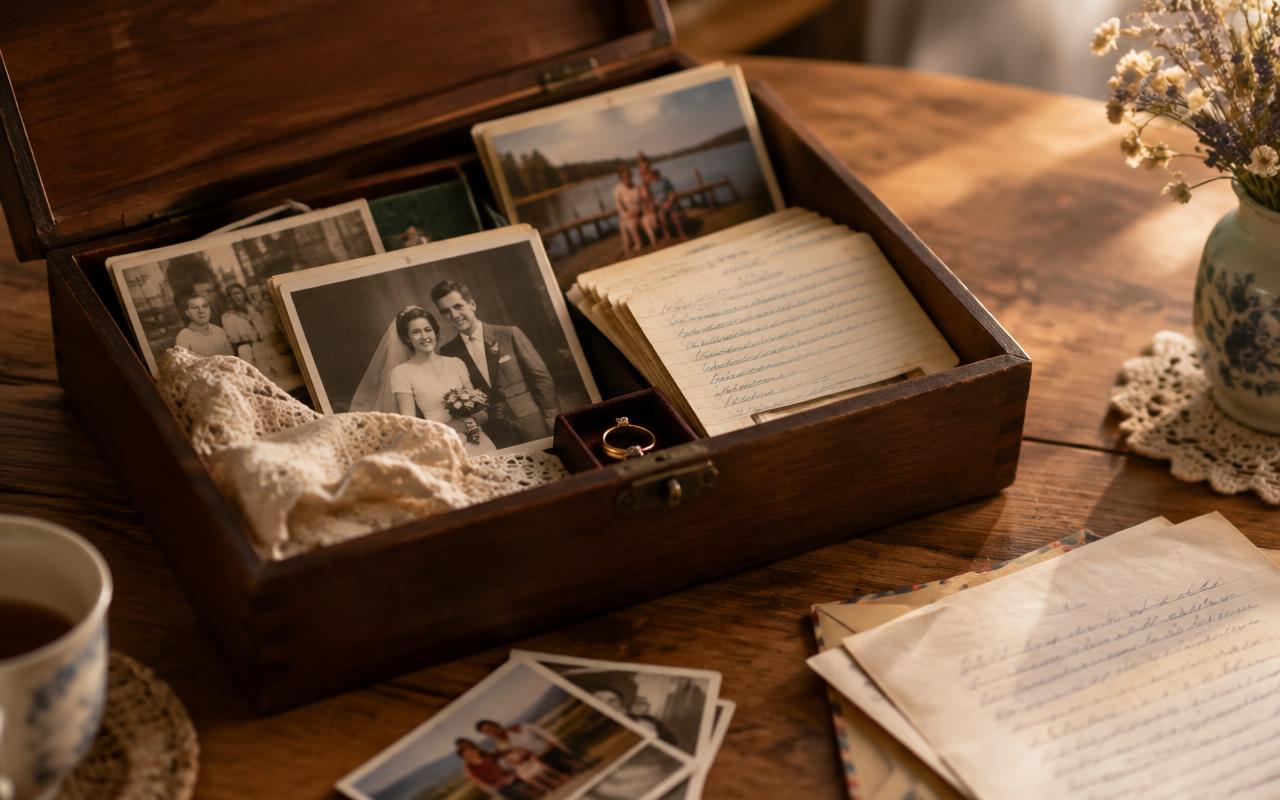
The fights that last are rarely about money. They're about a mother's recipe box, a father's watch, or a holiday ornament. Ideas families use:
- Name each person's top three before you start, and honor the first choice where you can.
- Copy what can be copied: scan photos and letters, and make digital copies of recipe cards for everyone.
- Split sets: divide a set of china, or the holiday ornaments, among siblings.
- Take turns: rotate a single family heirloom between households every year.
- Record the stories: write down why an item matters, so it goes with the item.
Step 5: Siblings who live far away
A sibling who can't be there often worries they'll get the leftovers. Make it fair:
- Share the photo inventory before the division day.
- Do picks on a video call, and walk through the house with a phone or tablet.
- Let them pick by proxy: a trusted sibling or the executor picks on their behalf from a written list.
- Agree on shipping before the day, including who pays. Shipping heavy furniture can cost more than it's worth.

"Mom promised me": handling disputes
Verbal promises are the hardest disputes. In general, a verbal promise isn't legally binding on the estate unless it's in the will or a valid signed list. But it may still matter to the family. Steps that help:
- Look for proof: a note, email, card or recording.
- Ask the executor to decide, following the will.
- Let the promised item count as that sibling's first pick.
- Use a mediator. Many communities have family or elder mediation services. It's cheaper than court.
- Talk to a probate attorney if the item is valuable and no one will budge.
Step 6: What happens to the rest
After the family has taken what it wants, most homes still have plenty left: furniture, kitchenware, tools, collectibles and clothes. Your options:
- Hold an estate sale. A company prices, stages and sells everything, usually for a commission, and the proceeds go to the estate. See estate sale company fees explained.
- Donate. Good for usable items. Get receipts if the estate might claim a deduction.
- Sell a few valuable items separately through a dealer or auction house.
- Clean out. A cleanout company hauls away the rest.
Most estate sale companies need the family to finish choosing items before they set up the sale, so set a firm date. You can find estate sale companies near you on EstateSaleFinder and compare reviews and past sales. Our guides on cleaning out a parent's house after death and what happens to unsold items after an estate sale cover the next steps.
For parents: make your list now
The kindest thing a parent can do is decide ahead of time.

- Ask each child what they want. You may be surprised.
- Write a signed list if your state allows one, and mention it in your will.
- Explain your reasons, especially if the split isn't equal.
- Give items now if you're downsizing. You get to see them enjoyed.
- Tell everyone where the list is.
Our guide on how to talk to aging parents about downsizing has conversation starters.
Printable worksheet for dividing items
Copy this into a document or print it out. Fill in one row per item.
| Item | Room | Photo taken? | Appraised value | Who wants it (1st, 2nd choice) | Method used | Goes to | Value counted toward share |
|---|---|---|---|---|---|---|---|
Agreement
We agree to use the ____________ method on ____________ (date). Nothing leaves the house before then except items named in the will. Disputes go to the executor, ____________.
Signed: ____________ ____________ ____________
FAQ
What is the fairest way to divide personal property among siblings?
Rotating picks with the order reversed each round is the most common fair method. Add appraisals and an even-up payment if some items are worth much more than others.
Who decides how belongings are divided?
The will and the executor. The executor follows the will and any valid signed list. If there's no will, state law and the court-appointed administrator decide.
Can one sibling take things before the estate is settled?
They shouldn't. The executor controls estate property. Taking items early can cause legal trouble and family fights.
Is a verbal promise from a parent binding?
Generally no, unless it's in the will or a valid signed list. Families can still choose to honor it.
What if siblings can't agree?
Let the executor decide, use a mediator, or as a last resort ask the probate court.
What do we do with everything left over?
Hold an estate sale, donate, sell valuable items separately, or hire a cleanout company. Finish choosing items before the sale company sets up.
Sources:
- Pew Research Center: Experiences With Estate Planning and Discussing End-of-Life Preferences (Nov. 6, 2025)
- BBC News: One in 10 "falls out" over will (YouGov for Scottish Widows, July 2006, UK data)
- Massachusetts General Laws c. 190B, Section 2-513
- South Dakota Codified Laws 29A-2-513
- New Mexico Statutes 45-2-513
Acting under a power of attorney? See what an agent can and can't give away
Sources checked November 1, 2026. General information, not legal advice. Talk to a probate attorney in your parent's state.
Keep exploring
Ready to start your own treasure hunt?
Discover estate sales near you and find incredible deals.
Explore Sales Near Me
About the author
Andy
Founder, EstateSaleFinder.net
Hi, I'm Andy — a retired commercial photographer turned developer with a five-year (and counting) obsession with estate sales. I started EstateSaleFinder.net because I knew there had to be an easier, smarter way to find and list estate sales. Now I get to chase treasure and build the tool I always wished existed.