How to Clean Antiques Without Ruining Them
Before you polish Grandma's silver or scrub an estate-sale find, identify what you have. Museum-backed guidance for silver, brass, coins, tools and vintage glass—and when to leave the surface alone.
To clean antiques without ruining them, identify the material and original finish first, then use the least invasive care the object actually needs. Leave collectible coins uncleaned, avoid polishing away brass patina, and hand-wash sound vintage glass rather than putting it in a dishwasher. Before any irreversible treatment, document the item and get specialist advice if its identity, condition or value is uncertain.
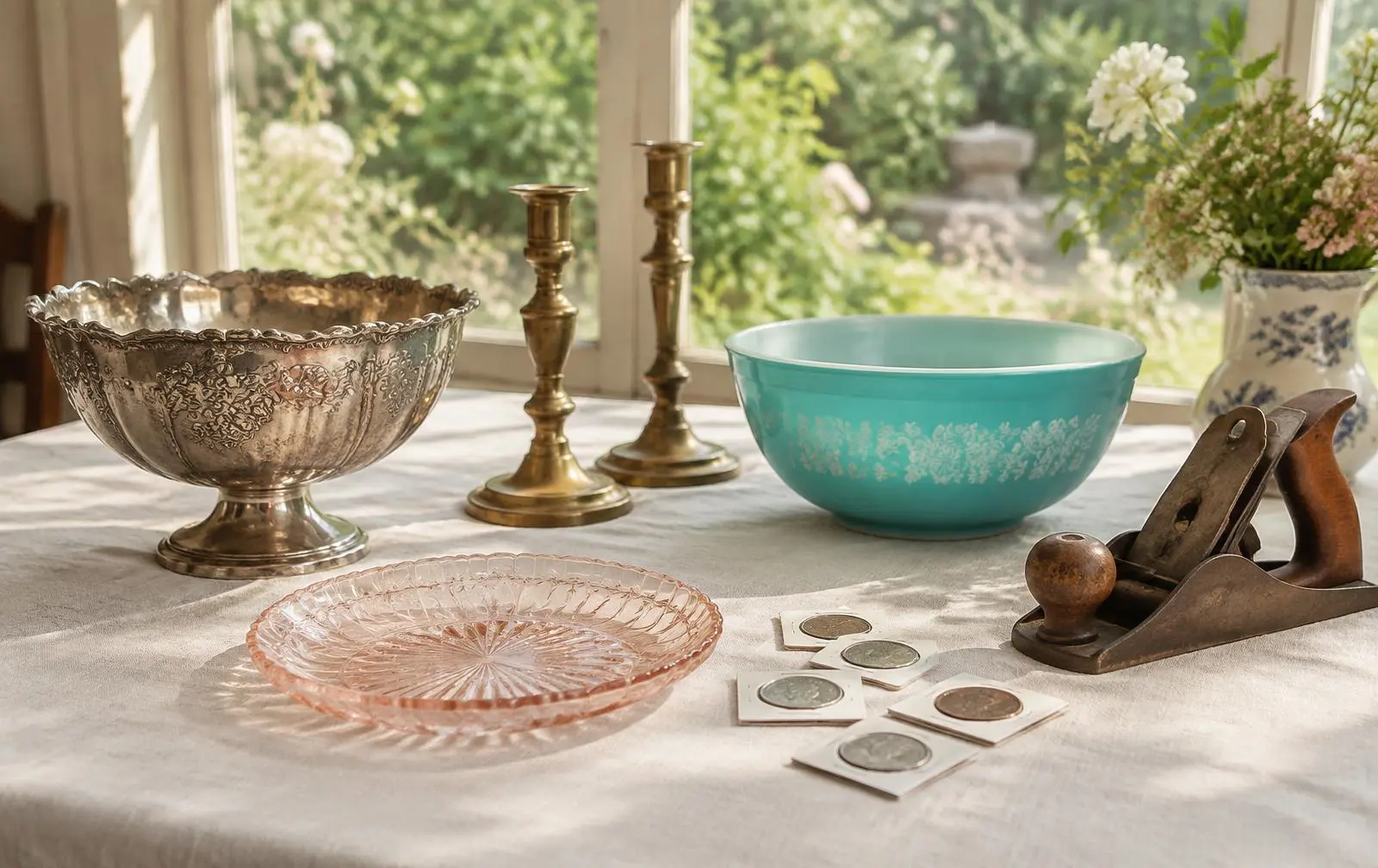
The silver that Grandma left you looks dark. A pair of brass candlesticks looks dull. The old plane in the garage has rust, and the turquoise mixing bowl could use a wash. It is tempting to put everything on the counter and make it shine before photographing it for an estate sale.
Pause before reaching for the polish. These are different materials with different risks. A useful cleaning job removes unwanted dirt; an overenthusiastic one can remove the surface a collector wanted to see. This guide translates museum conservation advice into a practical first decision for families, estate sale shoppers and sellers—not a promise that every old object should look new.
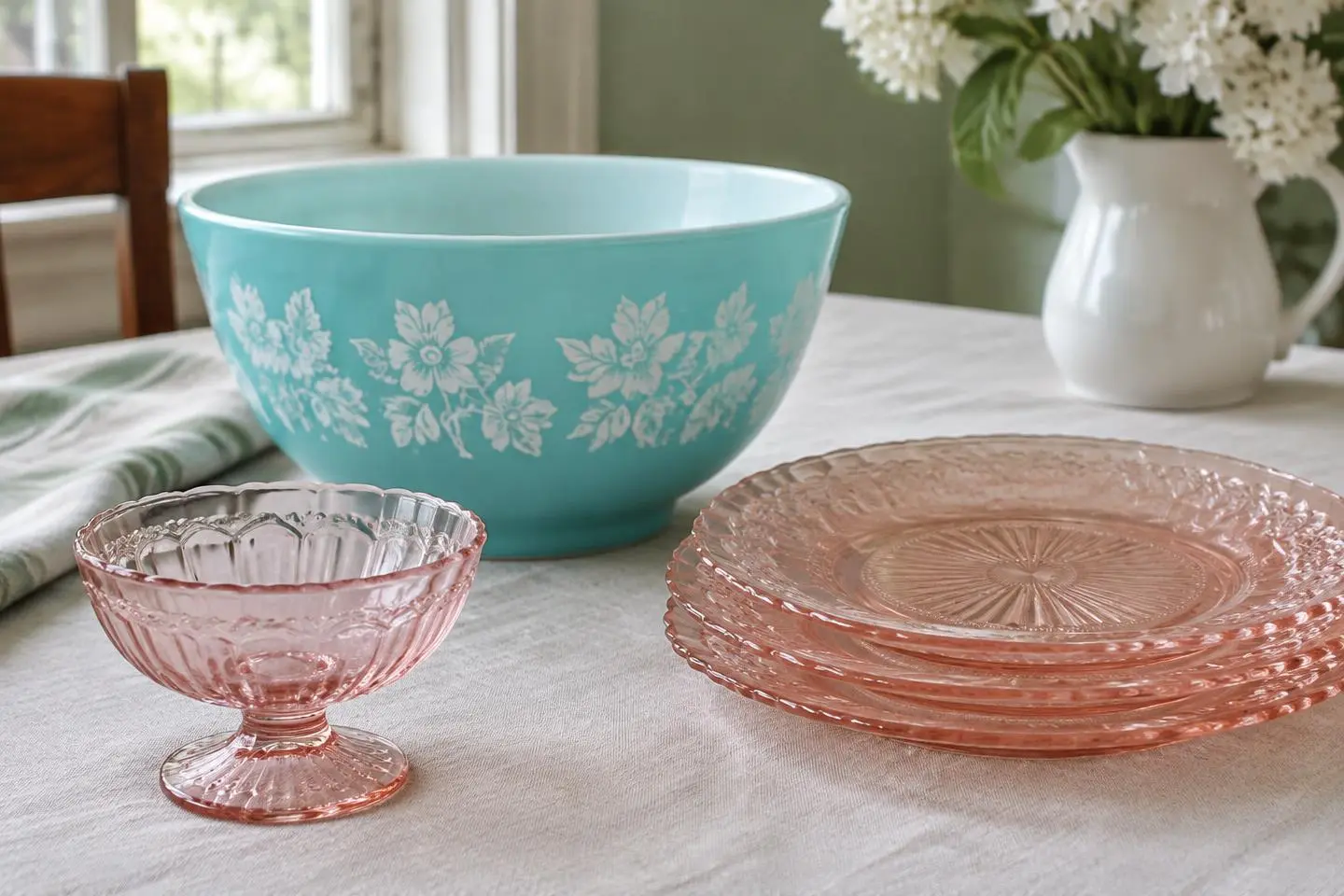
Research checked October 13, 2026. This is general preservation guidance, not an examination by a conservator. The photographs are generated editorial illustrations, not authenticated antiques, exact collectible patterns or evidence of a treatment result.
The #1 rule: don't clean it until you know what it is
Identify first. Clean second. Patina can be part of an object's history and collector appeal, but “patina is value” is not a universal formula. Stable aging, intentional finishes, ordinary dirt and active corrosion are not the same thing. Leaving actively deteriorating metal untreated can also cause harm.
The Canadian Conservation Institute's brass and copper guidance makes a crucial distinction: cleaning removes material such as dust, grease and old polish residue, while polishing is abrasive and removes some surface metal. Repeated polishing loses surface detail. An object may also have a deliberately darkened finish or original colored lacquer that should stay.
There is no reliable universal percentage for how much cleaning reduces antique value. Nor did the primary sources used here establish an “only 1% of owners know” statistic. The defensible warning is simpler: the wrong treatment can permanently change condition, originality and buyer interest; the financial effect depends on the object.
For families preparing a house, our guide to what not to throw away before an estate sale applies the same principle: let the company assess unfamiliar belongings before you discard, refinish or polish them.
Before you clean it, check what you have
Photograph the whole object, underside, maker's marks, decoration, wear and damage in good window light. Keep labels, boxes and any family history with it. Do not scrub a hallmark to make it easier to read; change the angle of the light instead. Our antique photo identification guide shows which details to capture.
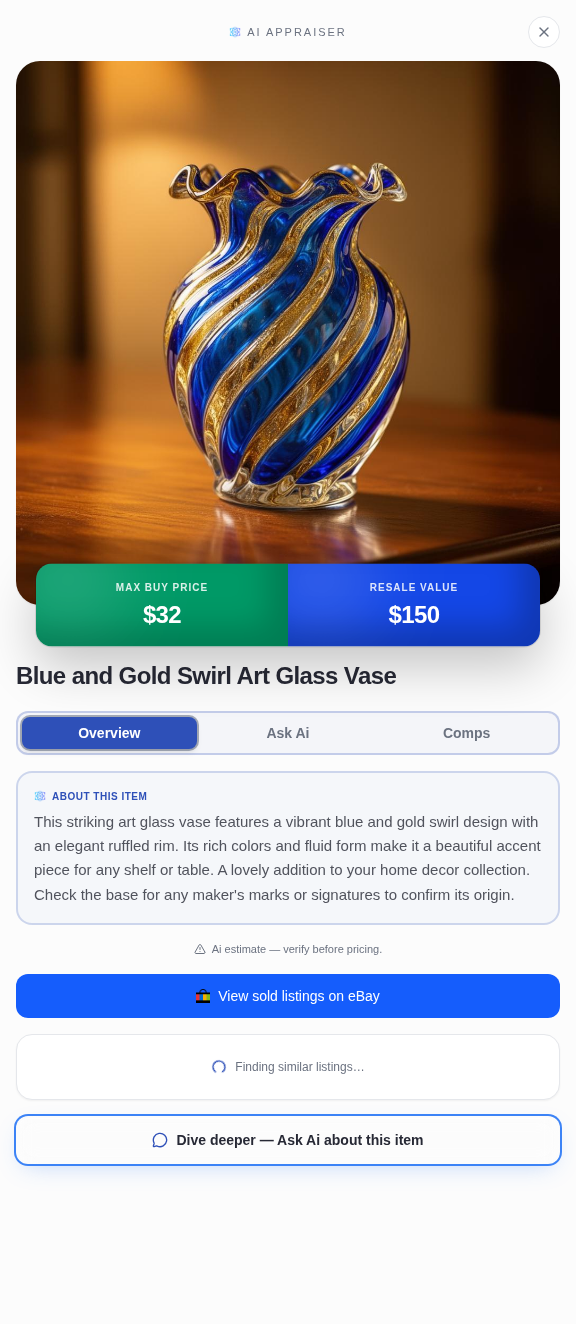
The EstateSaleFinder Ai Appraiser can provide a suggested identification and value guidance from photos. Sign in with a free account, photograph the untouched item, and verify the result against reliable references and genuinely comparable sales. It is a research starting point—not a formal insurance, tax or probate appraisal, an authentication certificate, or permission to undertake a conservation treatment.
For an unusual hallmark, potentially rare coin, damaged finish or significant heirloom, consult the relevant specialist before cleaning. A conservator advises on preservation; a qualified appraiser assesses value. They answer different questions. Cleaning before either examination can remove evidence, but it does not automatically reduce every estimate.
Before you clean it, identify it
Photograph the original surface and marks. Get a suggested identification with a free signed-in account; use a specialist for valuable or fragile pieces.
Antique-cleaning chart: what to do and what to avoid
This chart is a first-decision guide, not a treatment prescription. “Sound” means no cracks, loose decoration, failing coatings or other condition problems. If you cannot tell, stop at documenting the item and ask for advice.
| Material | Lowest-risk starting point | Avoid before identification | Stop and ask a specialist when |
|---|---|---|---|
| Antique silver | Gentle dusting; mild detergent and careful drying only for suitable, sound pieces | Chemical dips, vigorous polishing, toothpaste and abrasive pastes | There is gilding, worn plating, intentional dark decoration or a wood/bone handle |
| Antique brass | Dust gently; preserve the existing finish | Brasso, steel wool, acid-and-salt recipes and polishing to a mirror shine | Lacquer or patina is uncertain, paint is present, or corrosion is powdery |
| Old collectible coins | Leave the surface alone; handle by the edge | Washing, rubbing, metal polish, vinegar, baking soda and household “coin cleaning” hacks | You suspect rarity, surface contamination or active deterioration |
| Antique hand tools | Document marks and finishes; dry dusting only if the surface is stable | Wire wheels, sanding, acid baths and wholesale rust stripping | Rust is shedding, original paint/japanning survives, or wood is attached |
| Vintage Pyrex | Hand-wash sound pieces with clear mild detergent and a soft cloth | Dishwasher, abrasive pads, scraping and sudden temperature changes | Decoration is loose, there are cracks, or gentle washing does not resolve the problem |
| Depression glass | Gently hand-wash sound undecorated pieces, one at a time | Dishwasher, scrubbing, impact and temperature shock | There is gilding, repaired damage, cracks or persistent haze |
The sections below explain why the advice differs—and what a safe stopping point looks like.
How to clean silver without ruining value
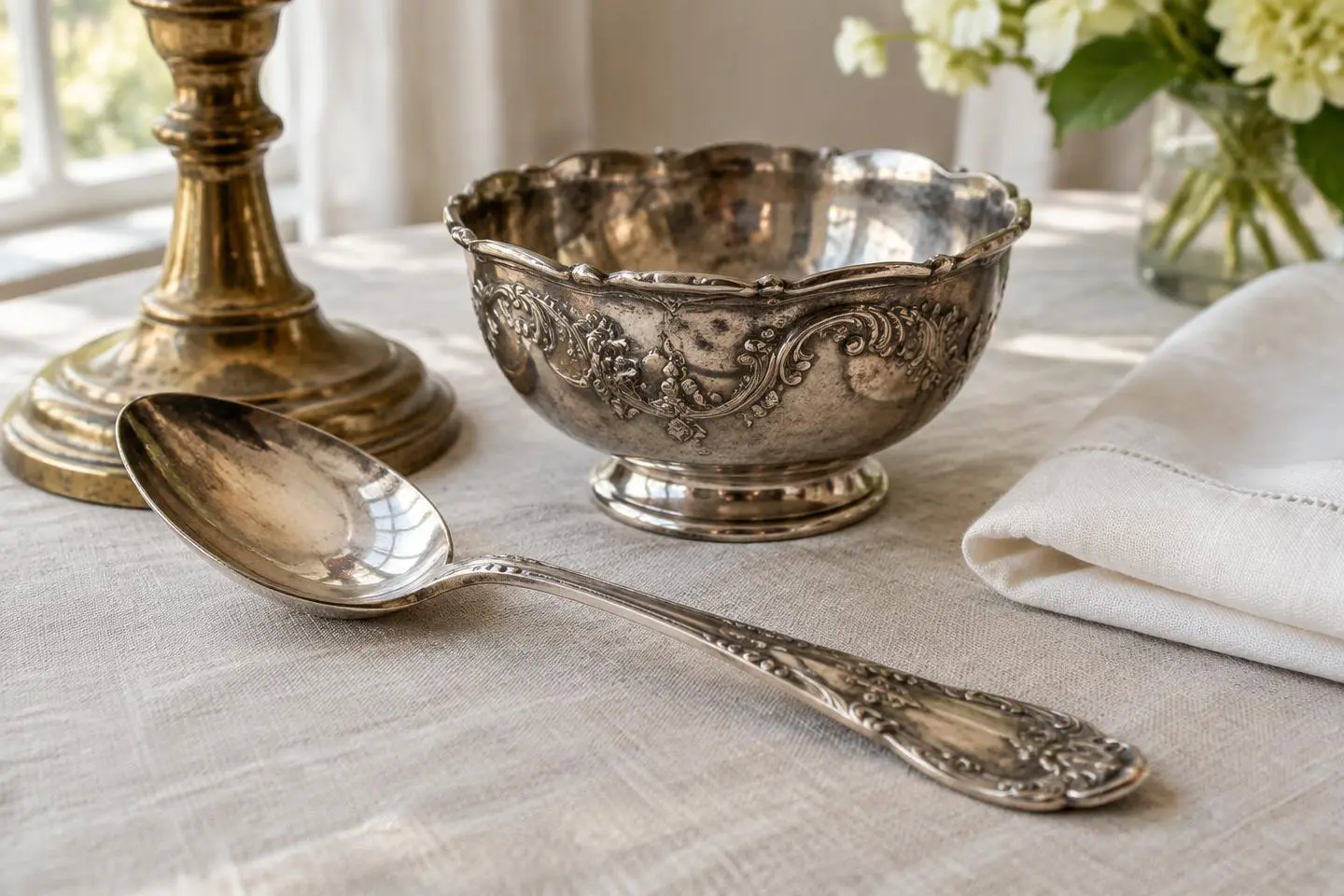
Start by distinguishing sterling silver, silver plate and decorative finishes. A worn plated tray cannot be treated as if it were solid silver. Wood, ivory, bone, filled handles, gilding and intentionally dark decoration also change the decision. Use our sterling silver hallmark guide to research the marks before touching the surface.
In Winterthur's silver conservation advice, objects conservator Lauren Fair recommends mild dishwashing detergent, thorough rinsing and gentle drying for suitable silver objects. She first warns readers to protect organic components from water and use extreme care with plating, gilding and applied patinas. The practical estate-sale version is not “soak every silver object.” Do not immerse mixed-material or uncertain constructions.
For a sound, suitable all-metal piece, work gently with mild detergent and a soft cloth, rinse thoroughly and dry fully without vigorous rubbing. This cleans surface dirt; it may not remove tarnish. That is not a reason to keep scrubbing.
Winterthur also describes controlled tarnish removal using supplier-grade calcium carbonate and light pressure. It does not say silver must never be polished. What it does say is that abrasive polishing removes a little silver, and many commercial products contain chemicals that may harm the object. Before resale, an unknown inherited piece is a poor candidate for experimenting with a dip or homemade polish. Do not substitute kitchen powders for conservation materials.
The stopping point
dirt has lifted, the object is dry, and its marks and original finish remain intact. If you want more shine, first establish whether that treatment is appropriate. Better storage can reduce the need for repeated polishing: Winterthur recommends enclosed storage and appropriate anti-tarnish materials rather than continual abrasive cleaning.
How to clean antique brass without removing patina
The safest default for unidentified antique brass is gentle dusting, not polishing. A mellow brown surface might be stable tarnish, an intentional patina or a protective finish. Brass-colored objects may also be plated rather than solid brass. Neither the color nor a quick magnet test identifies every construction or finish.
The Canadian Conservation Institute says the first question is whether an object should have a polished appearance at all. It specifically cautions about commercial polishes such as Brasso and notes that solvents can remove historically important coatings. Its specialist solvent procedures are not household cleaning recipes.
For a stable surface, gently lift loose dust with a soft brush without dragging gritty particles across the finish. If you have confirmed a sound, compatible surface and only need to remove ordinary grime, the Hemswell Antique Centres cleaning guide describes applying a mild soap solution without immersing the brass and drying immediately. Test cautiously; stop if color or coating transfers. Leave uncertain lacquer, paint and complex construction to a conservator.
Do not use Brasso, steel wool, lemon-and-salt or vinegar mixtures as your first attempt on an unidentified collectible. That is a preservation-first rule, not a claim that every brass object is permanently forbidden from polishing. Powdery or changing corrosion needs assessment; do not assume every green deposit is desirable patina.
How to clean old coins: for collectible value, don't
Do not clean a coin you might collect, sell or have graded. Even a gentle-looking home treatment can leave hairline scratches or alter its original surface. The goal is not to make the portrait brighter; it is to preserve the evidence a buyer or grader evaluates.
PCGS's coin-cleaning guidance is direct: “DO NOT CLEAN YOUR COINS.” Improper cleaning can prevent a coin from receiving a normal numerical grade. A rare cleaned coin may still have value, but no single discount percentage applies to every coin or type of damage.
Handle coins by their edges over a padded surface. Keep them in suitable holders instead of rubbing them with a cloth. The U.S. Mint's collection-care guide recommends acid-free and PVC-free storage, cool dry conditions and keeping original documentation.
A sticky residue or unusual corrosion is a reason to consult a numismatic specialist—not to try toothpaste, vinegar, baking soda, a brush or an online “safe coin cleaning” recipe. Professional conservation is different from home cleaning and must be assessed for the particular coin. Leave sealed graded holders closed.
How to remove rust from tools without destroying collectible surfaces
An antique tool is not automatically a restoration project. Before removing rust, record the maker's stamp, original finish, wood handles, labels and surviving paint or japanning. Those features may matter more to a collector than a newly bright surface.
The Canadian Conservation Institute's iron-care note distinguishes stable surfaces from active corrosion. Loose orange powder, flaking and moisture-like “weeping” deserve attention. Simply deciding that all rust is attractive patina is unsafe.
Its separate guidance on rust removal from machined iron surfaces warns that common aggressive methods can damage artifacts. Wire wheels, sanding and acid baths can erase finishes and historical surface evidence; soaking can also damage attached wood or other materials.
For an unidentified estate-sale tool, stop at photography, stable-surface dry dusting and dry storage while arranging advice. Keep a shedding object apart from other pieces. If it is an ordinary modern working tool with no collector interest, the manufacturer's maintenance instructions may be appropriate—but that is a different job from preserving an antique. This guide deliberately does not provide a one-size-fits-all vinegar bath.
How to clean vintage Pyrex without fading the pattern
Hand-wash sound vintage Pyrex with a soft cloth or sponge and clear mild detergent; keep it out of the dishwasher. In the Corning Museum of Glass cleaning guide, conservator Stephen Koob warns that dishwashers etch Pyrex and advises against abrasive sponges, wire wool and sharp scraping tools.
Start with water comfortably warm for the object—not a sudden change from cold storage to hot water. Wipe gently, rinse, inspect and dry. For suitable intact pieces, Koob also describes soapy-water soaking if the first wash fails. That is not a blanket ban on soaking decorated Pyrex, nor permission to soak cracked, repaired or failing decoration. If its condition is uncertain, get advice before prolonging contact or trying anything stronger.
Do not use abrasive cleaners to chase a stain at the expense of the printed surface. The museum article goes on to discuss stronger chemical treatment with significant safety precautions; this family-facing guide intentionally stops before that stage. Seek a conservator for a stubborn or valuable piece rather than improvising with caustic chemicals.
Identify the shape and pattern with our vintage Pyrex dating guide, then read the focused guide to Pyrex dishwasher damage and condition. A removed pattern cannot be washed back on. Photograph existing fading accurately when listing, and never describe a dull piece as restored simply because it looks shinier while wet.
How to clean Depression glass gently
For sound undecorated Depression glass, wash by hand, one piece at a time, with mild detergent and a soft cloth. Avoid the dishwasher, abrasive pads and sudden temperature changes. A padded sink or plastic tub reduces the chance of hitting a hard surface; avoid knocking rims together and support the whole piece rather than lifting a filled vessel by its handle.
The National Depression Glass Association's preservation guide emphasizes careful washing and storage, including protection from scratches and impacts. Older glass may have worn rims, cracks, repairs or metallic decoration that makes ordinary washing inappropriate. Inspect first and set suspect pieces aside.
If a gentle wash leaves haze, stop rather than increasing abrasion. Cloudiness can have more than one cause, including surface damage; a photograph alone may not establish which. Do not promise that vinegar or polishing will “restore” every cloudy glass. Get advice before treating gilding or persistent surface problems.
For resale, accurate identification and condition are more useful than an aggressive shine. Use our Depression glass pattern and value guide, show the underside and rim in photos, and disclose chips or repairs. This is preservation advice, not a food-use safety certification for vintage glassware.
When you must clean—and when you should stop
Remove ordinary dirt only when you have identified the material, confirmed a compatible sound surface, and have a reason to do so. Contamination, active corrosion or failing decoration are reasons for professional assessment, not a stronger version of the same household method.
Stop immediately if:
- Color, gilding, paint or lacquer comes off onto the cloth.
- A crack, loose handle, glued repair or missing surface layer appears.
- Corrosion is powdering, flaking or returning after treatment.
- The only way forward seems to be more force, a harsher chemical or a longer soak.
For an estate sale company, keep cleaning decisions separate from ordinary room cleanup. Photograph unidentified pieces as found, put questionable objects aside with their notes, and let the specialist explain what should happen next. For a family, doing less now often leaves more options later.
Common questions about cleaning antiques
Does cleaning antiques always lower their value?
No. Appropriate cleaning can improve presentation and remove damaging residues. The risk is using a treatment that removes original material or changes a collectible surface. Value depends on maker, rarity, condition, originality and the market; there is no universal cleaning discount.
Can I polish inherited silver before an appraisal?
Document it first and ask whether polishing is appropriate. Sound everyday silver and fragile plated or gilded objects need different treatment. An Ai identification can help start the research, but a formal appraisal or conservation decision needs the relevant professional.
Is soap and water safe for every antique?
No. Water can damage attached wood, paper, organic handles, repairs and some finishes. Coins should not be washed to improve collectible value. The mildest useful method depends on the whole object, not just its main material.
What if I already cleaned a coin or polished away a finish?
Stop rather than trying to recreate age with chemicals. Record what was used and tell the specialist or buyer. A damaged or cleaned object may still be collectible, but its changed condition needs honest assessment and disclosure.
Sources and further reading
These sources support the material-specific advice. None is presented as endorsing EstateSaleFinder, identifying the illustrated objects, or guaranteeing a resale result.
- Winterthur — Caring for Your Collections: Silver Conservation Tips: Lauren Fair's guidance on mixed materials, gentle washing, careful polishing and storage.
- Canadian Conservation Institute — Brass and Copper, Note 9/3: cleaning versus polishing, original finishes and commercial-polish cautions.
- PCGS — Come Clean About Your Coins: why collectors should not clean coins themselves.
- U.S. Mint — Caring for Your Coin Collection: handling, holders and storage.
- Canadian Conservation Institute — Care and Cleaning of Iron, Note 9/6: stable versus actively corroding iron.
- Canadian Conservation Institute — Mechanical Removal of Rust, Note 9/8: risks to historical machined surfaces.
- Corning Museum of Glass — How to Clean Pyrex: hand-washing, soaking and dishwasher/abrasion warnings.
- National Depression Glass Association — Preserving Your Depression Glass: careful handling, washing and storage.
- Hemswell Antique Centres — How to Clean Antiques: a dealer's practical brass surface-cleaning advice, distinguished here from museum conservation procedures.
The takeaway
you do not need to make an antique look new to make an informed decision. Preserve its clues, identify it, and choose the least invasive appropriate care. Start with the Ai Appraiser before reaching for the polish—and get specialist help when the stakes are higher.
Keep exploring
Before you clean it, identify it
Sign in with a free account for suggested identification and value guidance. Ask a specialist before treating a fragile or valuable piece.
Open the Ai Appraiser
About the author
Andy
Founder, EstateSaleFinder.net
Hi, I'm Andy — a retired commercial photographer turned developer with a five-year (and counting) obsession with estate sales. I started EstateSaleFinder.net because I knew there had to be an easier, smarter way to find and list estate sales. Now I get to chase treasure and build the tool I always wished existed.