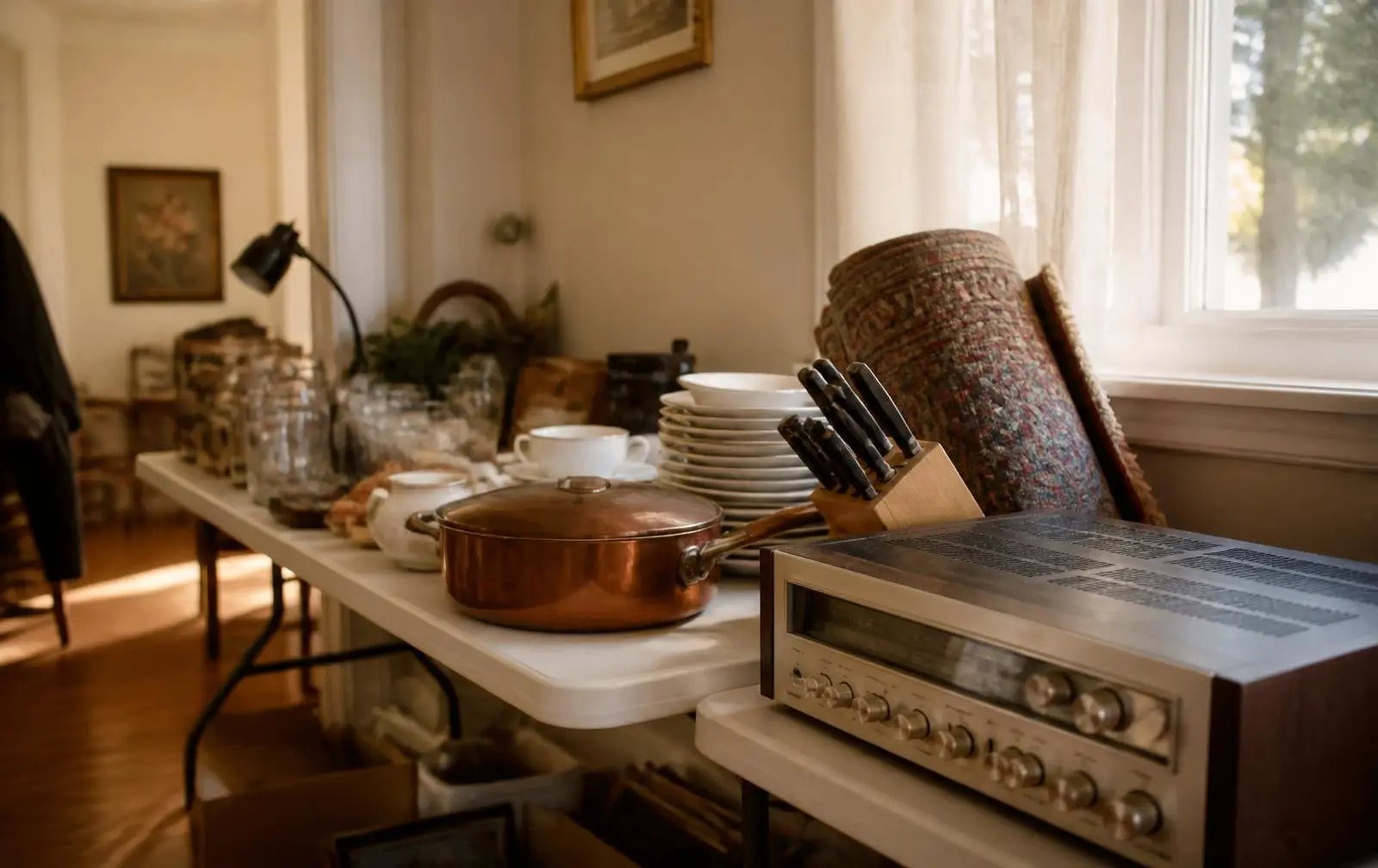
The Overlooked Estate Sale Goldmine: 100+ Expensive Brands Most Buyers Walk Right Past
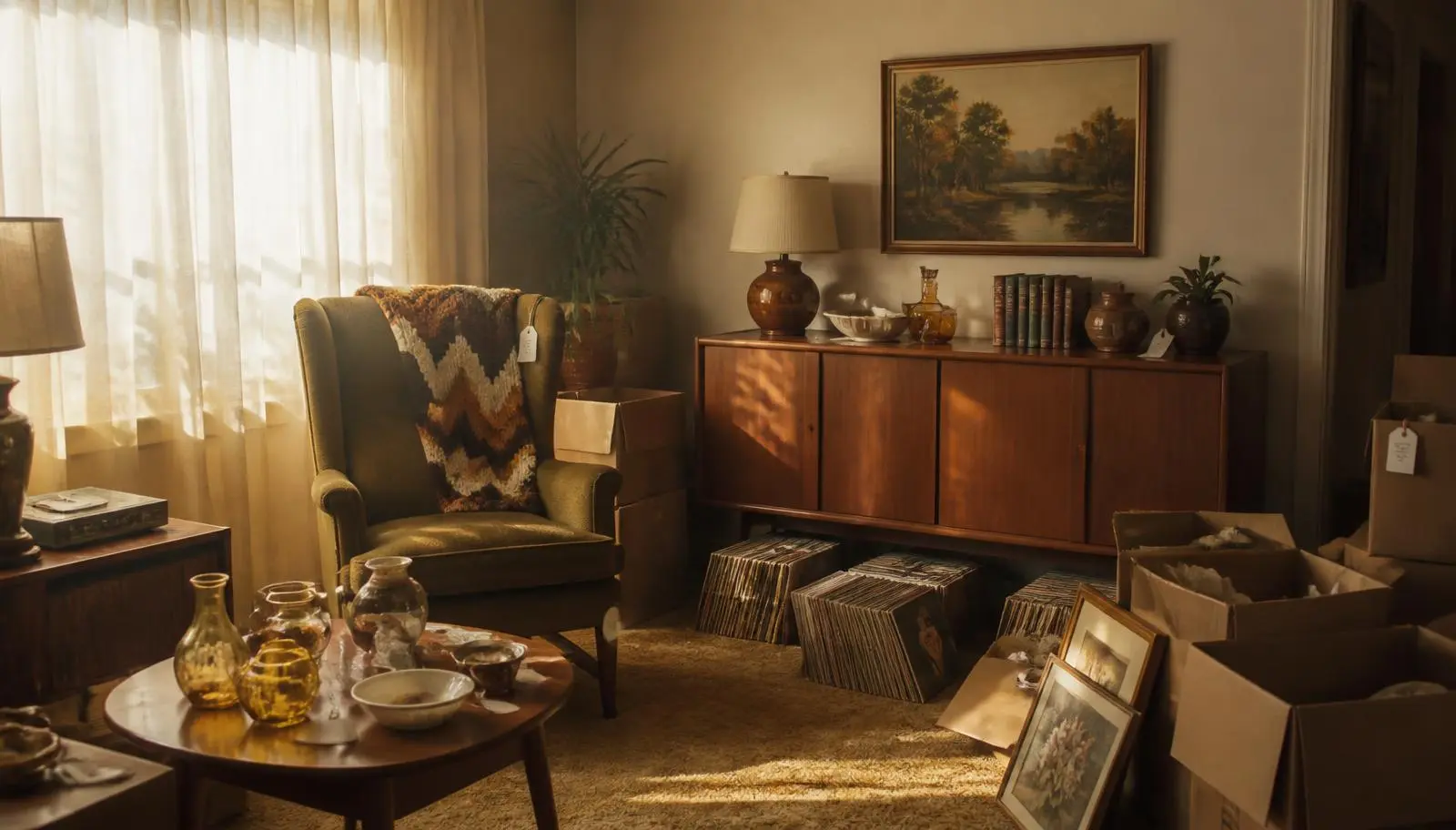
Everyone grabs the Tiffany box and the Eames chair. Meanwhile a $600 copper sauté pan sits at $10, a $2,000 silver-face receiver is tagged "old stereo," and a hand-knotted Persian rug is rolled up in the garage at $75. This is the complete brand-by-brand field guide to the value nobody else in the room can see.
The most valuable items at estate sales are rarely the ones that look expensive. They're the ordinary-looking ones: a heavy stainless pan with a thin copper stripe in the wall of the metal, a dusty silver-faced stereo receiver on a basement shelf, a worn red rug rolled behind the water heater, a plain wooden hand plane in a milk crate of tools. Learn roughly a hundred names and three physical tells — weight, marks, and materials — and you will out-shop almost everyone in the room, every weekend, permanently.
This is the complete field guide: category by category, brand by brand, with what to look at, what to skip, and realistic resale ranges as of 2026.
Why so much value gets mispriced
An estate sale company may price eight thousand objects in three days. Even excellent companies cannot be specialists in French copper, Japanese steel, Norwegian amplifiers, Caucasian weaving, and pre-war hand planes simultaneously. So specialized items get priced on appearance rather than identity.
That gap is the whole opportunity:
| What it looks like | What it can actually be | Typical sale tag | Typical resale |
|---|---|---|---|
| "Old stainless pan" | All-Clad Copper Core sauté | $8–$20 | $150–$300 |
| "Dusty old stereo" | Silver-face Marantz receiver | $40–$100 | $500–$3,000+ |
| "Worn carpet" | Hand-knotted Heriz or Tabriz | $75–$250 | $900–$10,000+ |
| "Rusty tools" | Pre-1960 Stanley Bedrock plane | $10–$25 | $150–$600 |
| "Grandma's sheets" | Boxed Italian linen set | $10 | $150–$400 |
None of that requires an appraiser's eye. It requires knowing which names matter and where the marks hide.
Field rule: flip it over before you decide. Ninety percent of the value in this article is stamped, labeled, or woven onto a surface nobody bothered to look at.
1. Premium cookware — the most reliably underpriced category
High-end pans effectively never wear out, so estate sales routinely contain forty-year-old pieces still holding most of their retail value. This is the category to learn first because it appears in nearly every house.
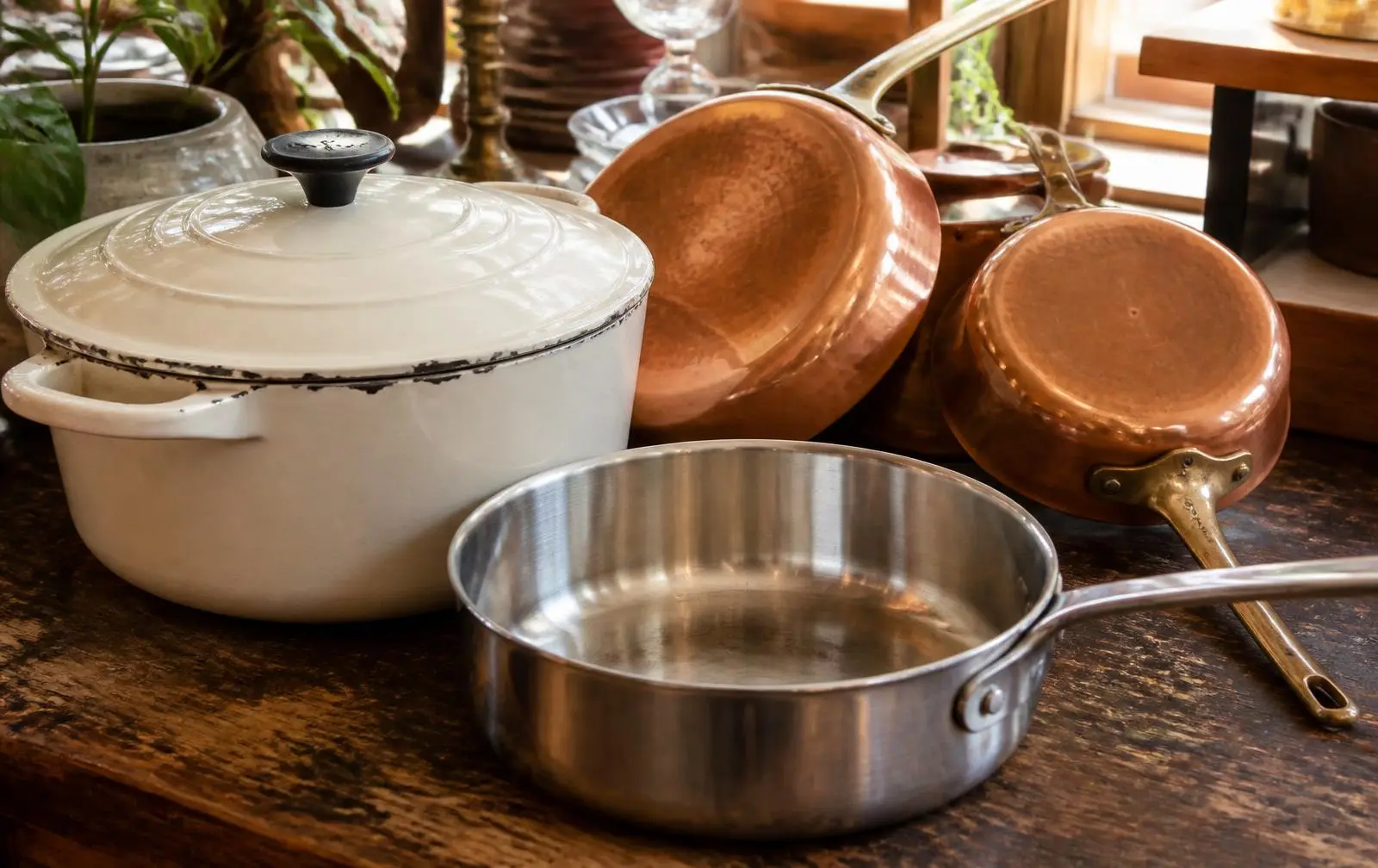
Le Creuset (enameled cast iron)
- What to look for: "Le Creuset" and "France" cast into the base; older pieces may read Cousances, an early French foundry Le Creuset absorbed.
- Values: common colors in clean condition typically resell around $75–$200; discontinued and rare colorways can run $200–$500+.
- Condition matters more here than anywhere else. Interior enamel that is crazed, chipped, or scorched black cuts value sharply. Exterior scuffs don't.
All-Clad (American clad stainless)
- Copper Core is the prize — look at the edge of the rim or the exterior wall for a visible copper stripe sandwiched in the metal.
- D3 and D5 lines resell well, particularly 4-quart-and-up sauté pans, rondeaus and stockpots. Small saucepans are the least interesting.
- Check for: "All-Clad" and "Made in USA" stamped on the base. Riveted handles, seriously heavy for their size.
Mauviel and French copper
Copper is priced by thickness, and thickness is usually stamped right on the base.
| Gauge | What it is | Rough resale |
|---|---|---|
| 1–1.5mm | Decorative / light home copper | Under $100 |
| 2mm | Solid home cooking copper | $150–$400 |
| 2.5mm+ | Professional weight (M'héritage, M'250) | $400–$1,000+ |
Bronze or cast-iron handles generally indicate older, more collectible production than modern stainless handles. Interior tin that is worn through does not kill value — retinning is routine.
Also worth grabbing
Staub, Falk Culinair, Ruffoni, Demeyere (especially Atlantis), Fissler, Bourgeat, Sitram Profiserie, Vollrath Tribute, and vintage Revere Ware with the "Process Patent" or Rome, NY marking.
2. Kitchen knives — the fastest $10-to-$150 category there is
Estate sale pricing rarely distinguishes a $25 supermarket knife from a $300 Japanese gyuto. Both are "a knife on a table."
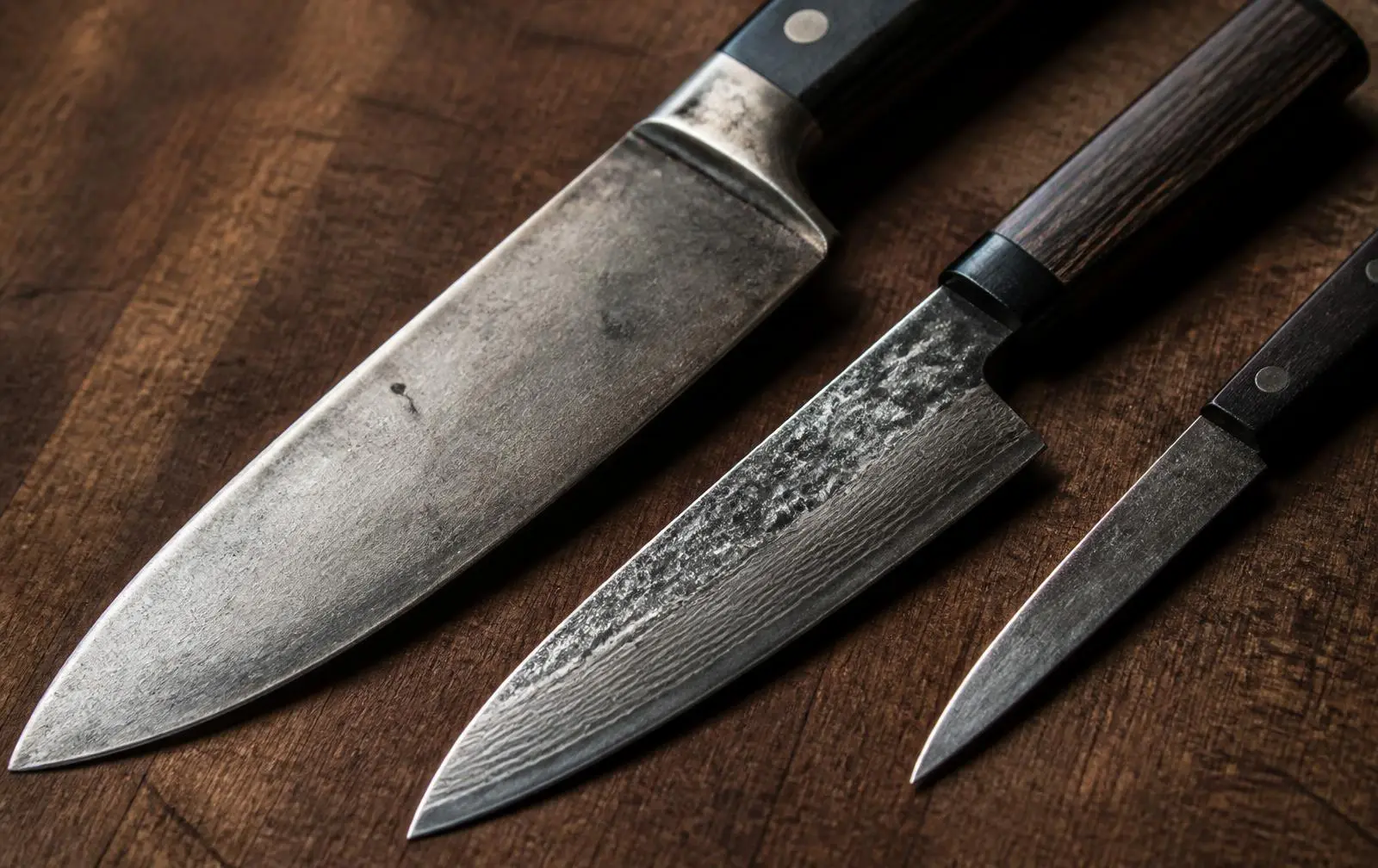
German forged
Wüsthof (Classic, Classic Ikon), Zwilling J.A. Henckels — the two-figure "twin" logo is forged, the single-figure "International" line is stamped and worth far less — plus Messermeister and F. Dick.
Japanese
Shun (Classic, Premier, Dual Core, Kanso), Global, MAC, Miyabi, Tojiro. Damascus cladding and carbon-steel cores (shirogami/aogami) signal the higher tiers.
Three tells that separate a keeper from a donation:
- Bolster and tang. A thick collar where blade meets handle, with the steel visibly running the full length of the handle, means forged.
- Origin marks. Solingen on German blades; Seki or Seki City on Japanese blades.
- The set. A complete block with matching handles sells for meaningfully more than the same knives sold loose.
Skip
Chicago Cutlery basics, Farberware, Ginsu, and any blade whose only marking is "stainless / Japan."
3. Vintage audio — the biggest dollar gap in the building
If you learn one category in this entire guide, learn this one. Nothing else routinely turns $75 into four figures.
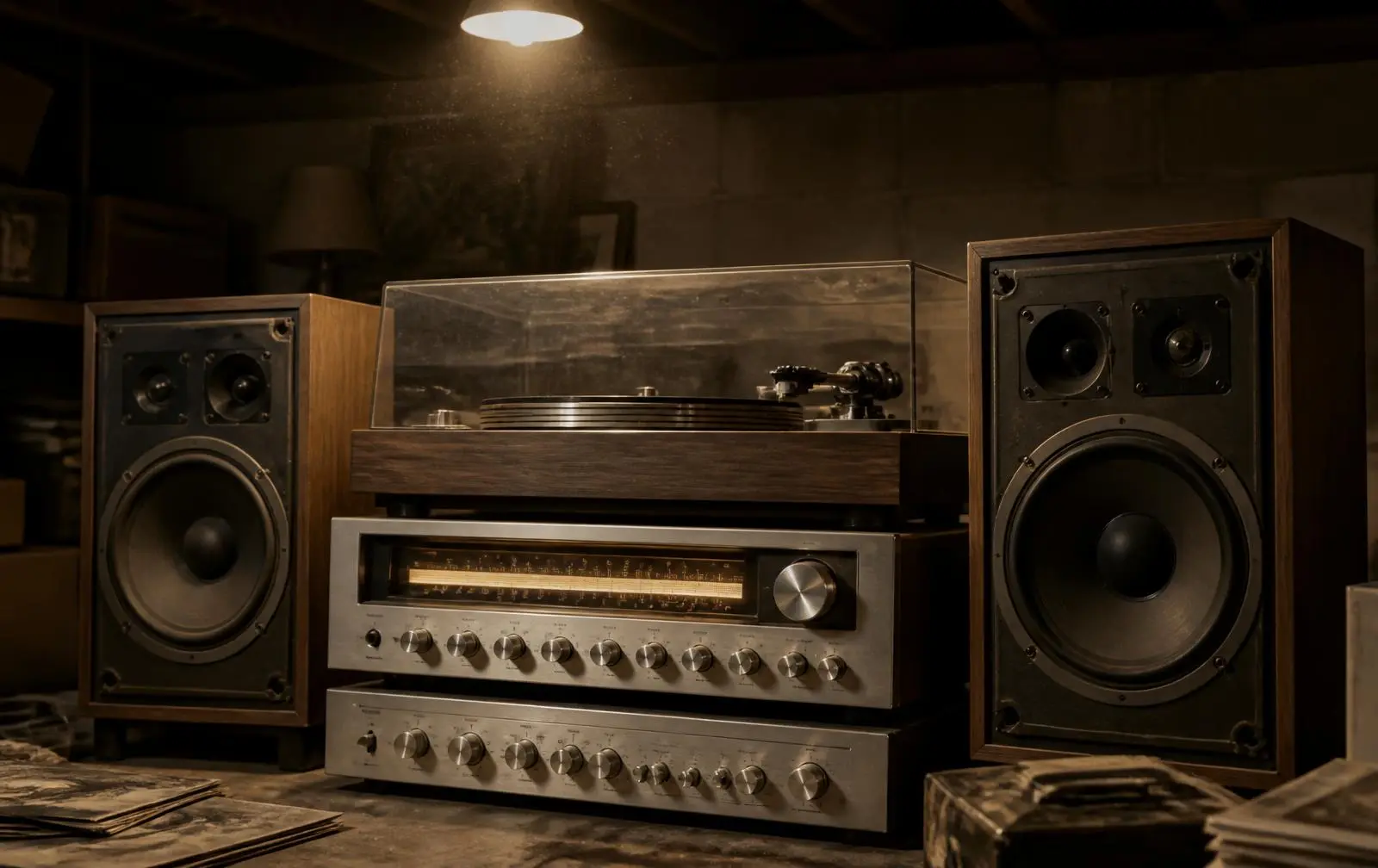
The 1980 rule
there was a broad shift in build quality around 1980, from heavy transformers, metal chassis and discrete components toward lightweight plastic-cased gear. Pre-1980 audio in working condition is where the money is. If it's unusually heavy for its size and the faceplate is real brushed metal, stop and research it.
| Type | Names that matter | Realistic resale |
|---|---|---|
| Receivers | Marantz (2230, 2270, 2325, 2385), Pioneer (SX-1010 → SX-1980), Sansui (9090DB, G-series), Kenwood KR-9600, Fisher tube models | $300–$5,000+ |
| Amps & preamps | McIntosh (blue meters — always stop), Luxman, Tandberg, Accuphase, Dynaco tube gear | $500–$6,000+ |
| Speakers | JBL L100, Klipsch Heritage (Heresy, Cornwall, Klipschorn), Large Advent, KLH, Bose 901 | $300–$3,000 |
| Turntables | Technics SL-1200 series, Thorens TD-124/TD-160, Linn LP12, Rega Planar, vintage Dual | $150–$3,000+ |
Non-working does not mean worthless in this category — recapping and servicing are standard, and collectors buy dead McIntosh and Marantz units all day. Grab the manuals, original boxes and wood cases too; they add real money.
While you're in the basement, the record crates beside the stereo deserve the same attention — see the rare records guide.
4. Oriental and Persian rugs — the most undervalued textile on earth
Families donate hand-knotted rugs constantly, because a genuinely old rug looks old. Meanwhile a 9'×12' hand-knotted rug can represent close to a year of one weaver's work.
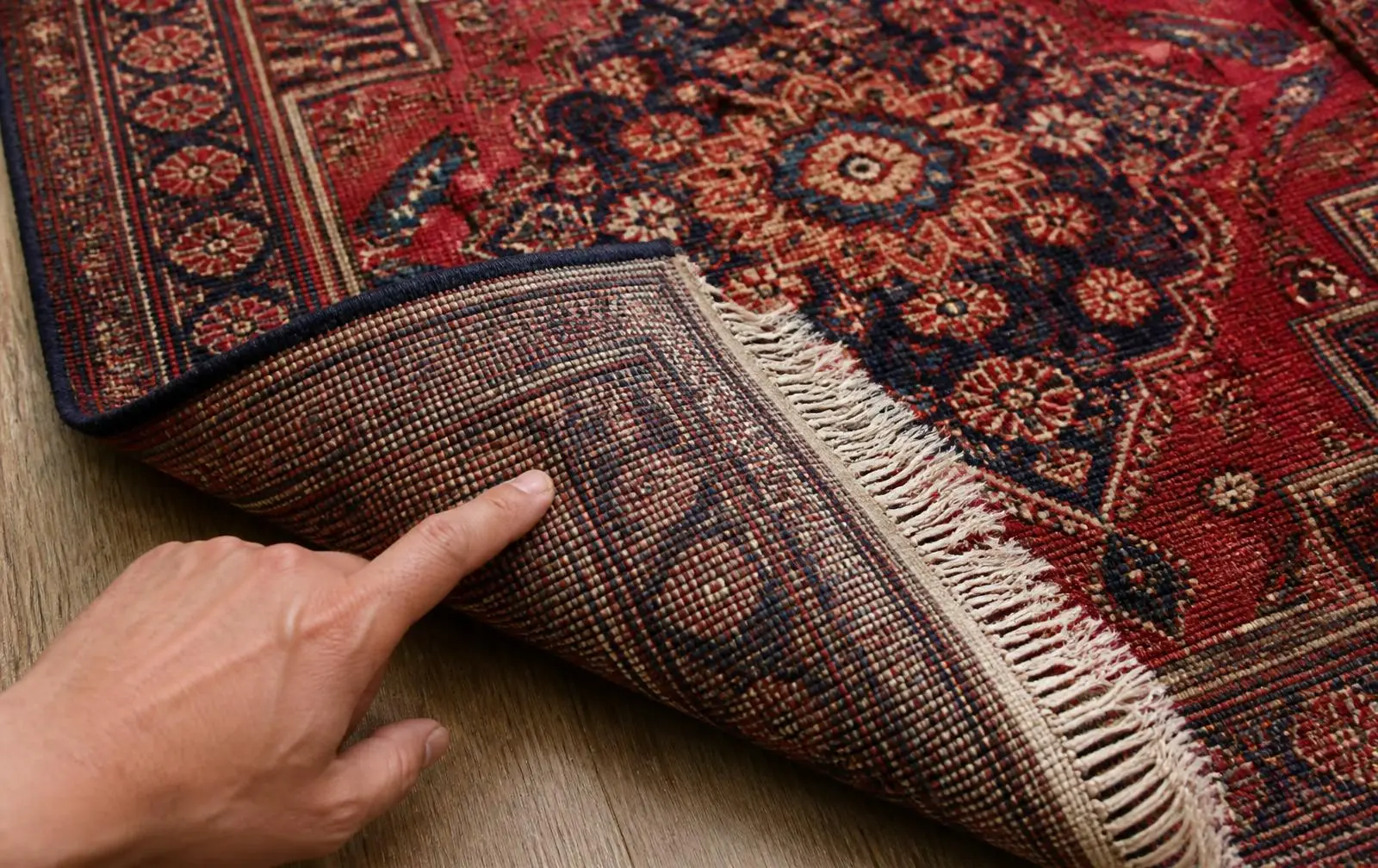
The 20-second authentication
- Flip a corner. Machine-made backs are a mechanically perfect grid; hand-knotted backs show small irregularities in knot size and row spacing, and the design reads clearly on the reverse.
- Check the fringe. Real fringe is the warp itself, emerging from the rug. Fringe sewn or glued on as a separate strip means machine-made.
- Look for abrash — soft horizontal color banding from hand-dyed wool lots. Synthetic-dyed machine rugs are perfectly uniform.
- Silk test: silk warms quickly under a rubbed palm, drapes like fabric rather than board, and has a directional sheen.
Weaving centers worth recognizing
Tabriz, Isfahan, Kashan, Kerman, Heriz, Nain, Qom, Bijar (Persian); Hereke, Oushak, Konya (Turkish); Kazak, Shirvan, Kuba (Caucasian); antique Peking and Ningxia (Chinese); Turkoman/Bokhara (Central Asian).
Small Caucasian pieces start in the low hundreds; fine silk Qom and antique Tabriz rugs reach five and six figures. Anything you suspect is significant deserves a professional appraisal before you sell it, not after.
5. Luxury linens — the category nobody recognizes
Fine bed linen improves with washing, and estate homes are full of boxed sets bought for guest rooms and used twice.
Names
Frette, Sferra, Pratesi, Matouk, Yves Delorme, Rivolta, Peacock Alley, Anichini.
What lifts the price
original boxes and ribbon, embroidered logos, "Made in Italy" labels, and named collections (Sferra Giza 45, Milos, Grande Hotel; Frette Hotel Classic, Doppio Ajour). King and queen sets bring the most; full/double sets have become scarce enough to surprise people.
Related textiles worth the same look: Hermès scarves, cashmere throws (Loro Piana, Johnstons of Elgin, Brora), vintage Pendleton wool — especially trade-pattern blankets — and heavy bath towels from Frette, Abyss, and Matouk.
6. Tools — the category that sells out in the first twenty minutes
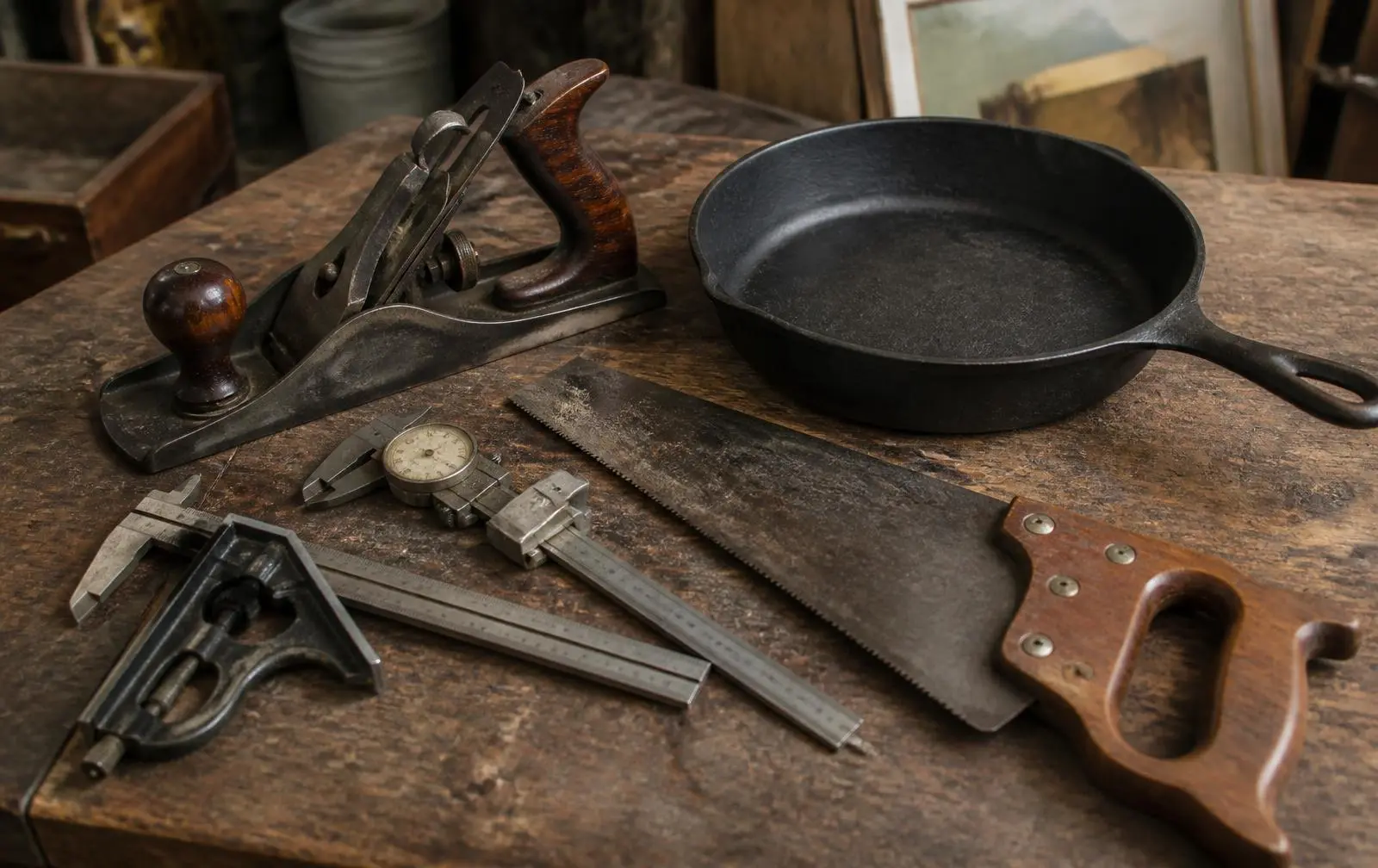
Vintage hand tools
Stanley Bailey planes (pre-1960, Types 11–13 with rosewood knob and tote) and the premium Bedrock line; Starrett precision measuring; Millers Falls hand drills; Disston saws (pre-1928 medallions); Snap-on and Mac hand tools in any condition.
Power tools
Festool sells instantly at almost any price. Milwaukee M18/M12, Makita, Bosch Professional, higher-end DeWalt, and older USA-made Porter-Cable are all safe grabs — and loose batteries and chargers alone are worth real money.
Machinery
vintage Powermatic (yellow era), Delta Unisaw and Rockwell-Delta, and quality older Grizzly.
Cast iron cookware lives with the tools as often as the kitchen
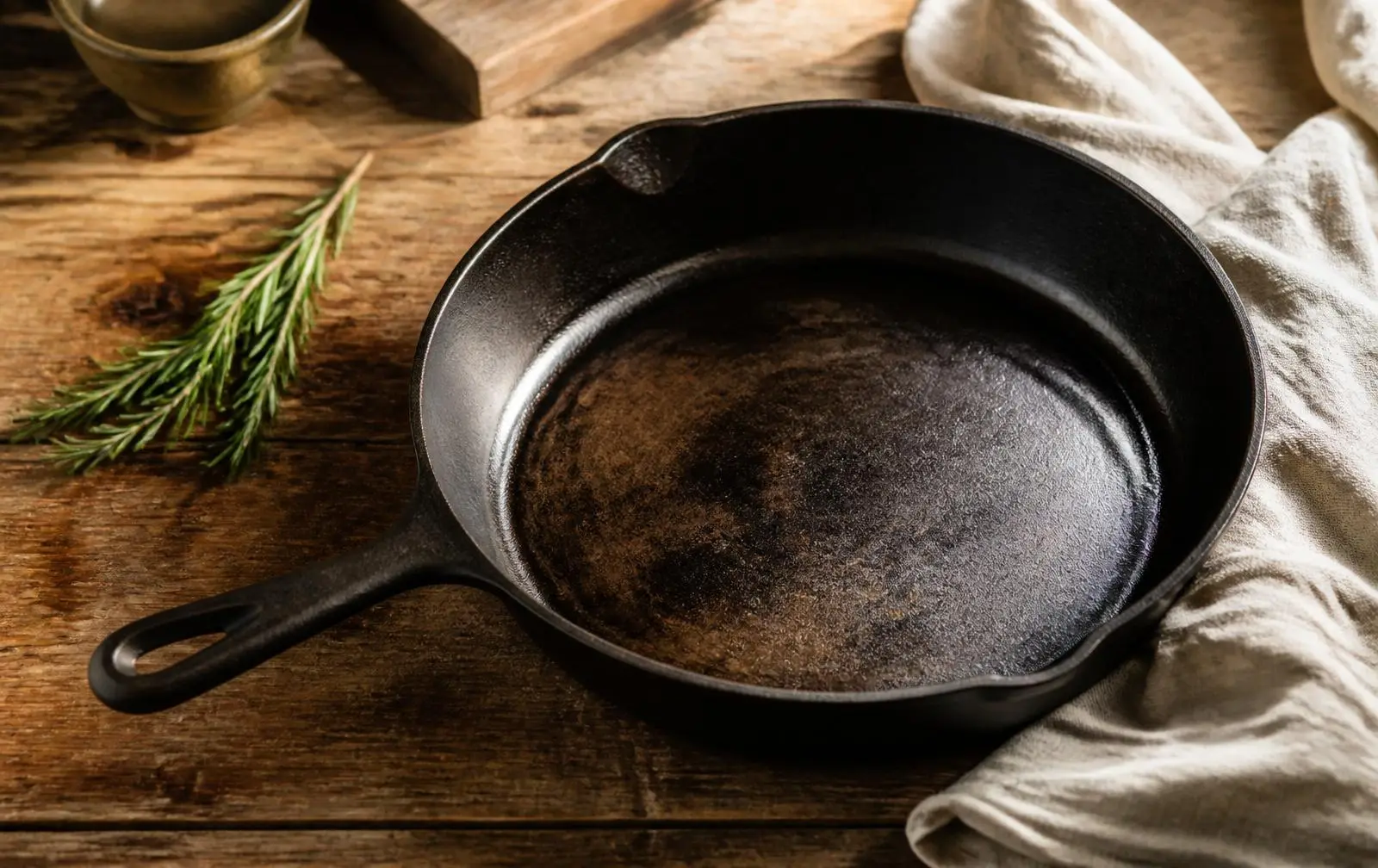
Griswold small-logo, Wagner Ware Sidney -O-, and pre-1960 three-notch Lodge all carry premiums. Full identification and cleaning steps are in the cast iron guide.
7. Musical instruments — beat-up is not the same as worthless
Acoustic instruments genuinely improve with age. Never dismiss a shabby guitar without reading the headstock and the label inside the sound hole.
- Gibson — Les Paul, ES-335, J-45; pre-1965 is premium territory
- Fender — Stratocaster, Telecaster; pre-CBS (before 1965) is grail territory
- Martin — D-28, D-18; pre-1970 premium, pre-1944 exceptional
- Rickenbacker, Gretsch, Guild, Taylor (800 series and up)
- Selmer Paris saxophones (Mark VI above all), vintage King, Conn, Buescher brass
- Zildjian, Sabian, Paiste cymbals; Ludwig, Gretsch, Slingerland drums
- Steinway and Yamaha C-series pianos — real value, but price the movers before you commit
8. Watches, pens, cameras — small, portable, badly priced
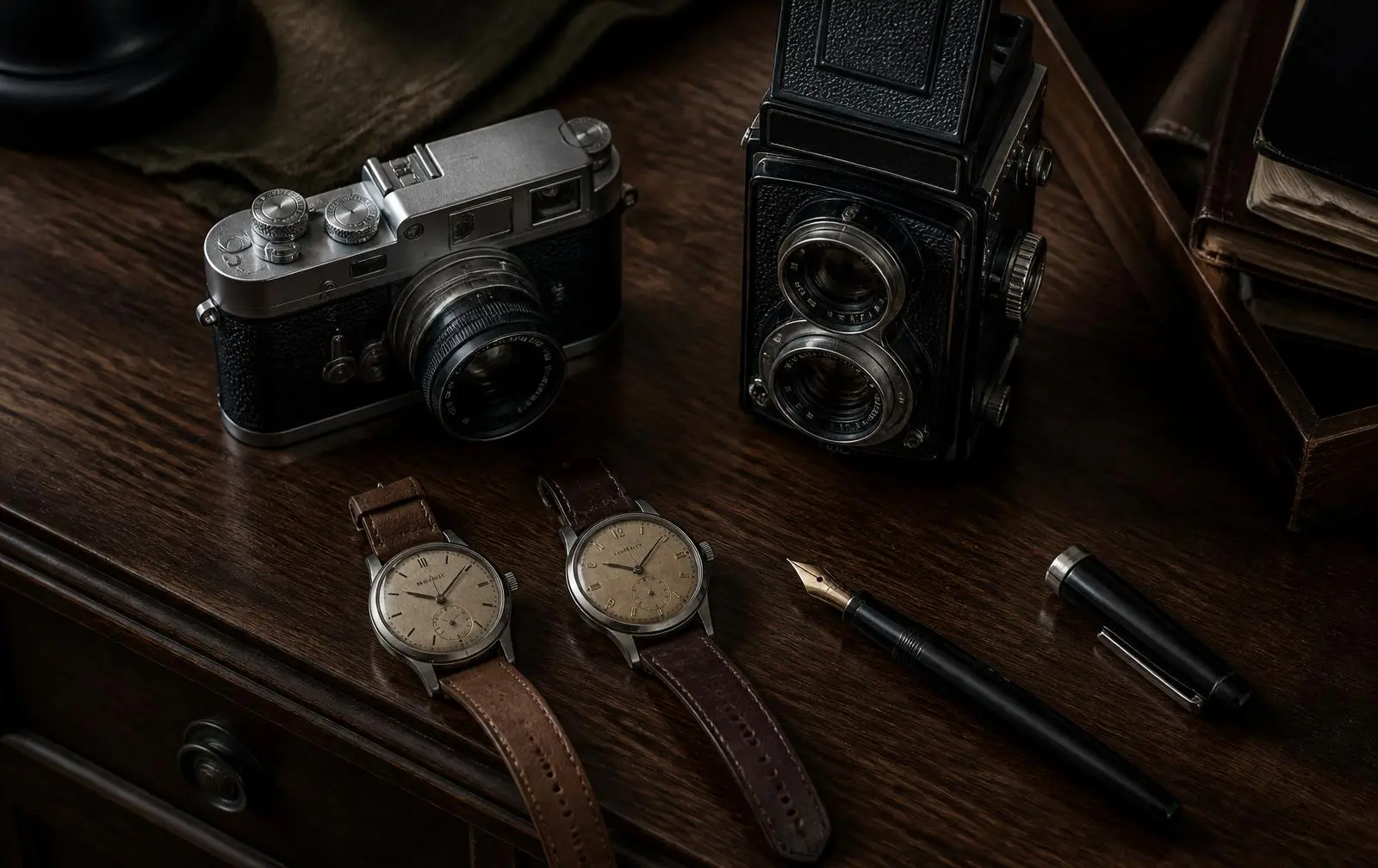
Watches beyond Rolex
Omega (Speedmaster, Seamaster, Constellation), Longines (pre-1970 Swiss), Zenith El Primero, IWC, Jaeger-LeCoultre, Tudor, vintage Seiko 6139 chronographs and Grand Seiko, Bulova Accutron, Hamilton Ventura. Buy them dead — mechanical movements are serviceable, and a non-running Speedmaster still sells.
Pens
Montblanc Meisterstück 149, Parker Duofold / 51 / 75, Waterman, Pelikan Souverän M400 and up, Sheaffer Snorkel and PFM, plus undervalued English makers Onoto and Conway Stewart. Check the nib for 14K or 18K markings.
Cameras
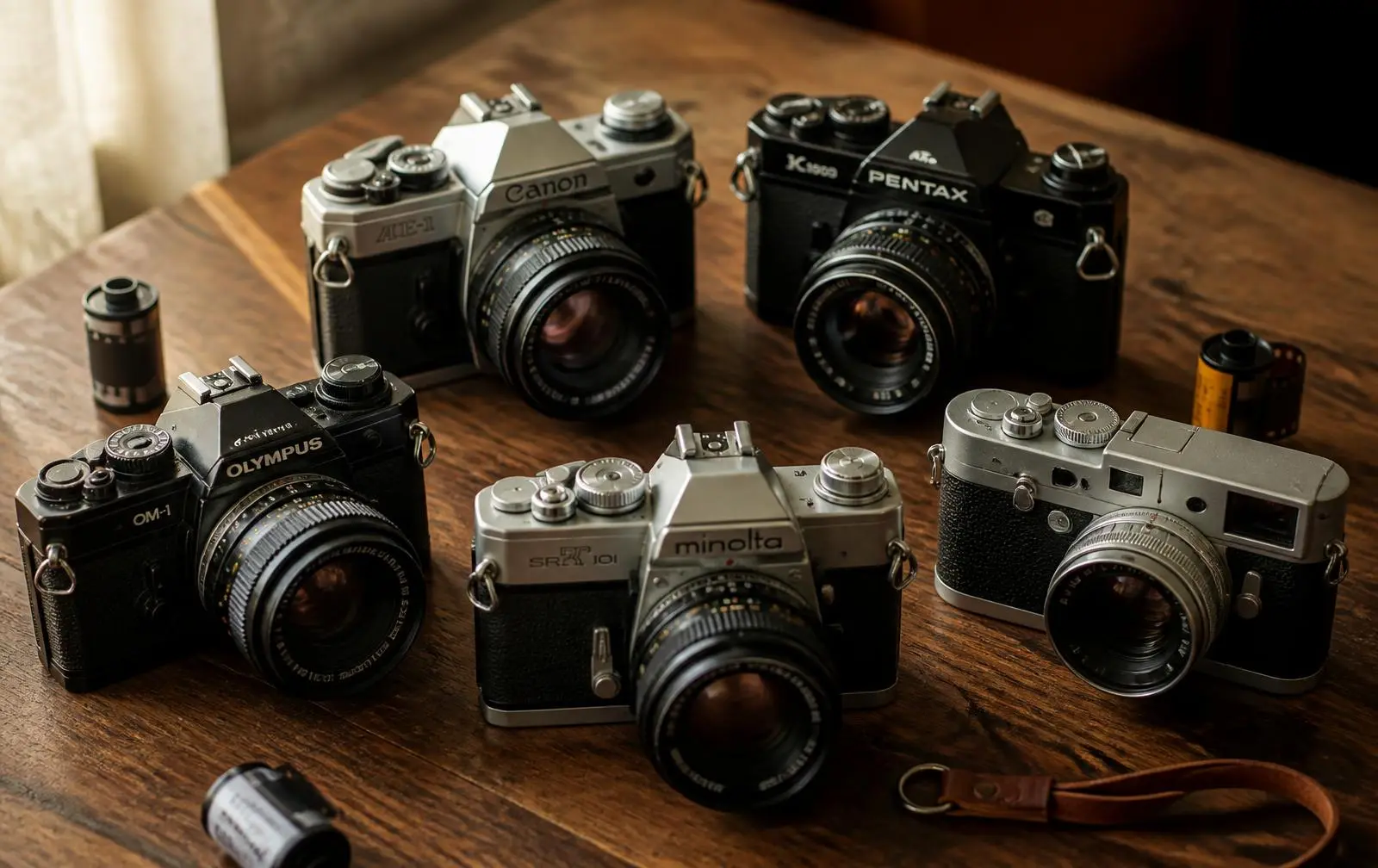
Leica anything (M3, M4, M6 bodies reach four figures), Hasselblad 500C/M and 503CX, Rolleiflex TLRs, Nikon F/F2/F3, Canon AE-1 and F-1, Pentax K1000 and 6x7, Contax G1/G2, Mamiya RB67/RZ67, Minolta SR-T and XD-11. Lenses often beat bodies — a single clean Leica, Zeiss, or fast Nikkor lens can carry the whole trip. The full workflow is in the vintage camera hunter's guide.
9. Silver, china and crystal
Sterling flatware
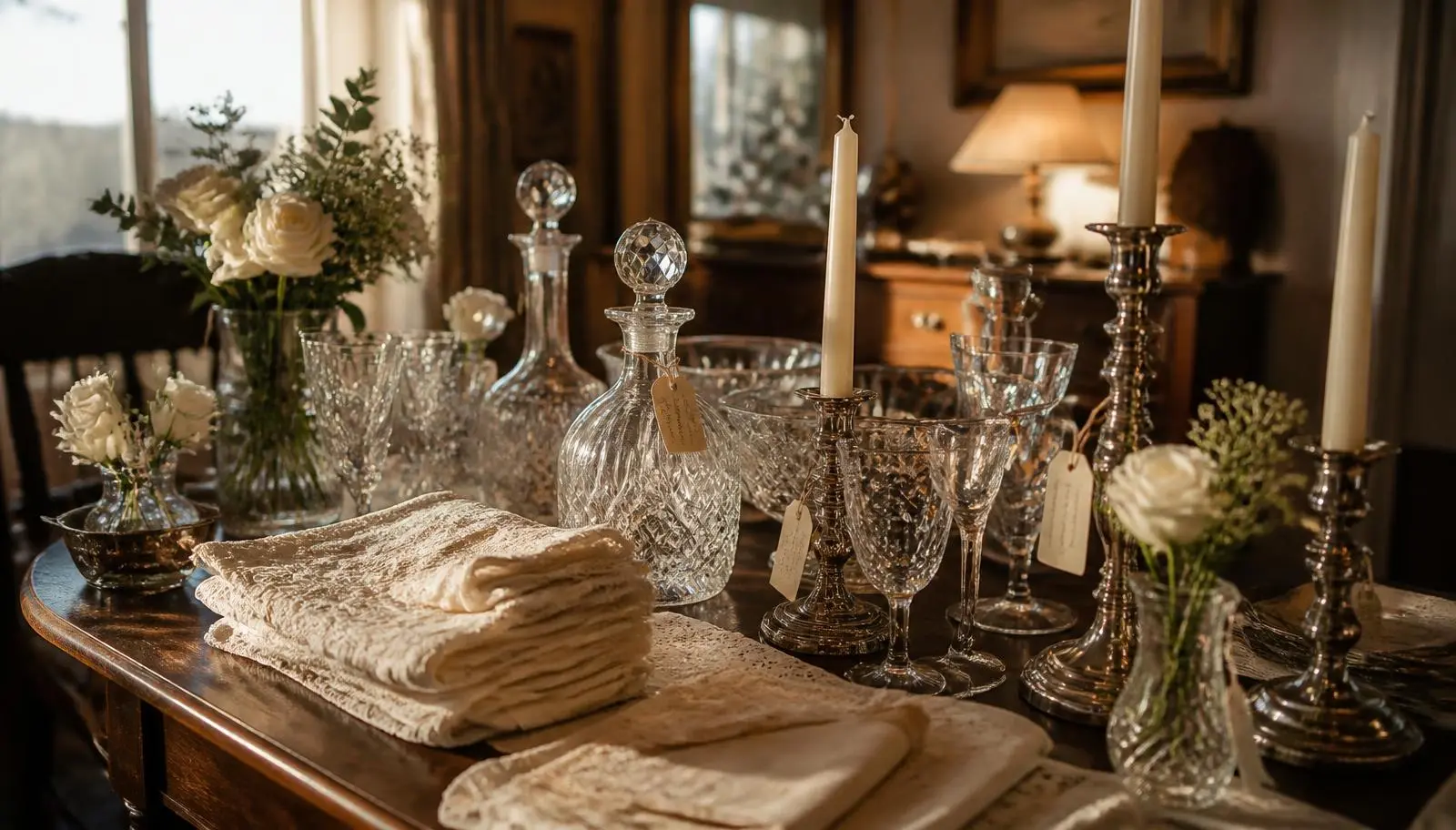
Georg Jensen, Tiffany & Co., Buccellati, plus American sterling from Gorham, Reed & Barton, Wallace and International. Sterling carries a metal floor regardless of pattern, so a full service is rarely cheap-but-worthless. Read the hallmarks with the sterling silver identification guide — and know that "silver plate," EPNS, and A1 are not sterling.
China
Herend, Meissen, Royal Copenhagen, early Wedgwood Jasperware, Limoges, and selected Lenox, Spode and Royal Doulton patterns.
Crystal and glass
Baccarat, pre-2010 Irish-made Waterford, signed Lalique, Steuben, Orrefors, and Kosta Boda.
10. Handbags, fashion and furniture labels
The 1990s and early 2000s are now firmly "vintage," and prices followed.
Bags
Hermès (Birkin, Kelly, Constance), Chanel Classic Flap and Boy, Louis Vuitton vintage monogram, Gucci bamboo and Jackie, Prada nylon, Fendi Baguette, Bottega Veneta Intrecciato. Clothing: vintage Chanel tweed, YSL Le Smoking and safari, Dior, Givenchy, Balenciaga, Jean Paul Gaultier runway, Comme des Garçons, Yohji Yamamoto.
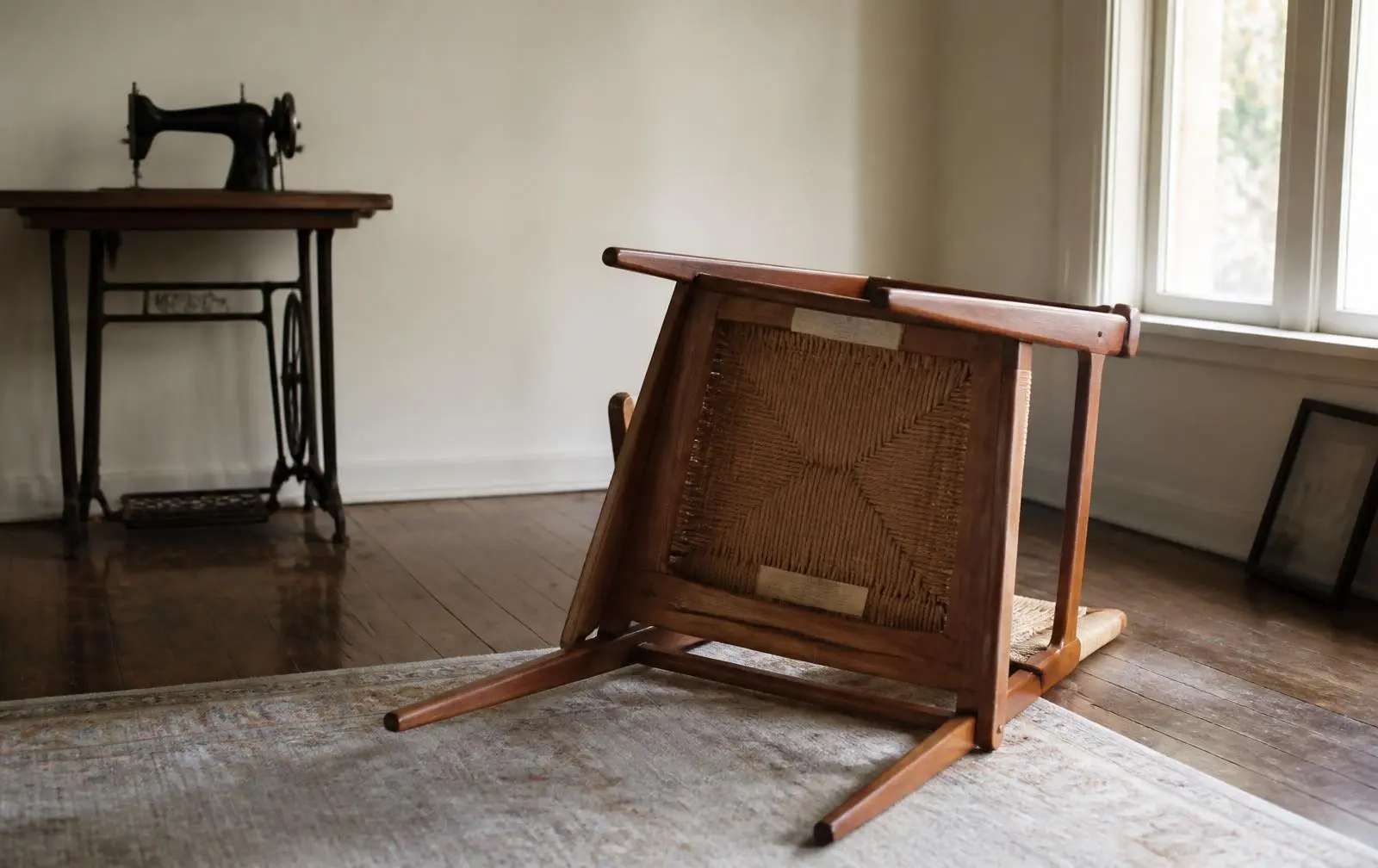
Furniture beyond Herman Miller
Hans Wegner, Finn Juhl, Arne Jacobsen, George Nakashima, Sam Maloof, Wharton Esherick, Vladimir Kagan, Milo Baughman, Paul Evans — and manufacturer labels from Knoll, Dunbar (Wormley), and Widdicomb. Tip the chair over. A paper or foil label underneath the seat is the fastest authentication in the house, and it's the step almost nobody performs.
11. Everything else worth flipping over
- Art: signatures bottom corner, gallery labels on the back, edition numbers on prints ("12/50"), original oils priced as décor, signed lithographs, antique maps and botanicals, pre-1970 film posters, signed silver gelatin photographs
- Books: first editions and signed copies — see the first edition guide for number lines and dust jacket rules
- Clocks: French mantel clocks with signed movements, Vienna regulators, carriage clocks, Atmos by Jaeger-LeCoultre, high-end Howard Miller and Herschede grandfathers, Seth Thomas and Ansonia
- Toys: 1977–1985 Kenner Star Wars (carded especially), 1964–1978 G.I. Joe, 1959–1972 Barbie, sealed and retired Lego (UCS Star Wars), first-run D&D, and 1998–2003 Pokémon cards
- Sewing machines: Singer Featherweight 221/222K, Singer 201 and 301, older Swiss Bernina, Pfaff, Juki, Necchi
- Sporting: Zeiss/Leica/Swarovski binoculars, bamboo fly rods (Orvis, Winston, Payne, Leonard), Hardy and Bogdan reels, pre-1935 wood-shaft golf clubs, steel racing bicycles (Colnago, De Rosa, Bianchi, Peugeot, Raleigh)
- Odds and ends: Shiny Brite ornaments, pre-1970 Replogle and Weber Costello globes, Olivetti Lettera 32 and Hermes 3000 typewriters, Bakelite rotary phones, working neon, enamel advertising signs, Zippo and S.T. Dupont lighters, uranium and carnival glass, and costume jewelry heavy enough to hide real metal — covered in the melt value guide
The real skill: weight, marks, materials
Every category above reduces to the same three tests, and they take about five seconds each.
Weight. Quality is heavy. Sterling outweighs plate. Cast copper outweighs clad steel. Solid wood outweighs veneered particleboard. A pre-1980 receiver is absurdly heavy for its size. If an object surprises your hand, look closer.
Marks. Turn everything over: pan bases, chair seats, drawer interiors, sound holes, rug corners, silver rims, clock movements, camera lens barrels. "Made in France," a Solingen stamp, a lion passant hallmark, a paper Danish cabinetmaker's label — these are the identifiers that turn $10 into hundreds.
Materials. Solid brass or brass-plated. Silk or viscose. Copper or copper-colored. Wool or polypropylene. A magnet, a fingernail, and the weight of a thing tell you most of it before you ever pull out your phone.
The general in-store tests are covered in how to spot valuable items without being an expert, and the triage step is fast: photograph the item, run it through the free Ai photo appraiser for a category and ballpark, then confirm against sold comps before you commit real money. Treat the Ai number as a suggestion for triage — never as a final appraisal.
Build a hunting system, not a memory
Nobody memorizes a hundred brands in a weekend. What works is narrower and slower:
- Pick one category a month. Learn its top five names and three physical tells. Twelve months later you own twelve categories, which is more than most full-time resellers.
- Save searches instead of scanning listings. Set wishlist alerts for the brands and keywords in this article so listings that mention them find you.
- Verify with sold prices only. Active asking prices are fiction; completed eBay sales, auction archives, and category-specific databases are data.
- Go back on the last day. Half-price Sunday is where the mispriced heavy stuff nobody carried out on Friday is still sitting.
Questions & answers
Frequently asked questions
What is the most overlooked category at estate sales?
Vintage stereo equipment. The gap between what it looks like — a dusty old stereo — and what a pre-1980 Marantz, McIntosh, Pioneer, or Sansui component is actually worth is wider than in any other common household category, routinely $500 to $3,000 on an item tagged under $100.
Should I buy old kitchen items if I can't identify them?
Under about $20–$30, usually yes. Cast iron, copper, forged knives, sterling flatware and vintage Pyrex all have strong resale floors even for average examples, so the downside is small and the upside is occasionally enormous.
How can I tell if a rug is hand-knotted?
Fold a corner back and look at the reverse. Hand-knotted rugs show slightly irregular knots and the pattern reads clearly through the back; machine-made rugs show a perfectly uniform mechanical grid. Then check the fringe: real fringe is the warp continuing out of the rug, not a separate strip sewn on.
Is a broken vintage receiver or watch still worth buying?
Often, yes. Mechanical watches and pre-1980 audio gear are routinely serviced and recapped, and collectors actively buy non-working McIntosh, Marantz, Omega and Longines pieces. Ask the price as-is, and don't pay working-condition money for an untested unit.
What should I skip even though it looks valuable?
Hummel and Precious Moments figurines, 1980s–90s collector plates, mass-produced porcelain dolls, encyclopedia sets, most commemorative coins sold on television, and silver-plate hollowware. These were marketed as investments and have close to no resale market today.
How do I learn brands quickly without becoming an expert?
Study one category per month and learn only the top five names plus three identification signals for it. Photograph anything uncertain, check completed sold listings rather than asking prices, and let saved alerts do the scanning for you between sales.
The bottom line
Estate sales reward recognition, not luck. The Tiffany box is already spoken for by the time the door opens — but the copper pan, the silver-face receiver, the labeled teak chair, and the rug behind the water heater are still there at noon, waiting for the one person in the room who bothered to flip them over.
Find estate sales near you, and set wishlist alerts for the brands you're hunting so the listings come to you.
About the imagery and figures
all photographs in this article were generated for illustration and do not depict specific items, sales, or branded products. Resale ranges are 2026 estimates drawn from completed-sale market data and vary widely by model, condition, and region; verify with sold comps such as eBay completed listings, WorthPoint, HiFi Shark for audio, and Reverb Price Guide for instruments before buying or selling.
Keep exploring
Ready to start your own treasure hunt?
Discover estate sales near you and find incredible deals.
Explore Sales Near Me
About the author
Andy
Founder, EstateSaleFinder.net
Hi, I'm Andy — a retired commercial photographer turned developer with a five-year (and counting) obsession with estate sales. I started EstateSaleFinder.net because I knew there had to be an easier, smarter way to find and list estate sales. Now I get to chase treasure and build the tool I always wished existed.