Pokémon Turns 30: The Estate Sale Card-Hunting Guide
Pokémon turns 30 in 2026, and the cards a whole generation left in their childhood closets are now buried in estate sales all over the country. This is the field guide: the exact era to hunt (1999–2003), how to spot a real 1st Edition or Shadowless holo in ten seconds, what the grail cards are actually worth, and how to find sales that have cards before you burn a Saturday driving around.
Pokémon turns 30 in 2026 — and the cards a whole generation shoved in a shoebox and forgot about are now sitting in estate sales all over the country. The franchise launched with Pocket Monsters Red and Green in Japan on February 27, 1996 (Smithsonian Magazine; official Pokémon 30th site), which means the kids who opened their first booster packs are now in their thirties and forties — and their parents' houses are being cleared out. If you know exactly what to look for, an estate sale shoebox can hide a card worth more than the furniture in the whole house.
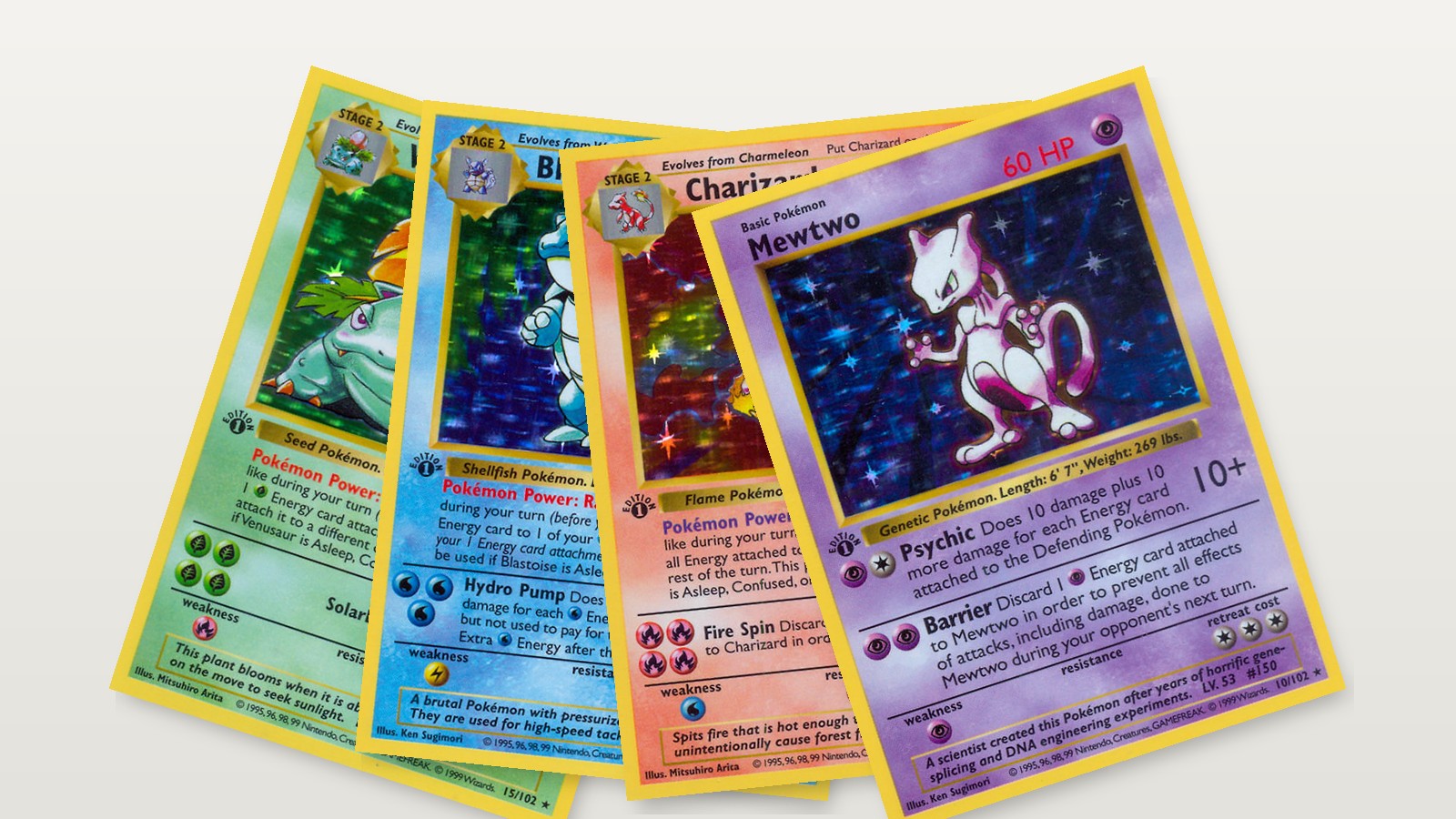
Real 1999 Base Set 1st Edition holo cards (Venusaur, Blastoise, Charizard, Mewtwo). Card images via the Pokémon TCG API (pokemontcg.io). Cards © Wizards of the Coast / The Pokémon Company.
"Found a Charizard at an estate sale" isn't a fairy tale. It happens, quietly, most weekends — usually to the one person in the room who knew what they were holding. This guide makes sure that person is you.
Why Pokémon Cards Are Flooding Estate Sales Right Now
Two things are happening at once, and they're colliding perfectly in 2026.
First, the 30th anniversary has put Pokémon back in the cultural spotlight — anniversary events, reprints, and nonstop press about record card prices have pulled a younger, hungrier buyer demographic into the resale market. Pokémon is, by most measures, the highest-grossing media franchise in the world, and the trading cards are its most collectible artifact.
Second — and this is the part estate hunters care about — the original TCG generation grew up. The English Base Set launched January 9, 1999, produced by Wizards of the Coast (Poké Master Center; PokéMasters). The nine-year-old who tore into those packs is now around 36. When a grandparent's or parent's home gets liquidated, the cards in the attic come out with everything else — and most of the people running and shopping the sale have no idea which ones matter.
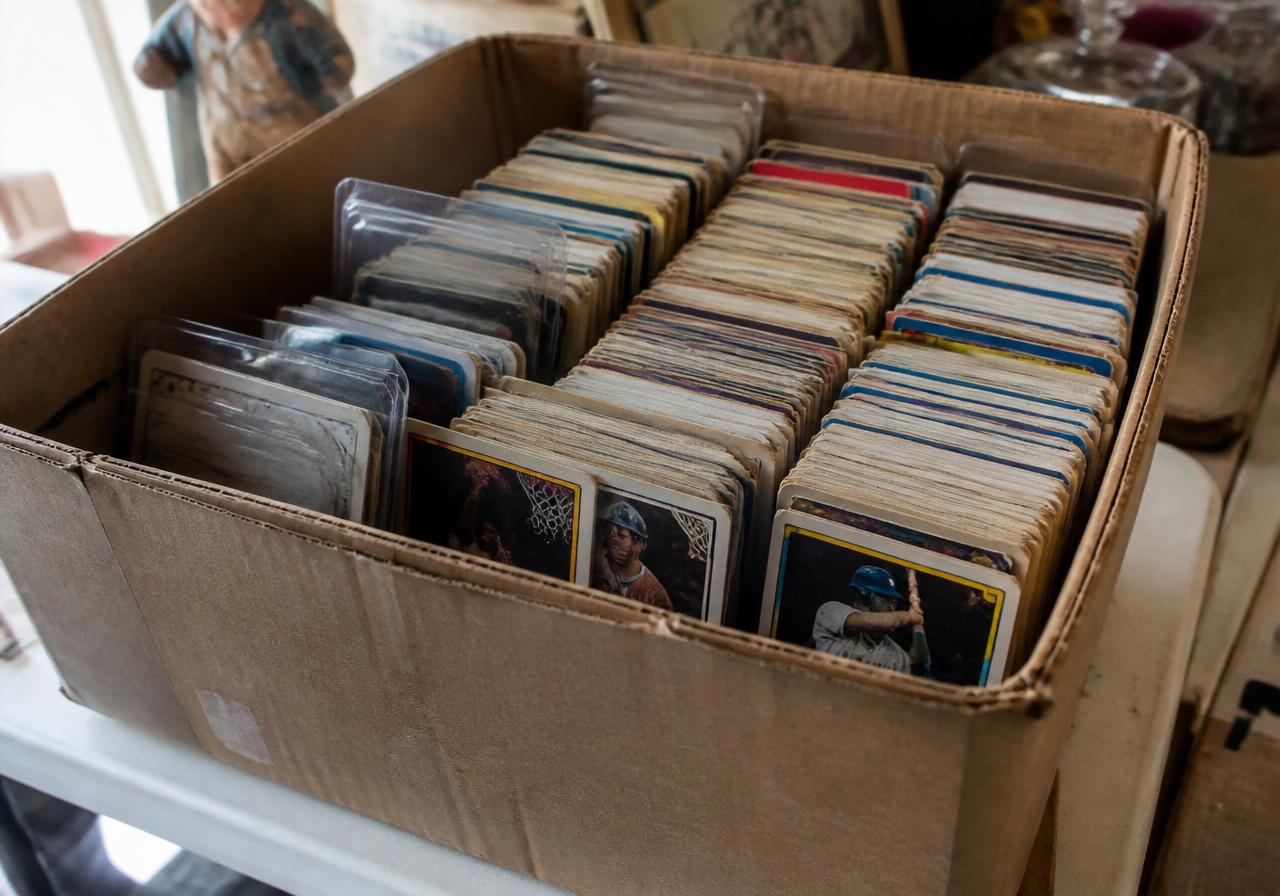
That knowledge gap is the entire opportunity.
The Only Era That Really Matters: 1999–2003 (WOTC)
If you remember one thing from this guide, make it this: the money is in the Wizards of the Coast era, roughly 1999 to 2003. Before Nintendo's Pokémon Company took the TCG back in-house in 2003, Wizards printed the sets that collectors chase hardest — Base Set, Jungle, Fossil, Team Rocket, the Gym sets, and Neo.
Here's how to date a card fast at a sale:
- Look at the bottom of the card face. WOTC-era cards carry a Wizards of the Coast copyright line, not "Nintendo / Creatures / GAME FREAK" alone. That single detail separates the valuable vintage stuff from the modern reprints.
- Check the copyright year. "1995, 96, 98, 99" printings are the golden window. Base Set holos read "©1999."
- Feel the card stock. Vintage WOTC cards have a distinct thinner, softer feel than glossy modern cards once you've handled a few.
Modern cards (2010s–2020s) can still be worth money, but they're printed in enormous quantities. The vintage WOTC cards are the ones that turn a $5 shoebox into a headline.
How to Spot a 1st Edition or Shadowless Holo in Ten Seconds
This is the single most valuable skill you can bring to an estate sale. The exact same Base Set card exists in three print variants, and the difference between them can be tens of thousands of dollars (CardSense; Beckett):
- 1st Edition — the first, smallest print run. Look for a small "1st Edition" stamp on the lower-left of the card art, just left of the creature's image. This is the rarest and most valuable. It's also the most counterfeited card in the hobby, so treat a raw one with healthy skepticism.
- Shadowless — the second run. No 1st Edition stamp, and crucially, no drop-shadow on the right side of the creature's picture box. The art looks "flatter" against the yellow border. Strong value, and constantly overlooked by casual sellers.
- Unlimited — the big, ongoing run. No stamp, but there is a drop-shadow to the right of the picture box. Most common, still valuable for the top cards.
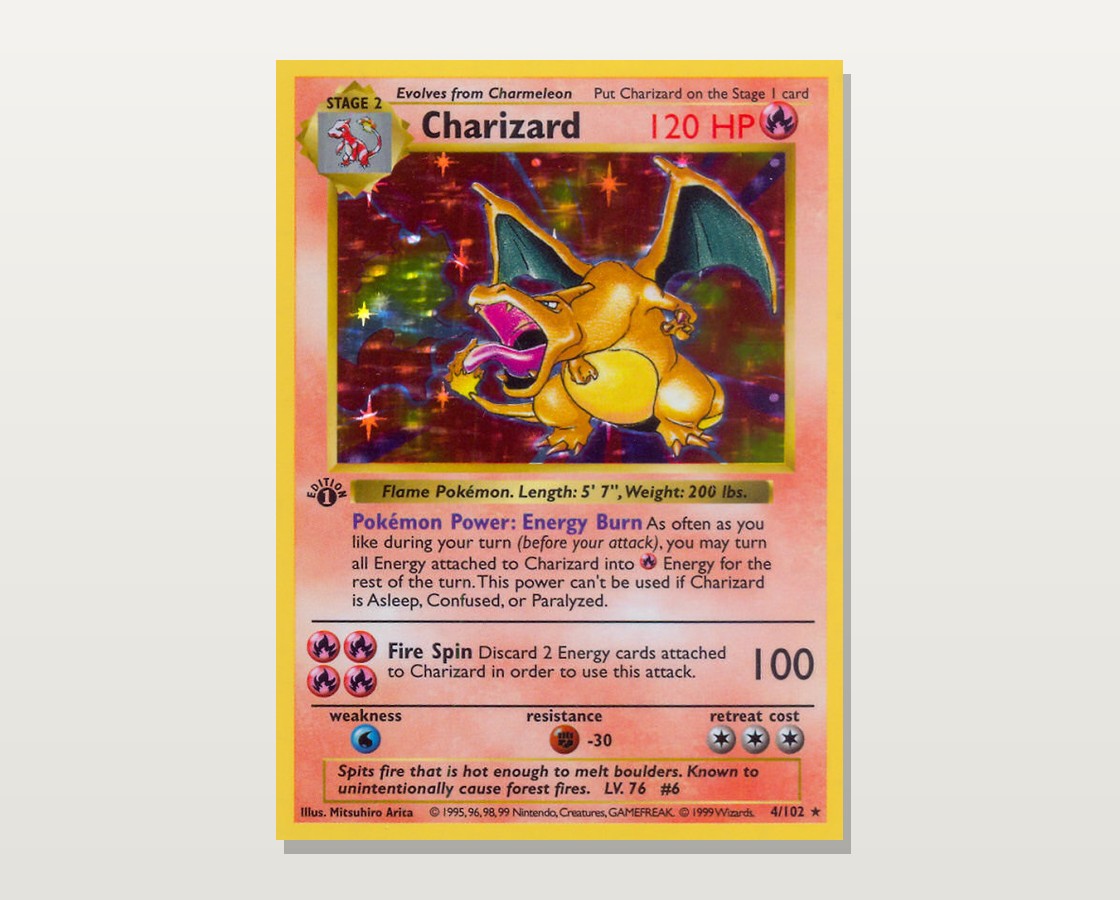
The 1999 Base Set 1st Edition Charizard (#4) — note the foil holo pattern behind the art and the "1st Edition" stamp on the lower left. Card image via the Pokémon TCG API (pokemontcg.io). Card © Wizards of the Coast / The Pokémon Company.
Your ten-second field test, in order:
- Is there a "1st Edition" stamp on the lower left? If yes, stop everything and inspect it carefully.
- Is there a drop-shadow to the right of the art box? No shadow = Shadowless (better). Shadow = Unlimited.
- Does it shine? True holos have foil across the picture box. A holographic Base Set card of any starter or Legendary is worth a closer look.
What the Grail Cards Are Actually Worth
Let's talk numbers — the accurate, sourced kind, not the "I heard it's worth a million" kind you'll hear at the sale.
The 1999 Base Set Charizard (#4) is the most recognizable trading card of an entire generation. In late 2025, a 1st Edition Shadowless Charizard graded PSA 10 sold for $550,000 at Heritage Auctions, breaking the previous $420,000 record set in 2022 (Heritage Auctions; Sports Illustrated).
But that's the perfect, sealed-in-plastic unicorn. Here's the more realistic spread for a Base Set Charizard by variant and grade (CardSense):
- PSA 10 1st Edition: $400,000+ at peak
- PSA 10 Shadowless: ~$30,000+
- PSA 10 Unlimited: roughly $10,000–$20,000
And the all-time crown? The Pikachu Illustrator, a 1998 promo, sold in a private sale for $5,275,000 to Logan Paul in April 2022 — officially the most expensive Pokémon card ever, per Guinness World Records. You will almost certainly not find one in a shoebox. But you might find its cousins.
The realistic estate-sale wins are the other Base Set holos — Blastoise, Venusaur, Alakazam, Mewtwo, Zapdos, Chansey, Machamp, Gyarados, Ninetales, and more. In high grade with the right variant, these routinely carry premiums from the hundreds into the thousands. A cardboard box of "old game cards" priced at $10 can absolutely contain several of them.
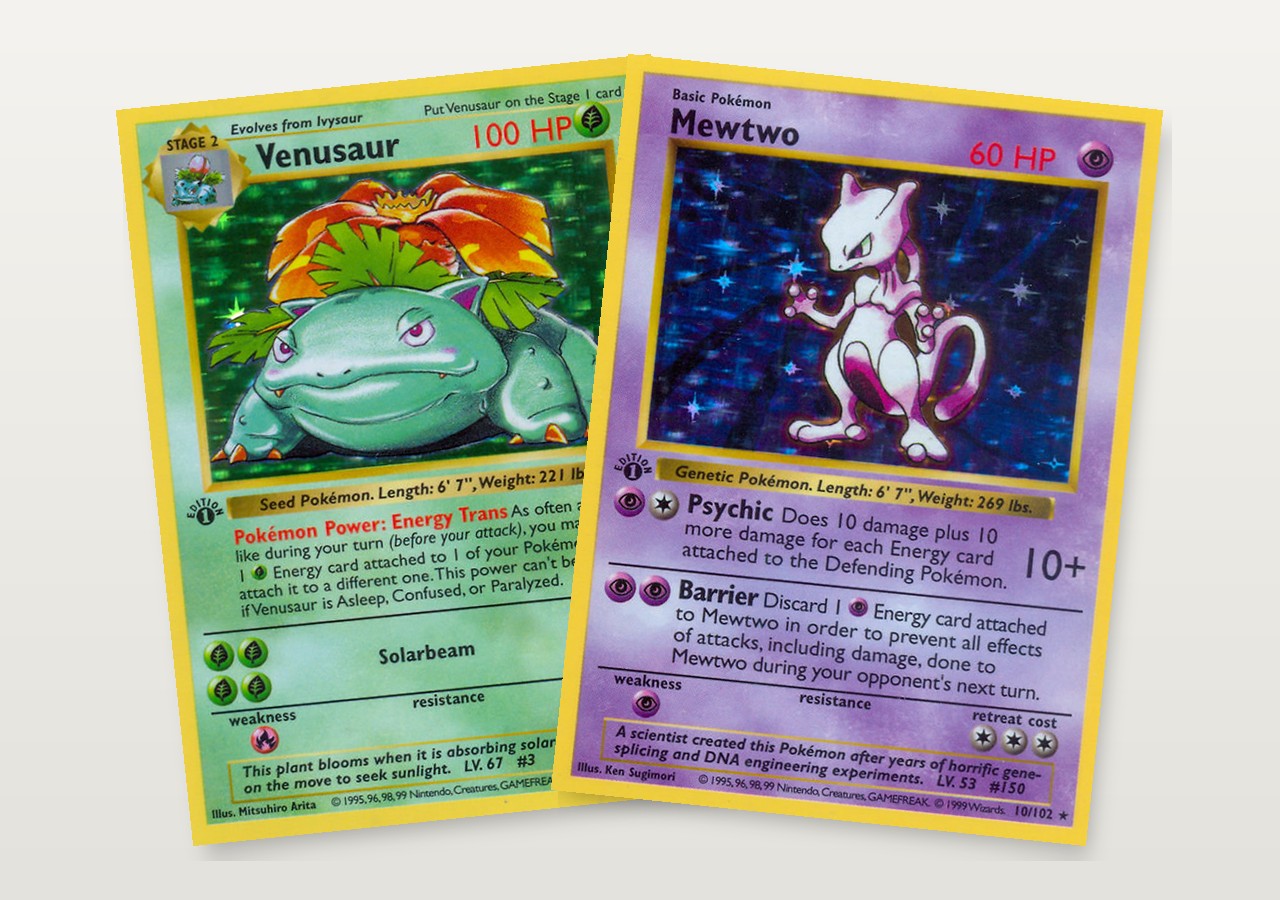
The Base Set holos worth hunting: 1999 1st Edition Venusaur (#15) and Mewtwo (#10). Card images via the Pokémon TCG API (pokemontcg.io). Cards © Wizards of the Coast / The Pokémon Company.
A word on condition: Base Set was printed with brutal centering, so pristine PSA 10s are effectively miracle cards — that's why the gap between a PSA 9 and a PSA 10 is enormous. Handle finds by the edges, never bend them to "check," and don't clean them.
How to Find Sales That Actually Have Cards (Before You Waste a Saturday)
Here's the hard truth about card hunting the old way: you can drive to ten estate sales and find zero cards at nine of them. Cards are small, they get boxed up fast, and they're often not mentioned in a listing at all. That's a lot of gas and a lot of Saturdays for a maybe.
This is exactly the problem EstateSaleFinder is built to fix.

Search inside the sales, not just for them. Our keyword search looks inside estate sale listings — the photos and the item descriptions — so you can type "Pokémon," "trading cards," "Charizard," "TCG," or even "baseball cards," and see every nearby sale that actually has them. You show up already knowing the good stuff is there.
Can't find any this weekend? Wishlist it. Add "Pokémon cards" to your wishlist, and the moment a local sale lists matching items, you get an alert. It's a tireless personal shopper quietly scanning every new sale in your area while you go live your life — so you only leave the house when there's treasure confirmed and waiting.
For the truly organized hunter: when a big weekend does hit, plan your route so you hit the card-heavy sales first, at opening, before the other collectors get there.
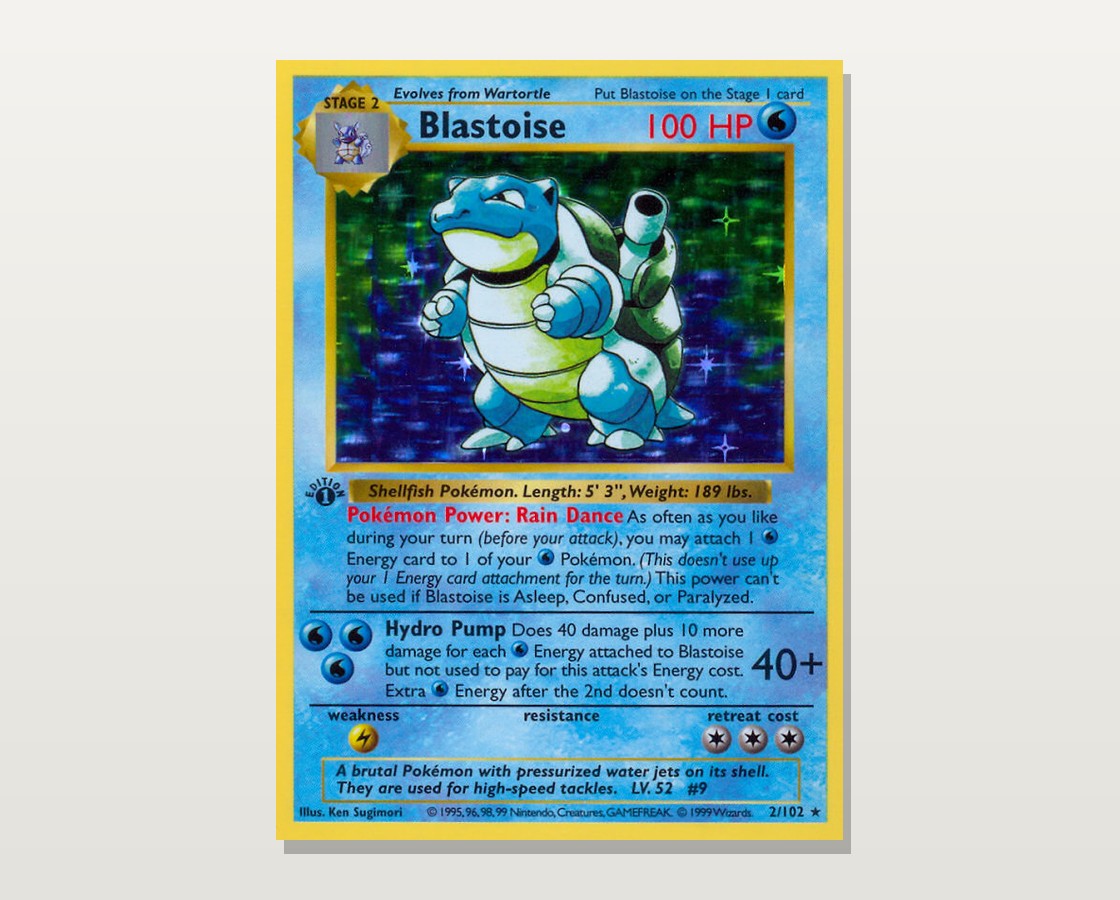
The 1999 Base Set 1st Edition Blastoise (#2). The small "1st Edition" stamp sits on the lower left of the picture box — that stamp is the single detail that separates the rarest print run from Shadowless and Unlimited. Card image via the Pokémon TCG API (pokemontcg.io). Card © Wizards of the Coast / The Pokémon Company.
The 30th-Anniversary Hunter's Checklist
- Hunt the 1999–2003 WOTC era first. Wizards of the Coast copyright line = vintage gold.
- Check every card for the "1st Edition" stamp (lower-left of the art) and for the missing drop-shadow (Shadowless).
- Prioritize holos — the foil starters and Legendaries carry the real premiums.
- Handle with care. Edges only, no bending, no cleaning. Condition is most of the value.
- Don't overpay for raw high-end cards. The 1st Edition Charizard is the most faked card there is — verify, or buy graded (PSA/CGC) for the big stuff.
- Get there early. First morning gets first pick; card people move fast.
- Use keyword search and wishlist alerts so you only chase sales that actually have cards.
Gotta Catch 'Em All (At the Estate Sale)
Thirty years in, the schoolyard kids grew up, and their cards are back on the table — literally — in dining rooms and garages across the country. Most of the people standing over those shoeboxes don't know a Shadowless holo from an Unlimited one. Now you do.
So load up your wishlist, run your keyword searches, and go find the box everyone else walked past. Your Charizard is out there in someone's estate sale right now. Go catch it.
Find estate sales near you — and search inside them for trading cards — at EstateSaleFinder.
FAQ
Are old Pokémon cards from an estate sale actually worth anything?
Some are worth a fortune and most are worth a little — the era and condition decide everything. The valuable ones are almost all from the Wizards of the Coast era (1999–2003), especially holographic cards from the 1999 Base Set. A 1st Edition Shadowless Base Set Charizard graded PSA 10 sold for $550,000 at Heritage Auctions in late 2025, while common non-holo cards from the same era may be worth cents each. The skill is telling them apart.
How do I tell if a Pokémon card is 1st Edition, Shadowless, or Unlimited?
Check two things. First, look for a small "1st Edition" stamp on the lower-left of the card's artwork — if it's there, it's 1st Edition (the rarest and most valuable). If there's no stamp, look at the right side of the picture box: no drop-shadow means Shadowless, and a visible drop-shadow means Unlimited. Shadowless cards are more valuable than Unlimited and are frequently overlooked by casual sellers.
What is the most valuable Pokémon card?
The Pikachu Illustrator, a 1998 promotional card, is the most expensive Pokémon card ever sold — it went for $5,275,000 in a private sale to Logan Paul in April 2022, a Guinness World Record. The most iconic mainstream grail is the 1999 Base Set 1st Edition Charizard, which has sold for $550,000 in PSA 10 condition.
What years of Pokémon cards should I look for at estate sales?
Focus on 1999 to 2003, the Wizards of the Coast era. Look for a "Wizards of the Coast" copyright line printed on the card and copyright years like 1999. This window includes Base Set, Jungle, Fossil, Team Rocket, the Gym sets, and Neo — the sets collectors chase hardest. Cards printed after 2003 are generally far more common and less valuable.
How can I find estate sales that have Pokémon cards near me?
Use EstateSaleFinder's keyword search to search inside sale listings for terms like "Pokémon," "trading cards," or "TCG," so you only visit sales that actually have cards instead of driving around hoping. If nothing near you has them yet, add "Pokémon cards" to your wishlist and you'll be notified the moment a local sale lists a match.
Should I get an old Pokémon card graded before selling it?
For high-end cards — holographic Base Set cards, anything 1st Edition, or a card in excellent condition — professional grading (PSA, CGC, or BGS) usually pays for itself by increasing value and proving authenticity, since the top cards are heavily counterfeited. For common cards or ones with visible wear, grading fees often cost more than the card is worth, so sell those raw.
Image credits: All Pokémon card images in this article are official 1999 Base Set scans sourced from the Pokémon TCG API (pokemontcg.io). Cards are © Wizards of the Coast, Nintendo, Creatures, and GAME FREAK / The Pokémon Company and are shown here for identification and editorial reference.
Keep exploring
Ready to start your own treasure hunt?
Discover estate sales near you and find incredible deals.
Explore Sales Near Me
About the author
Andy
Founder, EstateSaleFinder.net
Hi, I'm Andy — a retired commercial photographer turned developer with a five-year (and counting) obsession with estate sales. I started EstateSaleFinder.net because I knew there had to be an easier, smarter way to find and list estate sales. Now I get to chase treasure and build the tool I always wished existed.