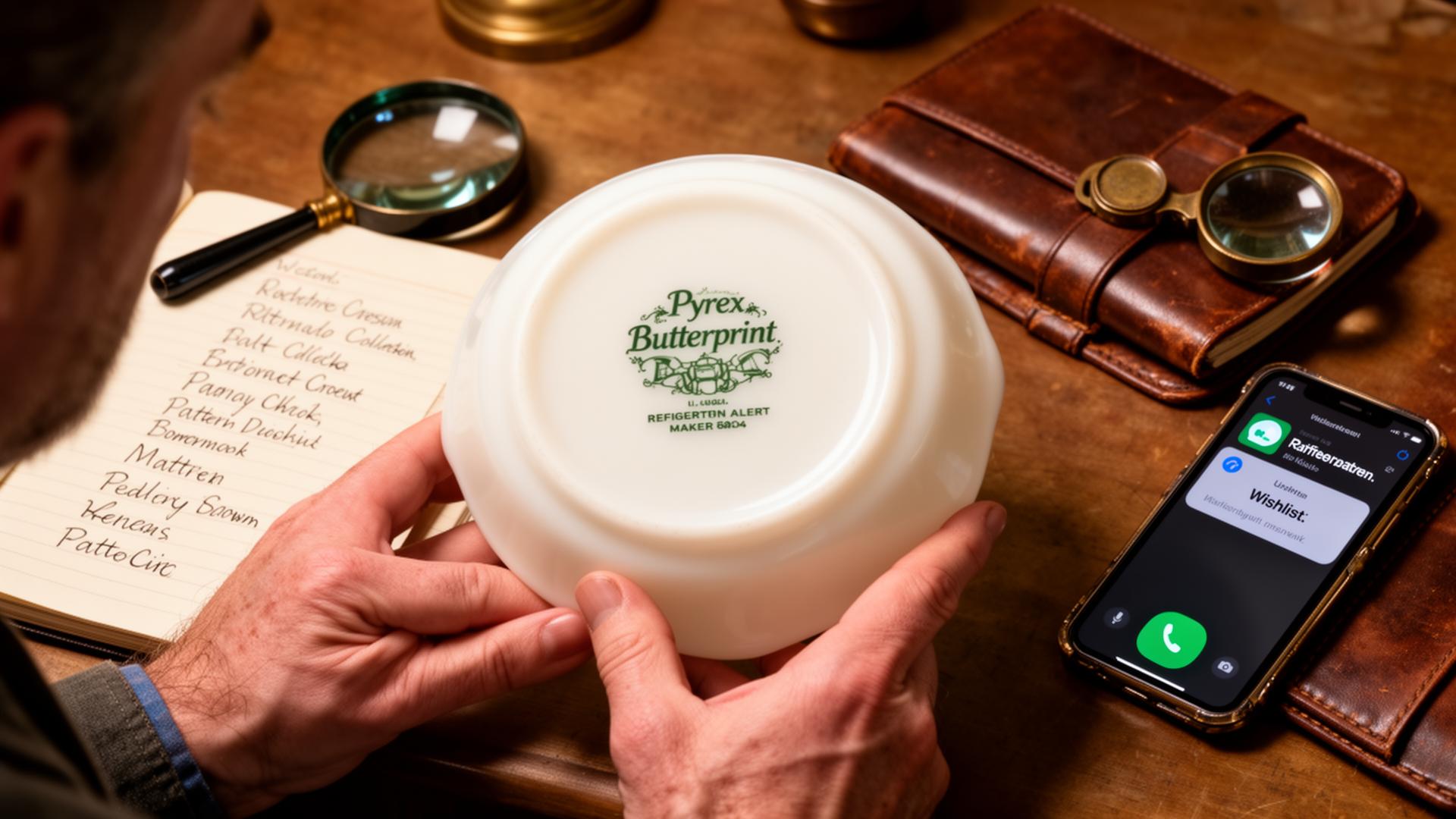
How Serious Collectors Use Wishlist Alerts to Never Miss Their Category Again
Set an alert specific enough to filter out the generics and get notified the moment your exact pattern, maker, or model shows up at any nearby estate sale. Here's how to do it right.
Every serious collector has the same problem: the piece you've been hunting for ten years is out there right now, sitting on a card table at an estate sale you don't know about, priced at $12 because the seller doesn't know what they have. The question is whether you'll be the one to find it — or whether someone with no idea what it is will buy it for kindling money and post about it on Instagram next Tuesday.
Wishlist alerts solve this. But only if you write them right.
Specific Beats Broad — Always
The single biggest mistake new collectors make is setting alerts that are too broad. "Pyrex" generates an alert for every Cinderella bowl, every 1990s reproduction, and every grandma's kitchen at every sale within 50 miles. You'll stop reading them by the third week.
"Pyrex Butterprint 043 refrigerator dish" generates one alert a month — and every alert is something you actually want to see.
The rule: write your keyword the way you'd describe the piece to another collector who knows the category. If your alert reads like a Wikipedia entry, it's right. If it reads like a Target search bar, start over.
How to Write Effective Keywords by Category
Pottery and ceramics: include the maker, line name, and ideally a piece type. "McCoy Lily Bud planter," "Roseville Pinecone vase," "Hull Bow Knot pitcher." Generic "vintage pottery" is noise.
Vintage clothing: the brand, era, and piece. "Levi's 501 Big E," "1970s Pendleton wool shirt," "deadstock Wrangler 13MWZ." Skip "vintage shirt."
Vinyl records: the artist, album, and ideally label/pressing detail. "Blue Note Lee Morgan Sidewinder," "Beatles White Album original UK pressing." If you're hunting first pressings, say so explicitly.
Tools: the maker and tool type. "Stanley No. 5 plane type 11," "Disston D-8 saw pre-1928," "Craftsman BeCraftsman socket set USA." Vintage tool collectors are some of the most specific buyers in the hobby.
Jewelry: the maker and type. "Miriam Haskell baroque pearl brooch," "Trifari signed crown brooch," "vintage Eisenberg Original Sterling clip." Don't just say "vintage jewelry."
Books: title, author, and edition detail. "Catcher in the Rye first edition Little Brown," "Hemingway Sun Also Rises 1926." Modern firsts have their own collector communities and specific signal words.
The Radius Calculation
The other variable that matters is how far you're willing to drive. Two rules:
- For rare pieces in your collection, expand the radius. If you've been hunting a specific Trifari piece for three years, set the alert for 100 miles. Drive the four hours when it appears.
- For things you find regularly, tighten the radius. If you collect McCoy generally, 30 miles is plenty — you don't need to drive across two states for every Lily Bud planter.
Why Specificity Helps the Seller, Too
Here's the thing most collectors don't realize: sellers benefit when buyers find their items quickly. An estate sale listing that includes specific terminology ("McCoy Lily Bud planter, marked, c.1948") generates immediate matches with the right collectors. A listing that says "vintage planter" sits unsold while collectors hunt elsewhere. The wishlist system rewards everyone who participates seriously.
Real Examples
A pottery collector in Ohio set "McCoy Lily Bud" as an alert. Got a hit within a week. Drove 22 miles. $18, perfect condition. Same piece sold the previous month on eBay for $140.
A jazz record collector in Chicago set "Blue Note first pressing" with a 60-mile radius. Got a match Thursday morning. Drove 40 minutes. $25 for a Lee Morgan Sidewinder original that sold the same week on Discogs for $340.
A vintage Levi's collector in Texas set "Levi's Big E" with a 50-mile radius. Got 14 matches over six months. Built a full collection at estate sale prices.
The collectors who use wishlist alerts well don't shop estate sales — they let estate sales come to them.
Keep going: set up your first alert or learn more about the collector workflow.
Keep exploring
Ready to start your own treasure hunt?
Discover estate sales near you and find incredible deals.
Explore Sales Near Me
About the author
Andy
Founder, EstateSaleFinder.net
Hi, I'm Andy — a retired commercial photographer turned developer with a five-year (and counting) obsession with estate sales. I started EstateSaleFinder.net because I knew there had to be an easier, smarter way to find and list estate sales. Now I get to chase treasure and build the tool I always wished existed.