Stop Walking Past the Garage: The Estate Sale Room Every Serious Buyer Ignores (And Shouldn't)
Everyone beelines for the living room and the kitchen. Meanwhile the garage, the shed, and the back of the closet are where the underpriced tools, fishing gear, camping equipment, and forgotten collections sit — often half-tagged because the estate sale company ran out of time. A dusty $20 box can hide a $2,000 hand plane. Here is exactly what to look for, where to look, and why the most overlooked room is quietly the best room in the house.
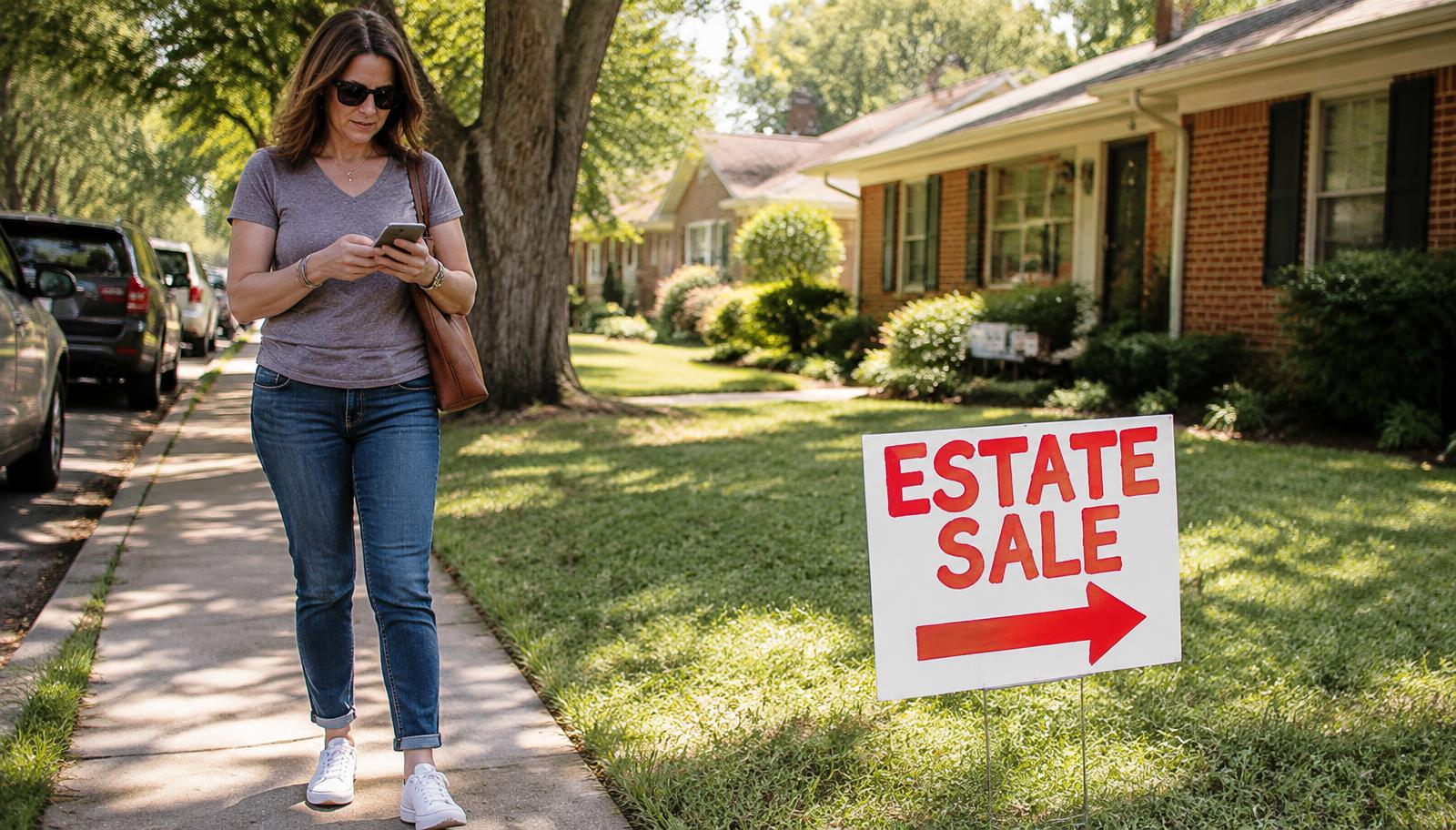
Picture the first ten minutes of any estate sale. The doors open, and the crowd does the exact same thing it always does. It pours into the living room. It crowds the china cabinet. It fans out across the kitchen counters. Everyone's elbows-deep in the same three rooms, fighting over the same teacups and the same costume jewelry.
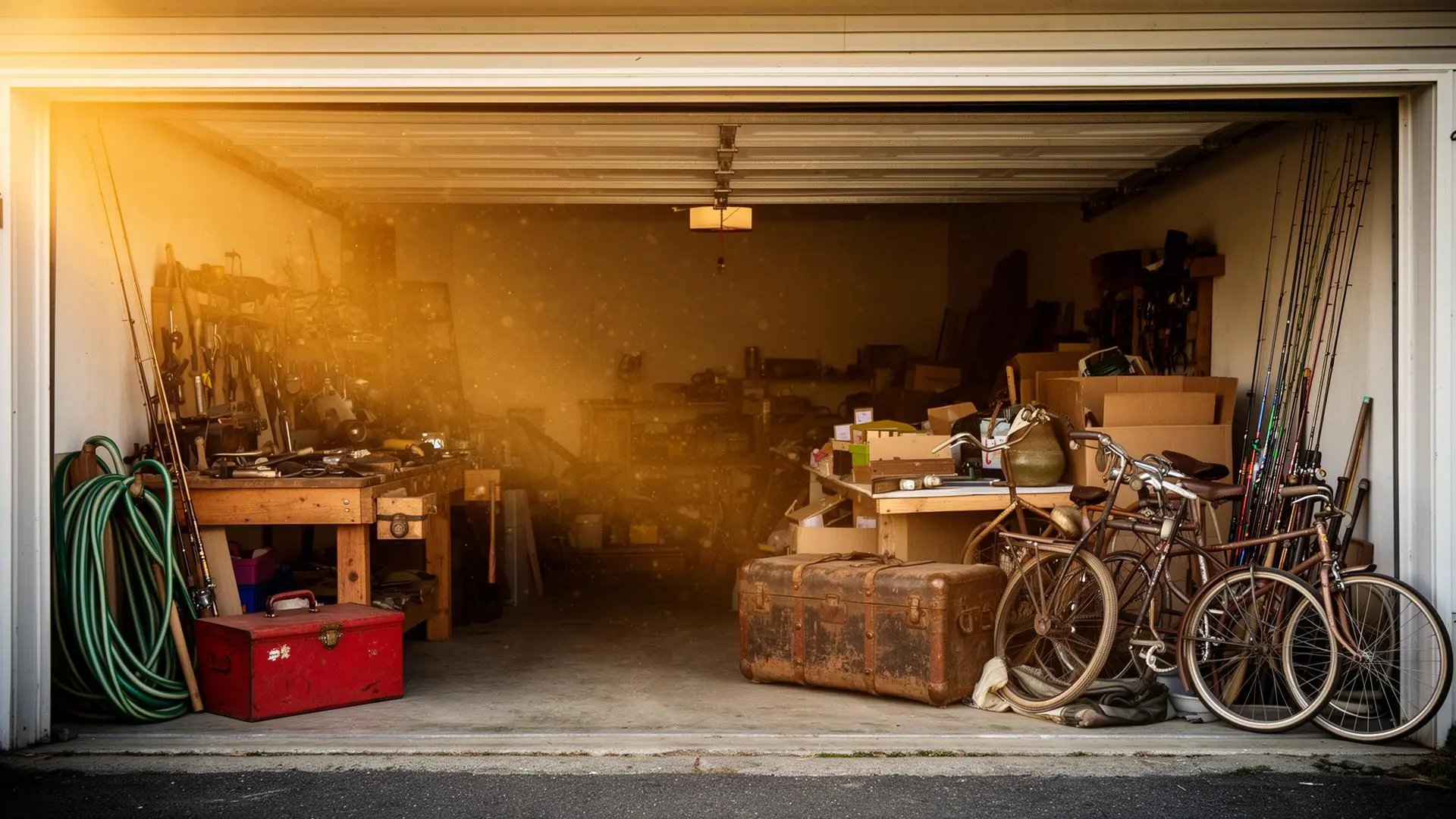
And the whole time, there's a door off to the side that almost nobody opens. It usually smells faintly of motor oil and sawdust. The light's a little dimmer. There's a workbench, some shelves, a couple of cardboard boxes shoved in a corner with handwritten prices — if they're priced at all.
That's the garage. And it might be the best-kept secret in this entire hobby.
Why the Garage Gets Ignored (and Why That's Your Opening)
Here's the thing nobody says out loud: most estate sale shoppers are decorating. They want the pretty stuff for the mantel, the dishes for the holidays, the framed print for the hallway. The garage doesn't look pretty. It looks like work. So they skip it.
The estate sale company often half-skips it too. By the time the team has spent three days staging the house — wiping down glassware, arranging the furniture, pricing the jewelry under glass — they're out of hours. The garage is the last room they get to, if they get to it at all. So you'll routinely find shelves where every third item has a tag, boxes marked "$5 EACH" that clearly should be priced individually, and entire categories — hardware, fasteners, fishing tackle — lumped into a single "make an offer" pile.
That combination — low foot traffic plus rushed pricing — is the exact recipe for an underpriced room. You're not competing with the crowd, and you're not competing with a careful pricer. You're just paying attention while everyone else is fighting over the gravy boat in the dining room.
The Tool Bench Is Where the Real Money Hides
If you only learn one thing from this post, make it this: old hand tools are wildly undervalued at estate sales, and most people genuinely cannot tell a $15 tool from a $1,500 one.
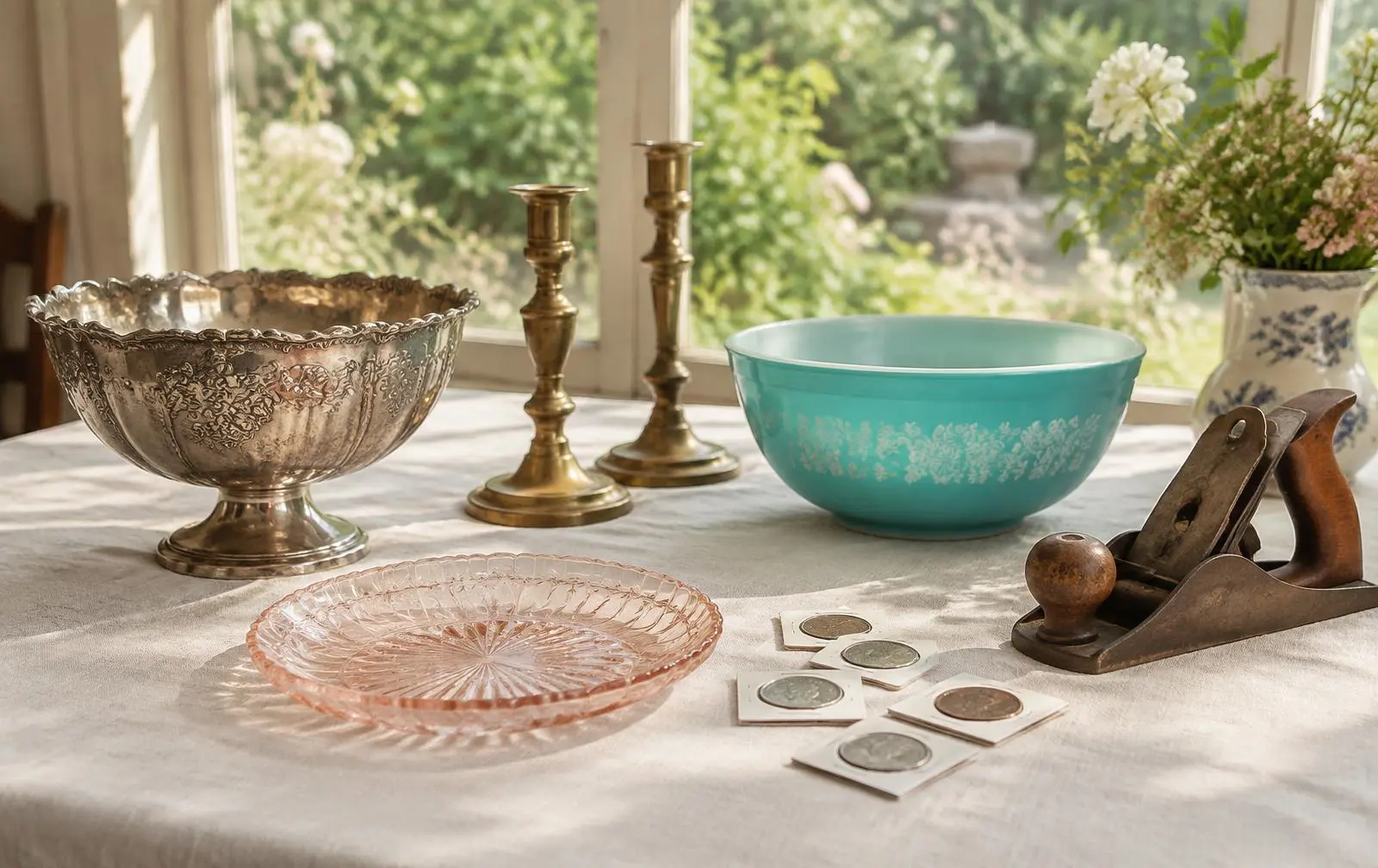
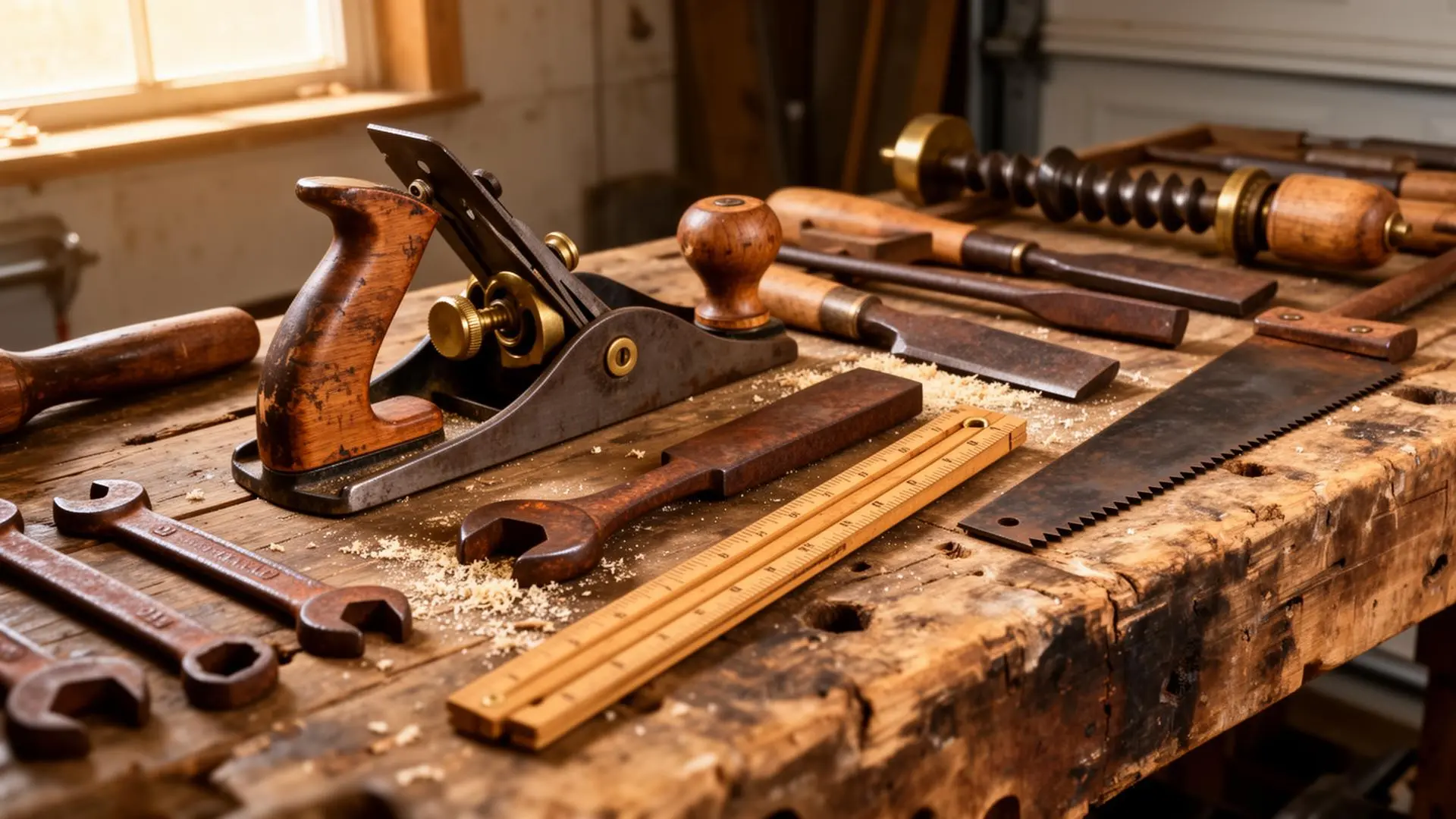
Vintage woodworking tools have a serious, cash-in-hand collector market. Hand planes, chisels, marking gauges, brace-and-bit drills, levels with brass fittings — the good American makers from the late 1800s and early 1900s are sought after by woodworkers and collectors who will pay real money for the right piece.
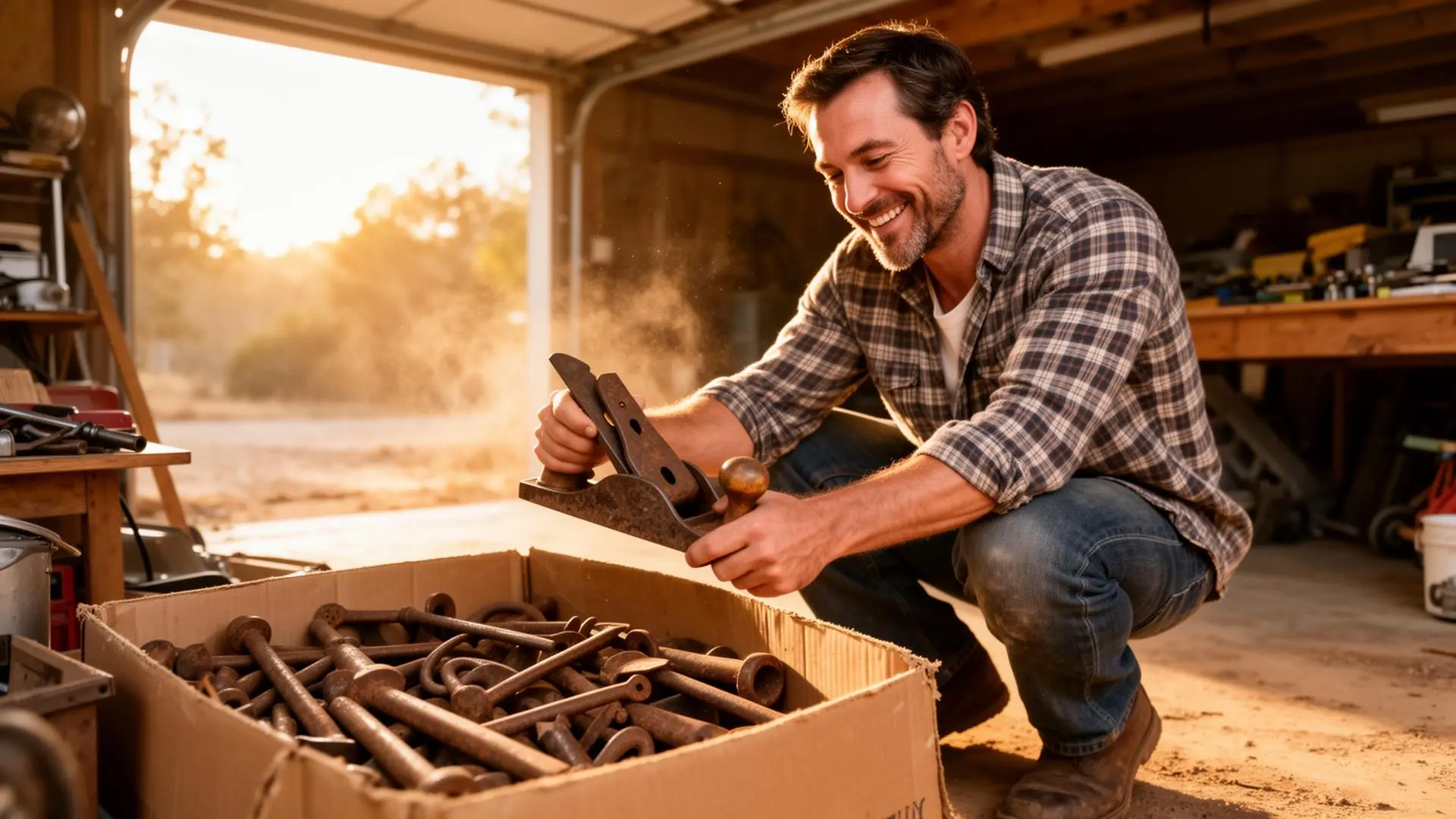
The legendary example is the Stanley No. 1 smoothing plane — the smallest in the line. It turns up in boxes of rusty metal, gets glanced at, and sells for $20 because it looks like junk. To the right collector, a genuine one in honest condition can be worth upwards of $2,000. That's not a typo, and it's not a once-in-a-lifetime unicorn. It's the kind of thing that's in a box, in a garage, right now, somewhere near you.
What to actually scan for on the tool bench:
- Hand planes — Flip them over. Look for a maker's name cast into the metal. Brand names and a model number stamped on the body are the tell. Even common models are worth far more than the $5 they're usually tagged.
- Anything with a name and a number stamped in it — Old tools were proudly branded. A name plus a model number is your signal to look it up before you walk away.
- Brass and rosewood — Marking gauges, levels, and squares with brass hardware and dark hardwood handles are almost always older and almost always worth more than the plastic stuff beside them.
- Complete sets in wooden boxes — A full set of chisels or a machinist's tool chest sold as one lot is frequently priced like a single item. That's a gift.
- "Rusty" is not "ruined." Surface rust wipes off. Collectors expect patina. Don't let a little orange dust talk you out of a great find — that's exactly what talks everyone else out of it.
When you're standing there unsure whether the plane in your hand is a $15 user or a $1,500 collectible, that's precisely the moment to pull out your phone. Snap a photo with the Ai appraiser, see what comparable tools have actually sold for on eBay sold listings, and decide in thirty seconds — before the guy behind you reaches for the same box.
Sporting, Fishing, and Camping Gear: The Quiet Goldmine
The back corner of the garage is where a lifetime of hobbies goes to rest. And hobbyist gear holds value in a way that surprises almost everyone.
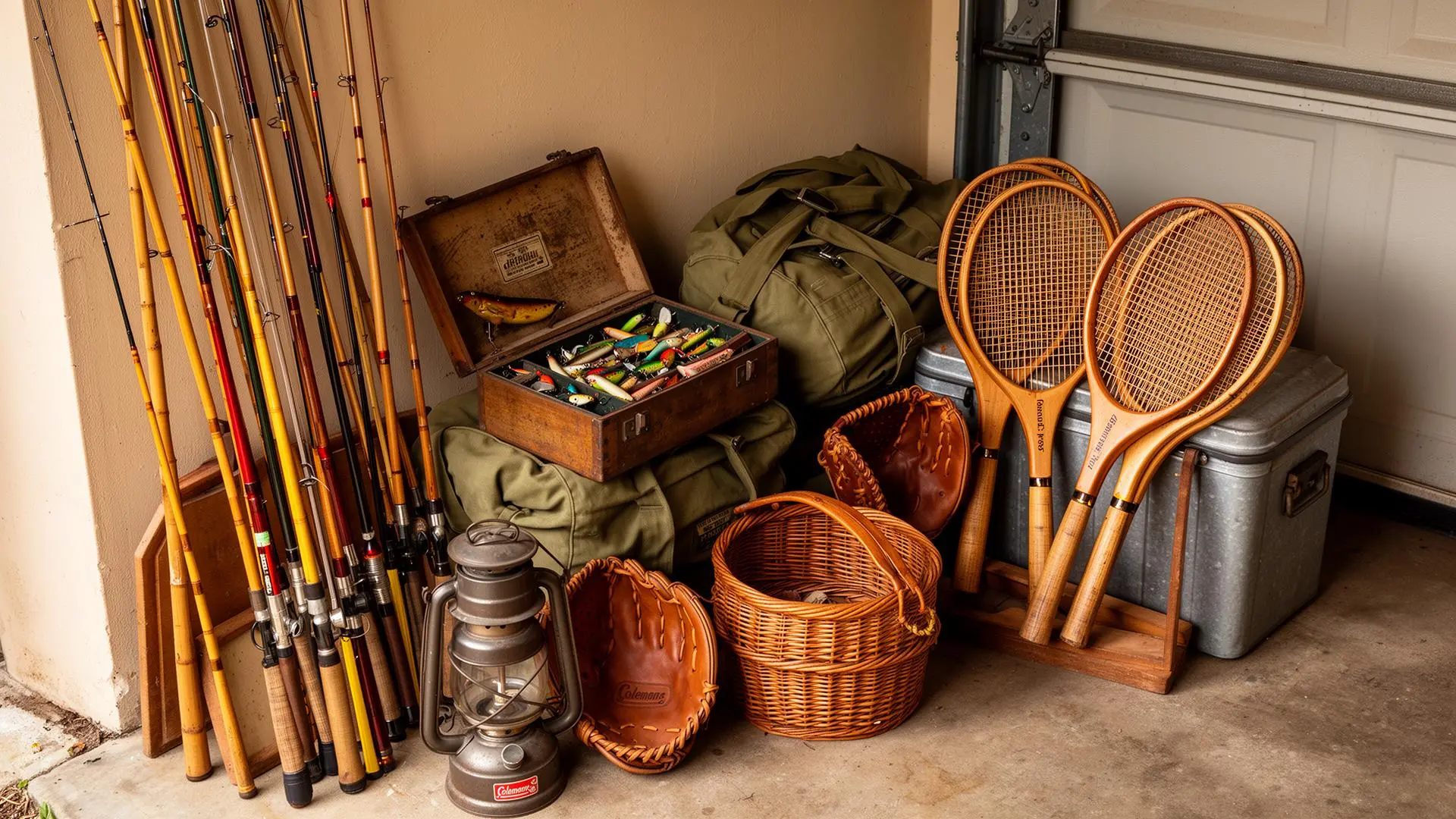
Vintage fishing tackle is its own little economy. Old wooden lures, glass-eyed plugs, bamboo fly rods, classic reels, and metal tackle boxes still loaded with hand-tied flies can each be worth more than the entire box they're sitting in. Collectors hunt this stuff relentlessly, and it almost never makes it to the "good" rooms of the house.
The categories that reward a careful look:
- Fishing tackle — Wooden lures, bamboo rods, old reels, and full tackle boxes. Brand names matter enormously here.
- Camping gear — Vintage brass lanterns and stoves from the well-known makers are both beautiful and collectible. People pay for the patina and the nostalgia.
- Hunting and outdoor — Decoys, knives, leather goods, old canvas packs. Quality leather and craftsmanship age into value.
- Bikes — A dusty vintage road bike or a classic cruiser leaning against the wall can be worth a few hundred dollars to the right buyer. Most people walk right past it.
- Sports equipment — Wooden tennis rackets, leather ball gloves, old golf clubs in a leather bag. The pre-plastic era of sports gear has real charm and real demand.
The Reddit-Famous Angle: Free Money Sitting on a Shelf
Now for the part that has quietly gone viral in frugal-living circles — and it has nothing to do with collectibles.
Walk to the practical shelves. The ones with the cleaning supplies, the paint, the garage staples. At a lot of estate sales, those shelves are packed with sealed, unopened, perfectly good household products that the family simply doesn't want to box up and move. Full bottles of premium cleaners. Unopened cans of paint. Stacks of paper towels. Boxes of light bulbs. Motor oil. Garden fertilizer. Batteries. WD-40 by the four-pack.
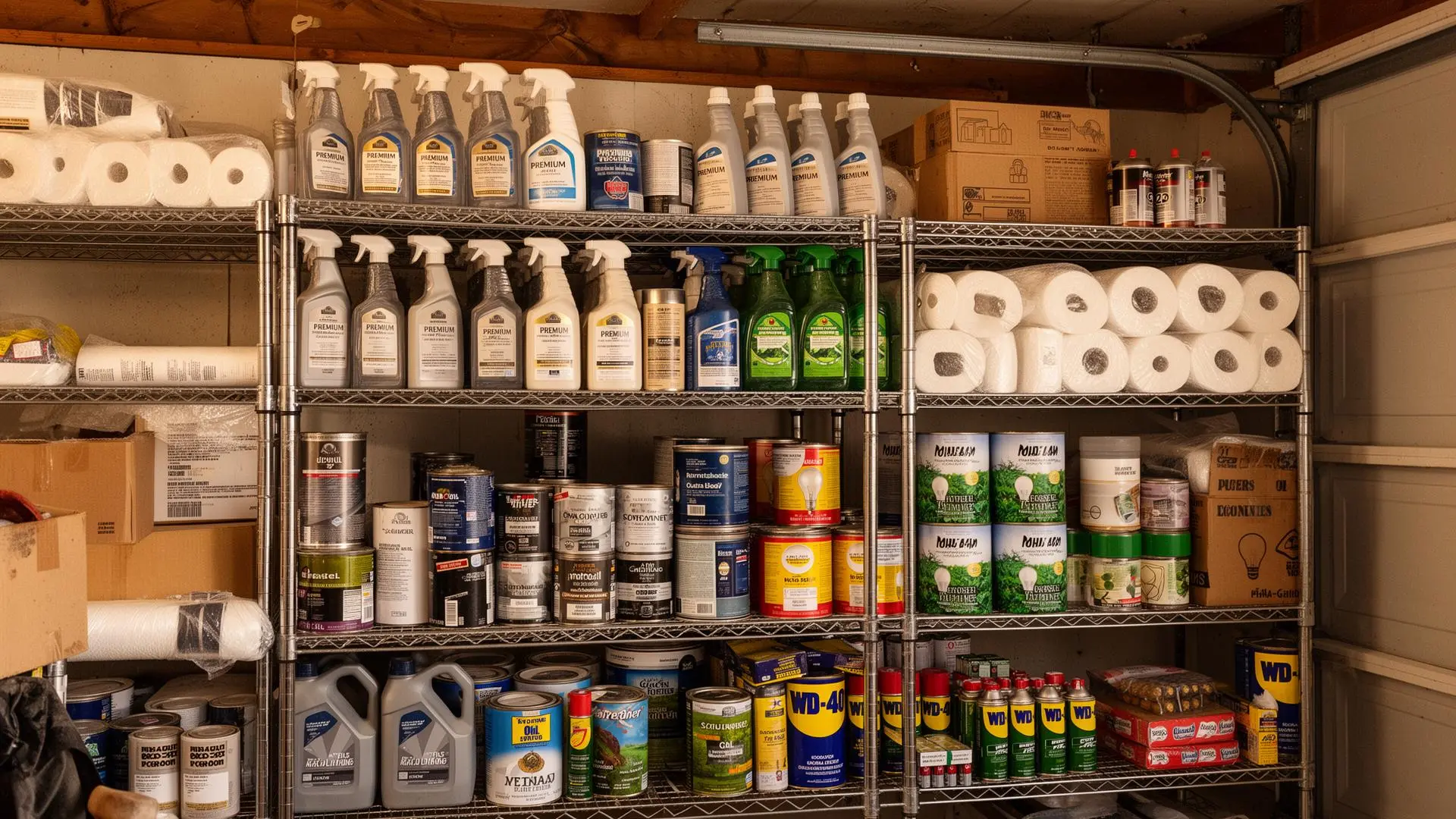
Nobody fights over this stuff, so it gets tagged for pennies on the dollar — or thrown into a "fill a bag for $5" bin. But it's the exact same product you'd pay full retail for at the store on the way home. People have furnished an entire year of household supplies for the price of one nice dinner, just by buying the boring shelf the rest of the crowd ignored.
It's not glamorous. It won't make you a flipper. But it's real money you keep in your pocket every single month, and it's sitting right there.
Don't Stop at the Garage: The Shed, the Attic, and the Back of the Closet
The garage is the headliner, but the same logic applies to every storage space in the house — the rooms where things got put away and forgotten.
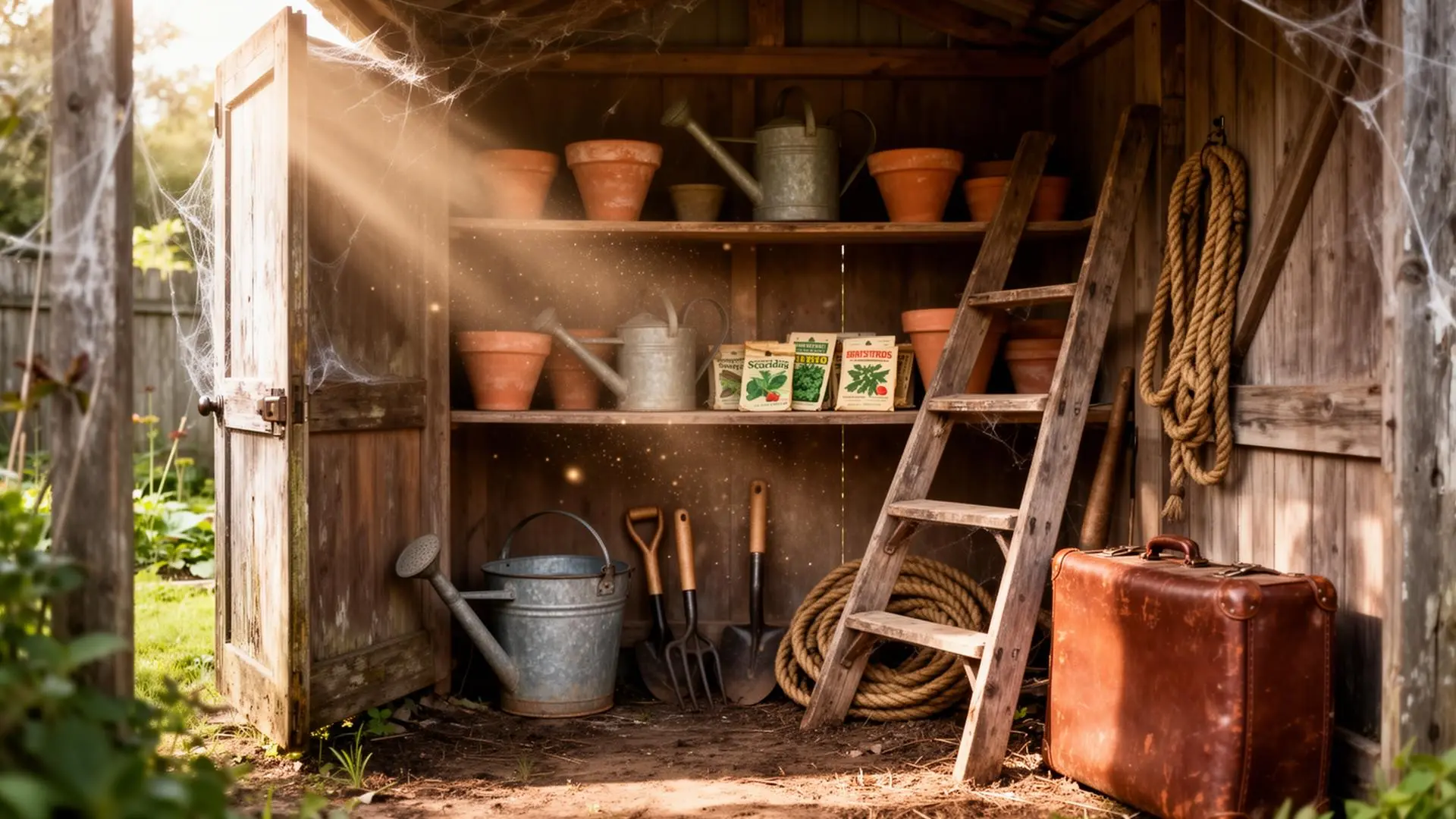
- The garden shed — Galvanized watering cans, terracotta pots, vintage hand tools, and old seed tins all have a devoted decorating and collecting crowd. And sheds are even more likely to be rushed or unpriced than garages.
- The attic — This is where the suitcases live. A forgotten trunk or vintage suitcase can hold a collection of travel souvenirs, old linens, designer accessories, or a stack of letters and photographs that turn out to matter. Attics are physically annoying to reach, which is exactly why they stay full of good things.
- The back of the closet — Past the everyday clothes, in the dark, is where the special-occasion items hide: the fur-collared coat, the beaded handbag still in its box, the shoebox of watches in the top corner. Reach back. Look up. Look behind.
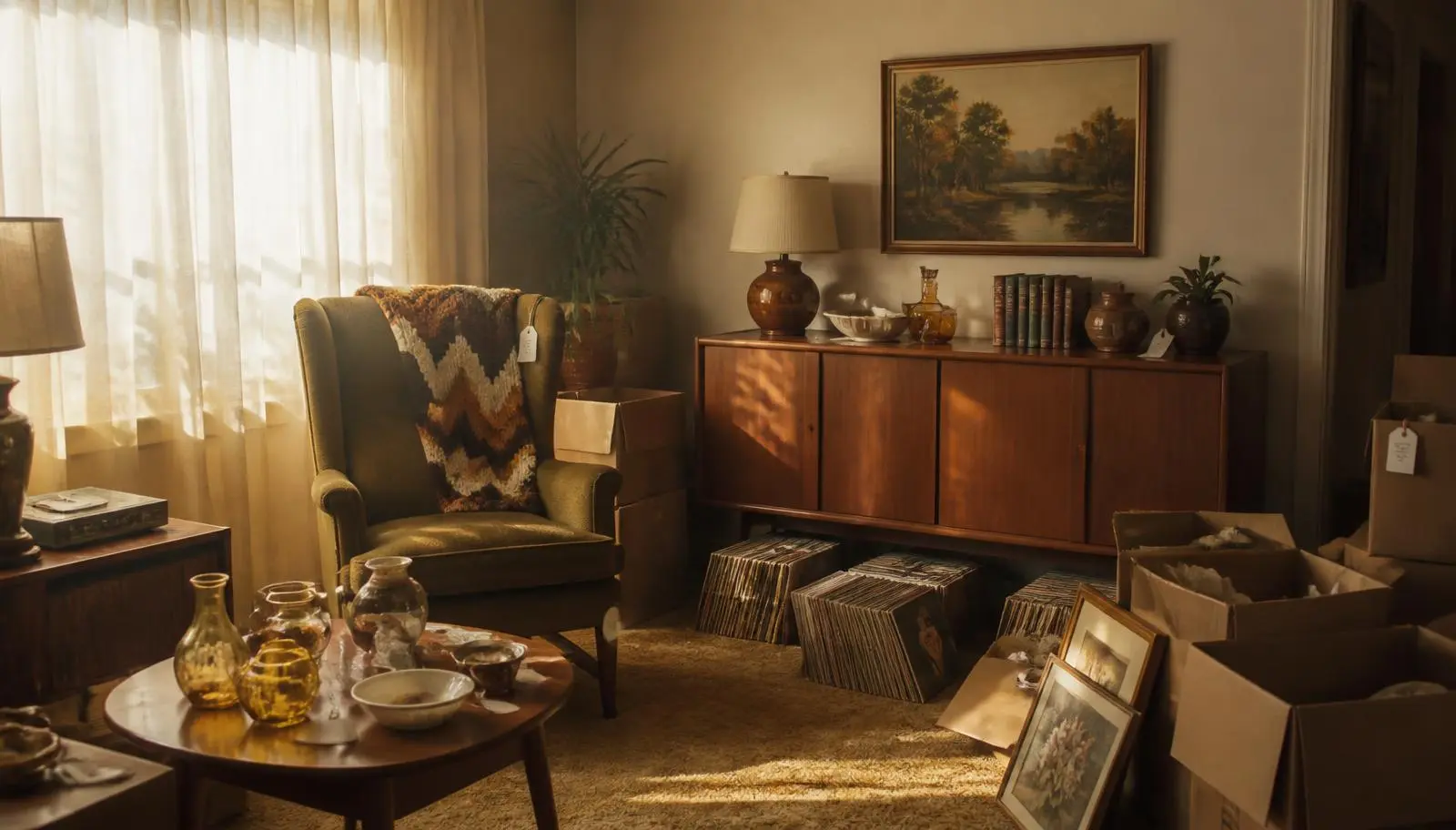
- The basement — Workbenches down here mirror the garage. Plus old stereo equipment, records, and "I'll fix it someday" projects that never got fixed.
The pattern is always the same: the more inconvenient a space is to stage, the more likely it's been underpriced — and the more likely the treasure is still in it.
How to Actually Work the Garage Like a Pro
A few field-tested habits that separate the people who score from the people who poke around and leave empty-handed:
- Go to the garage first. Yes, first. While the crowd floods the living room, you've got the best room in the house to yourself. Reverse the herd.
- Bring a flashlight. Garages are dim, and the good stuff is in the shadows — under the bench, on the top shelf, in the box behind the box. Your phone light works in a pinch.
- Open every box and trunk. A sealed or folded-shut container is the single best sign that nobody before you bothered to look. Lift the lid.
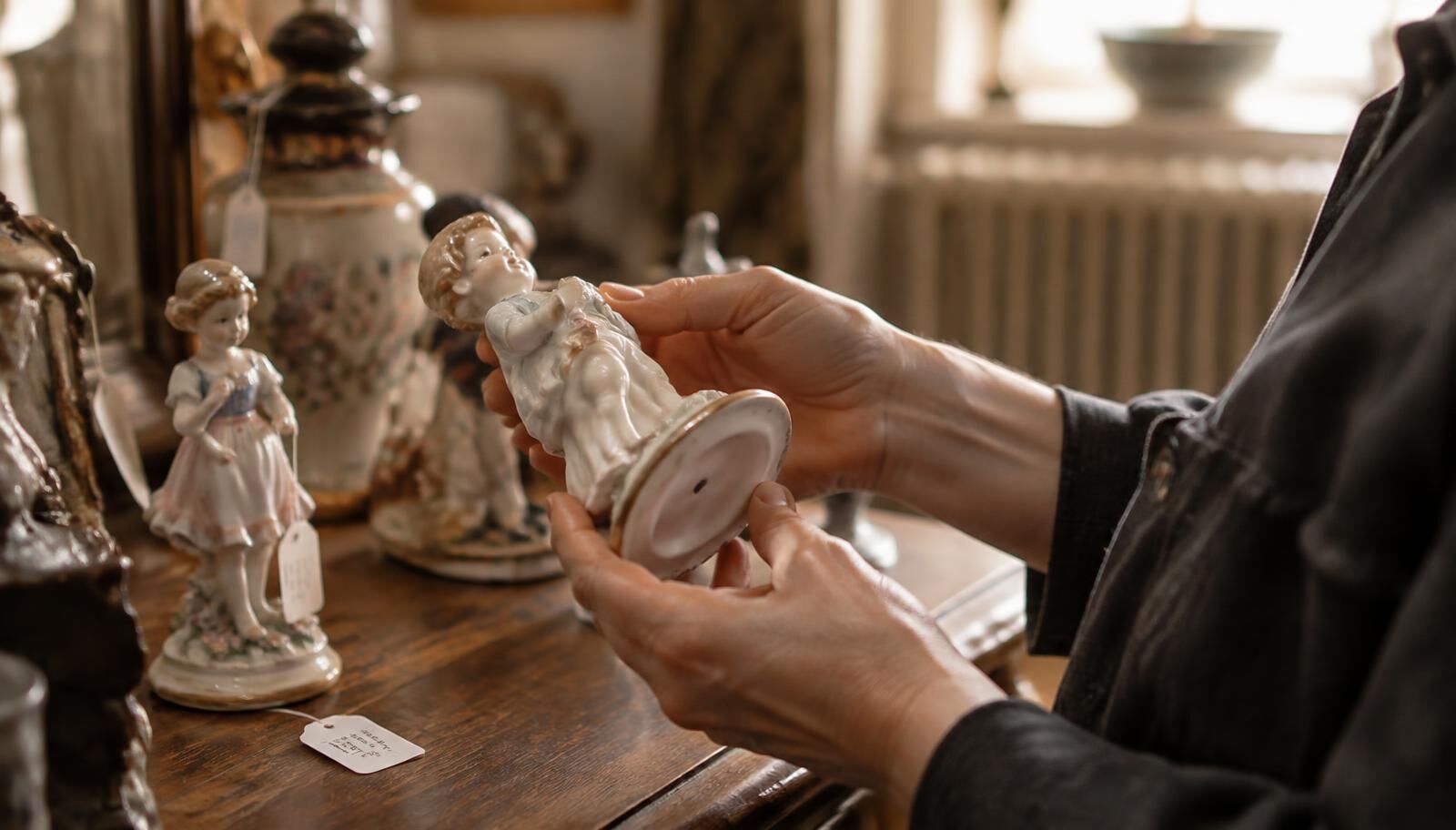
- Turn things over. Maker's marks, model numbers, and stamps live on the bottom and the back. The information that turns $15 into $1,500 is rarely on the front.
- Check it before you commit. When something feels like it might be special, run a quick Ai appraisal right there on the concrete floor. Real sold-comp data beats a gut feeling every time.
- Don't be afraid of dirty, rusty, and dusty. That's the camouflage. The crowd reads "junk." You read "underpriced."
The Takeaway: Open the Door Everyone Else Walks Past
Here's the whole strategy in one sentence: everyone goes where the house looks pretty, so go where the house looks like work.
The living room is a crowded, fully-priced, picked-over fight. The garage is quiet, half-tagged, and full of the exact stuff that holds value — tools, gear, collections, and the boring practical goods that save you a fortune. It's the most overlooked room at almost every sale, and that's not a coincidence. It's an opportunity that resets every single weekend.
So this Saturday, when the doors open and the crowd surges left toward the china cabinet, go right. Find the side door. Open it. Bring your flashlight, turn over every plane on the bench, and lift the lid on the box in the corner.
You're going to check the garage now, aren't you? Good. That dusty corner has been waiting for someone who finally bothered to look.
Keep exploring
Ready to start your own treasure hunt?
Discover estate sales near you and find incredible deals.
Explore Sales Near Me
About the author
Andy
Founder, EstateSaleFinder.net
Hi, I'm Andy — a retired commercial photographer turned developer with a five-year (and counting) obsession with estate sales. I started EstateSaleFinder.net because I knew there had to be an easier, smarter way to find and list estate sales. Now I get to chase treasure and build the tool I always wished existed.