
Beanie Babies, Junk-Wax Cards and the '90s Comic Crash: What the Last Manias Teach Resellers
Three times in one decade, America was absolutely certain it had found the retirement plan. Three times, America was holding a plastic tote of it. Here's what Beanie Babies, junk-wax baseball cards and the '90s comic crash actually teach you about buying at estate sales — and the four-question test that separates real scarcity from nostalgia.
Beanie Babies, junk-wax baseball cards and 1990s comic books were the three biggest collectible manias of the last 40 years, and all three ended the same way: with enormous supply, no scarcity, and a generation of storage totes. Today most Beanie Babies sell for pocket change, most 1987-1994 baseball cards are worth less than the shipping, and common '90s comics sit in dollar bins. The lesson for resellers is not "avoid collectibles." It is that nostalgia sets the price of a memory, while scarcity sets the price of an object — and only one of those is worth carrying to your car.
I want to tell you about a garage.
The garage that made me write this
Estate sale, ordinary Saturday, ordinary ranch house. Immaculate. The kind of home where the screwdrivers hang on a pegboard outline of screwdrivers.
Along the back wall: forty-one plastic totes, labeled in careful handwriting. Beanie Babies. Tags on, tag protectors on, sorted alphabetically. Next to those, eleven long boxes of comics, every one bagged and boarded. And under the workbench, unopened wax boxes of baseball cards stacked like bricks, still shrink-wrapped, still smelling faintly of gum that has been chemically inert since the first Bush administration.
The family had priced the whole wall at $600 for everything.
By noon they had dropped it to $200. It did not sell. A guy from a thrift charity took the plush and the cards at the end of the day, and I watched a grown man carry the Death of Superman out to his truck for a dollar.
Here is what got me: whoever built that collection did everything right. They protected it. They organized it. They believed. They just believed in the wrong variable.
Mania #1: Beanie Babies, or how to sell air with a heart-shaped tag
Ty Warner did not invent the stuffed animal. He invented the retirement announcement.
The playbook was elegant. Understuff the toys so they slouch adorably. Keep them cheap — five bucks, the price of an impulse. Refuse to sell to big-box chains, so the only way to get one is a gift shop that gets a few dozen at a time. Then periodically announce that a style is being "retired," which converts a $5 toy into a countdown clock.
It worked so well that by the late '90s Beanie Babies were routinely described as accounting for something like a tenth of everything sold on eBay, with a majority of American households owning at least one. I want to be straight with you about those two numbers, because this is an honest-numbers site: they get repeated constantly, including in Fortune's retrospective on the crash, but they trace back to estimates made during the frenzy rather than to audited data. What is not in dispute is the shape of the thing. It was gigantic.
Then it got weird. In September 1999, Ty announced that all Beanie Babies would be retired at the end of the year — the ultimate scarcity move — and by Christmas the company was putting the decision back "in the hands of consumers", which is corporate for please stop, we are frightening ourselves. That November, a Las Vegas judge ordered a divorcing couple to divide their Beanie Baby collection one animal at a time on the courtroom floor, on their hands and knees, because they could not agree on who got the bears.
That is the peak. That is always the peak. When the asset is being divided by a judge on a carpet, the asset is done.
The part almost nobody understood at the time: the eye-watering prices people quoted to each other were asking prices. Investigations later found that huge numbers of the famous five-figure Beanie listings never actually sold at those prices, and Snopes has spent years untangling the $100,000 Princess bear stories that still circulate on Facebook today. An unmet asking price is not a value. It is a wish with a photo attached.
Where the market landed
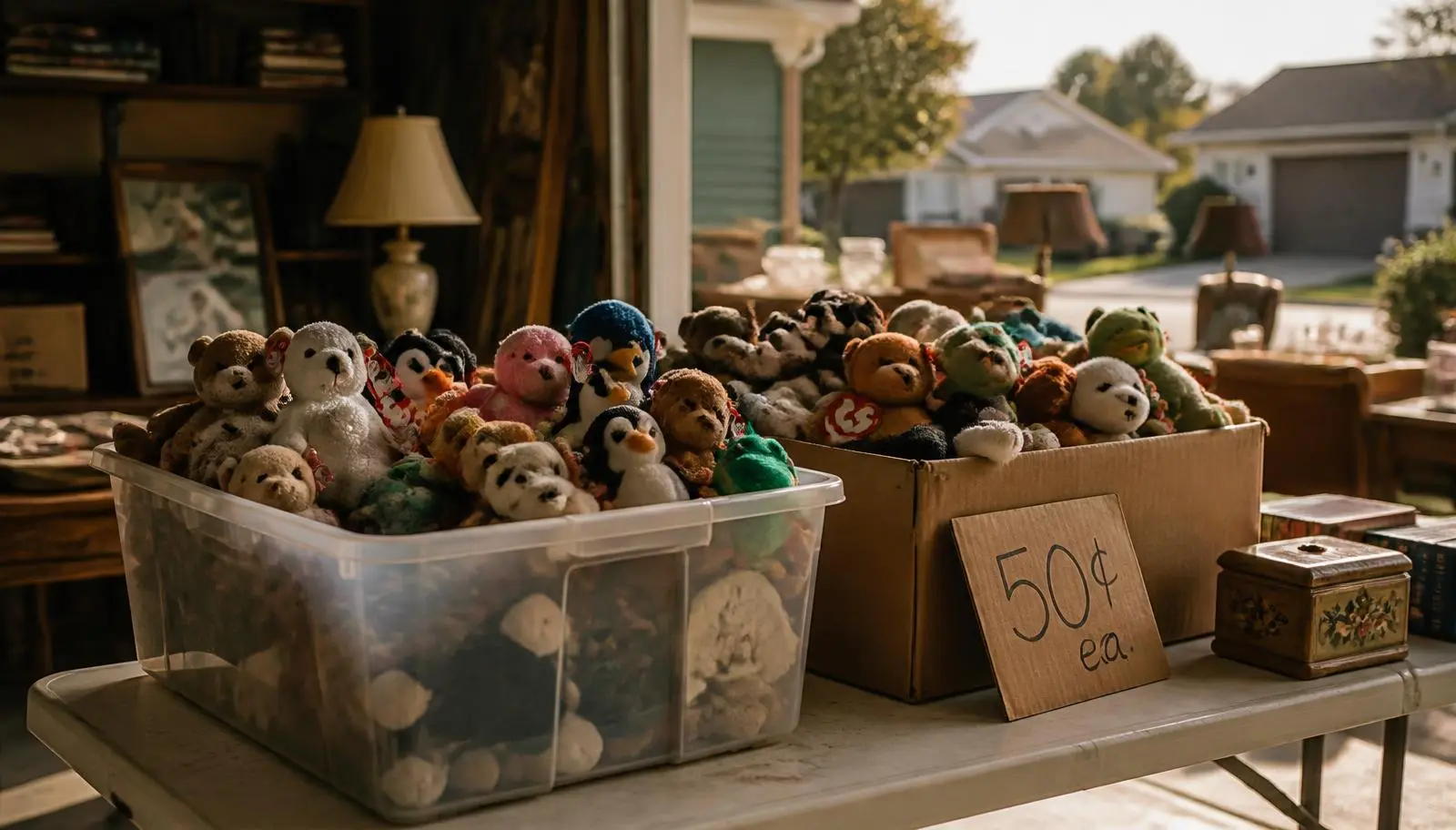
the overwhelming majority of Beanie Babies now sell for a couple of dollars or less, and in the real world — the estate sale world — they move by the bin. A tote of two hundred is a $20 item on a good day.
Mania #2: Junk wax, or the great cardboard flood
The baseball card bubble was the same story told by accountants instead of gift shops.
Kids in the 1970s learned a hard truth: cards from the '50s and '60s were valuable because their mothers threw them away. So the generation that grew up on that lesson did the obvious thing. They bought cards and did not throw them away. Ever. In quantity.
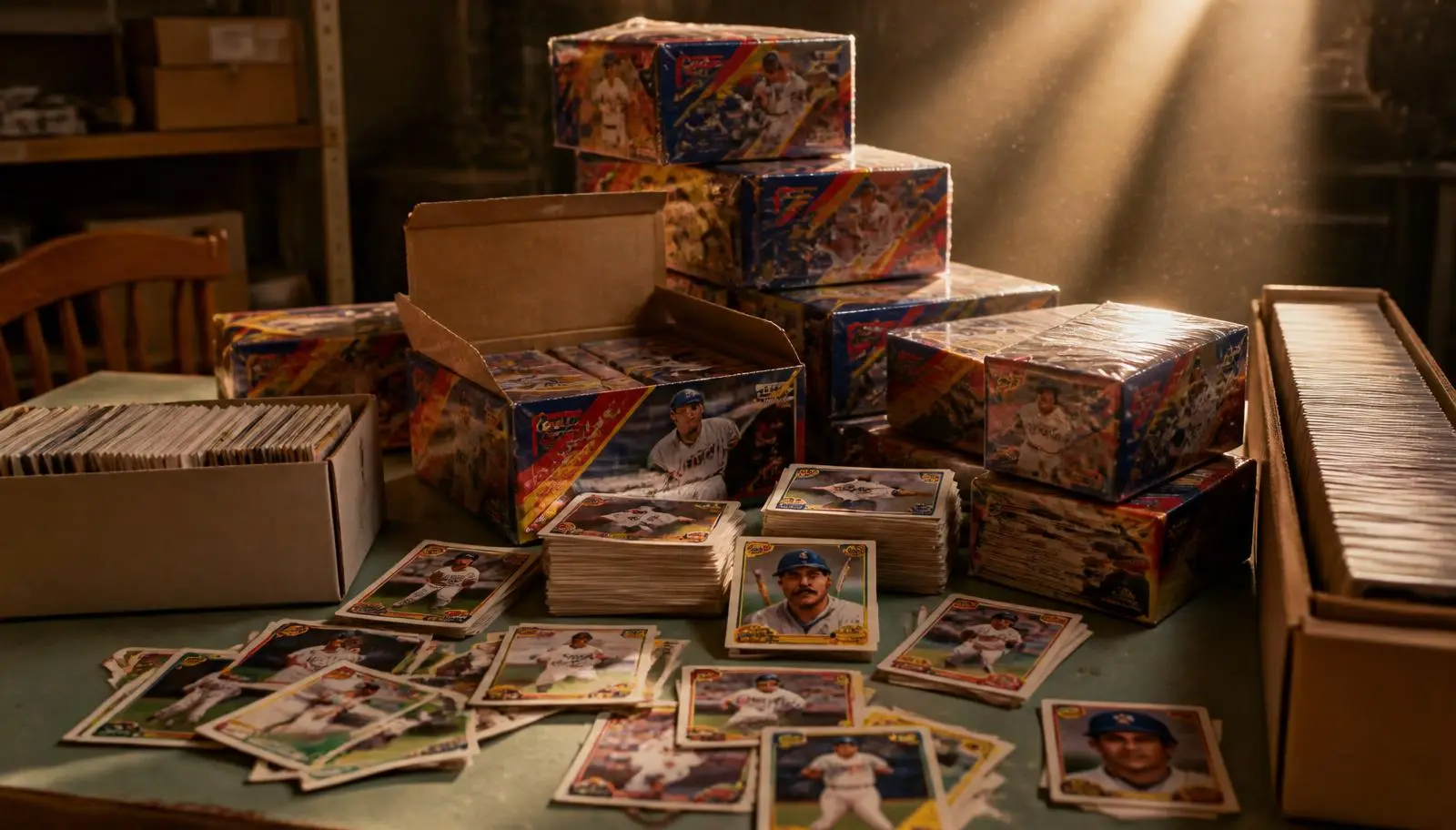
The manufacturers noticed, and they responded with the most rational business decision available to them: print more. A lot more. The stretch from roughly 1987 to 1994 is now known in the hobby as the junk-wax era, and the print runs were staggering — hobby reference sources estimate something on the order of three million copies of each individual base card in the 1991 Donruss set. Not the set. Each card.
So here is the math problem that broke a million childhoods: if three million people own a card and three million people want to sell it, the price is whatever it costs to make the transaction go away.
The cruelest part is the condition trap. Junk-wax cards are worth nothing and they were stored beautifully, so they are worth nothing in mint condition too. Scarcity was never coming.
The exceptions, because there are always exceptions
Two cards from that flood are still worth real money, and both are worth studying because they explain the entire principle:
- 1989 Upper Deck Ken Griffey Jr. — the debut card of a brand-new company that used better stock, tamper-proof holograms and smaller runs, featuring the single most beloved player of the era. Raw copies are still cheap and everywhere. Graded gem-mint copies have been on a tear and swing wildly. The card is not rare. The condition is.
- 1993 SP Derek Jeter — printed in small numbers on foil stock that scuffed if you looked at it sideways. Of more than 24,000 copies ever submitted to PSA, only about two dozen have graded a perfect 10, and one of those sold at auction for $312,000.
Notice that neither card was scarce because a company said so. One is scarce in top grade because the manufacturing was fragile. The other is scarce in top grade because the demand for one specific player never faded. Scarcity plus demand. Both. Always both.
Mania #3: The '90s comic crash, in polybags
Comics managed to run the entire bubble cycle in about five years, which is honestly impressive.
The formula was foil covers, holograms, die-cuts, chromium, gatefolds, five variant covers of the same issue, and above all the promise of the first appearance — the collector's lottery ticket. It produced the best-selling single comic issue in history: X-Men #1 in 1991 sold over 8.1 million copies, a record that will probably stand forever, partly because retailers were buying stacks of the five covers to complete sets.
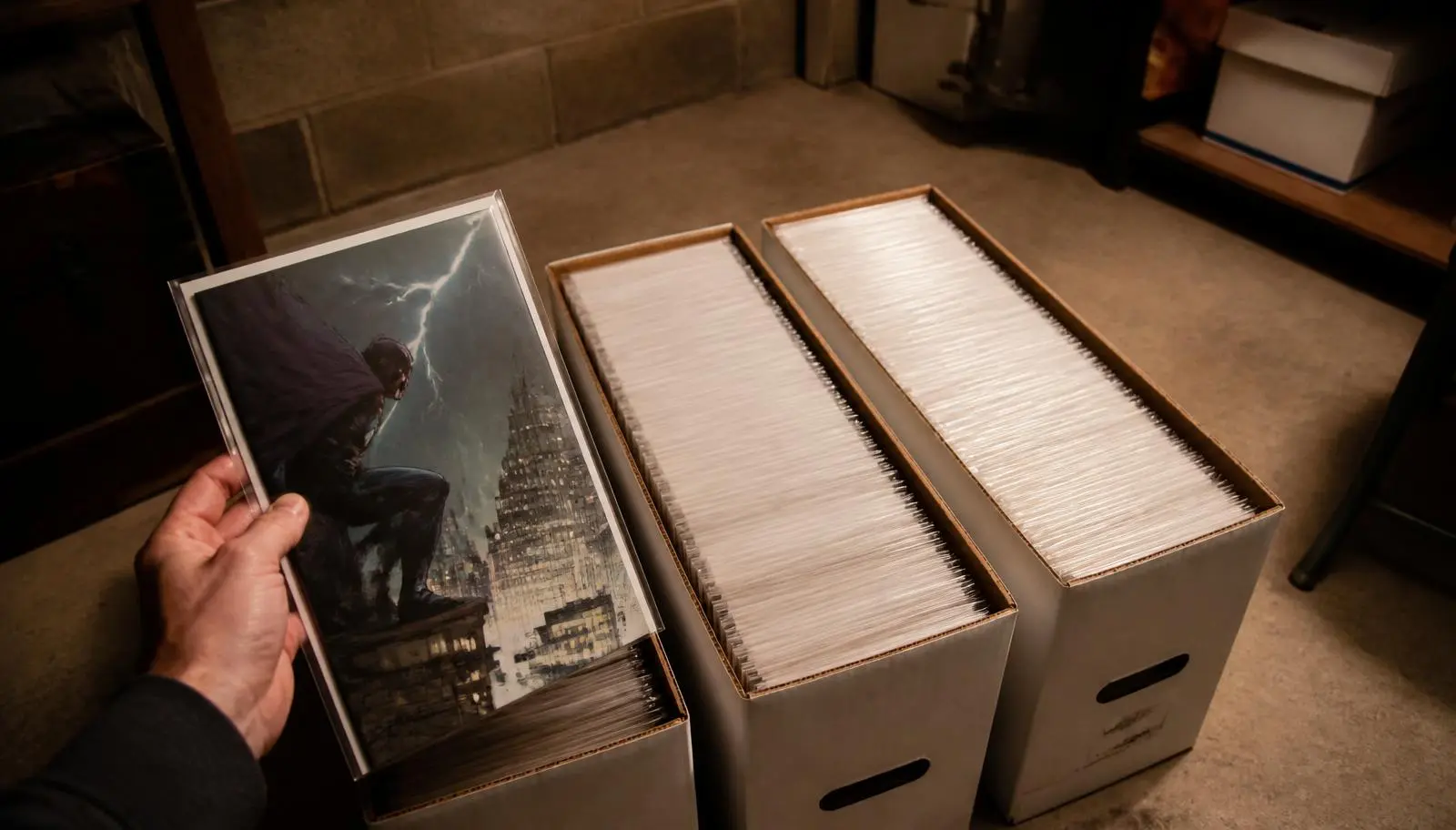
Then in 1992 DC killed Superman, and the black polybagged edition of Superman #75 went out to millions of buyers who had been told, correctly, that this was a historic issue — and had concluded, incorrectly, that historic means valuable. Local news covered people lining up. Everyone bought two: one to read, one to keep sealed forever.
Which is exactly why it is worth almost nothing. There is no scarcity in an object that several million people carefully preserved on purpose. A raw copy today is a dollar-bin comic in most shops.
The bust that followed was brutal in a way the Beanie crash never was, because comics had an industry attached. Marvel bought its own distributor in the mid-'90s and forced the direct market into chaos, filed for Chapter 11 bankruptcy in December 1996, and returned to Diamond in early 1997 — handing Diamond a distribution monopoly that lasted decades. Thousands of comic shops closed. Speculators had inflated orders, the speculators left, and the stores holding the inventory ate it.
The '90s comics that did keep value are, predictably, the ones nobody hoarded: New Mutants #98 — Deadpool's first appearance, in an unglamorous issue of a title that was about to be cancelled — and high-grade copies of debut Image issues. Nobody put those away in bulk, because at the time nobody knew.
So what actually held value? A side-by-side
Rough, honest ranges for what these things trade for in the real world — the estate sale, the flea market, the online sold listing. Not asking prices. Not price guides. What people pay.
| Item | What it "was worth" at peak | What it realistically brings today |
|---|---|---|
| Common Beanie Baby, tag on | $20-$100+ in the guides | About $1-$3, or by the bin |
| Bin of 100+ Beanie Babies | A retirement fund, allegedly | $15-$40 for the whole tote |
| 1990 Topps baseball card, any player | The next Mantle, apparently | Effectively $0 — commons sell by the pound |
| Sealed junk-wax wax box | $50-$150 | $15-$45, mostly for the fun of opening it |
| 1989 Upper Deck Griffey, raw | The crown jewel | Real money, but modest raw; the value lives in top grades |
| Superman #75, polybagged | $50-$100 "and climbing" | Low double digits sealed, dollar-bin opened |
| X-Men #1, 1991 | Investment grade | A few dollars per cover in reading condition |
| New Mutants #98 | Nothing. It was a cancelled book. | The most valuable mainstream '90s comic |
| Grandma's sterling flatware, ignored in a drawer | Nobody was talking about it | Melt value alone often beats the whole wall of totes |
That last row is the actual thesis of this article. The garage I opened with had $600 of hype on the back wall and, in the dining room, a service for twelve of sterling that the family had nearly donated.
The four-question scarcity test
This is the whole skill. Four questions, thirty seconds, at the table. If an item fails two of them, walk.
- How many were made — and who says so? If the only source for "limited" is the label on the item, that is marketing. Real numbers come from print-run data, population reports and auction archives, not packaging.
- How many survived in this condition? This is where the money hides. A million made and four hundred surviving in collectible shape is a scarce item. A million made and all of them in bins is not. Ask yourself: did people use this, or store it?
- Was it bought to be kept? The single fastest filter I know. If it was marketed to collectors, collectors preserved it, and there is no scarcity. If it was marketed to be used, thrown out or worn through, there might be.
- Who wants it besides people my age? Nostalgia is a birth cohort with a wallet. It peaks when that cohort is 35 to 50 and then it fades with them. Demand that outlives its generation — craftsmanship, materials, artists, genuine historical significance — is the only demand you can hold for a decade.
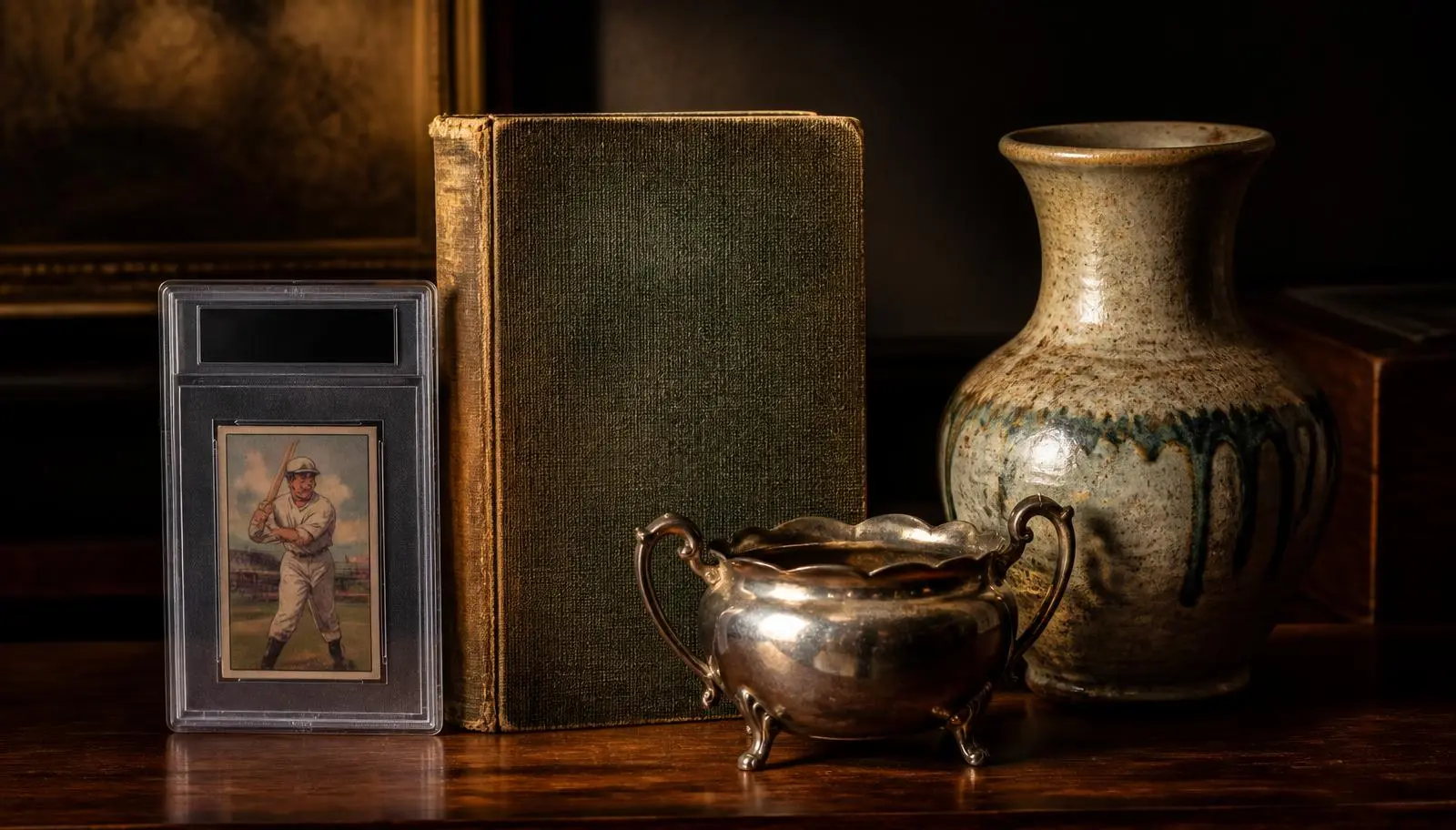
Run those four on the wall of totes and it fails all four in about four seconds. Run them on a hand-thrown studio pot signed on the base and it passes all four.

Checking prices at the table, without becoming that person
You do not need to memorize any of this. You need a habit.
- Search sold, never active. The number that matters is what something sold for. Active listings are hopes. This is the exact mistake that let people believe in the $25,000 Beanie Baby.
- Search the specific thing. Not "baseball card." Year, brand, player, card number, grade. Specificity is the entire game.
- Beware the single outlier. One weird sale is a story, not a market. Three comparable sales in the last 90 days is a market.
- Let a photo do the first pass. Our Ai Appraiser identifies an item from a photo and pulls current market comparables, which is genuinely useful when you are standing in a basement holding something you cannot name. Treat what it returns as a suggestion and a starting point for your own research — it is a fast second opinion, not a final answer.
- Price the pile, not the piece. With bulk collectibles, the correct move is almost always to make one low offer on the entire lot at the end of the sale and resell it as a lot. Sorting a tote of two hundred plush animals individually is a $2/hour job.
If you want the long version of this workflow, I wrote it up in how to appraise estate sale items, and the buy-side numbers are in how to make money reselling estate sale finds.
Today's version of the same mistake
Every generation gets its own tote wall. Right now the candidates are easy to name, and the reporting is already following the familiar arc:
- Pokémon cards. The company printed nine billion cards in a single year specifically to cool a speculative shortage. Nine billion. That is the entire junk-wax lesson replayed at global scale, deliberately, in public.
- Funko Pops. Vinyl figures made in enormous quantities and bought to be kept in the box — the textbook failure of question three. The company eventually wrote off around $30 million of unsold inventory and sent it to a landfill.
- Labubu and blind-box plush. A genuine 2025 mania with genuine desirability, then supply caught up. Bloomberg tracked mini figures falling roughly 24% from peak, and Reuters attributed the resale slide largely to the maker increasing supply about tenfold.
- Hyped drinkware and sneakers. Both had a moment; both saw resale premiums compress once supply arrived and attention moved.
None of that means these things are worthless or that you should never buy them. It means: buy them at bin prices, sell them into the hype rather than after it, and never, ever be the person storing the tote.
What to actually put in your car instead
The unglamorous stuff wins with boring consistency, because it was made to be used and it was never marketed to collectors:
- Sterling silver, gold scrap and real gemstone jewelry — priced by material, not by mood
- Mid-century and solid-wood furniture from named makers
- Cast iron, quality hand tools, vintage kitchen equipment
- Studio and art pottery, signed on the base
- First-edition books with intact jackets
- Vintage denim, leather, workwear and designer textiles
- Anything with a maker's mark you can research
That is the whole list, and it has not changed in fifty years. Related deep dives: overlooked items and brands worth real money, cast iron cookware, first-edition books and vintage toys that genuinely hold value.
How to find the sales where this stuff actually is
The estates that produce sterling and studio pottery are the same estates that produce forty-one totes of plush — one household, one lifetime, everything at once. The trick is being there.
- Browse by what you buy. On EstateSaleFinder you can search estate sales near you and look at the actual item photos before you drive anywhere, which is the single biggest time saver in this hobby.
- Set a wishlist alert. Tell us the terms you hunt — "sterling," "Roseville," "Griffey," "Pyrex" — and your wishlist pings you when a matching item is listed at a new sale in your area. That is how you get to the good stuff before the crowd.
- Plan the route. Our route planner orders your Saturday by start time and distance so you hit the estate sales in the right sequence instead of criss-crossing town.
- Make an offer before doors open. Where the seller allows it, you can offer on individual items ahead of the sale — which matters most for the heavy, awkward, genuinely valuable furniture that everyone else fights over at 8am.
Questions & answers
Frequently asked questions
Are Beanie Babies worth anything today?
Almost all of them are worth between nothing and a few dollars. The exceptions are rare and mostly involve authenticated factory errors or genuinely low-production styles verified by a specialist — not the retirement-list rarities the '90s price guides promoted. The famous five-figure listings you see online are asking prices that have circulated for years without selling. If you are pricing an inherited collection, price it as a lot, expect $15 to $40 for a large tote, and do not pay to grade or authenticate anything without a sold comparable in hand first.
What is the junk-wax era, and are any of those cards valuable?
The junk-wax era runs from roughly 1987 to 1994, when card companies printed sports cards in the millions and collectors preserved nearly all of them. The result is permanent oversupply, so the vast majority of cards from those years have no meaningful resale value regardless of condition. A handful of exceptions exist, driven by specific players and by cards that were physically difficult to keep perfect — the 1989 Upper Deck Ken Griffey Jr. and the 1993 SP Derek Jeter being the two most cited. In both cases the value lives almost entirely in professionally graded top-grade copies, not in raw cards from a shoebox.
Why did 1990s comic books lose value?
Because publishers and buyers both optimized for the wrong thing. Print runs hit historic highs — X-Men #1 sold over eight million copies in 1991 — and buyers, believing the issues were investments, bought multiples and stored them carefully in bags and boards. That combination guarantees oversupply: high production plus near-total survival equals no scarcity. When speculators left the market in the mid-'90s, thousands of comic shops closed and prices collapsed. The '90s comics that did hold value are the ones nobody thought to hoard at the time, such as New Mutants #98.
How can I tell if a collectible is actually rare?
Look for evidence of scarcity that does not come from the seller or the packaging. Published print-run data, grading-company population reports from PSA or CGC, and archives of completed auction sales are all outside sources. Then ask whether the item was bought to be kept: anything marketed to collectors was preserved in bulk and is rarely scarce, while everyday objects that were used up, worn out or discarded can become genuinely rare. Real value requires scarcity and durable demand together — either one alone is not enough.
Should I buy Beanie Babies or old cards at an estate sale at all?
Yes, at the right price, as a lot, on the last day. Bulk collectibles are worth buying when you can get the entire pile for the price of one item and resell it as a single lot. What you should not do is pay per-piece prices based on a 1998 price guide, and you should never buy them expecting appreciation. Your time is the real cost in this category, so anything that requires individually sorting hundreds of low-value items is usually a losing trade.
What collectibles are most likely to hold value long term?
Items whose value comes from material, craftsmanship or genuine historical significance rather than from a marketing campaign: precious metals and real gemstone jewelry, solid-wood and designer furniture, signed studio pottery and art, first-edition books, quality tools and cast iron, and authenticated antiques with a documented maker. These categories were made to be used rather than stored, so survival rates are naturally low, and their buyers are not limited to a single nostalgic generation.
One last thing about that garage
I do not tell this story to dunk on anybody. The person who filled those totes was not stupid. They were told, by magazines and price guides and television and their neighbors, that carefulness would be rewarded. They were careful.
The thing nobody told them is the only thing worth remembering from this entire article: you cannot preserve your way to rarity. Rarity is decided before you ever get involved — by how many were made, and by how many people were careless with them.
So look past the wall of totes. The money in that house is almost always in the drawer nobody opened.
Related reading:
- How to appraise estate sale items — the full research workflow
- Overlooked items and brands worth real money
- Vintage toys worth money — the toys that actually did hold up
- How to make money reselling estate sale finds
- Complete beginner's guide to estate sales
See you at the tables. Bring cash, skip the totes.
Keep exploring
Ready to start your own treasure hunt?
Discover estate sales near you and find incredible deals.
Explore Sales Near Me
About the author
Andy
Founder, EstateSaleFinder.net
Hi, I'm Andy — a retired commercial photographer turned developer with a five-year (and counting) obsession with estate sales. I started EstateSaleFinder.net because I knew there had to be an easier, smarter way to find and list estate sales. Now I get to chase treasure and build the tool I always wished existed.