Unlikely Roommates: The Forgotten WWII Lighters and the Secret Stories Left Behind in Estate Collections
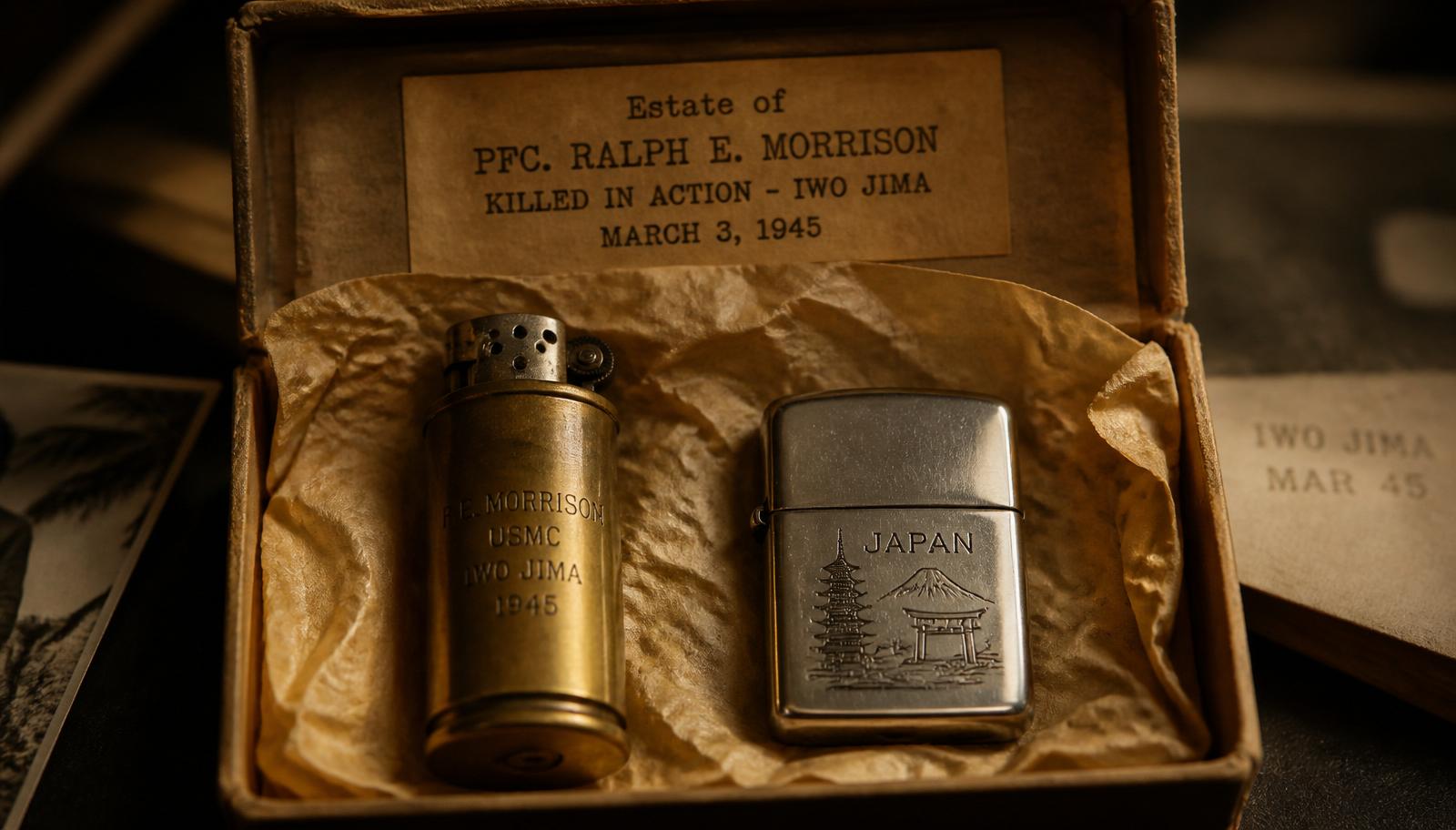
In a cardboard box on a folding table sat two cigarette lighters that had not been apart in sixty years — one hand-built by an American GI from a brass shell casing, the other a chrome souvenir carried home from the Pacific. Two former enemies, one drawer, a single quiet story almost lost to a two-dollar junk bin. A meditation on the small, pocket-sized history hiding in every estate, and why the right eye (and the right tool) keeps those stories from disappearing.
It was sitting on a folding table near the garage, the kind of cardboard box that gets a hand-lettered "$2 each" sign slapped on it on the last morning of the sale. Inside, under a tangle of orphaned keys and a dried-out fountain pen, were two cigarette lighters.
They had been together a long time. You could tell by the way they had settled into the same corner of the box, the same shallow groove worn into the cardboard. Sixty years, give or take. Two small metal objects that had outlived the man who carried them, the war that made them, and very nearly the memory of why they mattered at all.
One was brass — heavy, hand-built, etched by someone who had time on their hands and a reason to keep their hands busy. The other was chrome, machine-bright once, now dulled to the color of an old nickel, with a delicate crane in flight pressed into its face and a few characters most American shoppers would never be able to read.
An American lighter and a Japanese lighter. Two former enemies, riding out the decades in the same two-dollar box.
Roommate #1: The American
The brass one is what collectors call trench art — a catch-all term for the things soldiers made from the raw materials of war. A 20mm shell casing, a spent .50-caliber round, the brass driving band off an artillery shell: in the long, strange stretches of boredom between the moments that defined a war, these became raw stock.
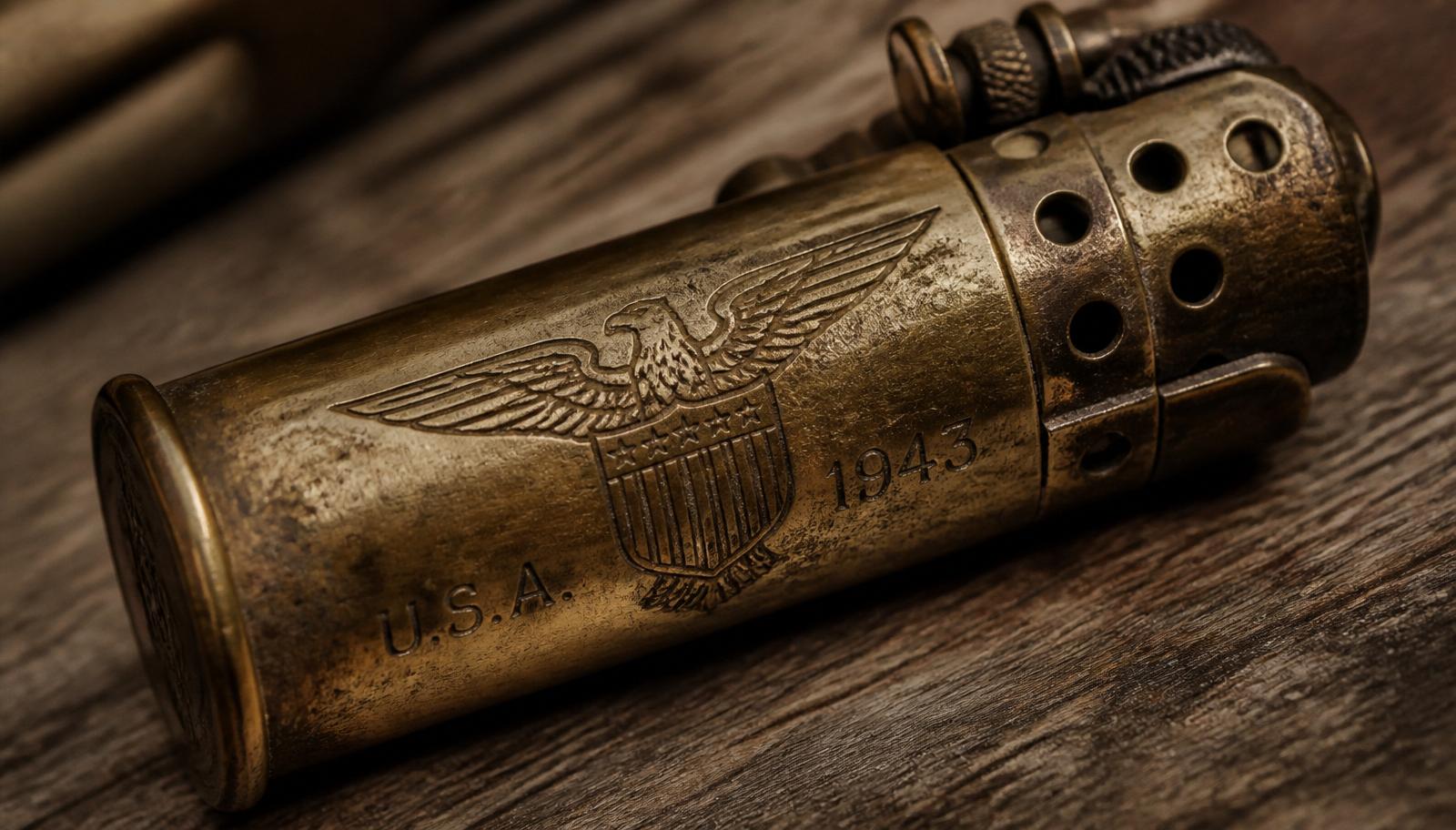
A man with a file, a soldering iron, and a steady afternoon could turn an instrument of war into something that fit in a shirt pocket. Some were crude. Some — like this one, with its hand-cut eagle and the year stamped beside it — were quietly, almost defiantly, beautiful. They were keepsakes before anyone called them collectibles: proof that you were there, that you survived, that your hands could still make something other than war.
That is the thing people miss about trench art. It was never meant to be sold. It was meant to be kept. Which is exactly why it ends up, generations later, in a box no one bothered to look through twice.
Roommate #2: The Souvenir
The chrome lighter came home a different way.
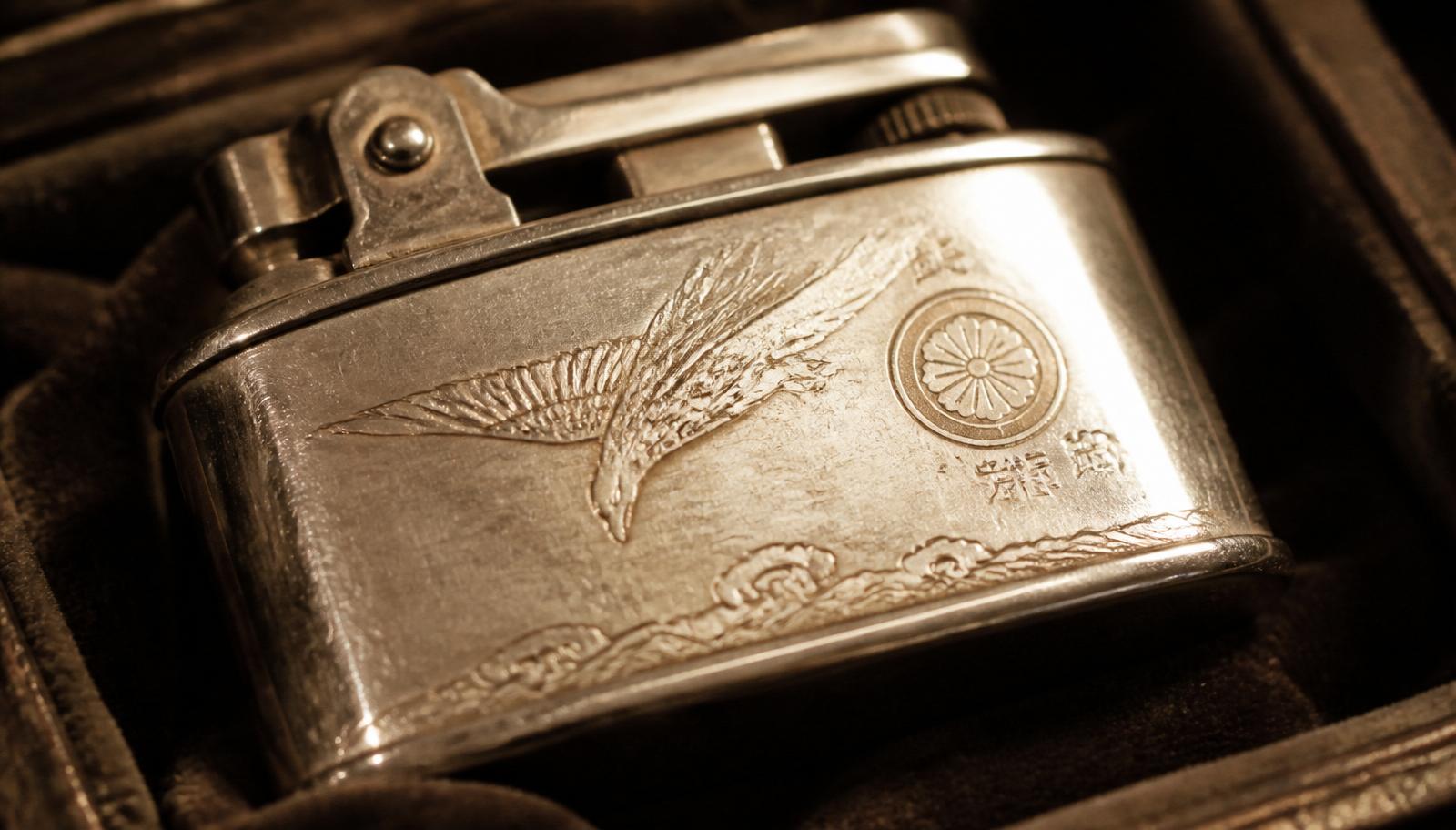
It was a souvenir — picked up, traded for, or simply carried home from the Pacific by a GI who wanted something to mark where he'd been. Lighters like this one were small, portable, and personal in a way that a rifle or a helmet never could be. A soldier could slip it into a pocket and forget it was there until he reached for a cigarette and felt the cool weight of the other side of the war in his hand.
For decades, militaria like this carried complicated feelings. It was a trophy and a reminder all at once. Families often didn't know what to do with it, so they did what families do: they put it in a drawer. And then the drawer became a dresser, and the dresser became a closet, and the closet became an estate.
How they ended up together
Here is the part that should stop you cold the next time you walk past a junk box.
Neither of these objects was ever filed, catalogued, or explained. There was no note. The man who carried them home didn't write down which one he made and which one he found, because he knew, and at the time that was enough. The story lived entirely in his head.
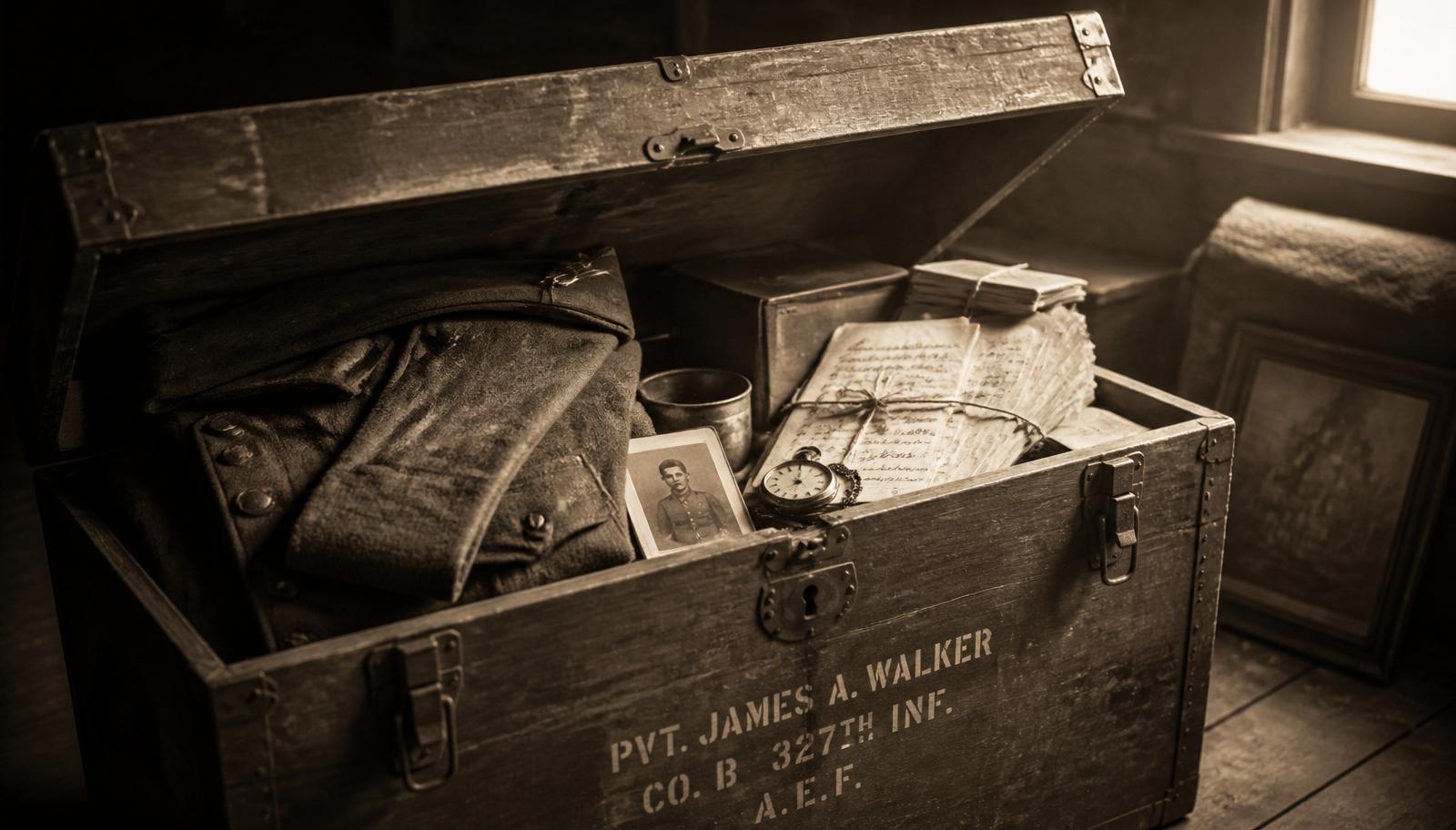
When he passed, the story started to fade. His widow knew it was "something from the war." His kids knew it was "Dad's stuff." His grandkids, sorting the house in a single exhausting weekend, knew only that there was a lot to get through and not much time to do it. The footlocker got opened, the uniform got donated, the letters got maybe saved, and the little brass and chrome lighters — small enough to disappear into a handful — got swept into the miscellaneous box with the dead pens and the loose keys.
That is not a failure of love. It's a failure of information. The people clearing the home weren't careless; they simply had no way of knowing that the heavy brass thing was hand-made by their grandfather on a troopship, or that the chrome one had crossed an ocean in his pocket. To them, two lighters in a box looked like two lighters in a box.
The quiet tragedy of the miscellaneous box
Every estate sale has a box like this. Sometimes several.
It's where the small things go — the things too minor to display, too unfamiliar to price, too time-consuming to research on the last hectic morning before the doors open. Pocket-sized history gets a blanket "$2 each" sticker not because anyone decided it was worthless, but because nobody had the time, or the knowledge, to decide it was anything else.
And small does not mean cheap. A documented piece of WWII trench art can be worth far more than the mass-produced china in the dining room. An identifiable Pacific-theater souvenir lighter can mean something real to a collector, a museum, or — most importantly — to a family member who didn't even know it existed. The dollar value is almost beside the point. The story value is what gets thrown away, and stories don't come back once the box is sold.
This is the heartbreak hiding in plain sight at liquidations: the most historically interesting objects in the house are often the smallest, the least understood, and the first to be undervalued.
How not to lose the story
You don't need to be a militaria expert to catch what almost got missed. You need a habit and a tool.
The habit is simple: slow down at the small stuff. The display case gets all the attention; the junk box gets none. Flip that instinct. Pick up the heavy little thing. Turn it over. Look for marks, dates, initials, characters, hand-work. Weight and craftsmanship are tells — mass-produced objects feel different in the hand than something a person made on purpose.
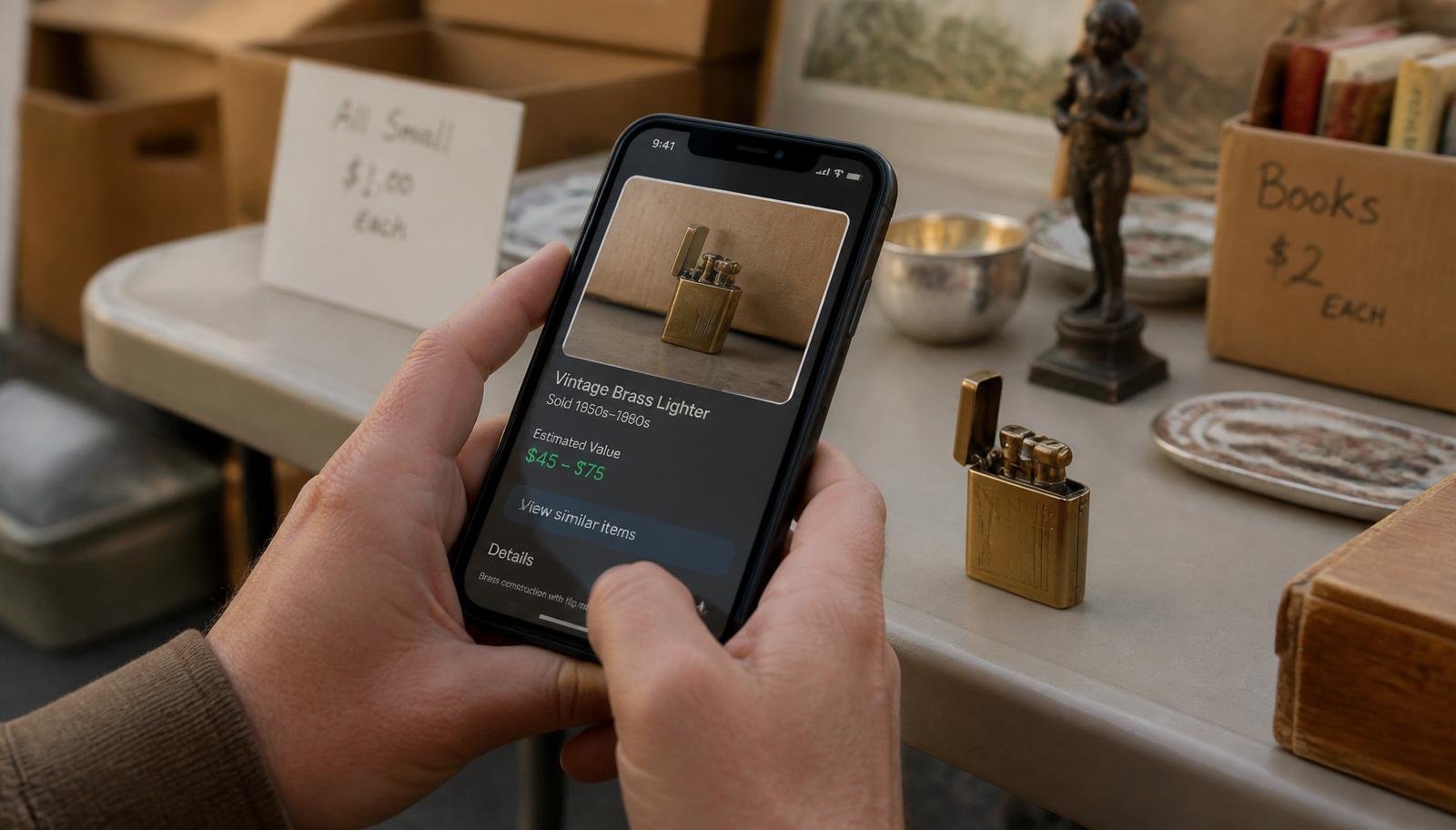
The tool is what closes the gap that killed this story in the first place — the gap between holding an object and knowing what it is. With Ai item identification, an executor walking through a home, or a liquidator setting up a sale, can photograph a mystery object and instantly surface what it likely is, what era it's from, and what comparable pieces have actually sold for. The brass lighter stops being "some old thing in a box" and becomes "WWII trench art, here's the history, here's the range." The chrome one stops being clutter and becomes a documented souvenir with a paper trail.
That single step — a photo, a few seconds — is the difference between a $2 sticker and a story that survives. It protects the family from giving away the one thing that mattered. It protects the liquidator's reputation and bottom line. And it keeps history from being quietly priced as trash.
Back to the box
The two lighters had spent sixty years as roommates. Made on opposite sides of the same war, carried home by the same hands, set down in the same drawer, and nearly sold off together for the price of a cup of coffee.
What saved them, in the end, was attention. Someone picked up the heavy one, felt that it was different, and looked closer.
So the next time you pass a folding table with a tired cardboard box and a "$2 each" sign, remember the unlikely roommates. The most important thing in that house might not be hanging on the wall or sitting in the china cabinet. It might be small enough to vanish in a handful — waiting, as it has for decades, for someone to finally ask what it is.
What else is hiding in that drawer? There's only one way to find out.
Keep exploring
Ready to start your own treasure hunt?
Discover estate sales near you and find incredible deals.
Explore Sales Near Me
About the author
Andy
Founder, EstateSaleFinder.net
Hi, I'm Andy — a retired commercial photographer turned developer with a five-year (and counting) obsession with estate sales. I started EstateSaleFinder.net because I knew there had to be an easier, smarter way to find and list estate sales. Now I get to chase treasure and build the tool I always wished existed.