The Booth Seller's Guide to Sourcing from Estate Sales: What to Buy, What to Skip
Inside an antique mall booth? Here's exactly what professional booth sellers source from estate sales, which categories sell best in booths vs. online, and how Ai pricing changes the game.
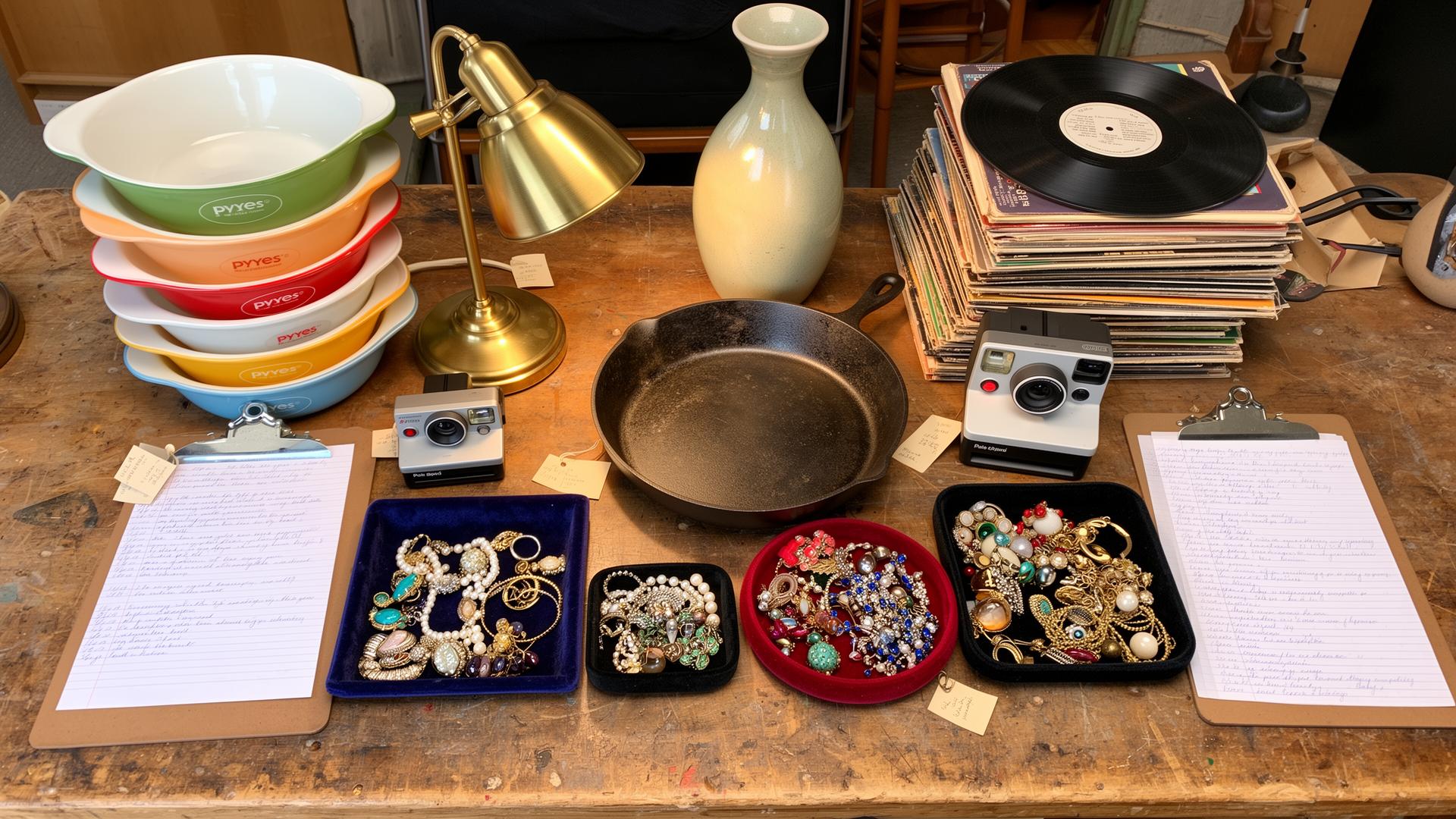
If you run a booth in an antique mall, vintage co-op, or flea market, your inventory problem is fundamentally different from online resellers. You need volume. You need fast-moving categories. You need pieces that photograph well from across the aisle and make buyers walk into your booth instead of past it.
Estate sales are, hands down, the best inventory source for booth sellers. Here's why, and exactly how to do it well.
Why Estate Sales Beat Other Inventory Sources
Most booth sellers source from one of four channels: thrift stores, auctions, estate sales, or wholesale. The honest comparison:
Thrift stores: priced for retail buyers now, not resellers. The 2010s era of Goodwill thrift flipping is over. Margins are thin and inventory is picked over.
Auctions: great for volume, but bidding wars destroy margins on the categories everyone wants. You also buy in lots, which means dragging home stuff you don't want.
Wholesale: works if you sell new merchandise, but the booth sellers who do best sell vintage and antique pieces — and there's no wholesaler for that.
Estate sales: priced to clear, real vintage and antique inventory, no bidding wars, you pick exactly what you want. The margins make every other source look bad.
Which Categories Move Fastest in Physical Booths
Online resellers and booth sellers buy differently. The categories that turn fastest in a physical booth:
- Smalls (under $25) — pottery, glassware, vintage kitchenware, costume jewelry. Foot traffic loves the impulse buy.
- Wall art — framed prints, oil paintings, vintage advertisements. Decor buyers shop visually.
- Lighting — table lamps, vintage sconces, anything that lights up. High visual interest.
- Vintage signs — metal signs, advertising, anything wall-hangable with character.
- Mid-century smalls — ashtrays, bar accessories, ceramics, lamps. Still selling strong.
- Holiday decor in season — vintage Christmas, Halloween, Easter. Massive seasonal multiples.
The categories that struggle in booths:
- Furniture (too hard to move, requires delivery, slow turn)
- Books (low margin, takes shelf space, hard to organize)
- Clothing (better online, sizing kills foot traffic sales)
- Electronics (untestable, fast obsolescence)
This doesn't mean never source these — but they shouldn't be your bread and butter for a booth.
How Booth Sellers Use the Ai Appraiser Differently
Online resellers use the Ai appraiser to confirm sold comps and decide whether to buy. Booth sellers use it the same way, plus one more: pricing for foot traffic.
The math is different. A booth has overhead — monthly rent, commission to the venue (often 10%), and the time cost of restocking. So a piece that sells for $40 online needs to be priced at $25–$30 in a booth to move quickly enough to justify the shelf space.
The Ai appraiser tells you online sold comps. As a booth seller, your pricing should be roughly 60–75% of those comps. Items that don't move at that price after 30 days come down again. The booth sellers making money are the ones who turn inventory fast, not the ones holding out for top dollar.
How to Stage Booth Inventory
Foot traffic shopping is visual. The booth sellers who do best:
- Group by color or theme (a "blue and white" section, a "vintage Christmas" section)
- Put the most photogenic, highest-priced items at eye level near the front
- Use risers and pedestals to create vertical interest
- Light the booth (most malls have terrible overhead lighting)
- Rotate inventory weekly so regulars see new stuff
The Collective's secondary sales channel becomes valuable here too — items that don't move in your booth can be listed online and reach buyers who've set alerts for exactly those categories. The same inventory works two channels.
The Restocking Rhythm
The booth sellers making real money restock weekly. Here's the typical rhythm:
- Friday night: review wishlist alerts, identify 4–6 sales for Saturday morning
- Saturday morning: source from estate sales using the route planner
- Saturday afternoon: photograph and list the online-friendly items in your Collective booth
- Sunday morning: deliver new inventory to your physical booth, restage the section
- Monday–Friday: foot traffic and online sales work in parallel
That weekly rhythm separates the booth sellers who make $2,000/month from the ones who make $200. Inventory has to keep moving in to keep moving out.
A Real Example
A booth seller in Pennsylvania has a 10x12 booth in a regional antique mall. Sources from estate sales every Saturday morning using wishlist alerts and the route planner. Average weekly sourcing budget: $300. Average weekly booth sales: $850. Plus another $400/month in online Collective sales for items that didn't move in the booth. Net of booth rent and commission: about $2,400/month. That's not life-changing money, but it's a real second income on 10 hours a week of work.
The combination of physical booth + online Collective channel + Ai-priced sourcing is what makes this math work. Take any one of those out and the numbers fall apart.
Keep going: open your free Collective booth or browse sales near you.