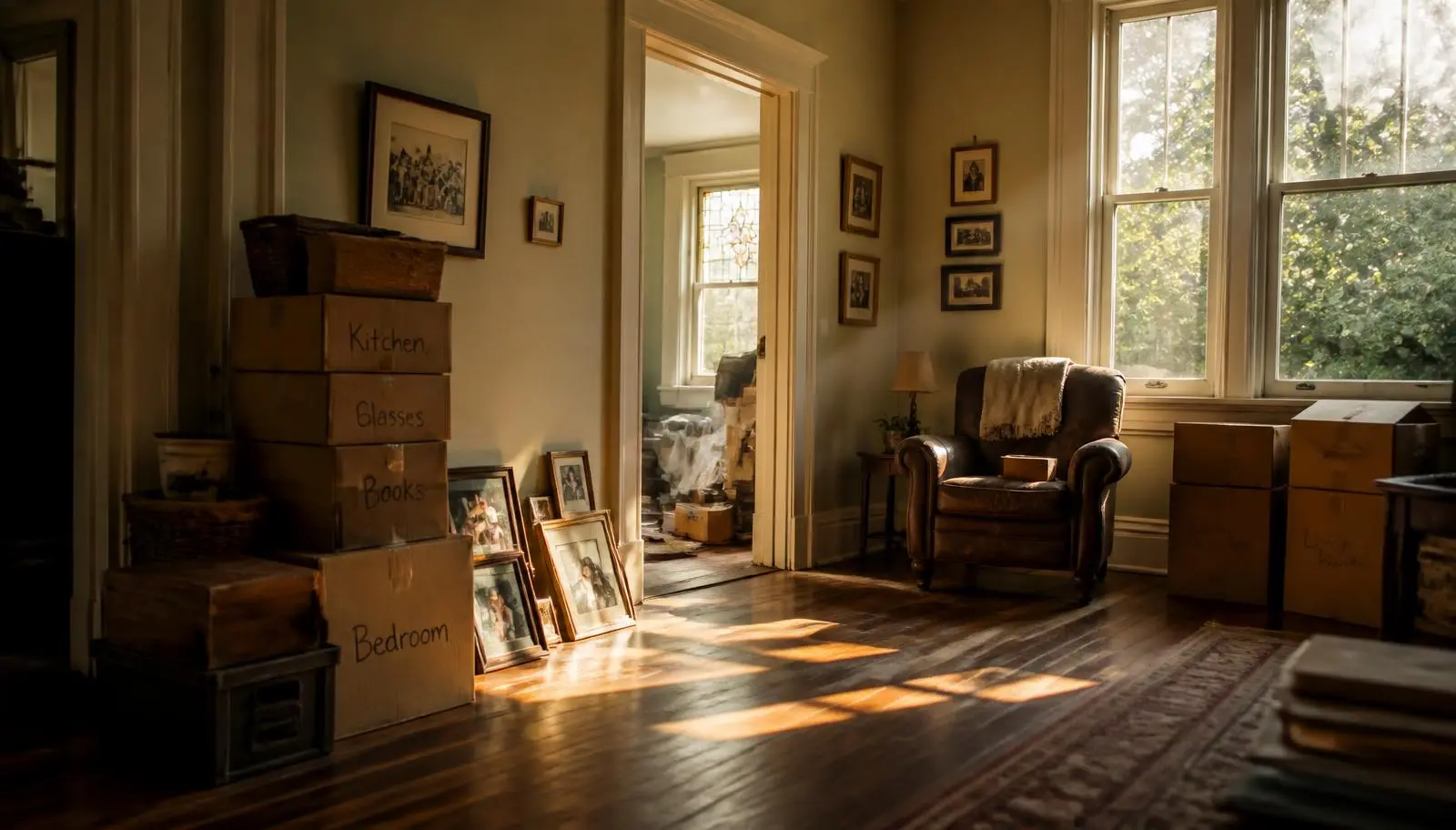

What to Do With Everything in the House After a Loved One Dies
A compassionate, practical guide to handling the contents of a home after a death — what to keep, what to sell, how to find help, and what to expect from an estate sale company.
If you're reading this, someone you love has died. I'm sorry. The next sentence is going to feel cold no matter how I word it, so I'll just say it: at some point, often before you feel ready, the house has to be cleared. And the question of what to do with sixty years of accumulated belongings is real, and heavy, and it doesn't go away just because the timing is terrible.
This guide is meant to make that part a little easier.
The First Thing to Know
Most families wait too long. Not because they're avoiding it — they're grieving, working, traveling, raising kids, and the house feels like the last place they should rush. But practically: the longer the house sits, the more it costs (utilities, insurance, sometimes mortgage), and the harder it gets to enter and start. The families who handle this best usually start the process within 30–60 days, even if the actual sale happens later.
That's not a rule. That's just what tends to work.
The Three Categories
Everything in the house falls into one of three buckets:
Keep: things with real meaning to you or other family members. Photo albums, jewelry passed down, the watch your dad wore. This is usually a smaller pile than people expect.
Sell: furniture, kitchenware, art, collectibles, tools, books, decor — most of the contents of any home. This is the largest pile by volume.
Donate: items in poor condition or things nobody wants. Usually smaller than people expect because more has resale value than they realize.
The mistake most families make is trying to do this themselves. Two days in a row of going through a parent's closets while grieving is brutal. There's a better option.
What an Estate Sale Company Actually Does
A professional estate sale company handles everything from the moment you say yes to the day they hand you a check:
- Walkthrough and quote: a representative tours the home, identifies the contents' value, and provides a commission quote (typically 30–50% of gross sales).
- Pricing and staging: their team prices every item using current market rates and stages the home for sale.
- Advertising: they list the sale on platforms like this one, plus their own buyer email list. A good company brings 100–500 buyers to a typical sale.
- Running the sale: typically a Friday/Saturday/Sunday weekend. They handle payments, security, parking, and the constant questions.
- Cleanout: many companies offer post-sale cleanout for a fee (or roll it into the commission). The house is left broom-clean, ready for sale or new tenants.
You don't have to be there. Many out-of-state families never visit during the sale itself.
What to Ask When You Call
When interviewing companies, ask:
- What's your commission rate, and what does it include? (Get this in writing.)
- Do you offer cleanout, and what does that cost?
- How many sales do you run per month?
- Can I see references from recent sales?
- What's your typical buyer turnout?
- Are you insured and bonded?
- What's the timeline from contract to check?
Most reputable companies will answer all of these without hesitation.
Things You Might Not Know to Check
A few things people often forget:
- Check pockets and books: cash and important documents hide everywhere.
- Look in freezers and toilet tanks: a surprising number of older adults hide valuables this way.
- Open every safe: get them drilled if you can't find combinations.
- Save personal papers: tax returns, deeds, social security cards, birth certificates. Don't let these go to the sale.
- Photograph everything before pricing: you'll want a record, especially for items with sentimental value being sold.
When to Skip the Sale
Some homes don't have enough contents to justify a full estate sale. If the company quotes you and it's borderline, ask about a "buyout" — they purchase the contents outright for a flat fee. This is faster, simpler, and sometimes the right call when the house needs to be cleared quickly.
How to Find Help
A good local estate sale company can take this entire process off your hands. The best way to find one is by location — companies that work in the property's area, not yours.
Keep going: find an estate sale company near the property or read about managing this from out of state.
Keep exploring
Ready to start your own treasure hunt?
Discover estate sales near you and find incredible deals.
Explore Sales Near Me
About the author
Andy
Founder, EstateSaleFinder.net
Hi, I'm Andy — a retired commercial photographer turned developer with a five-year (and counting) obsession with estate sales. I started EstateSaleFinder.net because I knew there had to be an easier, smarter way to find and list estate sales. Now I get to chase treasure and build the tool I always wished existed.