Why Your Grandma's China Is Worth More Than You Think
Everyone says 'nobody wants china anymore.' That's not quite true — and the buyers who know the difference are making a killing.
You've probably heard it: "China doesn't sell anymore." And for mass-produced sets from the 1980s and 90s, that's mostly true. But dismissing ALL china is a costly mistake.
What's Actually Valuable
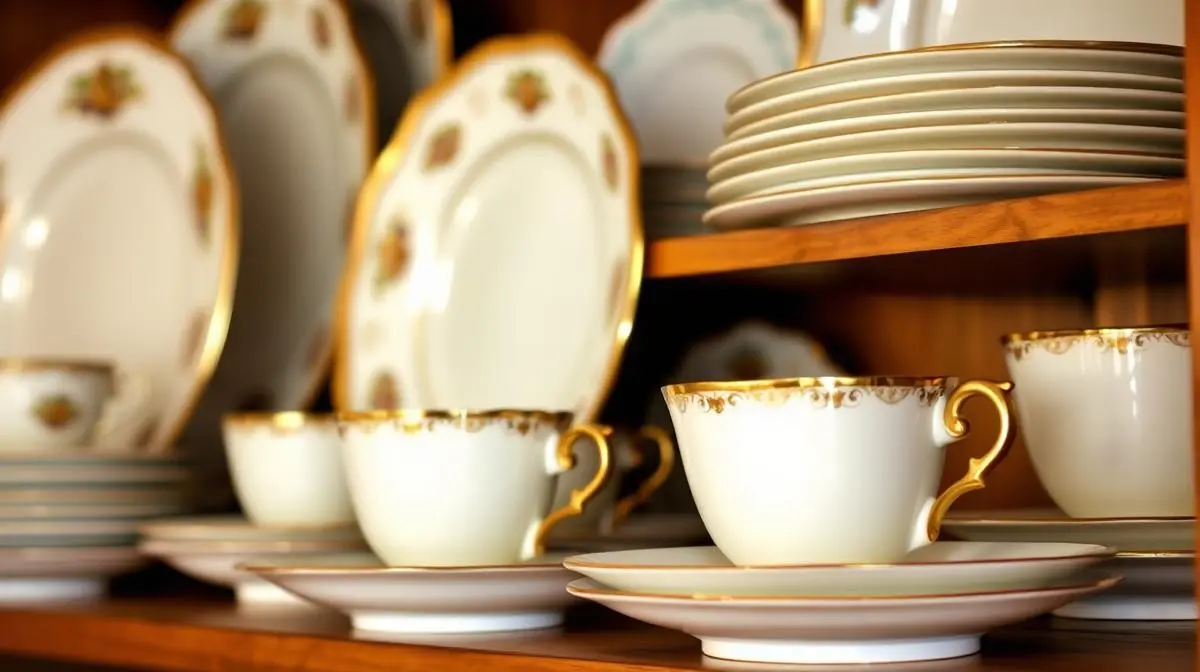
Pre-1950s sets from makers like Haviland, Meissen, Royal Copenhagen, and early Noritake still command strong prices — especially complete sets in excellent condition. Older European porcelain in particular tends to hold value better than mid-century American dinnerware, since much of it was hand-decorated and produced in smaller runs.
Individual serving pieces often sell better than full sets. A single Haviland tureen can sell for $200-400, while the matching dinner plates might only bring $5-10 each. Serving pieces — gravy boats, covered dishes, cake plates, and tureens — were made in far smaller quantities than the standard dinner plates, so they're scarcer today and more in demand from collectors trying to complete sets.
Hand-painted pieces with artist signatures are in a completely different category. These are art objects, not tableware, and are priced accordingly. Look closely at any painted decoration under good light or a loupe — true hand-painting shows slight brush texture and tiny inconsistencies, while a transfer-printed (decal) pattern will look perfectly uniform, often with a faint dot-matrix texture if you look closely enough.
The Replacement Market
Here's what most people miss: there's an entire industry built around replacing broken pieces in existing sets. Companies like Replacements, Ltd. buy individual plates, cups, and saucers at premium prices because their customers need specific pieces to complete their sets.
That means a single teacup from a discontinued pattern could be worth $30-50, even though a full set of the same pattern might not excite buyers at an estate sale. This is one of the more counterintuitive lessons in china: a broken set with missing pieces isn't necessarily worthless — in fact, individual survivors from a popular discontinued pattern are often worth more per piece than they would be as part of a complete set, because they're solving someone else's specific problem.
How to Evaluate Condition
Condition has an outsized effect on china values, so it's worth inspecting every piece carefully before assuming a set is complete or sellable:
- Hold pieces up to light to check for hairline cracks, which can be nearly invisible under normal lighting but will show as a thin dark line when backlit.
- Run a fingernail gently around rims to feel for chips too small to see easily.
- Check for crazing — the fine spiderweb pattern of tiny cracks in the glaze that develops in older porcelain over time. Light crazing is common and often acceptable to buyers; heavy, discolored crazing reduces value more.
- Look for gold or platinum trim wear. Rims with metallic trim are especially prone to fading from decades of washing, and worn trim noticeably reduces desirability, particularly for buyers trying to match an existing set.
- Count pieces carefully and note any mismatches. A "set of 12" that's actually missing two saucers is worth less than an honestly described "set of 10."
How to Research Your China
- Flip it over and photograph the backstamp.
- Search the maker and pattern name online — most manufacturers changed their backstamp design periodically, so the exact mark can help narrow down the decade it was made.
- Check Replacements.com for current pricing on individual pieces, which gives a realistic sense of per-piece demand even if you don't sell there directly.
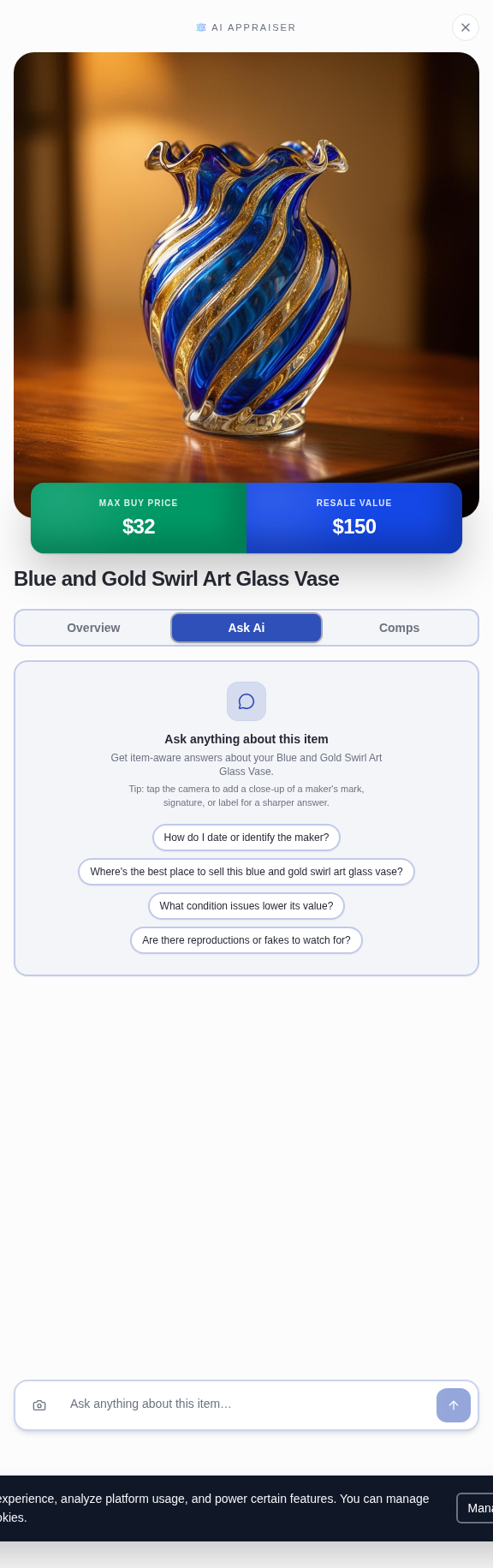
- Use EstateSaleFinder's Ai to identify patterns from photos when the backstamp alone isn't enough to pin down the maker.
Common Mistakes to Avoid
Donating or discarding a set without checking the backstamp first. It takes two minutes and could be the difference between giving away $20 worth of dishes and giving away $800 worth.
Assuming a chip ruins the whole set's value. A single damaged plate doesn't necessarily tank the value of the rest of a set — sell or price the damaged piece separately and let the undamaged pieces command their normal price.
Pricing an entire set as a single lot when serving pieces are included. Separating out tureens, platters, gravy boats, and other serving pieces for individual pricing nearly always brings in more money than lumping everything together.
Overlooking "orphan" pieces. A lone cup or saucer from an otherwise-sold set is easy to dismiss, but as the replacement market shows, that single piece might be exactly what another collector is searching for.
Don't let anyone tell you grandma's china is worthless without doing the research first.
When China Really Isn't Worth Much
To be fair, not every set deserves a deep research session. Mass-produced sets from large retailers in the 1980s and 90s, especially ones without a maker's mark or with a printed (rather than painted) pattern, typically have limited resale value beyond everyday use. If a backstamp search turns up nothing notable and the pattern isn't listed on Replacements.com, it's reasonable to price it for practical buyers — someone furnishing a first apartment or hosting a holiday dinner — rather than holding out for collector prices that may never materialize.
A Quick Checklist Before You Price or Sell
- Photograph the backstamp on every distinct pattern you find, even if you only have a few minutes
- Separate serving pieces (tureens, platters, gravy boats) from the standard place settings before pricing
- Check Replacements.com for your pattern name to see whether individual pieces are in active demand
- Hold pieces to the light and run a fingernail around rims to catch hairlines and chips before they surprise a buyer later
Keep exploring
Ready to start your own treasure hunt?
Discover estate sales near you and find incredible deals.
Explore Sales Near Me
About the author
Andy
Founder, EstateSaleFinder.net
Hi, I'm Andy — a retired commercial photographer turned developer with a five-year (and counting) obsession with estate sales. I started EstateSaleFinder.net because I knew there had to be an easier, smarter way to find and list estate sales. Now I get to chase treasure and build the tool I always wished existed.