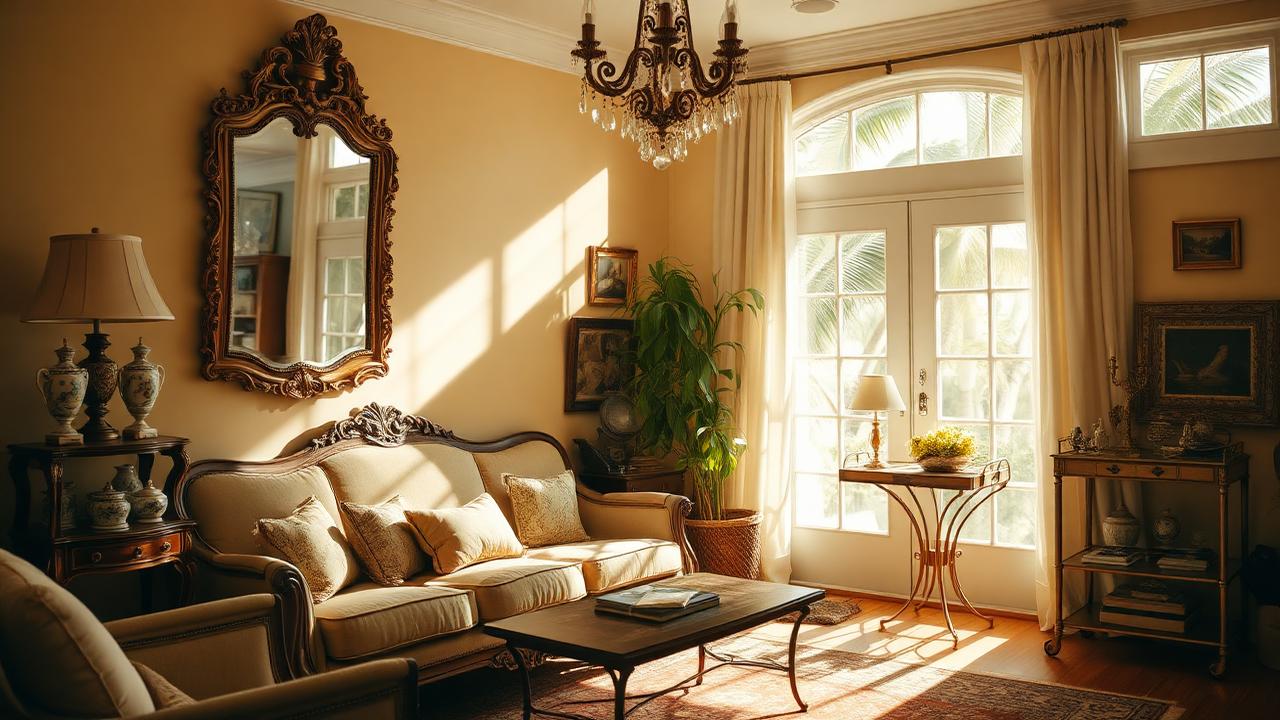
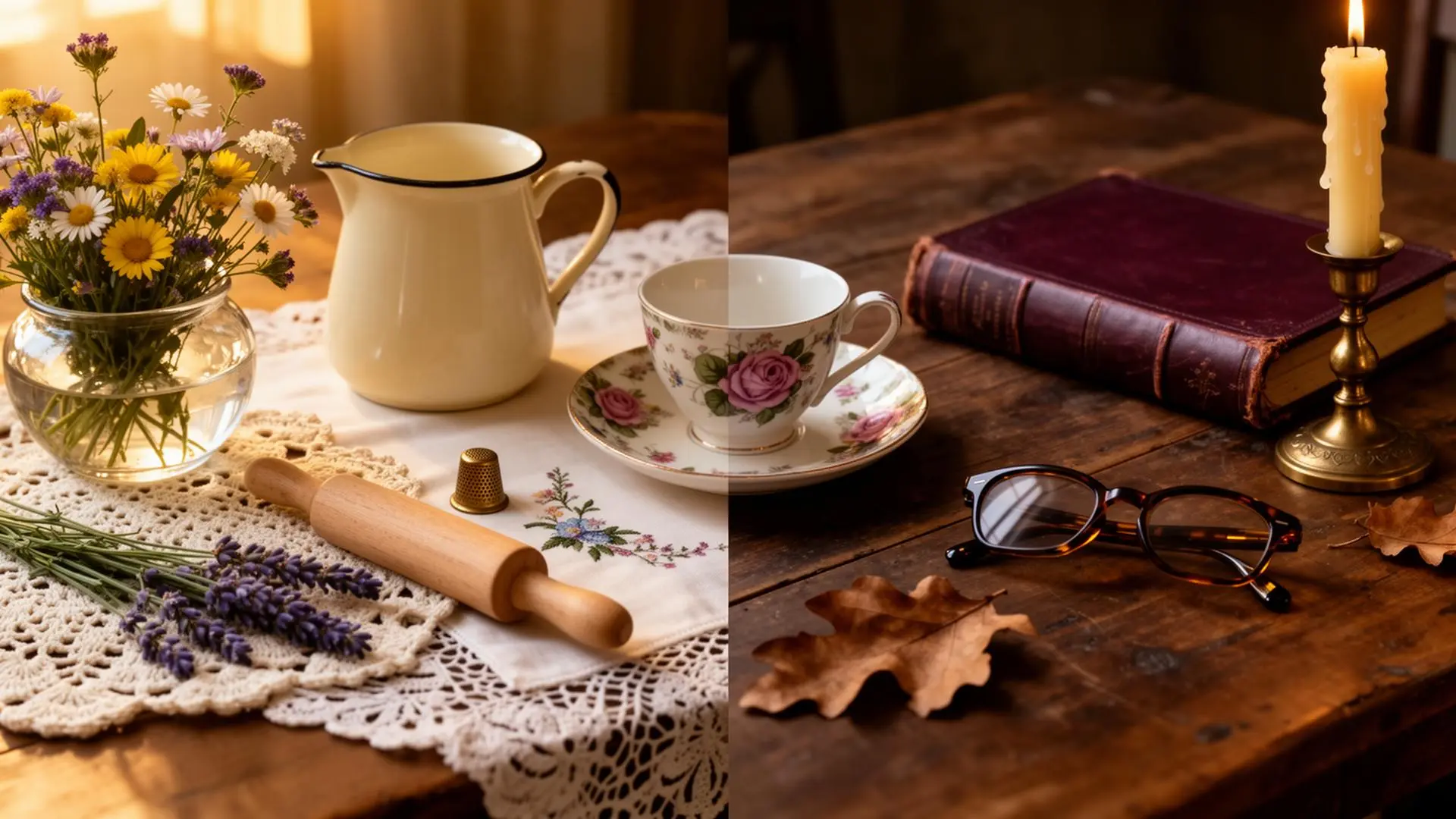
Cottagecore, Grandmacore & Dark Academia: The Complete Estate Sale Shopping Guide for Every Aesthetic
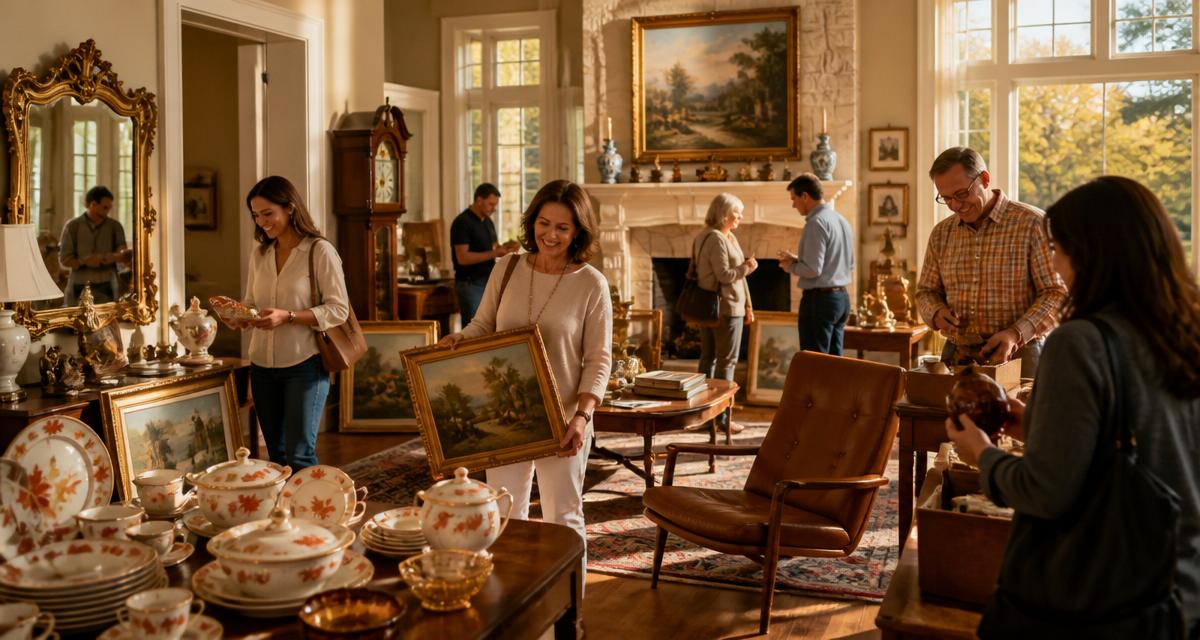
Pinterest is calling. TikTok has 13.8 billion views on #Cottagecore and 6.2 billion on #DarkAcademia. The catch? You can't actually buy any of it new. The pressed glass, the floral teacups, the leather-bound books, the brass candlesticks — they're sitting in estate sales right now, priced like nobody knows what they are. Here is the room-by-room, aesthetic-by-aesthetic field guide, with exactly what to look for, what to pay, and how to walk in confident.
Something quietly beautiful is happening in 2026. After a decade of bone-white walls, identical floating shelves, and one rubber plant in a beige pot, people are coming home to softness again. Layered linens. Mismatched plates. Brass candlesticks that have been somewhere. Books with cracked spines and someone's grandmother's name on the inside cover.
The hashtags tell the whole story. #Cottagecore is sitting on 13.8 billion TikTok views. #DarkAcademia just passed 6.2 billion. Pinterest's most-saved boards of the year are not "modern farmhouse" — they're "grandma's parlor", "rainy library afternoons", "Beatrix Potter kitchen". A whole generation grew up in apartments full of West Elm and decided they wanted a home that feels like a life, not a showroom.
There is exactly one problem.
You can't buy any of it new.
You can buy a polyester "doily-look" runner at Target and a plastic "vintage" rolling pin on Amazon, and they will both photograph like a costume the moment real daylight hits them. The whole point of these aesthetics is patina — the soft yellow of cream that's been on a shelf since 1968, the chip on a teacup that says somebody actually drank out of it, the way leather darkens around the edges of a book that's been opened a thousand times.
Estate sales are not a place to find this stuff. They are the place. And right now, in 2026, most of it is still priced like nobody knows what it is.
Grab a coffee. Here is the complete field guide, aesthetic by aesthetic.
First, a Five-Minute Mindset Shift
Before we get to the lists — one thing that will change everything.
Every other shopper at an estate sale is looking at items as objects: this is a bowl, that is a chair, this is a pile of doilies. You are going to look at them as scenes. A single $4 enamelware pitcher is just a pitcher. A $4 enamelware pitcher next to a $2 crochet doily with three sprigs of $0 lavender from your yard is a Pinterest board.
That's the whole game. You're not shopping for furniture. You're shopping for the photograph of your future kitchen. Once you see it that way, the prices stop being prices and start being absurd bargains, because what you're really buying for $11 total is the feeling of waking up in your own life on a Sunday morning.
Okay. Lists.
🌸 Cottagecore: Soft, Sunny, A Little Wild
The vibe
Beatrix Potter could walk in and sit down for tea. Open windows, wildflowers in a mason jar, something baking, a cat asleep on a sun-warmed quilt. Everything looks like it grew there.
The colors
Cream, butter yellow, pale blue, soft sage, dusty rose, oat, raw wood. Nothing slick. Nothing shiny except old glass.
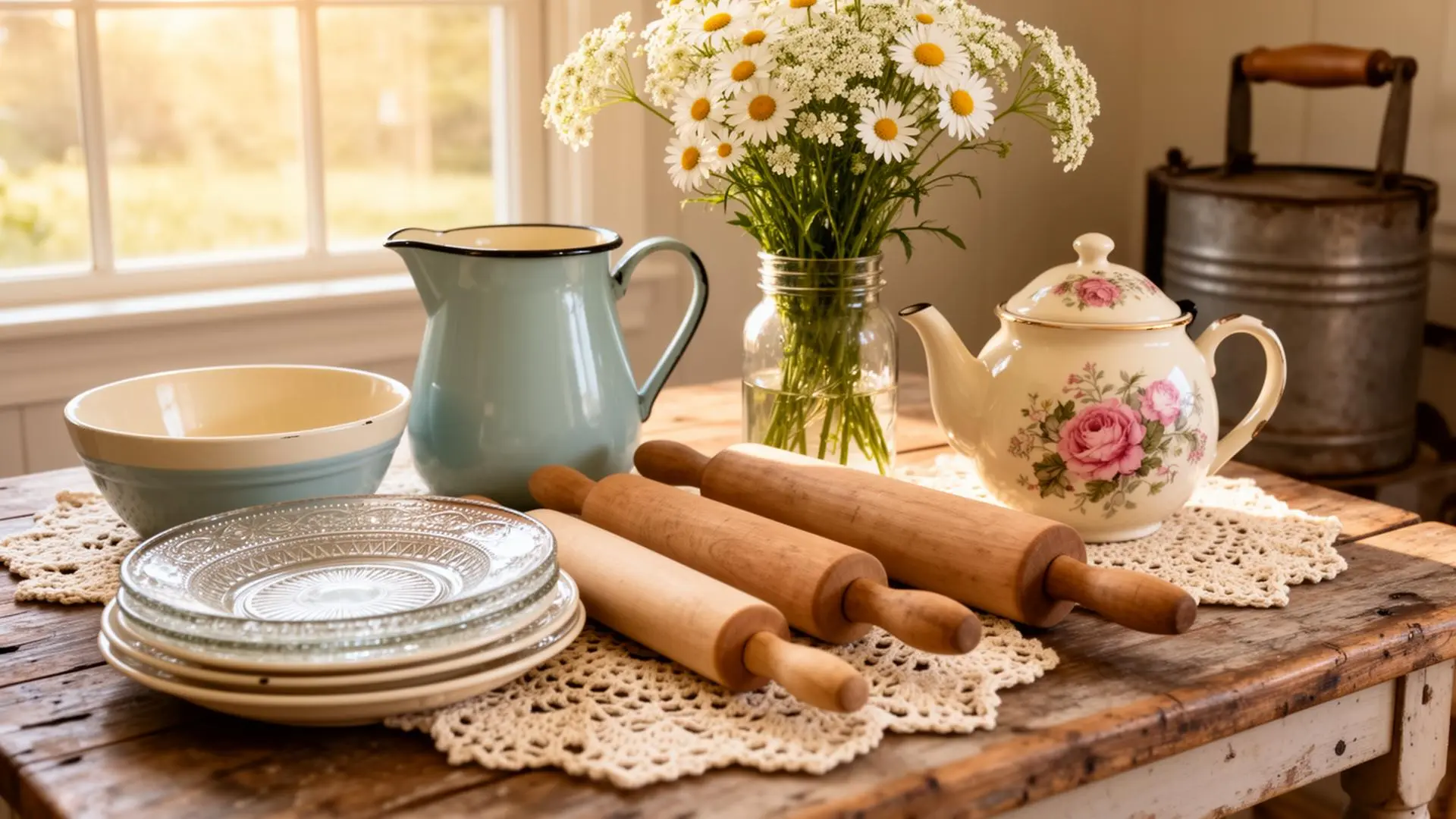
What to hunt for
| Item | What it looks like | Pay around |
|---|---|---|
| Enamelware pitchers, bowls, mugs | Cream or pale blue with a thin black rim; often chipped, which is good | $4–$15 each |
| Pressed glass dessert plates | Clear, embossed with starbursts, hobnails, or daisies; sold in stacks of 6–12 | $1–$3 each |
| Wooden rolling pins | Solid maple, often with the patina of decades of pie crust; collect three sizes | $5–$12 each |
| Floral chintz teapots & teacups | Pink roses, cabbage roses, English country florals; check for the maker stamp underneath | $8–$25 a piece |
| Crochet doilies & granny squares | Cream, ivory, or pale pink; lay them under everything else | $1–$5 each |
| Mason jars & blue Ball jars | Pre-1960 blue Ball jars are the prize; clear ones are everywhere | $1–$3 (clear) / $8–$20 (blue) |
| Wicker baskets | Especially the flat-bottomed picking baskets with a curved handle | $5–$20 |
| Floral aprons & embroidered tea towels | Hand-stitched is the goal; check the corners for someone's monogram | $2–$8 |
| Old garden tools, watering cans | Galvanized metal that's gone soft gray with age | $8–$25 |
How to spot the great ones
The single best cottagecore tell is softness of color. A new "vintage-look" enamelware pitcher from a craft store is a hard, plasticky white. A real one is the color of unsalted butter that's been left out, with a black rim that has worn through to gray in spots. That softness only comes from time — and it's the whole reason the aesthetic exists.
Same with floral textiles: real vintage chintz has a slightly faded, hand-washed quality, like the print was painted on and not stamped. Hold it up to the window. If the back is as bright as the front, it's new. If the back is paler, you've got the real thing.
Use the Ai appraiser → on anything stamped — chintz teapots, English bone china, marked pressed glass. Mid-century Royal Albert and Royal Doulton patterns are routinely priced at $5 at estate sales and selling for $40–$120 on eBay. A 30-second scan pays for your whole Saturday.
🕰️ Grandmacore: The Living Room You Were a Little Bit Afraid Of as a Kid
The vibe
Soft tungsten lamplight. A wall of family photos in mismatched gold frames. Doilies on every flat surface. Hard candy in a cut-crystal dish. A clock that ticks loudly enough to count. It smells like talcum powder and butter cookies, and you mean that as the highest possible compliment.
The colors
Dusty rose, hunter green, burgundy, gold, ivory, milk-glass white, the specific brown of an old wood-paneled wall.
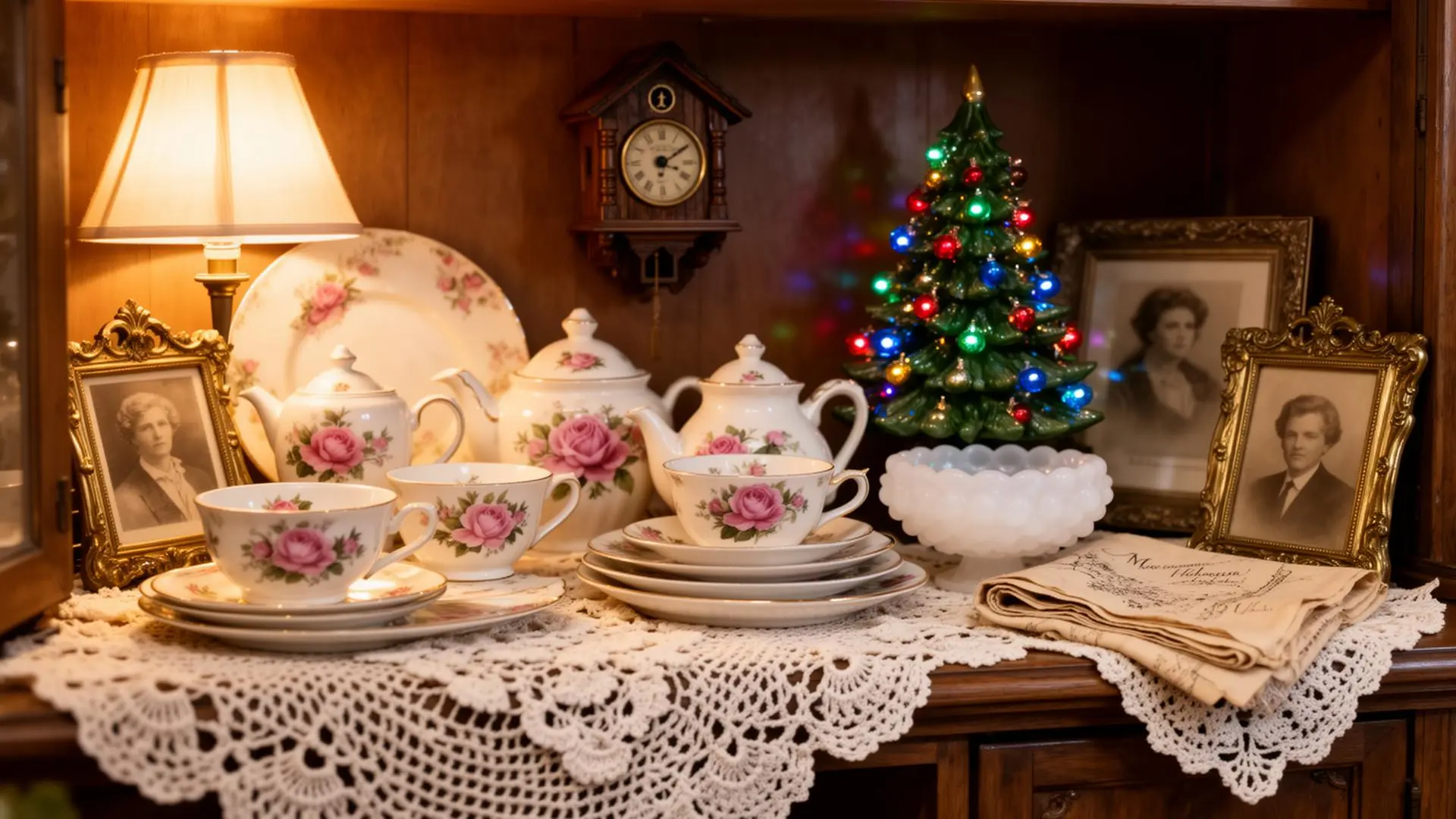
What to hunt for
| Item | What it looks like | Pay around |
|---|---|---|
| Full bone china sets (service for 8–12) | Pink roses, gold trim, marked underneath (Lenox, Noritake, Royal Albert, Royal Doulton) | $40–$180 for a full set |
| Ceramic light-up Christmas trees | Olive green, hand-painted, tiny colored plastic bulbs; the holy grail of grandmacore | $25–$95 |
| Cuckoo clocks | Black Forest carved walnut, working or not — even broken ones look beautiful on the wall | $40–$150 |
| Lace tablecloths | Cream or ecru, sometimes with embroidered cutwork; hold up to the light | $10–$45 |
| Milk glass (Fenton, Westmoreland) | Hobnail-textured opaque white candy dishes, vases, compotes | $4–$20 a piece |
| Brass picture frames | Ornate, with little easel backs; load them up with thrifted sepia photos | $2–$8 each |
| Doilies — boxes of doilies | Hand-crocheted cream and ivory, often sold in literal grocery bags for a dollar | $0.25–$2 each |
| Crystal candy dishes & cut glass bowls | Heavy lead crystal, prismatic edges; pre-1980 American-made is best | $5–$25 |
| Floral upholstered wingback or parlor chair | Cabbage-rose chintz or dusty velvet; even worn upholstery is fine, the bones are the prize | $40–$200 |
How to spot the great ones
Pick the bone china up and turn it over. If you see a backstamp with a maker, a country, and a pattern name (not just "Made in China"), you've found real grandmacore gold. Royal Albert "Old Country Roses" sets routinely go for $300+ online and routinely sell for $60 at estate sales because the family has heard "nobody wants china anymore" so many times they've started to believe it.
You? You want it.
For ceramic Christmas trees, the magic ones are the ones with tiny twist-in plastic bulbs and a brass star on top. Plug it in at the sale if you can. Original cord, working bulb, brass star = $60–$95. The all-modern reproductions are flatter and shinier; you'll see the difference instantly.
Save your favorites to a wishlist → and the app will tell you when a similar piece pops up at a sale near you. Grandmacore is one of those categories where the same items rotate constantly — patience pays.
🕯️ Dark Academia: Library, But Make It Yours
The vibe
It's October, it's raining, you've just lit the candle. The desk lamp is on but nothing else. There's a half-finished cup of tea, a fountain pen, and a book on a subject you've been pretending to know about. Outside, autumn leaves. Inside, the smell of paper.
The colors
Oxblood, forest green, ink black, tobacco brown, aged brass, ivory, the cracked-leather color of a 1932 hardback.

What to hunt for
| Item | What it looks like | Pay around |
|---|---|---|
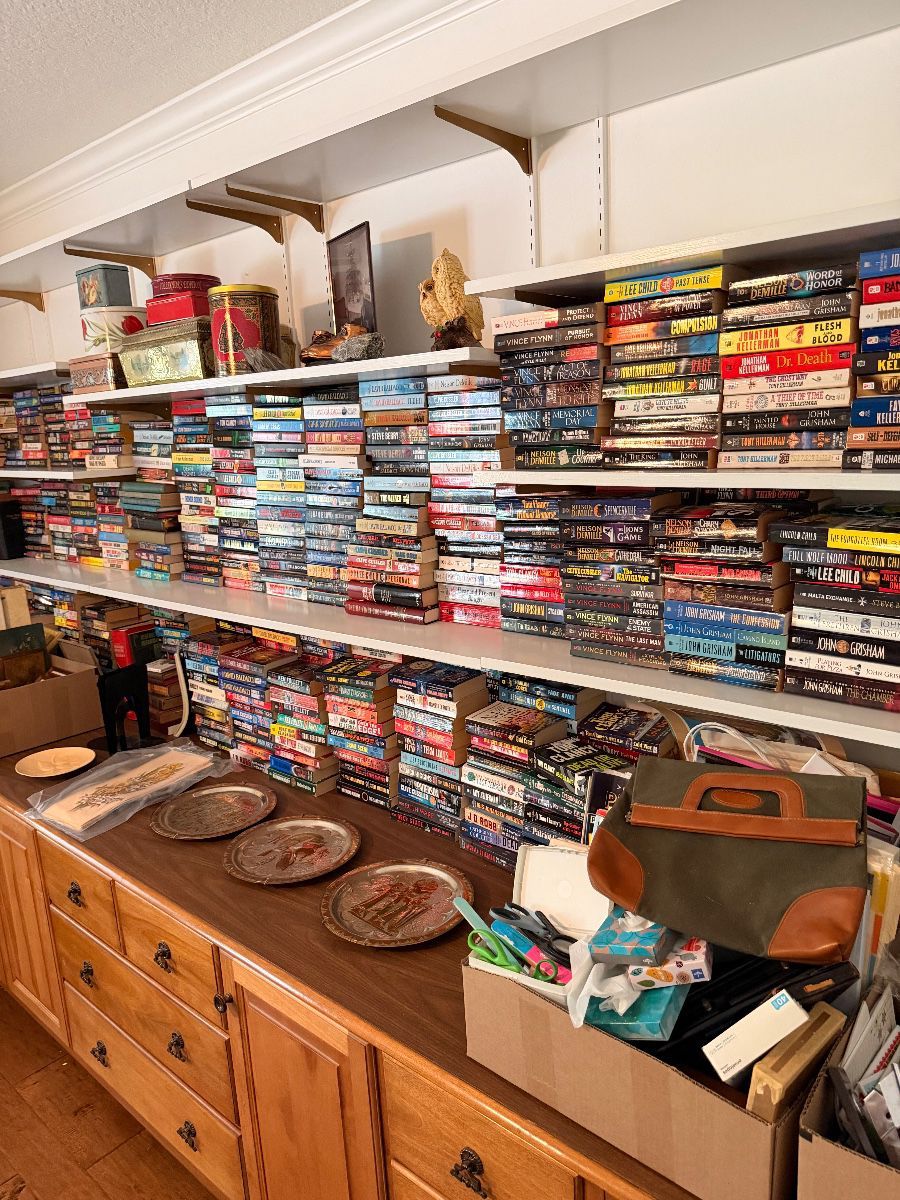
| Leather-bound classic books (pre-1960) | Burgundy, forest, tobacco brown; gilt lettering on the spine; sold by the foot at most sales | $1–$8 each / $15–$50 a stack |
| Brass candlesticks (weighted base) | Pairs are best; cast brass, heavy, slightly tarnished | $8–$35 a pair |
| Small wooden or brass globe | Tabletop size, often with a brass meridian ring; mid-century is the sweet spot | $25–$120 |
| Vintage brass telescope or sextant | Spyglass-style telescopes are the most achievable; sextants are the holy grail | $40–$180 |
| Oil paintings in gilt frames | Moody landscapes, dim portraits, dark still lifes; even amateur ones look incredible | $15–$120 |
| Tortoiseshell or horn-rim reading glasses | Empty frames are fine — they're props, not prescriptions | $5–$20 |
| Fountain pens & glass inkwells | Esterbrook, Sheaffer, Parker; even non-working ones display beautifully | $10–$60 |
| Vintage typewriters | Royal, Underwood, Smith Corona; the script and color you pick is half the personality | $40–$180 |
| Dark wood bookends, library lamps | Brass library lamps with green glass shades are the absolute pinnacle | $25–$200 |
| Old maps, framed botanical prints | Linen-backed maps, hand-tinted botanical plates | $5–$60 |
How to spot the great ones
Books are the gateway drug. Two rules: look at the spine and look at the publication date. You want cloth or leather binding, gilt or embossed lettering, and a date before 1965. Skip the orange-and-black 1970s book-club hardcovers — they were ugly when they were new. Look for anything from a publisher like Heritage Press, Modern Library (the early Boni & Liveright editions especially), Easton Press, or any university press from before 1960.
For brass: a real cast brass candlestick is heavy. Pick it up. If it feels like a movie prop, it is one — modern hollow brass plate. Real ones often have a soft greenish patina you'll never get from new metal.
For oil paintings, even the genuinely amateur ones from someone's adult-ed class in 1973 will look like a $400 antique store find once they're hung on a moody wall under a picture light. Pick the ones with good frames even if the painting is mediocre — the frame is half the price.
Run the Ai appraiser on signed paintings → before you walk away from anything signed. Listed but unknown American regionalist painters routinely turn up for $20 at estate sales and sell for $400–$2,000 once the signature gets identified.
How to Actually Pull This Off in a Single Saturday
The temptation, once you have the lists, is to try to do everything in one trip. Don't. Here's the realistic playbook.
The night before:
- Pull up sales near you → and skim the photos. You're looking for sales with china cabinets, full bookshelves, or "estate of a longtime resident" language. Avoid the ones that look like garage cleanouts unless the photos hint at gold underneath.
- Pick 2 or 3 sales, not 8. Map them in order — the route planner does this automatically.
- Pack: $100 in cash (mostly tens and fives), a tape measure, a small notebook, a tote bag, and one big empty bin in the trunk for fragile stuff.
At the sale:
- Walk the whole house first, fast. Don't pick anything up. Just look. You're building a mental list of where the good stuff is.
- Then make your loop, room by room, picking things up.
- Anything stamped, signed, or branded: pull out your phone, scan with the Ai appraiser, see what it actually sold for online. 30 seconds. This is the difference between paying $5 for a $200 piece and paying $200 for a $5 piece.
- Ask the seller, gently, on anything over $50: "Would you take ___ for this?" Sunday sales especially — most companies discount 25–50% on day two and they'd rather move it than haul it.
Back home:
- Wash everything in warm soapy water. Polish the brass. Lay out the textiles.
- Style one corner. Just one. Take the photo. Post the photo. Watch a generation of strangers on the internet ask you where you found it all.

You Don't Have to Pick Just One
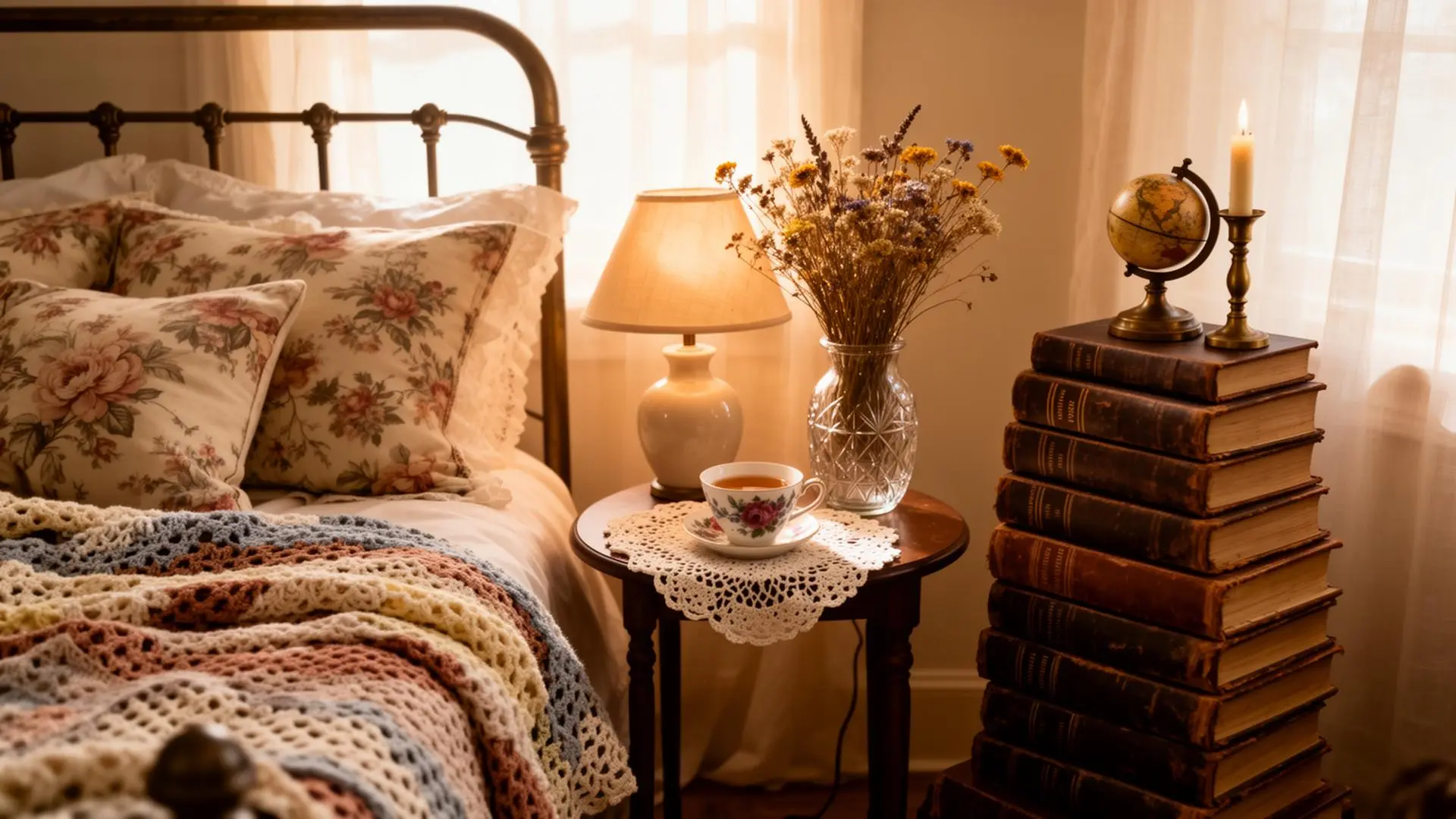
The best-looking rooms on Pinterest in 2026 are not strict to a single aesthetic. They're cottagecore with a stack of dark academia books on the nightstand. They're grandmacore with a leather chair pulled up to the lace-covered table. The aesthetics overlap because real homes overlap — the things you love don't sort themselves into hashtags.
Walk into an estate sale this Saturday with all three lists in your back pocket. You will leave with a story for every room of your house.
Where to Start This Weekend
You don't need a budget. You don't need a strategy. You need one Saturday morning, $40 in your pocket, and a sale within twenty minutes of your house.
Here's the truth nobody at West Elm wants you to know: the home you've been pinning for three years already exists. It's in pieces, scattered across a dozen houses in your zip code, priced like nobody knew you were coming.
Go pick it up.
Keep exploring
Ready to start your own treasure hunt?
Discover estate sales near you and find incredible deals.
Explore Sales Near Me
About the author
Andy
Founder, EstateSaleFinder.net
Hi, I'm Andy — a retired commercial photographer turned developer with a five-year (and counting) obsession with estate sales. I started EstateSaleFinder.net because I knew there had to be an easier, smarter way to find and list estate sales. Now I get to chase treasure and build the tool I always wished existed.