
The Reseller's Glossary: 40 Estate Sale and Auction Terms You Need to Know
From 'tag sale' to 'as-is' to 'pickers' day,' here are the 40 terms every estate sale shopper hears constantly — and what they actually mean for your wallet.
If you've ever stood in a stranger's living room and heard the staff use a phrase like "this one's a buy-it-now" or "day three is by appointment" and quietly nodded while wondering what on earth they meant, this glossary is for you.
40 terms. Plain English. The whole vocabulary.
The Sale Itself
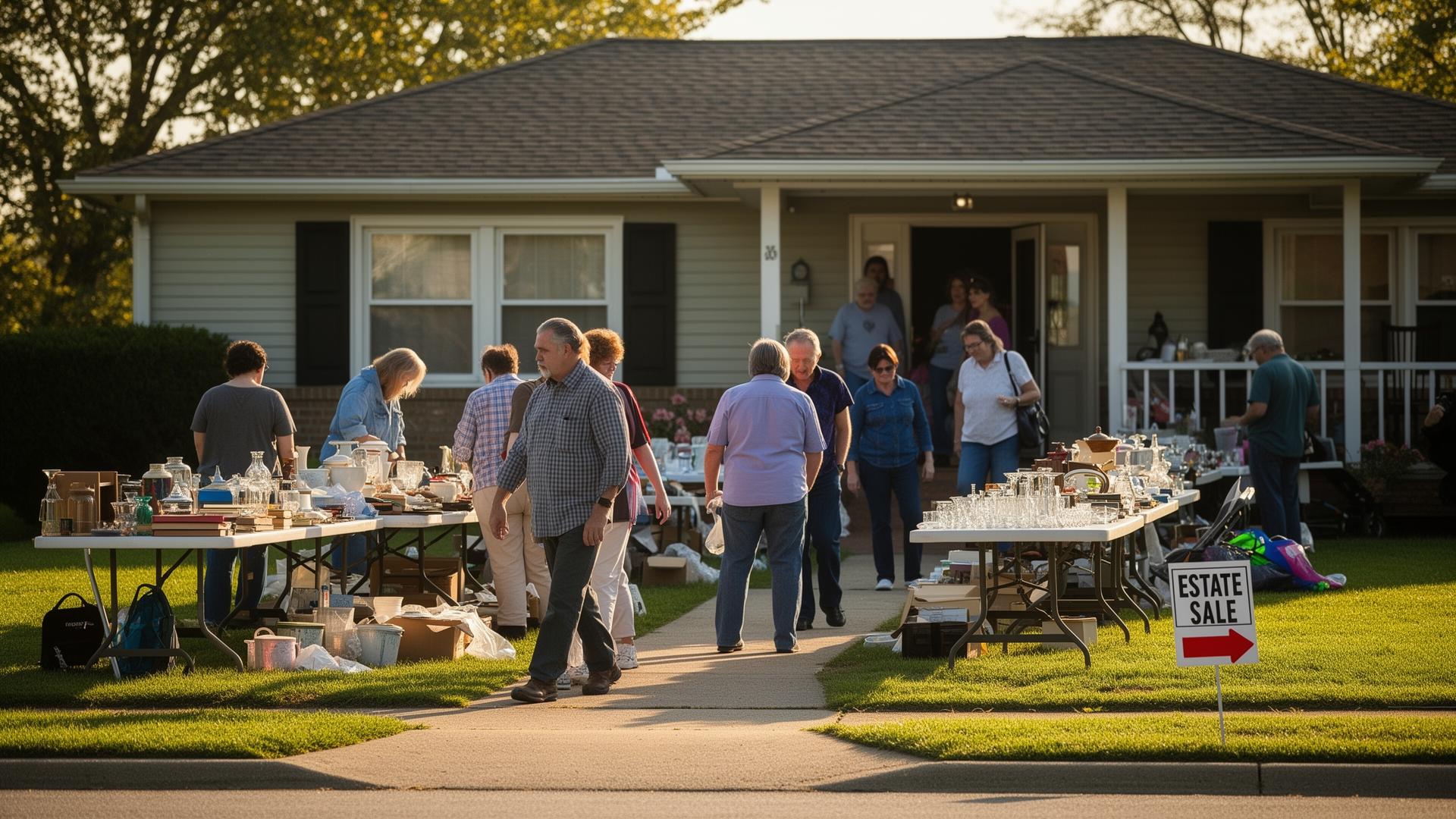
Estate Sale — A whole-household liquidation, usually professionally run, often because of death, downsize, or move.
Tag Sale — Same thing as an estate sale in much of the Northeast US. Items have price tags (vs. an auction where prices are bid).
Garage Sale / Yard Sale — Casual driveway sale by an individual family. Smaller, less curated, wildly variable pricing.
Moving Sale — Like an estate sale but the family is alive and downsizing. Often has more recent items.
Liquidation — Broader term. Includes business closeouts and bulk inventory clears.
Auction — Items are bid on rather than tagged. Can be live or online.
The Schedule
Preview Day — A paid early-entry, often Friday evening. Gets you first look before Saturday's crowd.
Day One / Opening Day — Saturday morning, usually 8 or 9 a.m. Highest prices, best inventory.
Day Two / Half-Price Day — Sunday. Most items 50% off as the opening offer.
Day Three / Cleanout Day — Less common. By appointment or last-minute. Aggressive discounts.
Pickers' Day — Informal term for an early reseller-only entry, usually paid.
The Pricing
Tagged — Has a price written on it.
As-Is — Sold in current condition, no returns, no warranties. Always the rule at estate sales.
Best Offer — The price is open to negotiation. Make a polite offer.
Firm — The price is not negotiable. Often used on the rarest items.
Buy-It-Now — Pay full price right now and the item is yours, no waiting on potential other offers.
Bundle / Lot Pricing — Multiple items grouped at one price. Common with costume jewelry, books, glassware.
Half-Price — Standard discount on day two. Almost never the floor.
Make Pile — A spot near the register where you stack items you want to bundle and negotiate for.
The Items
MCM — Mid-Century Modern. 1945–1970 furniture and design. High demand.
Atomic — 1950s–60s style with starbursts, boomerangs, geometric patterns.
Brass Era — Heavy brass-fittings furniture, lamps, decor from late 1800s.
Sterling — 92.5% silver. Marked "Sterling" or "925." Always worth at least scrap value.
Silverplate / EPNS — Plated silver, low value. EPNS = Electroplated Nickel Silver.
Bakelite — Early plastic from the 1930s–40s. Heavy, often colorful. Tested with hot water (smells distinctive).
Depression Glass — Mass-produced glassware from the 1929–1939 era. Specific colors and patterns are highly collectible.
Carnival Glass — Iridescent pressed glass. 1908+. Specific colors (red, ice blue) are valuable.
Pyrex — Borosilicate glass cookware. Specific patterns and colors are major collectors' items.
Cast Iron — Old skillets, especially Griswold and Wagner pre-1960.
Studio Pottery — Handmade pottery, signed on the bottom by the artist.
Hallmark — A maker's mark stamped on metal items (silver, gold, pewter).
Maker's Mark — General term for a stamped or printed maker identifier.
First Edition — Books from the first print run. Significantly more valuable than later printings.
The People
The Company — The professional firm running the sale.
The Family — The owners or heirs of the contents.
Pickers — Resellers and antique dealers who hunt sales for inventory.
Regulars — The same shoppers who come back week after week. Often friendly with the company.
Day-Trippers — Casual shoppers who come for entertainment, not to buy seriously.
The Etiquette
Numbered Tickets — A list-management system at popular sales. First-come, first-served entry order.
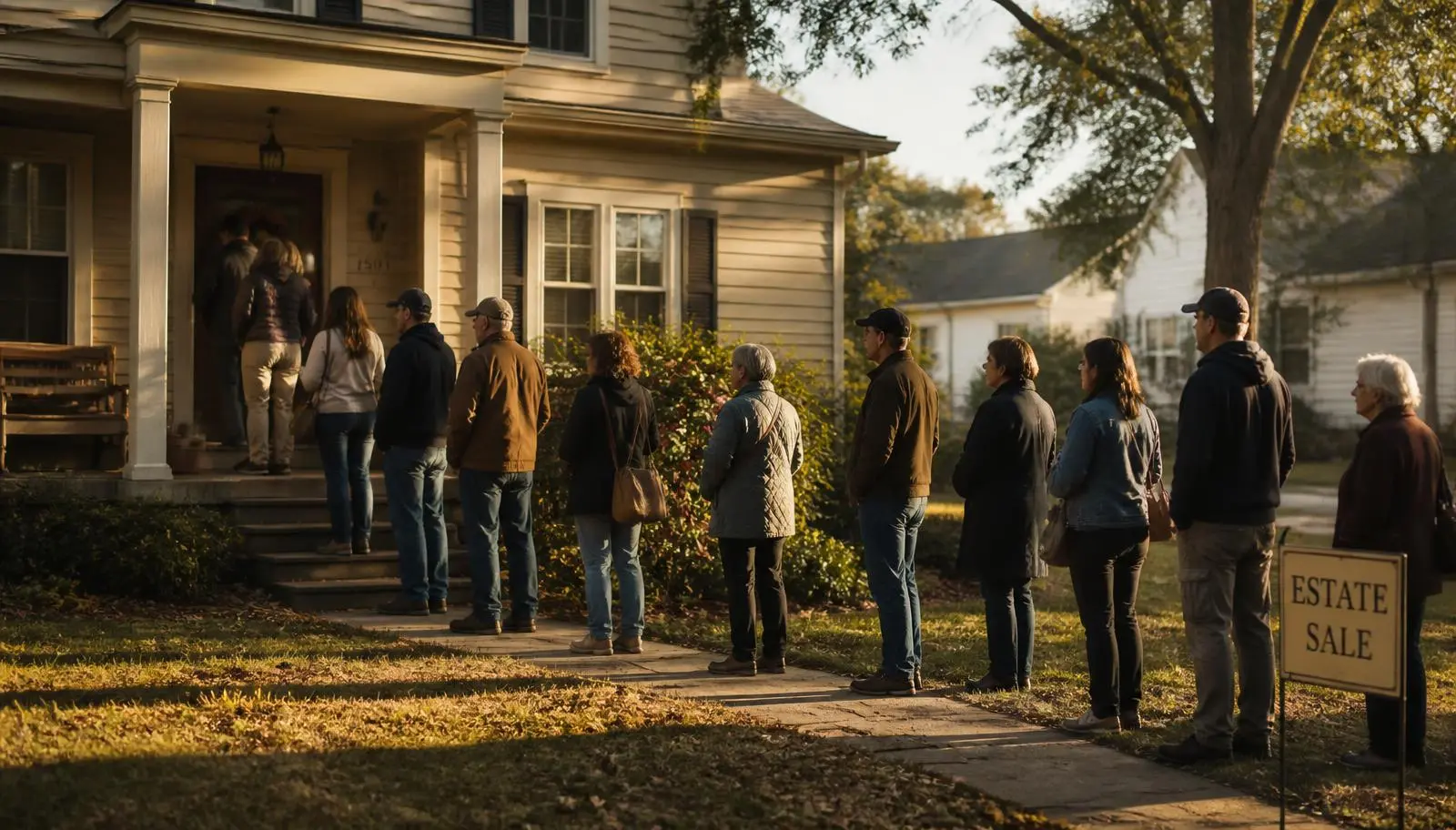
The Line — The crowd outside before opening. Get there 25–40 minutes early for popular sales.
The Hold — "Can you hold this for me while I keep shopping?" Most companies will hold an item near the register for 15–30 minutes.
No Re-Stocking — If you change your mind on something at the register, the staff won't put it back for you. You leave it there.
Showing Around — When staff offer to "show you the basement" — accept. There's almost always more.
The Tech
Listing — The online posting of the sale, usually with photos and details.
The Map — The map view of all sales in your area, the way most resellers actually plan their weekend.
Wishlist Alert — A notification when items matching your saved keywords appear at any nearby sale.
Route Planner — A tool that orders your stops geographically so you're not zigzagging across town.
Ai Photo Appraiser — Tools that identify items and provide market price ranges from a single photo.
What to Do With This Glossary
Bookmark it. Reference it when something at a sale confuses you. Send it to a friend who's just starting.
The fastest way to feel comfortable at estate sales is to understand the vocabulary. Once these 40 terms are familiar, you'll stop feeling like a tourist and start feeling like a regular.
Keep going: read the full Buyer's Guide for the rest of the system, or browse this weekend's sales near you and put your new vocabulary to work.
Keep exploring
Ready to start your own treasure hunt?
Discover estate sales near you and find incredible deals.
Explore Sales Near Me
About the author
Andy
Founder, EstateSaleFinder.net
Hi, I'm Andy — a retired commercial photographer turned developer with a five-year (and counting) obsession with estate sales. I started EstateSaleFinder.net because I knew there had to be an easier, smarter way to find and list estate sales. Now I get to chase treasure and build the tool I always wished existed.