How I Turned $47 in Estate Sale Finds Into a Real Side Business (And You Can Too)
I bought a dusty ceramic bowl for $4 at an estate sale in suburban Ohio. Six days later, someone in California paid me $380 for it. That's the moment everything changed.
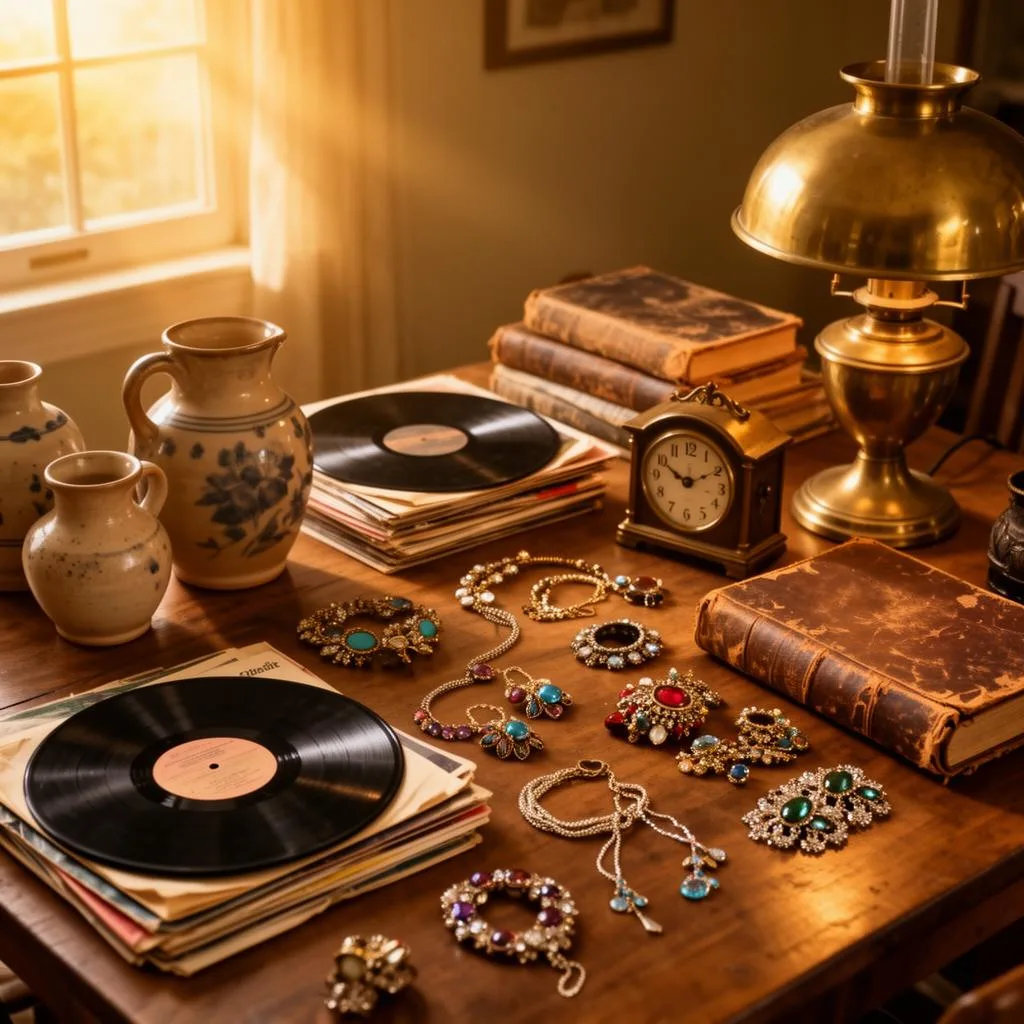
Let me tell you about the Saturday that rewired my brain.
I was standing in a stranger's garage in Dayton, Ohio, holding a ceramic bowl that looked like something you'd find at a Cracker Barrel clearance sale. It was dusty. It had a small chip on the rim. The estate sale company had slapped a $4 sticker on it and moved on to pricing the furniture.
I almost put it back. Almost.
But something about the glaze caught my eye — this deep, mottled blue-green that looked like the ocean during a storm. I flipped it over. There was a mark on the bottom I didn't recognize. I snapped a photo with my phone, paid my $4, and went home.
That night, I Googled the mark. My hands literally started shaking.
It was a Fulper Pottery piece from the 1920s. I listed it on eBay with the photos I had, wrote an honest description — "small chip on rim, otherwise excellent condition" — and set the starting bid at $50.
Six days later, a collector in San Diego paid me $380.
For a bowl I bought for four dollars. While wearing sweatpants.

The Secret Nobody Talks About
Here's what most people don't realize about estate sales — and this is the part that changed everything for me:
Estate sale companies don't have time to research everything.
Think about it. A typical household has 3,000 to 5,000 items. The estate sale company has maybe a week to catalog, price, and stage the entire house. They're experts at furniture, jewelry, and the obvious stuff. But that weird pottery in the back of the cupboard? The box of old tools in the basement? The stack of vinyl records in the attic? They're pricing those to move — fast.
They're not being lazy. They're being practical. You can't spend 20 minutes researching every single item in a 3,000-piece household. The math doesn't work.
But YOU can spend 20 minutes researching the one item that catches your eye. And that's your entire advantage.
That's the gap. That's where the money lives.
Starting Small (And Scared)
I need to be honest with you: my first eBay listing was embarrassing.
I took blurry photos on my kitchen counter with overhead fluorescent lighting that made everything look like evidence in a crime scene. My description was three sentences long. I spelled "antique" wrong. Twice.
But here's the beautiful thing — it didn't matter. The item sold anyway. Because the internet is full of collectors who know exactly what they're looking for, and they don't care about your photography skills. They care about the thing.
My first month, I made $127. I remember the exact number because I screenshot the PayPal balance and sent it to my sister with the message: "IS THIS REAL LIFE?"
She wrote back: "That's literally one dinner out."
She wasn't wrong. But she was also missing the point.

The Moment It Clicked
Month two: $340. Month three: $580. By month four, I made $890, and I started to notice something happening to my brain.
I wasn't just shopping at estate sales anymore. I was seeing differently. Every shelf, every box, every dusty corner became a puzzle. What's hiding here? What did the estate sale company miss? What would a collector pay for this?
I started learning categories:
- Pottery and ceramics — Flip it over. Always flip it over. Maker's marks on the bottom of pottery have paid my electric bill more than once. Roseville, McCoy, Weller, Hull — these names are money.
- Vintage tools — Stanley planes, old machinist tools, anything with "Made in USA" stamped on it from before 1970. Woodworkers and collectors go crazy for these.
- Old toys — Hot Wheels in original packaging. Vintage Barbie accessories. Tin toys from the '50s. That $2 matchbox car might be worth $75.
- Vinyl records — Skip the Barbra Streisand and the Christmas compilations. Look for original pressings of jazz, blues, punk, and anything on a small indie label.
- Designer clothing — Buried in a box of old sweaters, there's sometimes a cashmere Burberry coat that someone priced at $8 because it looked "old."
- Books — First editions, signed copies, vintage cookbooks, anything technical or niche from before 1960.

The $47 Weekend That Changed My Life
I keep a spreadsheet now. (I know, I know — very exciting.) But here's an entry from a weekend that still makes me smile:
Saturday morning. Two estate sales. Total spent: $47.
- Roseville pottery vase, small — $6 → sold for $185
- Box of vintage hand tools (7 pieces) — $15 → sold individually for $340 total
- Mid-century modern table lamp — $12 → sold for $95
- Stack of vintage National Geographic magazines (1960s) — $3 → sold for $45
- Signed first edition hardcover — $8 → sold for $220
- Costume jewelry lot — $3 → kept the good pieces, sold rest for $60
Total spent: $47. Total sold: $945.
I'm not telling you this to brag. I'm telling you this because someone needs to hear it. Someone who's scrolling through job listings at midnight. Someone who's tired of the paycheck-to-paycheck cycle. Someone who thinks "side hustle" is just another word for "scam."
It's not. This is real. The stuff is out there, every single weekend, in every single city, priced by people who simply didn't have time to look closer.
The Community You Didn't Know You Needed
The funniest thing happened about three months in. I started recognizing faces at estate sales. The same guy with the vintage watch loupe around his neck. The woman who always heads straight for the kitchen. The couple who only looks at furniture.
We started nodding at each other. Then chatting. Then texting each other about upcoming sales.
These people became my friends. We share tips, celebrate each other's finds, and yes — we sometimes compete for the same items. But it's friendly. Estate sale people are *good* people. We're all treasure hunters at heart.
One guy — Dave, retired engineer, always wears the same Carhartt jacket — taught me more about identifying quality furniture in a 10-minute conversation than I could have learned in a month of YouTube videos. Another woman, Maria, showed me how to spot real silver versus plated in about three seconds. (The sound it makes when you tap it. Seriously. Real silver rings.)

The Permission Slip
Here's what I want to give you right now, if you're still reading this: permission.
Permission to try something that feels silly. Permission to spend a Saturday morning digging through a stranger's basement. Permission to believe that a $50 budget and a smartphone are enough to start a business.
Because they are.
You don't need a business degree. You don't need startup capital. You don't need to quit your job. You need curiosity. You need the willingness to learn. And you need about $50 in cash and a free Saturday morning.
That's the cost of admission to a whole new world.
Start with one estate sale. Buy one thing that interests you. Go home and research it. List it online. See what happens.
Maybe it sells for $10 profit. Maybe it sits for a week and you have to lower the price. Maybe — just maybe — you flip that dusty bowl over, see a mark you don't recognize, and your hands start shaking.
Your First Steps
1. Find sales near you — Use EstateSaleFinder to browse upcoming sales in your area. Look at the photos. Read the descriptions. Get excited.
2. Bring cash — Most estate sales are cash-only or cash-preferred. Start with $50. You'd be amazed what $50 buys.
3. Arrive early — The best stuff goes fast. If the sale starts at 8, be in line by 7:30.
4. Look where others don't — The basement. The garage. The boxes under tables. The stuff that's dusty and overlooked. That's where the money hides.
5. Research before you sell — Spend 10 minutes on eBay's "sold listings" filter to see what similar items actually sold for. Price accordingly.
6. List honestly — Describe flaws. Take clear photos. Buyers appreciate honesty, and it protects you from returns.
7. Reinvest — Take your profits and put half back into buying inventory. Watch it compound.
The bowl that started it all? I still think about it sometimes. Not because of the $380 — although that was nice — but because of what it represented.
It was proof that you can find extraordinary value in ordinary places. That knowledge is the great equalizer. That the person willing to flip something over and look at the bottom will always have an advantage over the person who just sees a dusty old bowl.
Your $4 bowl is out there, sitting on a folding table in someone's garage, waiting for you to pick it up.
Go find it.