The Buyers Who Never Shop Estate Sales — and How to Finally Reach Them
Listing on the old estate sale sites puts you in front of the exact same regulars who already hit every sale. The real money — collectors, interior designers, researchers — never shows up because estate sales have never been convenient for them. Here's how keyword search and wishlist alerts on EstateSaleFinder change that, and bring high-value buyers straight to your items.

Here's an uncomfortable truth about how estate sales have been sold for the last twenty years: when you list on estatesales.net or one of the other legacy directories, you are advertising to the *same people who already know about every sale in your area.* The early-bird regulars. The dealers with the spreadsheet. The folks lined up at 6 a.m. with a number written on their hand. They're wonderful customers — but they're a fixed, finite crowd, and every company in your market is fighting over them.
Meanwhile, the buyers who would pay the most for your best pieces — the collector hunting one specific Leica, the interior designer sourcing a mid-century credenza for a client, the prop stylist, the antique dealer, the researcher chasing a single maker's mark — almost never walk through the door. Not because they don't want what you have. Because estate sales have never, ever been *convenient* for them.
That's the gap. And closing it is the entire idea behind how EstateSaleFinder is built.
We live in a society of convenience. Estate sales never got the memo.
Think about how every other thing you buy now works. You don't drive to seven stores hoping the thing you want is on a shelf. You type what you want into a box, you get results, and you buy it — or you save it and get told the moment it's available. Amazon, Zillow, StockX, eBay, Etsy, even your grocery store. The entire modern economy has been rebuilt around one promise: *tell us what you want, and we'll bring it to you.*
Estate sales did the opposite. The unwritten rules have always been:
- You have to already know the sale exists. Buried in a directory, found only if you go looking.
- You have to show up at a specific time, on a specific weekend, in person. Miss it and it's gone forever.
- You have to dig. No search, no filter, no "show me only the Art Deco lamps." Just a house full of stuff and a lot of luck.
For a retired regular with Saturday mornings free, that's the fun. For a working interior designer with eleven clients, a collector two states away, or a dealer who needs a *specific* item *this week*, it's a non-starter. The friction is the whole reason they don't participate. The high-value buyer was never uninterested — they were just priced out by inconvenience.
Listing on the old sites = fishing in a pond everyone's already fished
This is the part most companies never stop to think about. When all the estate sale companies in a city list on the same legacy directory, they're not expanding the audience — they're subdividing the same audience over and over. The pie doesn't grow. You're just competing for a thinner slice of the exact same treasure-hunting regulars who've been to every sale you've ever run.
To actually make more on your best pieces, you don't need *more* of the same shoppers. You need a *different kind* of shopper — one with a specific want and the budget to back it. And reaching that person requires two things the old model simply doesn't have: search and alerts.
Feature #1: Real keyword search across every item
On EstateSaleFinder, your individual items are searchable. Not just your sale's address and dates — the actual things inside it. When someone types "Eames," "Roseville pottery," "vintage Pyrex," "sterling flatware," or "mid-century lamp," your item shows up in their results, even if they've never heard of your company and weren't planning to attend a single sale that weekend.
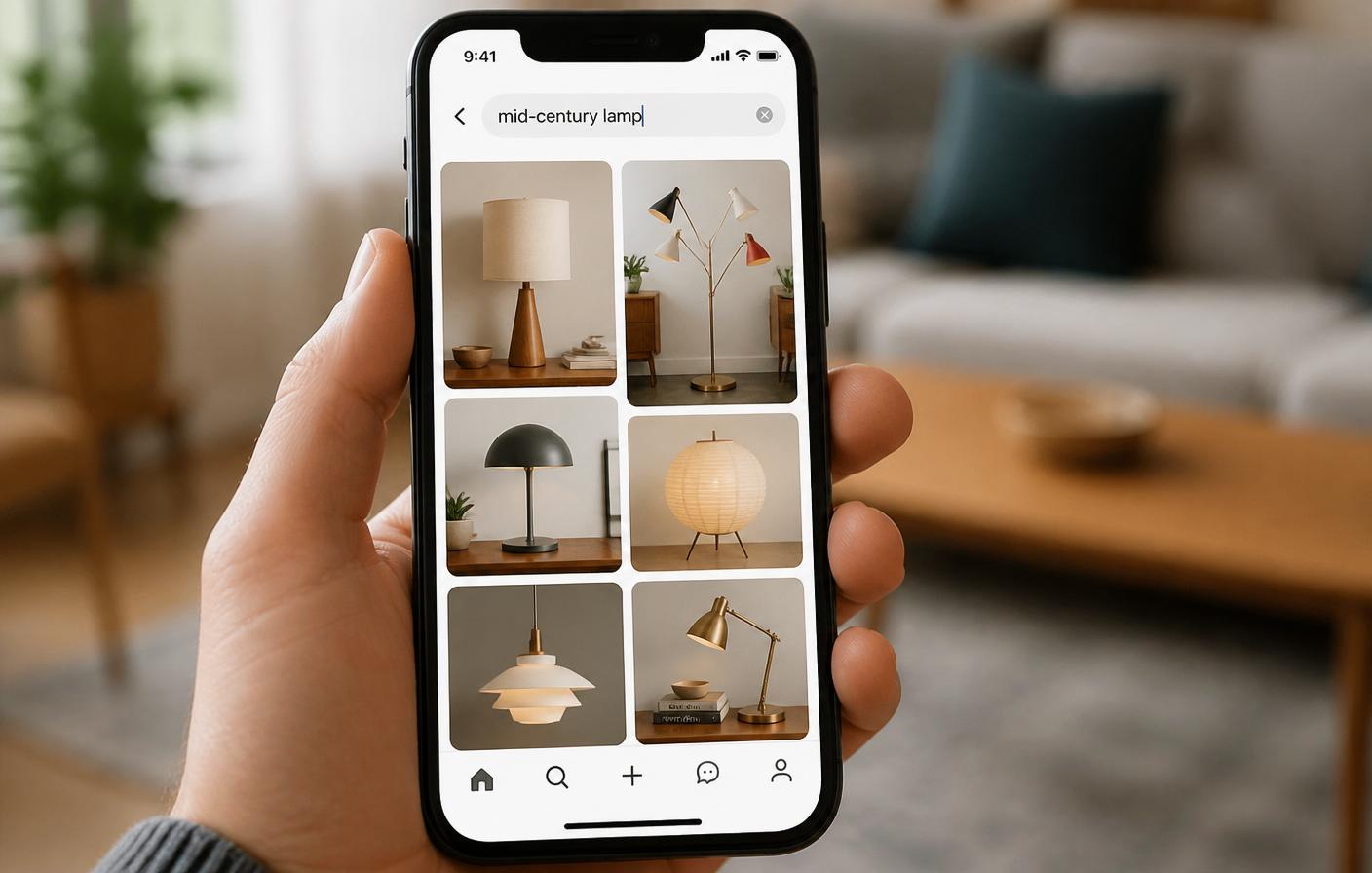
That one change flips the entire model. Instead of *hoping the right buyer randomly wanders in,* you let the right buyer come to you because they were already looking for exactly what you have. This is how a collector in another city, a designer mid-project, or a dealer restocking finds your sale — through the thing they want, not through a directory they were never browsing.
A designer doesn't have time to scan forty sale listings. But she'll absolutely type "marble console table" into a search bar on her lunch break. That search is your introduction. Browse it yourself on the live estate sale feed to see how items surface.
Feature #2: The wishlist that hunts for them 24/7
Search solves "what's available right now." The wishlist solves the much harder problem: *"I want this, but it isn't listed yet."*
A buyer saves the keywords they're chasing — "Herman Miller," "Limoges," "antique tools," "Lladró" — sets how far they're willing to travel, and then goes back to their life. The moment any company lists a matching item near them, EstateSaleFinder alerts them. No checking. No remembering. No FOMO. The platform does the hunting on their behalf.

This is the single most powerful thing you can offer the convenience-driven, high-value buyer: a standing order. The collector who would never drive around every Saturday will gladly let an app watch for the one piece he's wanted for years. When you list it, he's notified, and he's motivated — because it's not a maybe, it's *the exact thing on his list.*
For you, the seller, that means your items get matched to buyers who have already told us, in their own words, that they want them. That's not foot traffic. That's intent.
Who you're really targeting now
Put search and wishlist together and your potential audience stops being "people who go to estate sales" and becomes "people who want what's *in* estate sales" — a vastly larger and higher-spending group:
| Buyer | Why they skipped estate sales | What reaches them now |
|---|---|---|
| Interior designers | No time to browse in person; need specific pieces on a deadline | Keyword search for exact items + saved wishlists per project |
| Serious collectors | Can't attend every sale; chasing specific makers | Wishlist alerts the instant a match is listed |
| Antique & booth dealers | Need to restock specific categories efficiently | Search by maker, era, or category from anywhere |
| Prop & set stylists | Source unusual items fast, often remotely | Searchable inventory they can scan in minutes |
| Out-of-town buyers | Physically can't show up on sale day | Find and claim items without ever standing in line |
We even build landing pages aimed squarely at these audiences — like our pages for interior designers and for vintage collectors — so the right buyers discover the platform and, by extension, *your* sales.
What this means for your bottom line
More buyer types competing for an item is, simply, more demand on your best pieces. The regular who came for $2 glassware was never going to pay what your Stickley chair is worth. The collector who has been hunting that exact chair for three years will. Convenience is what gets that collector in the room — and EstateSaleFinder is the room.
You keep running your sales the way you always have. You just stop limiting your audience to the people who happened to already know about you, and start reaching everyone who wants what you're selling, wherever they are.

This is the future of the business — and it's already here
For decades, the estate sale industry asked buyers to bend to *its* schedule, *its* friction, *its* "you had to be there." Every other industry learned the opposite lesson years ago, and it's why convenience-first marketplaces won. Estate sales were overdue for the same shift.
That shift is what EstateSaleFinder is. Searchable items so the right buyer finds you. Wishlist alerts so the right buyer never misses you. A platform deliberately built to pull in the collectors, designers, and dealers who never used to show up — and to put your inventory in front of them.
If you're still only listing where the same regulars look, you're working hard to reach a crowd that's already maxed out. List where the *new* buyers are arriving instead.
Ready to reach the buyers nobody else is reaching? See seller plans for estate sale companies and put your next sale in front of the people who've been waiting for exactly what you have.