America's 250th Birthday Is About to Change How We Hunt at Estate Sales
On July 4, 2026, America turns 250 — and the Semiquincentennial is already reshaping what sells at estate sales. Authentic American-made, historical, and patriotic items are climbing fast, from 34-star flags and folk art to colonial furniture and presidential memorabilia. Here's why the America 250 wave matters, what to look for, and how resellers and estate sale companies can ride it over the next 12–18 months.
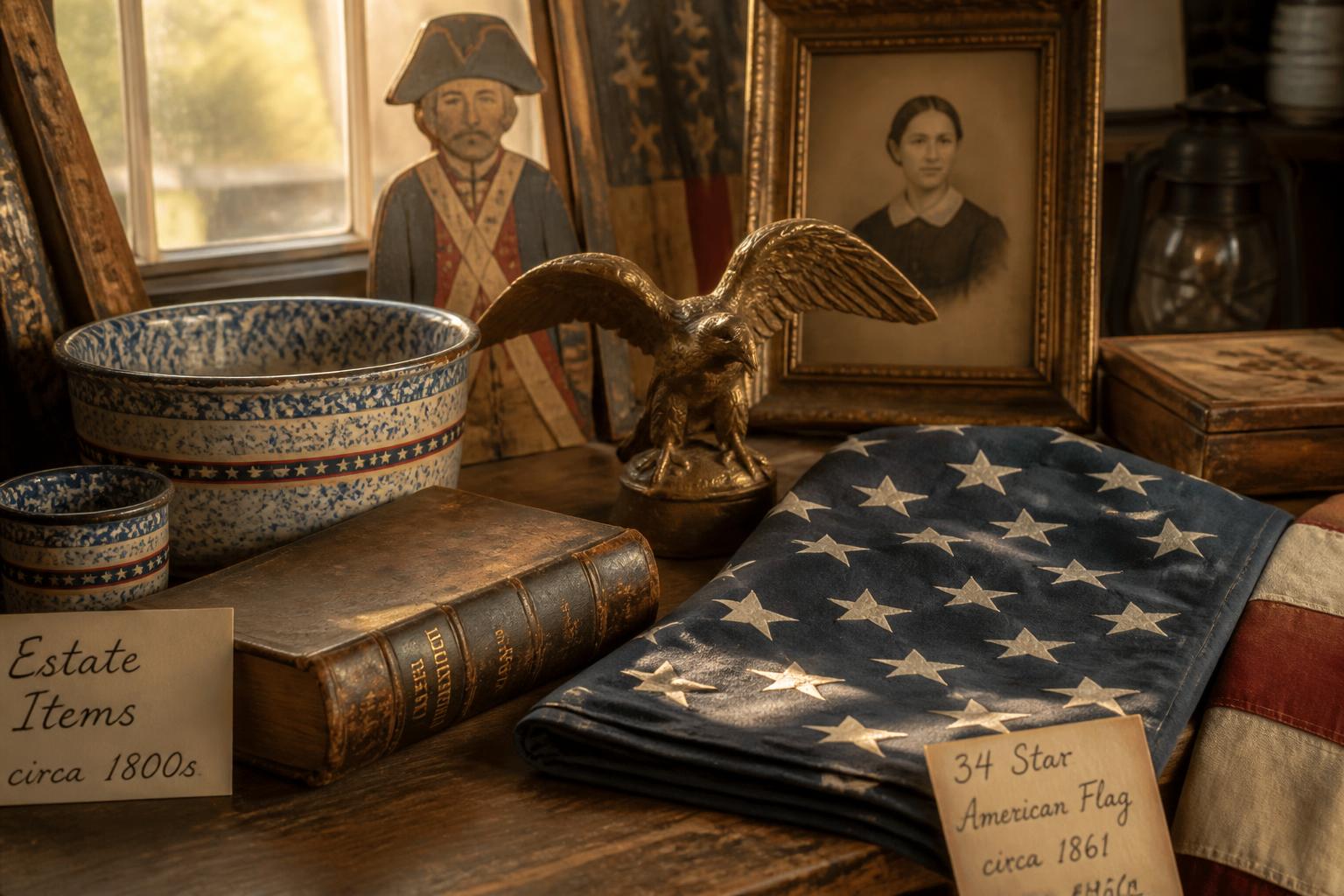
America turns 250 on July 4, 2026 — the Semiquincentennial — and it's already changing what sells at estate sales. Buyer interest is shifting hard toward authentic American-made goods, historical pieces, and patriotic collectibles, and the smart money says that wave runs through 2026 and well into 2027. If you shop, source, or run estate sales, this is the single biggest cultural tailwind of the next 12–18 months. Grab a slice of pie and let's talk about it.
The last time the country threw a birthday this big was the Bicentennial in 1976 — and the next milestone this size won't arrive for another 250 years. That once-in-a-lifetime energy has a name in the collecting world: Americana. And right now, it's on fire.
Why the 250th matters for treasure hunters
Big anniversaries do something powerful to a whole country's attic. Families pull out grandma's flag. Documentaries air. The U.S. Mint releases Semiquincentennial coins. Retailers flood shelves with "America 250" branded goods. And suddenly, millions of people are looking at old, red-white-and-blue, made-in-USA things and thinking, *"Wait — is that worth something?"*
The answer, increasingly, is yes. The Americana market has been climbing for years, and the 250th is pouring gasoline on it:
- At the top of the market, New York's January Americana auctions surged from roughly $40 million in 2020 to more than $160 million in 2026 — a fourfold jump in six years.
- Auction houses are running dedicated 250th-themed sales. Bonhams Skinner's *American Stories: Celebrating 250 Years of Independence* beat its estimate to total $2.4 million, with 85% of lots sold.
- A rare 34-star eagle parade flag (circa 1863–1864) more than doubled its high estimate at Freeman's, realizing $281,600.
- Even folk oddities are booming: patriotic sand-art bottles by Andrew Clemens have sold in the *six figures*.
Here's the part that should make every estate sale shopper grin: those are the trophy results. But the *taste* that drives them — the hunger for authentic, storied, American-made objects — trickles all the way down to the folding tables at a Saturday morning estate sale. The collectors setting records at Christie's started somewhere. So did the pieces.
What "America 250" demand actually looks like at estate sales
You're not going to find John Hancock's signature in a suburban ranch house (though stranger things have happened). What you *will* find is the everyday, affordable Americana that's quietly climbing in value as the country leans into its birthday. Here's what to keep your eyes peeled for.
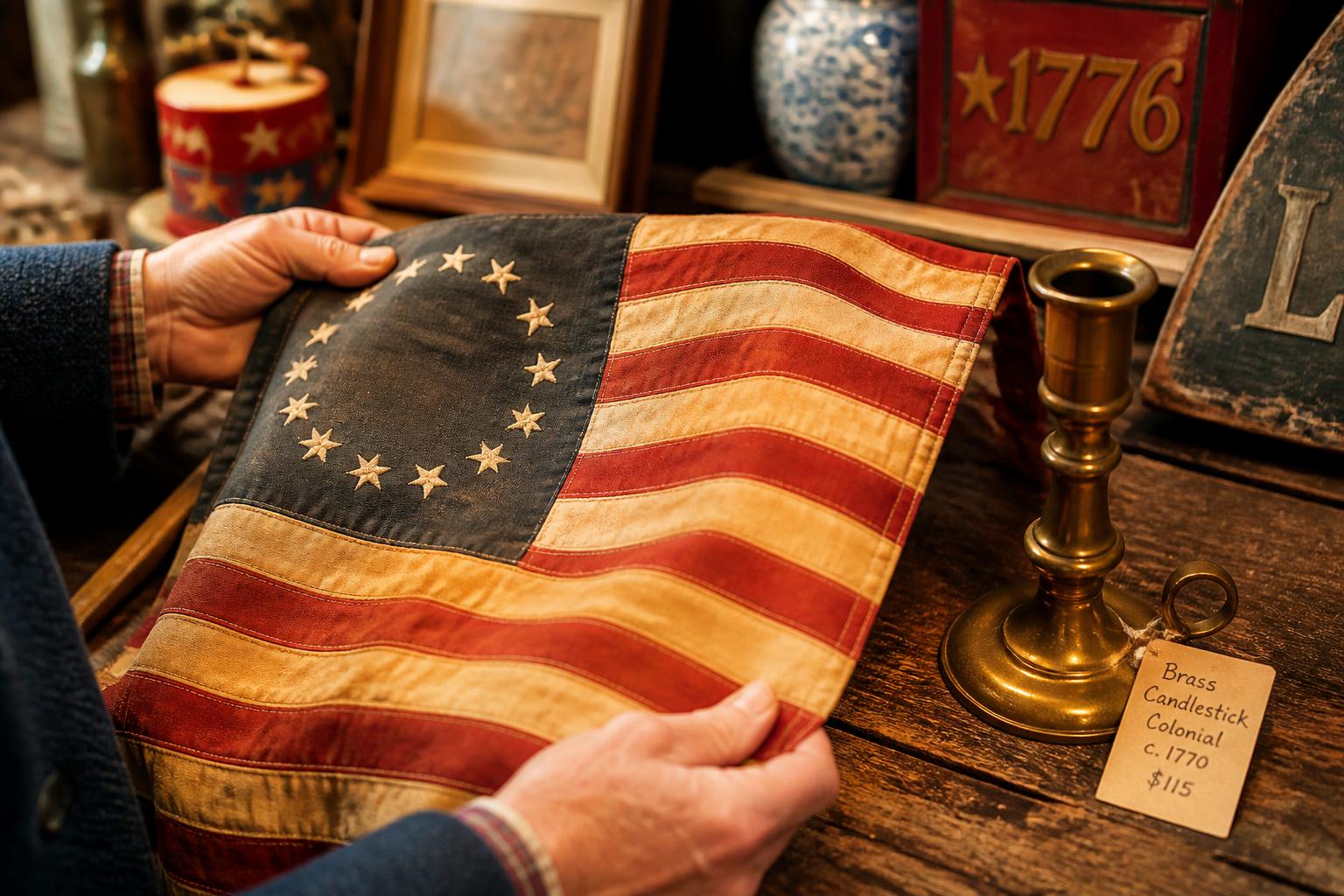
1. Antique and vintage American flags
Flags are the beating heart of the 250th trend. Star count tells the story — a 13-star, 34-star, 38-star, or 48-star flag can be dated to a specific slice of history, and pre-1912 hand-sewn flags with unusual star arrangements are the most prized. Even 1976 Bicentennial flags and bunting are having a moment as nostalgia doubles down.
2. Colonial and early-American furniture and primitives
Windsor chairs, ladder-back chairs, blanket chests, dry sinks, spongeware and stoneware crocks, wooden dough bowls, and hand-forged iron. "Brown furniture" softened for a decade — but authentic early-American primitives with real patina and a story are exactly the aesthetic driving today's folk-art revival.
3. Patriotic folk art and Americana decor
Carved eagles, weathervanes, hand-painted trade signs, Uncle Sam figures, drums, and anything with a genuine hand-made, star-spangled look. Folk art is the crossover darling right now — showing up everywhere from antique malls to Art Basel.
4. Presidential and political memorabilia
Campaign buttons, ribbons, inaugural programs, framed portraits of Washington and Lincoln, commemorative plates, and Bicentennial keepsakes. Historically resonant names — the founders, the great presidents — are exactly where new buyers are entering the market.
5. Documents, books, and ephemera
Old newspapers (especially anything dated around July 4), letters, maps, deeds, and leather-bound histories. The Americana-on-paper market has risen steadily for five years straight and keeps setting records — so don't walk past that box of "old papers."
6. American-made craftsmanship of every kind
Cast iron (Griswold, Wagner), American art pottery, quilts, samplers, coin silver, and tools stamped with USA maker's marks. Part of the 250th mood is a renewed pride in things built to last, made here — and buyers are paying up for it.
Why this is bigger than a summer fad
It would be easy to write this off as July-4th-weekend hype. It isn't, and here's why the runway stretches 12–18 months:
- The celebration is a full year (or more). America250 programming, exhibitions, and commemorative product releases run through 2026 into 2027 — sustained cultural attention, not a one-day spike.
- New, younger buyers are entering. Auction houses report more than one in four Americana buyers are *new* to the category, and millennials are showing up. New buyers mean new, lasting demand.
- Nostalgia is the dominant aesthetic. Folk art, "grandmacore," heritage craft, and made-in-USA authenticity were already trending. The 250th supercharges a wave that was already rolling.
- Scarcity is real. They aren't making any more 1876 Centennial keepsakes or hand-sewn 38-star flags. Fixed supply plus rising demand is the oldest math in collecting.
The families setting auction records didn't start with a Constitution. They started with a flag, a portrait, a curiosity — and a hunch. The 250th just handed every estate sale shopper that same hunch, a year early.
How resellers and flippers should play the next 12–18 months
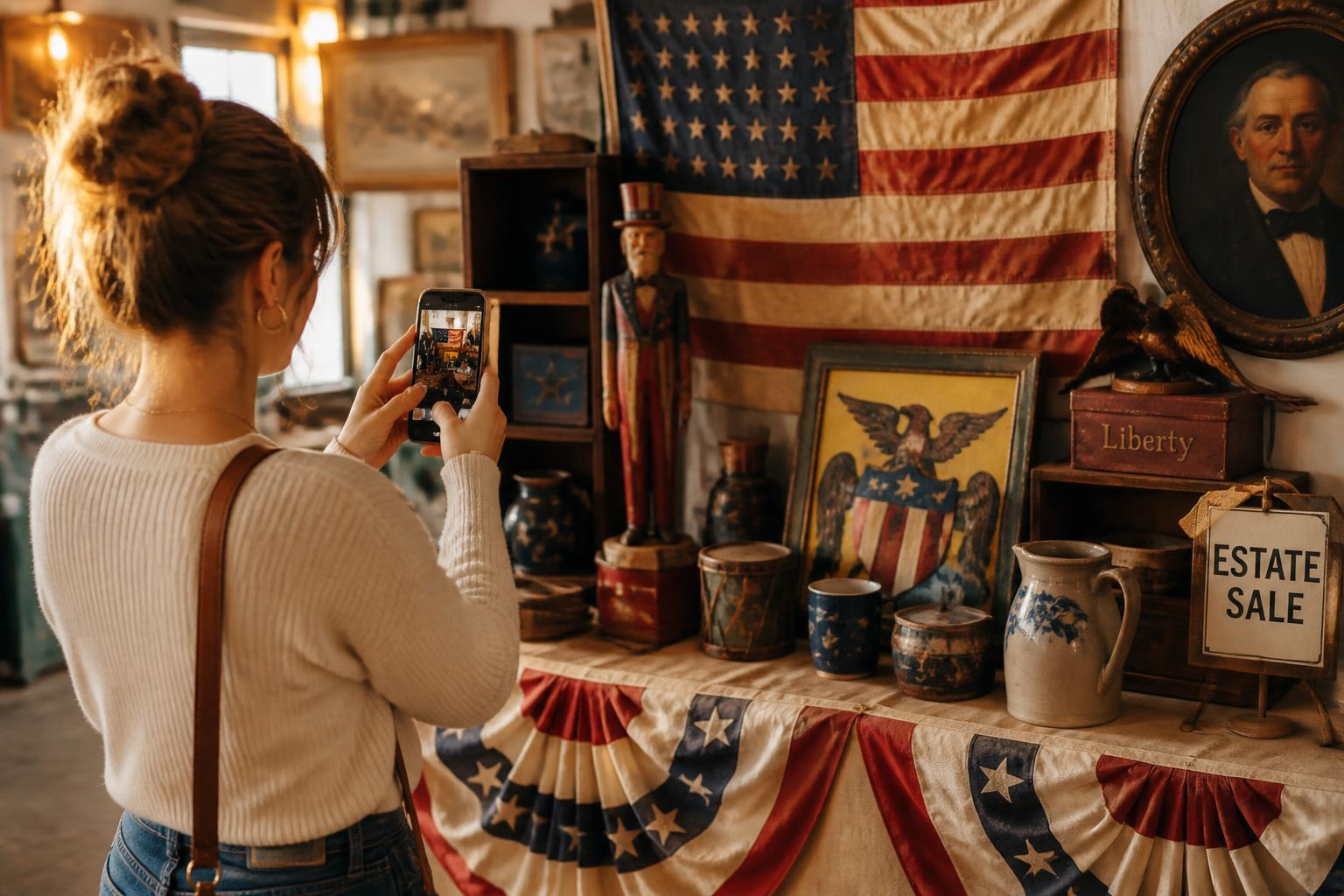
If you flip, this is a window you plan around. A game plan:
- Source now, sell into the wave. Estate sale prices haven't caught up to the trend yet — that's your margin. Buy authentic Americana this summer and fall, list it as the celebration peaks.
- Learn to date a flag on sight. Star count, construction (hand-sewn vs. machine), and material separate a $30 flag from a $300 one. This one skill pays for itself.
- Caption for the moment. List with terms buyers are actually searching — "antique 48-star flag," "colonial primitive," "vintage patriotic decor," "America 250." Speak the language and the algorithm finds your buyer.
- Chase authenticity, skip the mass-produced. New "America 250" retail goods will flood the market and mostly won't hold value. The wave rewards *genuine* age, provenance, and American craftsmanship.
- Verify before you commit. Not sure if that eagle carving is old or a reproduction? Snap a photo and let the Ai Appraiser give you a fast read on era, maker, and market value before you spend a dime.
How estate sale companies can cash in on the 250th
For companies running sales, the birthday is a marketing gift. Three moves:
- Theme and lead with it. If a home has flags, folk art, military, or colonial pieces, build the sale's headline around the 250th and stage those pieces up front and well-lit. Demand is highest for exactly this look right now.
- Name the patriotic inventory in your listing. When you list your sale on EstateSaleFinder, call out "antique American flag," "presidential memorabilia," or "primitive Americana" by name — those exact terms pull in the collectors already hunting them, and wishlist alerts notify buyers the instant your sale matches.
- Price patriotic pieces from data, not gut. The 250th has moved the market. Cross-check flags, folk art, and militaria against current comparables so a family doesn't leave money on the table — and so you can explain the number with confidence.
The bottom line
America's 250th isn't just a party — it's a rare, year-long spotlight on everything old, handmade, and proudly American. For treasure hunters, it means the dusty flag in the back bedroom and the carved eagle over the mantel are suddenly the stars of the sale. For resellers and estate sale companies, it's a demand wave with a clear runway through 2026 and into 2027.
So this Fourth of July, hunt with fresh eyes. That box of "old papers," that faded flag, that portrait of a stern-faced founder — in America's 250th year, they're not clutter. They're the story of the country, waiting on a folding table for someone who knows what it's worth.
Find patriotic and Americana estate sales near you, set a wishlist alert for flags and folk art, and let the Ai Appraiser tell you what your finds are really worth. Happy 250th, America — and happy hunting. 🇺🇸
America 250 & Estate Sales — Quick Answers
Why is Americana suddenly so valuable in 2026?
Because the United States turns 250 on July 4, 2026 — the Semiquincentennial. The milestone, which last happened at the 1976 Bicentennial and won't recur for another 250 years, has driven a surge of collector and buyer interest in authentic American-made, historical, and patriotic items. Top-tier Americana auction totals in New York have quadrupled since 2020, and demand is trickling down to everyday estate sale finds.
What patriotic items should I look for at estate sales?
The strongest America 250 categories are antique and vintage American flags (star count helps date them), colonial and early-American furniture and primitives, patriotic folk art (carved eagles, weathervanes, trade signs), presidential and political memorabilia, historical documents and old newspapers, and American-made craftsmanship like cast iron, quilts, and art pottery.
How can I tell if an antique American flag is valuable?
Look at the star count, construction, and material. Fewer stars generally means older — a 13, 34, 38, or 48-star flag maps to a specific era. Hand-sewn flags with unusual or hand-cut star arrangements, made before 1912, are the most prized. Condition and provenance matter too. Photograph it and run it through an Ai appraisal for a quick era and value read.
How long will the America 250 collecting trend last?
Expect the wave to run through 2026 and into 2027. America250 celebrations, exhibitions, and commemorative releases span a full year or more, new and younger buyers keep entering the market, and the underlying nostalgia and made-in-USA aesthetic were already trending before the anniversary — so this is a sustained shift, not a one-weekend spike.
Should resellers buy new "America 250" branded merchandise to flip?
Generally no. Mass-produced, newly branded America 250 retail goods will flood the market and mostly won't hold value. The trend rewards *authentic* age, provenance, and genuine American craftsmanship — antique flags, folk art, and historical pieces — so source real vintage Americana at estate sales rather than new commemorative merchandise.
How can estate sale companies market patriotic items for the 250th?
Theme sales around the anniversary when a home has flags, folk art, militaria, or colonial pieces; stage those items up front and well-lit; and name them specifically in your online listing ("antique American flag," "presidential memorabilia," "primitive Americana"). Naming on-trend inventory pulls in collectors searching those exact terms, and wishlist alerts notify interested buyers automatically.