What Collectors Are Actually Hunting for at Estate Sales in 2026 (The Complete Trend Report)
Every year the estate sale market quietly reshuffles what's hot and what's not. For 2026, the shift is unmistakable: practical beats decorative, solid wood beats particle board, and a handful of sleeper categories — vinyl, primitive kitchenware, vintage art, 80s/90s toys, and ceramic Christmas trees — are pulling real money. Here's the data-backed field guide to what's trending, what it's worth, and exactly what to put on your watch list before you walk in the door.
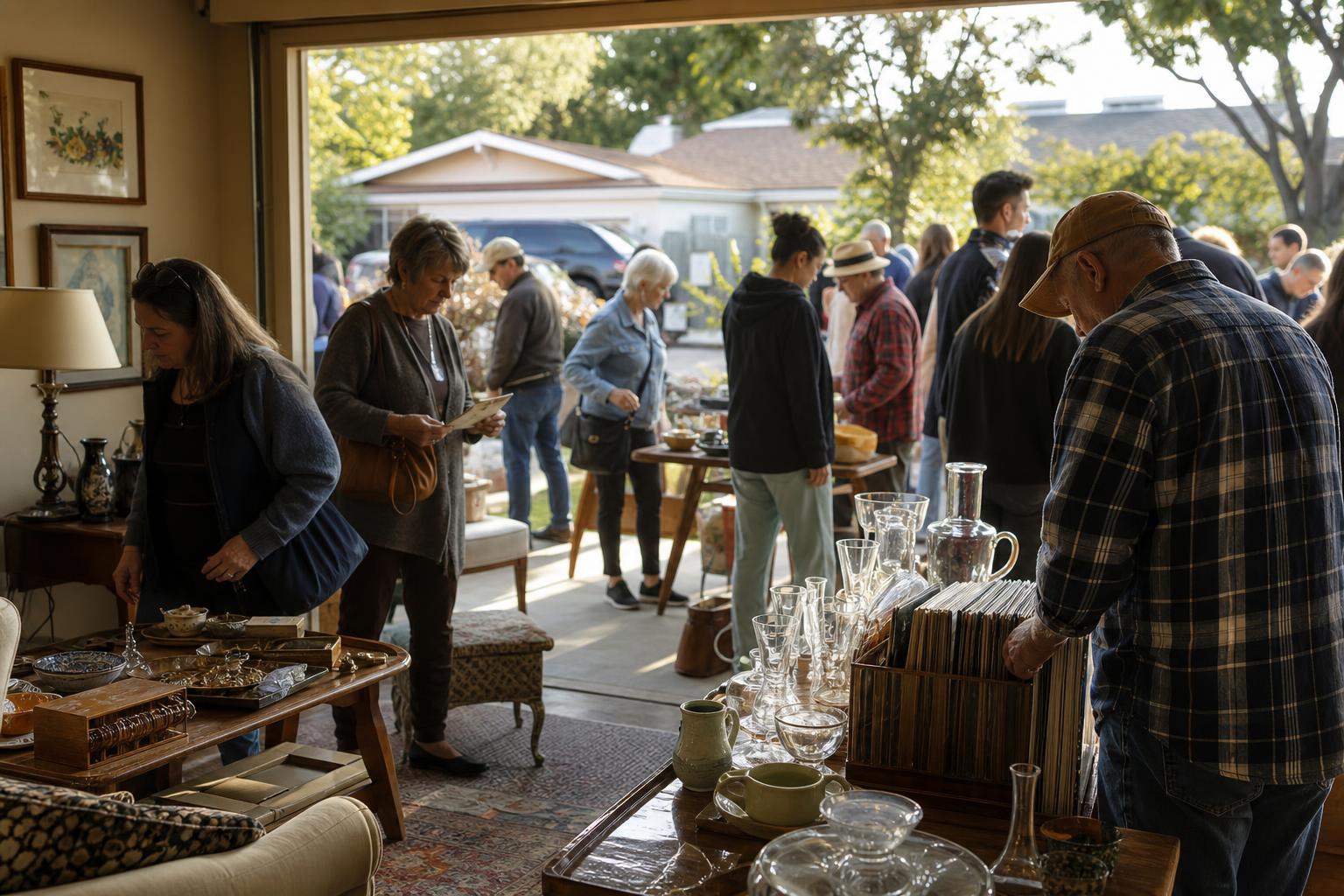
Every January, the same thing happens in living rooms across the country. The crowd lines up before sunrise, the doors open, and a few hundred thousand people spend the year hunting for things other people forgot they owned. And every year, what that crowd is hunting *for* quietly changes.
2026 is one of the bigger reshuffles we've seen in a while. After years of "brown furniture is dead" and "nobody wants grandma's stuff," the pendulum has swung hard in the other direction — and it swung toward two things at once: things that are useful and things that are real. Solid wood over particle board. A working stand mixer over a decorative figurine. An original painting over a mass-produced print. The 2026 buyer is part nostalgist, part pragmatist, and entirely done overpaying for new.
This is our complete trend report for the year — what's actually moving, what it's actually worth, and how to make sure the good stuff lands in your hands instead of someone else's. We built it from what estate sale companies are reporting at the register, what's commanding premiums on eBay sold listings and Facebook resale groups, and the categories pros like Blue Moon Estate Sales and decor specialists like Lost & Found Decor keep flagging as the year's quiet winners.
Read it once, then save the watch list at the bottom. The whole point of a trend report is to walk in already knowing what you're looking for while everyone else is still figuring it out.
1. Vinyl Records Are Still Climbing — and the Money Moved to the Edges
Vinyl's comeback isn't news anymore. What *is* news is where the value sits in 2026. The broad middle of the record market — the scratched-up greatest-hits compilations and the warped easy-listening LPs — is still basically worthless, tagged at a dollar or three and worth about that.
The money has moved to the edges: clean first pressings and the right genres. Classic rock continues to anchor the market — original pressings of the canon records in playable condition routinely move for $40 to $150 each. Jazz is where the real gravity is: original Blue Note, Prestige, and Riverside pressings can run from $100 into the four figures for the right title and stamp. And the genre that's grown fastest is hip-hop — original-pressing rap and early hip-hop LPs that nobody saved are now commanding $50 to $300 and up, because the people who grew up on them finally have collector money.
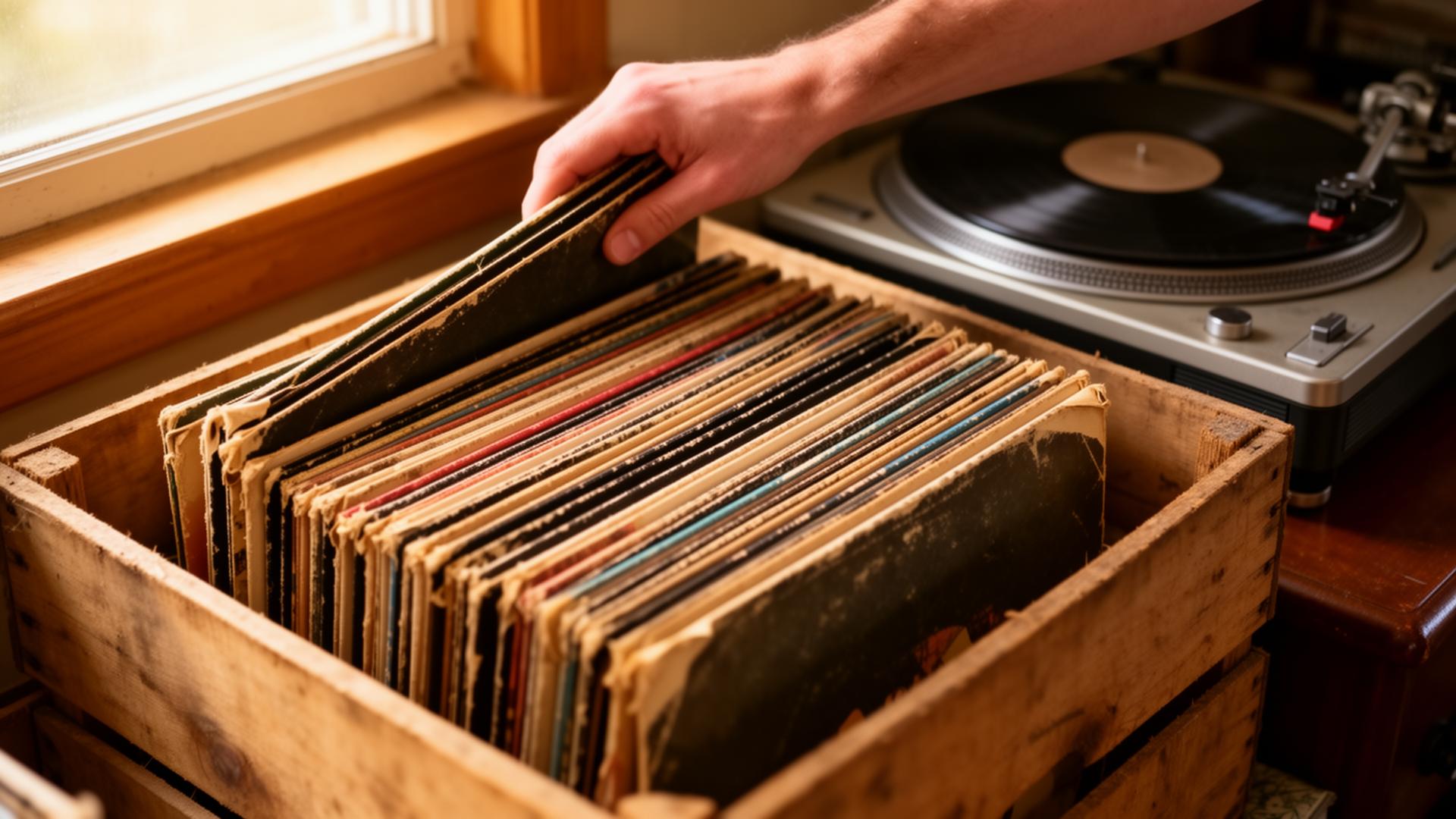
Here's why estate sales are the best place to play this: records get priced in bulk. A box marked "$2 each" or "fill a bag" almost never reflects what any individual record inside it is worth, because the people pricing the sale don't have time to look up 400 titles. Your edge is knowing which spines to pull.
What to watch for: original first pressings (deep-groove labels, original catalog numbers, no "reissue" or club-edition markings), classic rock, jazz on the collectible labels, early hip-hop, and anything still sealed. Flip the jacket, check the vinyl for scratches under a light, and look up the pressing before you walk away. A $2 record can be a $200 record — and at a bulk-priced box, the only thing standing between you and that margin is whether you bothered to look.
2. The Big 2026 Shift: Practical Is Outselling Pretty
If there's one headline for the year, this is it. Functional, high-quality household items are outperforming decorative ones — often dramatically. It reflects exactly the economy you're living in: people don't want a knickknack for the shelf, they want the $500 appliance for $120.
The poster children are the kitchen workhorses. A used stand mixer that retails new for $300 to $500 routinely sells at an estate sale for $80 to $200 — and sells *fast*, because buyers know these run for thirty years. High-power blenders that cost $400 to $650 new move in the $150 to $350 range. And premium stainless tri-ply cookware — the heavy, bonded stuff that costs a fortune by the piece — gets tagged at estate sales for $10 to $40 a pan and resells, or simply *serves you*, at a fraction of retail.
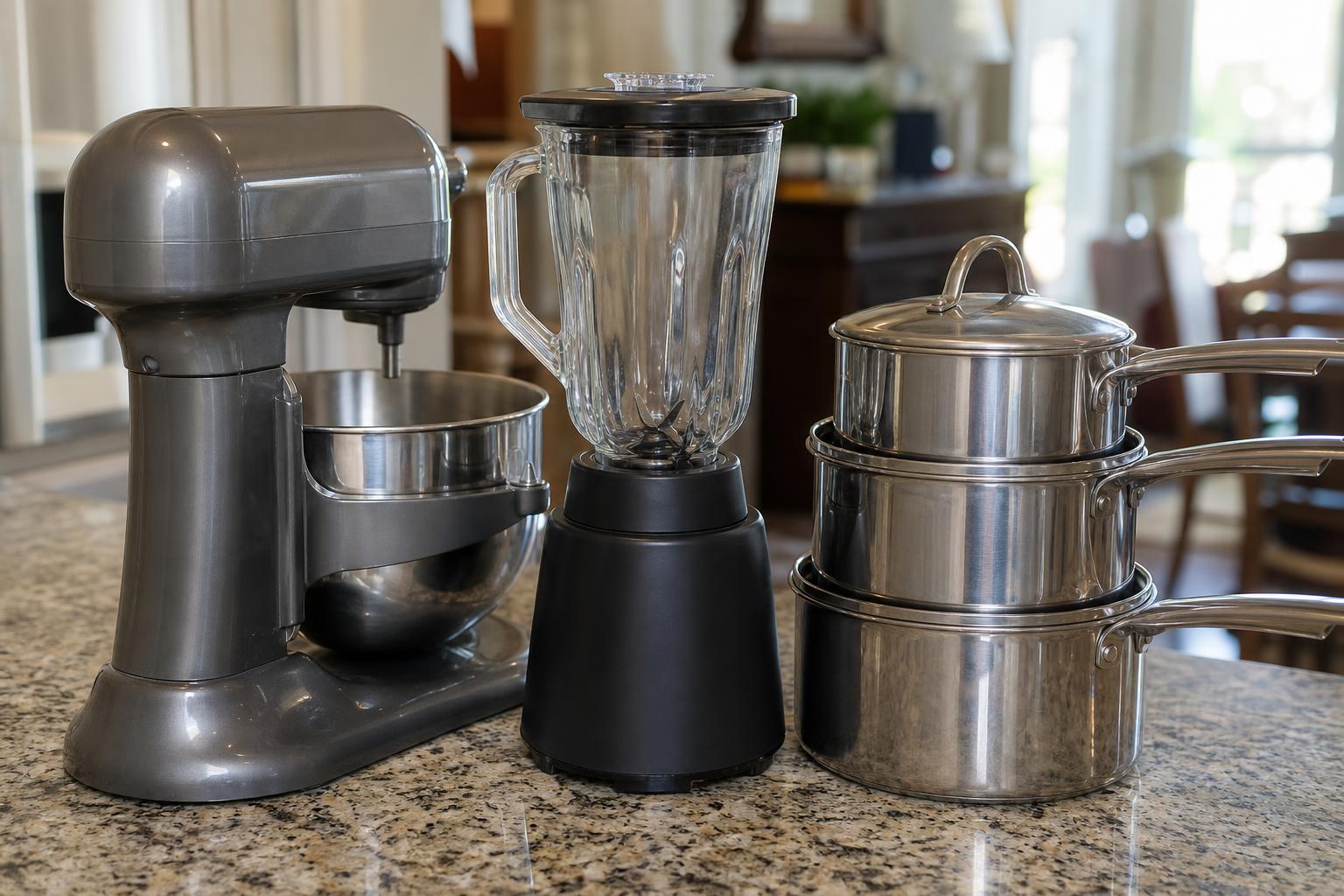
This is the rare trend that's a win whether you're flipping or keeping. Resellers love it because the demand is bottomless and the margins are clean. Regular shoppers love it because it's the single fastest way to outfit a real kitchen for the price of one dinner out.
What to watch for: stand mixers, high-power blenders, bonded stainless cookware, cast iron (still red-hot — clean vintage skillets from the good early makers carry serious premiums), and small appliances that obviously cost a lot new. Plug it in if you can. A working premium appliance at a quarter of retail is the most reliable "buy it every time" category of the year.
3. Solid Wood Furniture Is Back — and Particle Board Is Finally Dead
For a decade, the story was "brown furniture is worthless." That story is over. In 2026, the buying public has figured out what a generation of flat-pack furniture taught them the hard way: particle board falls apart, and solid wood lasts forever. With new furniture quality sliding and prices climbing, a well-built vintage piece is suddenly the smart-money buy.
Mid-century is still the premium tier — a genuine walnut or teak credenza, dresser, or sideboard from the era can run $300 to $1,200 and well beyond for signed designer pieces. But the trend has broadened past MCM. Solid oak, maple, and cherry dressers, dining tables, bookcases, and desks — the heavy, dovetailed, real-wood pieces your grandparents bought to last — are moving again at $150 to $600 because buyers finally understand the difference between furniture you keep and furniture you replace.
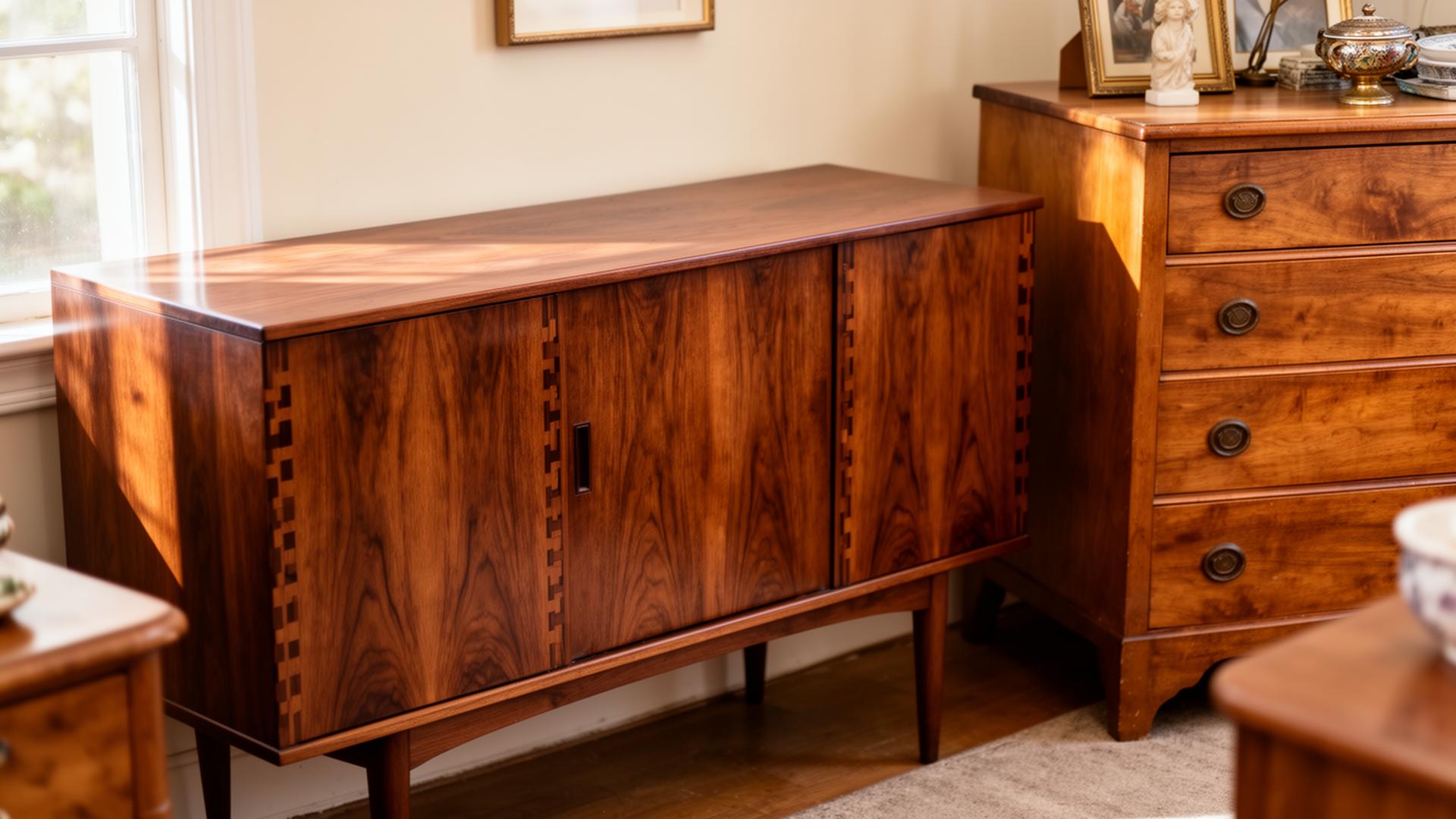
The tell is in the construction. Dovetail joints in the drawers, a solid back panel, real wood grain that wraps around the edges instead of a printed laminate that stops at a seam, and serious *weight*. Flip a drawer out and look at the corners. If it's dovetailed and heavy, it's the trend. If it's stapled chipboard with a photo of wood glued on top, leave it.
What to watch for: solid-wood case goods (dressers, credenzas, sideboards), dining tables and chairs, bookcases, and desks. Mid-century walnut and teak carry the highest premiums, but plain solid oak and maple are the sleeper value. Check the drawers, check the weight, and skip anything laminate.
4. Primitive & Farmhouse Kitchenware Is Surging on the Cottagecore Wave
The cottagecore aesthetic didn't fade — it matured into a full-blown buying category, and in 2026 it's pulling the old, honest, hand-worn kitchen pieces right out of the cupboards. This is the warm, lived-in, "looks like it's been used for a hundred years" look, and the genuine antiques that nail it are getting harder to find and easier to sell.
Salt-glazed stoneware crocks and crock bowls are the anchor — depending on size, glaze, and maker, they run from $40 into the hundreds, with decorated and signed pieces climbing well past $200. Carved wooden dough bowls have become a centerpiece object, regularly $60 to $250. Even the humble wooden rolling pin — the worn, one-piece antique kind — moves at $15 to $45, and they sell in stacks because stylists buy them by the handful.
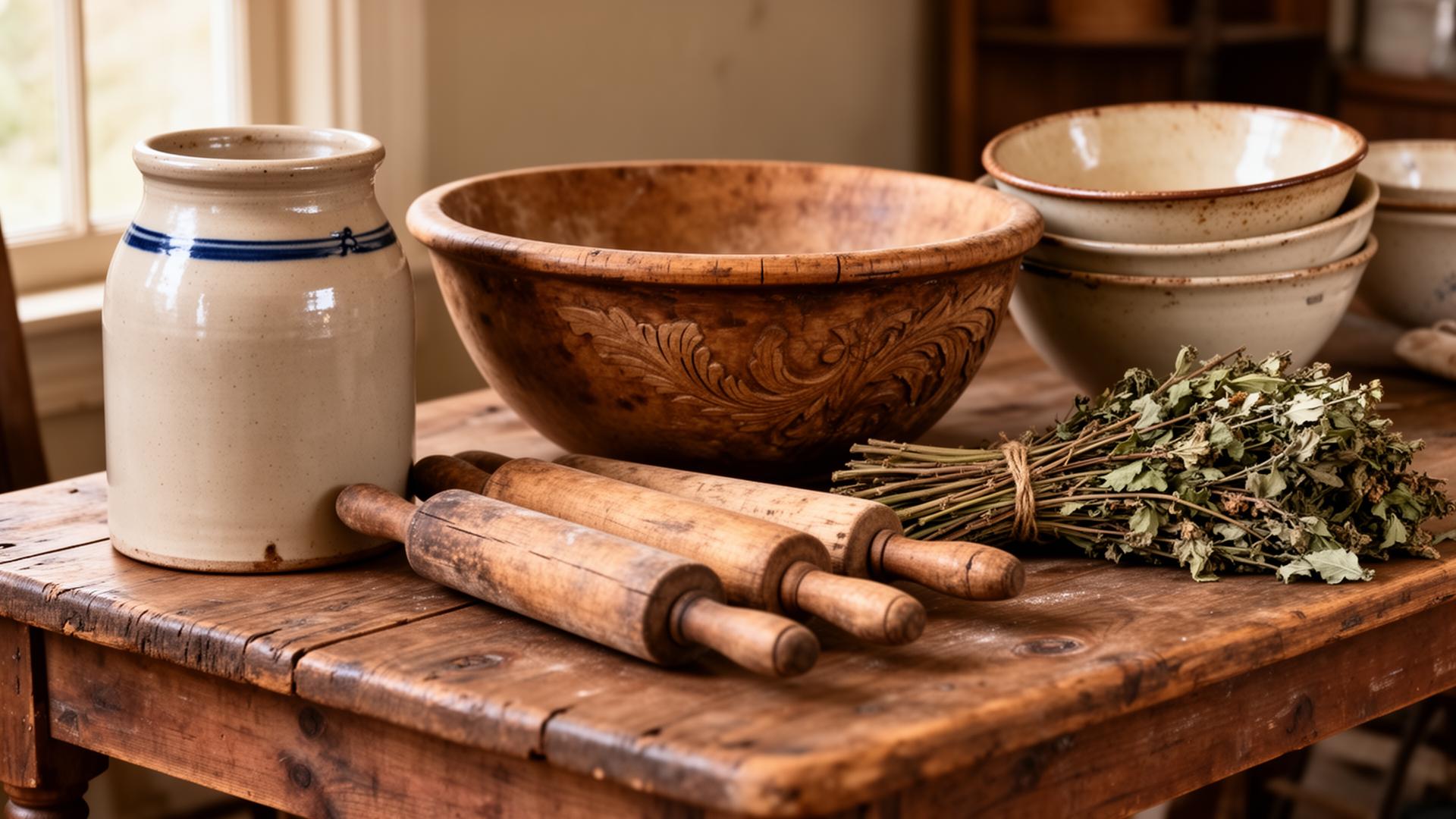
The key word here is *authentic*. The craft-store version of this look — the brand-new "farmhouse" crock with the fake stamp — is worth nothing. The real one, with genuine wear, age-darkened wood, and honest crazing in the glaze, is the trend. Buyers in this category can spot the difference instantly, and they pay for the real thing.
What to watch for: stoneware crocks and bowls (look for maker's marks and decoration), wooden dough bowls, antique rolling pins, yellowware and mixing bowl sets, enamelware, breadboards, and old utensils with worn wooden handles. The more honestly used it looks, the more it's worth.
5. Vintage Artwork Is Having a Major Moment
For years, original art at estate sales was the most overlooked category in the house — people walked right past framed paintings to dig through the jewelry. In 2026 that's flipped. With everyone tired of mass-produced prints and the "blank wall" problem driving a hunt for one-of-a-kind pieces, original vintage artwork is one of the year's strongest movers.
Original oil and watercolor paintings — landscapes, still lifes, portraits, and especially mid-century abstracts — are selling briskly, commonly in the $50 to $500 range, with signed pieces by listed or regional artists climbing into the thousands. The frames alone are part of the value now: a genuine carved giltwood frame can be worth real money empty. And because most shoppers still can't tell an original from a print, the margins for those who *can* are enormous.
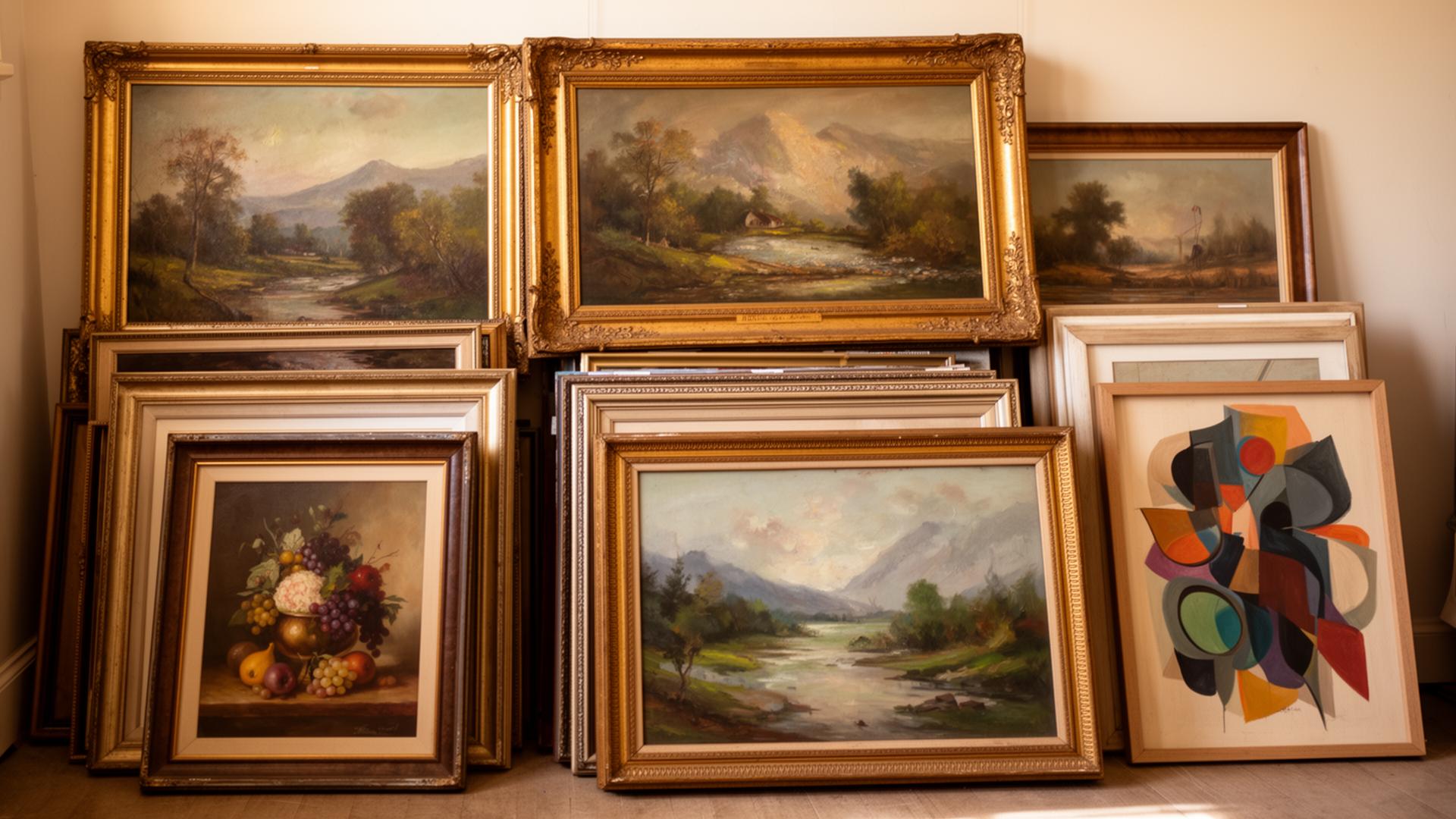
The thirty-second test: look at the surface at an angle. An original oil has texture — you can see and feel the brushstrokes standing up off the canvas. A print is flat, and under a loupe you'll often see a dot pattern. Then check the back: old stretcher bars, gallery labels, an artist's signature, or a hand-written title are all signals you may be holding something well underpriced.
What to watch for: original oils and watercolors (texture you can feel), signed works, mid-century abstracts, and quality carved frames. Always check the back for labels and signatures — that's where the value gets confirmed.
6. The 80s/90s Toy Renaissance Is in Full Swing
The Millennials are now the ones with the buying power, and they are spending it on their childhoods. The 80s and 90s toy market has gone from niche to mainstream, and estate sales — where these toys sat boxed in attics and closets for thirty years — are ground zero.
Carded and boxed action figures lead the charge: depending on the line and condition, they range from $50 to several hundred dollars, and the genuinely rare carded figures from the marquee franchises reach into the thousands. Vintage building-block sets, especially sealed ones, sell for multiples of their original retail. Collectible pocket-sized dolls and compacts from the era run $30 to $150. Even loose, played-with figures move at $10 to $60 each because collectors need the parts.
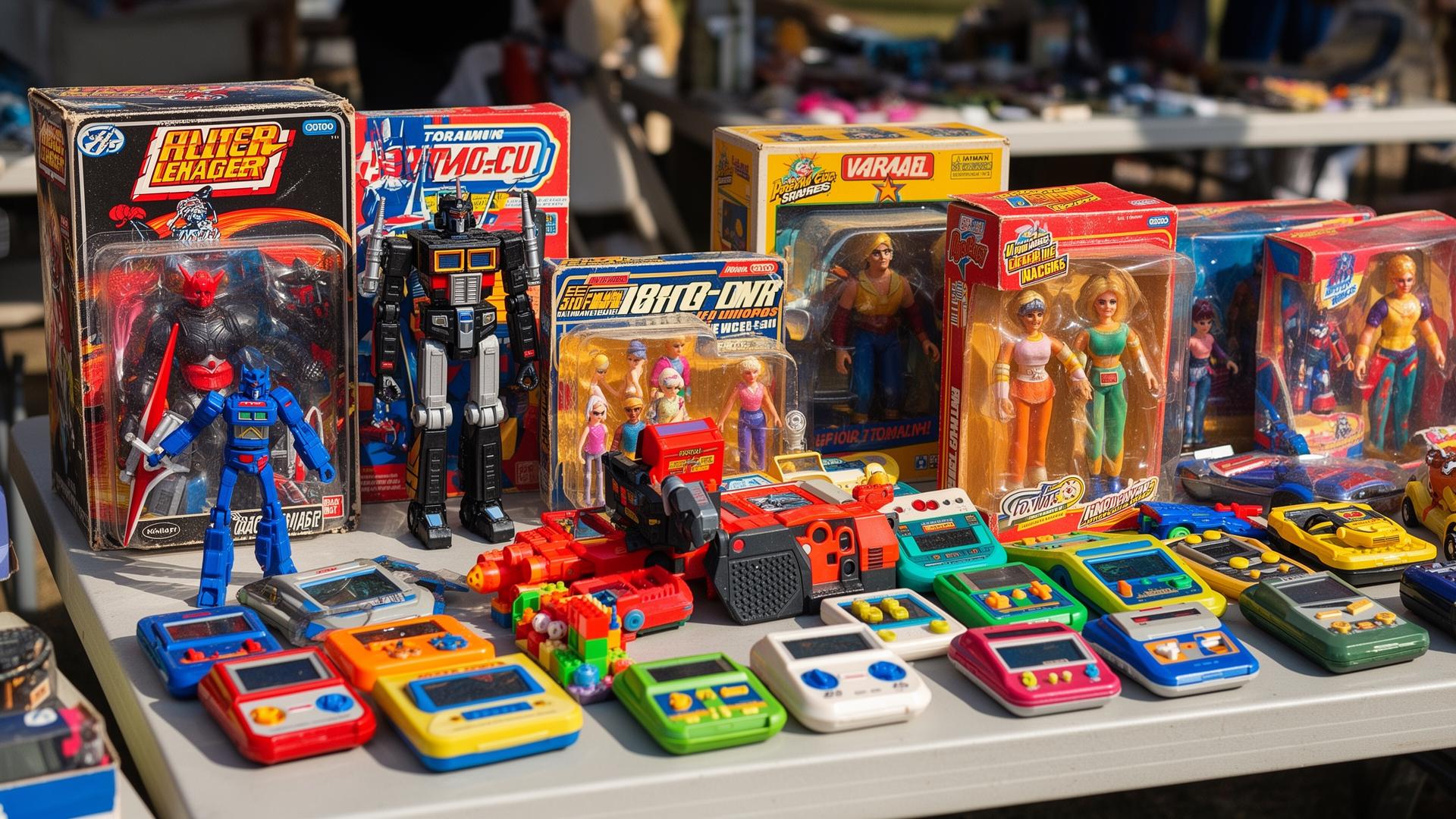
Condition and completeness are everything in this category. A figure still sealed on its original card is worth a large multiple of the same figure loose. Original boxes, instructions, and all the little accessories matter enormously. The instinct to "open it and play" is exactly why sealed examples are now so scarce and so valuable.
What to watch for: carded/boxed action figures, sealed building sets, pocket dolls and compacts, die-cast vehicles and robots, and handheld electronic games. Boxed and complete beats loose every time — and "I had that as a kid" is the most reliable buy signal in the whole sale.
7. The Sleeper Hit of the Year: Ceramic Christmas Trees
Every trend report needs one wildcard, and this is 2026's: the vintage ceramic Christmas tree. The light-up green ceramic trees with the little colored plastic bulbs — the ones that sat on grandma's side table every December — have quietly become one of the most consistently profitable seasonal flips in the country.
These move year-round now, not just in winter, and they sell shockingly well. A standard vintage light-up tree typically runs $40 to $150, and the larger, rarer, or unusually colored examples (white, blue, or the big two-piece musical bases) climb to $150 to $300 and beyond. The nostalgia is bulletproof, the supply is finite, and the demand spikes hard every fall — which means a tree you buy in May for $40 can do very well by November.
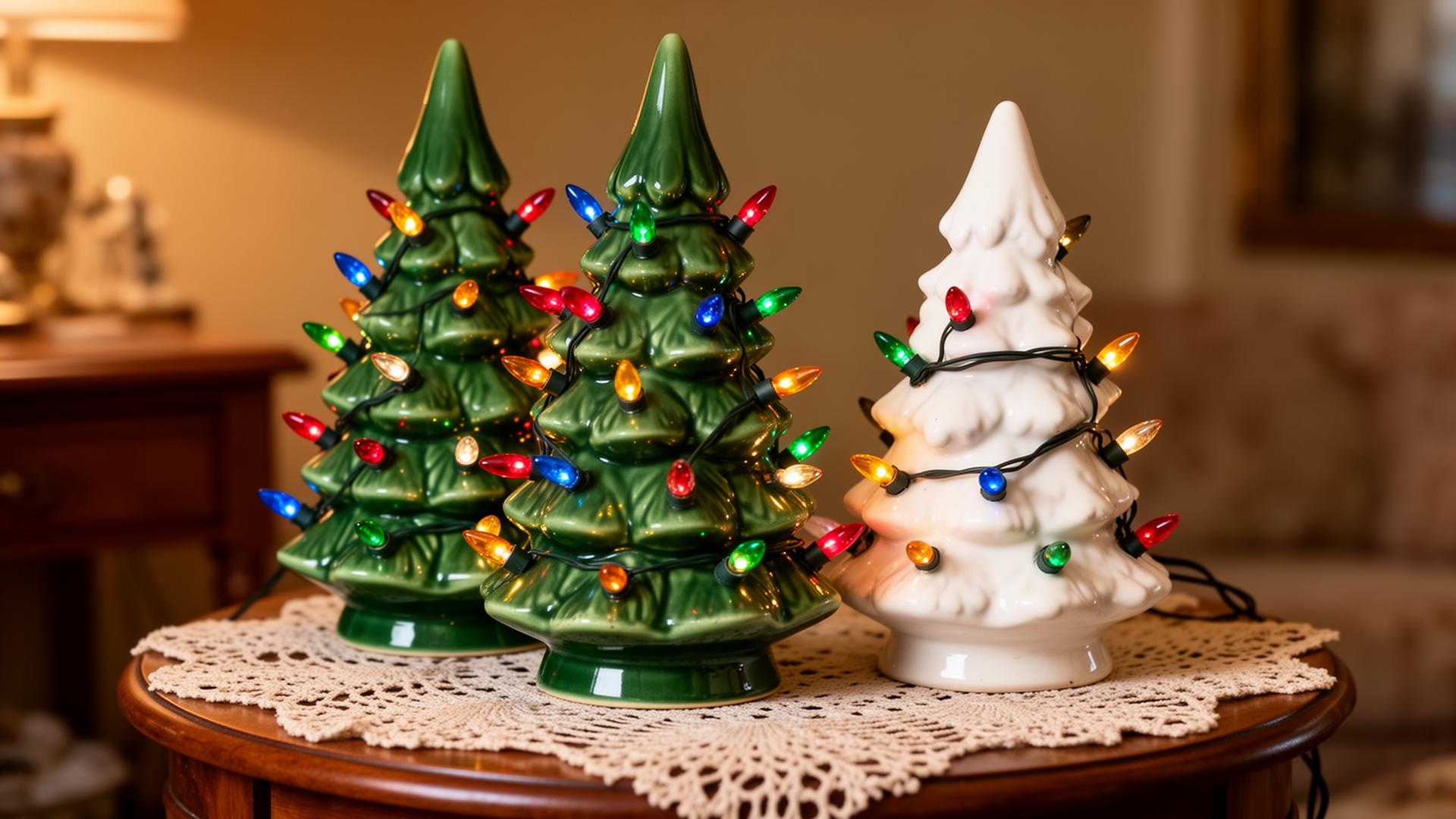
The value lives in the details: all the original plastic bulbs present, the base intact, no cracks or chips in the ceramic, and a working light kit. A complete, undamaged tree with every bulb is worth far more than one missing a third of its lights. Check it over, count the bulbs, and if it lights up, it's a buy.
What to watch for: vintage ceramic light-up trees with original bulbs, intact bases, working light kits, and the rarer white/blue/musical versions. Buy them in the off-season when they're cheap and overlooked.
The 2026 Watch List at a Glance
The whole point of a trend report is to walk in already knowing what you're hunting for. Here's the year in one scannable list:
- Vinyl records — first pressings, classic rock, jazz on collectible labels, early hip-hop. ($40–$1,000+)
- Kitchen workhorses — stand mixers, high-power blenders, bonded stainless cookware, vintage cast iron. (a fraction of retail)
- Solid wood furniture — mid-century walnut/teak and solid oak/maple case goods. ($150–$1,200+)
- Primitive kitchenware — stoneware crocks, dough bowls, rolling pins, yellowware. ($15–$250+)
- Original vintage art — oils, watercolors, mid-century abstracts, carved frames. ($50–thousands)
- 80s/90s toys — carded figures, sealed sets, pocket dolls, handheld games. ($10–thousands)
- Ceramic Christmas trees — vintage light-up, original bulbs, rare colors. ($40–$300+)
Don't Trust Your Memory — Put It on Your List
Here's the honest problem with every trend report, including this one: you'll read it, nod along, and then forget two-thirds of it by the time you're standing in a stranger's garage at 7 a.m. with a flashlight in one hand and a ceramic tree in the other, trying to remember whether it's worth $40 or $140.
That's exactly what the wishlist and keyword alerts are built for. Tell EstateSaleFinder what you're hunting for — "ceramic Christmas tree," "Blue Note," "walnut credenza," "KitchenAid," "stoneware crock" — and we watch the new estate sale listings in your area for you. When something on your list shows up nearby, you get the alert *before* the crowd does. The 2026 watch list above isn't just something to read; it's something to load into your account so the trends come to you.
And when you're standing there unsure whether the thing in your hands is the underpriced winner or the worthless lookalike, that's the moment to pull out your phone. Snap a photo with the Ai appraiser, see what comparable pieces have actually sold for, and decide in thirty seconds. Real sold-comp data beats a hunch every time — and in a year where the difference between "pretty" and "valuable" is the whole game, thirty seconds of checking is the cheapest money you'll ever make.

The trends will change again next year — that's the nature of this hobby, and it's why this report gets rewritten every January. But the move never changes: know what's hot before you walk in, check the real numbers before you buy, and let the good stuff come to you. See you in the driveway.