

The Ai Revolution Is Here — And It's Changing How We Treasure Hunt
Forget scrolling through blurry photos. Ai can now scan an entire room and tell you exactly what's worth buying — here's how it works.
The estate sale industry has long relied on word-of-mouth, newspaper ads, and basic online listings. But artificial intelligence is transforming every step of the process — from how sellers catalog their items to how buyers discover sales worth visiting.
The Problem with Traditional Estate Sales
For sellers, the biggest challenge has always been inventory. Cataloging hundreds (sometimes thousands) of items by hand is exhausting and time-consuming. Most sellers resort to vague descriptions like "lots of household items" or "furniture and collectibles," which tells buyers almost nothing about what they'll actually find.
For buyers, the challenge is discovery. Scattered listings across multiple websites, Facebook groups, and classified ads make it nearly impossible to get a complete picture of what's available in your area. And even when you find a listing, the lack of detailed item information means you're often driving to sales blindly, hoping the "lots of miscellaneous" line hides something worthwhile.
That gap between what's actually inside a home and what buyers can see online has shaped the whole hobby for decades. Serious treasure hunters built routines around it — showing up early, checking multiple sites, trading tips in local Facebook groups — just to compensate for how little information was available ahead of time.
How Ai Solves Both Problems
For Sellers: Instant Cataloging
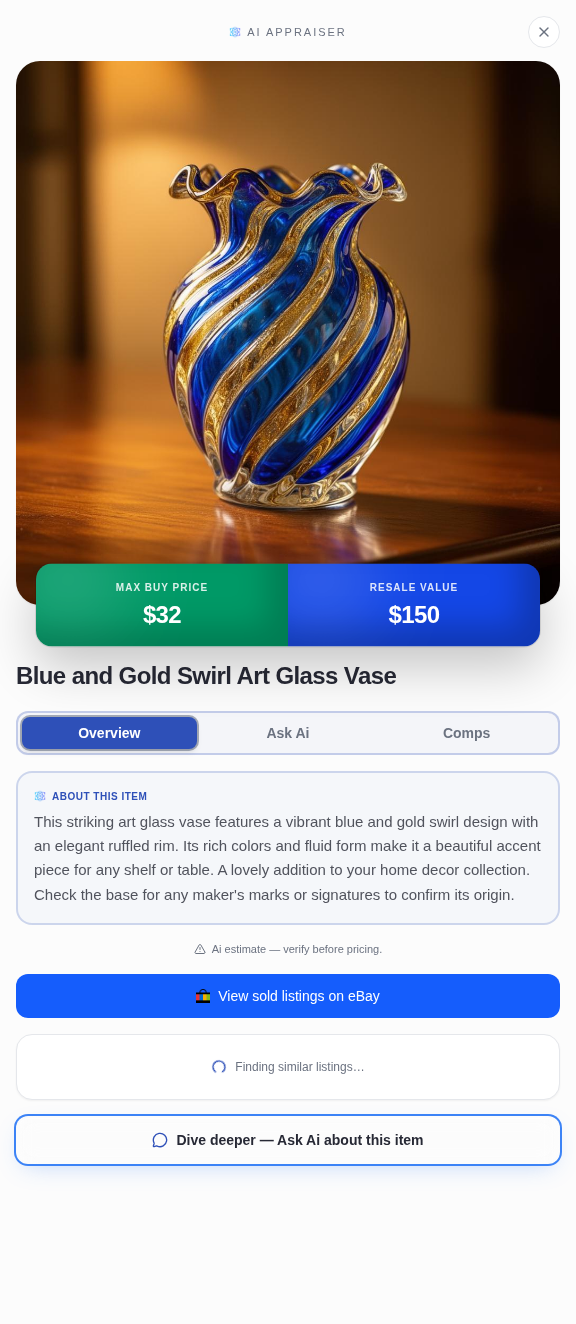
Ai vision technology can scan a photo of a room and identify every visible item — from furniture and artwork to small collectibles and kitchen appliances. Instead of spending hours writing descriptions, sellers can upload photos and get a complete inventory in minutes.
Each item gets an Ai-generated label, description, and estimated price range based on real market data. The result is a rich, detailed listing that attracts more serious buyers. This matters most for the categories that used to get glossed over: a drawer of flatware, a shelf of paperbacks, a box of old tools. Those items rarely get individual attention from a human cataloger, but they're exactly the kind of thing a specific buyer is searching for.
It's worth remembering that Ai-generated descriptions and price ranges are a starting point, not a verdict. A tool can recognize a pattern of cookware or a style of lamp, but it can't always tell you about hairline cracks, missing parts, or repairs — sellers should still do a hands-on condition check before finalizing prices, and buyers should always inspect items in person before paying.
For Buyers: Smarter Discovery
With Ai-powered item detection, buyers can search for specific items rather than browsing generic sale listings. Looking for mid-century modern furniture? Vintage vinyl records? Sterling silver? Ai makes it possible to find exactly what you're looking for across all active sales in your area, instead of reading through dozens of listings hoping one happens to mention it.
Combined with map-based search and optimized route planning, buyers can plan efficient sale-shopping trips that maximize their time and minimize driving. A collector who's spent years driving to sales "just in case" can now filter down to the handful of sales that actually have something worth the trip.
What This Means for How You Shop
If you're used to treasure hunting the old-fashioned way, a few habits are worth updating:
- Set up keyword alerts for the categories you collect, so you hear about matching items as soon as they're listed rather than stumbling across them.
- Use item-level photos as a first filter, but still show up in person — lighting, filters, and photo angles can make condition hard to judge from a screen.
- Cross-check Ai price estimates against recent sold listings for similar items when something looks like a big find; estimates are a helpful starting point, not a guarantee.
- Don't abandon the fundamentals. Getting to a sale early, being polite to sellers, and bringing cash still matter just as much as they always did.
The Future of Estate Sales
We're still in the early days of Ai-powered estate sales, but the direction is clear. As Ai models improve, we'll see even more accurate item identification, better price guidance, and smarter matching between buyers and the items they're looking for — without replacing the judgment of a careful shopper or an experienced seller.
The estate sale industry is evolving, and Ai is leading the way. Whether you're a seller looking to streamline your process or a buyer searching for hidden treasures, the tools available today are already making the experience dramatically better — while the heart of estate sale shopping, the thrill of discovery, stays exactly the same.
Keep exploring
Ready to start your own treasure hunt?
Discover estate sales near you and find incredible deals.
Explore Sales Near Me
About the author
Andy
Founder, EstateSaleFinder.net
Hi, I'm Andy — a retired commercial photographer turned developer with a five-year (and counting) obsession with estate sales. I started EstateSaleFinder.net because I knew there had to be an easier, smarter way to find and list estate sales. Now I get to chase treasure and build the tool I always wished existed.