I'm a Treasure Hunter — I Spent a Month Helping Set Up Estate Sales. Here's Everything I Got Wrong.
I thought running an estate sale meant putting stuff on tables and opening the door. Then I spent a month behind the scenes — the sorting, the scrubbing, the impossible pricing conversations with grieving families — and I will never grumble at a price tag the same way again.
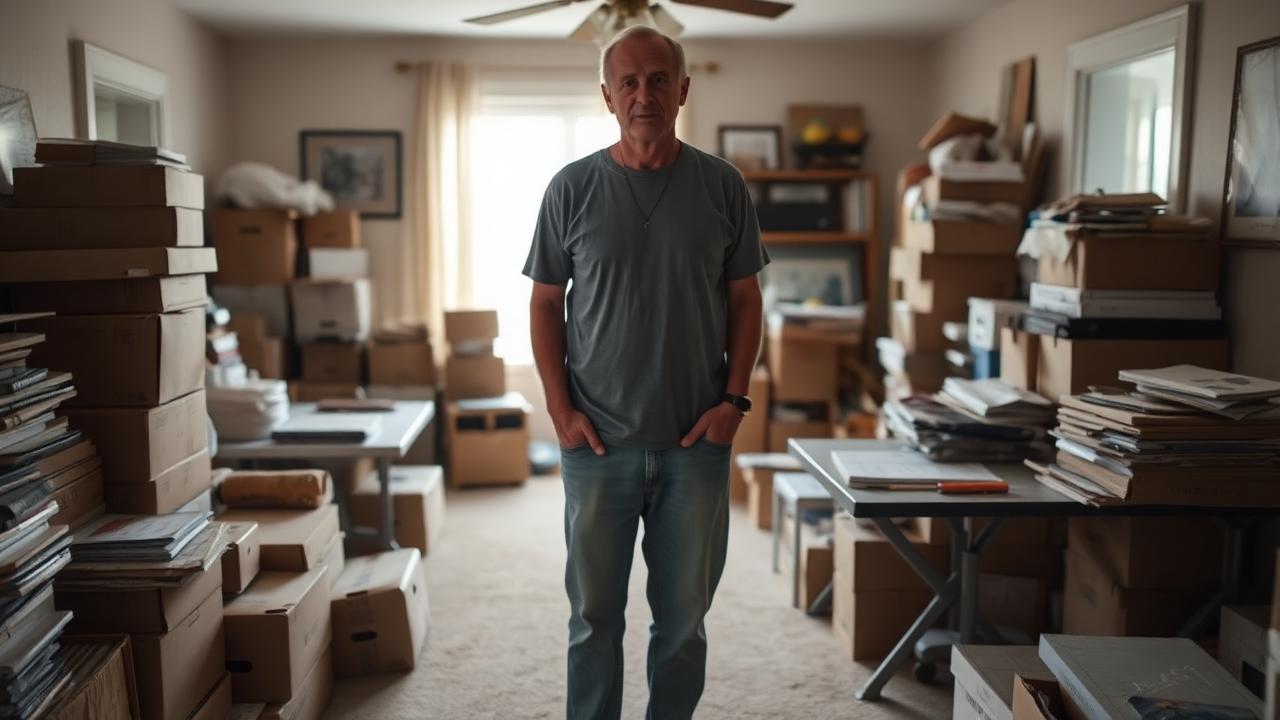
I've been a treasure hunter for the better part of a decade. I've stood in a thousand lines at dawn. I've grumbled about prices, side-eyed the "no early birds" sign, and muttered "they're asking *how much* for that?" more times than I'd like to admit. I thought I understood estate sales.
Then a local company let me shadow them for a month — actually helping set up sales, not just shopping them — and I learned that I understood almost nothing. Here's what a month behind the folding table taught me, written for every buyer who's ever wondered why the prices are what they are and why the door doesn't open a minute early.
I genuinely thought setup was a single afternoon
Day one, I showed up expecting to spend a few hours arranging things on tables. I figured a sale was maybe a day of prep, then you flip the sign and let the crowd in.
The reality: a typical single-family home takes a small crew five to ten days to stage — and that's *after* a separate walkthrough, contract, and planning visit. Big or hoarder-level homes can run two to three weeks. Before a single customer ever sees a price tag, dozens (sometimes hundreds) of human hours are already in the ground.
I had been treating the morning of a sale like the *start* of the work. It's actually the finish line of a marathon nobody in line ever sees.
The sort: every drawer, every box, by hand
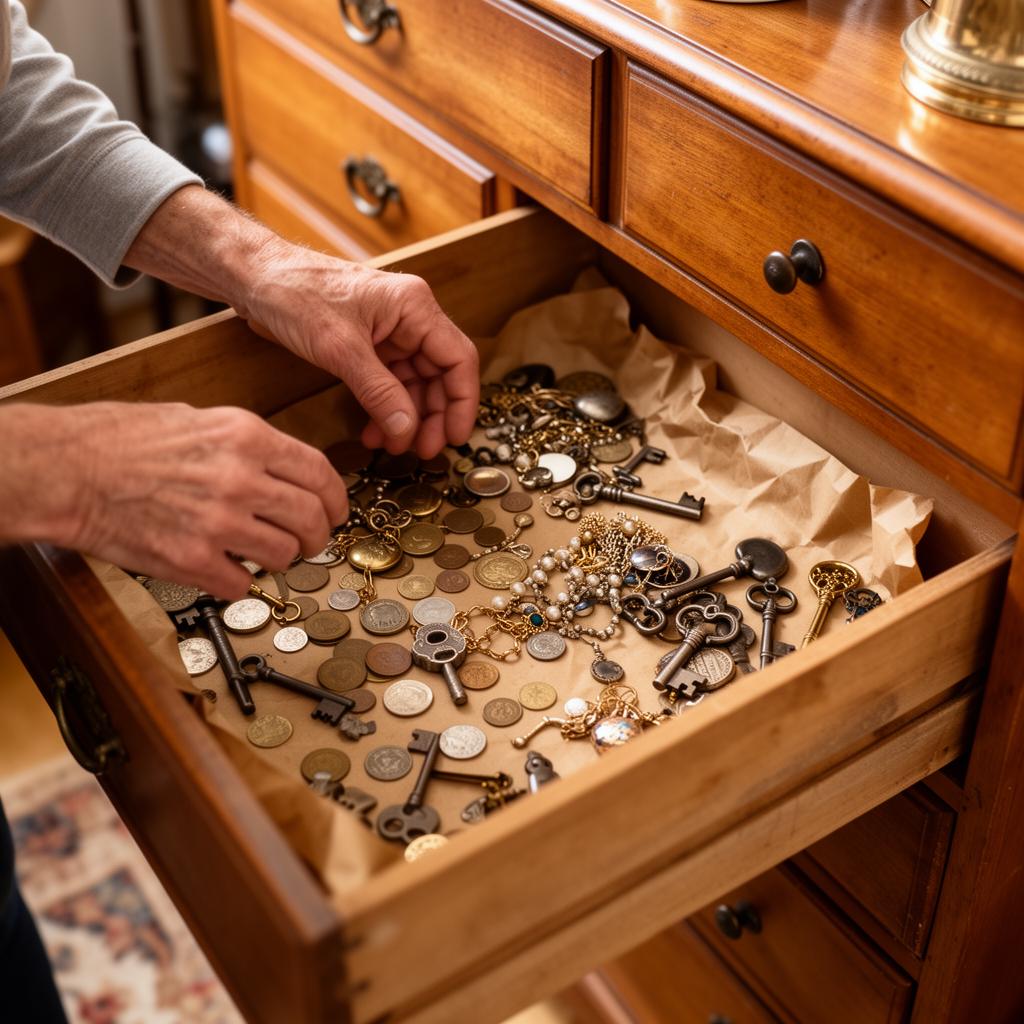
The first job floored me. You don't "set up" a house — you excavate it. Every drawer, every shoebox, every coat pocket, every coffee can in the garage gets opened by a human being and sorted item by item.
Why? Because people hide things. In one month I watched the crew find:
- Cash tucked inside book pages and taped under drawers
- Jewelry zipped into the lining of an old purse
- Old prescription bottles that have to be safely disposed of
- Important documents — birth certificates, savings bonds, war medals — that go straight back to the family
- And a *staggering* amount of stuff that simply has to be thrown away
Here's the part that reframed everything for me: the company doesn't get to keep the surprises. The cash, the gold, the bonds — that all belongs to the family. The crew's job is to find it, protect it, and return it, all while sorting through decades of accumulation that ranges from "museum piece" to "literal trash." Sorting one average kitchen took two people most of a day. One kitchen.
The clean and the haul: this is physical labor
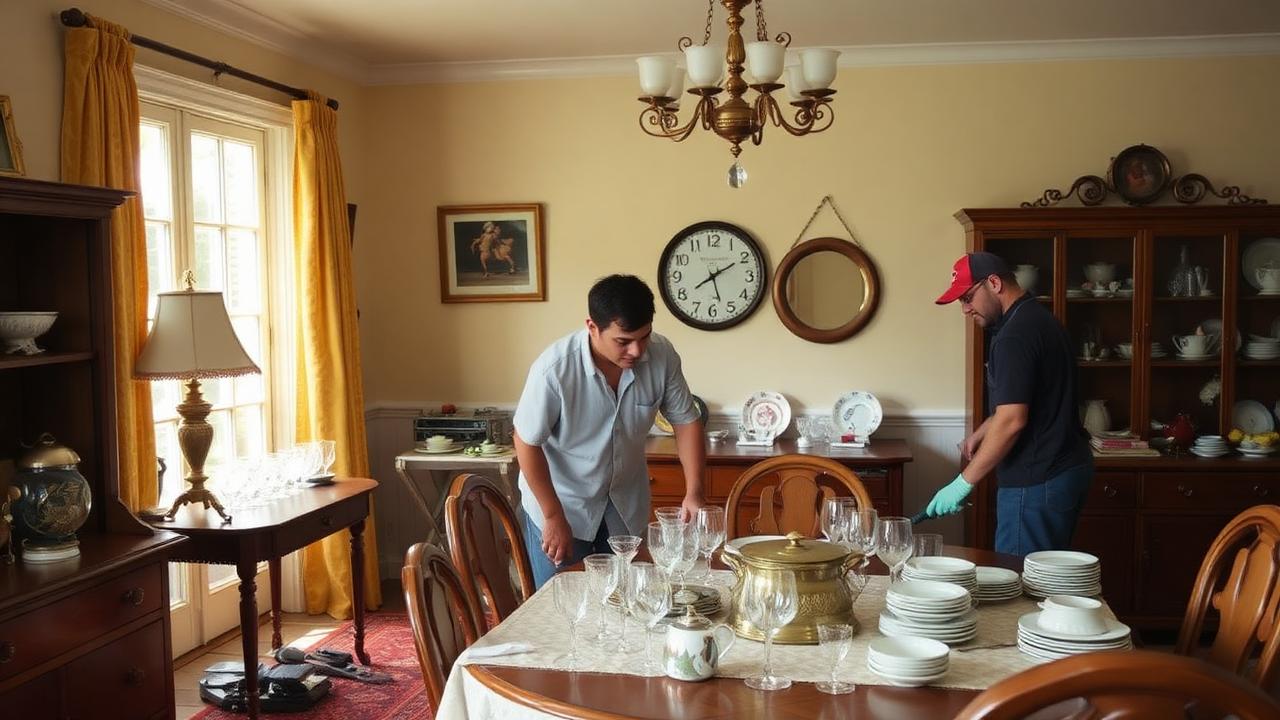
Nobody warned me about the cleaning. These are real homes, often belonging to someone who could no longer keep up with them, sometimes sitting closed for months. We scrubbed grime off glassware, wiped decades of dust off furniture, and cleaned things just enough that a stranger would want to take them home.
Then came the hauling. To make a house "shop" well, you move furniture *constantly* — drag the dining set into the light, group all the tools in the garage, build a "linens table," create a jewelry counter near the checkout. I was sore in muscles I forgot I had. A china cabinet does not care about your back.
I used to walk into a beautifully staged sale and think, "nice house." Now I know that "nice house" was a chaotic mess 72 hours earlier, and the calm, browsable layout I enjoyed was built by exhausted people the night before.
The research: hours of detective work per shelf
This is the one I owe the biggest apology for. As a buyer, I've rolled my eyes at prices a thousand times — "they have no idea what this is worth." Turns out, they usually do, and figuring it out is brutal.
Pricing isn't guessing. For anything that might matter, someone has to flip it over, read the maker's mark, identify it, and look up what it actually sold for — not the hopeful asking prices, the real sold comps. Multiply that by a house with thousands of items and you understand why prep takes a week.
And the truths are humbling on both sides of the table. I watched a "priceless" set of grandma's china research out to about $30 because the market is flooded with it. I also watched a genuinely ugly lamp from the basement come back at $800 because it was a sought-after designer piece. You cannot eyeball this. It's the same reason savvy buyers now run an item through the Ai Analyzer before they argue — it pulls real eBay sold-listing data, so you're negotiating with facts instead of feelings. The companies are using the same kind of homework. They're not pricing out of spite; they're pricing out of *research*.

The pricing tightrope: the hardest part isn't the prices, it's the people
Here's the thing I truly never considered as a buyer: the company doesn't just have to price the items. They have to price them for a family — and that conversation is the hardest part of the entire job.
Picture it. You're sitting with a daughter who lost her mother three weeks ago. She picks up a figurine and says, "Mom always told me this was worth a fortune." You've already researched it. It's worth $12. Now you have to be honest *and* kind, in the same breath, on the worst month of her life.
I watched these conversations happen, and they are emotional minefields:
- Price too high to spare feelings, and nothing sells — the family gets a tiny check and feels like the company failed them.
- Price too low to move it fast, and the family feels their loved one's life was given away for pennies.
- Tell the truth about a "treasured" heirloom's real value, and you risk breaking a grieving heart.
The pros are doing emotional labor and financial appraisal *simultaneously*, often as the middle-person between feuding siblings who each have a different opinion about what Dad's tools are "really" worth. It's part appraiser, part grief counselor, part referee. This is exactly why families hire professional companies through trusted directories — so a calm, fair outsider handles the part that's impossible to do with your own heart involved.

The emotional weight nobody talks about
You're working inside someone's whole life. The handwriting on the recipe cards. The half-used bottle of perfume. The closet organized exactly how they liked it. The wall of photos of people you'll never meet.
A few days in, it stopped feeling like inventory and started feeling like a person. The crew talked about it openly — you learn to hold respect and efficiency at the same time, because the family is often *right there*, and because the things matter. It changed how I touch items at a sale now. Somebody loved this. The least I can do is be gentle with it.
The logistics and the risks I never saw
Behind the friendly person at the cash box is a small business absorbing a stack of risk:
- Permits and rules — many cities require permits, limit signage, and regulate parking; violate them and the company eats the fine.
- Liability — strangers walking through a house create real insurance exposure if someone trips on the porch step.
- Theft and "shrink" — shoplifting, tag-swapping, and price-sticker peeling are constant. That's part of why staff watch the room and why the checkout feels controlled.
- Staffing — a busy sale needs a crew for setup, the sale days, *and* the cleanout.
- The unsold 30–40% — this one shocked me. A big chunk of every house simply doesn't sell. The company is often responsible for donating, hauling, and disposing of what's left so the family can hand over empty keys. The job doesn't end when the crowd leaves; that's when the *next* hard part starts.
So why the commission? Because it's a marathon, not a markup
I used to vaguely think the company "just takes a cut for opening the doors." After a month, the math is obvious. A single weekend sale can represent 80, 120, sometimes 200+ human hours of sorting, cleaning, hauling, researching, pricing, staffing, marketing, and cleaning out — plus the risk, the permits, and the emotional labor of guiding a grieving family.
That's not a markup. That's a service most families could never do themselves in the narrow, painful window they're given.

What I do differently as a buyer now
The month changed me. Here's how I show up these days — and it's made me a better, happier shopper:
- I respect the start time. The "no early birds" sign isn't snobbery; it's the only thing standing between a stressed crew and chaos. I browse sales the night before and show up strategically instead.
- I make fair offers, not insulting ones. Negotiating is welcome and expected — there's a kind way to do it that actually works better.
- I put things back where they live. That little courtesy saves someone real time.
- I bring small bills. Making change for a hundred at 9 a.m. slows the whole line.
- I assume the price is researched until I have a real reason to think otherwise. Usually, it is.
- I'm kind to the staff. They're not the family, they're not the enemy, and they're often running on three hours of sleep. (If you want the funny flip side, the companies themselves shared the things they wish buyers knew, and the complaints families have about *them*.)
The honest takeaway
I walked into that month a slightly jaded bargain hunter. I walked out with something I didn't expect: respect. Estate sale companies aren't gatekeepers standing between you and a deal. They're people doing an emotionally heavy, physically exhausting, logistically wild job — usually for a family on the worst week of their lives — and trying to give a lifetime of belongings a dignified second home.
So next time you're in line, watching someone count out change with tired eyes, remember the week of invisible work behind that calm little price tag. Be the buyer they remember fondly. You'll get better treasures, better deals, and you'll feel a whole lot better about the hunt.
Now go find one worth showing up for: browse estate sales near you and treat the next one a little differently.