Why Tariffs Are Sending Thousands of Shoppers to Estate Sales (And Why That's Good News for Everyone)
New furniture, tools, and clothing all cost more in 2026 — sometimes 30 to 60 percent more — because of tariffs on imports from China, Vietnam, and Mexico. Estate sales are 100% tariff-proof. Everything already lives in an American home. Here's the price math, the real-world comparisons, and how the Ai appraiser keeps you from overpaying once you get there.
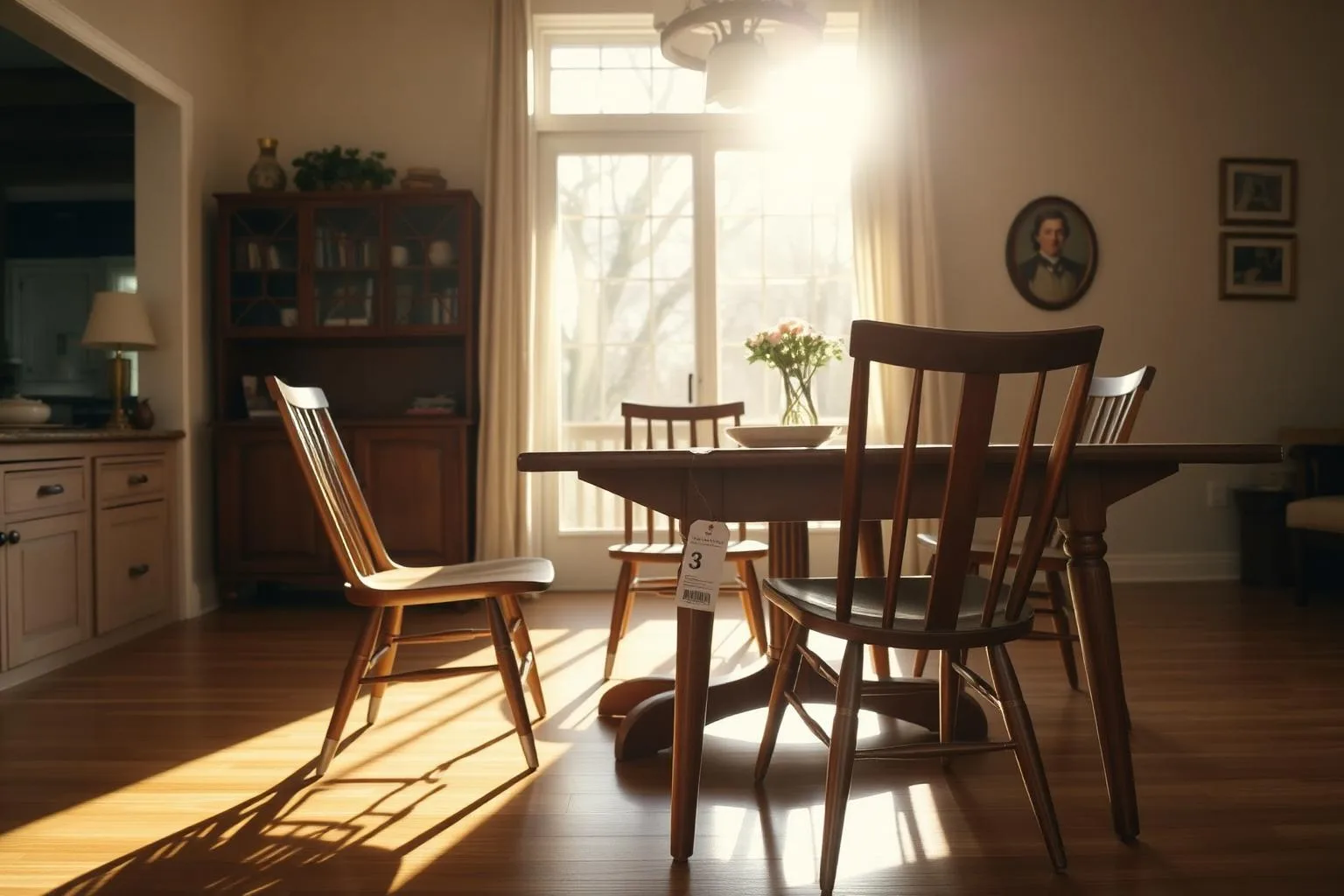
If you tried to buy a new dining table this spring, you already know. The same solid-wood, six-chair set that ran $1,200 in early 2024 is suddenly $1,800 to $2,400 — and the showroom associate can't really explain it without using the word "tariffs."
Here's what's happening, why it's not going away in the next twelve months, and why the smartest American shoppers — including a lot of people who would never have looked at an estate sale a year ago — are now showing up before 8 a.m. on Saturdays with cash and a coffee.

What Tariffs Actually Did to Furniture, Tools, and Home Goods
Roughly 60% of the upholstered furniture sold in the United States is imported. So is most flatpack casegoods, the majority of power tools, almost all small kitchen appliances, and a stunning amount of "American" clothing. When Washington raised duties on goods from China, Vietnam, and Mexico in 2024 and 2025, importers did what importers always do: they passed the cost down the line.
Here's what that looks like at the register in May 2026, based on side-by-side pricing we pulled from major retailers this month:
| Item | New retail (May 2026) | Same item, May 2024 | Increase |
|---|---|---|---|
| 6-seat solid wood dining table | $1,899 | $1,199 | +58% |
| Mid-priced upholstered sofa | $1,499 | $999 | +50% |
| Cast iron Dutch oven (7 qt) | $379 | $249 | +52% |
| Cordless drill kit (mid-tier) | $229 | $149 | +54% |
| Set of 8 ceramic dinner plates | $89 | $54 | +65% |
| Wool area rug, 8x10 | $899 | $599 | +50% |
Those aren't outliers. The Bureau of Labor Statistics' "household furnishings and supplies" category is up roughly 18% since spring 2024, and the actual sticker shock at the higher-quality end is much worse than the average suggests.
Why Estate Sales Are Tariff-Proof
Every chair, lamp, sideboard, drill, mixing bowl, and quilt at an estate sale is already inside the country. It was bought, sometimes decades ago, by an American household. There is no cargo ship, no port, no duty, no importer markup, no retailer margin sitting on top of it.
That is the entire pitch. The supply chain is one address long: someone's living room.
This is why estate sale traffic in our network is up sharply over the same weekend a year ago, and why we're hearing from companies in Dallas, Atlanta, Phoenix, and the Twin Cities that they're seeing whole new demographics in line — younger couples, first-time furniture buyers, contractors looking for hand tools, restaurant owners stocking out a bar.

What $1,800 Buys You New vs. at an Estate Sale
Same budget. Same goal: furnish a real dining room.
At a national furniture chain (May 2026):
- 6-seat dining table, particle-board veneer over MDF: $899
- Six matching parsons chairs, fabric-wrapped foam: $720
- Two flameless "candlesticks": $40
- Centerpiece bowl: $35
- Tax: ~$130
- Total: ~$1,824. Lifespan: 4–7 years.
At three estate sales in one weekend:
- Solid oak farmhouse table, 1970s, refinished: $250
- Six matched solid wood chairs (you'll find them; be patient): $180
- Pair of brass candlesticks, weighted bases: $24
- Hand-thrown stoneware centerpiece bowl: $18
- A small Persian-style rug to anchor the room: $140
- Set of eight ironstone dinner plates: $40
- Crystal water pitcher: $22
- Total: ~$674. Lifespan: another 30–50 years easily.
The estate sale dining room costs roughly a third of the new one, looks like it belongs in a magazine instead of a model home, and is genuinely heirloom-quality. The new one is going on Facebook Marketplace in 2031.
The Catch — and How the Ai Appraiser Removes It
The honest catch is that estate sale pricing is not standardized. A pair of brass candlesticks might be $12 at one sale and $70 at the next. Without a price reference, a first-time buyer can absolutely overpay — especially in markets where a few well-known companies have started pricing closer to retail because they know people are desperate.
This is what the Ai appraiser is built for. Photograph an item on the table, and within a few seconds you see what comparable pieces have actually sold for on eBay sold listings — not asking prices, *sold* prices. If the sticker on a 1960s teak credenza says $400 and the appraiser shows comparable pieces sold for $250–$320, you negotiate. If the sticker says $90 and the appraiser shows $300+, you take it to the table immediately.

Where to Go This Weekend
You don't need a strategy to start. You need a Saturday morning, $100 in cash, a tape measure, and one or two sales near you that look promising in the photos.
- Browse verified estate sales near you →
- Use the Ai appraiser before you buy →
- Read next: Estate Sales Are the Smartest Thing Gen Z and Millennials Can Do With $100 Right Now
The shopping environment in 2026 is genuinely different from any year in the last two decades. The instinct to keep buying flatpack at full retail because that's where you've always shopped is going to cost you thousands of dollars over the next five years. Estate sales were already a great deal. Tariffs just made the math impossible to ignore.