
Vintage Christmas Decorations Worth Money: Shiny Brite, Blow Molds, Ceramic Trees & What to Grab at Estate Sales (2026)
A field guide for estate sale shoppers and booth dealers: what to grab, what to skip, how to date Shiny Brite by its hanger, real dated auction results, and how to spot reproductions.
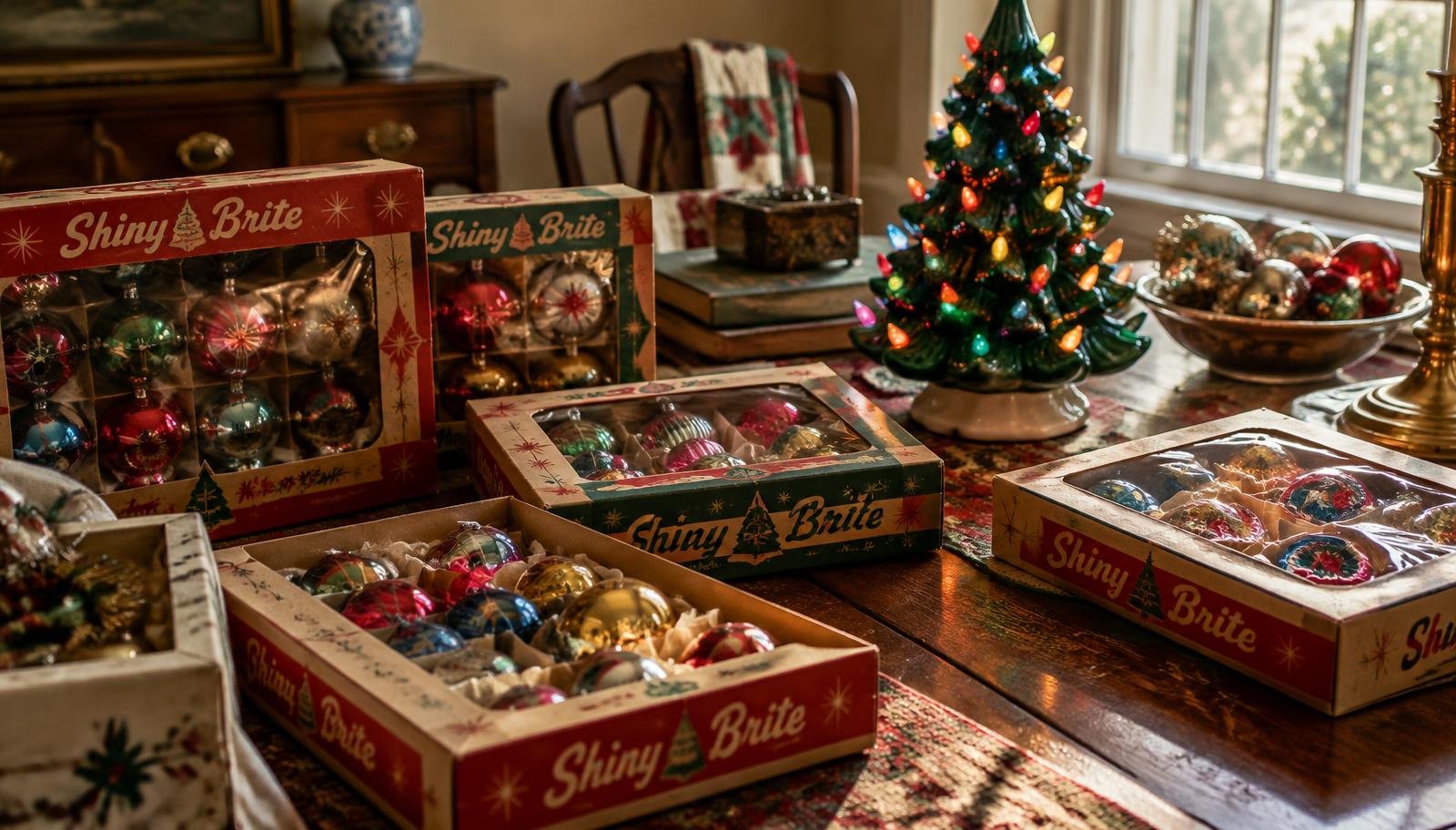
Yes, some vintage Christmas decorations are worth real money, but mostly in lots, not single pieces. Boxed Shiny Brite glass ornaments, lighted ceramic trees, aluminum trees with color wheels and older plastic blow molds are the pieces that sell. Recent auction lots of two dozen Shiny Brite ornaments sold for $70 to $160. Look at condition, the original box and the cap before you pay.
The 30-second field card
Take this card into the basement, the garage or the attic closet. That's where the holiday bins usually are.
Grab it
- Boxed Shiny Brite or other American glass ornaments in the original box, especially with stripes, indents or glitter
- Lighted ceramic Christmas trees with the plastic bulbs, unchipped and with a working cord
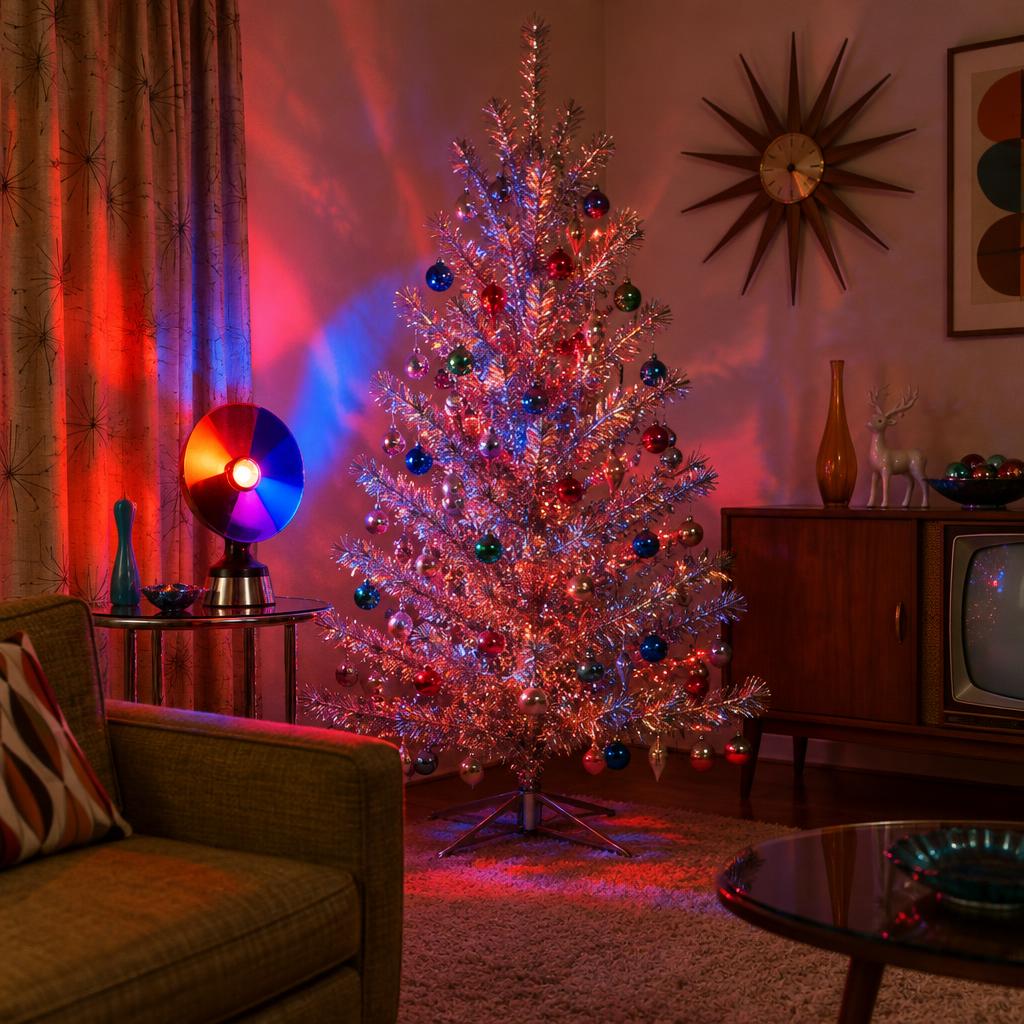
- Aluminum trees in their original sleeves, plus the rotating color wheel
- Older hard-plastic blow molds (Santas, snowmen, nativity figures) with paint that hasn't faded
Maybe
- Loose glass ornaments with mixed caps. They're good for a booth bowl but don't pay a premium.
- Hallmark Keepsake ornaments. A few early or rare ones sell; most sell for a few dollars.
- Strings of bubble lights. Test them first, and treat old wiring as decor, not something to plug in all night.
Skip it (or pay very little)
- Newer ornaments in "vintage-style" boxes
- Cracked ceramic trees, or trees missing most of their bulbs
- Blow molds with sun-faded paint or holes
Shiny Brite, in one paragraph of history
Shiny Brite is the name most people mean when they say "vintage Christmas ornaments." Max Eckardt, a New York importer of German glass ornaments, started the brand in 1937. He saw that a war would cut off his supply, so he worked with Corning Glass, which adapted its light-bulb machinery to blow glass balls (Wikipedia: Shiny Brite). The Henry Ford museum's history adds that F.W. Woolworth's Bill Thompson helped convince Corning by promising a large order for Woolworth stores (The Henry Ford, Pic of the Month, December 1997). Antique Trader calls them "the most popular mid-century Christmas ornaments in the U.S." (Antique Trader).
Date it by the hanger
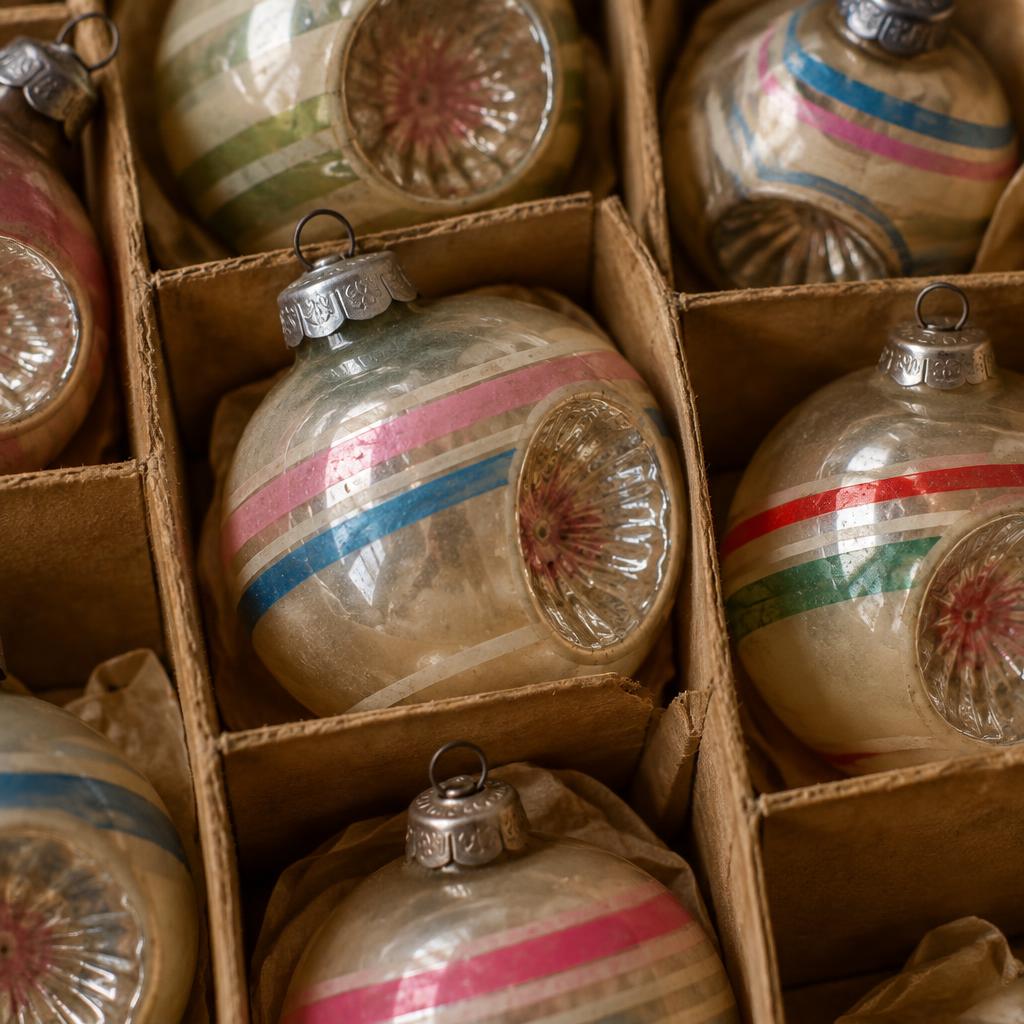
The cap is the fastest clue:
- Metal cap and loop. This is the original style, and it came back after the war.
- Cardboard tab, no metal cap. Metal was scarce during the war, so caps were replaced with a cardboard tab and string. That puts an ornament in the early 1940s (Wikipedia: Shiny Brite).
- Clear, unsilvered glass with soft pastel stripes. These are often wartime ornaments too, when silvering was cut back.
Look at the box as well. A matching, intact box with the cellophane window still there adds real value to a set. Boxes also get mixed up over the years, so don't assume the box tells you what's inside it.
What it actually sells for (dated, sourced)
These are real recent sales, not guesses. Prices move a lot with condition, so treat them as a reference, not an appraisal.
| Item | Sold price | Where and when |
|---|---|---|
| 24 Shiny Brite bell and ball ornaments, a few replaced caps, 2 boxes | $70 (plus 20% buyer's premium) | Atlee Raber Auctions, ended January 27, 2025 |
| Boxed lot of Shiny Brite, Coby and Pyramid glass ornaments, some paint loss | $160 (before buyer's premium, 24 bids) | Cates Auction, June 3 to July 7, 2025 |
Two things stand out. Both are lots, not single ornaments, and the second one sold for more partly because it had original boxes and painted designs. And both sold in summer. Holiday décor often sells for more in November and December, when people are decorating.
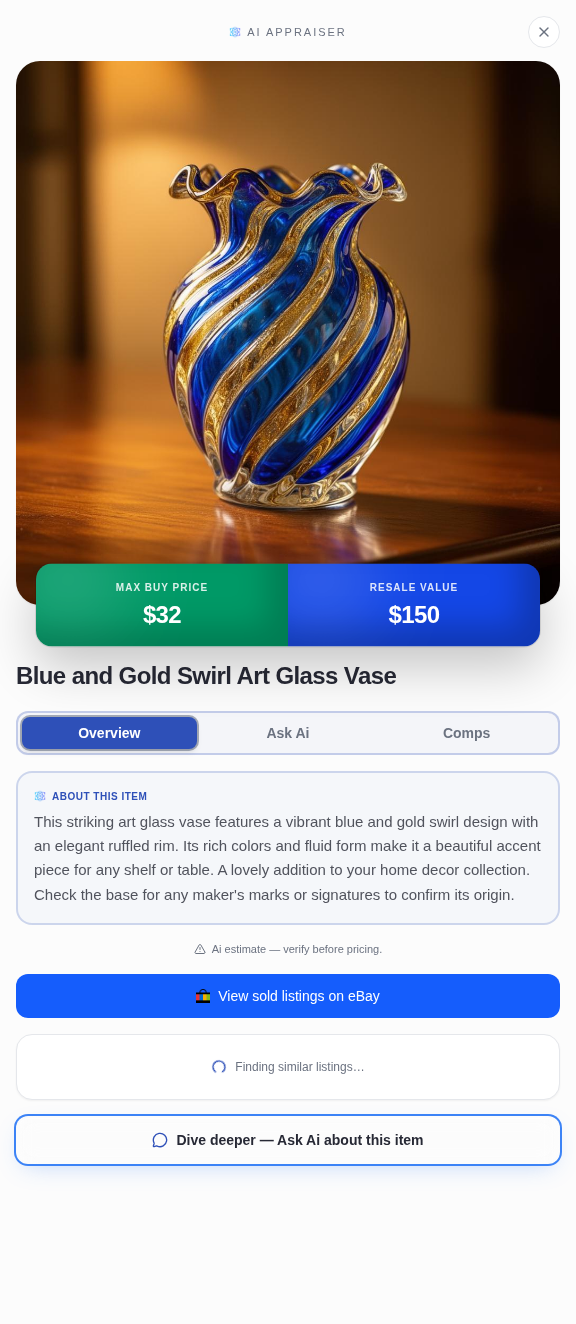
For anything else, check sold listings (not asking prices) on the day you're pricing. The Ai Appraiser can suggest a range from a photo, but treat it as a starting point. It's a suggestion, not a final price.
Ceramic trees: plug it in before you pay
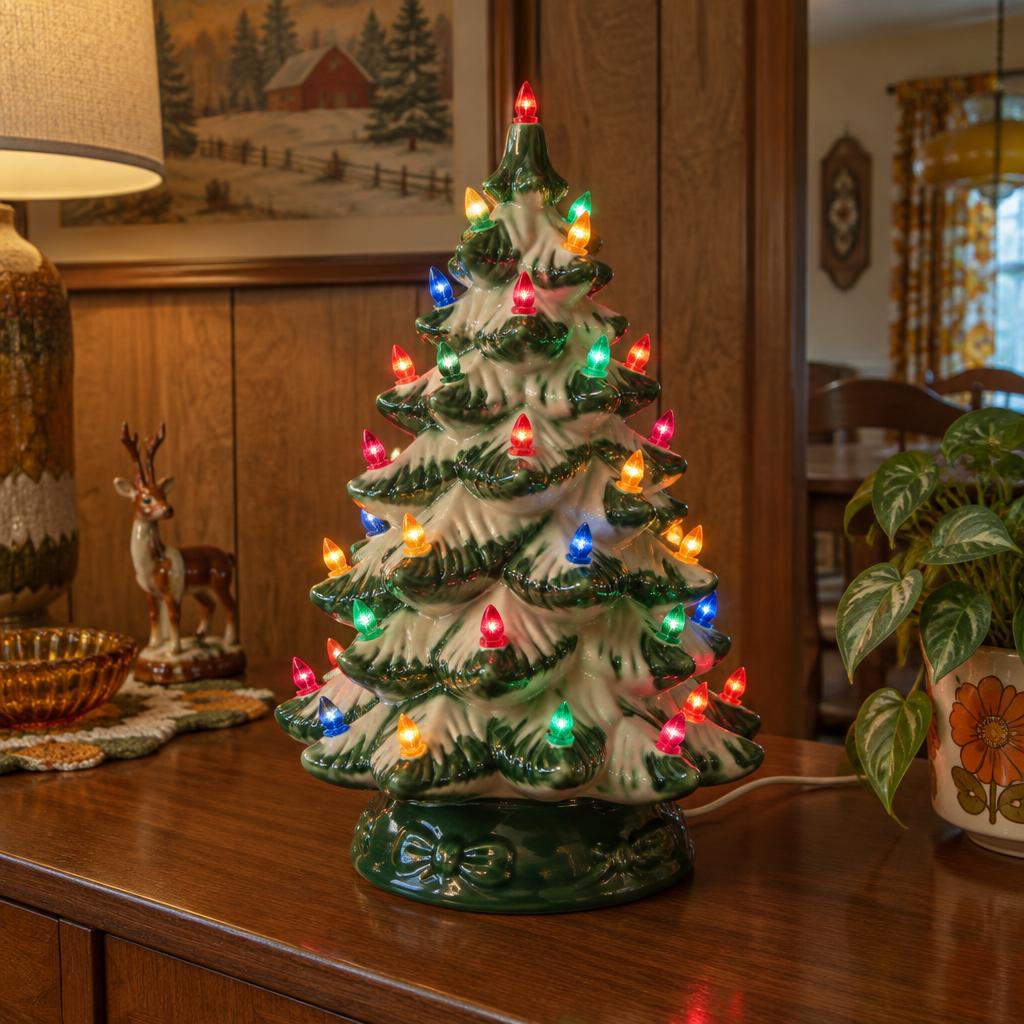
Ceramic trees from the 1970s and 1980s were often hand-glazed in home ceramics classes from commercial molds. That's why two trees that look the same can be signed and dated by different people. Before you buy one:
- Check the tips. Chipped branch tips are the most common damage.
- Count the bulbs. Replacement bulbs exist, so missing bulbs lower the price but don't make it worthless.
- Look under the base for a mold maker's name or a painter's signature and year.
- Ask to plug it in. Most estate sale companies will let you.
Blow molds and aluminum trees: size and condition
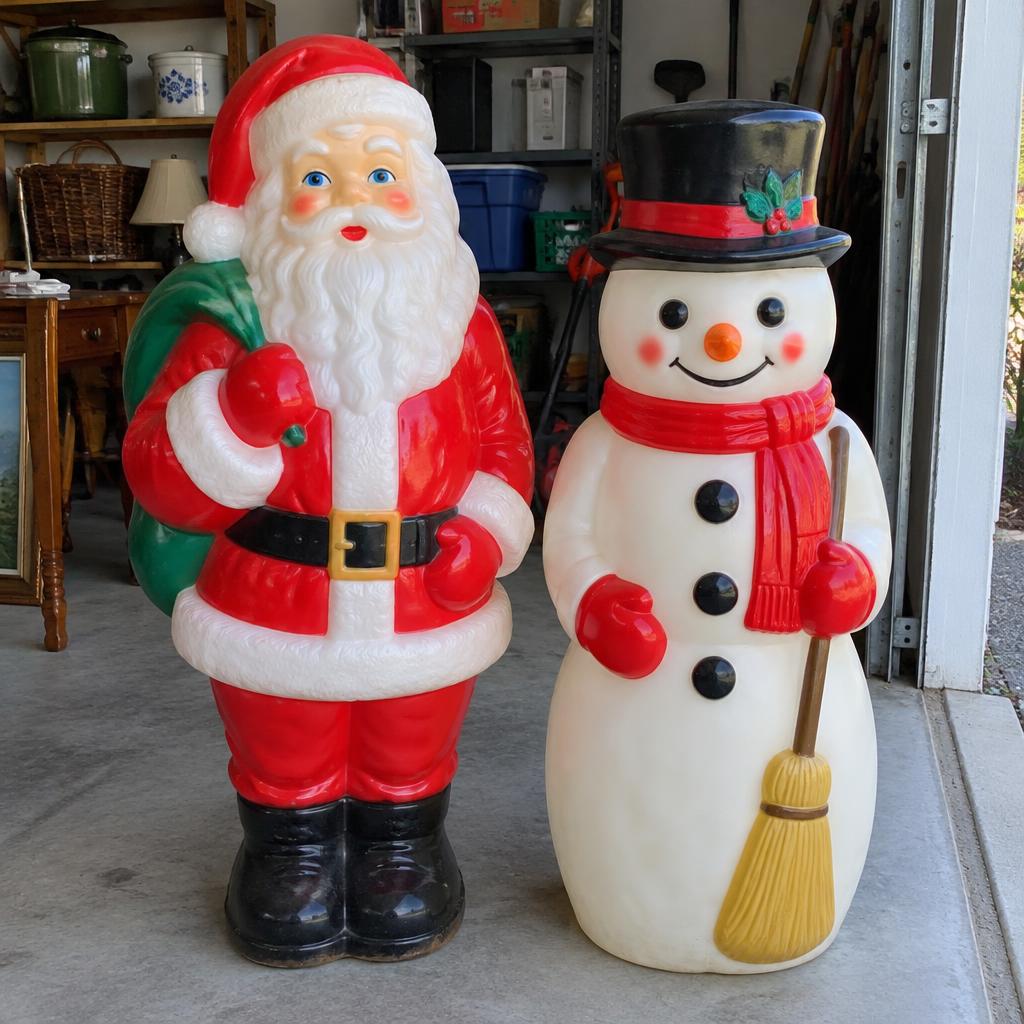
Blow molds are judged by their paint first. Sun-faded faces and cracked bases bring the price down quickly. Look for the maker's mark molded into the plastic, usually near the bottom. Nativity sets and larger figures draw the most interest, and buyers want to pick them up locally because they're bulky to ship.
Aluminum trees sell best when they're complete. That means the original sleeves for each branch, the pole and the stand, ideally in the original carton. The color wheel is often sold separately and has its own buyers.
Spotting a reproduction, side by side
Shiny Brite was revived as a licensed brand of new ornaments, so a "Shiny Brite" box doesn't always mean mid-century glass. Compare:
| Looks original | Looks newer |
|---|---|
| Thin glass, some silvering wear inside | Thicker glass, bright even finish |
| Soft, slightly worn caps, often marked | Shiny gold caps with crisp stamping |
| Box shows age: faded print, taped corners | Crisp box with a barcode or modern copyright |
| Mixed slight variations between ornaments | Perfectly uniform sets |
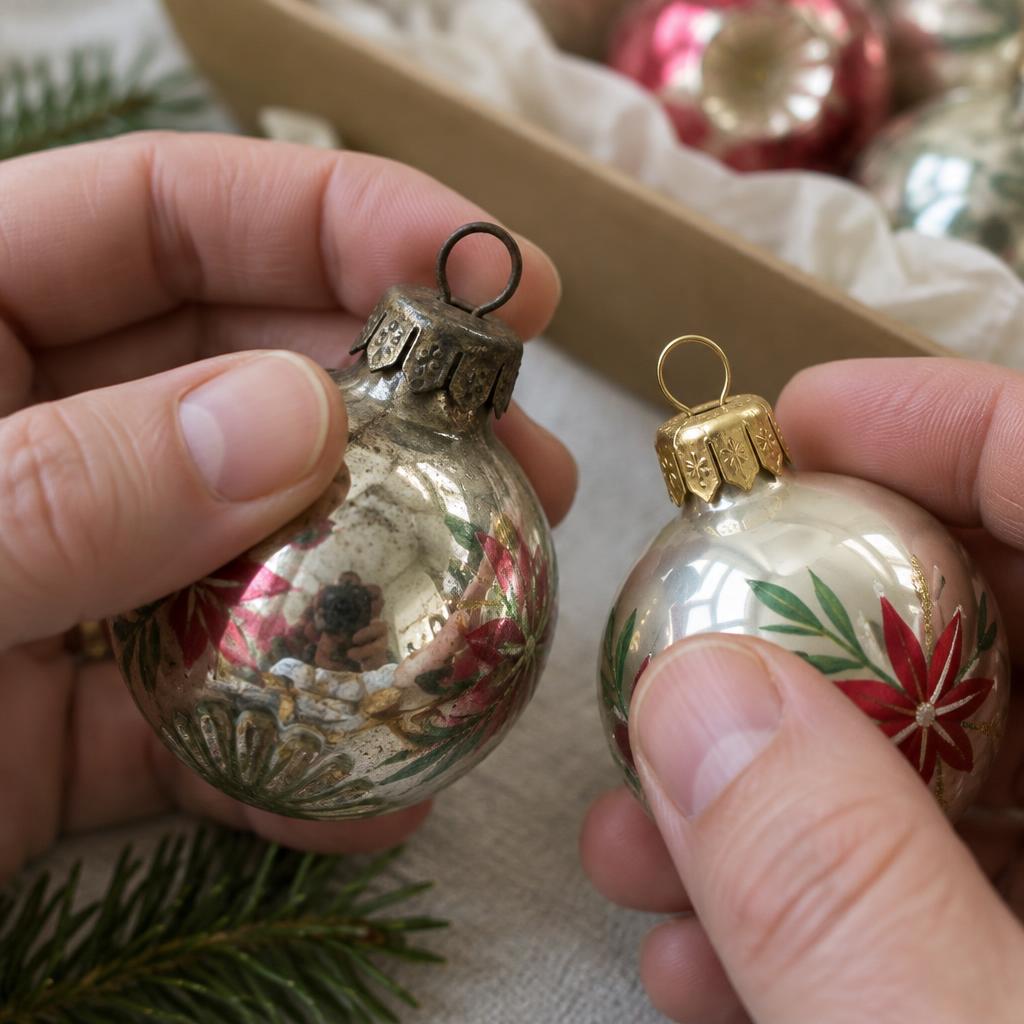
None of these clues is proof by itself. If several of them point the same way, trust that.
For booth dealers: a quick pricing strip
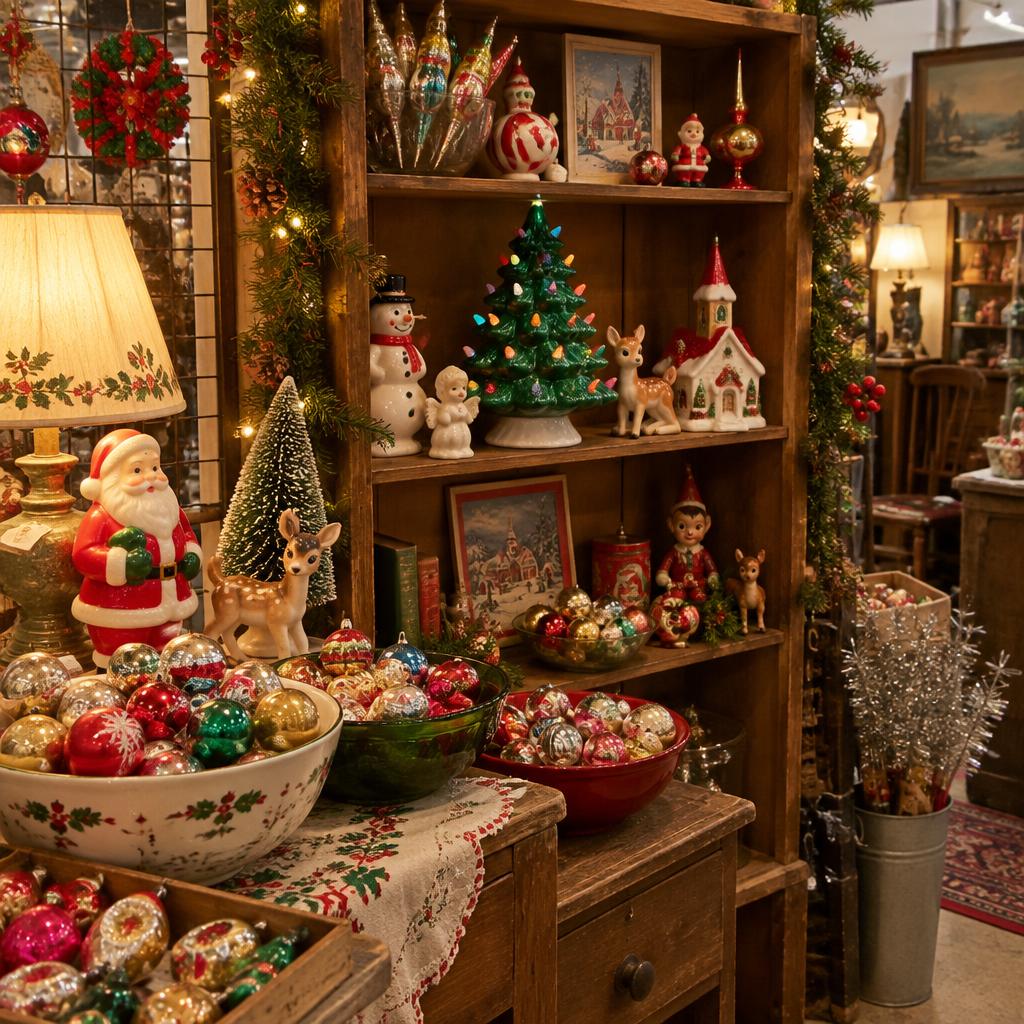
- Buy in October and November, sell in late November and December. Have your holiday shelf stocked before Thanksgiving weekend.
- Break up mixed lots. Sell the boxed sets as sets and the loose ornaments by the bowl.
- Price ceramic trees with the light on. A lit tree on display sells faster than one sitting in a box.
- Watch the last day of estate sales. Holiday bins are often still left on the final half-price day.
There's more on finding inventory in our booth seller sourcing guide, and you can see how booth sellers use EstateSaleFinder. If you liked this guide, the vintage Halloween decorations worth money guide covers the season before Christmas.
Quick answers
Are Shiny Brite ornaments worth anything?
Yes, but mostly as sets. Two auction lots of about two dozen ornaments sold for $70 and $160 in 2025. A clean original box, painted designs or rare shapes push the price up.
How do I know if my Shiny Brite ornaments are old?
Look at the hanger and the box. A cardboard tab instead of a metal cap points to the early 1940s. A worn box without a barcode suggests an older set. New licensed ornaments have crisp caps and modern packaging.
Are ceramic Christmas trees worth anything?
Lighted ceramic trees with most of their bulbs and no chipped tips sell well during the holidays. Check the base for a maker's or painter's mark.
Where can I find vintage Christmas decorations?
At estate sales in November and December, often in the basement or garage. You can browse estate sales near you and save keywords like "Shiny Brite" or "blow mold" so you hear about new finds.
Sources:
Sources checked October 29, 2026. Prices are past sales, not appraisals.
Keep exploring
Ready to start your own treasure hunt?
Discover estate sales near you and find incredible deals.
Explore Sales Near Me
About the author
Andy
Founder, EstateSaleFinder.net
Hi, I'm Andy — a retired commercial photographer turned developer with a five-year (and counting) obsession with estate sales. I started EstateSaleFinder.net because I knew there had to be an easier, smarter way to find and list estate sales. Now I get to chase treasure and build the tool I always wished existed.