How to Build a Complete Vintage Kitchen for Under $200 at Estate Sales
Pyrex, cast iron, jadeite, milk glass, linens, and a stand mixer that will outlive us all — here's the room-by-room playbook to build a magazine-worthy vintage kitchen for less than a single Target run.
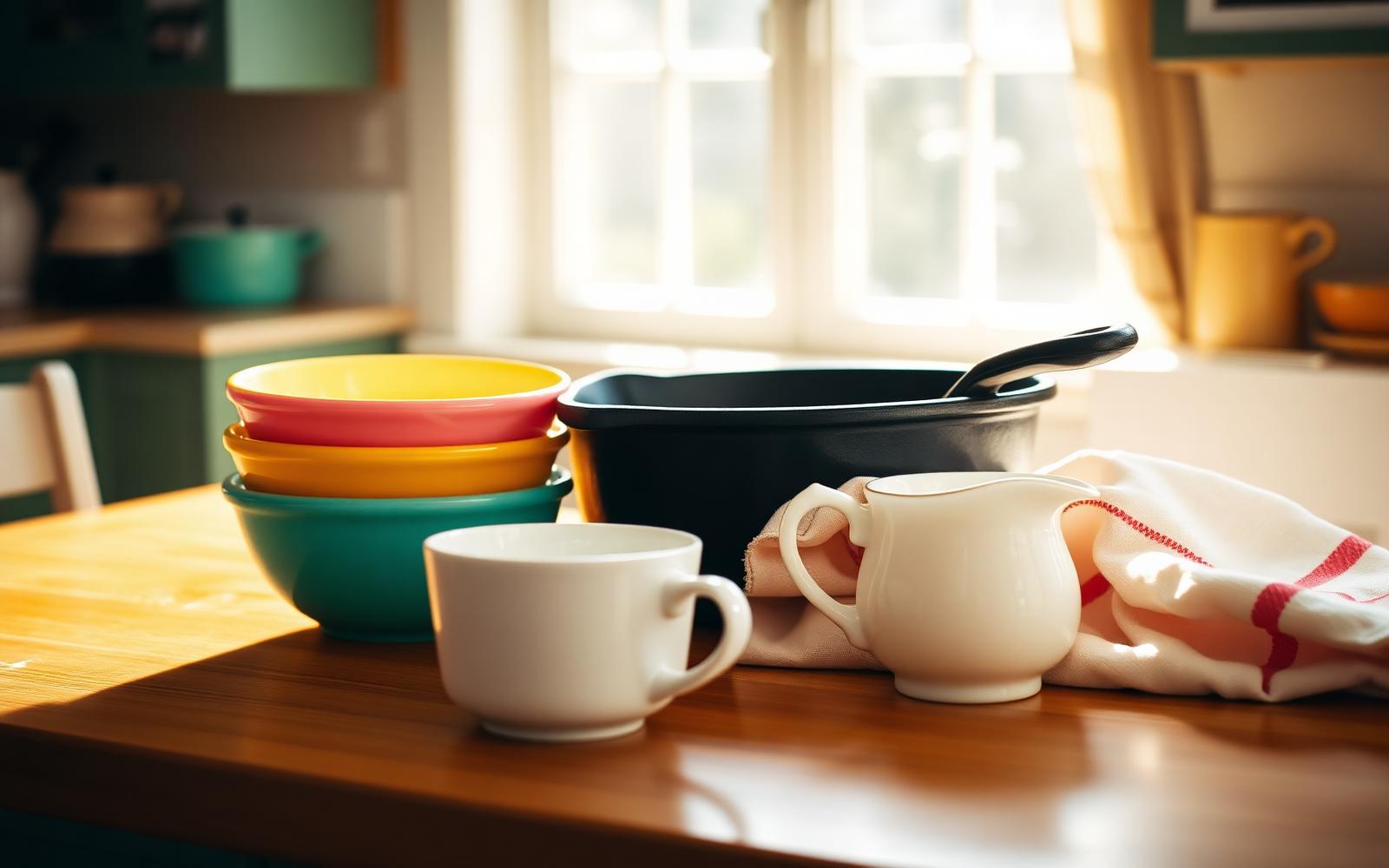
Walk into any estate sale on a Saturday morning and you'll find it — the vintage kitchen of your Pinterest dreams, sitting in cardboard boxes on a folding table, priced like it's yesterday's newspaper. A turquoise Pyrex bowl for $3. A cast iron skillet older than your grandma for $8. A jadeite mug that costs $45 on Etsy? $1.
I built a full vintage kitchen — bowls, pans, glassware, appliances, linens, utensils — for $187 total across five estate sales in a single month. My friend saw the finished shelves and asked which boutique it came from. It came from other people's basements.
Here's exactly how to do it, what to look for, what to pay, and how to walk out with a kitchen that looks like a Kinfolk shoot for less than one nice dinner out.
Why estate sales are the cheat code for a vintage kitchen
Retail vintage is priced for people who don't want to hunt. A single Pyrex Butterprint casserole runs $60–$120 on Etsy. A rehabbed Griswold skillet? $180 in a Brooklyn shop. A jadeite Fire-King mug? $35–$50 in an Instagram flip account.
At an estate sale, all of that is priced by someone clearing out Grandma's house who just wants it *gone*. According to the National Estate Sales Association, the average American estate contains 20,000–30,000 items and companies routinely finish pricing in a single weekend. That's why the deals are absurd — no one has time to research every Pyrex pattern or check every Wagner Ware stamp.
The formula is simple:
- Know the categories that make a kitchen feel vintage (below).
- Know the tells — patterns, marks, and shapes worth grabbing.
- Go to the right sales, in the right order, at the right time of day.
You can plan the whole route in five minutes with the route planner once you save the sales you want to hit.
The $200 vintage kitchen shopping list
Here's the actual list, in the order you should buy them. Each has a target price — if a sale is priced way above these, walk. Estate sales come around every weekend, and there is always another one.
| Category | Pieces | Target total |
|---|---|---|
| Pyrex mixing bowls + casseroles | 4–6 | $25–$40 |
| Cast iron skillet + smaller pan | 2 | $15–$25 |
| Jadeite / Fire-King mugs & bowls | 3–5 | $10–$20 |
| Milk glass + Depression glass | 2–4 | $10–$20 |
| Wooden utensils, rolling pin, crock | 6–8 | $10–$15 |
| Embroidered tea towels + napkins | 6–10 | $8–$15 |
| Bakelite-handled flatware set | 8–12 pcs | $10–$20 |
| Vintage stand mixer OR percolator | 1 | $20–$40 |
| Enamelware coffee pot or bread box | 1 | $10–$20 |
| Total | $118–$215 |
Come in around $150 and you'll have room to overpay on one hero piece — usually the appliance. That's fine. That's the plan.
1. Pyrex: the anchor of the whole room
If you buy nothing else, buy Pyrex. Nothing screams "vintage kitchen" harder than a stack of pastel mixing bowls on an open shelf.
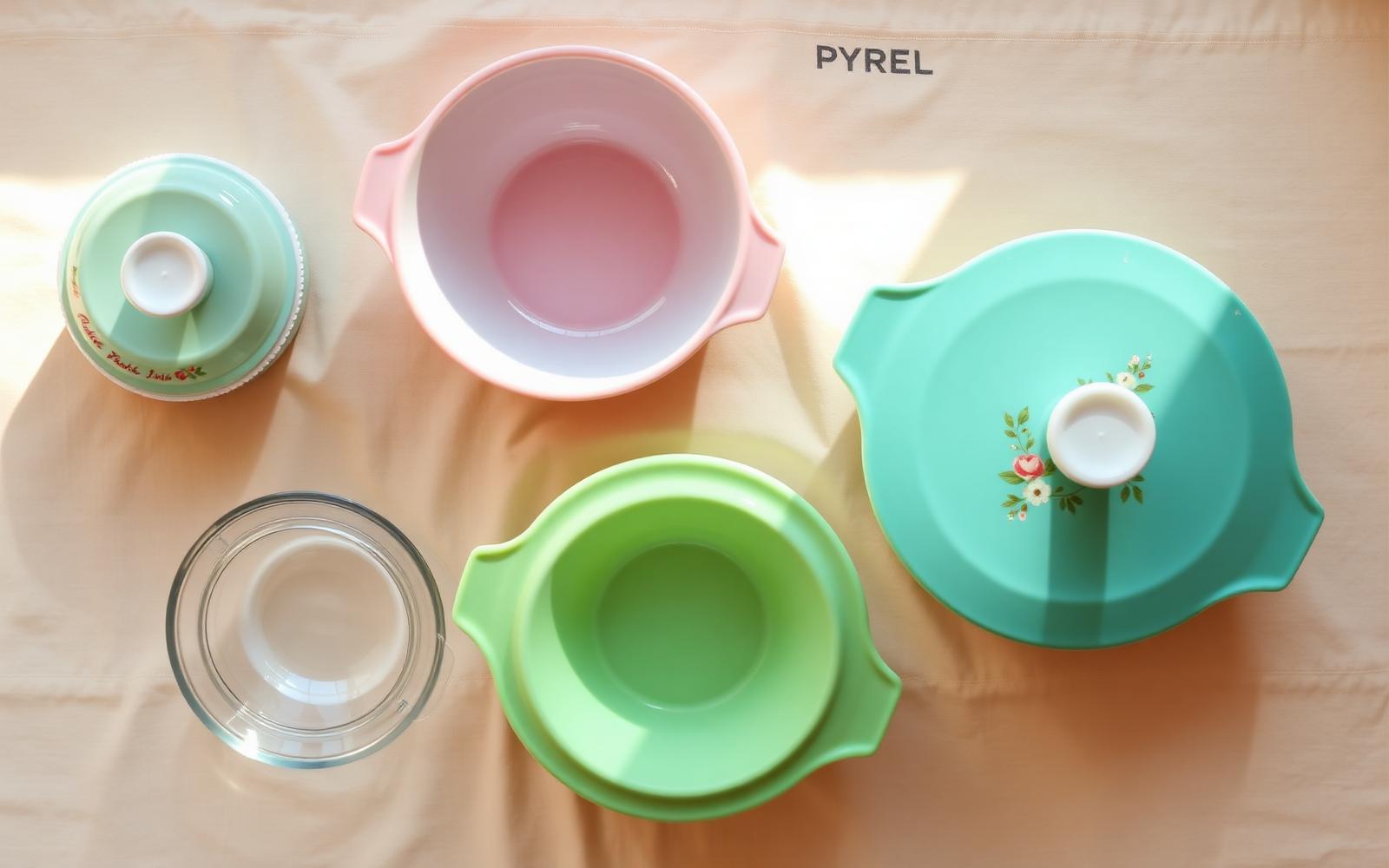
What to grab first:
- Primary Colors set (red, blue, green, yellow nesting bowls) — the icon. $30–$50 for a complete set at retail; you can find one bowl at a time for $2–$5 apiece.
- Butterprint (turquoise with white farm couple pattern) — the most Instagrammable.
- Pink Gooseberry — pink and white berries. Also collectible. If you see one for under $10, take it.
- Spring Blossom / Crazy Daisy (green) — later era, cheap, still gorgeous.
- Fridgies (small refrigerator dishes with lids) — the sleeper. $2–$4 each at sales, adorable stacked on a shelf.
How to spot real Pyrex fast: flip it over. Real vintage Pyrex says "PYREX" (all caps) with a mold number underneath. Newer or knockoff pieces don't have the pattern printed under the glaze. If the pattern feels smooth to the touch and glossy, it's original.
Don't overpay chasing a Lucky Boys or an Atomic Eyes rarity — those are $200+ collector patterns and they never live on the $3 table. If you want the full reseller-grade breakdown, we did a deep dive in Where to Find Pyrex to Resell — same identification skills work for personal buying.
2. Cast iron: one skillet is all you need
Skip the Le Creuset. A properly seasoned vintage cast iron skillet is the best piece of cookware you'll ever own, and it costs less than lunch.
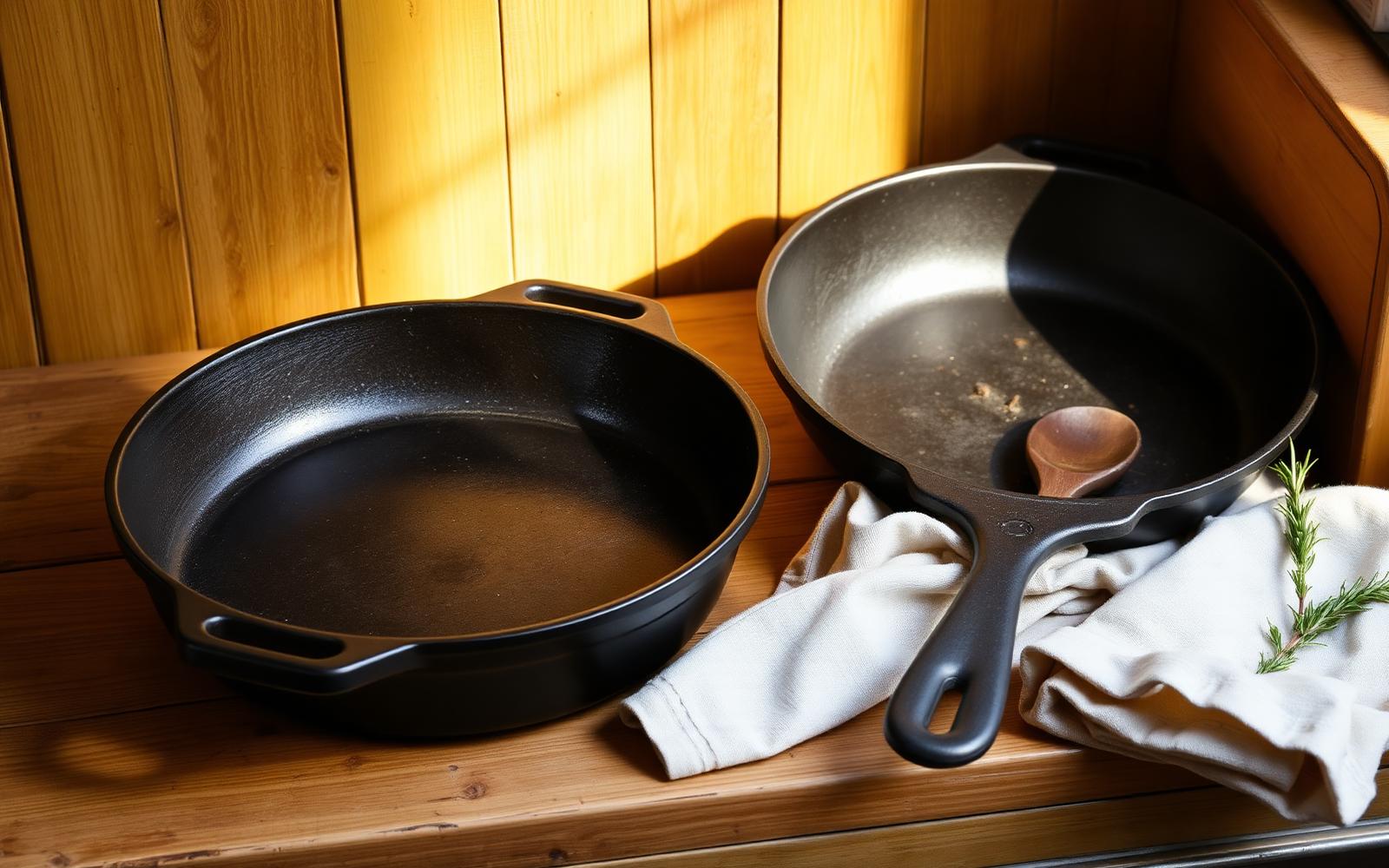
What to look for:
- Griswold or Wagner Ware — the pre-1957 American workhorses. Smoother cooking surface than anything made today.
- Unmarked "no name" skillets from the 1930s–1950s — cheaper, often just as good.
- Any size 8, 9, or 10 skillet — the everyday sizes. Skip the big 12s unless you actually roast whole chickens.
Target price: $5–$15 per skillet. Anything over $30 for an unmarked pan is retail creep — walk away.
Don't be scared of rust. Surface rust on cast iron is cosmetic. If the pan isn't cracked or pitted deep, you can restore it in a weekend with steel wool, coarse salt, hot water, and a fresh coat of flaxseed oil. America's Test Kitchen has the exact restoration process and it's foolproof.
Not sure what era a piece is from before you commit? Snap a photo of the stamp and run it through the Ai Photo Appraiser right at the sale — it will pull comps from eBay so you know if you're at a $10 pan or a $180 collector piece.
3. Jadeite, milk glass, and Depression glass
Green jadeite (Fire-King, McKee) is the internet's favorite vintage kitchen material for a reason — it glows in morning light. Same for opaque milk glass. Both were mass-produced for decades, and both are stupidly cheap at sales because most estate sale companies don't understand what they are.
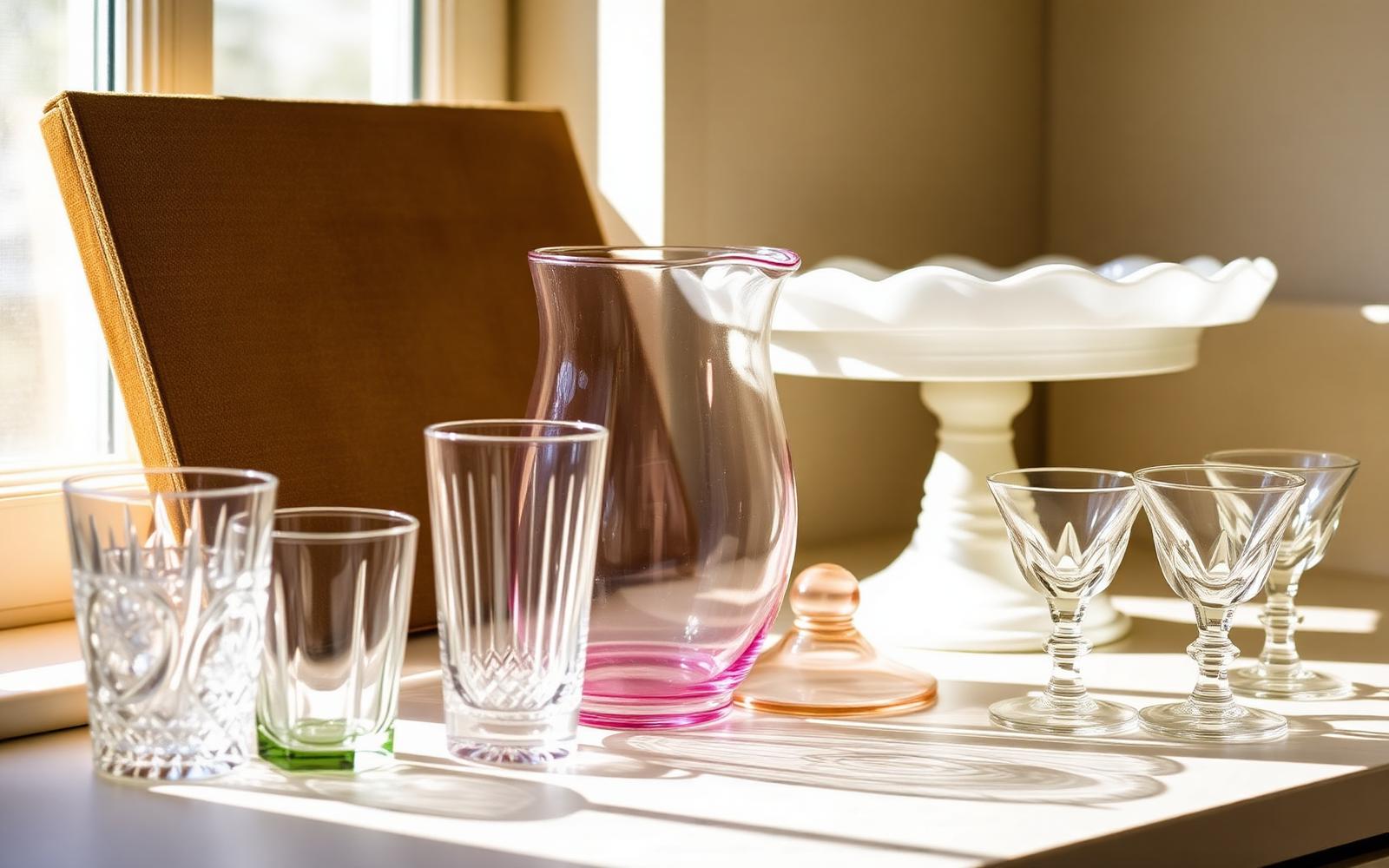
What to grab:
- Jadeite mugs — $2–$5 apiece. Buy every one you see; they photograph like a magazine.
- Milk glass creamer, sugar bowl, or cake stand — $5–$15. Instant kitchen glow-up.
- Depression glass pitcher or tumblers in pink, green, or amber — $8–$20 per piece.
- Pressed-glass water tumblers — practically free and gorgeous full of iced coffee.
Warning: reproductions exist. New "jadeite-look" pieces from Martha Stewart and Anchor Hocking are on the market. Real vintage Fire-King has a maker's stamp on the bottom (Fire-King, Anchor Hocking, or McKee); reproductions usually don't. When in doubt, Replacements.com's identification guide is the gold standard.
4. The appliance (the splurge)
You get one hero appliance and it's what turns a shelf of nice objects into an actual working vintage kitchen.
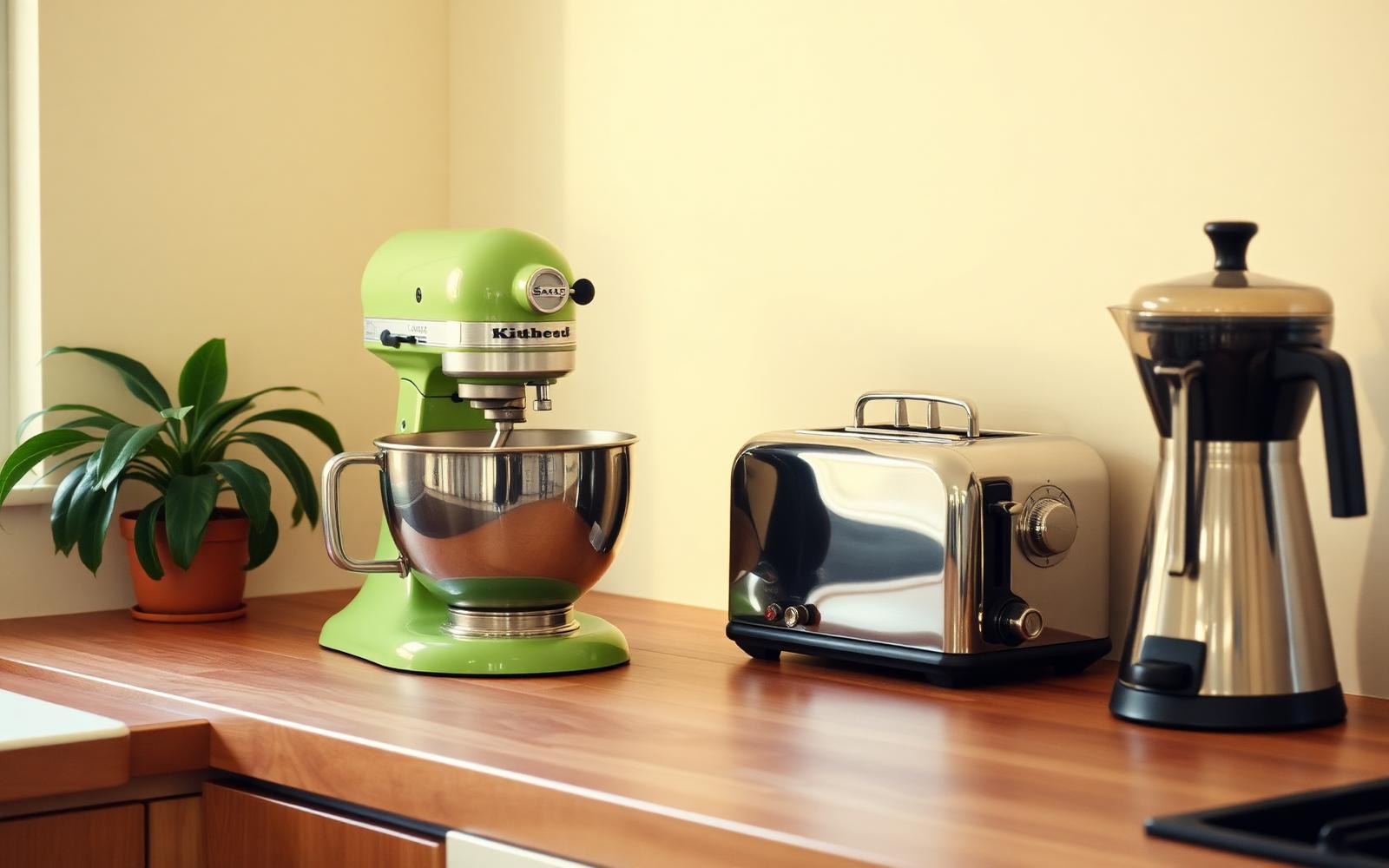
Best candidates, in order of value:
- Vintage KitchenAid stand mixer (K5-A, K45SS, or earlier). These things run forever. Estate sale price: $20–$60 for one that works, $80+ retail. Plug it in at the sale before you buy — the seller will let you.
- Sunbeam Mixmaster (1950s–1960s chrome). Cheaper ($15–$30), works beautifully, and looks like a spaceship.
- Percolator coffee pot (Farberware, Corning, Revere Ware). $5–$15 and photographs like a dream. Coffee tastes better, arguably.
- Chrome toaster — the domed pre-1970 kind. $10–$25.
Pro tip: the appliance is where you use the appraiser most. A working KitchenAid K5-A is worth $150+ on eBay, so even a "high" $60 estate sale price is a steal. Snap a photo of the model plate on the bottom, run it through the Ai Photo Appraiser, and you'll know instantly whether $40 is a deal or a dud.
5. Linens, utensils, and the small stuff that sells the whole look
This is the category people skip and it's the category that makes the room feel *lived in*, not staged.
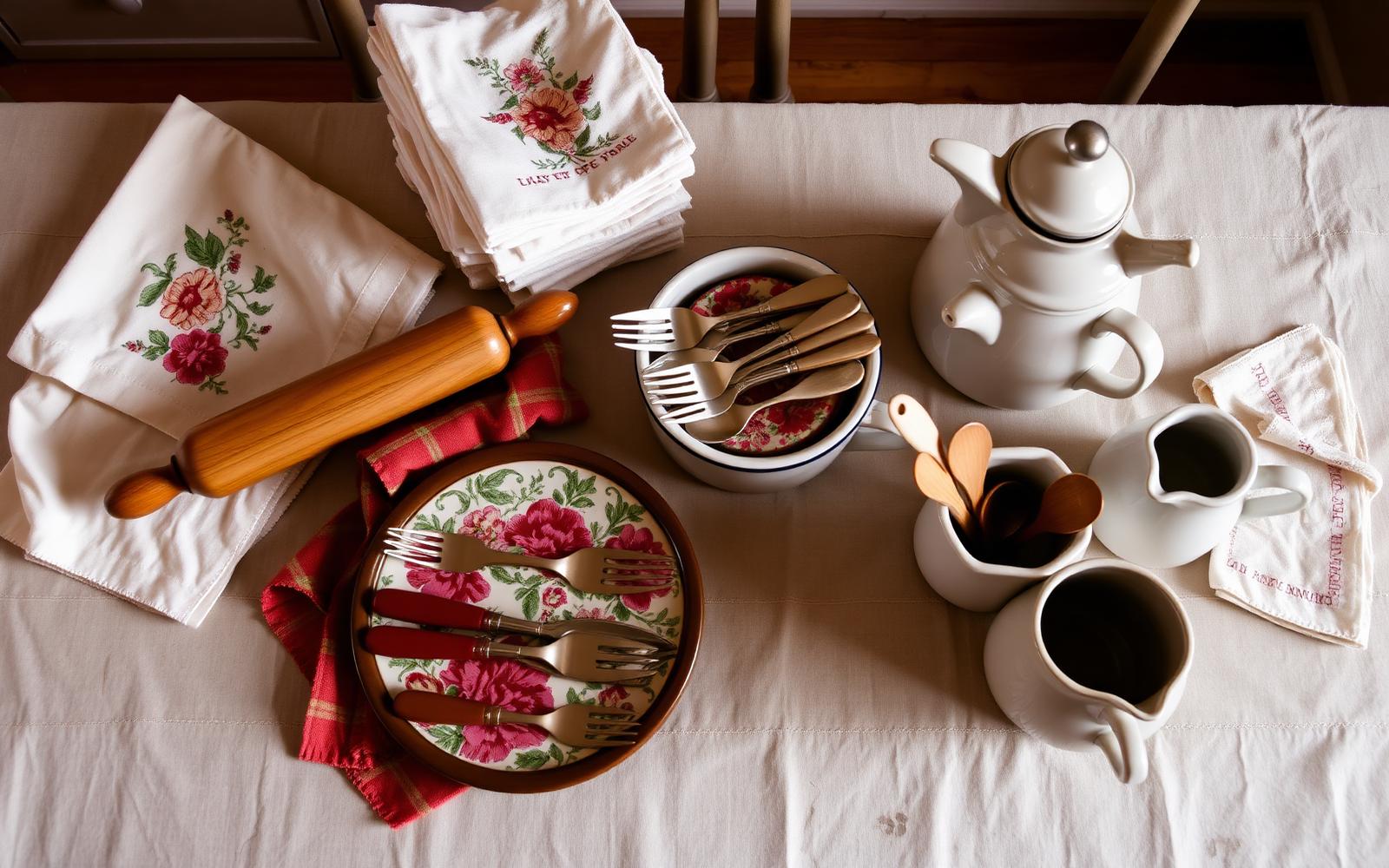
Fill your basket with:
- Embroidered tea towels ("Days of the Week" sets, floral prints) — $1–$3 each. Buy a stack.
- Cotton napkins in mismatched florals — $0.50–$2 each.
- Wooden rolling pin (one-piece maple is prettiest) — $3–$8.
- Wooden spoons, spatulas, and a small crock to hold them — $1–$5 apiece.
- Bakelite-handled flatware (red, yellow, green handles) — a full 12-piece set is $10–$25.
- Enamelware coffee pot, canister, or bread box — $8–$20. The white-with-navy-trim style is the classic.
Linens are usually piled unpriced on a table late in the sale — that's when you ask "would you take $10 for all of these?" and walk away with an armful.
Where to find these sales — and when to go
The 60% rule for estate sale timing:
- Day 1 (usually Friday): full price. Only go if there's a piece you *have* to have.
- Day 2 (Saturday): most items 25–50% off. The sweet spot for kitchen items — still plenty of stock, big discount.
- Final day (Sunday): 50–75% off, sometimes fill-a-bag pricing. Best for linens, glassware, wooden utensils.
For a vintage kitchen build, go Saturday. Sunday is too picked over for the good Pyrex; Friday is too expensive.
Find the sales:
- Search estate sales near you on EstateSaleFinder — filter by "Household Items" or "Kitchen."
- Scan the photos before you go. Every listing has a photo carousel; you can literally see the Pyrex before you drive over.
- Save sales you want to hit and hit "Plan route" — the route planner will string them together nearest-to-farthest and save you an hour of driving.
What to bring to the sale
Bring these five things and you will out-shop everyone else in line:
- Bubble wrap or dish towels for wrapping glass.
- A collapsible bin or milk crate — carts are usually forbidden but a bin at your feet is fine.
- Small bills and Venmo — some sales are cash-only, some are card. Bring both.
- Your phone charged — you'll use the Ai Photo Appraiser more than you think.
- A tape measure if you're buying an appliance — trust me, KitchenAid mixers are heavier than you remember.
The mistakes that ruin the $200 budget
- Buying incomplete Pyrex sets at "set" prices. A single Cinderella bowl without its lid is worth half. Check for chips, lids, and companion pieces before you pay.
- Chasing brand-name cast iron. A no-name 1940s skillet cooks identically to a Griswold. Save the extra $30.
- Ignoring the box on the floor. The best linens and wooden spoons are always in an unpriced box under the table. Ask.
- Skipping the garage. Kitchen appliances migrate to the garage first. Always look there.
The finished kitchen
Here's what $187 looks like assembled — Pyrex on open shelves, cast iron on a butcher block, jadeite mugs waiting for morning coffee, a stand mixer that will outlive both of us.
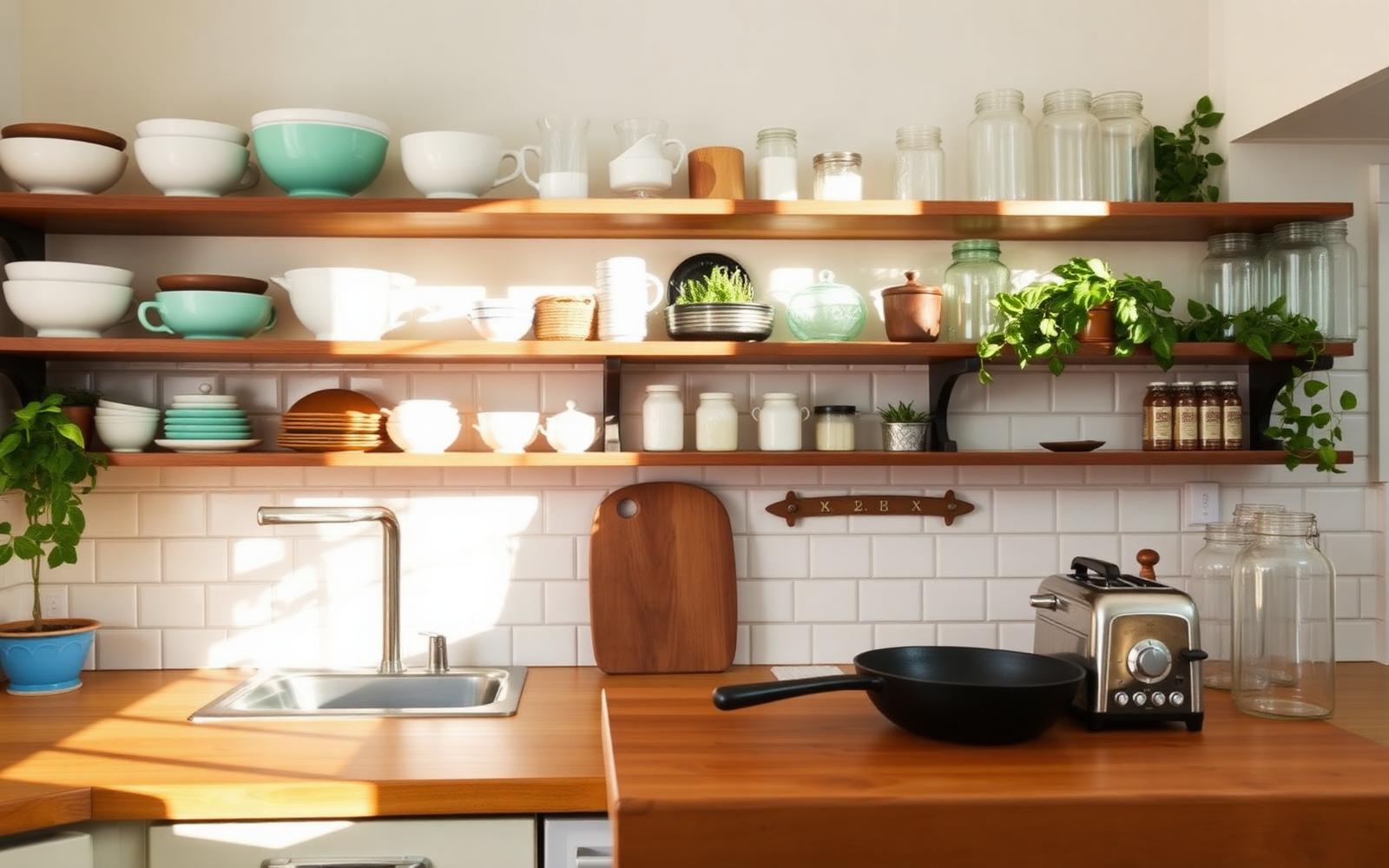
The trick isn't finding *rare* pieces. It's finding *cohesive* pieces — a color palette (pastels, greens, cream, warm wood), a mix of textures (glass, iron, linen, wood), and one hero appliance. Estate sales serve all of that on a folding table every single weekend.
Keep hunting
- Where to find Pyrex to resell — the identification skills work for personal buying too
- Cast iron cookware at estate sales — full restoration guide
- The complete beginner's guide to estate sales
- Browse estate sales near you this weekend
Bring the bubble wrap. Bring your phone. Come back with a kitchen.