How to Start an Antique Booth Side Hustle in 2026: Everything Nobody Tells You Before You Sign the Lease
An antique booth is the side hustle most people don't even know exists — rent a 10x10 space inside a local mall for $150–$400 a month, stock it with finds you already love hunting for, and let the mall's staff handle the register while you're at your day job. Successful booth sellers are clearing $800 to $3,500 a month in profit. Here is the complete playbook for 2026: how to pick the right mall, what rent really looks like, where to source, how to price, and the one move that doubles most booths' sales overnight.
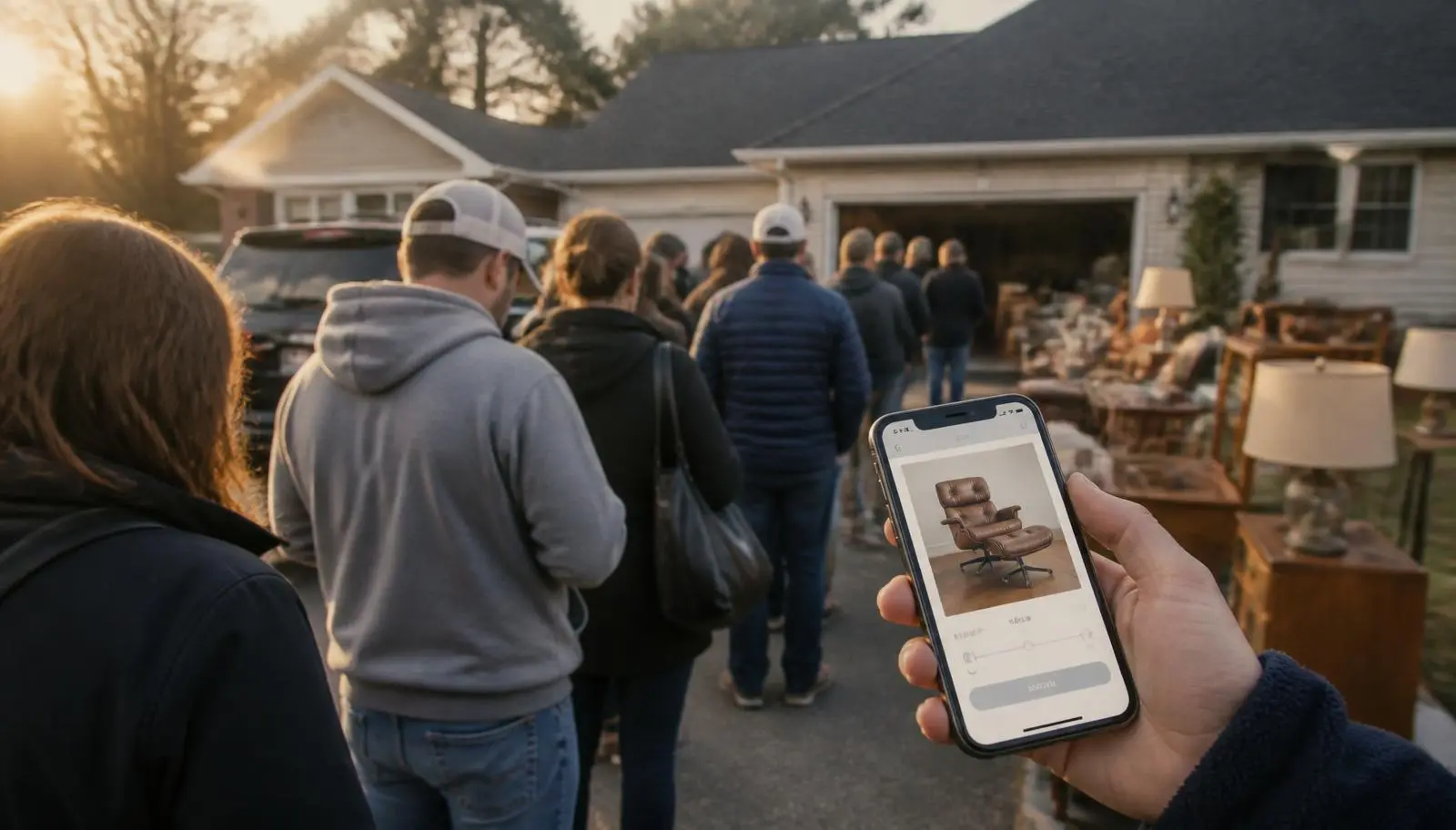
If you have ever stood in someone's living room at an estate sale at 7:47 a.m. on a Saturday holding a brass lamp you didn't strictly need and thought, I could do something with this — this post is for you.
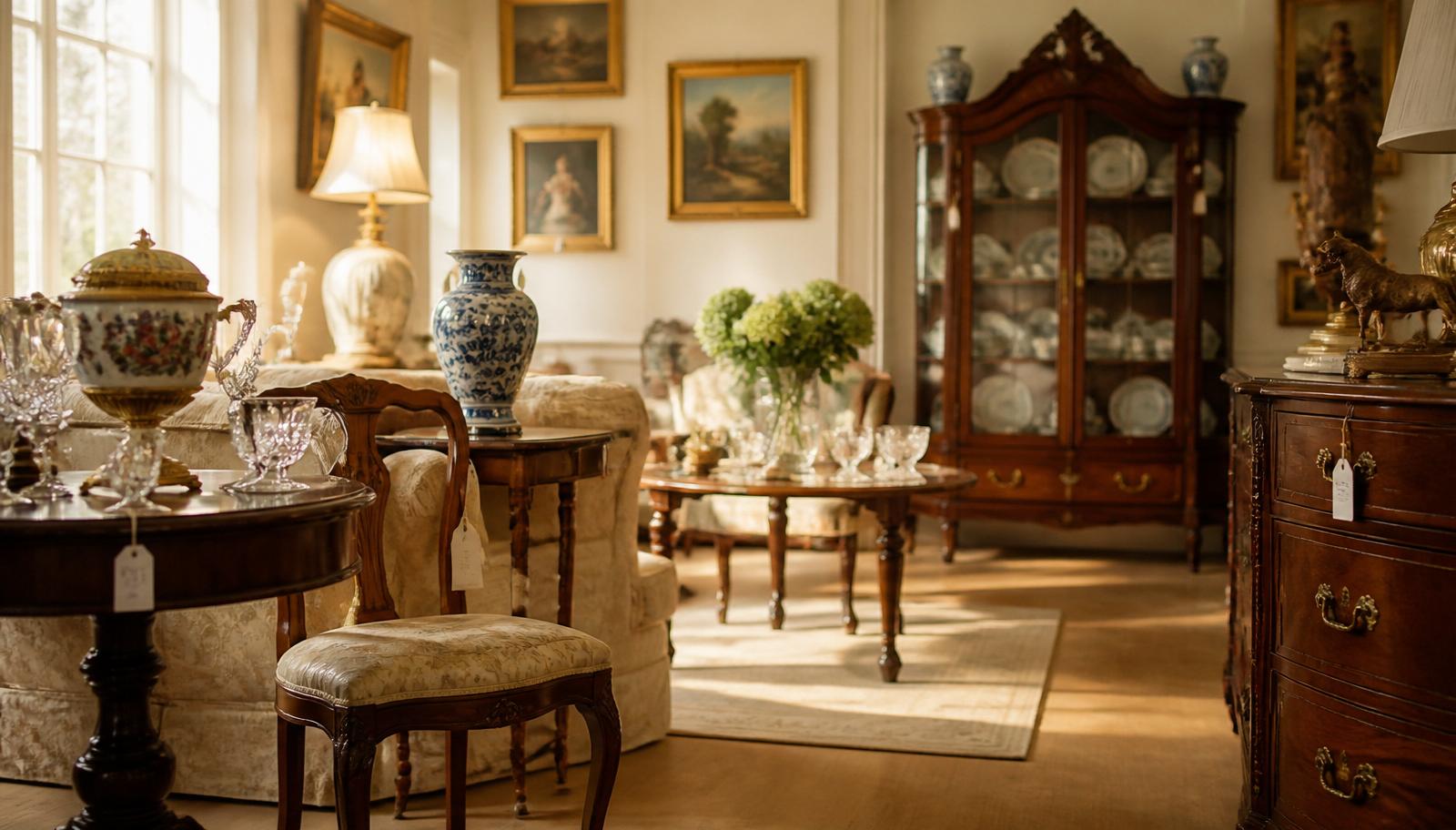
The antique booth side hustle is one of the few small businesses left in America where you can start with $500 and a hatchback, work it for two hours on a Sunday afternoon, and reasonably expect $800 to $3,500 a month in profit by month six. It is genuinely fun. You are paid to go to estate sales. You get to style a tiny room every couple of weeks like it's a magazine shoot. And the mall handles every part of it that would make you crazy — the register, the customer service, the security, the open-on-Christmas-Eve part.
One more line of booth income most people miss: getting paid monthly for the dealers you bring in.
The catch is that nobody really teaches it. People stumble in, sign a lease for a booth in the wrong location, fill it with the wrong stuff, price it wrong, never put it online, and decide six months later that "the antique booth thing didn't work."
It works. It just has a playbook nobody handed you. Here it is.
What an Antique Booth Actually Is (and Why It's Such a Good Deal)
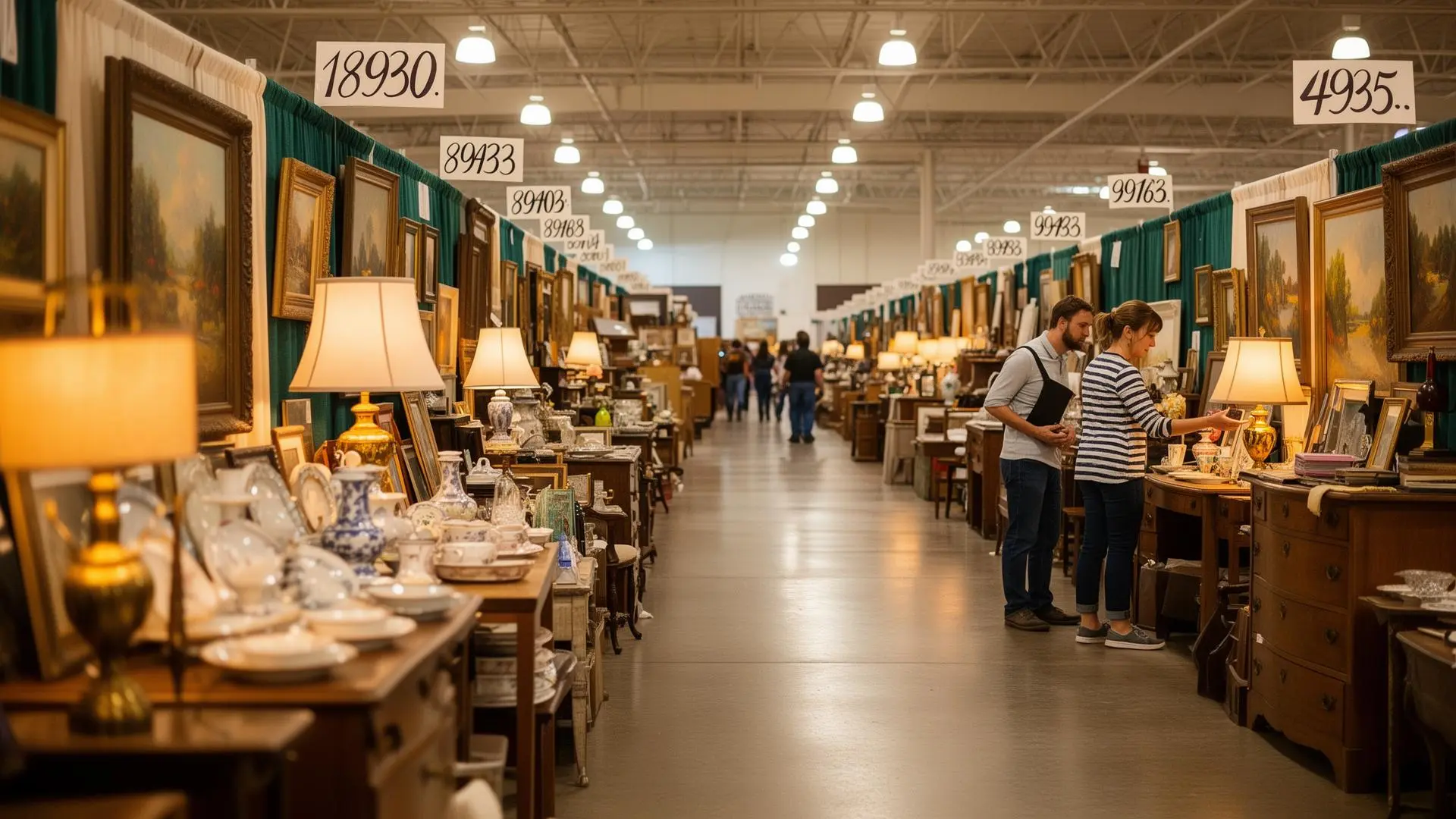
An antique mall is one big store made up of dozens — sometimes hundreds — of individual little stores. You rent a defined space inside the mall (most commonly 10 feet by 10 feet, sometimes a smaller 5x10 or a glass display case for jewelry and smalls). You stock it with your stuff. You set your prices. You attach a vendor number to every tag.
That's it. The mall does everything else:
- They keep the doors open seven days a week.
- They handle every sales transaction at one central register.
- They take credit cards, do the bookkeeping, and cut you a check (usually monthly) for everything that sold, minus a small commission.
- They handle customer service, security, theft loss, building maintenance, marketing, and the local foot traffic.
You walk in once every week or two, restock, dust, restyle, and leave. You do not stand behind a register. You do not answer "do you take less" forty-seven times a Saturday. You do not have to be there.
For a working person with a day job, kids, or a real life — this is the closest thing the retail world has to passive income.
The Real Numbers: Rent, Commission, and What People Actually Make
Let's get the money on the table, because this is where every other guide on the internet gets vague.
What you'll pay
| Space | Typical monthly rent | Typical commission |
|---|---|---|
| Glass display case (jewelry, smalls) | $40–$120 | 5–10% |
| 5x10 corner or aisle booth | $100–$220 | 8–12% |
| 10x10 standard booth | $150–$400 | 8–15% |
| 10x15 / 10x20 premium booth | $350–$700 | 10–15% |
| End-cap or window booth | $400–$900 | 10–15% |
You also pay a one-time set-up deposit at most malls — usually one month's rent.
A typical first booth: a 10x10 in a solid mid-tier mall in a metro area, $200/month rent, 10% commission. Total monthly fixed cost: $200 plus 10% of whatever sells.
What sellers actually earn
This is the number people whisper about. Here is the honest distribution from the booth-seller community in 2026:
- Bottom third — barely breaking even or losing $50–$150/month. Almost always: wrong mall, no online presence, sourcing too expensive, refusing to mark anything down.
- Middle third — $400 to $1,200/month in profit (after rent and commission). Solid booth, decent traffic, restocks consistently.
- Top third — $1,500 to $3,500+/month in profit. Right mall, sharp eye for inventory, prices things right, restyles often, and (this is the big one) has every piece of inventory online and discoverable.
Multiple booths in multiple malls is where the people clearing $5K–$10K a month live. But you have to nail one first.
Picking the Right Mall Is the Most Important Decision You Will Make
Most failed booths fail before the first piece of furniture goes in. They picked the wrong building.
Spend a Saturday — before you commit to a lease — driving to every antique mall within 45 minutes of your house. At each one, do this little checklist:
- Walk in at 11 a.m. on a Saturday. Is the parking lot half full or empty? Are there actual shoppers walking around with bags, or is it three retirees and a cat?
- Look at the booths. Are they styled like little rooms with track lighting and consistent pricing, or do they look like a yard sale with everything piled on cafeteria tables? You want the first kind. That mall has standards, which means buyers trust the pricing.
- Check the empty booths. A mall with three or four open booths is healthy and growing. A mall with twenty open booths is dying.
- Ask one current vendor a single honest question. "Hey, mind if I ask — are you happy with how things are selling in here?" Most vendors will tell you the truth in under a minute, and you will learn more from that one conversation than from any glossy brochure.
- Look for a website and Google reviews. A mall with a thriving Instagram and 4.5+ stars on Google is doing the marketing work for you. A mall with no online presence is leaving 30% of its potential customers on the table — and that math becomes yours.
When in doubt, pay a little more rent for the mall with the foot traffic. A $400 booth in a busy mall will out-earn a $150 booth in a dead one by a factor of ten.
Where to Source the Stuff — Without Going Broke
The whole game is buying low. Every dollar you overpay on inventory comes directly out of your profit.
Your sourcing rotation, ranked by what actually works in 2026:
- Estate sales — Your main supply. Find sales near you, plan a Saturday route, and show up at the second day (Saturday afternoon or Sunday) when prices are 25–50% off. The good stuff is sometimes gone, but the bones — furniture, lamps, framed art, kitchenware in bulk — is when the deals get truly absurd.
- Auctions (in person and online) — Box lots at local estate auctions are gold. A $30 box lot of mixed glassware will routinely contain $200 worth of priced-out booth pieces.
- Garage and yard sales — Saturday mornings, the older neighborhoods. Sellers price to move it today, not to maximize value. A 7 a.m. text-route through five sales in a 4-mile radius will fill the back of an SUV for under $80.
- Other people's downsizing — Word-of-mouth. Tell every friend, neighbor, and barista you know that you buy estate-quality furniture. You'll get one phone call a month that's worth a whole week of estate sales.
- Facebook Marketplace — Search for "moving sale," "downsizing," "estate cleanout." Filter by lowest price. Be the first to message.
Skip: thrift stores (they've gotten too good at pricing), retail antique stores (you're not buying retail to resell retail), and dropshipping (you cannot do this with antiques and the people trying are losing money).

The buying rule that keeps booth sellers solvent
Before you put a single dollar down at an estate sale, run the math in your head:
What is the realistic booth tag price on this — and is what I'm about to pay less than one-third of that?
A piece you would tag at $90 in your booth should cost you $30 or less at the source. A $300 piece should cost $100 or less. The 3x markup is not greed — it's what covers your rent, your commission, your gas, your shrinkage, your marketing, and also leaves you a profit.
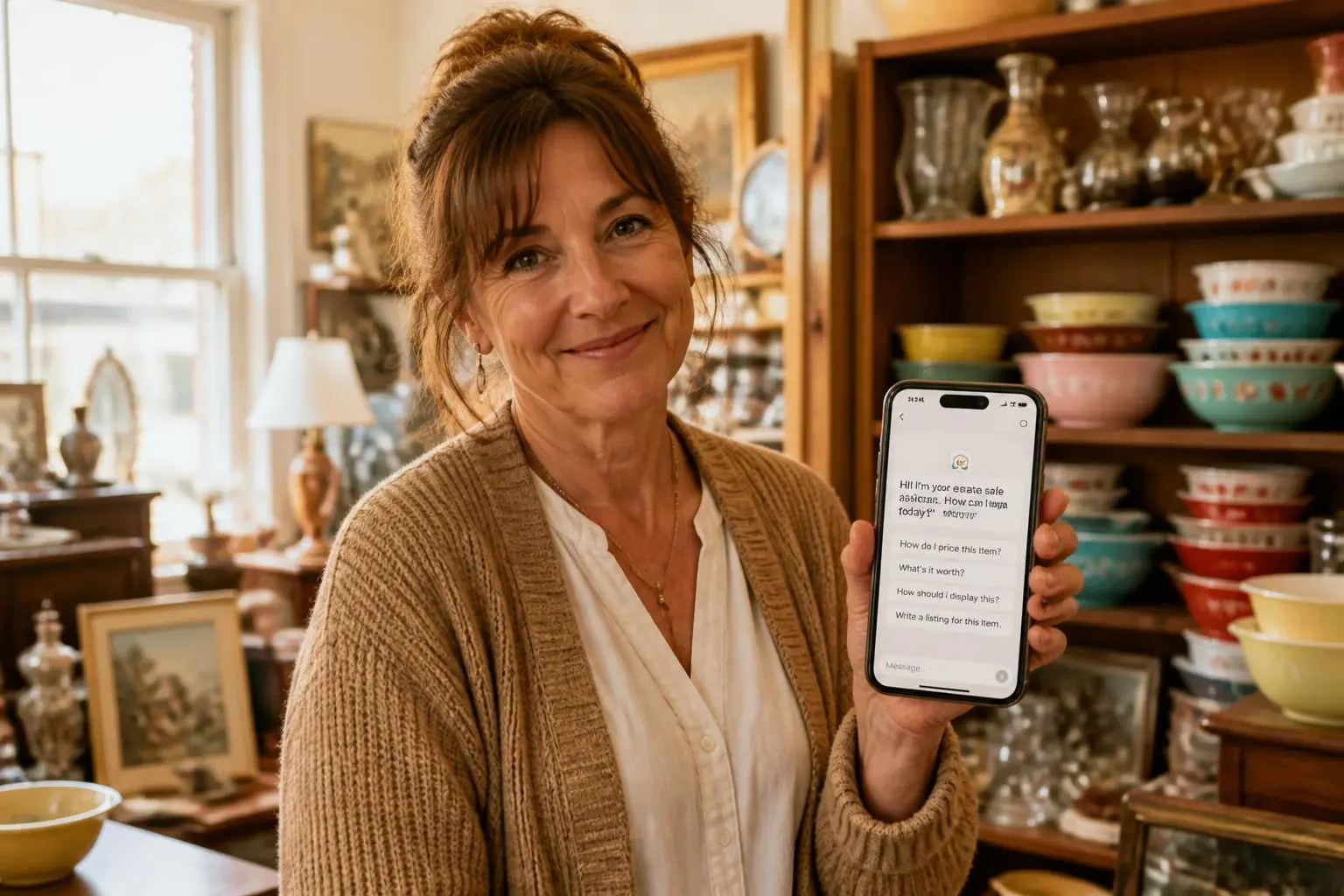
When you're not sure what the realistic tag price is, this is exactly what the Ai appraiser was built for. Snap a photo on the table at the estate sale, see what comparable pieces have actually sold for on eBay sold listings, and either negotiate the price or walk away. Thirty seconds. It pays for itself the first weekend.
How to Price Things So They Actually Sell
The single most common booth-killer is pricing for the customer you wish would walk in instead of the customer who actually walks in.
Three pricing principles that work in 2026:
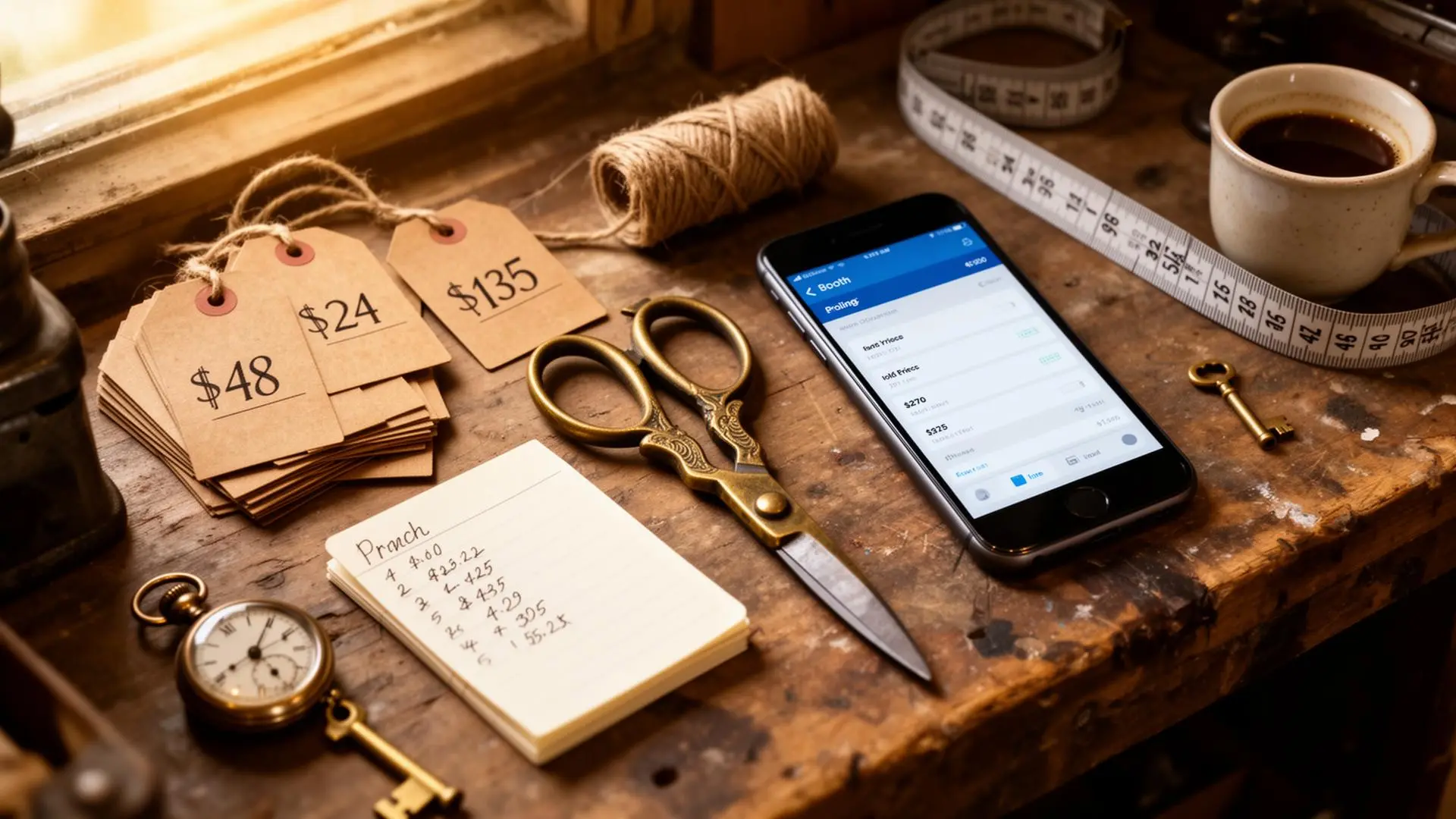
1. Price to be the most fairly-priced booth in the mall, not the cheapest. A signed mid-century walnut credenza tagged at $385 in a booth that looks beautiful will sell every time over the same piece tagged at $295 in a booth that looks like a storage unit. People pay for confidence. Confidence is a clean booth, a typed tag, and a price that feels honest.
2. Always leave room to negotiate — but a small amount. Most antique malls offer customers a "dealer call" — they will call you to approve a price. Build 10–15% of wiggle room into every tag. A $200 piece tagged at $225 with $25 of "give" feels like a win to the customer and lets you say yes without losing margin.
3. Mark down on a schedule. Always. The pieces that don't sell in 60 days don't sell because of the price. Drop 20% at day 60. Drop another 20% at day 90. Pull anything still sitting at day 120 and move it to a different booth or an outdoor flea. Dead inventory is the silent killer of antique booth profit — every square foot it occupies is square footage your good stuff can't live in.
How to Make Your Booth Look Like It Belongs on Pinterest
This is the part that separates the booth that does $700 a month from the booth that does $2,800 a month. Same square footage. Same rent. Wildly different outcome.
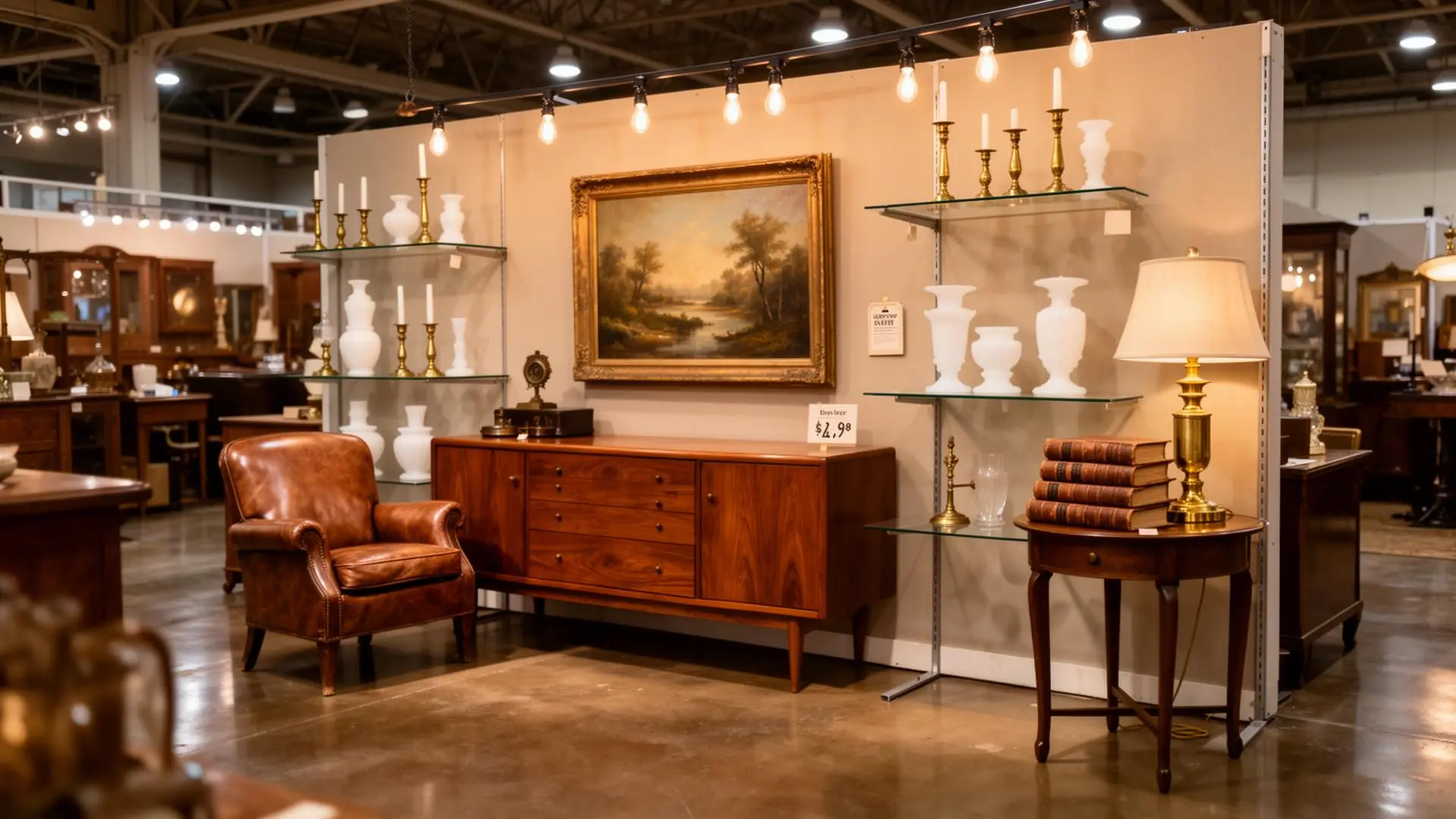
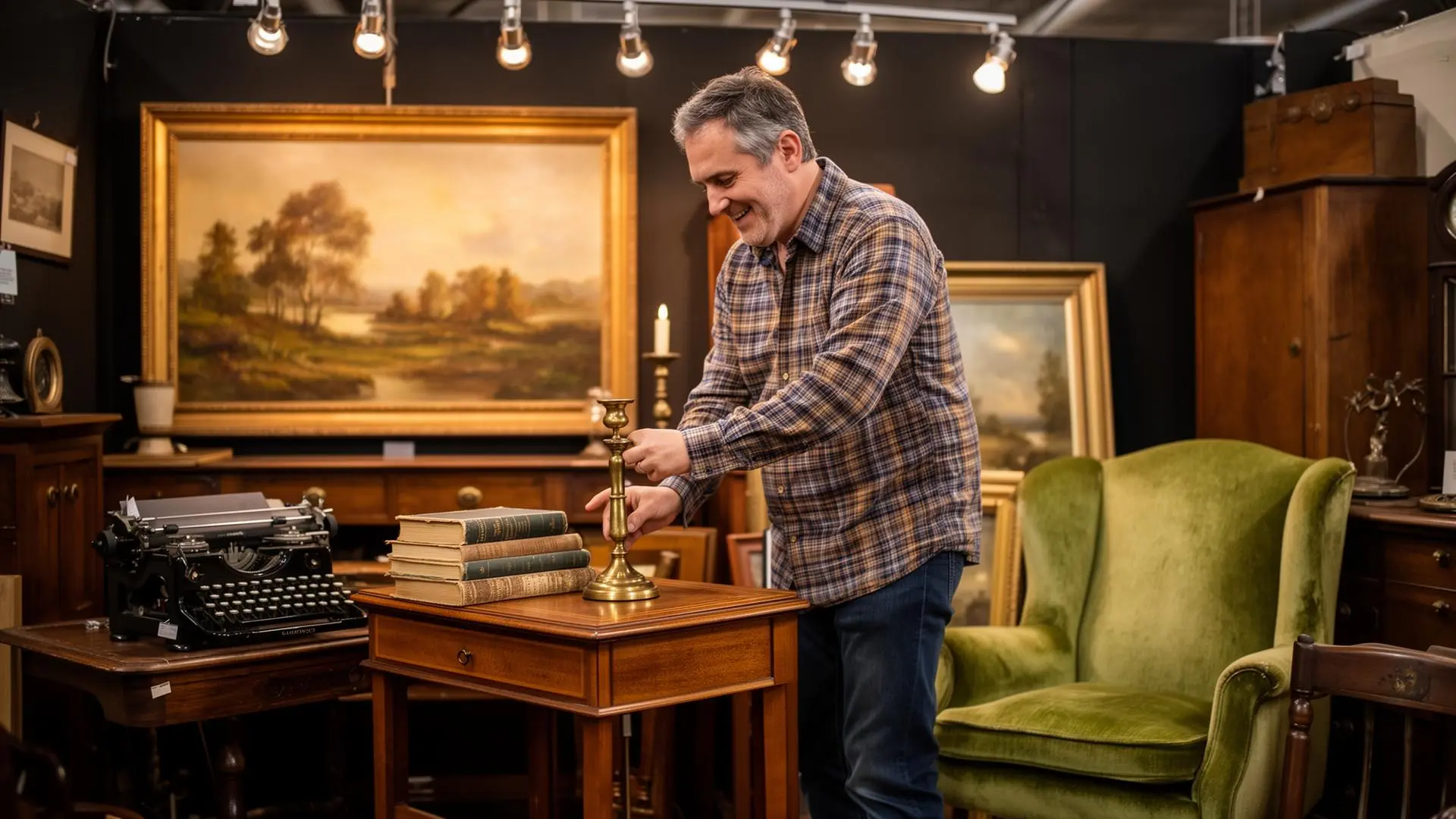
Treat your 10x10 as a tiny room set.
- One anchor piece in the back — a dresser, a credenza, a writing desk. Tall, dark, solid wood. It is the wall your eye lands on first.
- One seating piece — a wingback chair, a small settee, a leather club chair. Soft. Inviting. Even if it doesn't sell, it makes the booth feel like a place.
- Layered surfaces — a small side table next to the chair, a stack of three leather books on top, a brass lamp behind, a brass candlestick beside.
- One thing on the wall — an oil painting, a framed map, a vintage mirror. Hang it. Don't lean it. Hung art adds 25% perceived value to a booth, every single time.
- A rug on the floor, even a small one. It tells the eye where the room ends.
Restyle every two weeks at minimum. The same customer walks past your booth four times a month. If it looks identical every visit, they stop seeing it. Move one piece to a different spot, swap out a vignette, add fresh stock to the front. The booth that "feels new" is the booth that gets the call.
The One Move That Quietly Doubles Most Booths' Sales
Here is the part nobody at your mall is going to tell you, because most of them haven't figured it out yet.
The booth that exists only inside the building is invisible to 90% of the buyers who would have bought from it.
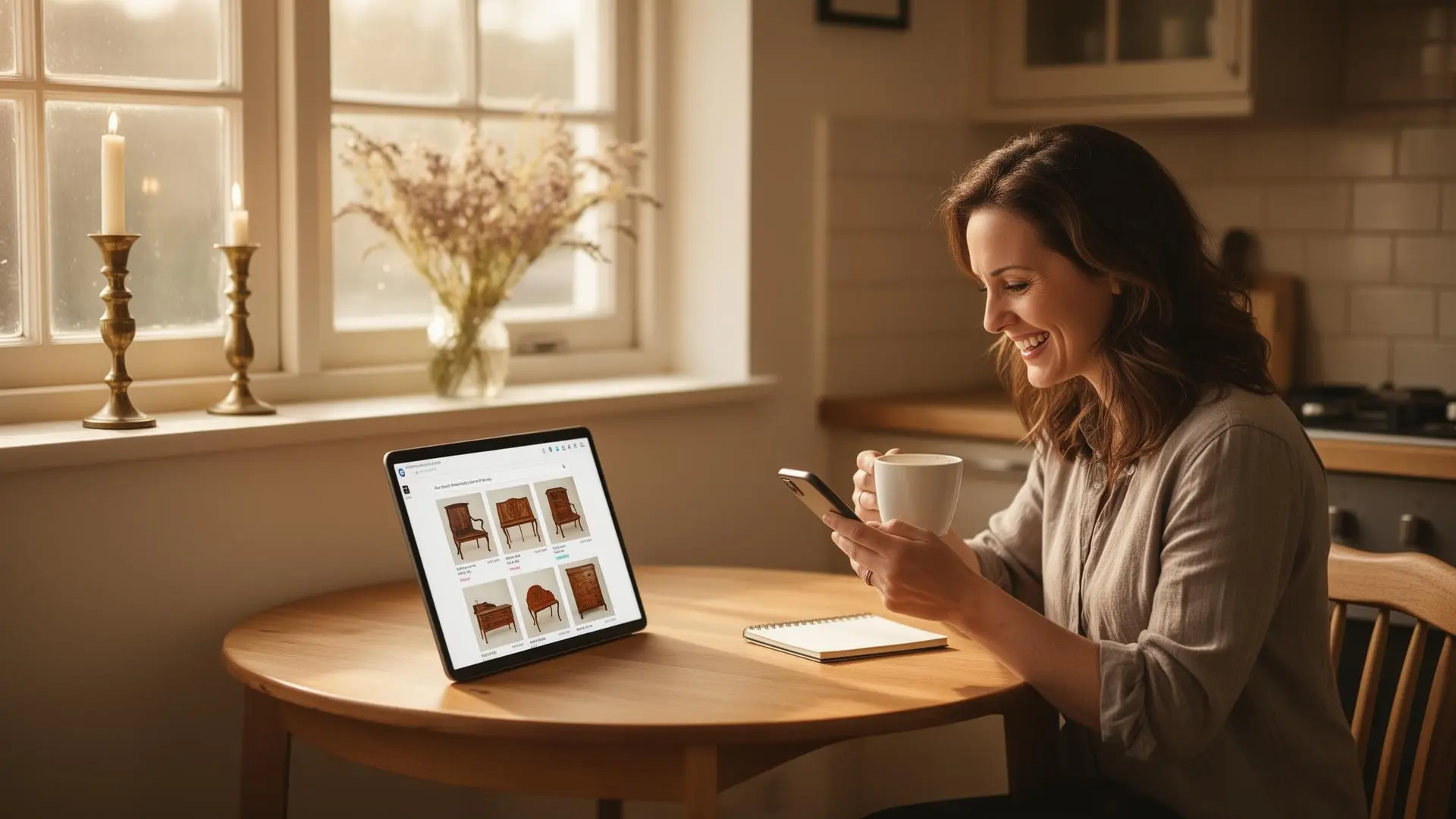
In 2026, almost every shopper who walks through your mall on Saturday morning also searched for "mid-century credenza near me" or "vintage oil painting Atlanta" on their phone earlier that week. If your inventory doesn't show up in that search, it doesn't exist. It does not matter how beautifully you styled the corner. They never knew it was there.
The fix is not a website. The fix is to get every individual piece of your booth online, photographed, priced, and discoverable — with your booth's location and your mall's address attached.
That is what EstateSaleFinder's free Booth Marketplace does. You photograph each piece on your phone the moment you stage it. It appears in our local search for buyers within driving distance of your mall. Anyone in your city who is searching for that piece on Google sees it. When they show up at the mall on Saturday holding their phone, they are not browsing — they are coming for that specific item.
The booths in our network that go from "in-store only" to "every piece online" routinely see their monthly take double inside ninety days. Not because the inventory changed. Because suddenly the right buyer knew it existed.
Your First 30 Days: A Realistic Plan
If you decide to actually do this — and a surprising number of you reading this will — here is the no-nonsense plan.
Week 1 — Decide.
- Visit every mall within 45 minutes of your house.
- Pick the busiest one with the best vibe and a 5x10 or 10x10 opening.
- Sign the lease. Pay the deposit. Get your vendor number.
Week 2 — Source the first load.
- Hit 8 to 12 estate sales over the weekend with $400–$600 in cash.
- Aim for: one anchor furniture piece, one seating piece, three layered surface pieces, a stack of books, four to six brass or glass smalls, and one piece of framed wall art.
- Use the Ai appraiser on anything you're unsure about before paying.
Week 3 — Set up.
- Pick up your inventory on Saturday morning, set up the booth on Saturday afternoon. Bring a small ladder, a hammer, picture-hanging hooks, a $25 area rug, and a roll of kraft price tags.
- Stage it like a tiny living room, not a storage unit.
- Tag everything with your vendor number, a clean price, and a one-line item description.
- Photograph every single piece and list it on the Booth Marketplace →
Week 4 — Watch and adjust.
- Stop by the mall mid-week. Note what sold. Note what people picked up and put back.
- Restock the empty spots immediately — an empty booth is a dead booth.
- The first month's check is almost never the moneymaker. The second and third months are when the booth's real personality shows up.
You Should Probably Just Start
Most people considering this read three guides, watch eight YouTube videos, lurk in a Facebook group for four months, and never actually do it. Then their cousin starts a booth, makes $1,400 the third month, and they're a little quietly furious about it.
You already have the eye. You already love this stuff. You already know what makes a piece feel like something and what makes it feel like landfill. All that's left is the lease.
- Browse estate sales near you for first-week inventory →
- List your booth on the free Booth Marketplace and start getting discovered →
- Run the Ai appraiser on anything you're unsure about before you pay →
- Read next: Why 90% of Local Buyers Will Never Find Your Antique Booth (And the Fix That Takes 10 Minutes)
The booth at the back of the mall that's been there for three years and clears $2,600 a month? That person started exactly where you are right now. The only difference is they signed the lease on a Tuesday afternoon while you were still thinking about it.
Sign the lease.
Keep exploring
Ready to start your own treasure hunt?
Discover estate sales near you and find incredible deals.
Explore Sales Near Me
About the author
Andy
Founder, EstateSaleFinder.net
Hi, I'm Andy — a retired commercial photographer turned developer with a five-year (and counting) obsession with estate sales. I started EstateSaleFinder.net because I knew there had to be an easier, smarter way to find and list estate sales. Now I get to chase treasure and build the tool I always wished existed.