The Items That Will Show Up at Estate Sales in 10 Years
Stanley Quenchers by the crate. Crocs sold by the bag. A wall of Funko Pops marked 'take one.' Here's our fun, research-backed prediction of what will show up at the estate sales of 2035 — and which of today's viral obsessions will actually be worth money.

Imagine it's a warm Saturday morning in 2035. You pull up to a nice house in the suburbs, coffee in the cupholder, phone open to your estate sale app. The tables in the driveway are packed, and among the vintage Pyrex and mid-century lamps you see it:
*A dozen pastel Stanley cups. A bin of Crocs. A stack of friendship-bracelet-covered concert tees. A little bowl full of tangled AirPods.*
Welcome to the estate sale of 2035.
Every generation dumps its "definitely-worth-something-someday" hoard onto folding tables eventually. Boomers gave us Hummels and Precious Moments. Gen X unloaded their Beanie Babies. Millennials are already starting to walk their Funko Pop collections to the curb. So what does our current viral moment leave behind?
Grab a coffee. This is going to be fun — and a little brutal.
First, the rules of the crystal ball
Before we start crowning winners and losers, here are the three iron laws every collectibles historian knows — and every reseller learns the hard way.
Law #1: If everyone bought one, no one will pay for one. This is overproduction, and it's the single biggest killer of "future collectibles." Ty made an estimated two billion Beanie Babies. Funko was producing so many Pops by 2023 that they wrote off $30+ million in inventory and destroyed them in a landfill rather than store them. Rarity is the whole game.
Law #2: The stuff no one saved gets valuable. People carefully preserved their Beanie Babies in plastic tag protectors. They *used* their 1955 Pyrex Cinderella bowls until the paint chipped. Guess which one is now worth $300.
Law #3: Nostalgia has a schedule. The 30-year cycle is remarkably consistent — the kids who grew up with something start paying real money for it when they're 35 and have a mortgage. Which means the objects of the 2020s peak on the resale market somewhere around 2050–2055, not 2035. In ten years, most of it will still be in the "sad garage" phase.
With those out of the way, let's walk the tables.
Stanley cups: the Beanie Babies of the 2020s
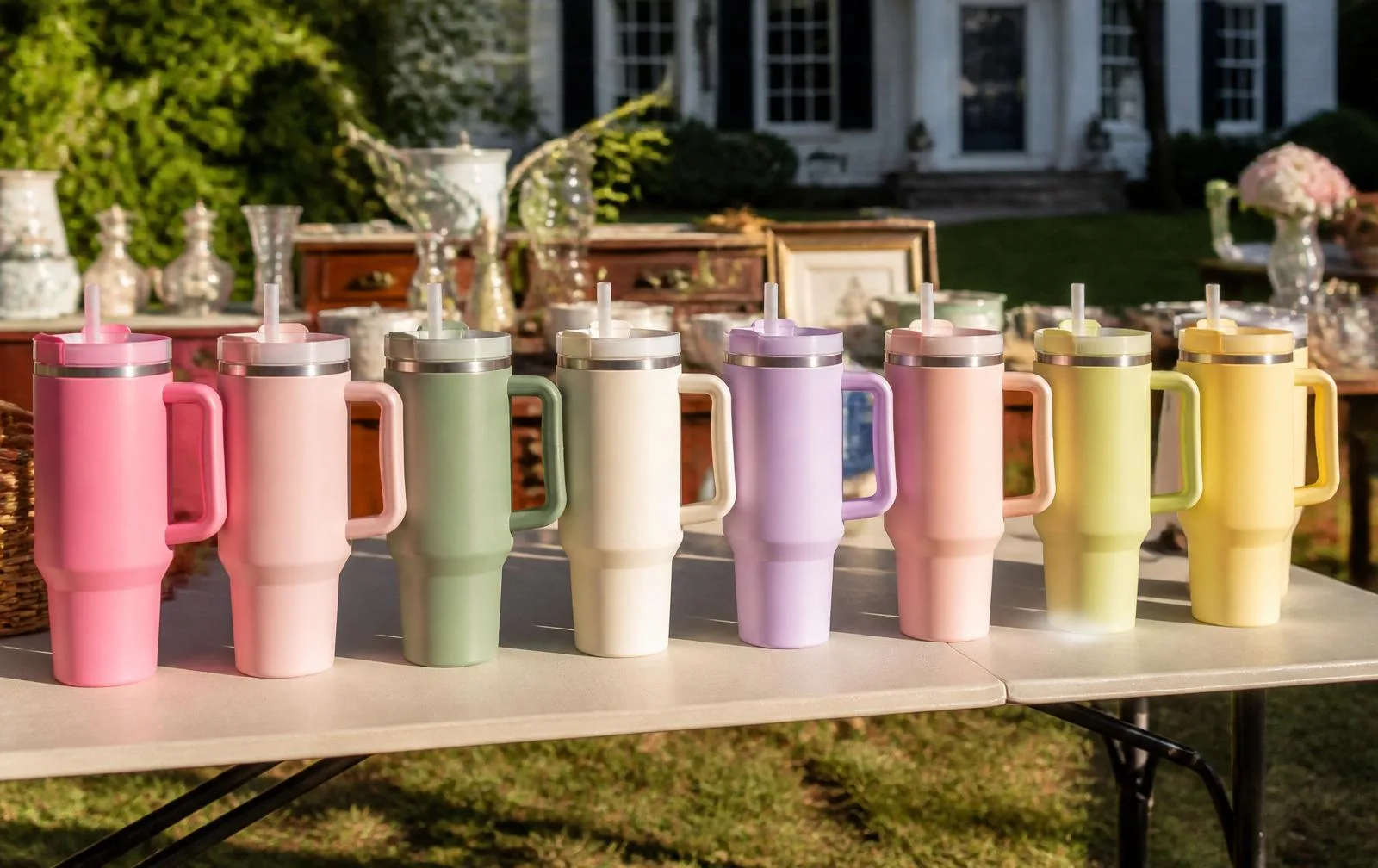
I say this with love, because I own three of them. The Stanley Quencher boom is one of the most textbook overproduction stories in modern collectibles history. Founded in 1913 as a lunch-thermos company, Stanley sold the Quencher tumbler quietly for years. Then TikTok's "Buy Guide" community picked it up, a Stanley survived a car fire in November 2023, and by early 2024 Target parking lots looked like Black Friday circa 1996.
Stanley's revenue reportedly went from around $75 million in 2019 to over $750 million in 2023 (CNBC). To feed the frenzy, they released dozens of colorways, collabs, and limited editions per year.
That's the problem.
Prediction for 2035: The everyday Quencher will be firmly in fifty-cents-to-two-dollars territory, sold in bins next to the travel mugs. The lids will not match the cups. The straws will be gone. A few genuinely rare early collabs (the Starbucks x Stanley Cosmo Pink Target release that started actual fights) may hold $50–$150 in mint condition — but only if you kept the sticker, the box, and the sticker on the box.
Almost nobody did.
The Beanie Baby comparison is exact. In 1998, Princess Diana bears sold for $500. Today most Beanie Babies sell for $1–$5 — with the rare, meticulously-preserved exception. Stanley Quenchers are going to have the same graph.
Crocs: actually, plot twist, buy them

Here's where the crystal ball surprises me. Founded in 2002, Crocs went through the full cycle: beloved → mocked → declared dead → revived by Gen Z → runway collabs with Balenciaga → daily-wear normalization. By 2024, Crocs Inc. was pulling in $4 billion in annual revenue and had convinced people to *actively decorate their shoes with tiny charms.*
At most 2035 estate sales, Crocs will be exactly what they look like: a mostly-worthless bin of foam clogs. Fill a bag for five dollars. Bring your own bag.
But — and this is a real "but" — a handful of specific Crocs will be genuinely collectible:
- The 2017 Christopher Kane crystal Crocs (retail $325, resold at $800+)
- Balenciaga x Crocs stiletto and rain boots (2018 and 2022) — already trading in the $500–$1,500 range on StockX
- The KFC x Crocs "Bucket Clog" with drumstick Jibbitz (2020, extremely limited)
- Post Malone Crocs — every single drop sold out in seconds; several are already hitting four figures
The rule for the estate sale of 2035: Ignore the bin. Flip the tag on any Croc that looks *weird* — spikes, crystals, high heels, food branding. If you see the Balenciaga logo or a Kane crystal cluster, quietly buy it, walk to your car, do not make eye contact.
Eras Tour merch: the sleeper hit
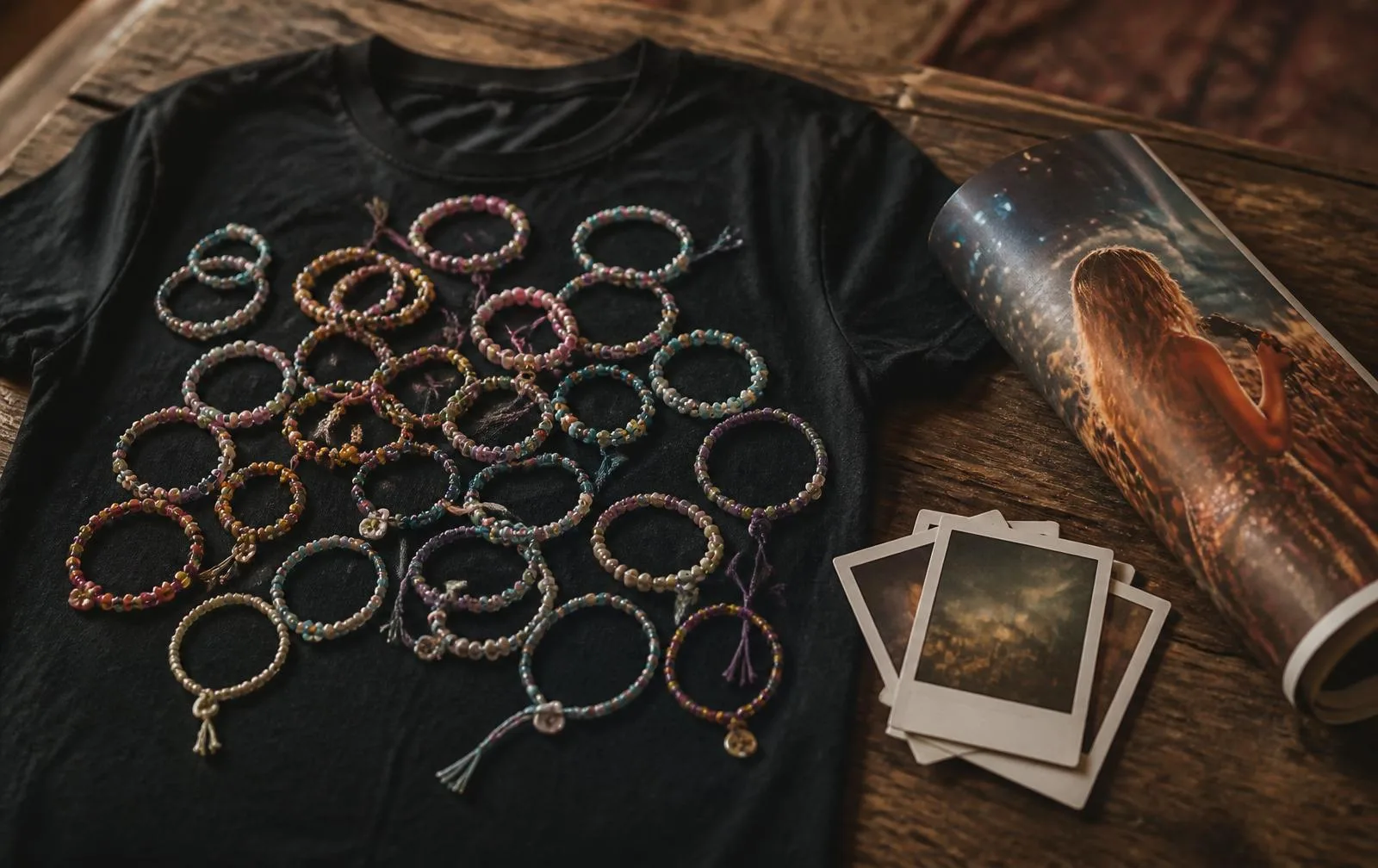
Here's the honest answer: Taylor Swift's Eras Tour merch is going to age better than almost anything else on this list. Not because it's inherently rare — Swift sold a LOT of shirts — but because of one specific thing collectors always reward: cultural moment + emotional attachment + verifiable date.
The Eras Tour ran from March 17, 2023 to December 8, 2024, hit 149 shows across 5 continents, and became the first tour ever to gross over $2 billion. Roughly 10.1 million people attended in person. Multiply that by the average fan's tour merch spend (which Swift reportedly pushed past $200 per attendee), and you have one of the largest single-artist merch runs in music history.
Which means the shirts and posters *from the specific stadium and date the buyer attended* will hold nostalgic value the same way 1970s tour tees do now.
Prediction for 2035:
- Generic "Eras Tour Merch" t-shirts: $10–$25 at estate sales. Nice but not rare.
- Stadium-and-date-specific city shirts (SoFi 8/3, MetLife 5/26, etc.): $40–$120 and rising, especially the first and last shows of each leg.
- Original friendship bracelets from a documented show: sleeper hit — the organic-fan-artifact category always wins long-term.
- Unopened tour VIP boxes: $150–$400.
- The "surprise song" set list printed sheets that roadies threw into the crowd: potentially serious money for anyone who kept a documented one.
If you inherit an Eras Tour bin, sort by *stadium and date first*. Everything else is secondary.
AirPods and gadgets: the sad electronics bowl
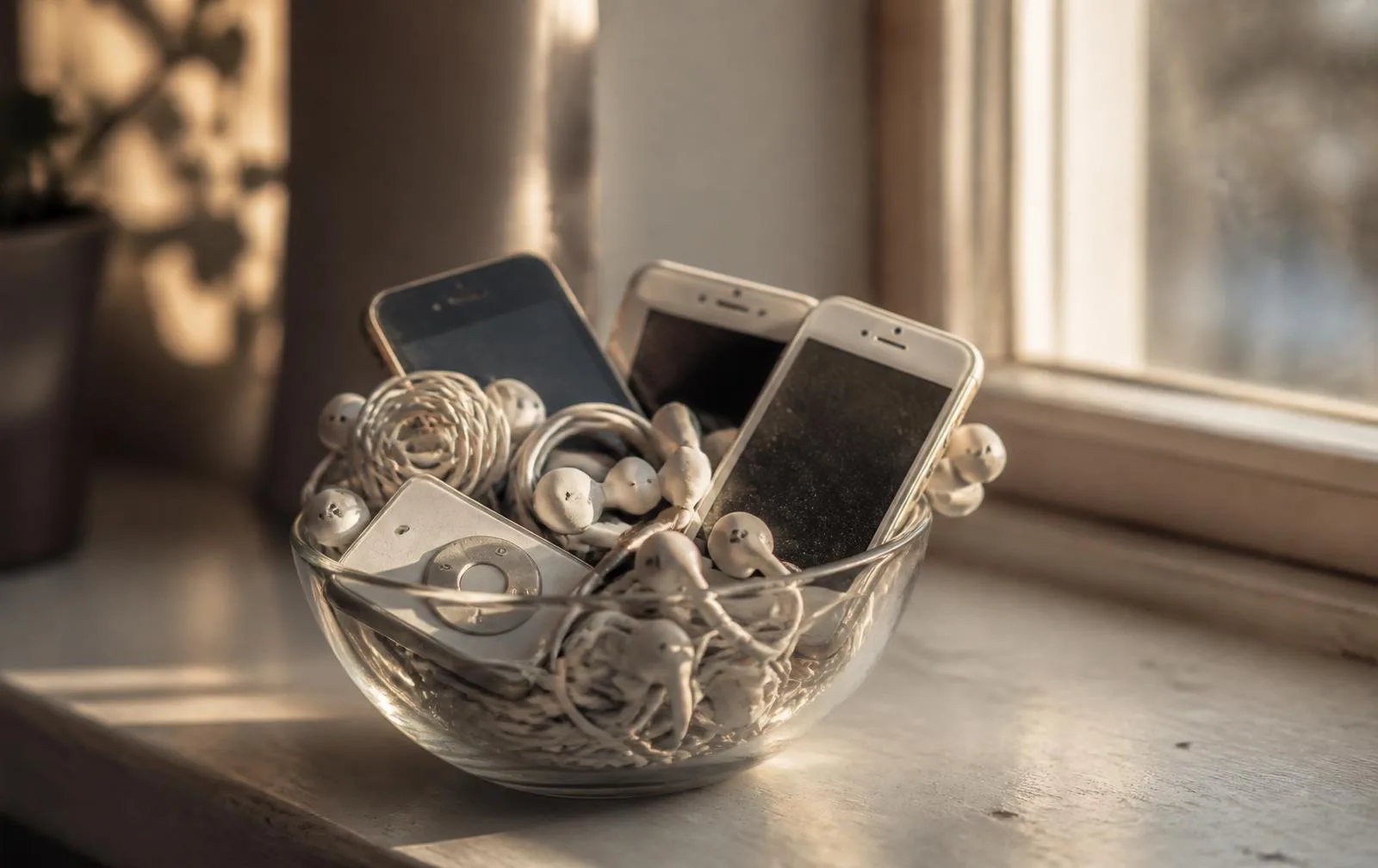
Every estate sale has one and it's always heartbreaking.
AirPods launched in December 2016 and Apple has sold an estimated 100+ million pairs per year since 2019 — well over half a billion units in total. The lithium-ion batteries in first-gen AirPods have a useful lifespan of roughly 2–3 years before they hold a functional charge for less than 30 minutes. By 2035, virtually every AirPods made before 2028 will be dead.
Prediction for 2035:
- First-gen AirPods (2016–2019): $1 each, untested. Not because they're worthless — because they're literal electronic paperweights.
- AirPods Max (the $549 headphones): $30–$60. The batteries can theoretically be replaced. Almost no one will.
- First-gen Apple Watch: $5. Sadly, same battery story.
- Ring / Nest / other smart home devices: mostly zero, because the cloud services they depend on will have been sunset, changed, or renamed.
- Original iPod Classic in working condition: $150–$400 and climbing. Apple hasn't made one since 2014, the mechanical hard drive doesn't fit modern products, and 30-year-cycle nostalgia is starting to kick in.
The single best gadget bet at any 2035 estate sale: unopened, boxed vintage Apple products from 1998–2010. Anything with the "translucent iMac" or "click wheel iPod" aesthetic is already ratcheting up on eBay.
Funko Pops: the great wall of Pop
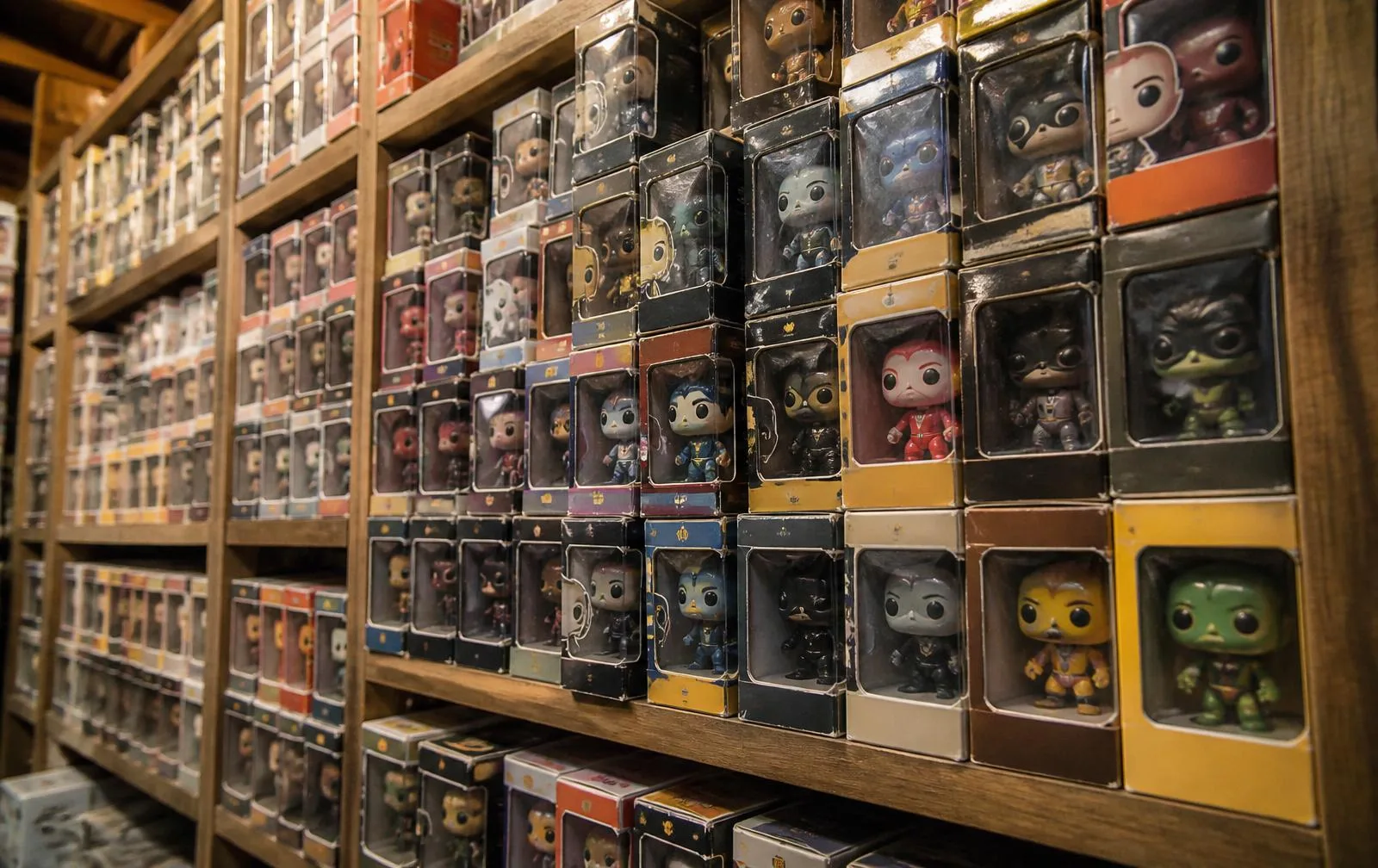
The Funko Pop crash of 2023 is one of my favorite stories in modern collectibles, and every treasure hunter should know it. Funko produced more than 6,000 unique Pop SKUs and pushed them into every drug store, comic shop, and airport. In Q1 2023, they wrote down $30+ million of inventory and confirmed they were destroying millions of unsold Pops in a landfill in Arizona.
Read that again. They threw the Pops away. That's the modern equivalent of the Ty Warner Beanie Baby glut.
Prediction for 2035:
- 99% of standard Funko Pops: $1 each. Buy the whole shelf for $50. Kids in 2035 will inherit these the way our generation inherited Precious Moments — with love, and then a Facebook Marketplace listing.
- A very short list of genuine grails — the Metallic Green Boba Fett SDCC 2011 exclusive, the Freddy Funko Willy Wonka, the Alex DeLarge Clockwork Orange (chase) — will still be $500–$5,000+, because those were made in runs of 24 to 480 units. Everything else is a $1 nostalgia item.
The scan rule for 2035: Never buy a Funko off the shelf without checking our Ai Photo Appraiser first. The rare ones look identical to the common ones except for a tiny sticker.
The pandemic garage: Peloton, Instant Pot, Mirror, Tonal
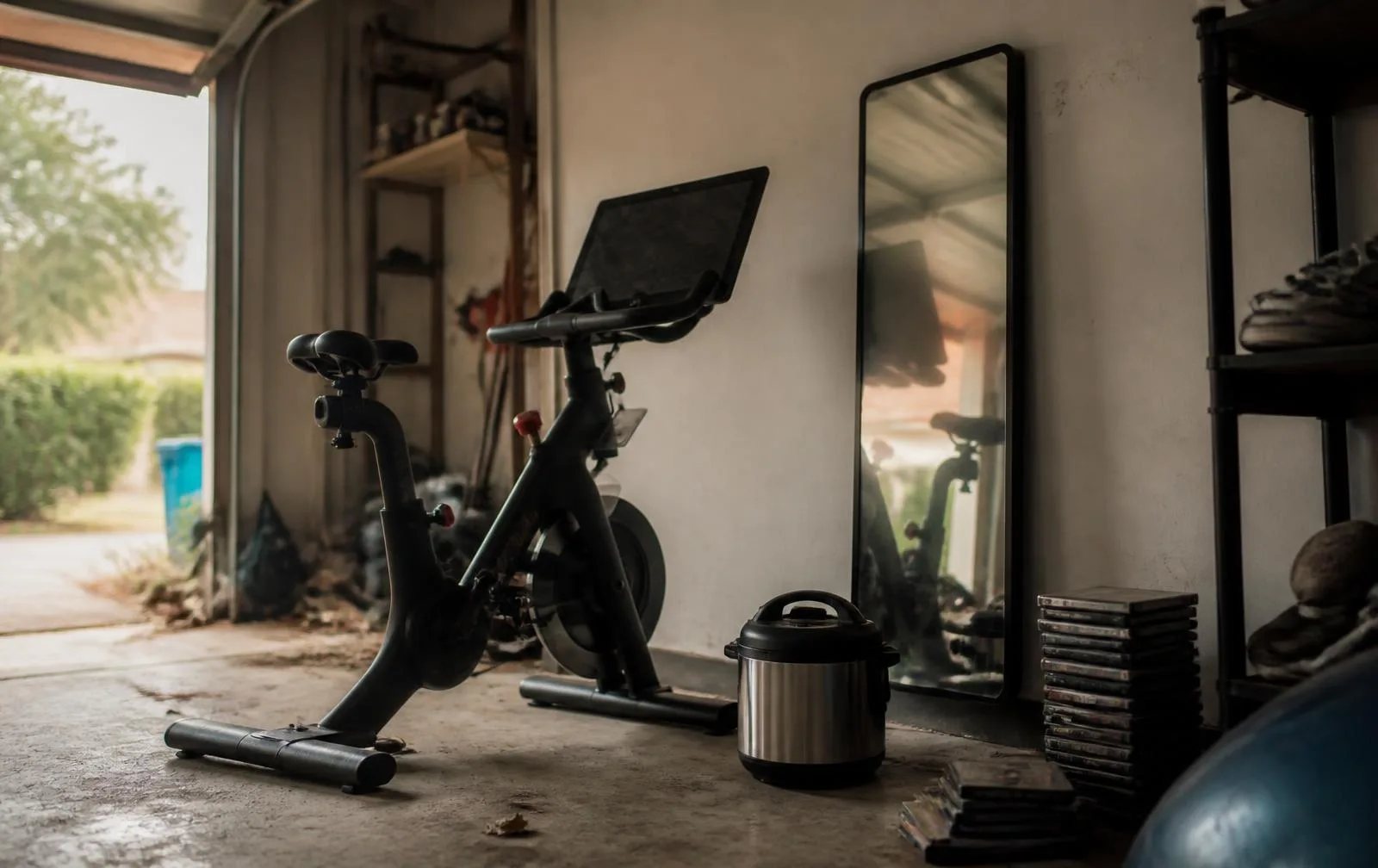
Ah, the pandemic garage. Every home in North America has one.
The 2020–2021 "we're all going to become fit at home" wave produced some of the most-purchased-then-unused equipment in consumer history. Peloton's revenue peaked at $4 billion in FY2021 then collapsed. Instant Pot's parent company filed for bankruptcy in 2023. Mirror was written down and quietly discontinued by Lululemon.
Prediction for 2035:
- Peloton bikes: $75–$200 for the hardware, but only if the subscription-locked features still work — and Peloton's history of changing what's included suggests they won't.
- Instant Pots: $5–$15. There's an Instant Pot in every 2035 estate sale in America. It has been used twice.
- Air fryers: $8–$20. Same story, three years later.
- Mirror / Tonal: Best-case scenario, they'll be $50 (as a wall mirror) because the cloud services will be gone.
The rule: Anything that requires an active subscription or a working cloud service to function is a buy-to-flip-immediately item, not a hold. The technology moves too fast.
Labubu, blind boxes, and the designer-toy wave
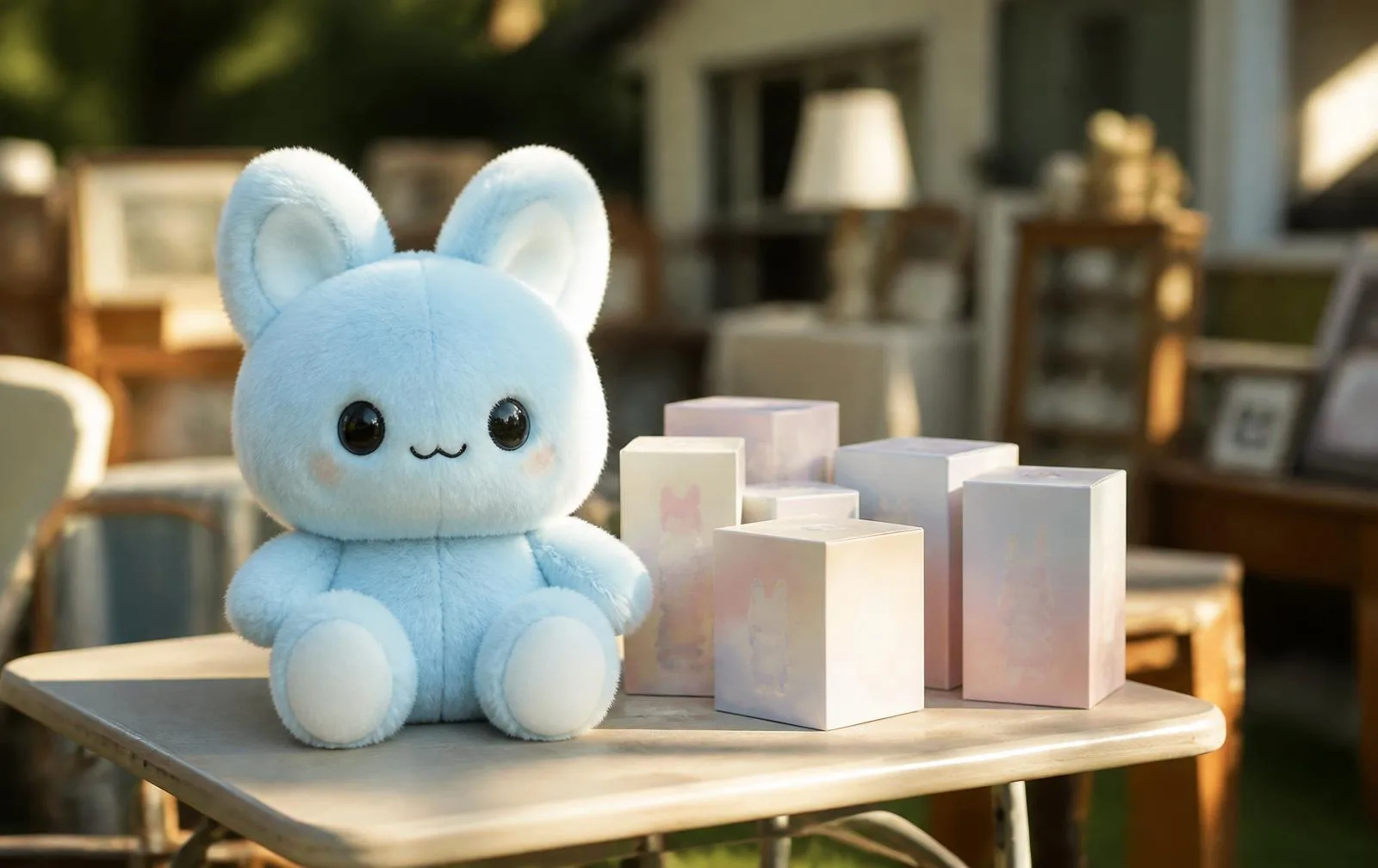
The Labubu boom of 2024–2025 is the most interesting mini-cycle to predict, because it's happening as I write this. Pop Mart, the Chinese blind-box company that owns the Labubu character, saw revenue jump more than 100% year-over-year in 2024. Celebrities carried them on handbags. Lines wrapped city blocks. The prices spiked hard.
Here's my honest read: Labubu is going to split. The everyday plush figures — the ones bought in 2024–2025 by the millions — will be in the same $1–$5 bin as Funko Pops by 2035. But because Pop Mart runs an actual blind-box system with documented limited runs and secret chase figures, the *specific* limited pieces will hold value the way Bearbrick 400% and 1000% pieces from Medicom Toy have.
Prediction for 2035:
- Standard Labubu plush: $2–$10.
- Documented limited-edition Labubu with box, tag, and provenance: $100–$800+, following the Bearbrick curve.
- Any early 2024 "The Monsters" series in unopened blind boxes: sleeper hit — could easily be $50–$200 each.
The dark horses (things I think will surprise us)
A few predictions I'll happily be wrong about:
- Wirecutter-approved everyday-carry — Bellroy wallets, the Nomatic Travel Bag, Field Notes notebooks. These will be the "quiet-luxury eBay finds" of 2035. Well-made, discontinued colorways, small production runs.
- Original 2022–2024 branded NFT swag — the Bored Ape hoodies, CryptoPunk hats, physical merch from projects that no longer exist. Historical curiosity, definitely a category. Values will be tiny but nonzero and *very* documented.
- The Rare Beauty Soft Pinch Liquid Blush and other viral TikTok makeup — no one keeps 2020s cosmetics past their expiration date. The packaging, though, in unopened condition, will absolutely be a niche.
- Physical DVDs and Blu-rays of anything Disney has quietly pulled from streaming — this is already happening. Old physical media of shows the streamers deleted is climbing.
- Working iPhone 4 through iPhone 7 in unlocked condition: surprisingly good bet — 30-year-cycle nostalgia + gorgeous industrial design + still-functional cameras.
The actual winners (buy these now if you see them)
If you want to be the person who *bought right* for the 2050s market, here's my honest short list:
- Anything unopened from the pre-2000 tech era. Sealed Game Boys, sealed original iPods, sealed original iPhones. A sealed original iPhone sold for $190,000 in 2023.
- Original Eras Tour date-specific merch and organic fan artifacts. Especially the friendship bracelets.
- Legitimate limited-edition designer toy runs with documented COAs — Kaws, Bearbrick 400%+, early Pop Mart limiteds.
- Physical media of deleted-from-streaming content.
- The really rare Croc collabs. (Yes, really. History is a strange country.)
What to do in the meantime
You don't have to wait for 2035 to have fun. Every estate sale near you *right now* has some version of a "future collectibles bin" — you just need to walk it with modern eyes:
- Scan first, buy second. Our Ai Photo Appraiser tells you within seconds whether the Funko in your hand is a $1 flip or a $500 grail — because the difference really is a tiny sticker on the box.
- Browse estate sales near you filtered by "Collectibles" or "Electronics" and read the photo galleries before you drive out.
- Plan a smart route — hit three sales in a morning, not one.
- Set a wishlist alert for the categories on your buy list and get pinged when a matching sale posts near you.
Come back and laugh at me in 2035
The best thing about writing a prediction post is that everyone gets to come back in a decade and see exactly how wrong I was. That's honestly the fun of it — pin this article, and in 2035, meet me at whatever estate sale is happening near you. Bring a Stanley cup. I'll bring a Funko Pop.
Whoever brought the more valuable item buys the coffee.
Related reading:
- What sells best at estate sales — this weekend, not in ten years
- Vintage toys worth money — the last cycle's version of this article
- How to appraise estate sale items — the workflow that keeps you from overpaying
- Complete beginner's guide to estate sales
See you at the tables.