
How Do Estate Sale Numbers Work? Street Numbers, Sign-Up Sheets and Digital Lines Explained
The four ways estate sales manage the opening-morning crowd, what a number does and doesn't get you, how early to show up, and how pre-offers let you skip the line.
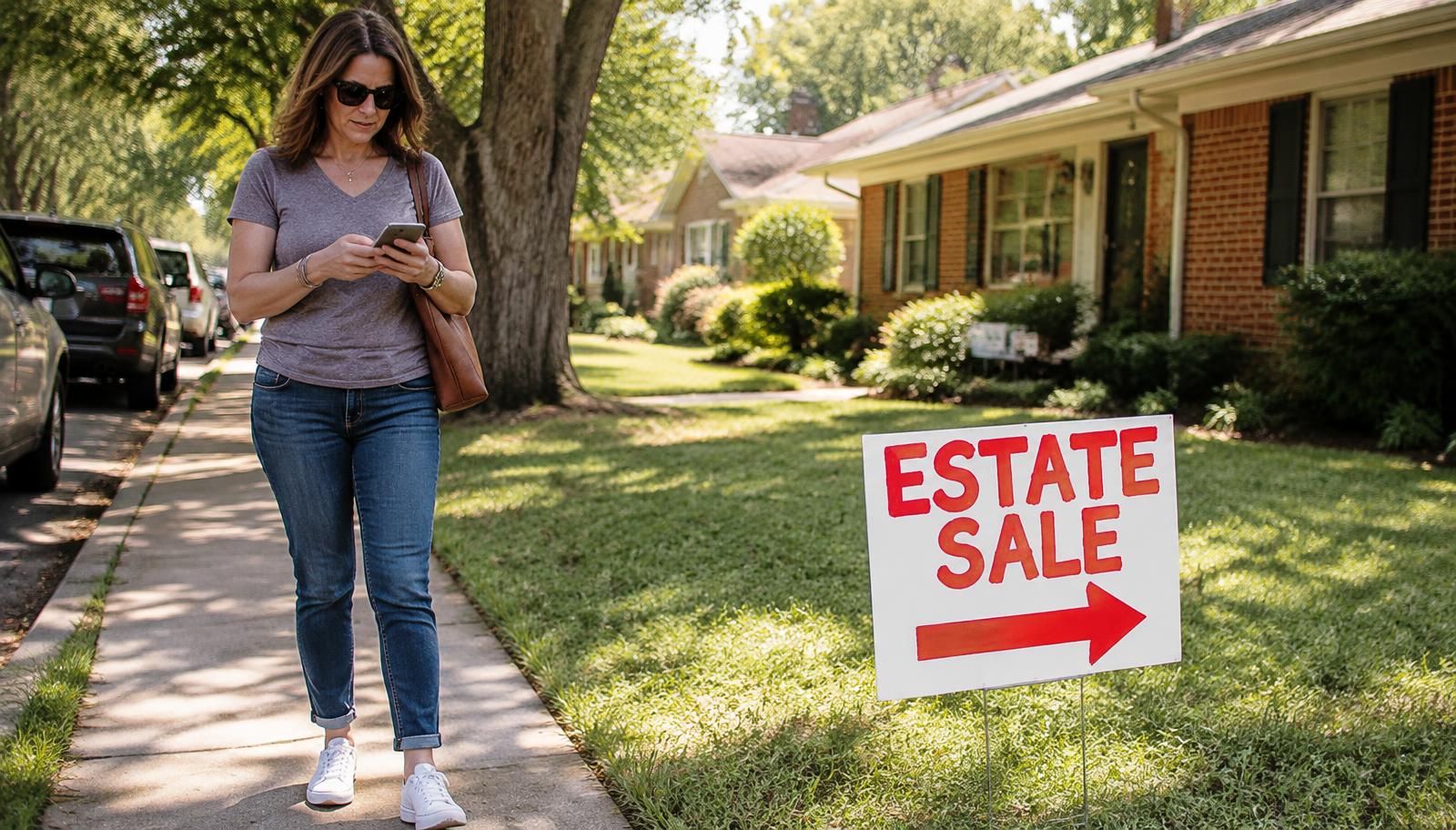
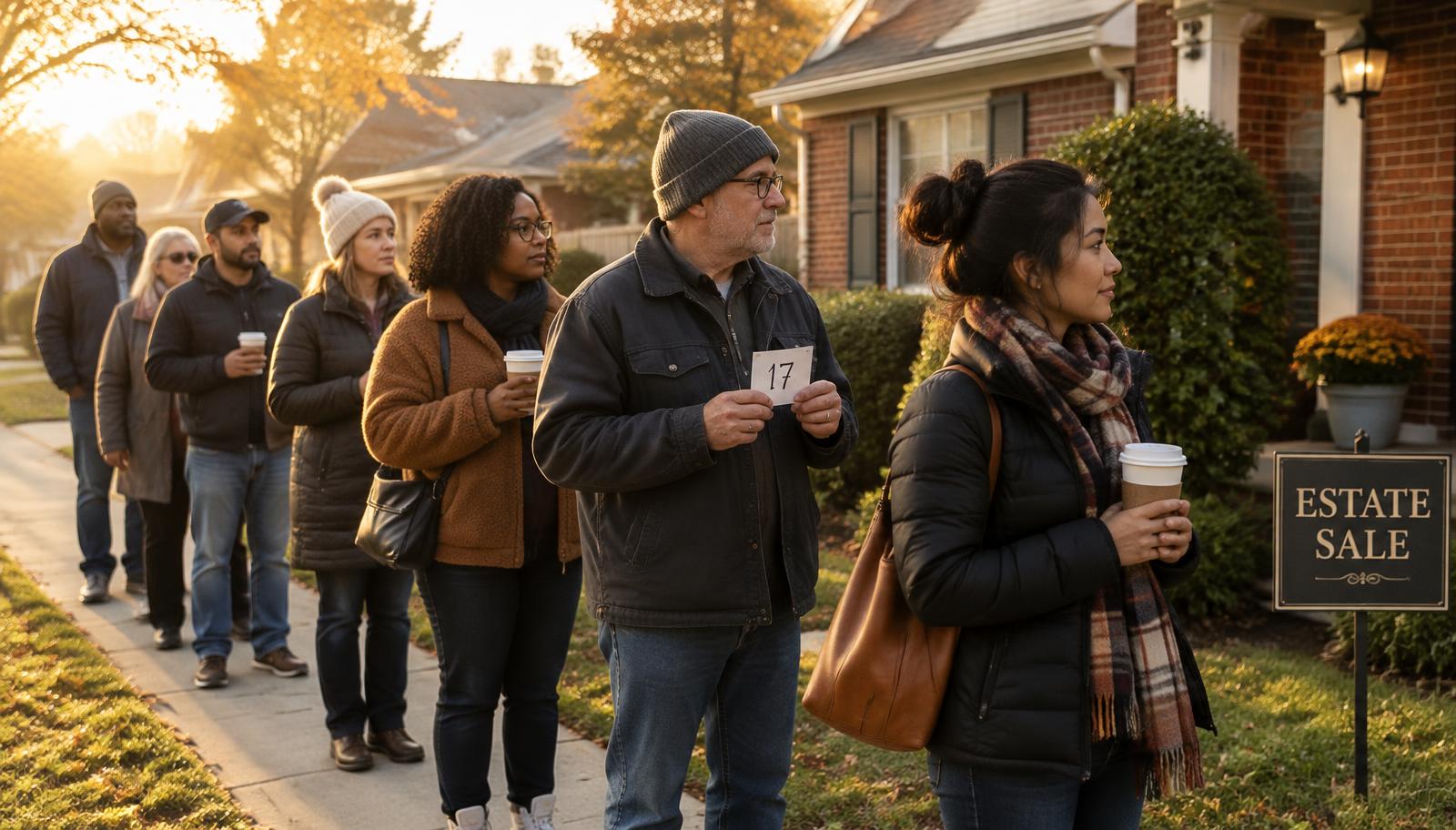
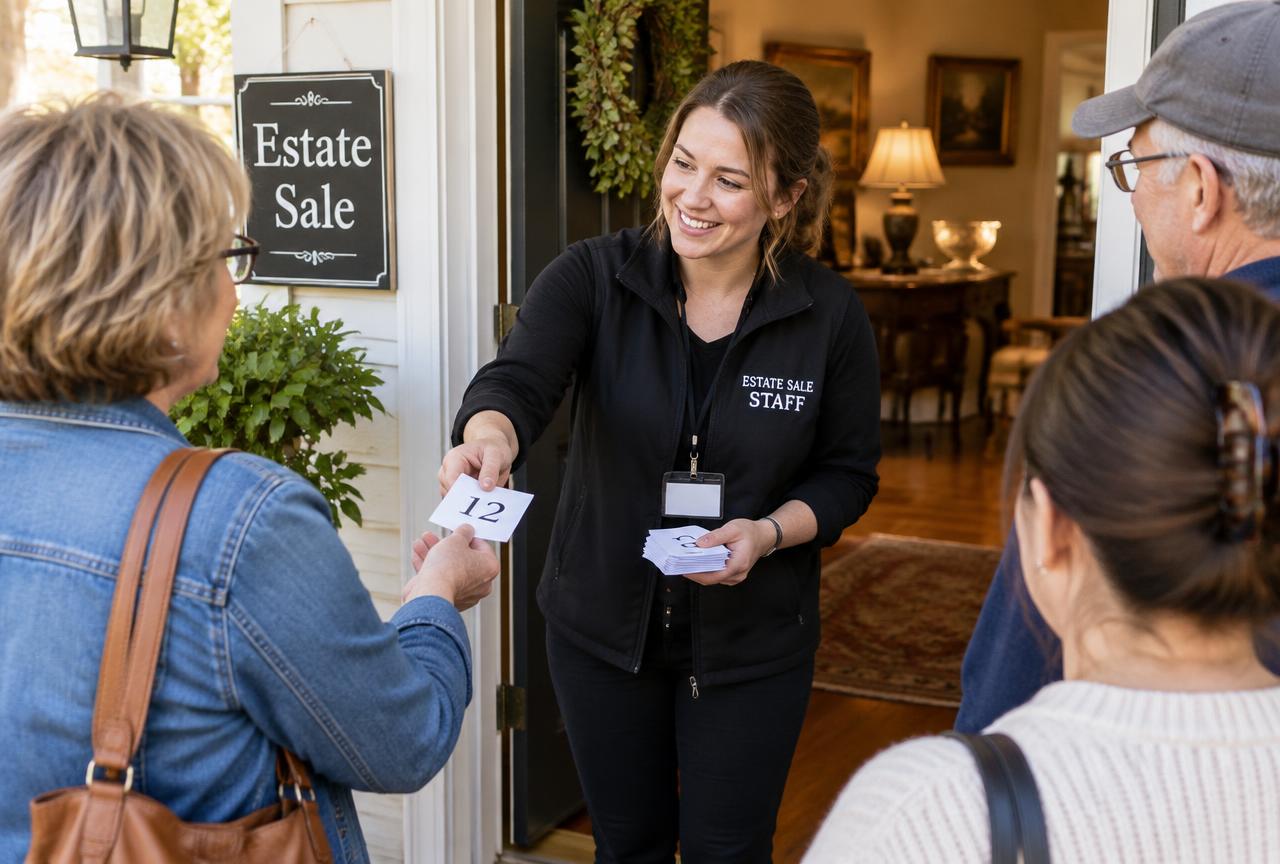
Estate sale numbers decide who goes in first on opening morning. The earliest shoppers get the lowest numbers, and the company lets people in by number when the doors open. Most sales use one of four systems: numbers handed out at the door, a sign-up sheet, "street numbers" run by the shoppers themselves, or a digital or text-message line. A number holds your place. It doesn't hold any item.
If you've ever pulled up to a sale at 7 a.m. and found 30 people already there, this is how that line works and how to plan around it.
Why estate sales use numbers at all
A house can only hold so many shoppers at once. Companies limit the crowd to prevent breakage, theft and injuries, and because they can't staff every room for a hundred people. Minnesota's Estate of Value puts it simply: they give out numbers "first come first served, just like waiting in line at the DMV" (Estate of Value).
The four systems compared
| System | Who runs it | When numbers go out | Can you leave after? |
|---|---|---|---|
| Numbers at the door | The company | Shortly before opening | Usually no; you're let in as numbers are called |
| Sign-up sheet | The company (sheet on the porch or door) | Often an hour or so before opening | Depends on the company; ask |
| Street numbers (pre-numbers) | The first shopper to arrive | As shoppers arrive, sometimes before dawn | Usually yes, except the person handing them out |
| Digital or text line | The company, through an app or text service | Online, before or on sale morning | Yes; you get a message when it's your turn |
Sources for the street-number rules: Estate of Value and Aaron's Estate Sales. Every company runs its line a little differently, so read the sale listing first.
How street numbers work
Street numbers (also called pre-numbers) are a shopper-run custom. Michigan's Aaron's Estate Sales explains it this way: the first person to arrive can be number one, makes their own numbers, and hands them out as others arrive. That person has to stay at the sale and keep handing out numbers until the company opens; everyone else can leave and come back (Aaron's Estate Sales).
Estate of Value adds an important detail: a pre-number is only a placeholder. It doesn't get you in the door. It saves your spot for when the company gives out its official numbers, and you have to be there when they do (Estate of Value).
How sign-up sheets work
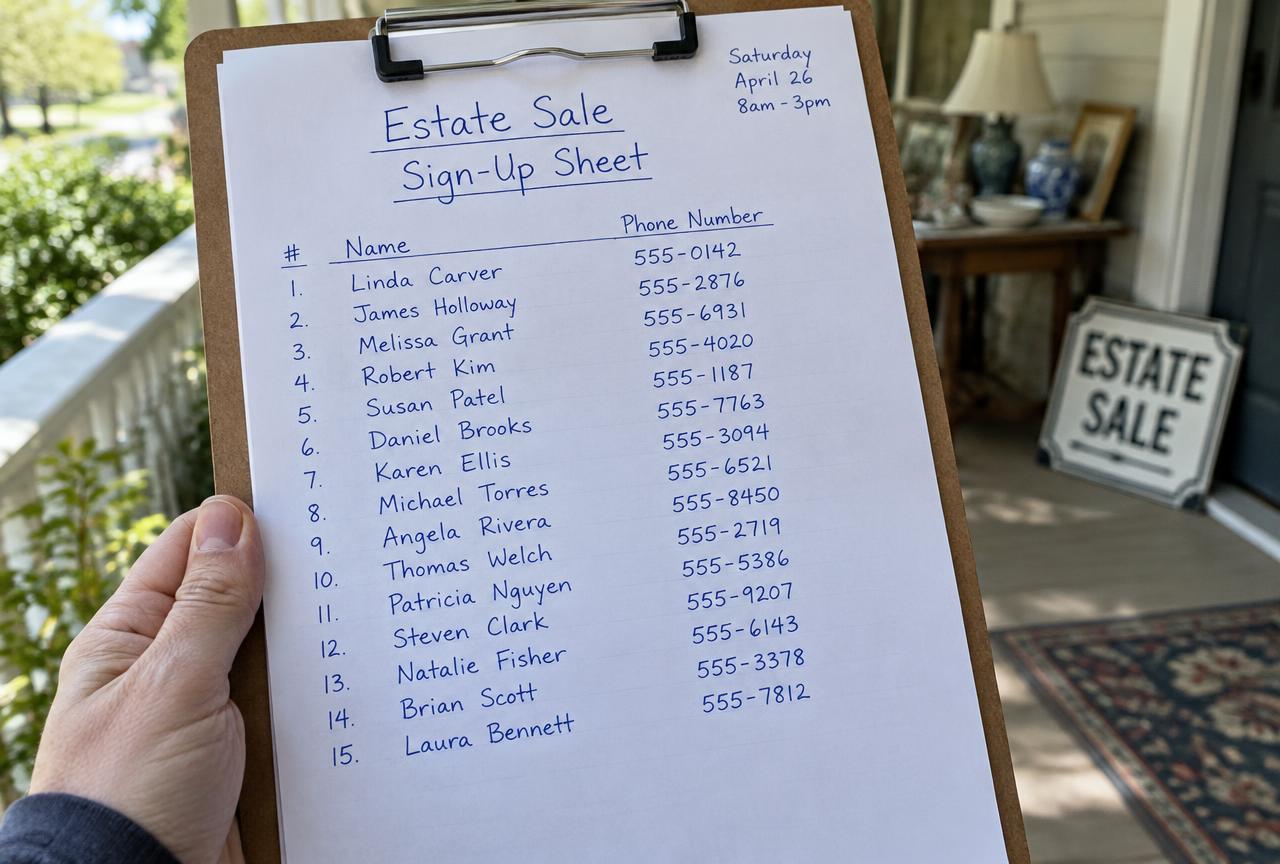
Some companies put out a clipboard and let shoppers write their names in order. Operators on Reddit often say the sheet goes out about 1 to 1.5 hours before opening, but that's anecdotal and varies a lot by company and city (r/EstateSales).
A typical sale-morning timeline
- Before dawn: serious dealers arrive at big sales. If the area uses street numbers, the first person starts a list.
- 1 to 2 hours before opening: most regular shoppers arrive. Sign-up sheets often go out around now.
- 15 to 30 minutes before opening: the company hands out official numbers or checks the sheet.
- Opening: shoppers go in by number, often in small groups. New people go in as others leave.
- Late morning and after: lines usually shrink and you can often walk right in.
How early should you get there?
It depends on the sale. For an ordinary neighborhood sale, arriving 30 to 60 minutes early is usually plenty. For a sale with famous names in the listing, like mid-century furniture, designer clothing, tools or firearms, expect dealers hours ahead of time. A good rule: if the photos made your heart jump, they did the same for everyone else.
If you just like to browse, consider skipping the first hour completely. The second day, and especially the last day when prices often drop, is calmer and cheaper. Our estate sale tips for first-time buyers cover what to bring and how to shop once you are inside.
What a number doesn't get you
- It doesn't hold an item. Being number 3 doesn't mean the dresser is yours. Whoever reaches it and the cashier first usually wins.
- It doesn't let you skip the house limit. If 20 people are inside, number 21 still waits.
- It usually doesn't carry over. Numbers are typically for opening on the first day only.
- It's lost if you're not there. If your number is called and you're gone, you generally lose your place.
Tips for cold-weather lines

- Wear layers, a hat and warm boots. Standing still is colder than walking.
- Bring a thermos and a charged phone.
- Don't block driveways or neighbors' yards, and park legally.
- Be friendly. Regulars in line are often the best source of tips about which sales are worth it.
Skip the line entirely: making a pre-offer
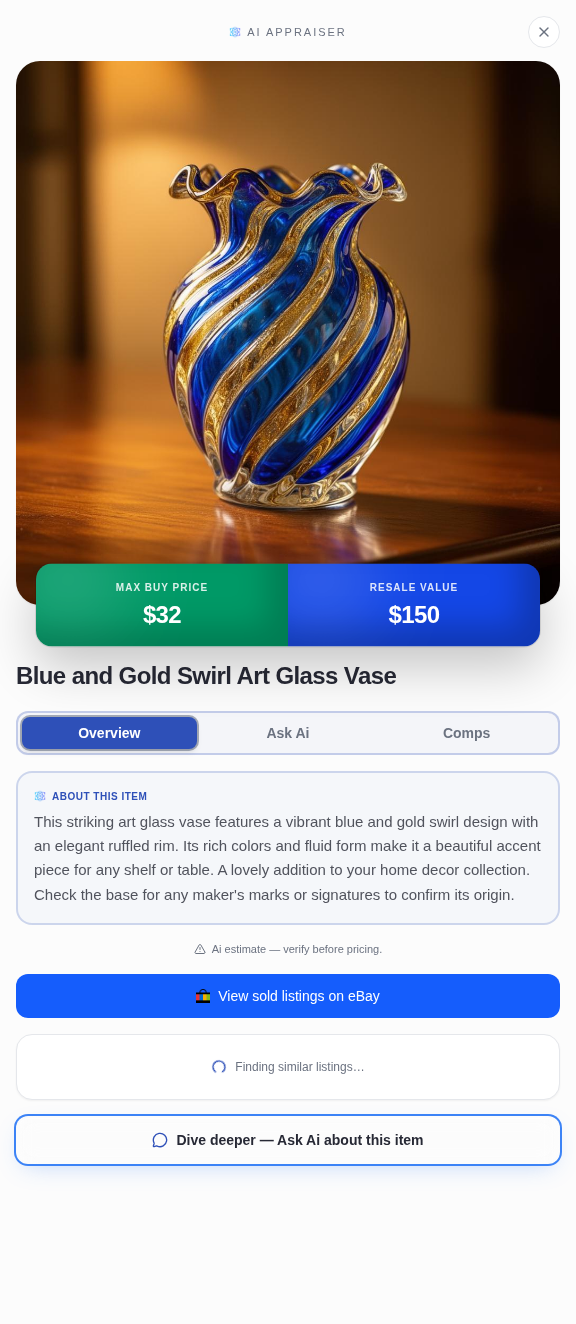
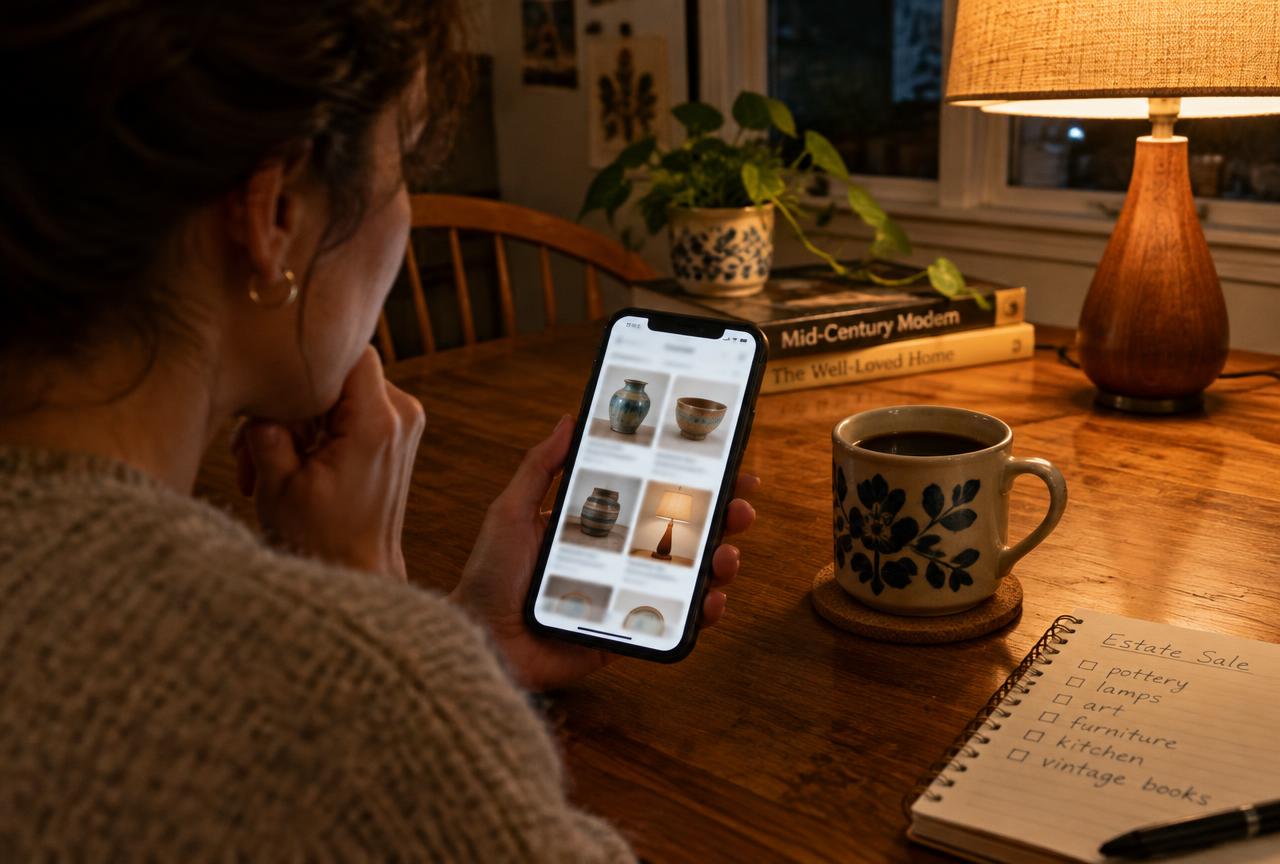
There's another way to get the piece you want, and it doesn't involve a 5 a.m. alarm. On EstateSaleFinder, many companies post their items with photos before the sale and turn on pre-offers (also called early offers). Instead of racing someone to the dresser, you make an offer on it from home.
Here's how it works:
- Browse the sale's item photos on the listing, before the doors open.
- Tap the item and enter your price. You can add several items into one bundle offer for the same sale.
- The company reviews it. They can accept, counter or decline, and you get a notice either way.
- Pay the invoice once it's accepted. You pay the estate sale company directly.
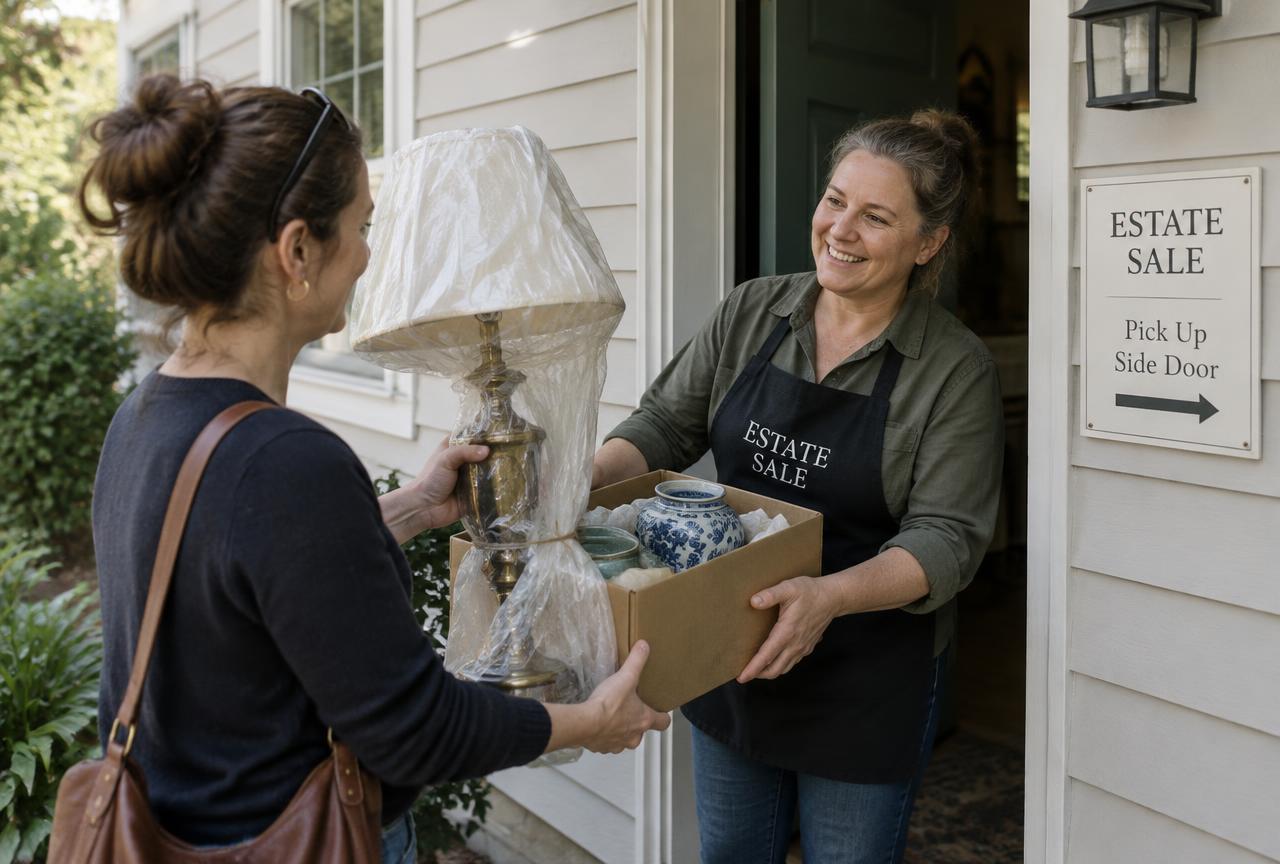
- Pick a pickup time. After payment, you see the pickup address and choose a time, so you're not fighting the opening crowd.
Why shoppers like it:
- No line and no lost number. You're not depending on who showed up first.
- The item is actually set aside for you. An accepted, paid offer is yours, unlike a number that only holds a place in line.
- It's simple. There's no bidding war and no countdown clock. You name a price, and the company answers.
- Some sales add early shopping for buyers who've paid, so you can pick up your items and look around before the crowd.
Why companies use it: they sell some items before the sale even starts, and they learn which pieces are drawing the most interest. And unlike online auction sites, which typically add a buyer's premium for shoppers and take a commission from sellers, EstateSaleFinder doesn't take a cut of pre-offer sales. The price you agree on goes to the estate sale company, and through them to the family.
Not every sale offers it; the company decides. Look for the offers option on the sale page when you browse estate sales near you.
For estate sale companies: picking a system
- Street numbers cost you nothing, but you don't control them, and arguments can start before you arrive.
- A sign-up sheet gives you control, but someone has to watch it.
- Door numbers are simple and fair if you post the time clearly in your listing.
- A digital or text line keeps people out of the cold and off the neighbors' lawns.
Whatever you choose, say it plainly in the listing: when numbers go out, who gives them, and whether shoppers can leave. Pairing your line with pre-offers on your best pieces takes pressure off the opening rush. Companies can turn pre-offers on in their sale settings; see how EstateSaleFinder works for companies.
Quick answers
Can I leave after I get a number?
With street numbers, usually yes, unless you're the one handing them out. With door numbers or sign-up sheets, ask the staff; you generally must be there when your number or name is called.
What are pre-numbers at an estate sale?
Pre-numbers are shopper-made placeholders, handed out by the first person in line, that save your place until the company gives out official numbers.
How early should I get to an estate sale?
30 to 60 minutes early for most sales. For sales with high-demand items, dealers may arrive hours before opening.
Does a low number guarantee I get an item?
No. A number only decides when you go in. To actually set an item aside, make a pre-offer if the sale allows it.
Sources:
Sources checked October 31, 2026. Line rules vary by company; always check the sale listing.
Keep exploring
Ready to start your own treasure hunt?
Discover estate sales near you and find incredible deals.
Explore Sales Near Me
About the author
Andy
Founder, EstateSaleFinder.net
Hi, I'm Andy — a retired commercial photographer turned developer with a five-year (and counting) obsession with estate sales. I started EstateSaleFinder.net because I knew there had to be an easier, smarter way to find and list estate sales. Now I get to chase treasure and build the tool I always wished existed.