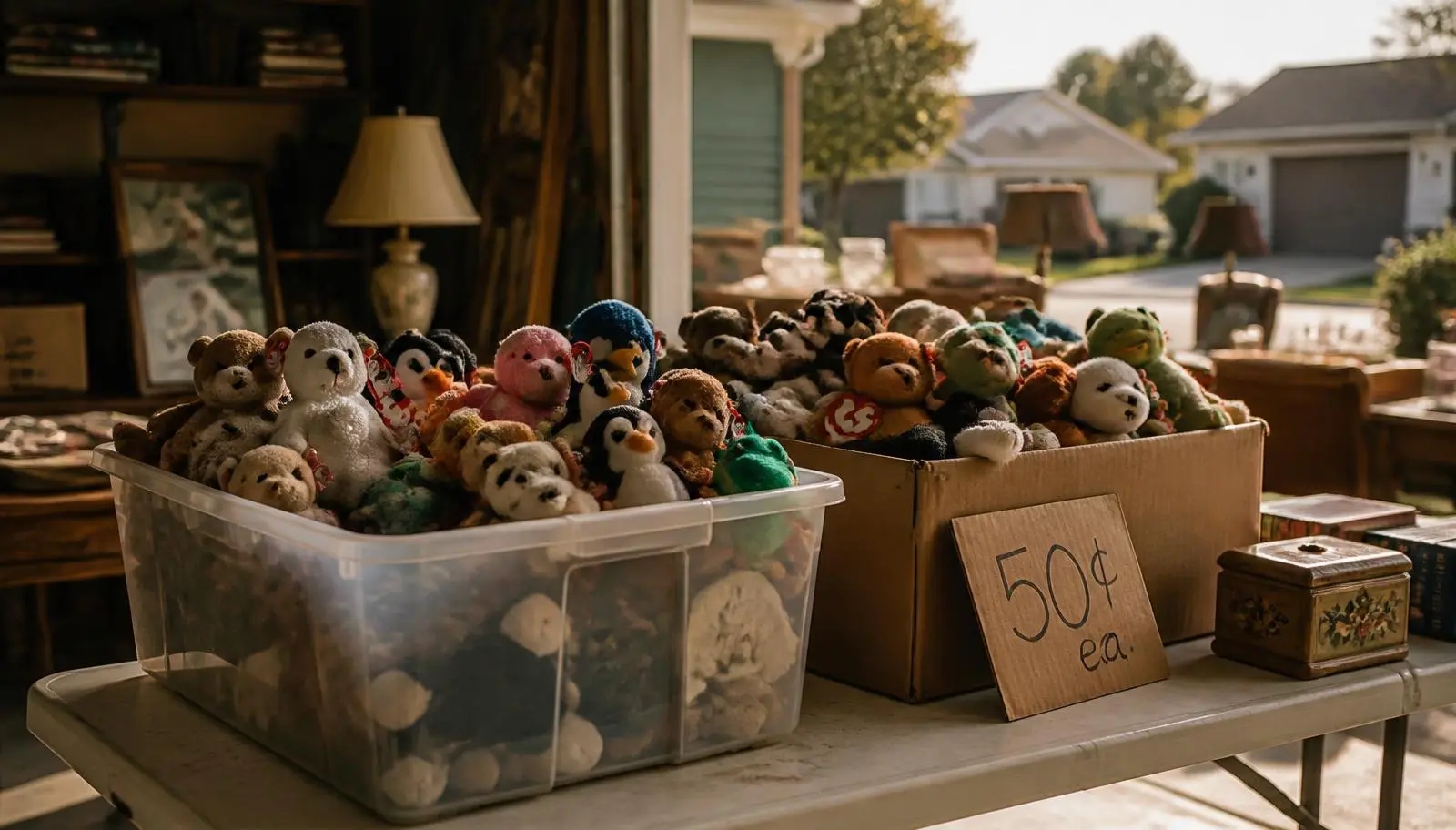

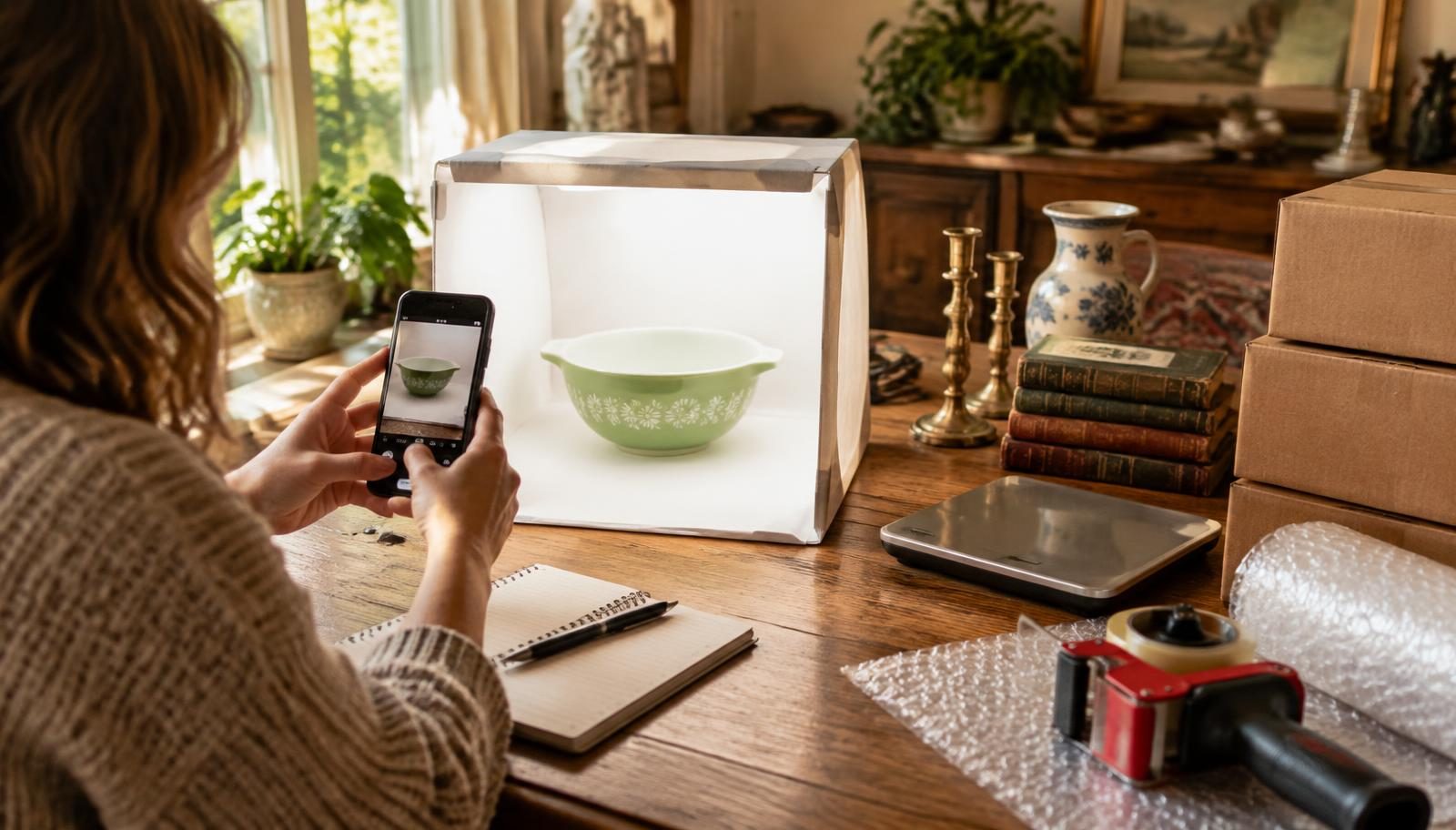
How Much Money Can You Make Reselling Estate Sale Finds? Real Reseller Numbers, eBay Fees, and the 1099-K Line
Real resellers' public numbers, the exact eBay fee math on a $50 sale, what $2,000 a month really takes, why estate sales make the math work, and the 1099-K line every beginner should know.
How much money can you make reselling? Part-time resellers who share real numbers usually keep somewhere between a few hundred dollars and about $1,000 a month in profit, and committed sellers with hundreds of active listings can reach $2,000 or more. There is no reliable average. What you keep depends far more on what you pay for items and how fast you list than on how much you sell.
That's the honest answer. The internet is full of "I made $100k flipping" videos, and full of people quietly losing money. This guide shows real numbers resellers have posted publicly, walks through the exact eBay fee math on a sale, explains why estate sales are one of the best places to buy, and covers the tax line most beginners don't know about.
If you want the how-to side (what to buy, where to sell, how to list), start with our companion guide: How to Make Money Reselling Estate Sale Finds. This post is the profit math.
Quick summary for skimmers:
- Gross sales are not income. In public first-year numbers, resellers often keep 10% to 40% of what they sell after fees, shipping, supplies and buying costs.
- eBay takes 13.6% of the total sale in most categories, plus $0.40 per order ($0.30 on orders of $10 or less).
- $2,000 a month in profit is possible but usually takes months of steady listing and hundreds of active items.
- Buying cheap is the biggest lever. Estate sale half-off days, bundle offers and lightweight "smalls" make the math work.
- Taxes: marketplaces send a Form 1099-K only above $20,000 and 200 sales, but all profit is still reportable income.
How much money can I make off of reselling?
There is no trustworthy national average for reseller income. Nobody publishes one, and the people who post their numbers are a self-selected group. What we can do is look at real people who shared detailed numbers and notice the pattern.
These are individual experiences posted on Reddit's r/Flipping community. They are examples, not averages:
| Who | What they reported | What they kept |
|---|---|---|
| Part-time flipper with a full-time job, under 20 hours a week | About $30,000 in gross sales for the year (r/Flipping) | About $9,000 profit |
| First-year part-time seller, 1,800 listings published | $38,000 revenue (r/Flipping) | $3,400 profit |
| First-year eBay seller | $22,000 in sales, $8,327 in selling costs (37.7%), $5,370 in purchases, $1,600 in supplies (r/Flipping) | About $4,000 in the bank, with roughly $10,000 of unsold inventory |
| Long-time hobby seller | "Net profit after all expenses about $12k a year" (r/Flipping) | About $1,000 a month |
Two lessons jump out. First, the $38,000 seller and the $30,000 seller kept wildly different amounts: about $3,400 versus about $9,000. The difference was mostly what they paid for inventory. One commenter on the $38k post put it bluntly: "You spent $25,241.57 to make $3.4k in profit?"
Second, a lot of first-year "profit" is sitting on shelves. Unsold inventory is money you spent, not money you made. The $22k seller's post is titled "I think I suck at this" because the bank account didn't match the sales number.
On hourly pay, the answers in one r/Flipping thread ranged from a joke ("Expectations: $50/hr. Reality: 50 cents/hr") to a seven-year full-timer who said they net "about $55/hr" (r/Flipping). Most people in between never track their hours at all, which is the first thing to fix.
Is reselling worth it?
Reselling is worth it if you enjoy the hunt, have space to store inventory, and can list consistently. It's not worth it if you expect a fast replacement for a paycheck. It usually beats a part-time job on flexibility, and often loses to one on guaranteed hourly pay in the first year.
Ask yourself three questions before you spend real money:
- Can I list at least a few items every day? Listings are what sell. Unlisted piles (resellers call it the "death pile") earn nothing.
- Do I have a place for inventory and shipping supplies? A spare room or a garage corner is enough to start.
- Will I track every cost? Buying price, fees, postage, boxes, tape, mileage. Without this you can't know if you're making money.
If you answer yes to all three, the numbers below show how to make it pay.
The real math: where a $50 eBay sale goes
eBay's final value fee for most categories is 13.6% of the total amount of the sale (item price plus shipping and sales tax) up to $7,500, plus a $0.40 per-order fee, or $0.30 on orders of $10 or less (eBay fee guide; fee calculator summary). Some categories differ: books, movies and music are 15.3%, and most jewelry and watches are 15%.
Here's a worked example. You buy a vintage bowl at an estate sale for $10 and sell it on eBay for $50 with free shipping built into the price (we've left sales tax out to keep it simple; on a real order eBay takes its percentage on the tax too).
| Line | Amount |
|---|---|
| Sale price | $50.00 |
| eBay final value fee (13.6% of $50) | −$6.80 |
| eBay per-order fee (order over $10) | −$0.40 |
| Shipping label (example) | −$9.00 |
| Box, bubble wrap and tape (example) | −$1.50 |
| What you paid at the estate sale | −$10.00 |
| Profit | $22.30 |
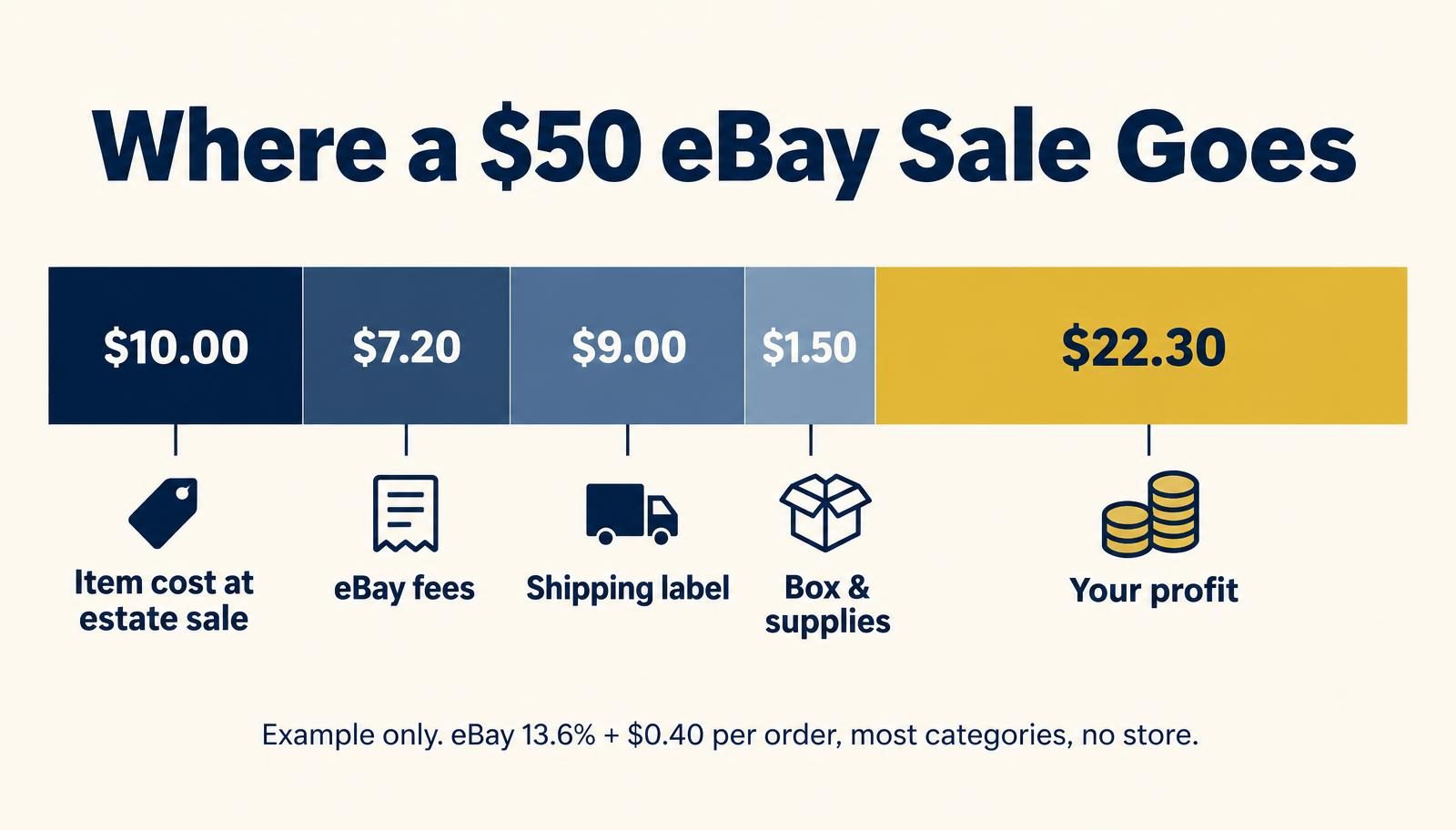
So a $50 sale left $22.30, or about 45% of the sale price. That's a good item. Change any one number and the result moves fast:
- Pay $25 instead of $10 and profit drops to $7.30.
- Ship something heavy for $18 instead of $9 and profit drops to $13.30.
- Sell for $20 instead of $50 and, after the same costs, you barely break even.
This is why experienced resellers talk about buying more than selling. Your profit is mostly locked in at the moment you pay for the item.
A quick rule of thumb
Before you buy, check what the item has actually sold for (not what it's listed for) and subtract roughly a third for fees and shipping. If what's left isn't at least double what you're paying, many resellers walk away. Our Ai Appraiser can pull recent sold comparables from a photo. Treat its number as a suggestion to double-check, never a guaranteed price.
Is it possible to make $2,000 a month reselling?
Yes, but it's a volume and consistency target, not a beginner number. In a June 2026 r/Flipping thread titled "Trying to get to $2000 a month profit," one part-time seller said their 90-day sales average was around $15,000 and estimated about $9,000 of that was profit, adding "diversify what you sell, it goes a long way" (r/Flipping).
Work backward to see what $2,000 a month takes:
| If your average profit per sale is… | Sales needed per month for $2,000 | About per day |
|---|---|---|
| $10 | 200 | 7 |
| $20 | 100 | 3–4 |
| $40 | 50 | 2 |
And sales come from listings. A store with a handful of listings rarely sells a few items a day. That's why people who reach this level talk about hundreds or thousands of active listings, and why another popular r/Flipping thread boils it down to: "Nobody can buy it if it isn't for sale" (r/Flipping).
How can I make $500 a week on eBay?
$500 a week in profit is the same as about $2,000 a month, so the table above applies. $500 a week in sales is much easier: at a $20 average sale, that's 25 sales a week, or under four a day.
A realistic path many resellers describe:
- Weeks 1–4: list everything sellable you already own. Learn photos, shipping and returns with no buying risk.
- Months 2–3: buy only items under $10 that have clear sold history. Aim to list every day.
- Months 4–6: reinvest profits, pick one or two categories you know well, and track profit per hour.
Be patient. Several of the sellers above only broke out after their first year.
What is most profitable to resell?
The most profitable items share three traits: cheap to buy, light to ship, and backed by steady sold history. At estate sales, that often means:
- Smalls and kitchen collectibles: vintage Pyrex, Fire-King, Corning Ware, cast iron (heavier, but strong demand). See our Pyrex value guide.
- Paper and ephemera: old postcards, advertising, photographs, manuals. They cost almost nothing to ship.
- Signed costume jewelry and sterling: small, light and frequently underpriced in the jewelry box. Our costume jewelry brands guide shows which marks matter.
- Tools, cameras and vintage electronics that are tested and working.
- Vintage clothing and accessories in good condition.
For what's moving right now, check the reseller demand report.
What sells the most at estate sales?
At the sale itself, estate sale companies consistently see jewelry, coins, tools, kitchen gear and collectibles move fastest. Our guide to what sells best (and worst) at estate sales covers it item by item. For a reseller, "sells fast at the sale" is a warning: those are the items other dealers are lined up for on day one.
What doesn't sell well at an estate sale?
Formal "brown" furniture, full sets of fine china, pianos, large entertainment centers, encyclopedias and most mass-produced decor tend to linger. They're often deeply discounted by the last day. For resellers that's a trap more than a deal: these items are heavy, hard to ship and slow online too. Unless you have a local buyer lined up, skip them.
Why buying at estate sales improves the math
Since profit is decided when you buy, the cheapest reliable source wins. Estate sales have a few advantages over thrift stores and retail arbitrage:
- Discount days. Many sales drop prices on day two and again on the final day, often to half off. Our estate sale discount days guide explains how schedules and offers usually work.
- Bundle offers. Companies are often happy to take one price for a box of smalls late in the sale, which drops your cost per item.
- Whole categories at once. A lifelong collector's shelf of one thing can stock a store for months.
- Less competition on niches. Paper ephemera, sewing notions, old tools and photography gear are often overlooked.
Find the right sales before everyone else
EstateSaleFinder is built for this. Save a wishlist for the makers and categories you resell ("Fire-King," "Leica," "Trifari") and you'll be alerted when a matching item is posted at a new sale near you. Many sales let you make an offer on specific items before the doors open, so you're not just hoping the item survives the first-morning rush. And browse sales by city or state to plan your weekend route.
If you'd rather sell locally than ship, an antique mall booth is another outlet. Our antique booth side hustle guide covers booth rent math and what sells in person.
Taxes: the 1099-K line and what it really means
Under the One, Big, Beautiful Bill, online marketplaces and payment apps are only required to send you a Form 1099-K when your payments exceed $20,000 and you have more than 200 transactions in a year (IRS). That threshold was reinstated retroactively, replacing the lower thresholds that were planned earlier.
What the threshold does not change: the form is a reporting rule for the marketplace, not a tax-free allowance for you. The IRS's own 1099-K FAQs explain how to handle sales of personal items and business income whether or not you receive a form (IRS Form 1099-K FAQs). If you buy items to resell for profit, that profit is generally income.
Practical habits that make tax time easier:
- Keep receipts for what you pay at estate sales (photos of handwritten receipts work).
- Export your marketplace sales and fee reports every month.
- Log mileage to and from sales.
- Track supplies: boxes, tape, labels, packing material.
This section is general information, not tax or financial advice. Tax rules change and depend on your situation. Always verify with a tax professional or the IRS.
A simple profit tracker you can copy
| Column | What to record |
|---|---|
| Item | Short name |
| Date bought / where | Sale and city |
| Cost | What you paid, including your share of a bundle |
| Listed date | When it went live |
| Sold price | Before fees |
| Fees | Marketplace fees |
| Shipping + supplies | Label and packing |
| Profit | Sold price − fees − shipping − cost |
| Days to sell | Sold date − listed date |
After 50 sales you'll know your real profit per item, your best categories and your slowest sellers. That's worth more than any average on the internet.
Questions & answers
Frequently asked questions
How much money can you make reselling part-time?
Public examples from part-time resellers range from a few thousand dollars a year to about $9,000–$12,000 a year in profit, with some first-year sellers keeping very little after buying inventory. There is no reliable average.
How much does eBay take from a sale?
In most categories, eBay charges 13.6% of the total sale (item price, shipping and sales tax) up to $7,500, plus $0.40 per order, or $0.30 on orders of $10 or less. Some categories, like books and jewelry, have different rates.
Is it possible to make $2,000 a month reselling?
Yes. It typically takes steady daily listing, hundreds of active listings and an average profit per sale of $20 or more. Most people need months to get there.
Do I have to pay taxes on reselling income?
Generally, yes, on profit from buying and reselling. Marketplaces only send a 1099-K above $20,000 and 200 transactions, but the income is reportable either way. Check with a tax professional.
What's the best way to find items to resell?
Estate sales, especially on discount days, are one of the best sources because prices drop and whole collections come up at once. Wishlist alerts on EstateSaleFinder notify you when matching items are posted near you.
Sources
- eBay Help: Selling fees and fee calculator summary, rates checked September 2026
- IRS: 1099-K threshold under the One, Big, Beautiful Bill reverts to $20,000
- IRS: Form 1099-K FAQs
- r/Flipping threads quoted above, each linked inline. These are individual experiences, not averages.
Related reading:
Fee rates checked October 25, 2026. Shipping and supply figures in the worked example are illustrations. Reddit figures are self-reported by individual sellers.
Keep exploring
Ready to start your own treasure hunt?
Discover estate sales near you and find incredible deals.
Explore Sales Near Me
About the author
Andy
Founder, EstateSaleFinder.net
Hi, I'm Andy — a retired commercial photographer turned developer with a five-year (and counting) obsession with estate sales. I started EstateSaleFinder.net because I knew there had to be an easier, smarter way to find and list estate sales. Now I get to chase treasure and build the tool I always wished existed.