The Designer's Secret Source: How Interior Designers, Stagers & Airbnb Hosts Quietly Furnish From Estate Sales
The most-photographed rooms on your Instagram feed weren't furnished at a showroom. They were sourced at 8 a.m. on a Saturday in a stranger's living room. Here's how the pros furnish entire projects from estate sales for a fraction of retail — and the playbook to do it yourself.

Walk into any "designer" living room that stops your thumb mid-scroll — the brass floor lamp with the perfect patina, the slightly-foxed botanical prints in matching gilt frames, the velvet wingback that looks like it has a story. Now ask the designer where they got it.
They'll smile. They might tell you. But the honest answer is rarely "the showroom."
It was a Saturday morning. There was a line on the lawn. And the whole vignette — the one that just earned 4,000 likes and booked them their next client — cost less than a single new accent chair at a furniture store.
This is the part of the design world nobody puts in the brochure: the best-furnished rooms in America are quietly sourced at estate sales. And once you see it, you can't unsee it.
Why pros buy here when they could buy anywhere
Designers, stagers, and short-term-rental hosts all have the same three problems, and estate sales solve all three at once.
1. Real furniture costs real money — and the markups are brutal. A solid-wood sideboard at a retail showroom runs $1,800 to $3,000. The nearly identical 1960s walnut credenza — actual solid wood, dovetailed drawers, the kind they don't build anymore — sits at an estate sale with a $120 sticker on it. For a designer furnishing a whole house, or a host outfitting a rental, the math isn't close. It's the difference between a profitable project and a break-even one.
2. "New" looks like everyone else. The fastest way to make a room look like a catalog is to buy it from a catalog. Clients are paying designers precisely to *not* get the same floating shelf their neighbor has. Estate sales are the original one-of-one marketplace — every piece has age, character, and a patina you literally cannot order online.
3. They buy in volume, and they buy fast. A stager needs to fill 2,400 square feet by Thursday. An Airbnb host is furnishing three bedrooms before the first booking. A designer is sourcing forty accessories for a single install. Estate sales are one of the only places you can walk in and walk out the same morning with a truck full of cohesive, characterful inventory — and negotiate the whole lot down on the last day.
This is the part your competitors aren't talking about, because the ones who know don't want the lawn any more crowded than it already is.
The interior designer's playbook
For designers, estate sales aren't a hobby — they're a margin strategy. Here's how the working pros use them.
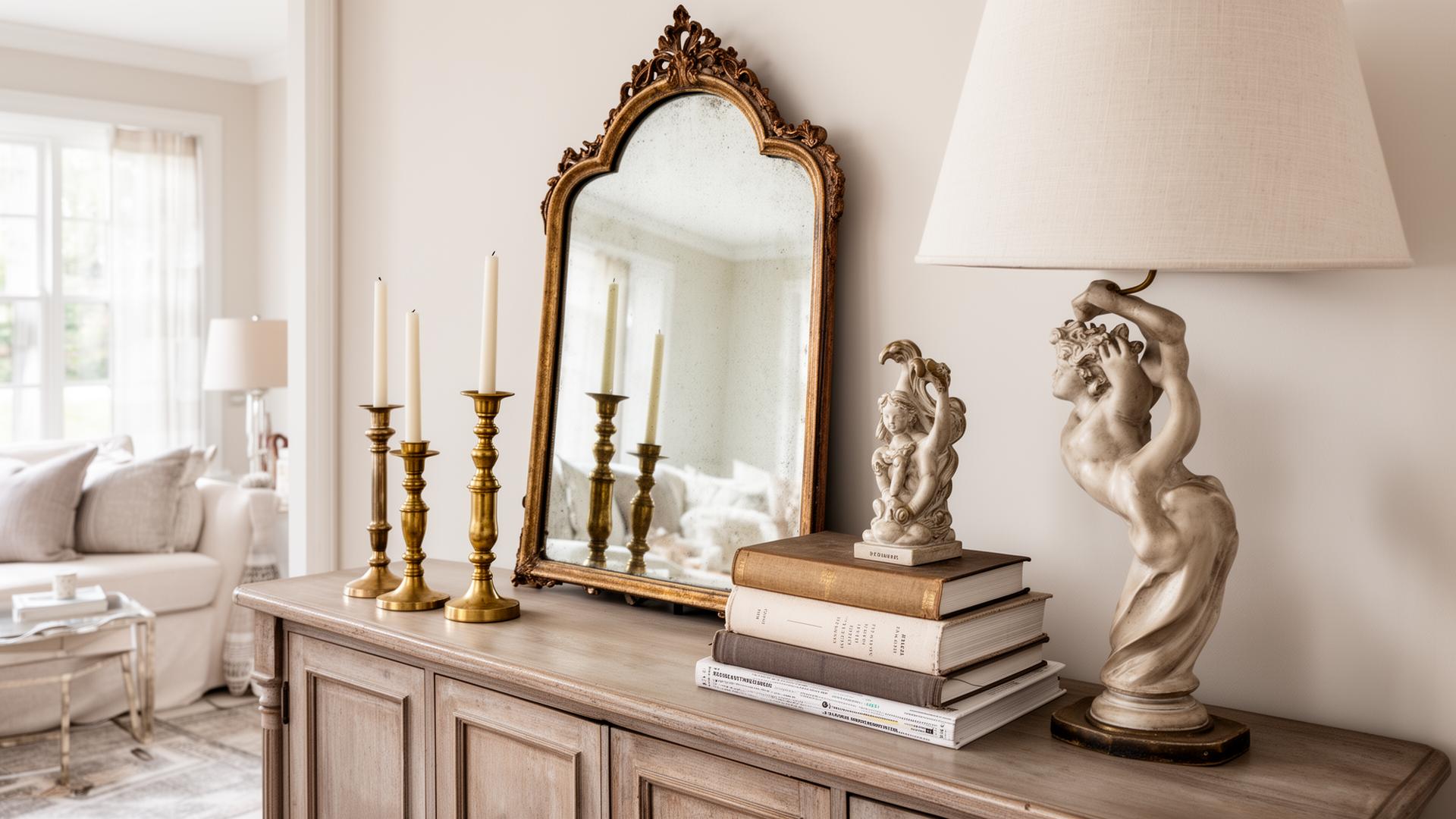
They source "the layer," not the big pieces. Sofas and beds usually come new (hygiene, client expectations). But everything that makes a room feel *designed* — the lamps, the art, the ceramics, the books, the brass, the trays, the vintage textiles — that's the layer, and it's exactly what estate sales do best. A $40 haul of accessories can elevate a $5,000 room into a $50,000-looking one.
They shop with a project, not a wish list. Pros walk in with paint chips and room dimensions in their phone. They're not hunting for "something cool." They're hunting for *the 14×20 mirror for the Hendricks entryway* and *a pair of lamps for the primary in warm brass.* Specificity is the whole game.
They use AI to verify value on the spot. When a designer spots a signed piece or a maker's mark they don't recognize, they don't guess — they photograph the mark and run it through the EstateSaleFinder Analyzer to instantly identify the era, maker, and real market value before they buy. It's the difference between billing a client for a "vintage find" and accidentally overpaying for a reproduction.
If this is your world, we built a page specifically for you: estate sale sourcing for interior designers.
The home stager's secret weapon
Home staging is a numbers game with a deadline, and estate sales are how the best stagers win it.
A stager's entire business model depends on furnishing beautifully *and cheaply*, because the furniture isn't sold with the house — it goes back into the warehouse for the next listing. Spending retail prices on inventory you'll reuse twenty times makes no sense. Spending estate-sale prices on solid, photogenic pieces that survive a dozen installs? That's the whole edge.
Stagers love estate sales for three specific reasons:
- Cohesion in one stop. A single estate often reflects one person's taste over decades — which means the lamps, the art, and the side tables already *go together*. You can stage an entire room from one house.
- Photogenic character. Listing photos sell homes. Vintage pieces photograph with a warmth and depth that flat-pack furniture never will.
- Last-day discounts on volume. Most estate sales drop to 50% off on the final day. Stagers who time their visit can fill a box truck for a few hundred dollars.
If you stage homes for a living, here's your dedicated guide: home staging on an estate-sale budget.
The Airbnb host nobody warned the hotels about
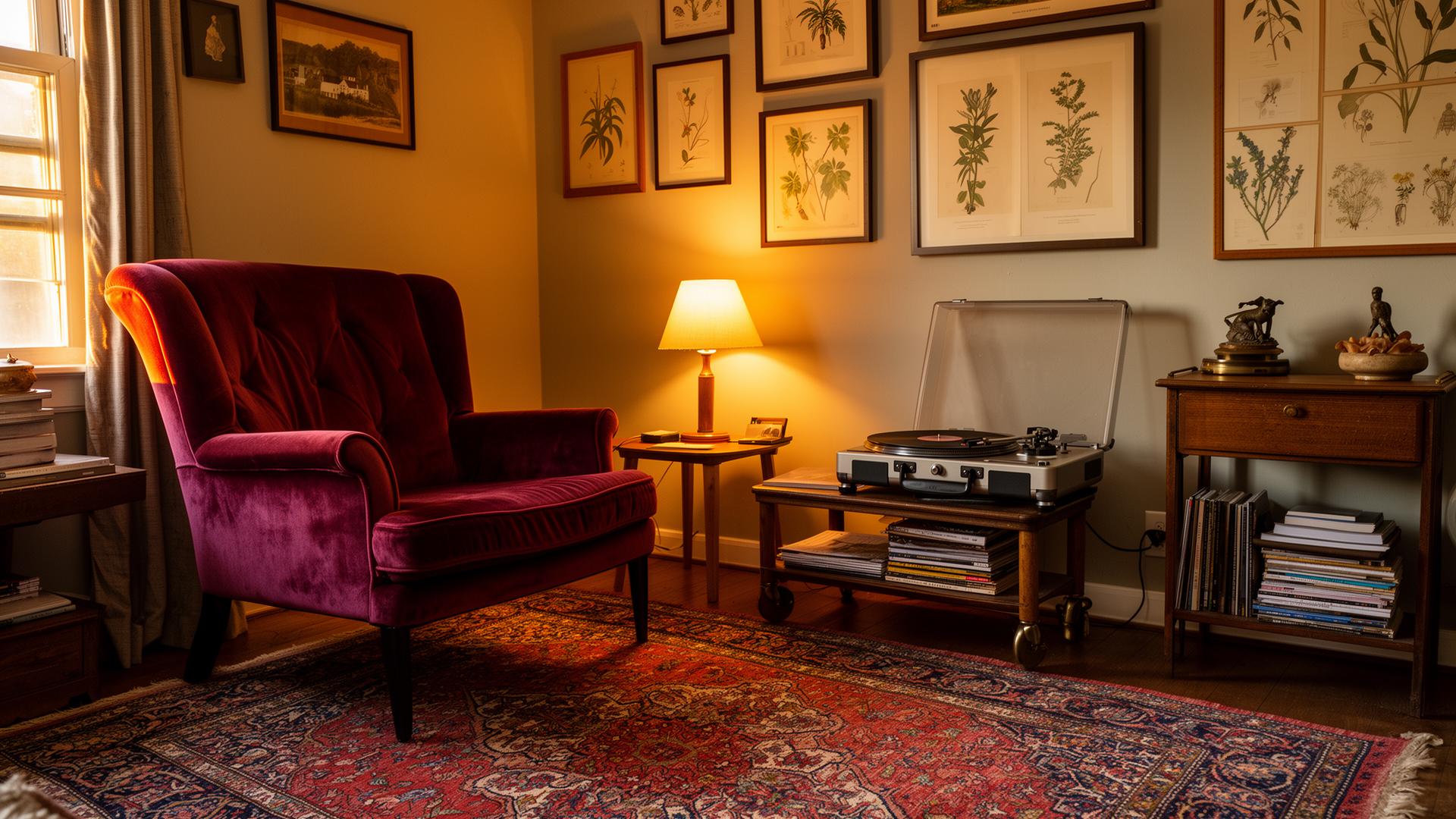
Here's the trend hospitality brands genuinely fear: short-term-rental guests don't want another beige box. They want *character.* They book the listing with the velvet reading chair, the vintage record player, the wall of framed botanicals — the place that feels like a person, not a property manager.
That look is almost impossible to buy new without spending a fortune. But it's exactly what's sitting in estate sales every weekend.
Smart hosts furnish entire rentals from estate sales because:
- Character drives bookings and reviews. "It felt so unique and cozy" is the review that fills your calendar. You can't buy that feeling at a big-box store — but you can find it in a 1970s living room being cleared out three towns over.
- The budget math is unbeatable. Furnishing a two-bedroom rental new can run $8,000–$15,000. The same space, sourced thoughtfully from estate sales, can come in under $2,500 — and look *better.*
- Replacements are cheap and guilt-free. Guests are hard on furniture. When a side table gets a ring stain, replacing a $25 estate-sale find beats replacing a $400 designer piece.
We made a whole roadmap for this: furnish your Airbnb from estate sales. Prop and set stylists work the same angle — here's the prop sourcing guide.
The volume-buyer's field strategy
Buying one teacup is easy. Furnishing a project is a different sport. Here's how the pros operate when they're buying by the truckload.
Scout the listings before you drive. The single biggest time-saver is knowing which sales are worth your Saturday *before* you burn gas on them. Set up alerts for the categories you actually source — mid-century, lighting, art, brass — and let the sales come to you. Find estate sales near you and save the ones that match your projects.
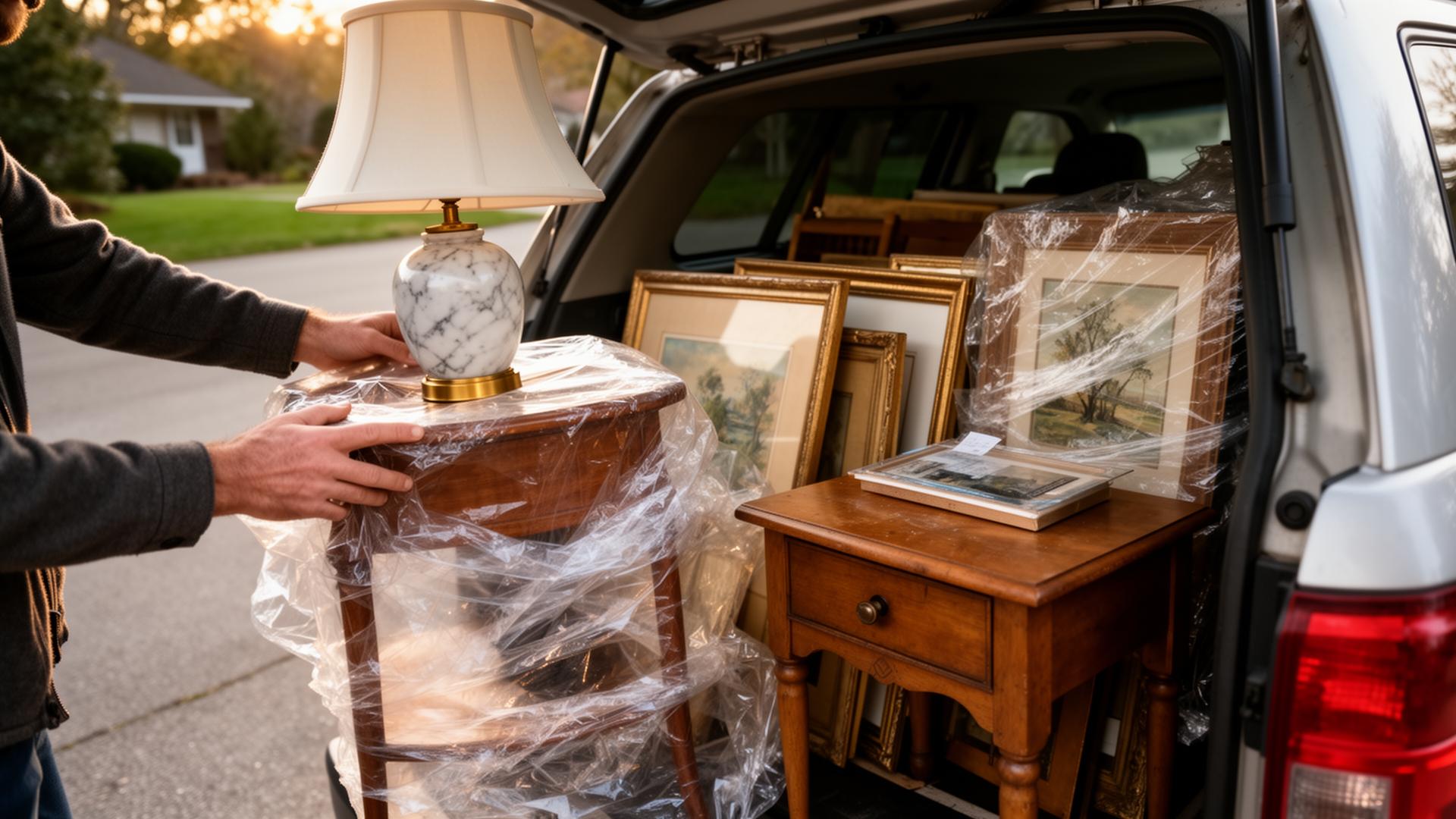
Go early for selection, go late for price. Day one, first hour, is for the irreplaceable pieces — the signed art, the specific lamp pair, the perfect rug. Day three is for volume: that's when companies slash prices 50% and entertain "I'll take everything on this table for $X" offers. Many pros do both.
Negotiate the lot, not the item. Estate sale companies *want* to move volume — an empty house by Sunday night is the goal. A buyer who says "what's your best price if I take all six of these chairs and both nightstands?" gets a deal a single-item shopper never will. (Do it kindly — here's how to negotiate without being rude about it.)
Verify before you buy, every time. When you're buying for clients, mistakes are expensive and embarrassing. Photograph maker's marks, hallmarks, and signatures and run them through the AI Analyzer to confirm authenticity and value on the spot. Our sterling silver identification guide covers reading the marks by hand, too.
Build a relationship with the companies. The pros who source consistently get *texted* about upcoming sales before they're public. Estate sale companies love a reliable buyer who shows up, pays fairly, and clears volume. Become that buyer.
What to actually grab (the pro shopping list)
If you source for spaces, these are the categories that punch above their weight at estate sales:
- Lighting. Vintage brass, ceramic, and milk-glass lamps are the single best value in the building. New "designer" lamps cost a fortune; estate sales price them at $15–$60.
- Original and framed art. Even unsigned vintage oils and prints add instant soul. The frames alone are often worth the price.
- Mirrors. Gilt, beveled, and full-length mirrors make rooms feel bigger and read as "designer" in every listing photo.
- Solid-wood case goods. Sideboards, dressers, nightstands, and desks built before particleboard. They survive installs and photograph beautifully.
- Textiles and rugs. Wool rugs, linen, quilts, and vintage throws. Real materials, real character.
- Brass and ceramics. Candlesticks, bowls, vases, trays — the small objects that make a styled shelf look intentional.
- Books by the foot. Vintage hardcovers with cloth spines are the cheapest way to make a bookshelf look curated.
The opportunity hiding in plain sight
Here's the thing most people in the design and hospitality world never quite put together: estate sales aren't the consolation prize for people who can't afford the showroom. They're the *insider* market — the place the people furnishing the most beautiful, most-photographed, most-profitable spaces in the country quietly shop while everyone else pays retail.
If you furnish spaces for a living — design, staging, rentals, props, sets — you're leaving money and character on the table every week you don't have estate sales in your rotation. The inventory is there. The prices are there. The competition is, for now, blissfully unaware.
FAQ
Are estate sales actually a reliable source for a business, or just a lucky-find thing?
Both, if you systematize it. The "lucky find" mindset treats sales as random. The pro mindset treats them as inventory pipelines — you set alerts for the categories you need, scout listings before you drive, and build relationships with local companies so you hear about sales early. Done that way, estate sales are one of the most reliable and highest-margin sourcing channels available to designers, stagers, and hosts. Start by setting up alerts for sales near you.
Can I buy in bulk at an estate sale, or is it one-item-at-a-time?
You can absolutely buy in bulk, and the companies want you to. The cleaner the house is by closing, the better for everyone. The move is to bundle: "What's your best price if I take all of these?" Bulk offers land best on the final day of a sale, when most companies are already at 50% off and motivated to clear remaining inventory.
How do I make sure I'm not overpaying or buying a reproduction for a client?
Verify on the spot. Photograph any maker's mark, hallmark, signature, or label and run it through the EstateSaleFinder Analyzer, which identifies the maker, era, and real market value in seconds using actual sold-listing data. For silver and metals specifically, our hallmark identification guide walks through every major marking system so you can read them by hand.
What's the best time to shop an estate sale as a volume buyer?
It depends on your goal. Go in the first hour of day one for irreplaceable, specific pieces (a particular lamp pair, signed art, the perfect rug) — those go fast. Go on the final day for volume and discounts, when prices typically drop 50% and companies will negotiate "take the whole table" deals. Many pros do both: one early scouting run, one late clean-up run.
Is this only for big cities, or can I source this way in smaller markets?
Smaller markets are often *better* for sourcing — less competition on the lawn and frequently lower prices, since fewer resellers and designers are working the sales. Wherever you are, browse estate sales near you to see what's running this weekend.
I run estate sales — how do I attract these volume buyers?
List your sales where designers, stagers, and hosts are actually looking, and tag your higher-value categories clearly. Buyers searching for lighting, art, mid-century furniture, and brass will find your sale through category alerts. List your estate sale here to get in front of the pros who buy by the truckload.
The next time a room stops your scroll, you'll know the secret. The question is whether you want to keep paying retail — or start sourcing like the pros.