
Are Old Barbie Dolls Worth Anything? How to Tell a 1960s Barbie From a 1990s Doll, What's Valuable, and Where to Sell
Why the date on her back isn't her birthday, a doll decoder, an eras table, what's valuable vs. not, outfits and cases, condition rules, and how estate sale companies should handle a doll closet.

In this guide · 16 sectionsShow
- 01Quick summary
- 02Are old Barbie dolls worth anything?
- 03How do I tell how old my Barbie is?
- 04Is the date on the back the year it was made?
- 05Barbie eras at a glance
- 06What's valuable and what usually isn't
- 07Are 90s Barbies worth anything?
- 08Are Holiday Barbies worth anything?
- 09Outfits, cases and accessories
- 10Condition: what not to do
- 11How to check what yours is worth
- 12Where to sell Barbie dolls
- 13Will an estate sale company sell my doll collection?
- 14Tips for buyers
- 15Frequently asked questions
- 16Sources
Most Barbie dolls from the 1980s and 1990s are worth only a few dollars each, because Mattel made them by the millions. The real money is in 1959–1966 originals, especially the No. 1 Ponytail with holes in her feet, and in clean, never-opened editions in good boxes. The date on her back is the mold's patent date, not the year she was made.
Quick summary
- Check the mark on her bottom or lower back, then the country. A "1966" doll made in China or Malaysia is from the 1980s or later (Doll Reference).
- Early signs: white irises, side-glancing eyes, sharply arched brows, and holes in the feet on the very first doll (PBS Antiques Roadshow).
- Real prices: an Antiques Roadshow appraiser valued a No. 1 Barbie with a rare outfit at $9,000 to $12,000 in 2024 (PBS). Most later dolls aren't close.
- Outfits and cases count. Tagged 1960s clothes and accessories can be worth more than the doll.
- Don't wash, cut, restyle or redress before someone knowledgeable looks.
- Price from sold listings, not asking prices.
Are old Barbie dolls worth anything?
Some are worth a lot, most are worth a little. Barbie debuted at the New York Toy Fair on March 9, 1959, and Mattel made about 350,000 of the first doll (Doll Reference). The earlier and rarer the doll, and the more complete and clean she is, the more she's worth.
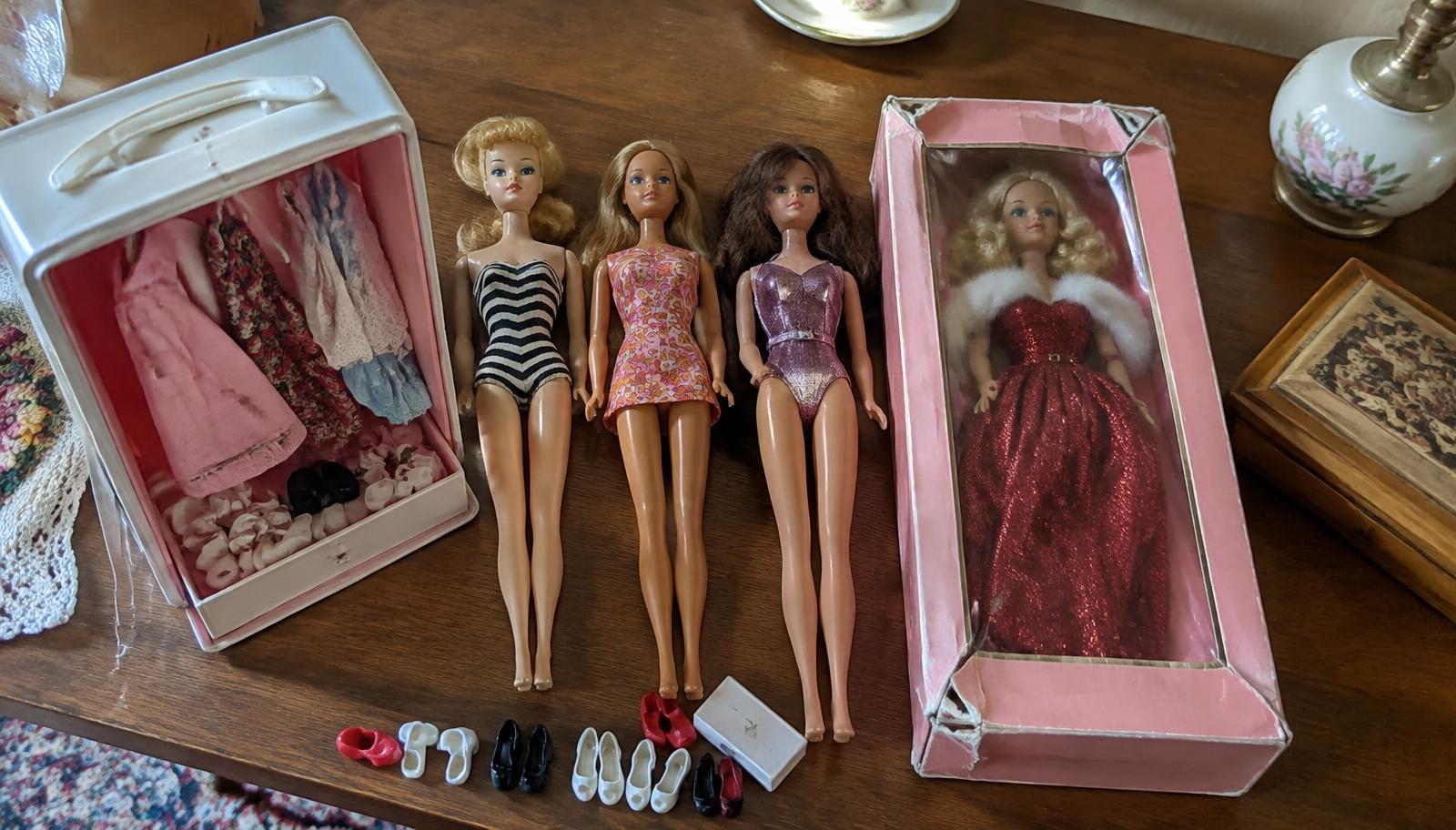
The big change came later. From the late 1970s on, Barbie was produced in enormous numbers, and nearly every family has a bin of them. Those play dolls, with messy hair and mixed-up outfits, usually sell in lots for small amounts. That isn't a judgment on the dolls; it's supply.
How do I tell how old my Barbie is?
Follow these five steps in order. Use the decoder below to match what you see.
- Find the mark. On vintage dolls it's on the right buttock; on modern dolls, the lower back at the waist. Numbers inside the arms or legs are mold numbers and don't date the doll (Doll Reference).
- Read the country. Japan means 1959–1972. Mexico appears in 1968–1970 and 1989–1990, Hong Kong and Taiwan in 1970–1987, Korea in 1970–1978, the Philippines in 1978–1988, and China and Malaysia from 1986 on (Doll Reference).
- Look at the eyes and brows. White irises, eyes glancing sideways and pointed brows point to the earliest ponytail dolls. The No. 3 doll has blue irises and curved brows (The Spruce Crafts).
- Check the feet. Holes in the bottom of the feet, and copper tubes in the legs, mean a No. 1 Ponytail. Without the holes but otherwise matching, she's likely a No. 2 (The Spruce Crafts).
- Look for reproduction wording on the box or body. Mattel has reissued early looks for collectors, and a reissue is not an original.
Doll decoder
What do you see on your doll?
Likely era
1980s or later
Next step
Usually play-doll value
1966 is the body mold's patent date, not the year she was made. Billions of later dolls carry it.
Is the date on the back the year it was made?
No. The date is the patent or copyright date for that body mold. The 1966 mark is the most misleading: Doll Reference notes there are "billions" of Barbie dolls made from the 1980s on that carry a 1966 date (Doll Reference). Doll expert Denise Van Patten writes that many 1966-marked dolls were made in the 1980s and 1990s, "which means they have little value to collectors" (The Spruce Crafts).
Barbie eras at a glance
| Era | How to spot it | What it usually means for value |
|---|---|---|
| 1959–1964 ponytail dolls | Marked with "MCMLVIII," made in Japan, side-glancing eyes; No. 1 has foot holes | The top of the market; get expert help |
| 1961–1966 bubble cut and early friends | Short bubble-cut hair, Japan | Collectible, especially with original outfits |
| 1967–1972 mod era | "©1966" plus Japan, Twist 'n Turn waist, rooted lashes | Worth researching; condition matters |
| 1977 to the 1990s play dolls | SuperStar smile and later, made in Asia or Mexico | Usually sold in lots for small amounts |
| 1988 on, Holiday and collector editions | Dated boxes, often never opened | Made in huge numbers; box condition and edition decide |
| Reissues | Box or body says reproduction | Collector item, worth far less than an original |
This table draws on Doll Reference's mark and country guides and The Spruce Crafts' ponytail guide (Doll Reference, The Spruce Crafts).
What's valuable and what usually isn't
| Usually worth researching | Usually low value |
|---|---|
| 1959–1966 dolls made in Japan | 1980s–2000s play dolls with mixed clothes |
| Original swimsuit, shoes, earrings, stand and box | Dolls with cut, frizzed or restyled hair |
| Tagged 1960s outfits, complete | Loose fashion-pack clothes from the 1990s |
| Early friends: Midge, Ken, Skipper, Francie | Common Holiday editions with damaged boxes |
| Never-opened rare editions in clean boxes | Reproductions sold as "originals" |
What a top doll can bring: in a 2016 Antiques Roadshow appraisal a No. 1 Barbie was valued at $3,500 to $4,500 (GBH). In 2024, an appraiser put a No. 1 with the rare "Gay Parisienne" outfit and her original ponytail rubber band at $9,000 to $12,000, crediting the 2023 movie for higher prices (PBS). These are appraisals of exceptional dolls, not a guide to the one in your closet.
Are 90s Barbies worth anything?
Usually not much, one by one. The 1990s were Barbie's peak production years, so supply is enormous. A few exceptions are worth checking: rare limited editions, store exclusives, and dolls still sealed in crisp boxes. Look up the exact doll's name and stock number on the box, then search sold listings.
Are Holiday Barbies worth anything?
Most are worth modest amounts, because collectors bought them to keep, and many survive in their boxes. The first Holiday doll and a few scarcer years draw more interest. Box condition matters more than anything: crushed corners, tape or sun-fading cut the price.
Outfits, cases and accessories
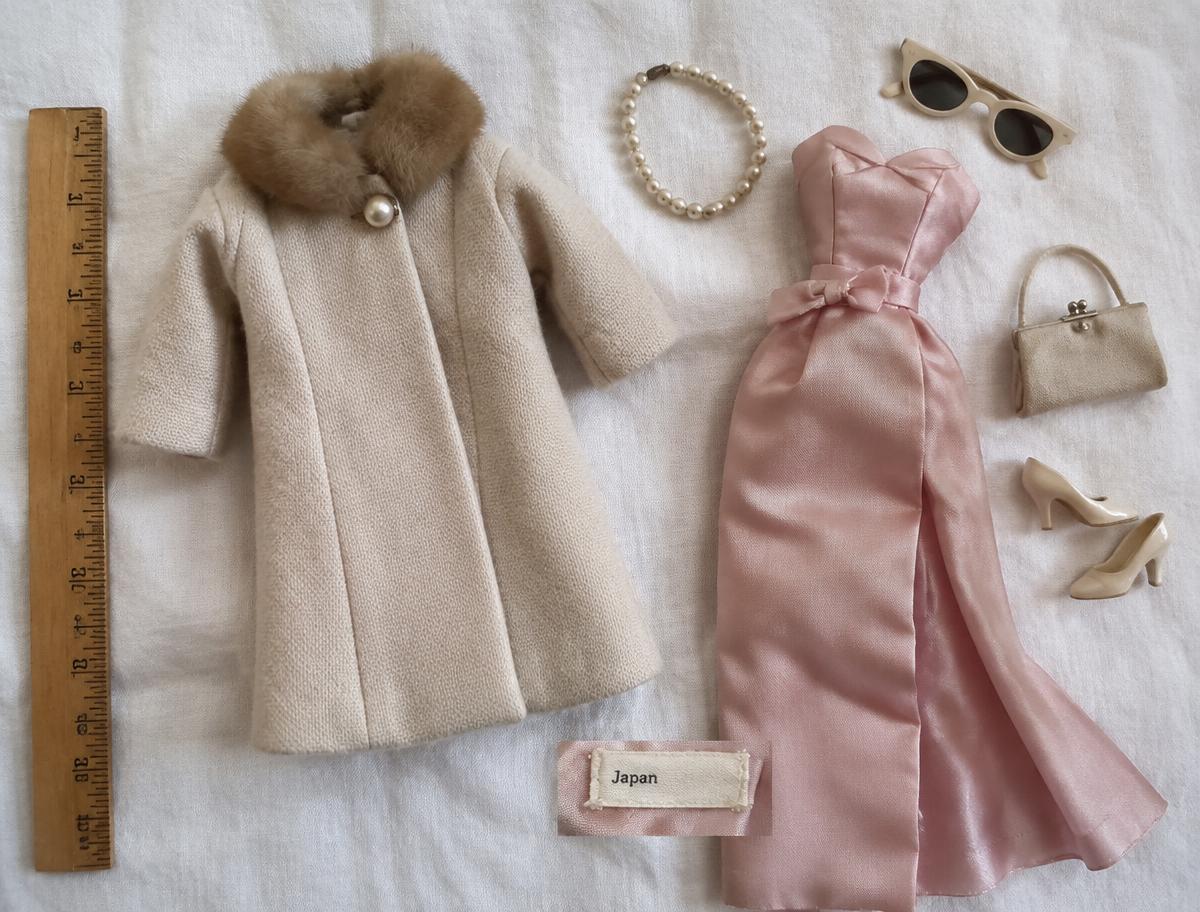
Early Barbie fashions were sold separately, and complete tagged outfits from the 1960s are collected on their own. The tiny pieces matter: shoes, gloves, purses, sunglasses and jewelry. A complete outfit with all its pieces is worth much more than the dress alone.
Vinyl carrying cases from the 1960s, booklets and original stands add value too. Keep everything together until someone has sorted it.
Condition: what not to do
- Don't wash or brush the hair. Original sets, and even the original rubber band, matter to collectors, as the 2024 Roadshow appraiser pointed out (PBS).
- Don't redress dolls to make them "look nice." You may separate a doll from her original outfit.
- Don't open a sealed box. Never-removed-from-box dolls are their own category.
- Do remove metal earrings carefully if a doll will be stored, since they can stain the ears green. Ask a doll collector first if she's early.
- Keep them out of heat and sun. Vinyl can turn sticky or fade.
How to check what yours is worth
- Identify the doll with the steps above.
- Search sold listings, not asking prices. Filter to sold or completed results.
- Match condition honestly: box, hair, paint, outfit, accessories.
- For anything that might be early, get an opinion from a doll appraiser, a doll club, or an auction house with a toy department.
For a quick first look, our AI Appraiser can suggest what an item might be and point you to comparable sales. It's a starting suggestion, not an appraisal.
Where to sell Barbie dolls
You have three basic routes. We're not reviewing any specific platform here.
- Sell it yourself online: best for single valuable dolls, if you can photograph well and ship carefully.
- A specialty auction or doll dealer: best for early dolls, big collections and rare outfits.
- An estate sale: best when the dolls are part of a whole house, and when you'd rather not handle each one yourself.
Will an estate sale company sell my doll collection?
Yes. Most estate sale companies sell dolls, toys and collectibles alongside furniture and household items. Ask how they research collectibles, whether they'll send the rare dolls to a specialty auction, and how they display small accessories. You can find an estate sale company near you and compare reviews.
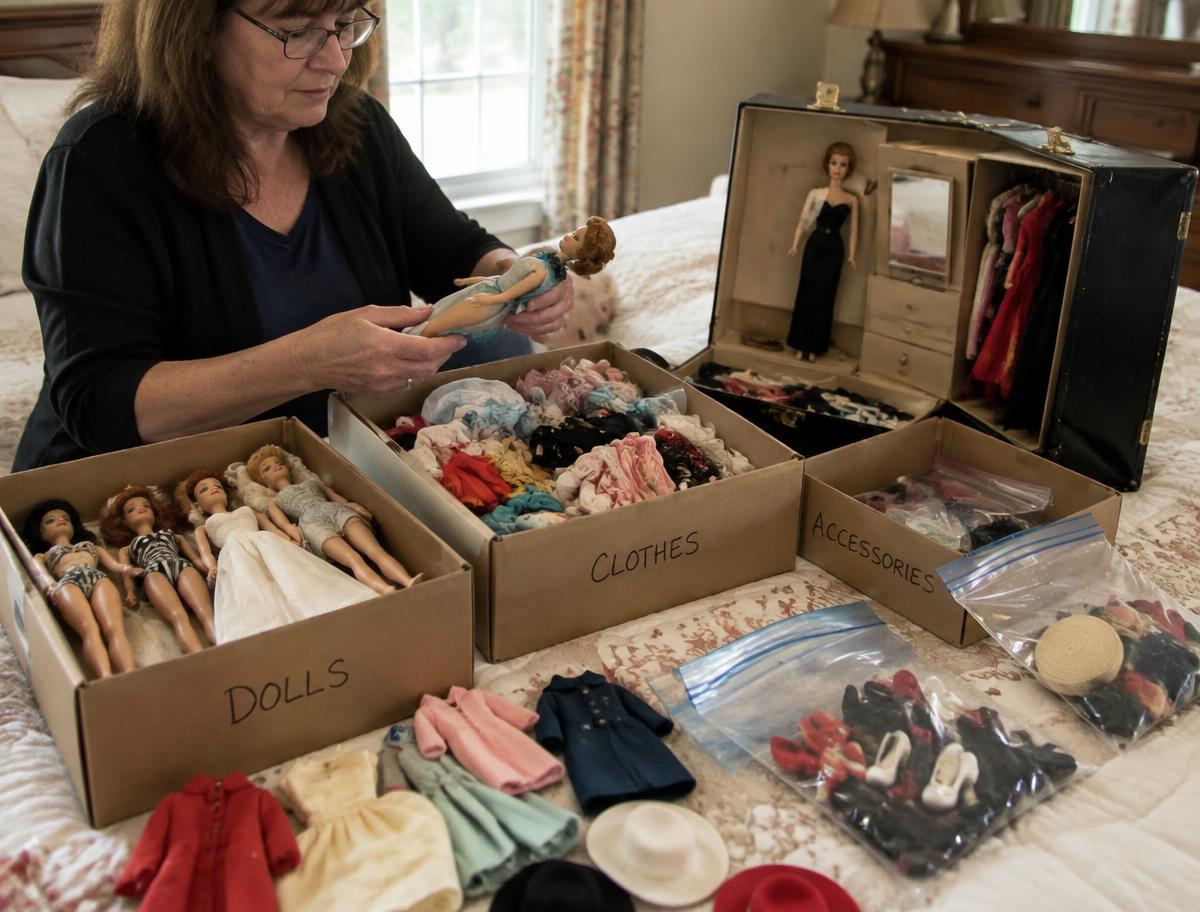
For estate sale companies: handling a doll closet
- Sort first: dolls, outfits, accessories, cases and boxes in separate trays. Bag tiny shoes by doll.
- Check every doll's mark and country before pricing. Pull any Japan-marked doll for research.
- Keep sealed boxes sealed, and photograph all six sides.
- Group 1980s–2000s play dolls into lots instead of pricing them one by one.
- Photograph the best pieces for your listing so collectors know to come early. On EstateSaleFinder, tagging your items helps shoppers with saved searches find them.
Tips for buyers
- Bring a small flashlight to read marks.
- Look for the country first, then the face and feet.
- Check boxes for tape, re-sealing or a doll that doesn't match the box.
- Ask before undressing a doll at a sale.
- Save "Barbie," "vintage doll" or "doll case" to your wish list to get alerts when a nearby sale lists them. Our guide to wish list alerts for collectors explains how.
How common are they at sales? On EstateSaleFinder, 190 items across 79 sales have been identified as Barbie items, and none of our 287 shopper wish lists mention Barbie yet (counted November 24, 2026). That's a quiet field for early shoppers.
If you like toy hunting, read our guides to vintage toys worth money, Hummel figurine marks and values and the Beanie Baby crash, a good reminder of what mass production does to collectible prices.
Questions & answers
Frequently asked questions
Are 90s Barbies worth anything?
Most are worth a few dollars each, because millions were made. Rare limited editions and sealed dolls in clean boxes are the exceptions; check sold listings for the exact doll.
How do I tell how old my Barbie is?
Read the mark on her bottom or lower back and the country of manufacture, then check the eyes, brows and feet. Japan-made dolls date from 1959 to 1972.
Is the date on the back the year it was made?
No. It's the patent or copyright date for the body mold. Many dolls marked 1966 were made in the 1980s and later.
Are Holiday Barbies worth anything?
Most sell for modest amounts because so many were kept boxed. Early editions and boxes in excellent condition do better.
Should I take a Barbie out of the box?
No, if you might sell it. Never-removed-from-box dolls are worth more than opened ones.
Will an estate sale company sell my doll collection?
Yes. Most sell dolls and toys, and good companies research rare pieces or send them to a specialty auction.
Sources
- Doll Reference: Mattel Barbie 1966 doll marks and country dates
- Doll Reference: Mattel No. 1 to 8 Barbie 1959+ identified
- The Spruce Crafts: How to Identify a Vintage Ponytail Barbie (Denise Van Patten)
- The Spruce Crafts: What the 1966 Mark on Barbie Dolls Really Means
- PBS Antiques Roadshow: 1959 Number 1 Barbie Doll and Accessories
- PBS Antiques Roadshow: Barbie Doll with Gay Parisienne Outfit, ca. 1959 (Oct. 2024)
- GBH Antiques Roadshow Detours: The Barbie Boost?
Sources checked November 24, 2026. Photos are AI-generated illustrations. EstateSaleFinder item and wish list counts are from our own data on November 24, 2026. Appraisals are past opinions of specific dolls, not a price for yours. Barbie is a trademark of Mattel; this guide is not affiliated with Mattel.
Keep exploring
Ready to start your own treasure hunt?
Discover estate sales near you and find incredible deals.
Explore Sales Near MeAbout the author
Andy
Founder, EstateSaleFinder.net
Hi, I'm Andy — a retired commercial photographer turned developer with a five-year (and counting) obsession with estate sales. I started EstateSaleFinder.net because I knew there had to be an easier, smarter way to find and list estate sales. Now I get to chase treasure and build the tool I always wished existed.