
Original Painting or Print? Six Checks to Make at an Estate Sale
A loupe, a flashlight and a look at the back can change how you buy art. Six safe checks, print types, artist signatures and the difference between decoration and an appraisal-worthy find.

In this guide · 13 sectionsShow
- 01How can you tell if a painting is an original or a print?
- 02The six checks: painting, offset print, giclée or embellished print
- 03Original painting, original print and reproduction: the important difference
- 04What is a giclée, and can it be worth anything?
- 05Etching vs. lithograph vs. serigraph vs. poster
- 06What a real museum reference can—and cannot—tell you
- 07How do I find out who painted a painting?
- 08How can you tell if a painting is valuable?
- 09Art appraisal near me: when do I need a specialist?
- 10AI-generated art printed on canvas: the 2026 buying question
- 11A practical plan for shoppers, families and companies
- 12Frequently asked questions
- 13Sources and research notes
To tell whether a painting is original or a print, examine the surface with a loupe and low, raking light, then check the edges, back, signature and edition marks. Look for consistent evidence, not one shortcut: prints can have real added paint, and original watercolors can be flat. Authentication and value require separate research.
How can you tell if a painting is an original or a print?
Inspect it in good light, magnify the image, and compare surface texture with the painted forms. Then examine the edges, reverse, signature and edition notation. Printing dots suggest reproduction, while hand-applied paint supports painting or embellishment. Neither canvas nor a signature proves originality; some genuine prints are valuable artworks themselves.
That distinction is the most important thing to learn before you buy wall art at an estate sale. “Print” does not mean “fake,” and “painted by hand” does not mean “valuable.” An artist-created etching can deserve specialist attention. An unsigned amateur oil can be a lovely decorating purchase. A canvas reproduction can look convincing from the doorway.
This guide is a non-destructive screening process, not an authentication certificate. Take a small loupe and flashlight, ask permission before moving anything, and record what you see. If the evidence conflicts, “unidentified framed artwork” is a better answer than an expensive guess. 2
About the visuals
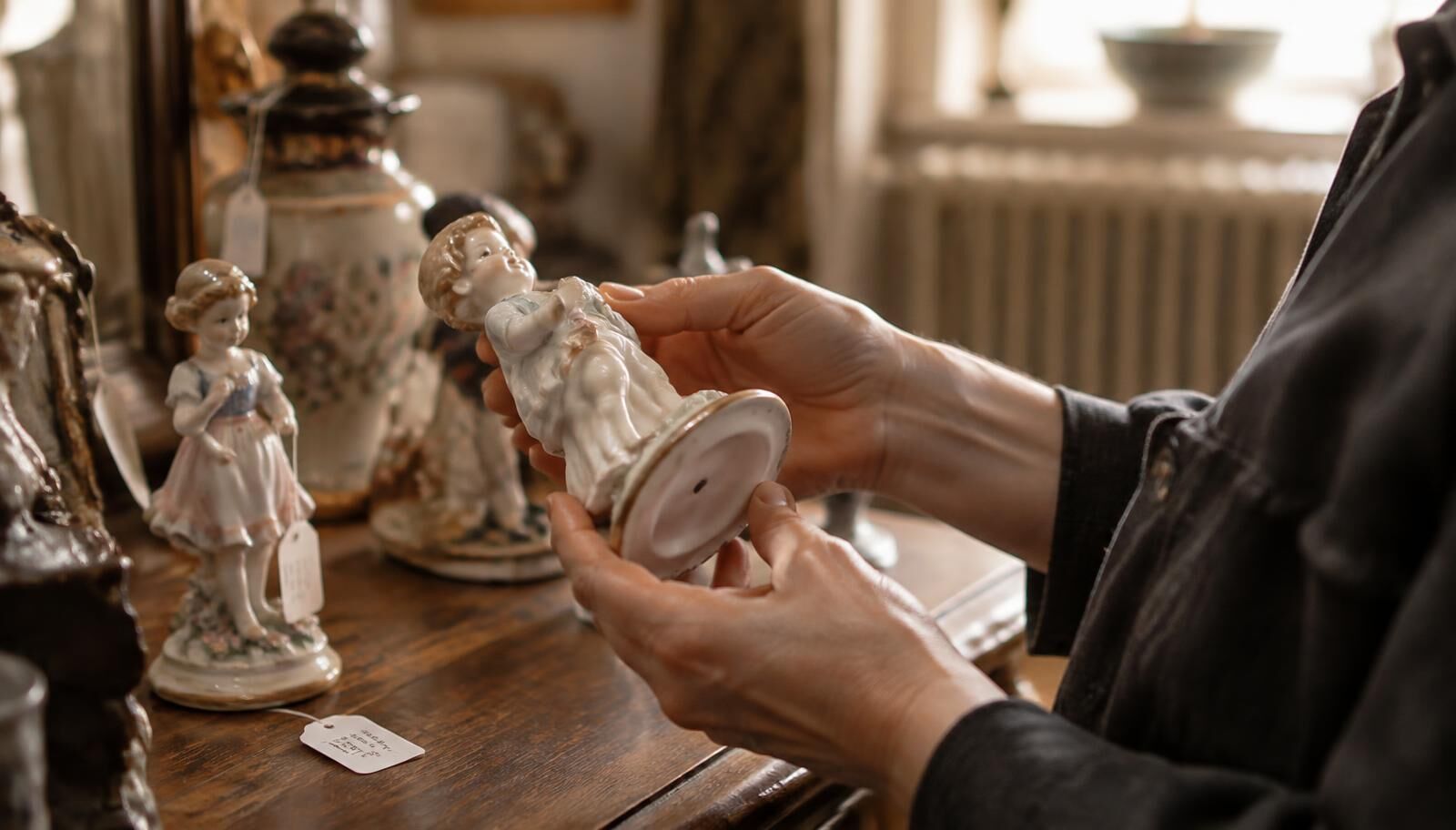
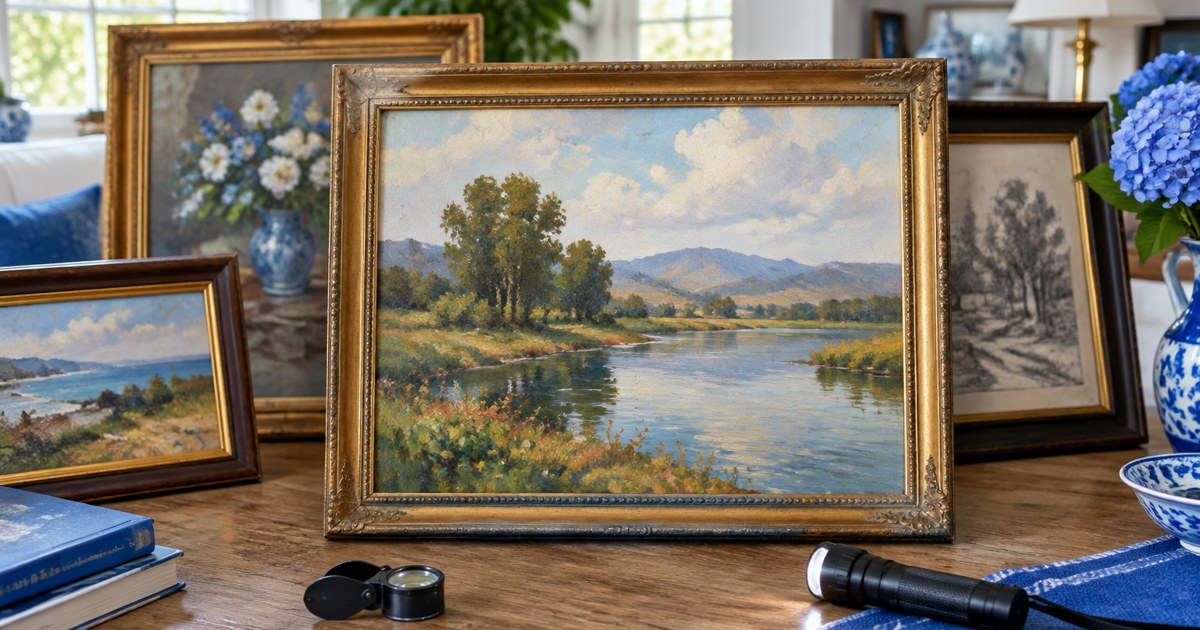
the cover and inspection scenes are disclosed AI-generated editorial illustrations, not photographs of authenticated sale inventory. The Van Gogh image below is a real museum collection photograph, provided through The Metropolitan Museum of Art’s public-domain Open Access collection. The decision diagram is an educational graphic, not a diagnostic test.
The six checks: painting, offset print, giclée or embellished print
Use the table as a group of clues. Exceptions matter: not every painting has thick paint, not every print has a visible dot pattern, and a painted copy is still a painting even if it reproduces another artist’s composition. The inspection framework follows Revere’s painting-versus-print guidance and Christie’s explanation of original prints. 2 1
| Check | Hand-painted work | Offset reproduction | Giclée / inkjet reproduction | Hand-embellished print |
|---|---|---|---|---|
| Loupe | Irregular pigment and marks; no necessary printing pattern | Often regular halftone dots or rosettes | Fine ink droplets; pattern may be hard to resolve | Printed image beneath added paint or medium |
| Raking light | Relief may follow painted shapes; thin painting can be flat | Usually flat image; paper can have texture | Canvas weave can be visible without painted relief | Raised strokes can sit over a flat printed base |
| Edges | Paint or ground may extend onto support edges | Paper margins, image boundaries or crop marks may help | Printed canvas may wrap around stretcher bars | A printed base may be clearest where paint is absent |
| Back | Support, labels and construction provide context | Publisher information or copyright line may survive | Supplier labels or modern production information may survive | Canvas/stretchers can resemble a painting |
| Signature | May be painted, written, absent or later added | Can be reproduced as part of image | Can be reproduced or hand-signed afterward | May be printed, hand-signed or painted over |
| Edition | Usually not numbered as an edition; exceptions exist | May be unnumbered or marketed as limited | May be numbered or open edition | May belong to an embellished edition |
The table deliberately says “may” and “often.” A genuine original lithograph, etching or screenprint is a separate category from an offset reproduction and should not be dismissed simply because it is a multiple. Keep the technique, artist attribution and condition separate in your notes.
Check 1: use a loupe, not just your phone zoom
Inspect a pale area, a dark area, the boundary between two colors and the signature. A regular colored dot pattern can point toward a photomechanical reproduction. But the absence of obvious dots is not a certificate of originality: fine inkjet printing can be difficult to resolve, and some authentic print processes do not look like an office printout.
Look for repetition. Do tiny marks repeat evenly across unrelated parts of the picture? Does the apparent brushwork remain identical across different colors? Compare several areas rather than choosing the one patch that supports your first impression. A phone close-up is useful for documentation, but glare, sharpening and compression can hide or invent fine detail.
Do not touch the surface with the loupe. Keep glass, metal and fingertips away from paint and paper. If the art is behind glazing, inspect what you can without removing it. A weak or uncertain observation is still worth recording; it is not a reason to dismantle someone else’s artwork.
Check 2: skim light across the surface
Raking light means light directed at a low angle across the face of the work. Hold a small flashlight to the side, rather than shining it straight at the picture. In oils and acrylics, raised paint may create tiny shadows and reveal the direction of strokes. Examine whether that relief makes sense with the forms underneath.
A painted highlight may stand proud of a leaf or wave. A uniform textured coating over the whole composition is less convincing as evidence of brush painting. Added texture establishes texture, not authorship. Some reproductions have clear gel, painted accents or other embellishment. Conversely, a watercolor, thin oil or smooth acrylic can show little relief. 2
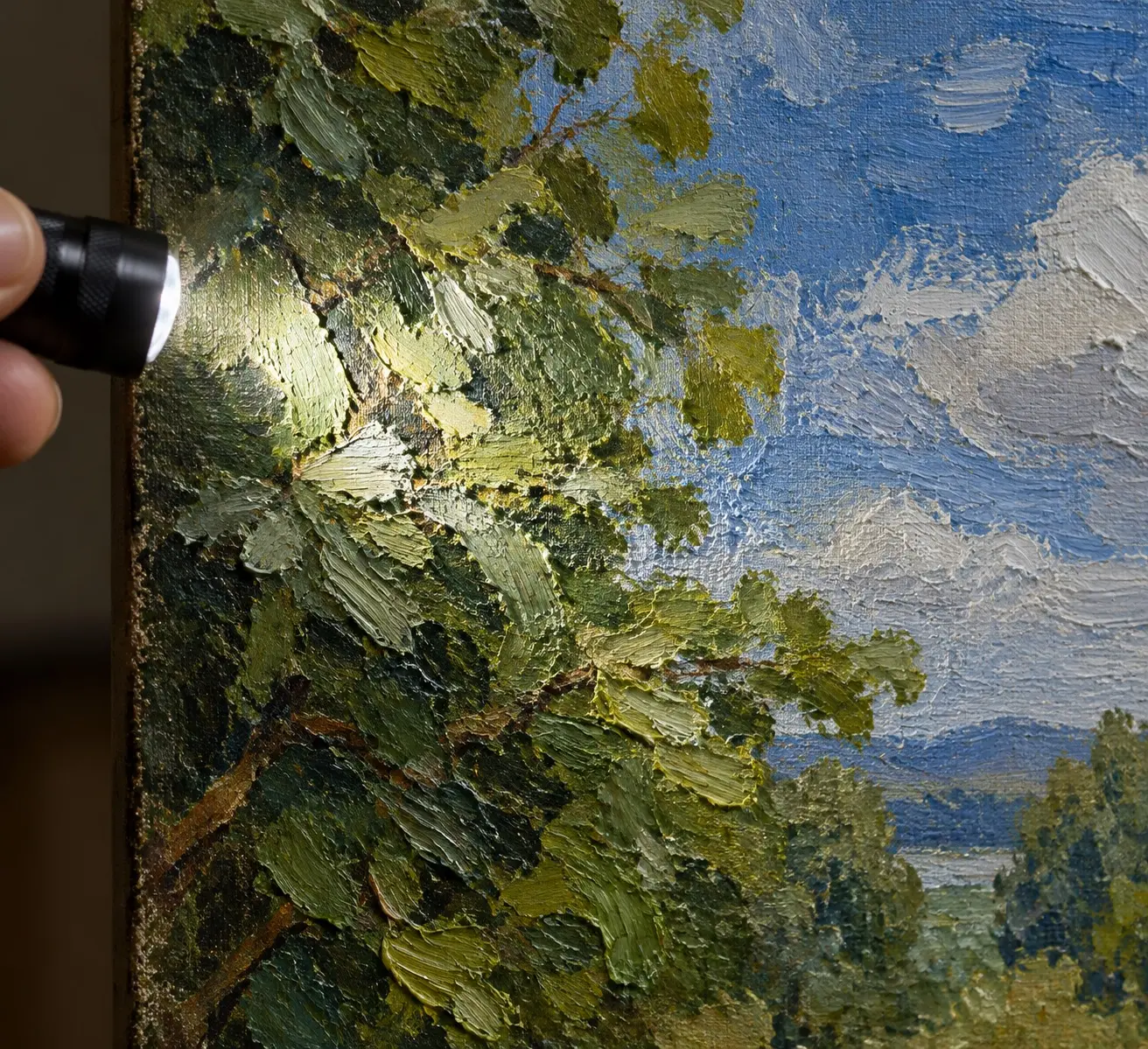
Do not use heat, scrape the coating, wet the image or test a corner with solvent. Even a modest decorating piece can be permanently damaged by an improvised test. If an artwork appears fragile or unusually important, leave it in place and ask the seller whether a specialist has reviewed it.
Check 3: inspect the edges without taking it apart
Where visible, look at the edge of the support and the boundary of the image. Paper borders may carry a signature, edition number, publisher’s blind stamp or title. Canvas wrapping around stretcher bars does not settle the question: a reproduction can be printed on canvas and wrapped just like a painting.
A frame can hide useful evidence, but removing it at a sale can damage the sheet, tear hinges or disturb a fragile surface. Ask staff whether they already have an unframed photograph or a report. If they do not, document the limitation. “Edges obscured by frame” is useful information for a later specialist.
Never trim a print to reveal or improve it. Paper margins can matter to collectors, and Christie’s specifically warns against trimming a sheet to fit a frame. It also recommends suitable framing and protection from moisture and direct sun. 1
Check 4: photograph the back
The reverse can offer a title, artist name, framing invoice, exhibition label, gallery label, publisher name or handwritten inventory note. Photograph the whole back first, then each readable label. Record the location of the label as well as its wording: a note on a frame is not necessarily evidence about the artwork currently inside it.
Canvas, board and paper tell you about the support, not the artist. A frame may be older than the picture, and a modern frame may surround an older work. Stretcher bars, staples and nails can provide context, but a household screening process should not turn them into a precise date without supporting evidence.
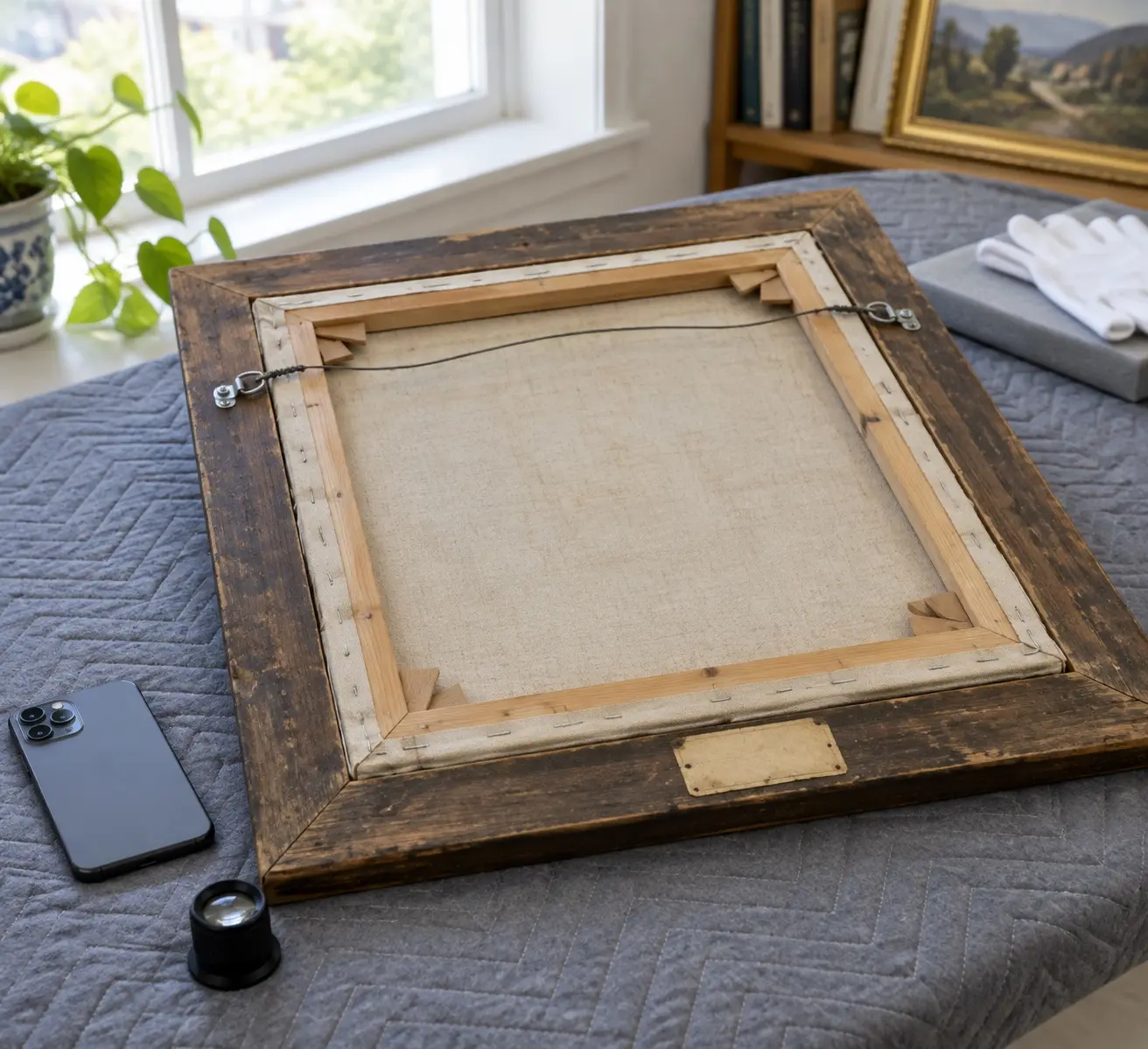
Ask about paperwork before leaving the sale. A surviving purchase receipt or exhibition document may help a specialist evaluate provenance. A family story should be preserved as a story, with the speaker and their relationship recorded, rather than silently upgraded into a confirmed attribution.
Check 5: separate a signature from an attribution
A name in the corner can be part of the printed image. It can also be a later handwritten signature, an actual artist signature, a copied signature or a dealer’s attribution. Examine it with the same care as the rest of the surface. Is it printed in the image layer? Does it appear to be pencil in the margin? Does a painted signature seem consistent with the surrounding medium?
None of those observations alone proves who made the work. Christie’s notes that some legitimate prints are unsigned, initialed or stamp-signed, and some portfolios were signed only on the title page. Unsigned does not automatically mean worthless; signed does not automatically mean authentic. 1
Photograph the signature straight-on and in context. Keep the full artwork photo alongside the close-up so a possible match is not based on letter shapes alone. Similar names, copied compositions and a misread first initial can send research in the wrong direction very quickly.
Check 6: record every edition mark exactly
An inscription such as 25/100 usually identifies impression 25 in a stated edition of 100. It is not a date or a fraction of value. Christie’s explains that the number on the right denotes edition size, while the number on the left identifies the individual print. A/P commonly means artist’s proof; such proofs may be essentially identical to the standard edition. 1
Write the notation exactly as it appears, including Roman numerals, punctuation and any additional letters. Do not assume that an artist’s proof is unique, or that a low impression number must command a premium. Other proof types may represent different stages or colors, so the published edition history is more useful than a general rule.
A numbered edition can still be a reproduction. Numbering restricts or describes an edition; it does not turn an inkjet copy of a painting into that original painting. Ask what process produced the image and whether reliable artist or publisher records describe that specific edition.
Original painting, original print and reproduction: the important difference
A painting involves paint applied to a support. An original print is an artwork conceived for a print process, such as etching, lithography, woodcut or screenprinting. A reproduction copies an existing image. All three can be framed, signed, attractive and sold at an estate sale. The label “original” needs to describe which meaning is intended. 1
For example, a lithograph created as a lithograph is not a cheaper counterfeit of a painting. It is a different kind of artwork. A canvas inkjet reproduction of a museum painting is a copy of the image, even if someone later signs or embellishes that copy. A hand-painted copy of that same museum composition is genuinely painted, but it is not the museum artist’s original.
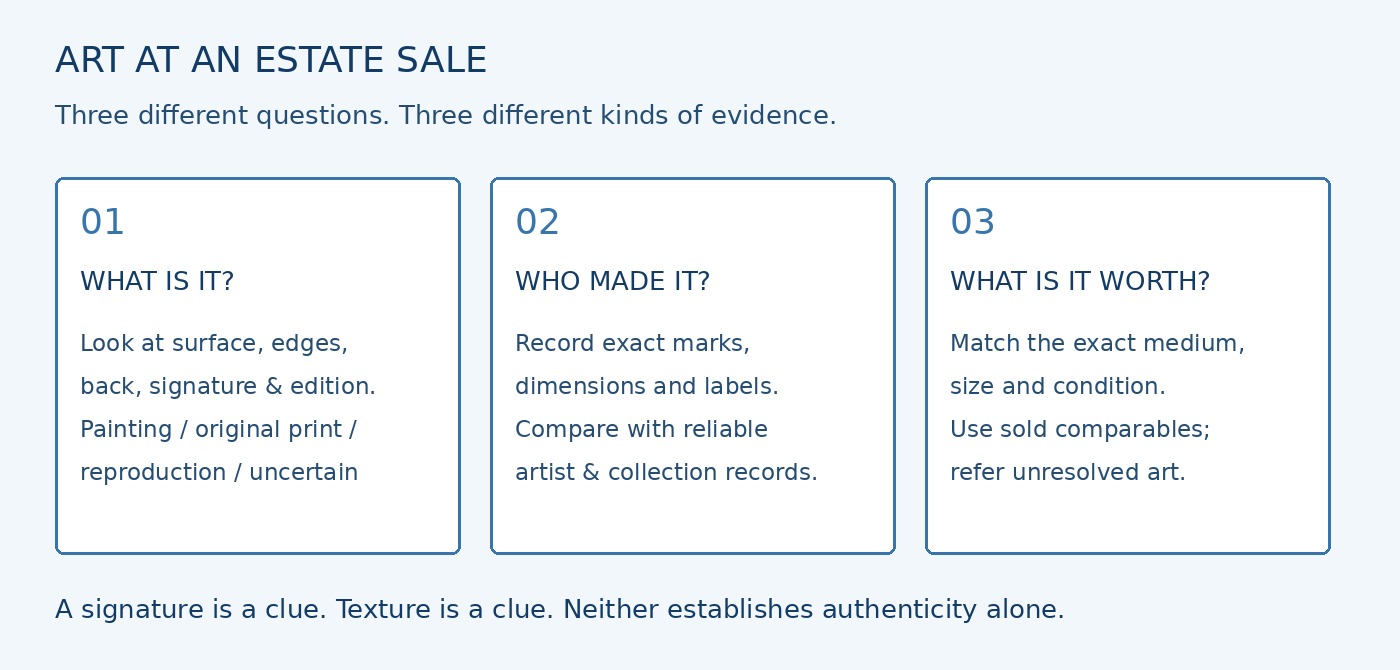
This is why prices should come after classification. Matching a framed reproduction against auction results for an artist’s original oils can create a wildly misleading number. Before opening sold results, make yourself write the medium, support, image dimensions and the limits of the attribution.
What is a giclée, and can it be worth anything?
Giclée generally refers to inkjet printing used for art reproductions or fine-art digital prints. It is a process description, not a guarantee of a hand-painted original, artist involvement or resale demand. A giclée can be printed on paper or canvas, sold in an edition, signed afterward or embellished with paint. Revere distinguishes digital reproductions from original prints made through traditional artist-directed processes. 2
Do not reduce value to “giclée equals worthless.” Research the specific artist, publisher, edition, condition and sold market. Equally, do not assume an expensive original retail price will be recovered secondhand. A numbered decorative reproduction and a documented artist-issued edition are different research problems.
Edition size alone is not a reliable universal value test. There is no useful hard cutoff that replaces the artist’s market, the exact edition and comparable sales. If all you know is a marketing term and a number, you still do not know enough to promise a resale price.
Etching vs. lithograph vs. serigraph vs. poster
| Term | How the image is made | What to investigate |
|---|---|---|
| Etching | Ink retained in lines etched into a plate transfers to paper | Plate mark, paper, edition records, artist and condition |
| Lithograph | Printing from a prepared flat stone or plate | Artist/publisher records; original lithography versus reproduction |
| Serigraph / screenprint | Ink passes through open areas of a stenciled mesh | Edition documentation, ink layers, paper and attribution |
| Giclée / inkjet | Digital image printed using inkjet equipment | Reproduction or digital original, publisher, edition and sold demand |
| Poster | A publishing format, not one specific printing technique | Date, publisher, purpose, rarity and condition |
Christie’s explains etching and other original print processes; Tate defines lithography and screenprinting, including the common term serigraph. The word “lithograph” on a sales label is not enough to establish an artist-created original print. Offset production and photochemical methods complicate simple labels. 1 1 2
Treat a plate mark as a clue rather than a verdict. Framing can hide it, and embossing can imitate it. Likewise, a poster may be historically interesting without being an original painting. The practical question is always “What exact object do these records describe?” rather than “Which single word sounds most valuable?”
What a real museum reference can—and cannot—tell you
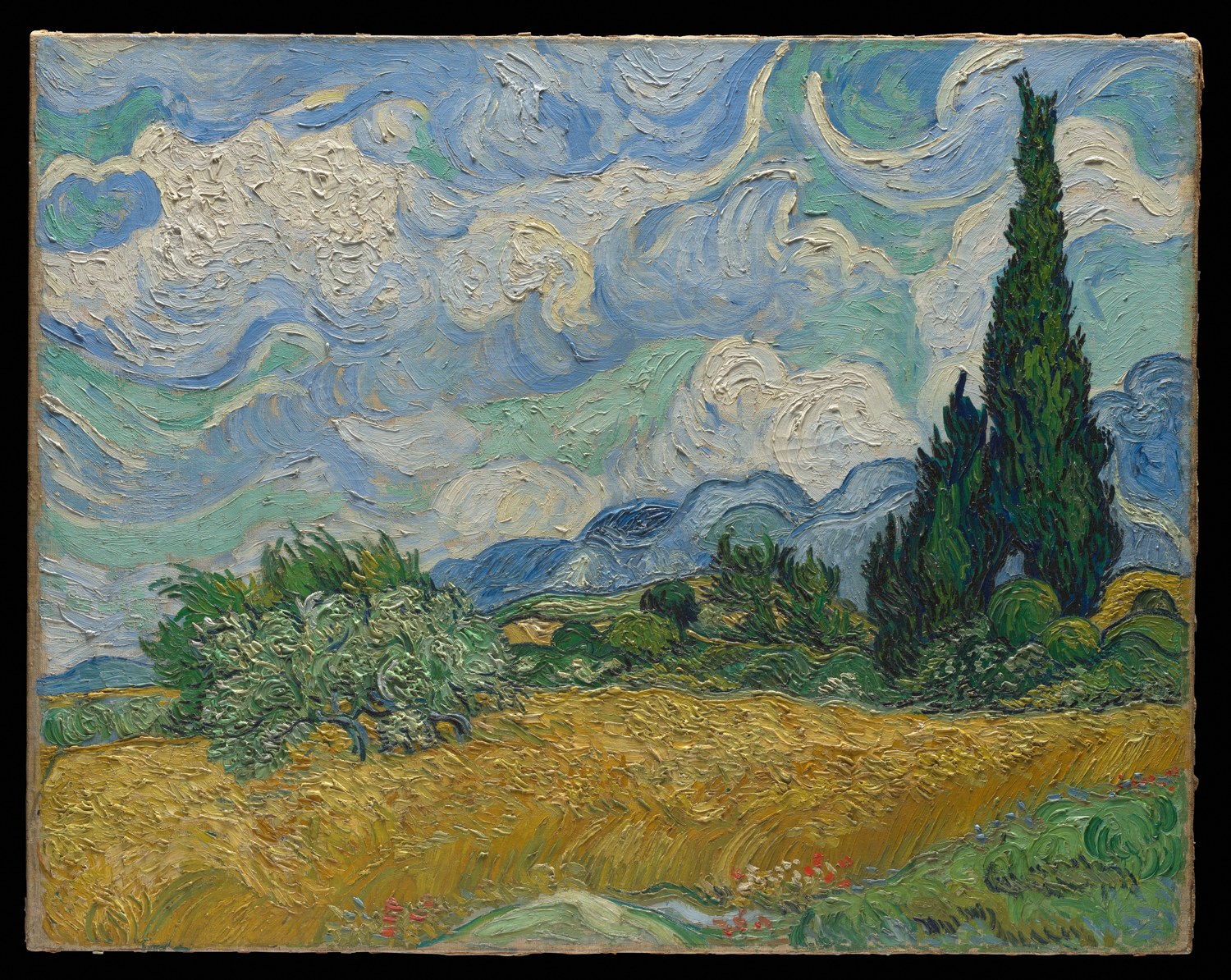
The Met identifies this work as Vincent van Gogh, Wheat Field with Cypresses, 1889, oil on canvas. That verified record gives an artist, medium, date, dimensions and provenance for one specific object. A household print of the same composition is not that object, no matter how convincing its color or frame. Met collection record
Use museum collection records to check a title, composition and accepted artist information. Do not use a photograph to authenticate the physical surface of your own piece. Lighting, resolution, varnish and image processing change how texture appears. Even a high-resolution image cannot establish what material is in the work you are holding.
If a sale picture matches a well-known museum composition exactly, start by investigating reproduction or painted copy. That is a sensible research lead, not a final verdict. An expert can help identify the actual process and distinguish a copy from a legitimate related print or other documented version.
How do I find out who painted a painting?
Start with a record you can share: whole front, signature, whole back, labels, visible edges, damage and dimensions. Transcribe the signature literally, then list uncertain letters separately. “Possibly R or K” is more helpful than converting an unclear mark into a famous surname.
Search combinations of the possible name, subject, medium and any gallery or publisher wording. Compare with museum collections, established galleries, auction archives and artist catalogues. Look for multiple matching facts, not just a signature image that resembles yours. The artist’s dates, known medium, composition and documented editions should make sense together.
Our guide to identifying antiques by photo explains the same evidence-first photo workflow. You can use the AI Appraiser for a suggested identification and research starting point, but a model’s confident artist name is not authentication. Keep the suggestions alongside the sources you checked, not in place of them.
If the signature remains unreadable, search the reverse labels first. A title or gallery label can be more specific than handwriting. A professional may recognize regional schools or techniques from the whole work. Sometimes the honest result is “artist unidentified,” and that is still enough to make a sensible decorating decision.
How can you tell if a painting is valuable?
Classify first, then compare sold examples that match the artist attribution, medium, size, period and condition. An asking price is a seller’s hope, not evidence that a buyer paid it. A sale result can also include buyer’s premium; read the terms before comparing it with what you would receive after commission, packing or shipping.
Look carefully at damage. Tears, flaking, mold, staining, fading, repairs, trimming and poor mounting may affect both marketability and the cost of preservation. Do not assume restoration will pay for itself. Ask a qualified conservator or specialist about the condition before treating a project piece as a profitable resale find.
For booth dealers, separate the picture’s art-market prospects from its decorating appeal. A desirable size, attractive subject and sound frame may support a decor purchase even when the artist is unknown. Our guide to estate-sale items to resell on eBay explains why costs and realistic demand matter more than a spectacular listing screenshot.
For gift buying, choose something the recipient would actually enjoy. Keep its known story with it: where it was found, what you verified and what remains uncertain. Never present “signed in the lower right” as “authenticated by the artist.” For more ideas, see vintage Christmas gifts from estate sales.
Art appraisal near me: when do I need a specialist?
Seek specialist help when a promising attribution is unresolved, documentation is complex, the work appears significant, or a written value is needed for a specific legal, insurance or tax purpose. Tell the appraiser the purpose before commissioning the report. An auction estimate, insurance replacement value and charitable-donation valuation answer different questions.
Check relevant education, experience and whether the professional actually handles your type of art. Ask how fees are calculated, what the report includes, whether an in-person inspection is needed and what authentication work is outside the assignment. An estate sale company can help identify which pieces need referral, but listing a sale and issuing a qualified tax appraisal are not the same service.
For U.S. charitable deductions, the IRS says a claimed deduction above $5,000 for an item or group of similar items generally requires a qualified appraisal and Form 8283 Section B, subject to the applicable rules and exceptions. The threshold concerns the claimed deduction, not simply an informal guess at retail value. Discuss the situation with your tax adviser before donating. 2 3
Our estate sale versus donation guide helps with the wider household decision. Do not split related donations or assume several modest labels remove the reporting requirements. Preserve the records and get professional advice when the deduction or ownership circumstances matter.
AI-generated art printed on canvas: the 2026 buying question
Separate the image’s origin from the physical production method. A digitally generated image printed on canvas remains a print; canvas weave and a textured coating do not turn it into a hand-painted original. A digital artist’s work can also be legitimately sold as a print. The issue is accurate description, not dismissing digital art automatically.
Visual oddities are not a dependable AI detector. Ask the seller about the maker, process, publisher, edition and supporting records. If they do not know, the description should say so. “Decorative canvas print; maker unknown” is safer than claiming it is an antique original because the subject looks old.
For a reseller, retain whatever production disclosure is available and avoid inventing an artist biography. For a company, keep the item title grounded in observable facts. A buyer shopping for decoration may be perfectly happy with a contemporary print; a buyer seeking a collectible artist-issued work needs different evidence.
A practical plan for shoppers, families and companies
Shoppers: buy the object you can verify
Before you browse estate sales near you, decide whether you are hunting a decorating piece or a work needing specialist research. At the sale, ask to inspect the reverse, take the six photographs, record condition and read pickup terms. If authenticity is unresolved, set your maximum spend around the risk you can afford—not an imagined jackpot.
For future finds, a wish list can help you watch terms such as “etching” or “oil painting.” Treat those listing words as discovery clues, not verified medium or artist statements. Read the actual description and ask for the photos that matter before traveling.
Families: keep uncertain art out of the donation pile
Keep labels, invoices, correspondence and family history together with the work. Do not remove a label to make the back look cleaner or repaint a frame before someone reviews it. Make a simple folder per piece and distinguish documented facts from remembered stories. If ownership belongs to an estate, confirm who can authorize a sale or appraisal.
Ask an estate sale company how it screens art and when it refers pieces to an independent specialist. The sensible workflow is not to appraise every inexpensive decoration. It is to avoid casually disposing of the few pieces whose attribution, documentation or condition warrants further attention.
Companies: describe evidence instead of promising discoveries
A useful listing might say “Framed landscape on canvas, signed lower right; artist unverified; surface and reverse photos included.” If you have verified the medium, say so; if not, leave it open. Do not title a piece as a named artist’s original merely because software proposed the name.
Put the six-check photos in the item record before setting a suggested price. Keep a specialist-needed group separate from routine decor. This reduces two avoidable problems: an underpriced piece sold before research, and an overconfident attribution that creates a dispute afterward.
The same discipline applies to the sterling silver hallmark guide and first-edition book checks: inspect the identifying evidence, establish what it actually means, and only then look at the market.
Questions & answers
Frequently asked questions
Does a signature mean a painting is original?
No. A signature can be printed into a reproduction, added by hand or copied. Some legitimate works are unsigned. Examine the whole object and its records; a signature is one piece of evidence, not proof of originality or authorship.
What does 25/100 mean on a print?
It usually identifies impression 25 in a stated edition of 100. It does not mean 25 percent ownership, a year or a guaranteed value. Proofs and other editions may also exist, so check the specific artist and publisher records.
Is a signed giclée worth anything?
It may be, but signing and numbering alone do not establish resale value. Research the exact work, issuer, edition and sold demand. A signed reproduction remains different from the original painting it reproduces.
Can I identify an artist signature by photo?
A photo can help generate possible readings and compare documented signatures. Include the whole artwork, medium, dimensions and reverse labels. A suggested match should be verified against reliable records or a specialist before it becomes an attribution.
Can an original painting have a completely smooth surface?
Yes. Thinly applied paint, watercolors and other techniques may be smooth. Thick texture is not required for a painting, and textured reproductions exist. That is why the guide uses six checks rather than one surface test.
Are estate sale paintings worth buying?
They can be worthwhile decorating purchases or collectible finds. Buy according to verified facts, condition, realistic sold comparisons and your own taste. If a major artist attribution is uncertain, do not spend as though it has already been authenticated.
Should I clean a painting before getting it appraised?
Do not improvise cleaning, solvent or scraping tests. Photograph its present condition and ask a qualified professional before treatment. Old labels, margins and original surfaces can be important evidence, and damage is easier to prevent than undo.
Sources and research notes
Reviewed November 28, 2026. This guide uses Christie’s collecting guide for original print techniques, edition numbers, proofs and signatures; Revere Auctions for the painting-versus-print screening framework; Tate for lithography and screenprint terminology; The Met for the pictured work’s identity and image rights; and IRS guidance for charitable-donation substantiation. It makes no promise that the six checks authenticate a work, and reports no invented ESF inventory counts or search volumes.
Keep exploring
Look closer before you name a price.
Photograph the whole work, signature and reverse for suggested identification; verify the evidence before making an artist attribution.
Open the AI AppraiserAbout the author
Andy
Founder, EstateSaleFinder.net
Hi, I'm Andy — a retired commercial photographer turned developer with a five-year (and counting) obsession with estate sales. I started EstateSaleFinder.net because I knew there had to be an easier, smarter way to find and list estate sales. Now I get to chase treasure and build the tool I always wished existed.