
Are Old Tools Worth Anything? The Hand Planes, Brands and Workshop Tools That Sell, What's Only Worth a Few Dollars, and How to Clear Dad's Garage Without Giving It Away
Most garage tools are box-lot items, but a few planes, chests and sets can be worth real money. How to sort, identify maker marks, check sold prices and dispose of chemicals safely.

In this guide · 11 sectionsShow
- 01The short answer
- 02Are old tools worth anything? It depends on four things
- 03The first 15 minutes in the garage
- 04How to tell what you have: maker marks, plane numbers and patent dates
- 05A simple value-tier table
- 06Should you clean rust off old tools before selling?
- 07How to check real sold prices (not wishful asking prices)
- 08Safety and disposal: fuel, chemicals, blades and tanks
- 09Ways to sell old tools
- 10What resellers grab first
- 11Frequently asked questions
Most old tools are worth a few dollars each, but a garage can still hold a few pieces worth hundreds. Stanley planes with early or "Sweetheart" marks, maker-stamped wooden planes, complete machinist chests and quality socket sets sell best. Sort before you clean, check maker marks, and compare sold prices, not asking prices.
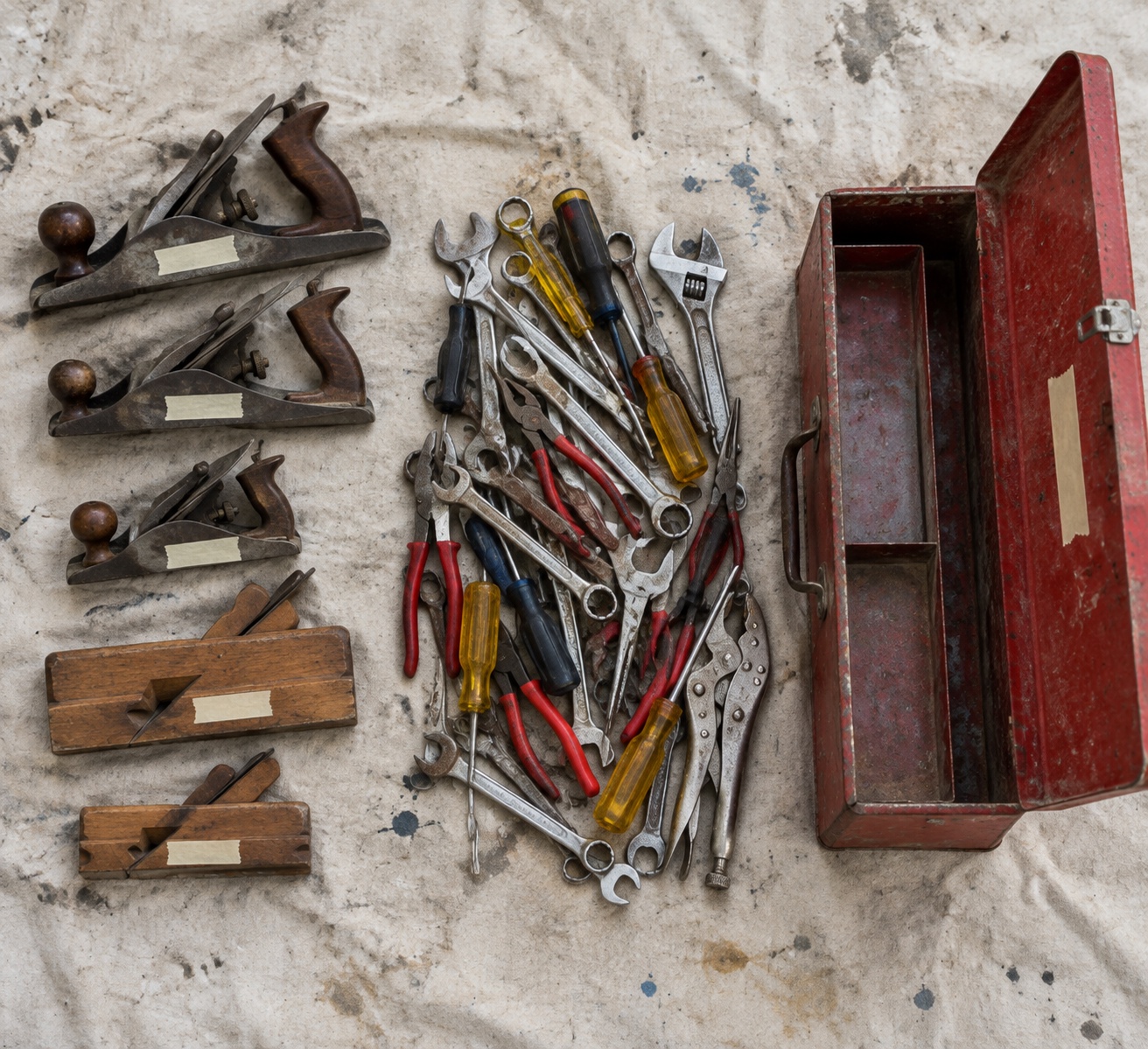
The short answer
- Usually worth a few dollars: loose screwdrivers, pliers, unmarked wrenches, hardware-store hammers and rusty odds and ends. They sell best as a box lot.
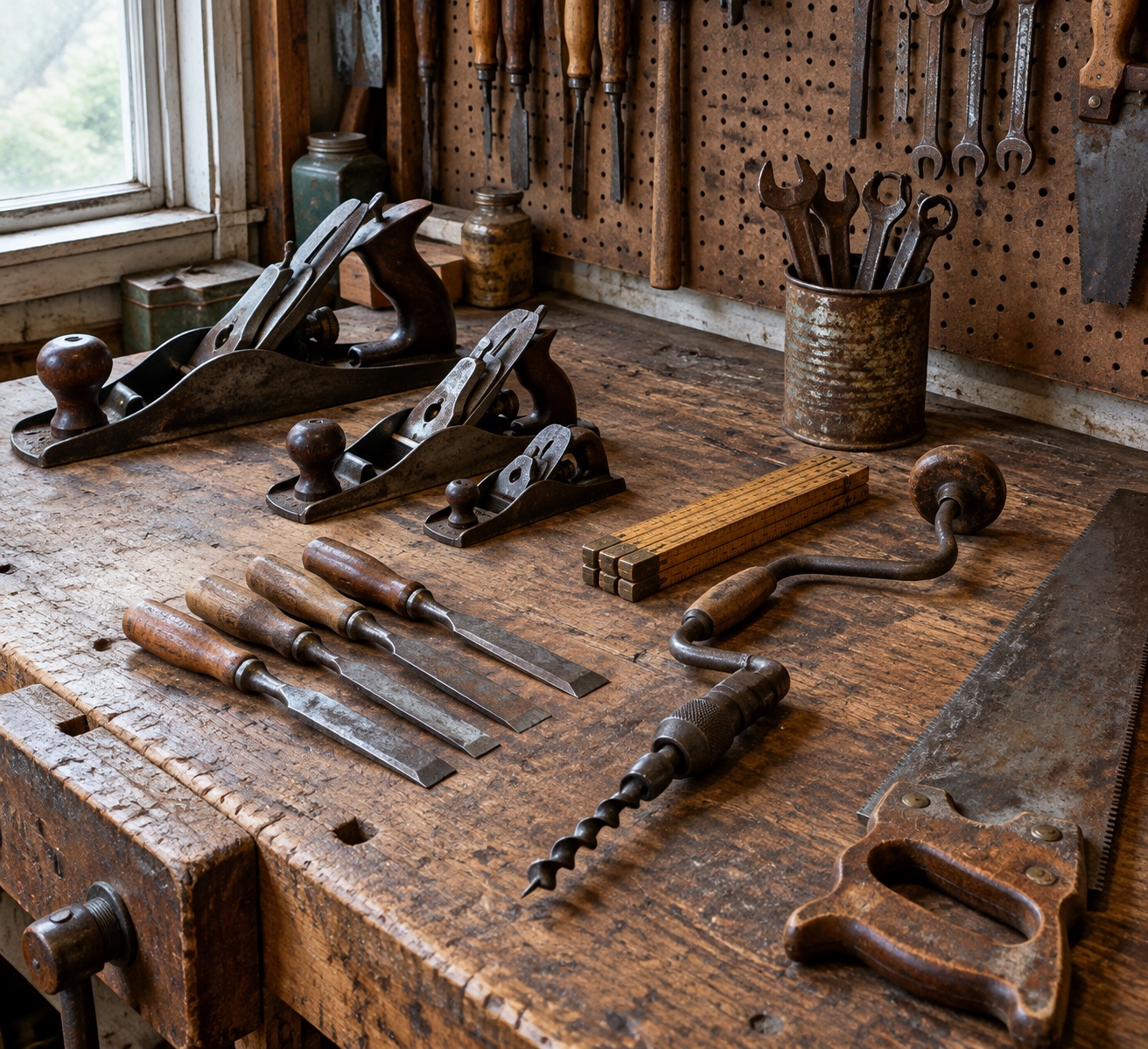
- Worth checking: hand planes (especially Stanley and Bailey), wooden molding planes with a maker's name, chisel sets, braces, levels, and complete machinist chests.
- Can surprise you: a small number of collector planes. On Antiques Roadshow in 2014, an appraiser said a Stanley No. 1 "Sweetheart" plane with its original box reliably sells for $5,000 or more at auction PBS. That is a rare exception, not a typical garage find.
- Never worth selling: old gasoline, solvents, leaking cans and damaged tanks. Those go to your local household hazardous waste program.
The rest of this guide shows you how to tell the piles apart in an afternoon, without cleaning off the very marks a buyer wants to see.
Are old tools worth anything? It depends on four things
The tools that bring real money usually have a few things in common:
- A maker you can read. Stanley, Bailey, Sargent, Millers Falls, Disston, Starrett, Brown & Sharpe, Snap-on, Proto, older Craftsman, and named 19th-century wooden-plane makers get searched. An unmarked wrench rarely does.
- Completeness. A plane with its original iron, cap and lever cap is worth more than one with swapped parts. A machinist chest with its keys, drawers and fitted tools is worth more than an empty one.
- Condition you can use. Many buyers are woodworkers who will put the tool to work. Cracks in a cast-iron plane body, a broken tote (handle) or a pitted sole cut the price a lot.
- Demand right now. Prices for collectible tools change with the market. Antiques Roadshow's own guidance warns that an appraisal reflects its date, the sales channel and condition PBS.
A Stanley Black & Decker history of tool collecting puts it simply: collectors want old tools for their precision, their materials (rosewood, brass, ebony), and their history Stanley Black & Decker.
The first 15 minutes in the garage
Before you donate, toss or tag anything, do this quick pass. It protects the few valuable pieces and saves hours later.
- Stop the clean-up crew. Ask family not to throw out "junk" boxes yet. Small planes, gauges and levels often hide inside coffee cans and drawers.
- Find the planes first. Pull every metal and wooden plane onto one table. They are the most likely money-makers.
- Keep chests and sets together. Do not empty a machinist chest or split a socket set. The set is the value.
- Set the chemicals aside. Move gas cans, thinners, pesticides and tanks outside the work area. Do not open, pour or combine them.
- Photograph marks before moving things. Take clear photos of every stamp, number and patent date you can see.
- Start four piles. Use the triage board below.
Garage triage board · tap a pile
Four piles, before anyone names a price
- Stanley planes with a Sweetheart or early Bailey mark
- Molding and plow planes with a maker's stamp
- Complete machinist chests with drawers and contents
- Patent-dated or unusual braces, levels and gauges
Next step: Photograph marks, keep parts together, and compare sold listings before anyone names a price.
How to tell what you have: maker marks, plane numbers and patent dates
Stanley and Bailey bench planes
Stanley made Bailey-pattern bench planes for about a century. Collectors date them using a "type study" that tracks small design changes, from Type 1 (1867–1869) to Type 20 (1962–1967) Hyperkitten. You do not need to master the type study. Just check these spots:
- The size number. Most Stanley bench planes have a number cast near the toe (front), such as 3, 4, 5 or 7. Higher numbers are longer planes.
- Patent dates behind the frog. Look in the casting just behind the part that holds the blade. One, two or three patent dates help narrow the era Stanley Type Study.
- The blade stamp. A heart-shaped "SW" logo ("Sweetheart") was used from about 1920 to 1935. Sweetheart planes often bring more, but not always Handplane Central.
- Small and unusual sizes. The tiny No. 1 is the famous one. The same source notes counterfeits exist, with rough castings and badly shaped handles, so a "No. 1" needs a careful look.
Type studies are guides, not certificates. Parts were swapped over the decades, so a plane may mix features from different years Virginia Toolworks.
Wooden planes
Wooden molding planes and plow planes are easy to overlook. Look at the end grain at the front of the plane for a stamped maker's name and city. Named makers and complete sets draw collectors. Unmarked, split or wormy planes are usually decor-level pieces.
Wrenches, sockets and mechanics' tools
Older American-made socket and wrench sets from well-known brands sell steadily, especially complete sets in their original box or case. Mixed singles are box-lot material. "Made in USA" markings, drop-forged stamps and a full run of sizes all help.
Measuring and machinist tools
Starrett, Brown & Sharpe and similar precision tools (calipers, micrometers, squares, levels) are bought by machinists and hobbyists. A wooden machinist chest with its drawers, felt and key can be worth more than the tools inside.
The quick way to identify an odd tool
When you find something you cannot name, take a clear photo and run it through the AI Appraiser. It gives a suggested identification and comparable sales to check. Treat it as a starting point, then confirm the maker mark and sold prices yourself.
A simple value-tier table
| Tier | Typical examples | Best way to sell |
|---|---|---|
| Rare collector pieces | Early or small Stanley planes, Sweetheart No. 1, named plow planes, complete machinist chests | Individual listing or specialist tool auction, after checking sold prices |
| Steady sellers | Common Stanley/Bailey No. 4–7 planes, chisel sets, quality socket sets, working hand saws, vises | Priced individually at an estate sale, or online as sets |
| Box-lot tools | Mixed screwdrivers, pliers, unmarked wrenches, loose bits and hardware | One price per box or tray |
| Do not sell | Old fuel, solvents, pesticides, leaking cans, damaged tanks | Household hazardous waste collection |
This table is a sorting guide, not a price list. Check current sold listings for your exact maker, number and condition.
Should you clean rust off old tools before selling?
Not before you price them. Many buyers would rather see honest, untouched surface rust than a tool that has been wire-wheeled, sanded or painted. Aggressive cleaning can remove maker marks, japanning (the black finish) and patent dates, which are exactly what buyers check.
It is fine to:
- Wipe off loose dust and cobwebs with a dry cloth.
- Brush loose debris out of a toolbox.
- Store tools somewhere dry so rust does not get worse.
Avoid:
- Wire wheels, grinders and power sanders on planes.
- Repainting cast iron.
- Soaking wooden planes or handles.
- Chemical rust removers on anything you think may be collectible.
The exception: heavily rusted, common tools in a box lot. Nobody pays more for a cleaned $3 wrench, so leave the restoration to the buyer.
How to check real sold prices (not wishful asking prices)
- Search sold listings, not active ones. On eBay, filter to Sold Items. Asking prices tell you what someone hopes for.
- Match exactly. Same maker, same number, same type era if you can tell, same condition, same completeness.
- Look at several sales. One high sale can be a fluke. Look for the middle of five or more sales.
- Watch for sets vs. singles. A complete chisel set sells differently from one chisel.
- Subtract fees and shipping. Cast-iron planes are heavy. A sale price is not what lands in your pocket.
If you are an estate sale company pricing a garage, our guide on how to price items for an estate sale walks through fair pricing and markdowns. Tag and Go can also suggest price comps from photos as a starting point, so your crew is not guessing on a bench full of planes.
Safety and disposal: fuel, chemicals, blades and tanks
Garages hold more than tools. The EPA lists paints, solvents, oils, pesticides and batteries as household hazardous waste that needs special handling, and warns against pouring them down drains, on the ground or into regular trash EPA.
- Fuel and solvents: keep in original containers, upright, away from heat. Take them to a local household hazardous waste collection.
- Propane and compressed-gas tanks: many collection events do not accept them. Illinois EPA, for example, lists propane tanks and fire extinguishers as not accepted at its one-day collections Illinois EPA. Call your local program or a propane supplier.
- Blades and saws: cover sharp edges with cardboard and tape before moving boxes. Never leave loose blades in a box lot.
- Lead-acid batteries: usually taken back by auto parts stores or recyclers. Check locally.
Do not sell or give away unlabeled containers. If you do not know what is in a can, it is a disposal item.
Ways to sell old tools
Sell everything at an estate sale
An estate sale works well when the garage is only part of a full house. Tools draw a steady crowd of woodworkers, mechanics and resellers. A company can price the steady sellers individually, bundle the rest, and pull out the rare pieces for extra research. If you are not sure whether the household is big enough, our comparison of an estate sale vs. a buyout explains the trade-offs.
You can find an estate sale company near you and ask how they handle a workshop: who researches the planes, whether they sell box lots, and how they dispose of chemicals.
Sell online
Good for a few rare or high-value pieces. Expect to research, photograph, pack heavy items and handle returns.
Sell to a tool dealer or collector
Fast and simple, but expect a wholesale price. Get more than one offer for anything special.
Sell all together vs. one at a time
- All together (a buyout or one buyer for the whole garage) is fastest and least work, but usually brings the least money.
- One at a time brings the most for the good pieces but takes the most time.
- The middle path: pull out the five to ten best pieces for individual sale, then sell the rest together or by the box.
What resellers grab first
If you shop estate sales for tools, these are the things experienced buyers head for first. Many of them show up in our list of garage and shed treasures at estate sales:
- Hand planes of any kind, especially small sizes and wooden planes with maker stamps
- Complete socket and wrench sets from known brands
- Machinist chests and precision measuring tools
- Old hand saws with clear etchings and good handles
- Unusual patented gadgets, gauges and levels
- Box lots that might hide any of the above
Want to know when tools show up near you? Add "hand plane" or "Stanley" to your wishlist alerts and browse estate sales near you. As of November 27, 2026, 112 current or upcoming EstateSaleFinder listings mention tools or a workshop in their descriptions.
For other "is it worth anything" checks in the same garage, see our guides to old fishing lures and items secretly worth $500.
Questions & answers
Frequently asked questions
Are old rusty tools worth anything?
Yes, sometimes. Light surface rust rarely ruins a collectible plane or saw, and many buyers prefer untouched tools. Deep pitting, cracks and missing parts lower the price. Common rusty hand tools usually sell as box lots for a few dollars.
Are old Craftsman tools worth anything?
Older American-made Craftsman sets sell steadily, especially complete sets in their original case. Single common wrenches and screwdrivers are usually worth only a few dollars each. Check sold listings for the exact set.
How do I know if my Stanley plane is valuable?
Check the size number near the toe, the patent dates behind the frog and the stamp on the blade. Small sizes, early types, original parts and a Sweetheart blade can add value. Compare several sold listings for the same number and type.
Should I sell Dad's tools one at a time or all together?
Pull out the best five to ten pieces and sell them individually after checking sold prices. Sell the rest together or in box lots. That balances money and time.
Do tools sell well at estate sales?
Yes. Workshops attract woodworkers, mechanics and resellers, and box lots move quickly. Ask the estate sale company how it researches planes and handles chemicals before the sale.
Keep exploring
Not sure what that tool is?
Snap a photo for a suggested identification and comparable sales to check. Treat it as a starting point, then confirm maker marks and sold prices.
Open the AI AppraiserAbout the author
Andy
Founder, EstateSaleFinder.net
Hi, I'm Andy — a retired commercial photographer turned developer with a five-year (and counting) obsession with estate sales. I started EstateSaleFinder.net because I knew there had to be an easier, smarter way to find and list estate sales. Now I get to chase treasure and build the tool I always wished existed.